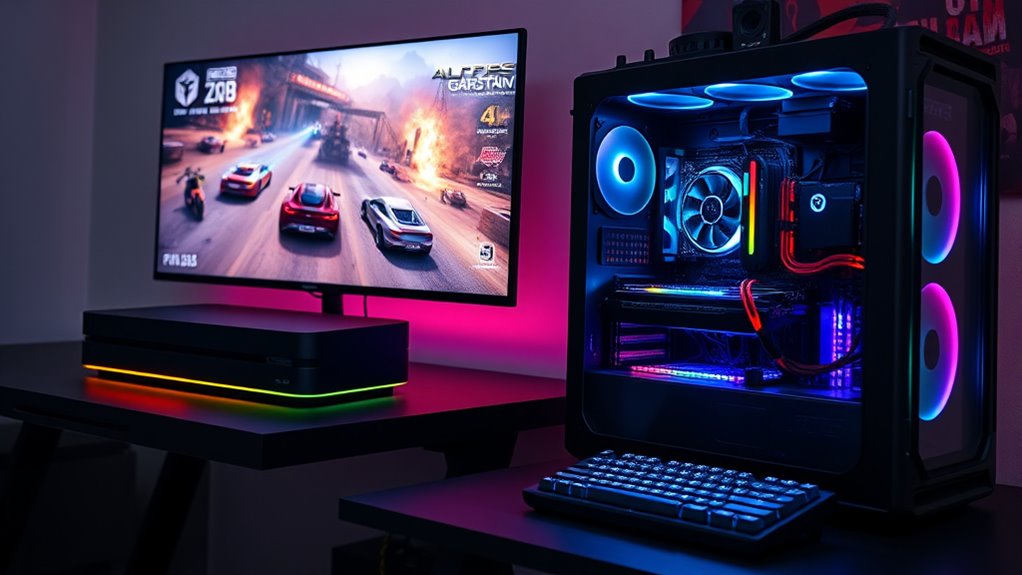

Choosing between console and PC gaming depends on your priorities. If you want a simple setup, lower upfront costs, and easy access to exclusive titles, a console might be better. However, if you’re after top graphics, customization, and future-proofing, a gaming PC gives you more power and flexibility. Consider your budget, gaming habits, and space—there’s more to discover that can help you make the perfect choice.
Key Takeaways
- PCs offer customizable hardware, better graphics, and future-proofing through upgrades, ideal for high-performance gaming enthusiasts.
- Consoles provide a simpler, plug-and-play experience with lower upfront costs and dedicated exclusive titles.
- PC gaming supports extensive multiplayer options, modding, and larger game libraries, appealing to dedicated and social gamers.
- Consoles are more accessible and space-efficient, suited for casual users and those seeking quick setup.
- Long-term costs and upgrade flexibility make PCs more cost-effective over time, while consoles are better for straightforward, budget-friendly gaming.

GameSir G7 Pro Wireless Gaming Controller - Officially Licensed for Xbox Series X|S, Xbox One, Windows PC & Android, TMR Joysticks, 1000Hz Polling Rate, Charging Dock- Zenless Zone Zero Edition
No Stick Drift TMR Joysticks: Enjoy ultra-smooth, precise control with virtually zero stick drift. Powered by advanced Mag-Res...
As an affiliate, we earn on qualifying purchases.
Performance and Graphics Quality
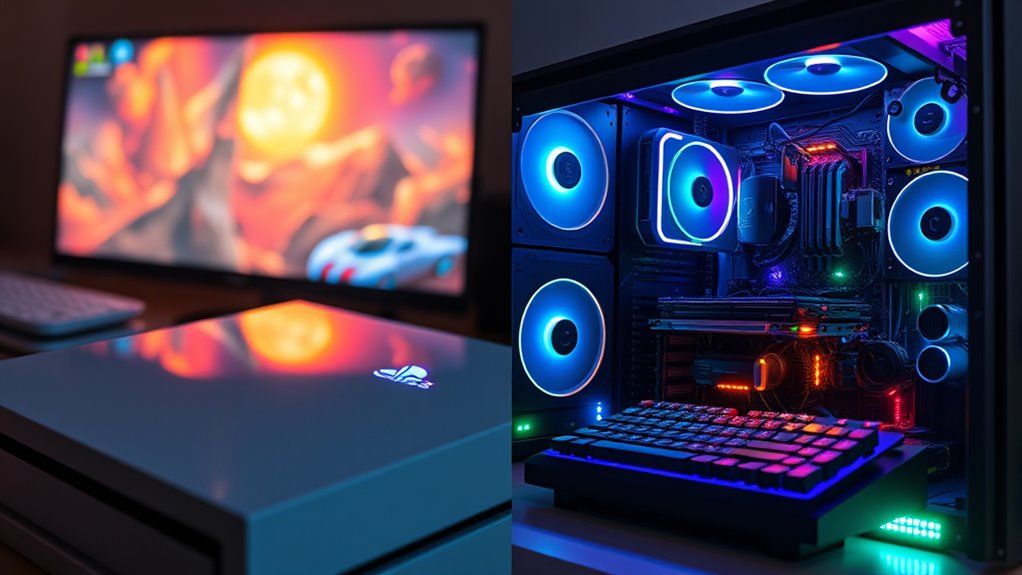
When comparing performance and graphics quality, PCs generally have an edge due to their customizable hardware and higher processing power. This allows you to upgrade your PC’s graphics card, processor, and RAM to improve performance and achieve stunning visuals. This flexibility allows you to run the latest games at higher resolutions and settings, delivering smoother gameplay and richer details. Unlike consoles, which are limited to fixed hardware, PCs adapt to technological advancements, ensuring you stay on the cutting edge. Additionally, PCs often support more advanced graphics technologies like ray tracing, providing more realistic lighting and reflections. If you prioritize top-tier visuals and performance, a PC gives you the ability to customize and optimize your gaming experience to meet your specific preferences. Furthermore, the availability of high-quality home theatre projectors can enhance your gaming setup by providing an immersive large-screen experience, making visual immersion more accessible than ever. Leveraging hardware upgradeability ensures your system remains capable of handling future titles and innovations, and the continual development of graphics technology pushes the boundaries of visual fidelity.
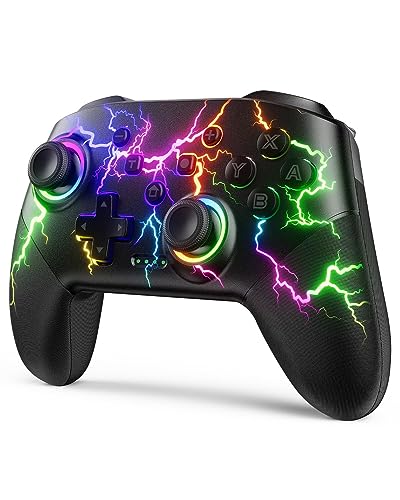
VOYEE Switch Controllers Compatible with Switch/Lite/OLED/PC Windows, 1000mAh Programmable RGB Lightning LED, Wireless Pro Controller with One Key Pairing/Wake Up/Turbo/Vibration
RGB Cool Lightning Bolt & 1000 mAh Battery: Switch controller with lightening bolt style and 9-color LED looks...
As an affiliate, we earn on qualifying purchases.
Cost and Budget Considerations
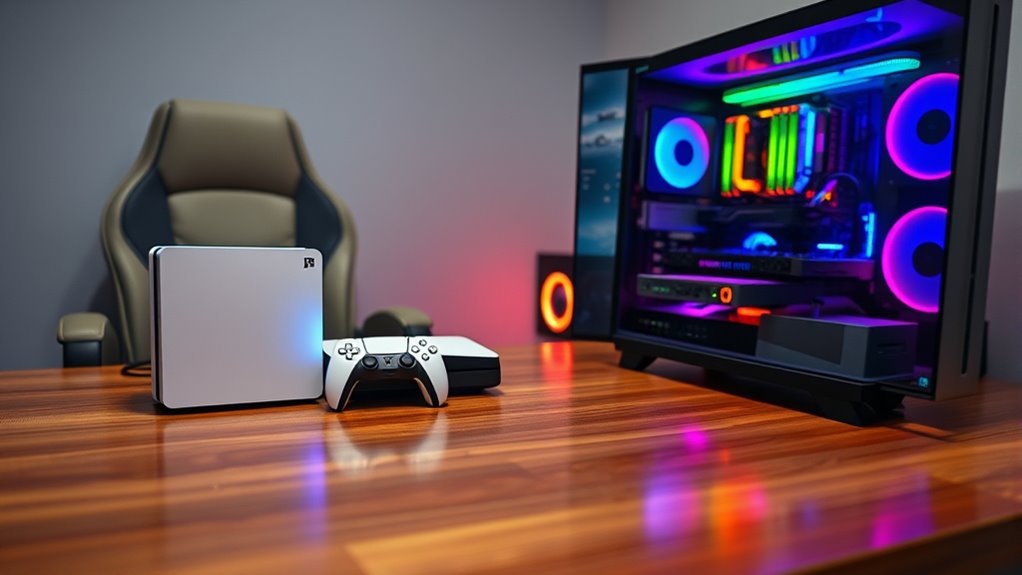
Your initial investment varies greatly between consoles and PCs, with consoles typically costing less upfront. However, ongoing expenses like games, subscriptions, and upgrades can add up over time. Considering potential savings and long-term costs helps you choose the option that fits your budget best. Additionally, understanding the difference between Free Floating and fixed hardware can influence maintenance costs and upgrade frequency. Being aware of cybersecurity risks associated with different gaming platforms also plays a role in evaluating overall costs and safety. Moreover, the availability of affiliate deals and discounts can significantly impact the overall expense of building or purchasing a gaming setup. It is also important to consider screen technology and how it affects visual quality and potential additional costs. Recognizing the impact of hardware compatibility can help you avoid costly upgrades and ensure smoother gameplay experiences over time.
Upfront Purchase Price
Choosing between a console and a PC often hinges on upfront costs, as each option requires a different financial investment. Consoles generally have a lower initial price, making them more accessible if you’re on a tight budget. A new console, like a PlayStation or Xbox, typically costs between $300 and $500. In contrast, building or buying a gaming PC can start around $600 but often exceeds $1,000 for high performance. While consoles come with a fixed hardware cost, PCs offer customization options that can influence the initial expense. If you want a straightforward, budget-friendly start, consoles are usually the better choice. However, if you’re looking for flexibility and future upgrades, a PC’s higher upfront price might be justified. Additionally, the best-rated vacuums of 2024 reflect how technological advancements can impact long-term value and performance. Incorporating upgradable hardware options in a gaming PC can help optimize your investment over time. Furthermore, understanding the energy efficiency of different systems can lead to cost savings in the long run. Ultimately, your budget will determine the best fit.
Ongoing Expenses Involved
While the initial purchase price sets the stage, ongoing expenses can substantially impact your gaming budget over time. For consoles, you’ll regularly spend on game titles, online subscriptions, and occasional accessories. For PC gaming, costs include software updates, hardware upgrades, and maintenance. Specifically, consider:
- Monthly or annual online service fees (e.g., Xbox Live, PlayStation Plus)
- Purchasing new games or downloadable content
- Upgrading hardware components to keep up with new games
- Fixing or replacing peripherals and accessories over time
- Implementing reliable backup power solutions can help protect your gaming setup from power interruptions and hardware damage, potentially reducing repair costs. Additionally, routine home maintenance practices, like cleaning and inspecting your gaming equipment and power sources, can extend their lifespan and prevent unexpected failures.
These expenses can add up, sometimes exceeding initial costs. Your choice depends on how much you’re willing to spend regularly, not just upfront. Budgeting for these ongoing costs helps you enjoy gaming without surprises.
Potential Cost Savings
Considering the potential for cost savings, gaming on a budget requires careful planning and smart choices. Consoles often have a lower upfront cost, and their games tend to be less expensive over time. PC gaming, however, can be more affordable if you prioritize upgrades and choose wisely. You might save money by buying used gear or waiting for sales, but costs can add up quickly. To help visualize, here’s a quick comparison:
| Aspect | Console Gaming | PC Gaming | Your Choice |
|---|---|---|---|
| Initial Cost | Lower, one-time purchase | Can be higher, depending on parts | Fits your budget? |
| Game Prices | Generally cheaper, bundled deals | Sales and discounts available | Are you patient? |
| Upgrades | Limited, costly over time | Flexible, potentially cheaper | How often do you upgrade? |
Smart choices help maximize savings, no matter the platform. Additionally, upgrading hardware can extend the lifespan of your PC gaming setup and save money in the long run, especially when considering cost-effective components. Moreover, selecting compatible parts ensures smoother performance and better value over time.

VOYEE Switch Controller, LED Star Wireless Pro Controllers Compatible with Switch/Lite/OLED, Multi-Platform Windows PC with 9 Colors Colorful RGB Lights/Programmable/Vibration/Turbo/Wakeup
Multi Device Compatible and One Key Pairing: The switch pro controller is compatible with Switch, Lite, OLED, PC...
As an affiliate, we earn on qualifying purchases.
Game Library and Exclusives
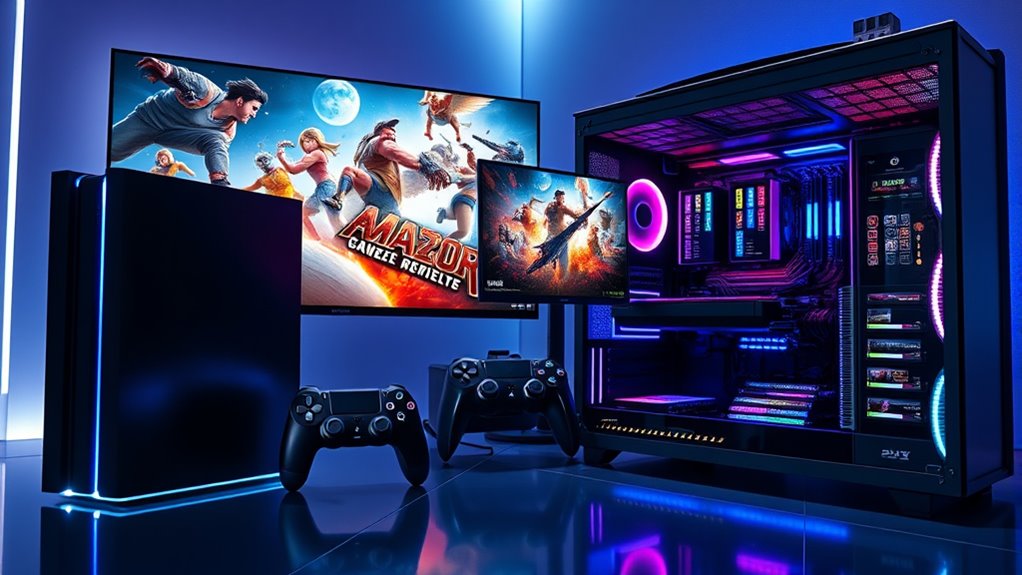
When it comes to game libraries, consoles often have the edge with their exclusive titles that you can’t find anywhere else. These exclusives can sway your choice by offering unique experiences. For example: 1. Popular franchises like *Halo* or *The Last of Us* are only available on specific consoles. 2. Console exclusives often feature optimized gameplay and graphics tailored to their hardware. 3. New releases or remasters tend to debut on consoles first, giving you early access. 4. Some titles are built around console-specific features, like motion controls or VR integration. While PC gaming boasts a vast, diverse library accessible through digital storefronts, specialized hardware can enhance the experience of certain exclusive titles, providing a compelling reason to choose one platform over another, especially if you’re passionate about those unique titles.

ECHTPower Wireless PC Gaming Controller - Hall Effect Joystick, 2.4G & Wired 1000Hz Polling Rate, 800mAh Battery, Adjustable Turbo/Vibration - for PC/Switch/iOS/Android
Hall Effect Joystick – No Drift: Enjoy flawless control and eliminate joystick drift with the ECHTpower PC Gaming...
As an affiliate, we earn on qualifying purchases.
Customization and Upgradability
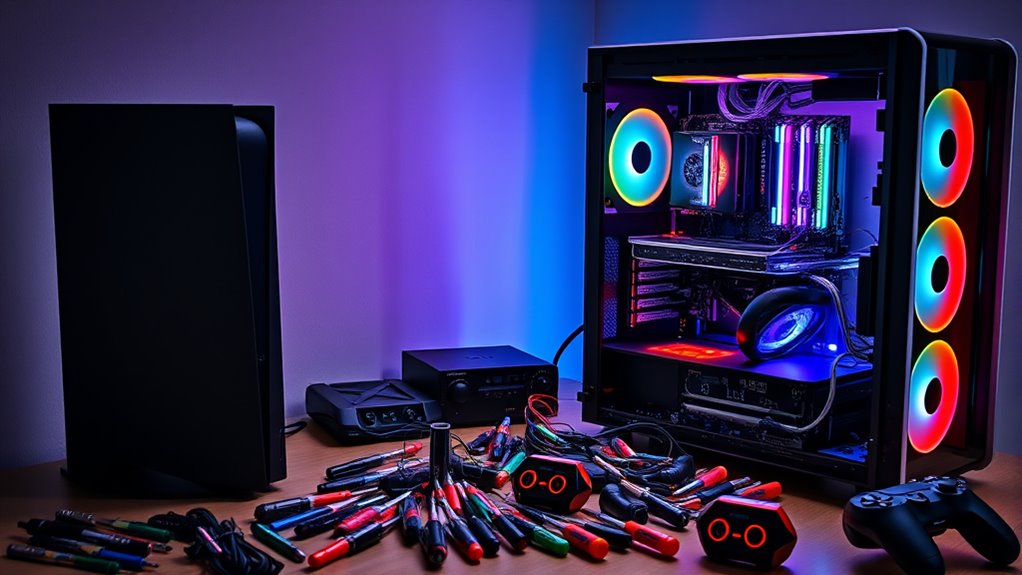
Unlike consoles, which offer limited options for hardware modifications, PCs provide extensive customization and upgradability. You can choose specific components like graphics cards, processors, RAM, and storage to match your gaming needs and budget. This flexibility allows you to upgrade parts over time, keeping your system current without replacing the entire machine. If a game demands better performance, you can target upgrades to improve frame rates and visuals. Custom PCs also let you personalize your setup with different cases, cooling systems, and peripherals. This level of control means your gaming rig can evolve along with your skills and interests. Additionally, system hardware is a key factor in ensuring your gaming experience remains optimal and adaptable to new titles. Upgrading hardware components can significantly extend the lifespan of your gaming PC and enhance overall performance. Furthermore, understanding upgrading procedures can help you perform these enhancements more effectively and safely. To make the most of your upgrades, it’s helpful to learn about compatibility considerations, which ensure your new parts work seamlessly with your existing setup. However, it also requires more technical knowledge and effort to build, maintain, and troubleshoot your system.
Ease of Use and Accessibility

While PCs offer extensive customization and upgrade options, they can also present challenges regarding ease of use and accessibility. Setting up a gaming PC often involves installing hardware, managing drivers, and troubleshooting issues, which can be intimidating for beginners. Additionally, you’ll need to navigate different operating systems and software configurations. Consider these factors:
- Learning curve for operating systems and software
- Time required for initial setup and updates
- Compatibility issues with peripherals and games
- Technical knowledge needed for troubleshooting
In contrast, consoles are designed for plug-and-play simplicity, letting you start gaming quickly. They typically come with user-friendly interfaces, making them more accessible for those less familiar with tech.
Online Services and Multiplayer Features
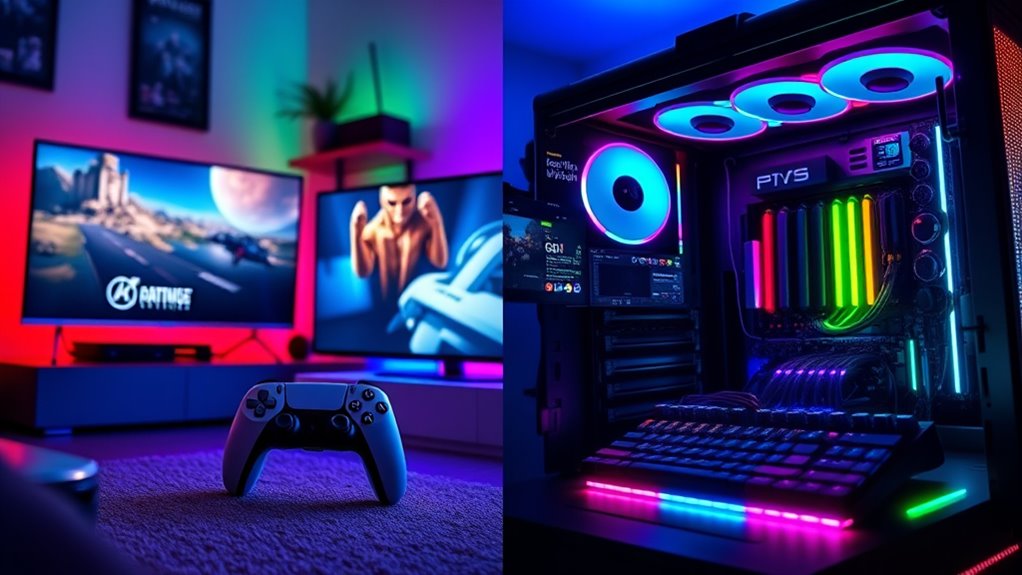
Online services and multiplayer features are essential aspects of modern gaming that can considerably enhance your experience. On consoles, you often rely on proprietary platforms like PlayStation Network or Xbox Live, which provide seamless access to multiplayer games, friends lists, and exclusive content. PCs, on the other hand, typically use services like Steam, Battle.net, or Epic Games Store, offering extensive multiplayer options and community features. The table below compares key aspects:
| Feature | Console | PC |
|---|---|---|
| Online Platforms | PlayStation Network, Xbox Live | Steam, Epic, Battle.net |
| Multiplayer Stability | High, optimized for hardware | Varies, depends on connection |
| Community Features | Friends, clans, parties | Mods, clans, voice chat |
| Cross-Platform Play | Limited, game-dependent | Increasing, platform-agnostic |
| Subscription Services | PlayStation Plus, Xbox Game Pass | Various, often free or low-cost |
Furthermore, PC gamers often benefit from customizable experiences that can adapt to different hardware and preferences, enhancing multiplayer engagement.
Hardware Longevity and Future-Proofing
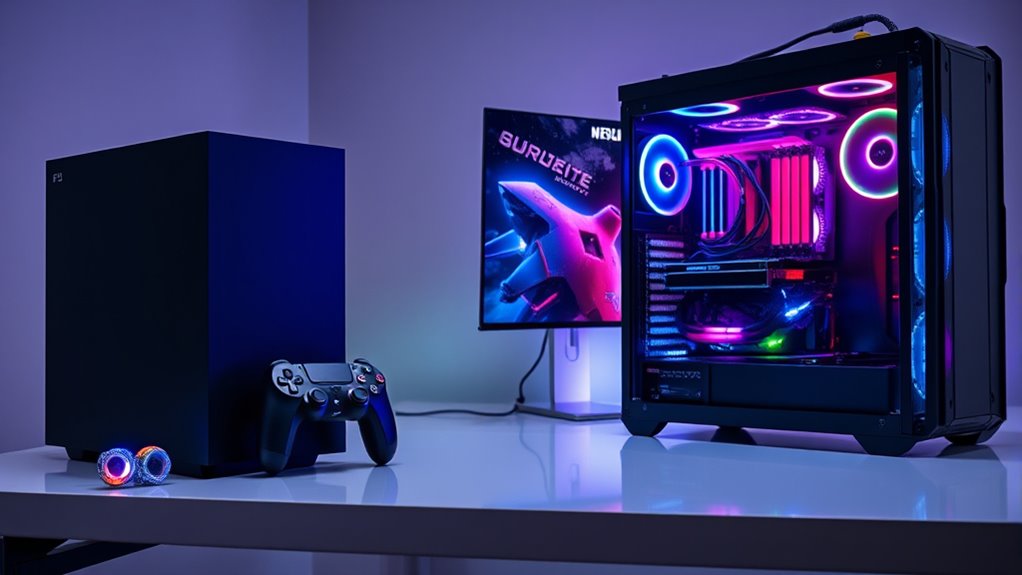
You’ll want to contemplate how well your gaming hardware holds up over time, as consoles are often built for durability but can still become outdated. Upgrading a PC offers more flexibility, but it can be limited by compatibility or cost. Technological advancements also pose a risk of your current setup becoming obsolete faster than you expect.
Hardware Durability Over Time
Hardware durability over time varies markedly between consoles and PCs, influencing how long each system remains viable and relevant. Consoles typically have a fixed lifespan, often around 5-7 years, after which new models replace old ones. PCs, however, can be upgraded to extend their usefulness. To maximize durability, consider these factors:
- Build quality and components’ robustness
- Frequency and intensity of use
- Availability of hardware upgrades and replacement parts
- Software support and updates that keep hardware compatible
A well-built PC with upgrade options can last longer than a console, which becomes outdated once new generations launch. Your choice depends on how much you value long-term durability and the ability to adapt your system over time.
Upgrade Flexibility Limitations
While upgrading options can extend the lifespan of a gaming system, consoles often face significant limitations in future-proofing. Unlike PCs, which allow you to swap out components like graphics cards, RAM, or storage, consoles are built with fixed hardware configurations. This means you’re stuck with what you buy initially, making it difficult to keep up with advancing game requirements or new technology. If a game demands higher performance, you might find your console struggling sooner than a PC that can be upgraded over time. Additionally, console manufacturers rarely release hardware updates or new versions that are compatible with your existing system. As a result, your ability to adapt and prolong your console’s relevance is limited, potentially leading to earlier obsolescence.
Technological Obsolescence Risks
Technological obsolescence poses a significant challenge for console gamers because fixed hardware limits how long a system remains capable of running new games at ideal settings. Over time, game developers optimize for newer hardware, making older consoles struggle with performance and compatibility. To mitigate this, consider these factors:
- Consoles typically have a lifespan of 5-7 years before hardware becomes outdated.
- Firmware updates may extend usability but can’t match the flexibility of PC upgrades.
- Future-proofing is limited since consoles lack upgradeability—you’re stuck with original specs.
- Newer technology, like faster processors or graphics, often renders older hardware obsolete faster.
Understanding these risks helps you decide whether a console’s fixed hardware aligns with your long-term gaming goals.
Social and Multiplayer Experiences
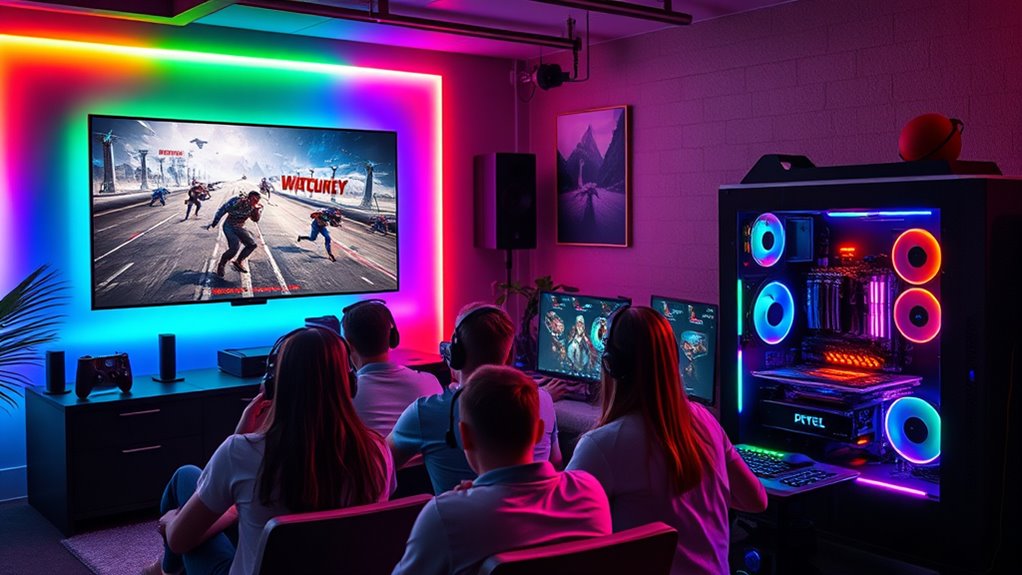
When it comes to social and multiplayer experiences, consoles often create a more accessible and straightforward environment for friends to play together. With built-in multiplayer options and local co-op features, you can easily invite friends over or connect online without complicated setups. Consoles typically have user-friendly interfaces, making it simple to join matches or party up with friends. Plus, many popular multiplayer games are designed specifically for consoles, ensuring a smoother experience. On the other hand, PC gaming offers more advanced communication tools, like voice chat and custom servers, which benefit more dedicated gamers. However, the overall ease of use and instant access to local multiplayer make consoles a convenient choice for casual and social gaming sessions.
Space and Setup Requirements
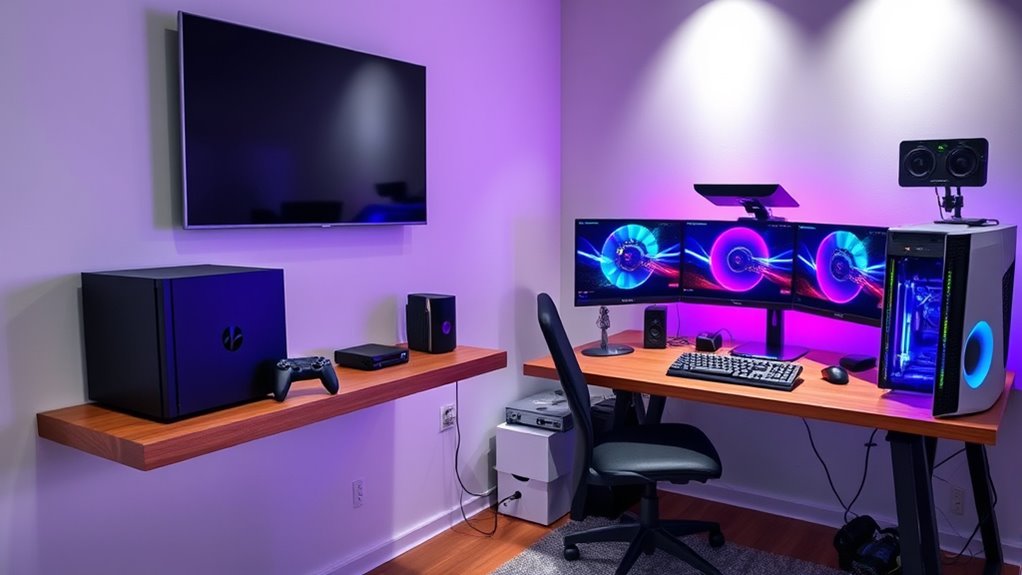
Your gaming space can considerably impact your experience. Consoles usually need less room and are easier to set up, making them ideal for smaller areas. PCs often require more space and a more complex setup, which can be a challenge in tight spots.
Space Efficiency
Compared to a gaming PC, a console generally requires less space and a simpler setup. Consoles are designed to fit easily into various environments, making them ideal if you have limited room. Here’s how they save space:
- Compact size: Consoles are smaller and more streamlined than most gaming PCs.
- Minimal accessories: You only need a TV or monitor, not multiple peripherals.
- No dedicated desk needed: You can place a console on a shelf or entertainment center.
- Easy storage: Consoles are portable, so you can stow them away when not in use.
This simplicity allows you to enjoy gaming without cluttering your space or needing elaborate setups, making consoles a practical choice if space is at a premium.
Setup Complexity
Consoles are designed for quick and straightforward setup, making them appealing if you want minimal hassle. You simply connect the power, HDMI cable, and possibly an internet connection, then you’re ready to play. PCs, on the other hand, often require more planning—assembling components, managing cables, and ensuring compatibility. This setup can be time-consuming and complex, especially for beginners.
| Aspect | Console | PC |
|---|---|---|
| Setup Time | Minutes | Hours |
| Hardware Assembly | No | Yes |
| Space Requirements | Minimal | More space needed |
| Cable Management | Simple | Can be complex |
| Customization | Limited | Extensive |
Personal Preferences and Gaming Style
Personal preferences and gaming style play a significant role in determining whether a console or PC is the better choice for you. Think about what suits your gameplay habits and comfort. For example, if you prefer quick, casual gaming sessions, a console’s simplicity might appeal to you. If you enjoy customization and high-performance gaming, a PC could be more fitting. Consider these factors:
Your gaming preferences and habits help determine if a console or PC suits you best.
- Game Library – Do you favor exclusive console titles or PC mods and indie games?
- Control Preference – Do you prefer a controller or keyboard and mouse?
- Gaming Duration – Are you into quick sessions or long, immersive play?
- Social Gaming – Do you play mainly online multiplayer or solo campaigns?
Your style and preferences will guide you toward the right choice.
Frequently Asked Questions
Which Platform Offers Better Virtual Reality Experiences?
You’ll find that PC gaming generally offers better virtual reality experiences due to its higher processing power and customizable hardware. With a gaming PC, you can access a wider range of VR headsets and enjoy sharper graphics, smoother gameplay, and more immersive environments. Consoles are catching up, but they typically have limited VR options and less flexibility. If VR is your priority, a powerful PC gives you the best, most versatile experience.
How Do Console and PC Gaming Impact Eye Health?
You might notice eye strain after long gaming sessions, whether on console or PC. For example, a gamer reported headaches and blurred vision after extended PC use. To protect your eyes, take regular breaks, follow the 20-20-20 rule (look at something 20 feet away for 20 seconds), and adjust screen brightness. Both platforms can impact eye health, but mindful habits help minimize discomfort and keep your vision clear.
Are There Exclusive Controllers or Accessories for Each Platform?
Yes, there are exclusive controllers and accessories for each platform. For consoles, you get controllers specifically designed for that system, like the DualShock for PlayStation or Xbox controllers for Xbox. PC gamers often use standard controllers, but you can also find specialized options like racing wheels or flight sticks. These accessories enhance gameplay and are often optimized for their respective platforms, giving you more immersive and precise control.
What Are the Environmental Impacts of Gaming Consoles Versus PCS?
Think of your gaming setup like a hero’s journey—each choice leaves an impact. Consoles generally consume less energy than high-performance PCs, making them more eco-friendly. PCs, especially powerful ones, require more resources to build and maintain. If you want to minimize your environmental footprint, opt for a console or choose energy-efficient components for your PC. Your gaming habits can turn you into an eco-warrior, one game at a time.
How Do Hardware Failures Differ Between Consoles and PCS?
You’ll find that hardware failures differ because consoles are designed for simplicity and durability, making them less prone to issues but harder to repair. PCs, on the other hand, have more complex hardware components that can fail more often due to overheating, power surges, or component wear. While PCs offer easier upgrades, they also require more maintenance and troubleshooting, whereas consoles tend to have fewer parts that can break down.
Conclusion
So, which is right for you—console or PC gaming? Think about your budget, the types of games you love, and how much tinkering you enjoy. Do you prefer plug-and-play convenience or endless customization? Ultimately, it’s about what fits your gaming style and lifestyle. After all, isn’t the real goal to have fun and enjoy your gaming adventures, no matter which platform you choose?