
For students who want a second screen without hauling a desktop monitor between dorm and library, a portable monitor is one of the cheapest productivity upgrades available. After comparing 15 popular models, the ASUS ZenScreen MB16ACE stands out as the best overall pick thanks to its trusted brand reliability and dependable single-cable USB-C operation. Budget shoppers should look at the KYY 15.6″ FHD, which delivers a sharp 1080P panel and a protective cover at one of the lowest prices here, while the ARZOPA 16.1″ 144Hz makes sense for students who split time between essays and gaming. The main tradeoff in this category is price versus polish: generic 15.6″ models under $120 offer great value but weaker stands and speakers, while name-brand options cost more but last through four years of backpack abuse. Keep reading for the full breakdown of which monitor fits your budget, laptop, and coursework.

Get the latest gadgets delivered free with Prime
- Fast, free delivery on millions of items
- Prime Video, Amazon Music and more included
- Member-only deals all year
Complete the kit



Key Takeaways
- Most 15.6” budget models (Anyuse, Yxk, ForHelp, MNN) share nearly identical 1080P IPS panels, so the real differences come down to stand design, included accessories, and warranty support.
- The ASUS ZenScreen MB16ACE earns the top spot because brand reliability and driver support matter more than raw specs when a monitor has to survive a full semester in a backpack.
- The ARZOPA 16.1″ is the only high-refresh option in the lineup, making it the clear pick for students who game, but its higher price is wasted on note-taking and document work.
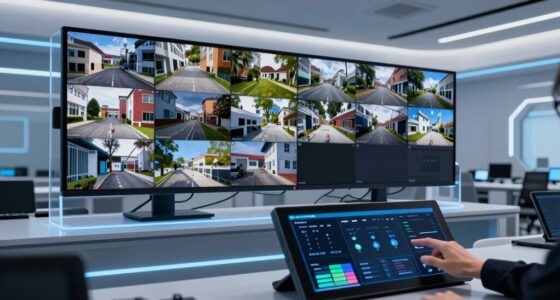
- The dual and triple screen extenders (products 8 and 12) solve a different problem than single portable monitors — they turn one laptop into a multi-display workstation, but only work with specific laptop sizes.
- VESA mountability (Yxk, Cocopar) is an underrated feature for students, since it lets you attach the monitor to a dorm desk arm and reclaim workspace that flimsy folding stands eat up.




| portable portable monitors for student | Resolution | Weight | Display Size | Panel Type |
|---|---|---|---|---|
| Anyuse 15.6" FHD IPS USB-C HDM | 1920×1080 (FHD) | 1.37 lbs | — | IPS, 178° viewing angle |
| Yxk 15.6 Inch Portable Monitor | 1920×1080 Full HD | 1.43 lbs | 15.6 inches | IPS, HDR |
| 15.6 Inch FHD Portable Monitor | 1920×1080 FHD | 1.4 lbs | 15.6 inches | IPS, anti-glare |
| ASUS ZenScreen 15.6" 1080P Por | 1920 x 1080 | — | 15.6 inches | — |
| VILVA 15.6" FHD IPS USB-C HDMI | 1920 x 1080 | — | 15.6 inches | — |
| Cocopar 15.6 Inch Portable Mon | 1920×1080 (FHD) | 2.4 lbs | 15.6 inches | — |
| ForHelp 15.6-inch Portable Mon | 1920×1080 | 1.52 lbs | 15.6 inches | IPS (matte) |
| Laptop Screen Extender 14-17.3 | — | 1.87 lbs | — | — |
| KYY Portable Monitor 15.6" 108 | 1920×1080 (FHD) | 1.7 lbs | 15.6 inches | — |
| InnoView 15.6" Portable Monito | 1080P | 1.5 pounds | — | — |
| ARZOPA 16.1” Portable Gaming | 1920 x 1080 | 1.42 kg | 16.1 inches | — |
| 15.6" Laptop Screen Extender | 1920 x 1080 per panel | 3.9 lbs | — | LED IPS |
| KYY 15.6” FHD Portable Monito | 1920 x 1080 | 1.7 lbs | 15.6 inches | IPS |
| InnoView Portable Monitor 15.6 | 1920 x 1080 | — | 15.6 inches | IPS |
| MNN 15.6-Inch FHD Portable Mon | 1920 x 1080 | — | — | IPS (glossy) |
More Details on Our Top Picks
Anyuse 15.6″ FHD IPS USB-C HDMI Portable Monitor
The Anyuse 15.6-inch earns the top spot because it nails the balance students actually care about: price-to-weight ratio and reliable plug-and-play setup. At 1.37 lbs, it is lighter than both the Yxk (1.43 lbs) and the VILVA, which matters when it lives in a backpack next to textbooks. The HDR-capable IPS panel handles lecture slides, PDFs, and streaming without complaint, and the blue light filter makes late-night study sessions easier on the eyes. Compared with the generic FHD monitor later in this list, the Anyuse adds HDR at a similar weight. The tradeoff is real, though: no built-in battery, and full USB-C functionality requires Thunderbolt 3.0/4.0 or DP Alt Mode support — older budget laptops may need an adapter.
Pros:- Ultra-light at 1.37 lbs — one of the easiest to carry daily
- HDR support and blue light filter for comfortable long study sessions
- Versatile connectivity with dual USB-C and Mini HDMI
- Plug-and-play setup with laptops, consoles, and phones
Cons:- Requires Thunderbolt 3.0/4.0 or USB 3.1 DP Alt Mode for USB-C use
- No built-in battery — always tethered to a power source
- Built-in speakers are mediocre for media
Best for: Students who want a dependable, lightweight second screen for note-taking and research on a modern USB-C laptop
Not ideal for: Owners of older laptops without DP Alt Mode over USB-C, since they will need extra adapters and cables
- Screen Size:15.6 inches
- Resolution:1920×1080 (FHD)
- Panel Type:IPS, 178° viewing angle
- HDR:Yes
- Weight:1.37 lbs
- Ports:2x USB-C, 1x Mini HDMI
- Blue Light Filter:Yes
- Speakers:Built-in
Our verdict“If you want the best all-around student monitor at a student-friendly price, this is the safest pick in the lineup.”
Yxk 15.6 Inch Portable Monitor with 1080P HDR IPS Screen
What separates the Yxk from cheaper generics like the ForHelp and KYY models is the integrated VESA kickstand. Most budget monitors force you to prop the screen against a water bottle or fuss with a folio cover; here, the stand is built in, which makes library desks and café tables far less awkward. The HDR IPS panel is on par with the Anyuse in image quality, and dual speakers are serviceable for lecture recordings. Compared with the Anyuse, you give up a bit of portability (0.31-inch thickness versus a slimmer chassis) and gain a more stable setup experience. The catch: like nearly everything at this price, full USB-C function requires DP Alt Mode, and there is no touchscreen — something only the ASUS in this group partially addresses with auto-rotation.
Pros:- Built-in VESA kickstand eliminates the need for a folio or improvised stand
- HDR IPS display matches pricier models in this roundup
- Dual USB-C plus HDMI covers laptops, consoles, and phones
- Under 1.5 lbs and slim enough for most laptop sleeves
Cons:- Requires Thunderbolt 3.0/4.0 or DP Alt Mode for full USB-C functionality
- No touchscreen functionality
- Kickstand adds thickness compared to slimmer rivals like the Anyuse
Best for: Budget-conscious students who want a self-standing monitor without buying a separate case or stand
Not ideal for: Anyone wanting a touchscreen or planning to use a laptop without DP Alt Mode USB-C ports
- Display Size:15.6 inches
- Resolution:1920×1080 Full HD
- Refresh Rate:60Hz
- Panel Type:IPS, HDR
- Weight:1.43 lbs
- Thickness:0.31 inch
- Ports:2x USB-C, 1x Mini HDMI
- VESA Compatible:Yes
Our verdict“The smart buy for students who value a stable, ready-to-use stand over shaving every last ounce.”
15.6 Inch FHD Portable Monitor with IPS Screen and USB-C
This unbranded FHD monitor earns its place for one spec most budget rivals quietly omit: 300 nits of brightness. In a sunlit dorm or a coffee shop by the window, that advantage matters more than HDR — the Anyuse and Yxk panels will wash out where this one stays readable. The anti-glare coating doubles down on that strength, matching the ASUS ZenScreen’s matte finish at a lower price. Where it falls behind: the 1W dual speakers are barely audible in shared spaces, and the 60Hz refresh rate makes it a poor companion next to the ARZOPA 144Hz if gaming is the priority. At 0.43 inches thick, it is also the chunkiest of the budget picks here, so it belongs in a bag, not a slim sleeve.
Pros:- 300-nit brightness outshines most budget rivals for sunny rooms
- Anti-glare matte coating reduces reflections during long sessions
- VESA 75x75mm mount plus 3.5mm audio jack add flexibility
- Wide USB-C and HDMI device compatibility
Cons:- 60Hz refresh rate is weak for gaming compared to the ARZOPA 144Hz
- Dual 1W speakers lack volume for media
- Thickest chassis of the budget picks at 0.43 inches
Best for: Students who study in bright, glare-prone environments and prioritize screen readability over extras
Not ideal for: Gaming-focused students or anyone who wants usable built-in audio without headphones
- Display Size:15.6 inches
- Resolution:1920×1080 FHD
- Brightness:300 nits
- Refresh Rate:60Hz
- Panel Type:IPS, anti-glare
- Weight:1.4 lbs
- VESA Mount:75x75mm
- Audio:Dual 1W speakers, 3.5mm jack
Our verdict“Choose this over glossier budget panels if daylight glare is your everyday enemy.”
ASUS ZenScreen 15.6″ 1080P Portable USB Monitor (MB16ACE)
The ASUS ZenScreen MB16ACE is the name-brand option here, and that brand carries real weight: a 3-year warranty and polished firmware that the Anyuse, Yxk, and VILVA cannot match. For a student planning to use a monitor across multiple laptops and four years of coursework, that support network justifies the higher price. The auto-rotation feature switches orientation automatically when you turn the screen portrait for reading journal articles — a genuine productivity perk no budget model in this roundup offers. The foldable smart case doubles as a stand, though the Yxk’s built-in kickstand is sturdier on wobbly desks. Tradeoffs are clear: USB-C/USB-A only means no HDMI for consoles, and you pay a premium for the same 1080p resolution the cheaper picks deliver.
Pros:- 3-year warranty and ASUS support far exceed budget-brand coverage
- Auto-rotation makes portrait-mode document reading seamless
- Foldable smart case protects the panel and works as a stand
- Eye Care technology reduces flicker and blue light
Cons:- USB-C/USB-A only — no HDMI port for consoles or older devices
- Noticeably more expensive than equally sharp 1080p budget rivals
- Smart-case stand is less stable than the Yxk’s built-in kickstand
Best for: Students who want long-term reliability, a 3-year warranty, and portrait-mode reading for research papers
Not ideal for: Students on a tight budget or those wanting to connect a PS5, Xbox, or Switch, since there is no HDMI input
- Display Size:15.6 inches
- Resolution:1920 x 1080
- Display Type:IPS, anti-glare
- Connectivity:USB Type-C, USB Type-A
- Features:Auto-rotation, Eye Care
- Design:Ultra-slim with foldable smart case
- Warranty:3 years
Our verdict“Worth the premium if you want a monitor that outlasts your degree — skip it if price or console connectivity rules your decision.”
VILVA 15.6″ FHD IPS USB-C HDMI Portable Monitor
Most monitors in this price range arrive as plastic slabs; the VILVA stands out with a metal chassis and a magnetic leather smart cover that feels closer to a premium tablet accessory than a budget screen. For a student whose backpack gets tossed around daily, that durability argument is compelling — the Anyuse is lighter, but it also feels lighter-built. Connectivity is generous, covering laptops, tablets, phones, and consoles over USB-C or HDMI, which gives it an edge over the ASUS MB16ACE and its missing HDMI port. The tradeoffs: no documented adjustable stand or tilt mechanism beyond the cover, no brightness figure published, and no battery. If you want flexibility in positioning, the Yxk’s kickstand is the better answer.
Pros:- Metal construction is noticeably more durable than plastic budget rivals
- Magnetic leather smart cover protects the screen and doubles as a stand
- Broad USB-C and HDMI compatibility including consoles
- Sharp FHD IPS panel comparable to pricier picks
Cons:- No dedicated adjustable stand or tilt options beyond the cover
- No built-in battery and no published brightness rating
- Heavier feel than ultra-light options like the Anyuse
Best for: Students with rough commutes who want a sturdy, well-finished screen that survives backpack abuse
Not ideal for: Students who need adjustable tilt angles or detailed brightness specs before buying
- Display Size:15.6 inches
- Resolution:1920 x 1080
- Display Type:IPS
- Connectivity:USB-C, HDMI
- Speakers:Built-in
- Material:Metal chassis
- Smart Cover:Magnetic leather
Our verdict“The right choice when survivability matters more than shaving ounces or tilt flexibility.”
Cocopar 15.6 Inch Portable Monitor with 1080P FHD Display, HDMI & USB-C, VESA Mountable, with Cover Stand
Most portable monitors in this roundup are designed to lean against a laptop, but the Cocopar 15.6-inch stands apart because of its VESA mount compatibility. For a student living in a dorm, that means you can bolt this to a cheap monitor arm and turn it into a semi-permanent second screen that frees up desk space — something the KYY and InnoView models simply can’t do. The 85% sRGB coverage is modest next to dedicated color-accurate panels, but it’s perfectly fine for lecture slides, note-taking, and streaming. Its 2.4 lb weight makes it the heaviest pick here, which is the real cost of the VESA option. Compared with the featherweight ForHelp at 1.52 lbs, this is a screen you’ll set up once and leave, rather than toss in a backpack daily.
Pros:- VESA mount support allows arm or wall mounting for a permanent desk setup
- USB-C, HDMI, and 3.5mm audio connectivity covers nearly every device a student owns
- IPS panel with 178° viewing angles works well for group study sessions
- Included cover stand protects the screen in transit
Cons:- Heaviest model in this batch, less suited to constant travel
- 60Hz refresh rate and 85% sRGB make it a poor fit for competitive gaming or color work
- Requires Thunderbolt 3/4 or USB 3.1 for full single-cable operation
Best for: Dorm residents who want a flexible, arm-mounted second display that doubles as a travel screen
Not ideal for: Students commuting daily with a full backpack — at 2.4 lbs it’s noticeably heavier than slimmer rivals
- Display Size:15.6 inches
- Resolution:1920×1080 (FHD)
- Refresh Rate:60Hz
- Color Gamut:85% sRGB
- Weight:2.4 lbs
- Connectivity:USB-C, HDMI, 3.5mm Audio
- VESA Mountable:Yes
Our verdict“Buy this if you want a dorm-first monitor that can be mounted on an arm; skip it if your monitor lives in a backpack rather than on a desk.”
ForHelp 15.6-inch Portable Monitor, 1080P USB-C HDMI External Display for Laptop, PC, Mac, Phone, PS, Xbox, Switch, IPS Ultra-Thin Gaming Screen with Smart Cover
When the priority is carrying weight, the ForHelp 15.6-inch wins this batch outright at 1.52 lbs and just 0.3 inches thick. That’s nearly a pound lighter than the Cocopar, and even lighter than the already-slim KYY at 1.7 lbs — a difference you’ll feel walking across campus every day. The matte IPS finish is the other standout: unlike the glossier panels on most competitors here, it cuts glare from library lighting and sunny windows, which matters more for reading PDFs than any spec sheet suggests. The tradeoff is that there’s no VESA mounting and no advanced HDR, so it’s less versatile at a desk than the Cocopar. Console support for Switch and Xbox makes it a genuine dorm-room hybrid, provided your laptop has a USB-C port with DP Alt-Mode.
Pros:- Lightest monitor in this batch at 1.52 lbs
- Matte screen reduces glare in bright libraries and classrooms
- Works with laptops, phones, and gaming consoles including Switch and Xbox
- PU leather smart cover doubles as a protective stand
Cons:- No VESA mounting or HDR support limits desk versatility
- Mini HDMI port placement makes cable management awkward
- Requires Thunderbolt 3/4 or USB 3.1 DP Alt-Mode for single-cable use
Best for: Commuting students who carry their monitor daily and need the lightest possible screen with anti-glare
Not ideal for: Students without USB-C DP Alt-Mode ports — you’ll be juggling adapters and careful HDMI cable routing
- Display Size:15.6 inches
- Resolution:1920×1080
- Panel Type:IPS (matte)
- Weight:1.52 lbs
- Thickness:0.3 inches
- Ports:2 USB-C, 1 Mini HDMI
- Built-in Speakers:Yes
Our verdict“The pick for students who judge a monitor by what it adds to their backpack weight — nothing else here travels lighter.”
Laptop Screen Extender 14-17.3 inch FHD Dual Portable Monitor, Ultra-Portable & Slim
Every other monitor in this batch is a freestanding screen; this one is built to clamp onto your laptop and extend it into a dual-display workstation. For a student juggling lecture slides on one screen and notes on the other, that form factor is genuinely transformative — the ForHelp and InnoView both require a separate stand and table space, while this attaches directly and moves with your laptop. The 300-nit brightness is competitive with the KYY, and the 226° hinge adjustment lets you angle the second screen toward a study partner. The catches are real, though: it only fits laptops between 14 and 17.3 inches, and with no built-in battery it draws power straight from your machine, so expect shorter unplugged runtime. If your laptop lacks USB-C, you’ll be carrying a tangle of USB-A and HDMI cables to compensate.
Pros:- Mounts directly to the laptop for a true dual-screen setup without table space
- Plug-and-play with no drivers required
- 300-nit 1080P IPS panel with a wide 226° viewing range
- Compatible with Windows, macOS, ChromeOS, Linux, and Android
Cons:- Only fits laptops between 14 and 17.3 inches
- No built-in battery — it reduces the host laptop’s unplugged runtime
- Needs multiple cables if USB-C isn’t available
Best for: Students who take notes while reading slides or research and want a true dual-screen laptop setup anywhere
Not ideal for: Students with laptops under 14 inches, or anyone who needs long battery runtime — it drains the host laptop
- Compatible Laptop Size:14–17.3 inches
- Display Resolution:1080P FHD
- Brightness:300 nits
- Viewing Angles:226°
- Weight:1.87 lbs
- Compatibility:Windows, macOS, ChromeOS, Linux, Android
Our verdict“The right choice if your workload is constant side-by-side multitasking; the wrong one if you want a standalone screen you can also use with a phone or console.”
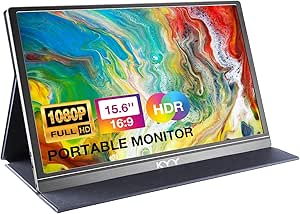
KYY Portable Monitor 15.6″ 1080P Computer Screen Extender with Cover
The KYY 15.6-inch earns the all-rounder slot because it hits the balance point the others tip past: at 1.7 lbs it’s lighter than the Cocopar but sturdier-feeling than the ultra-thin ForHelp, and its 300 cd brightness with HDR is a step up from the Cocopar’s 280 cd/m² for late-night study sessions in dim rooms. Built-in speakers mean one less accessory in the bag, which the laptop-mounted extender can’t claim. Its 1000:1 contrast is respectable for reading and video, though not a match for the InnoView’s 1200:1 if image depth is your priority. The honest drawback is power draw: at 12 watts it consumes double the Cocopar’s 6 watts, so students running it off a laptop battery will notice the drain faster. Still, for a single screen that travels well, connects to everything, and doesn’t cost a premium, this is the safest default in the batch.
Pros:- 300 cd brightness with HDR beats dimmer rivals like the Cocopar
- Built-in speakers eliminate the need for extra accessories
- Lightweight 1.7 lb ultra-slim frame with a smart cover stand
- Broad connectivity including USB-C, HDMI, and Thunderbolt
Cons:- 12-watt power consumption drains laptop batteries quickly
- 60Hz refresh rate rules out competitive gaming
- Needs Thunderbolt 3 or USB-C support for single-cable operation
Best for: Students who want one dependable screen for lectures, the library, and dorm gaming without overspending
Not ideal for: Battery-conscious users running purely off a laptop — its 12-watt draw drains the host device faster than rivals
- Display Size:15.6 inches
- Resolution:1920×1080 (FHD)
- Brightness:300 cd/m²
- Contrast Ratio:1000:1
- Refresh Rate:60Hz
- Weight:1.7 lbs
- Connectivity:HDMI, USB Type-C, Thunderbolt, 3.5mm Audio
Our verdict“The default recommendation for most students — bright, complete, and portable — unless unplugged runtime is your top concern.”
InnoView 15.6″ Portable Monitor with 1080P Resolution, Adjustable Stand, and Protective Sleeve
Where the InnoView 15.6-inch justifies its place is eye comfort: its low blue light mode and 1200:1 contrast ratio — the highest in this batch — make it the screen to pick when you’re staring at readings for hours. The KYY matches its portability at a similar weight, but the InnoView pairs that with a genuinely useful adjustable stand rather than relying solely on a folding cover, so you can tilt it to a comfortable neck angle at a desk. The protective sleeve is a nicer travel solution than the bare panels some brands ship. Its weakness is power finickiness: if the connected device can’t deliver enough juice, you’ll see flickering and need a separate 15W+ adapter, which adds bulk the ForHelp avoids. For students whose screen time is measured in marathon library days rather than quick sessions, that trade is worth making.
Pros:- Low blue light technology reduces eye strain during extended study sessions
- 1200:1 contrast ratio is the best in this batch for text and image depth
- Built-in adjustable stand allows proper ergonomic tilt at a desk
- Protective sleeve and 1.5 lb weight make it easy to carry daily
Cons:- Can flicker without an external 15W+ power adapter on weaker ports
- Full functionality requires Thunderbolt 3/4 or USB 3.1 with DP Alt-Mode
- Stand and sleeve add accessories to keep track of
Best for: Students who spend long hours reading and writing and prioritize eye comfort and ergonomic positioning
Not ideal for: Minimalist packers — the external power adapter you may need to carry undermines its portability
- Screen Size:15.6 inches
- Resolution:1080P
- Contrast Ratio:1200:1
- Display Technology:IPS
- Weight:1.5 pounds
- Ports:2 USB-C, 1 HDMI
Our verdict“Choose this over the KYY if long reading sessions and comfortable viewing angles matter more than absolute simplicity.”
ARZOPA 16.1” Portable Gaming Monitor with 144Hz Refresh Rate and 106% sRGB
Among all the 60Hz options in this roundup, the ARZOPA 16.1-inch stands apart with a 144Hz refresh rate and 1 ms response time, making it the only pick here that makes sense for students who game seriously. Compared with the MNN 15.6-inch, which shares the IPS panel style but caps at 60Hz, this model delivers visibly smoother motion for fast-paced titles like Valorant or Rocket League. The 106% sRGB gamut also gives it a color advantage over the KYY, which matters for design coursework. The tradeoffs are real: no adaptive sync means occasional screen tearing, there are no built-in speakers, and 1080p is the ceiling. At 1.42 kg it is also slightly heavier than slimmer 15.6-inch rivals.
Pros:- 144Hz refresh rate for smooth gaming and scrolling
- 106% sRGB coverage suits design and media work
- Adjustable kickstand built in, no flimsy folio needed
- Both USB-C and HDMI connectivity
Cons:- No adaptive sync or FreeSync support
- No built-in speakers
- Slightly heavier than competing 15.6-inch models
Best for: Students who split time between study sessions and competitive gaming and want one screen for both
Not ideal for: Battery-life-focused students — 144Hz draws more power and the lack of speakers means carrying extra accessories
- Display Size:16.1 inches
- Resolution:1920 x 1080
- Refresh Rate:144Hz
- Color Gamut:106% sRGB
- Response Time:1 ms
- Ports:1 HDMI, 2 USB Type-C
- Weight:1.42 kg
Our verdict“This pick makes the most sense for students who want a dorm-room gaming screen that still handles lecture notes and design projects.”
15.6″ Laptop Screen Extender – Ultra-Thin & Light, Triple Portable Monitor 1080P FHD IPS
This option stands out for a completely different reason than every other pick here: instead of one extra screen, it adds two FHD panels at once, turning a laptop into a three-display workstation. Where the KYY 15.6-inch gives you a single companion display, this extender is built for students living in research papers, spreadsheets, and reference documents side by side. The free-standing aluminum alloy frame sets up without tools, and plug-and-play connectivity keeps cable clutter manageable. The compromises are worth understanding before buying: at 3.9 lbs it is far heavier than a solo monitor, it only fits laptops between 13 and 17.3 inches, and older MacBooks may need extra cables. There is no touch support either.
Pros:- Two extra FHD screens create a full triple-display workspace
- Wide 178-degree IPS viewing angles on both panels
- Tool-free, free-standing aluminum design
- Works across multiple operating systems and display modes
Cons:- Heaviest option in this lineup at 3.9 lbs
- Laptop size restricted to 13–17.3 inch range
- Older MacBooks may require additional cables
Best for: Graduate students and coders who need three screens of reference material wherever they work
Not ideal for: Students who carry everything in a backpack all day — the dual-panel frame adds noticeable bulk and weight
- Screen Size:2 x 15.6 inches
- Resolution:1920 x 1080 per panel
- Panel Type:LED IPS
- Refresh Rate:60Hz
- Brightness:280 nits
- Ports:1 HDMI, 2 USB-C
- Weight:3.9 lbs
Our verdict“This model is better suited to students whose coursework demands serious multitasking than anyone who just wants a simple second screen.”
KYY 15.6” FHD Portable Monitor with USB-C & HDMI
The KYY 15.6-inch earns its place by being the most complete package for a first-time buyer: smart cover, screen protector, and all the cables you need come in the box. Compared with the InnoView, which leaves out a power cable for HDMI connections, KYY spares students the frustration of discovering missing accessories on move-in day. It is also the only pick here with built-in speakers and a 3.5mm audio jack, which the ARZOPA lacks entirely — handy for dorm movie nights when headphones are not an option. The tradeoff is performance: a 60Hz panel with 1000:1 contrast means gamers should look at the ARZOPA instead, and the bundled speakers are serviceable rather than impressive.
Pros:- Complete accessory bundle including cover, protector, and cables
- Built-in speakers plus 3.5mm audio input
- Very light at 1.7 lbs with 0.3-inch thickness
- Wide device compatibility via USB-C and mini-HDMI
Cons:- 60Hz refresh rate limits fast-paced gaming
- Speakers are basic and will not satisfy music lovers
- Full connectivity requires multiple cables
Best for: First-year students who want everything included and a single screen that handles notes, streaming, and console gaming
Not ideal for: Competitive gamers — the 60Hz refresh rate and modest contrast fall short of the ARZOPA’s 144Hz panel
- Display Size:15.6 inches
- Resolution:1920 x 1080
- Panel Type:IPS
- Refresh Rate:60Hz
- Ports:2 USB-C, Mini-HDMI, 3.5mm audio
- Weight:1.7 lbs
- Thickness:0.3 inch
- Speakers:Built-in
Our verdict“This pick makes the most sense for students who value an unbox-and-go experience over cutting-edge specs.”
InnoView Portable Monitor 15.6 Inch FHD 1080P HDMI USB-C External Display
Where most picks in this lineup compete on raw specs, the InnoView 15.6-inch differentiates itself through comfort features: HDR support, a low blue light mode, and eye protection settings that matter during all-nighters. It also supports both landscape and portrait orientation, something the KYY does not emphasize — portrait mode is genuinely useful for reading long PDFs or writing code. The PU leather cover doubles as a stand, and USB-C power pass-through means one port can handle both video and charging on capable laptops. The drawbacks deserve attention: HDMI connections need your own power cable, it only works with Thunderbolt 3/4 or USB 3.1 DP Alt-Mode devices, and inconsistent power output can cause flickering on some laptops.
Pros:- Low blue light and HDR modes reduce eye fatigue
- Portrait and landscape orientation support
- Power pass-through keeps laptop charged over one cable
- Protective cover doubles as a adjustable stand
Cons:- No external power cable included for HDMI use
- Requires Thunderbolt 3/4 or USB 3.1 DP Alt-Mode support
- Can flicker if the source device’s power output varies
Best for: Students who spend long hours reading and writing and want portrait mode plus reduced eye strain
Not ideal for: Owners of older laptops without USB-C DP Alt-Mode — connectivity becomes a cable-management headache
- Display Size:15.6 inches
- Resolution:1920 x 1080
- Panel Type:IPS
- Viewing Angle:178 degrees
- Connectivity:2 USB-C, 1 HDMI
- Features:HDR, low blue light, landscape/portrait modes
- Material:PU leather cover
Our verdict“This option stands out for study-heavy students who read more than they game — check your laptop’s port specs first.”
MNN 15.6-Inch FHD Portable Monitor with USB-C & HDMI, IPS HDR for Gaming and Work
The MNN 15.6-inch lands as the value pick — it covers the fundamentals well without the premium pricing of an ASUS ZenScreen. Its glossy IPS panel with HDR support produces punchier, more vibrant visuals than the matte KYY, which students who watch a lot of video will notice immediately. Dual USB-C ports plus HDMI give it the same flexible connectivity as pricier rivals, and the included smart cover doubles as a stand to keep the carry weight down. Compared with the ARZOPA, the gap is speed: 60Hz versus 144Hz, so fast gaming is off the table. HDR support also depends on the connected device, and like the InnoView it needs Thunderbolt 3 or USB 3.1 DP Alt-Mode to work over a single cable.
Pros:- Glossy IPS panel with HDR for vibrant video playback
- Dual USB-C and HDMI connectivity matches pricier rivals
- Very light and travel-friendly with smart cover stand
- Supports multiple display modes
Cons:- 60Hz refresh rate limits fast-paced gaming
- Requires Thunderbolt 3 or USB 3.1 DP Alt-Mode support
- HDR may not activate on all devices
Best for: Budget-conscious students who want vivid visuals for streaming and everyday productivity at a low price
Not ideal for: Esports-minded students — the 60Hz cap makes the ARZOPA a better investment for fast games
- Screen Size:15.6 inches
- Resolution:1920 x 1080
- Refresh Rate:60Hz
- Panel Type:IPS (glossy)
- HDR:Supported
- Connectivity:2 USB-C, HDMI
- Included Accessories:Smart cover
Our verdict“This pick makes the most sense for students who want the biggest visual payoff per dollar and do not care about high refresh rates.”

How We Picked
My ranking logic centers on what actually matters to a student: price, portability, stand quality, connectivity, and durability. Every model here has a 1080P-class panel, so I weighted the factors that separate them in daily use — whether the included cover or kickstand survives backpack travel, whether a single USB-C cable handles both power and video, and whether the brand offers real warranty support when a generic panel fails mid-semester. Connectivity was a hard filter: a monitor without both USB-C and HDMI limits compatibility with older laptops, projectors, and dorm consoles.
I also considered the total cost of ownership, not just sticker price. A cheap monitor that requires buying a separate case, stand, or USB-C power adapter often costs more than a mid-range pick with everything included. Finally, I separated single-screen portable monitors from the laptop-mounted dual and triple extenders, because they solve different problems — one adds a travel screen for any device, the other transforms one specific laptop into a workstation. Ranking reflects which model gives the most students the fewest regrets at each price point.
Factors to Consider When Choosing Portable Portable Monitors For Students
Before clicking buy on the cheapest listing, spend a few minutes on the factors below. The differences between a $100 and $200 portable monitor are smaller in panel quality than they are in the details that decide whether the thing survives a semester.Check Your Laptop’s Ports Before Anything Else
The single most common mistake students make is buying a USB-C monitor for a laptop whose USB-C port doesn’t carry video. A full-featured USB-C port with DisplayPort Alt Mode lets one cable handle power and display, which is the whole point of portability. If your laptop only has USB-A and HDMI — common on older machines — you’ll need the HDMI input plus a separate USB cable for touch or power, which tangles fast in a library booth. Check your laptop’s spec sheet for “DP Alt Mode” or a display icon next to the port. And if you own a phone or tablet you want to mirror, confirm the monitor supports that device’s specific USB-C output, because not all of them do.
The Stand Decides Your Desk Experience
Panel specs get all the attention, but the stand or smart cover is what you interact with every day. Folding folio covers are the default on budget models, and many of them sag after a few months of use or only hold the screen at one or two angles. A built-in kickstand, like on the Yxk or InnoView adjustable-stand models, is more stable on wobbly library tables. VESA mounting holes are the hidden upgrade: paired with a cheap desk arm, they free up desk space and let you position the second screen at eye level, which matters during long study sessions. If your desk is tiny, prioritize a monitor that stands on its own without leaning against your laptop.
Panel Specs: Where to Spend and Where to Save
Nearly every monitor in this price range uses a 15.6″ 1080P IPS panel, and honestly, they look more alike than different for document work, slides, and web research. Paying more gets you better brightness, color accuracy, or refresh rate — but a 144Hz panel like the ARZOPA only pays off for gaming and fast-motion content. For pure study use, 1920×1080 at 60Hz is plenty, and spending the savings on a better stand or a protective sleeve delivers more day-to-day value. The exception is HDR claims: budget monitors advertise HDR but lack the brightness to show it meaningfully, so don’t pay extra for that label alone.
Weight, Size, and the Backpack Test
A monitor that stays in your dorm because it’s annoying to carry provides zero benefit. Most 15.6″ models land between 1.5 and 2 pounds without their covers, but the cover can add another half pound — and the dual and triple screen extenders weigh considerably more since they clamp onto your laptop lid. If you walk across campus daily, aim for under two pounds total and confirm a sleeve or case is included, because a bare panel in a backpack is a cracked panel waiting to happen. Also check the monitor’s dimensions against your laptop bag’s sleeve: some 16.1″ panels like the ARZOPA won’t fit standard 15″ compartments.
Power Delivery and Cable Management
Budget monitors often need two cables: one for video and one for power, which means hunting for an extra outlet or carrying a second adapter. Models with proper USB-C power pass-through simplify this to a single cable from your laptop, at the cost of slightly draining your laptop’s battery faster. If your laptop has weak battery life already, a monitor with its own power input may actually be the better choice for long library days. Check whether a power adapter is included in the box — several budget listings ship without one, which is an annoying surprise. Students with gaming consoles or a Switch should also verify the monitor can pull power from a wall adapter while taking HDMI input, since consoles can’t power a screen over USB.
Single Screen vs. Laptop-Mounted Extender
These are two different products that often get lumped together. A standalone portable monitor works with any laptop, phone, console, or desktop — it’s flexible and you can lend it to a roommate. A dual or triple screen extender physically clamps to your laptop’s lid and only fits specific laptop sizes (usually 13–17.3 inches), but it creates a genuine multi-monitor workstation anywhere. Extenders are heavier, pricier, and strain laptop hinges, so they suit students with a fixed laptop who study in varied locations. If you might upgrade your laptop next year, buy the standalone monitor instead — it won’t be obsolete when your machine changes.
Frequently Asked Questions
Can a cheap $100 portable monitor actually last through college?
Mostly yes, if you treat the panel as fragile and the accessories as disposable. The IPS panels in generic 15.6″ monitors like the Anyuse, ForHelp, and MNN come from the same small pool of manufacturers as name-brand models, so image quality rarely disappoints. What typically fails first is the folding folio cover, which loses stiffness after months of daily folding. Buying a $10 aftermarket sleeve and transporting the monitor separately from textbooks easily doubles its practical lifespan. The real risk with ultra-budget picks is warranty support — if a controller board fails, replacement is often slower and less certain than with ASUS or an established brand.
Do I need a 144Hz portable monitor for schoolwork?
Not for studying — a 60Hz panel displays documents, PDFs, and video calls identically to a 144Hz one. The higher refresh rate in the ARZOPA 16.1″ makes a real difference in competitive games and fast-motion content, where smoother motion reduces blur and input lag. If you play shooters or fighting games regularly between classes, the premium is justified; otherwise you’re paying extra for a benefit you’ll never see in a spreadsheet. A better use of that price difference for most students is a nicer stand, a carrying case, or simply keeping the cash. Buy the refresh rate for your hobby, not your homework.
Why won’t my portable monitor turn on with just one USB-C cable?
Almost always because your laptop’s USB-C port doesn’t support video output — it charges your laptop but doesn’t carry a display signal. This happens on budget laptops that include one full-featured USB-C port and one charge-only port, and it’s the number-one source of bad reviews on these products. Check your laptop’s manual for “DisplayPort Alt Mode” support, and try every USB-C port on the machine. If none support video, use the monitor’s HDMI input for picture plus a USB cable for power, which still works fine — you just carry one extra cable. Phone users hit the same wall: only certain phones output video over USB-C, so verify your model before buying.
Are laptop screen extenders better than a separate portable monitor?
They solve different problems, and the right answer depends on how you study. Extenders like the dual 14–17.3″ model here attach permanently to your laptop and give you two extra screens wherever the laptop goes — great for research-heavy work with sources, notes, and a draft open at once. The downsides are real: they add significant weight, stress your laptop’s hinges, only fit specific laptop sizes, and become useless the day you switch laptops. A standalone monitor is lighter, works with any device including consoles and phones, and survives laptop upgrades. Choose an extender only if you have one laptop you’ll keep for years and genuinely need three screens on the go.
What screen size is best for a student’s second monitor?
15.6 inches is the sweet spot, and that’s why it dominates this list — it matches most laptop screens, fits standard bags, and keeps weight under two pounds. Going smaller than 14 inches saves little money and makes split-screen work cramped. Going larger, like the ARZOPA’s 16.1 inches, is fine at a desk but can outgrow a 15-inch laptop sleeve, so measure your bag first. At 1080P, a 15.6″ panel also hits a comfortable pixel density where text stays sharp without scaling issues on Windows or macOS. Unless you have a specific reason to deviate, stick with the standard size and spend your budget elsewhere.
Conclusion
The right pick here depends less on specs and more on how you study. For best overall, the ASUS ZenScreen MB16ACE justifies its premium with reliable single-cable operation and brand support that will still exist in your senior year. For best value, the KYY 15.6″ FHD with cover bundles the essentials at a price that leaves room in a student budget, with the InnoView adjustable-stand model as a close runner-up if stand flexibility matters more to you. Best for beginners goes to the ForHelp or Anyuse 15.6″ — cheap, plug-and-play, and low-risk if you’re not sure a second screen will stick. Best premium is the ARZOPA 16.1″ 144Hz for the gaming student, while best for specific needs is the laptop-mounted dual/triple extender for anyone who needs a genuine multi-screen workstation on one fixed laptop. Whatever you choose, prioritize the stand, the included accessories, and your laptop’s port compatibility over panel marketing — those details decide whether the monitor becomes a daily tool or a drawer ornament.
Halloween Picks
halloween
As an affiliate, we earn on qualifying purchases.