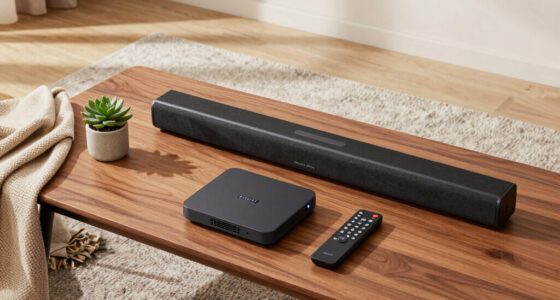
The best soundbar for most people is the Sonos Beam (Gen 2), which balances room-filling sound, Dolby Atmos support, and a compact design. For a more immersive setup, the Sonos Arc Ultra is the premium standout, while the JBL Bar 500 adds a wireless subwoofer for stronger bass without separate rear speakers. The main tradeoffs are space, bass impact, surround effects, connectivity, and how much setup you want to manage. Smaller all-in-one bars are easier to place but cannot match a separate subwoofer for low-end weight. Read on for the full breakdown of which soundbar fits your room, budget, and listening priorities.

Get the latest gadgets delivered free with Prime
- Fast, free delivery on millions of items
- Prime Video, Amazon Music and more included
- Member-only deals all year
Complete the kit



Key Takeaways
- The Sonos Beam (Gen 2) is the most balanced pick: it combines a compact footprint with Dolby Atmos support, though its all-in-one design cannot deliver the physical bass of a subwoofer-equipped system.
- The Sonos Arc Ultra leads for premium immersion: its larger format suits buyers prioritizing expansive TV sound, but its size and premium positioning make it a poor fit for small rooms or simple upgrades.
- Separate subwoofers change the listening experience: the JBL Bar 500 and LG S70TY offer more low-frequency impact than compact all-in-one options, at the cost of extra space and another component.
- Simple dialogue upgrades do not need Atmos: the Bose TV Speaker, Sony HT-S400, and Samsung HW-B400F suit buyers who mainly want clearer TV audio and straightforward operation.
- Wireless Atmos claims do not remove room limitations: placement, ceiling shape, and seating position affect perceived height and surround effects, so a simpler bar can be the smarter fit in an awkward room.
| Samsung S60D 5.0-Channel All-in-One Soundbar with Wireless Dolby Atmos and Built-in Alexa |  | Best All-in-One Soundbar | Channels: 5.0 | Audio technology: Wireless Dolby Atmos | Subwoofer: Built-in | VIEW LATEST PRICE | See Our Full Breakdown |
| JBL Bar 500 5.1-Channel Soundbar with MultiBeam and Dolby Atmos |  | Best for Big, Bass-Heavy Sound | Channels: 5.1 | Total output power: 590 watts | Subwoofer: 10-inch wireless | VIEW LATEST PRICE | See Our Full Breakdown |
| LG S70TY 3.1.1 Channel Soundbar with Wireless Subwoofer |  | Best for LG QNED TV Owners | Channels: 3.1.1 | Audio technologies: Dolby Atmos, DTS, Hi-Res Audio | Subwoofer: Wireless | VIEW LATEST PRICE | See Our Full Breakdown |
| Sony HT-S400 2.1ch Soundbar with Wireless Subwoofer |  | Best Simple Soundbar with a Subwoofer | Channels: 2.1 | Audio technologies: Dolby Digital, S-Force PRO Front Surround | Subwoofer: Wireless | VIEW LATEST PRICE | See Our Full Breakdown |
| Bose TV Speaker Compact Soundbar with Bluetooth and HDMI-ARC, Black |  | Best Compact Dialogue Soundbar | Audio output mode: Stereo | Drivers: Two angled full-range drivers and a center tweeter | Connectivity: Bluetooth, HDMI, optical audio, AUX | VIEW LATEST PRICE | See Our Full Breakdown |
| Samsung HW-B400F 2.0-Channel Soundbar with Built-In Subwoofer |  | Best for Simple TV Upgrades | Audio channels: 2.0 | Audio output mode: Surround | Maximum output power: 40 watts | VIEW LATEST PRICE | See Our Full Breakdown |
| Sony HTS100F 2.0-Channel Compact Soundbar |  | Best Compact Soundbar | Audio channels: 2.0 | Audio output mode: Surround | Connectivity: HDMI ARC, optical, Bluetooth, USB | VIEW LATEST PRICE | See Our Full Breakdown |
| Bose Smart Ultra Dolby Atmos Soundbar with Voice Control |  | Best Premium Spatial Audio | Audio output mode: Dolby Atmos | Transducers: Six, including two upward-firing dipole speakers | Connectivity: Bluetooth, Wi-Fi, HDMI eARC, optical audio | VIEW LATEST PRICE | See Our Full Breakdown |
| Sonos Beam (Gen 2) Soundbar with Dolby Atmos, Black |  | Best for Compact Smart-Home Audio | Audio channels: 2 | Drivers: 5 | Maximum output power: 200 watts | VIEW LATEST PRICE | See Our Full Breakdown |
| Sonos Beam Ultra Dolby Atmos Soundbar, Black |  | Best Advanced Compact Atmos Bar | Audio channels: 7.1.2 | Drivers: 9 | Maximum output power: 50 watts | VIEW LATEST PRICE | See Our Full Breakdown |
| JBL Bar 300MK2 5.0 Channel Soundbar with Dolby Atmos |  | Best Subwoofer-Free Atmos Pick | Audio channels: 5.0 | Maximum output power: 450 W | Speaker size: 37 inches | VIEW LATEST PRICE | See Our Full Breakdown |
| ULTIMEA Poseidon M60 5.1-Channel Dolby Atmos Soundbar System |  | Best Value for a Subwoofer-Included System | Audio channels: 5.1 | Peak power: 300 W | Frequency response: 45 Hz–18 kHz | VIEW LATEST PRICE | See Our Full Breakdown |
| Bose Lifestyle Ultra Soundbar, Wireless Home Soundbar for TV with Dolby Atmos, Surround Sound, Black |  | Best for Connected Streaming and Room Tuning | Audio output mode: Surround | Audio features: Dolby Atmos, TrueSpatial, CustomTune | Connectivity and streaming: HDMI ARC/eARC, Wi-Fi, Bluetooth, AirPlay, Spotify, Google Cast | VIEW LATEST PRICE | See Our Full Breakdown |
| Sonos Arc Ultra Dolby Atmos Soundbar, Black |  | Best Premium Spatial Audio Pick | Audio channels: 9.1.4 | Audio output mode: Surround | Sound technology: Dolby Atmos, Sound Motion | VIEW LATEST PRICE | See Our Full Breakdown |
| Bose TV Speaker (2nd Gen) Compact Soundbar with Bluetooth and HDMI |  | Best Compact Dialogue Upgrade | Audio channels: 3.0 | Connectivity: Bluetooth, HDMI | Controls: Remote | VIEW LATEST PRICE | See Our Full Breakdown |
| soundbar | Connectivity | Audio channels |
|---|---|---|
| Samsung S60D 5.0-Channel All-i | Bluetooth, Wi-Fi | — |
| JBL Bar 500 5.1-Channel Soundb | Wi-Fi, Bluetooth, AirPlay, Alexa Multi-Room Music, Chromecast | — |
| LG S70TY 3.1.1 Channel Soundba | — | — |
| Sony HT-S400 2.1ch Soundbar wi | HDMI ARC, optical, Bluetooth | — |
| Bose TV Speaker Compact Soundb | Bluetooth, HDMI, optical audio, AUX | — |
| Samsung HW-B400F 2.0-Channel S | — | 2.0 |
| Sony HTS100F 2.0-Channel Compa | HDMI ARC, optical, Bluetooth, USB | 2.0 |
| Bose Smart Ultra Dolby Atmos S | Bluetooth, Wi-Fi, HDMI eARC, optical audio | — |
| Sonos Beam | HDMI, Wi-Fi, Ethernet | 2 |
| Sonos Beam Ultra Dolby Atmos S | Bluetooth, HDMI, Wi-Fi | 7.1.2 |
| JBL Bar 300MK2 5.0 Channel Sou | Bluetooth, HDMI eARC, optical, USB, Wi-Fi | 5.0 |
| ULTIMEA Poseidon M60 5.1-Chann | HDMI eARC, optical, Bluetooth 5.4 | 5.1 |
| Bose Lifestyle Ultra Soundbar | — | — |
| Sonos Arc Ultra Dolby Atmos So | HDMI, Wi-Fi, Bluetooth, AirPlay 2, Spotify Connect | 9.1.4 |
| Bose TV Speaker | Bluetooth, HDMI | 3.0 |
More Details on Our Top Picks
Samsung S60D 5.0-Channel All-in-One Soundbar with Wireless Dolby Atmos and Built-in Alexa
The Samsung S60D makes the most sense for buyers who want surround-style sound and smart streaming without adding a separate subwoofer. Its built-in bass drivers keep setup tidy, while Wireless Dolby Atmos and room calibration aim to make sound feel more spacious and better matched to the room. Alexa, Chromecast, and AirPlay 2 also give it broader streaming flexibility than the simpler Sony HT-S400. The tradeoff is that an all-in-one cabinet cannot match the standalone bass impact of the JBL Bar 500’s large wireless subwoofer. Some Samsung-specific benefits, including Q-Symphony, also depend on owning a compatible Samsung TV. I’d choose this for a clean, connected living-room setup, not for buyers chasing the deepest movie effects.
Pros:- Built-in subwoofers avoid adding a separate bass unit.
- Wireless Dolby Atmos supports a more spacious presentation without HDMI cable clutter.
- Room calibration and adaptive audio adjust playback to the space and content.
- Alexa, Chromecast, and AirPlay 2 provide several voice and streaming options.
Cons:- Built-in bass cannot deliver the impact of the JBL Bar 500’s separate 10-inch subwoofer.
- Q-Symphony and some wireless Dolby Atmos functions require a compatible Samsung TV.
- The system does not include dedicated rear speakers.
Best for: Samsung TV owners who want smart streaming, room-aware sound, and a compact setup without a separate subwoofer.
Not ideal for: Movie fans seeking forceful standalone bass or buyers who want Samsung-specific TV features without a compatible Samsung television.
- Channels:5.0
- Audio technology:Wireless Dolby Atmos
- Subwoofer:Built-in
- Connectivity:Bluetooth, Wi-Fi
- Voice assistant:Amazon Alexa built-in
- Streaming integrations:Chromecast, AirPlay 2
- Mounting type:Wall mount
Our verdict“Choose the S60D for a tidy, feature-rich soundbar setup, but pick the JBL Bar 500 if bigger bass matters more than a compact footprint.”
JBL Bar 500 5.1-Channel Soundbar with MultiBeam and Dolby Atmos
The JBL Bar 500 is the pick here for buyers who want a strong movie-night impact without placing rear speakers around the room. Its 10-inch wireless subwoofer gives explosions and music more physical weight than the Samsung S60D’s built-in bass, while MultiBeam and Dolby Atmos create a virtual surround field from the front of the room. PureVoice is designed to keep dialogue audible when effects get loud, and Wi-Fi streaming adds AirPlay, Chromecast, and Alexa Multi-Room Music. The central compromise is that simulated rear effects do not place sounds as precisely as physical surround speakers. It is also a larger, more bass-focused system than the compact Bose TV Speaker, so it suits a dedicated TV area better than a minimal dialogue-first setup.
Pros:- Separate 10-inch wireless subwoofer adds deep, impactful bass.
- Dolby Atmos and MultiBeam create a broad virtual surround presentation without rear speakers.
- PureVoice is designed to keep dialogue clear amid louder effects.
- Wi-Fi supports AirPlay, Chromecast, and Alexa Multi-Room Music.
Cons:- Virtual surround effects lack the placement precision of a system with physical rear speakers.
- The separate subwoofer needs floor space and may be excessive for small rooms.
- Listed audio latency is 200 milliseconds, which may matter for some synced playback setups.
Best for: Movie and sports viewers who want substantial bass and virtual surround without installing separate rear speakers.
Not ideal for: Buyers with limited space, neighbors sensitive to bass, or listeners who prioritize precisely placed sound from physical rear speakers.
- Channels:5.1
- Total output power:590 watts
- Subwoofer:10-inch wireless
- Audio technologies:Dolby Atmos, MultiBeam
- Connectivity:Wi-Fi, Bluetooth, AirPlay, Alexa Multi-Room Music, Chromecast
- Dimensions:40 × 2.2 × 4 inches (W × H × D)
- Audio latency:200 milliseconds
Our verdict“Pick the Bar 500 if bass-heavy movies and virtual surround matter more than compact size or physical rear-channel precision.”
LG S70TY 3.1.1 Channel Soundbar with Wireless Subwoofer
The LG S70TY stands out for a more focused dialogue channel and close integration with select LG televisions. Its up-firing center channel is intended to lift speech toward the screen, while the wireless subwoofer supplies bass without a cable running back to the bar. WOW Orchestra and single-remote control can make the system feel more unified with compatible LG QNED TVs. Compared with the Samsung S60D, this setup has a clearer route to adding wireless rear speakers, but those speakers are sold separately; the Samsung is the simpler all-in-one choice. The LG also supports 120Hz passthrough for gaming, though its TV-specific conveniences narrow its appeal. I’d shortlist it for an LG-centered setup, not as the most flexible soundbar for mixed-brand homes.
Pros:- Up-firing center channel is designed to make dialogue easier to follow.
- Wireless subwoofer avoids a direct cable connection to the soundbar.
- WOW Orchestra and single-remote control support integration with compatible LG TVs.
- 120Hz passthrough and low-latency features suit gaming setups.
Cons:- Wireless rear surround speakers are sold separately.
- WOW Orchestra and related TV controls depend on compatible LG models.
- The QNED Synergy Bracket is sold separately and has limited availability.
Best for: LG QNED owners who want TV-integrated controls, a dialogue-focused center channel, and the option to add rear speakers later.
Not ideal for: Owners of other TV brands who want the full integration features, or buyers expecting rear surround speakers in the box.
- Channels:3.1.1
- Audio technologies:Dolby Atmos, DTS, Hi-Res Audio
- Subwoofer:Wireless
- Surround expansion:Wireless rear surround support
- Gaming features:120Hz passthrough, low latency
- Mounting:Wall mount or TV stand
- Enclosure material:Metal
Our verdict“Choose the S70TY for an LG QNED system that may grow with optional rear speakers, rather than a ready-to-go all-in-one like the Samsung S60D.”
Sony HT-S400 2.1ch Soundbar with Wireless Subwoofer
The Sony HT-S400 suits buyers who want a straightforward TV-audio upgrade with a separate subwoofer and little setup fuss. HDMI ARC provides a one-cable TV connection, while Bluetooth handles music from a phone; Dolby Digital and S-Force PRO Front Surround add a wider presentation than basic stereo. Its wireless subwoofer gives bass more presence than the Bose TV Speaker, which focuses more on compact dialogue improvement and has no included subwoofer. In return, the Sony offers fewer smart-home and streaming options than the Samsung S60D or JBL Bar 500, and its surround effect is front-based rather than delivered by rear speakers. I’d pick it for uncomplicated TV use, but not for buyers who want Wi-Fi streaming or app-based controls.
Pros:- Wireless subwoofer adds fuller bass than an all-in-one compact bar.
- HDMI ARC supports a simple one-cable connection to a compatible TV.
- Bluetooth enables music and audio streaming from compatible devices.
- Wall-mountable design supports placement near the television.
Cons:- Lacks Wi-Fi streaming and smart integrations found on the Samsung S60D and JBL Bar 500.
- S-Force PRO creates a front-based surround effect rather than using rear speakers.
- Control is remote-based, with no mobile app support listed.
Best for: TV viewers who want a simple HDMI ARC setup, Bluetooth playback, and more bass than a compact dialogue-focused bar can provide.
Not ideal for: Buyers seeking Wi-Fi streaming, advanced smart features, app control, or true surround placement from rear speakers.
- Channels:2.1
- Audio technologies:Dolby Digital, S-Force PRO Front Surround
- Subwoofer:Wireless
- Connectivity:HDMI ARC, optical, Bluetooth
- Speaker size:90 centimeters
- Subwoofer diameter:12 inches
- Bluetooth range:10 meters
Our verdict“Choose the HT-S400 for uncomplicated TV sound with a separate subwoofer, but step up to the Samsung S60D or JBL Bar 500 for broader streaming features.”
Bose TV Speaker Compact Soundbar with Bluetooth and HDMI-ARC, Black
The Bose TV Speaker is built around a clear, practical goal: make speech easier to hear without taking up much room. Two angled full-range drivers and a center tweeter support a more focused presentation, and a dedicated dialogue mode gives viewers a simple way to emphasize voices. At 23.38 inches wide, it is easier to fit beneath a small TV than the JBL Bar 500, though it does not deliver the JBL’s subwoofer-driven bass or virtual 5.1 surround. Bluetooth adds convenient music playback, and an optional Bose Bass Module can expand the low end later. The setup is less generous with accessories: optical is included, but HDMI and wall brackets are not. I’d choose it for speech clarity and compact placement, not cinematic scale.
Pros:- Dialogue mode and center tweeter focus the sound on speech.
- Compact 23.38-inch width fits beneath many smaller TVs.
- Bluetooth supports music and podcast playback.
- Optional Bose Bass Module 500 or 700 allows later bass expansion.
Cons:- No subwoofer is included, unlike the Sony HT-S400 or JBL Bar 500.
- HDMI cable and wall brackets are sold separately.
- Stereo output does not provide the surround formats offered by the Samsung S60D or JBL Bar 500.
Best for: Viewers with small TV spaces who want clearer dialogue, Bluetooth streaming, and a compact bar with simple controls.
Not ideal for: Movie fans seeking deep bass or a spacious surround presentation without buying a compatible subwoofer separately.
- Audio output mode:Stereo
- Drivers:Two angled full-range drivers and a center tweeter
- Connectivity:Bluetooth, HDMI, optical audio, AUX
- Dimensions:2.21 × 23.38 × 4.02 inches (H × W × D)
- Mounting type:Wall mount
- Included accessories:Remote control, optical audio cable
- Compatible subwoofers:Bose Bass Module 500 and 700
Our verdict“Pick the Bose TV Speaker for compact dialogue improvement, but choose the Sony HT-S400 or JBL Bar 500 if bass and surround effects matter more.”
Samsung HW-B400F 2.0-Channel Soundbar with Built-In Subwoofer
The Samsung HW-B400F is a straightforward way to improve TV sound without finding space for a separate subwoofer. Its built-in woofer adds bass, while dialogue enhancement can make speech easier to follow; night mode lowers both volume and bass for quieter viewing. Compared with the Sony HTS100F, this Samsung has a built-in woofer and convenient control of key functions with a compatible Samsung TV remote, while Sony offers more listed playback connections, including Bluetooth and USB. The tradeoff is a simpler setup: it is a 2.0-channel bar, not a system with dedicated rear speakers or the spatial-audio features of the Bose Smart Ultra. Some control features depend on having a compatible Samsung TV, and night mode noticeably reduces bass. I’d choose it for uncomplicated everyday TV listening, not for a room-filling home theater.
Pros:- Built-in woofer adds bass without a separate subwoofer.
- Dialogue enhancement can make voices easier to hear.
- Compatible Samsung TV remotes can control key soundbar functions.
- Night mode lowers volume and bass for quieter listening.
Cons:- Some features require a compatible Samsung TV.
- Night mode reduces bass along with volume.
- 2.0-channel design offers less immersion than the Bose Smart Ultra’s Dolby Atmos setup.
Best for: Samsung TV owners who want clearer dialogue and added bass from one compact bar, without setting up a separate subwoofer.
Not ideal for: Buyers seeking Dolby Atmos, separate surround speakers, or full control features without a compatible Samsung TV.
- Audio channels:2.0
- Audio output mode:Surround
- Maximum output power:40 watts
- Built-in subwoofer:Yes
- Dimensions:4.21 × 25.23 × 2.62 inches
- Weight:4.6 pounds
- Mounting type:Wall mount
- Power source:Corded electric
Our verdict“Choose the Samsung HW-B400F for a simple TV audio upgrade with built-in bass, especially if you already own a compatible Samsung TV.”
Sony HTS100F 2.0-Channel Compact Soundbar
The Sony HTS100F suits tight spaces where a slim bar and flexible playback matter more than cinematic scale. Its HDMI ARC, optical, Bluetooth, and USB connections give it more ways to connect than the Samsung HW-B400F’s listed setup, and Bluetooth or USB playback can be handy when the TV is off. Voice enhancement is aimed at quiet dialogue, while S-Force Pro Front Surround adds a surround effect from the front. That does not make this a multichannel system: like the Samsung, it has two-channel audio, and the product data does not list a built-in subwoofer. Its compact proportions and wall-mountable design are practical, but the plastic enclosure and limited channel layout are tradeoffs against the more immersive Bose Smart Ultra. I’d pick it for small rooms and varied sources, not for strong bass or convincing rear-channel effects.
Pros:- Slim design works well in compact TV setups.
- HDMI ARC, optical, Bluetooth, and USB support varied sources.
- Voice enhancement can help with quiet dialogue.
- Includes an optical cable and wall-mount template.
Cons:- Two-channel audio cannot match the spatial presentation of the Bose Smart Ultra.
- No built-in subwoofer is listed, limiting the case for bass-focused listening.
- Plastic enclosure may feel less substantial than a metal-bodied option.
Best for: Apartment dwellers or owners of smaller TVs who want a slim, wall-mountable bar with several connection options.
Not ideal for: Movie watchers who want powerful bass or genuine multichannel surround, or buyers who need a water-resistant speaker.
- Audio channels:2.0
- Audio output mode:Surround
- Connectivity:HDMI ARC, optical, Bluetooth, USB
- Bluetooth range:10 meters
- Mounting:Wall-mountable
- Enclosure material:Plastic
- Color:Black
- Warranty:1 year manufacturer warranty
Our verdict“Pick the Sony HTS100F when a small footprint and broad basic connectivity matter more than deep bass or immersive surround.”
Bose Smart Ultra Dolby Atmos Soundbar with Voice Control
The Bose Smart Ultra is the premium pick here for listeners who want immersive sound and voice control in a single bar. Dolby Atmos and TrueSpace work with six transducers, including two upward-firing speakers, to create a more spatial presentation than the two-channel Samsung HW-B400F. A.I. Dialogue Mode targets speech clarity, while HDMI eARC, optical, Bluetooth, and Wi-Fi cover TV and music connections. Built-in Alexa and compatibility with Google devices also give it more voice-control flexibility than the simpler Sony HTS100F. The tradeoff is that this is still a tabletop soundbar, not a bundle with separate rear speakers or a subwoofer, so buyers wanting a component-based home theater may prefer a system that can be expanded. Its plastic enclosure and lack of water resistance are practical limitations. I’d choose it for a premium, tidy setup where Atmos effects and voice control are priorities.
Pros:- Dolby Atmos and TrueSpace support immersive spatial audio.
- Two upward-firing speakers contribute to height effects.
- A.I. Dialogue Mode is designed to clarify speech.
- Alexa, Google device compatibility, HDMI eARC, optical, Bluetooth, and Wi-Fi offer flexible control and connection.
Cons:- No separate subwoofer or rear speakers are listed in the product data.
- Plastic enclosure may not suit buyers seeking a more substantial cabinet.
- Not water-resistant.
Best for: Viewers seeking Dolby Atmos effects, clearer dialogue, and voice-assisted control in a single-bar living-room setup.
Not ideal for: Buyers who want separate surround speakers and a subwoofer included, or who need a water-resistant speaker.
- Audio output mode:Dolby Atmos
- Transducers:Six, including two upward-firing dipole speakers
- Connectivity:Bluetooth, Wi-Fi, HDMI eARC, optical audio
- Voice control:Amazon Alexa; compatible with Google devices
- Control methods:App, remote, buttons, voice
- Mounting type:Tabletop
- Enclosure material:Plastic
- Warranty type:Limited
Our verdict“Choose the Bose Smart Ultra if you want a premium Atmos-focused soundbar with dialogue and voice-control features in one unit.”
Sonos Beam (Gen 2) Soundbar with Dolby Atmos, Black
The Sonos Beam (Gen 2) combines a compact footprint with Dolby Atmos, room tuning, and streaming features, making it a strong fit for buyers who use a soundbar for music as well as TV. Trueplay tuning adjusts the sound to the room, and Wi-Fi and AirPlay 2 let it handle audio when the TV is off. Compared with the Samsung HW-B400F, the Beam adds Atmos and app-based streaming, but Samsung has a built-in woofer and simpler TV-focused appeal. Its two-cable setup keeps installation straightforward, and control through the app, TV remote, or voice offers flexibility. Still, its listed two-channel configuration is a reminder that Atmos effects do not equal a full speaker array. The product data does not list a separate subwoofer, and the soundbar is not water-resistant. I’d favor it over a basic bar for a compact, connected setup, but not for buyers seeking dedicated rear channels.
Pros:- Dolby Atmos adds spatial effects in a compact soundbar.
- Wi-Fi and AirPlay 2 support music streaming when the TV is off.
- Trueplay tuning adjusts sound to the room.
- Two-cable setup and app, TV remote, or voice control simplify everyday use.
Cons:- The listed audio configuration is limited to two channels.
- No separate subwoofer is listed, unlike systems designed around dedicated bass hardware.
- Not water-resistant.
Best for: Sonos users and compact-room listeners who want Dolby Atmos, room tuning, and Wi-Fi music streaming in one bar.
Not ideal for: Buyers looking for a separate subwoofer, dedicated rear speakers, or a soundbar with more than two listed audio channels.
- Audio channels:2
- Drivers:5
- Maximum output power:200 watts
- Frequency response:50.4 Hz
- Connectivity:HDMI, Wi-Fi, Ethernet
- Wireless technologies:AirPlay 2, NFC, Wi-Fi
- Mounting type:Shelf mount
- Warranty:1 year
Our verdict“Pick the Sonos Beam (Gen 2) for a compact Atmos soundbar that also works as a connected music speaker, rather than a full surround system.”
Sonos Beam Ultra Dolby Atmos Soundbar, Black
The Sonos Beam Ultra is the choice in this group for buyers who want a compact bar with a more ambitious listed channel layout. Its 7.1.2 Dolby Atmos audio and nine drivers, including upward-firing channels, distinguish it from the two-channel Sonos Beam (Gen 2). AI Speech Enhancement targets clearer dialogue, while Trueplay adjusts the sound to the room. App, remote, voice, and AirPlay 2 controls suit a connected setup, and the option to add a subwoofer and surround speakers leaves room to expand later. That expansion comes with a caveat: those extra components are not included as part of the described soundbar. Compared with the Bose Smart Ultra, this Sonos emphasizes its 7.1.2 layout and upgrade path; buyers should still compare their desired system components rather than assume a complete surround package. I’d choose it for compact Atmos performance and future expansion, not an all-in-one bundle.
Pros:- Seven-point-one-point-two Dolby Atmos layout includes upward-firing channels.
- Nine drivers support a more elaborate listed configuration than the Beam (Gen 2).
- AI Speech Enhancement is designed to keep dialogue clear.
- Trueplay, app, remote, voice, and AirPlay 2 support connected listening and control.
Cons:- Subwoofer and surround speakers are additional components for an expanded system.
- A compact single-bar setup may not deliver the same physical separation as discrete speakers.
- Product data lists 50 watts of maximum output power, so buyers should compare output needs with larger systems.
Best for: Buyers wanting a compact soundbar with a listed 7.1.2 Atmos layout, speech enhancement, and the option to add surround components later.
Not ideal for: Shoppers who want a complete surround system with separate subwoofer and rear speakers already included.
- Audio channels:7.1.2
- Drivers:9
- Maximum output power:50 watts
- Connectivity:Bluetooth, HDMI, Wi-Fi
- Control methods:App, remote, voice
- Dimensions:2.56 × 4.13 × 29.53 inches
- Weight:6.4 pounds
- Warranty:1 year
Our verdict“Choose the Sonos Beam Ultra if you want an advanced compact Atmos bar with an upgrade path, and are prepared to add separate speakers for a fuller system.”
JBL Bar 300MK2 5.0 Channel Soundbar with Dolby Atmos
The JBL Bar 300MK2 suits buyers who want a more enveloping TV soundstage without giving floor space to a separate subwoofer. Its 5.0-channel layout, Dolby Atmos support, and MultiBeam 3.0 aim to spread sound beyond the bar, while PureVoice 2.0 targets clearer dialogue when effects get busy. Compared with the ULTIMEA Poseidon M60, it keeps the setup simpler and avoids a wired subwoofer, but gives up the dedicated bass driver that can add weight to action scenes. HDMI eARC, Wi-Fi, Bluetooth, and app-based room adjustment make it more flexible than a basic TV speaker. The tradeoff is physical: its low-frequency performance is limited by the all-in-one design, and voice commands need a separate assistant-enabled device.
Pros:- Dolby Atmos and MultiBeam 3.0 create a wider presentation without rear speakers.
- All-in-one 5.0 design avoids a separate subwoofer and its extra floor space.
- PureVoice 2.0 helps keep dialogue distinct from effects.
- HDMI eARC, Wi-Fi, Bluetooth, and JBL ONE app adjustment offer flexible setup and streaming.
Cons:- Bass lacks the depth and impact of systems with a dedicated subwoofer, such as the ULTIMEA Poseidon M60.
- Voice control requires a separate compatible assistant device.
- A single bar cannot provide the same physical surround placement as a system with separate speakers.
Best for: TV owners who want Dolby Atmos and a wider soundstage but do not want to place or connect a separate subwoofer.
Not ideal for: Movie fans seeking powerful, room-shaking bass or buyers who want built-in voice-assistant microphones.
- Audio channels:5.0
- Maximum output power:450 W
- Speaker size:37 inches
- Woofer diameter:42 mm
- Connectivity:Bluetooth, HDMI eARC, optical, USB, Wi-Fi
- Audio features:Dolby Atmos, MultiBeam 3.0, PureVoice 2.0
- Mounting:Wall mount
- Enclosure material:Metal
Our verdict“Choose the JBL Bar 300MK2 for a tidy, subwoofer-free Atmos setup, but pick a system with a dedicated subwoofer if deep bass matters more.”
ULTIMEA Poseidon M60 5.1-Channel Dolby Atmos Soundbar System
The ULTIMEA Poseidon M60 gives buyers a fuller system in one package: five built-in speakers, side-firing drivers, and a wired 5.25-inch wooden subwoofer. That makes it a stronger fit for bass-led films than the all-in-one JBL Bar 300MK2, which skips a separate subwoofer to keep installation simpler. HDMI eARC carries Dolby Atmos audio and supports unified TV control, while the app’s 10-band EQ and adjustable surround levels let listeners tailor the sound instead of accepting a fixed preset. Its 121 presets add choice, though that much adjustment may be unnecessary for someone who only wants a quick plug-in upgrade. The main compromise is the subwoofer cable: placement depends on a wired connection, so this system is less tidy than a single-bar solution.
Pros:- Dedicated wired wooden subwoofer adds bass that an all-in-one bar like the JBL Bar 300MK2 cannot match.
- Five built-in speakers and side-firing drivers create surround effects without separate rear speakers.
- HDMI eARC supports Dolby Atmos audio and CEC control.
- App provides a 10-band EQ, 121 presets, and adjustable surround levels.
Cons:- The subwoofer must connect by wire, which limits placement and adds cable clutter.
- A separate subwoofer takes up more room than an all-in-one soundbar.
- Its many sound presets and adjustment options may feel excessive to buyers seeking minimal controls.
Best for: Movie and TV viewers who want a dedicated subwoofer, adjustable sound, and surround effects without adding separate rear speakers.
Not ideal for: People with limited space for a subwoofer, a strong preference for cable-free placement, or a simple one-step setup.
- Audio channels:5.1
- Peak power:300 W
- Frequency response:45 Hz–18 kHz
- Subwoofer:5.25-inch wired unit with wooden enclosure
- Maximum SPL:99 dB
- Connectivity:HDMI eARC, optical, Bluetooth 5.4
- Sound adjustment:10-band EQ, 121 presets, 13 surround levels
- Mounting:Tabletop or wall mount
Our verdict“Pick the Poseidon M60 if you want adjustable Atmos sound and a dedicated subwoofer without separate rear speakers, and can accommodate its wired connection.”
Bose Lifestyle Ultra Soundbar, Wireless Home Soundbar for TV with Dolby Atmos, Surround Sound, Black
The Bose Lifestyle Ultra Soundbar is aimed at buyers who want a polished single-bar setup with flexible streaming and automatic room calibration. Dolby Atmos and TrueSpatial are designed to widen the presentation, while CustomTune adjusts playback to the room rather than relying solely on manual settings. Its support for Wi-Fi, Bluetooth, AirPlay, Spotify, Google Cast, Alexa+, and Siri makes it a more connected option than the JBL Bar 300MK2, whose feature set centers on soundbar playback and JBL’s app. Bose also offers touch, app, and voice control. The tradeoff is that this bar is not a complete multi-speaker system on its own, and the listed compatibility with optional Bose speakers and subwoofer points to extra components for expansion. No mounting hardware is included, so wall placement needs a separate solution.
Pros:- Dolby Atmos and TrueSpatial are designed to create a spacious presentation from a single bar.
- CustomTune automatically calibrates sound for the room layout.
- Broad streaming support includes Wi-Fi, Bluetooth, AirPlay, Spotify, and Google Cast.
- Touch, app, and compatible voice controls provide multiple ways to operate it.
Cons:- No mounting hardware is included for wall installation.
- A separate Bose subwoofer or compatible speakers are needed for system expansion.
- The listed specifications do not identify a dedicated subwoofer included with the soundbar.
Best for: Streaming-focused households that want Atmos, room calibration, and several ways to control music and TV audio from one soundbar.
Not ideal for: Buyers looking for a complete system with a subwoofer in the box or a soundbar ready for wall mounting without extra hardware.
- Audio output mode:Surround
- Audio features:Dolby Atmos, TrueSpatial, CustomTune
- Connectivity and streaming:HDMI ARC/eARC, Wi-Fi, Bluetooth, AirPlay, Spotify, Google Cast
- Voice compatibility:Alexa+, Siri
- Dimensions:4.92 × 43.28 × 3.63 inches (D × W × H)
- Weight:14.8 pounds
- Enclosure materials:Fabric and plastic
- Maximum range:9 meters
Our verdict“Choose the Bose Lifestyle Ultra for room-tuned Atmos and broad streaming support, but look elsewhere if you want a subwoofer or mounting hardware included.”
Sonos Arc Ultra Dolby Atmos Soundbar, Black
The Sonos Arc Ultra is the most ambitious spatial-audio option in this group, with a 9.1.4-channel configuration and Sound Motion technology designed to make Atmos effects feel more three-dimensional. AI-powered speech enhancement addresses a common soundbar frustration—dialogue getting lost beneath music and effects—while Trueplay adjusts output to the room. Compared with the Bose Lifestyle Ultra, the Arc Ultra has a clearly specified channel layout and adds Bluetooth alongside Wi-Fi, AirPlay 2, and Spotify Connect. It also offers several control routes, including the Sonos app, voice assistants, touch controls, and a TV remote. The cost of this more expandable approach is that adding separate Sonos speakers for surround requires extra purchases, and its tabletop format may not suit every installation.
Pros:- 9.1.4-channel Dolby Atmos layout is designed for immersive spatial audio.
- AI-powered speech enhancement helps separate dialogue from busy soundtracks.
- Trueplay room tuning adapts playback to the listening space.
- HDMI, Wi-Fi, Bluetooth, AirPlay 2, and Spotify Connect support varied playback sources.
Cons:- Surround expansion requires additional Sonos speakers.
- The listed package is a soundbar rather than a full subwoofer-and-rear-speaker system.
- Its 46.18-inch width may be a poor fit for smaller TVs or tight furniture.
Best for: Home-theater listeners who prioritize detailed Atmos placement, clearer speech, and the option to build a larger Sonos system over time.
Not ideal for: Buyers who want a subwoofer or rear speakers included, need a compact bar, or prefer a complete system without further expansion.
- Audio channels:9.1.4
- Audio output mode:Surround
- Sound technology:Dolby Atmos, Sound Motion
- Dialogue feature:AI-powered speech enhancement
- Room tuning:Trueplay
- Connectivity:HDMI, Wi-Fi, Bluetooth, AirPlay 2, Spotify Connect
- Speaker size:46.18 inches
- Warranty:1 year
Our verdict“Choose the Arc Ultra for premium Atmos and dialogue tools in a Sonos-ready home, but budget space and extra components for a full surround setup.”
Bose TV Speaker (2nd Gen) Compact Soundbar with Bluetooth and HDMI
The Bose TV Speaker (2nd Gen) favors clear speech and easy placement over cinematic effects. Its center tweeter, angled left and right speakers, and Dialogue Mode are aimed at making everyday TV dialogue easier to follow; its compact height also helps it fit in front of many screens. Compared with the more immersive JBL Bar 300MK2, this Bose is a much simpler 3.0-channel choice: it does not list Dolby Atmos or Wi-Fi streaming, but it includes an HDMI cable and remote for a straightforward TV connection. Bluetooth adds a way to play audio from a phone. Buyers can add a compatible Bose bass module, though that requires a separate cable. This is a focused speech-and-TV upgrade, not the pick for deep bass or enveloping surround sound.
Pros:- Compact design, just over two inches tall, fits in front of many TVs.
- Dialogue Mode emphasizes vocals for clearer speech.
- Included HDMI cable and remote make basic setup straightforward.
- Bluetooth supports wireless audio streaming from compatible devices.
Cons:- No Dolby Atmos or Wi-Fi connectivity is listed, unlike the JBL Bar 300MK2.
- Optical cable is sold separately.
- Connecting a compatible Bose bass module requires a separately sold cable.
Best for: Viewers with a small TV stand who mainly want clearer dialogue and a compact bar that connects through the included HDMI cable.
Not ideal for: Home-theater buyers who want Dolby Atmos, Wi-Fi streaming, a dedicated subwoofer, or a wide selection of connection types.
- Audio channels:3.0
- Connectivity:Bluetooth, HDMI
- Controls:Remote
- Dialogue and bass features:Dialogue Mode, Bass Boost
- Height:Just over 2 inches
- Included accessories:Remote control, HDMI cable
- Optical cable:Sold separately
- Bluetooth range:30 feet
Our verdict“Choose the Bose TV Speaker (2nd Gen) for a compact, dialogue-focused TV upgrade, not for Atmos effects or a full home-theater soundstage.”

How We Picked
I compared these 15 soundbars by the differences buyers are most likely to hear and live with: dialogue intelligibility, bass and impact, surround and height effects, connection options, ease of setup, and how much room each system needs. I also weighed whether a model’s design matches its intended role, such as a compact bar for speech, an all-in-one unit for fewer components, or a subwoofer-equipped system for fuller sound. Dolby Atmos support mattered, but I treated the format as one part of performance rather than a guarantee of convincing height effects.
The ranking favors models that balance sound quality, usability, and flexibility for a broad range of TV setups. The Sonos Beam (Gen 2) earns the overall spot because it offers a strong mix of size, features, and everyday usability; the Arc Ultra ranks higher for premium immersion but lower for value and room fit. Subwoofer-equipped bars rise for buyers who want more bass, while compact and entry-level models remain useful picks for dialogue and simple setup, not substitutes for a full surround system.
Factors to Consider When Choosing Best Soundbars
Soundbar choice is less about picking the longest feature list and more about matching the system to your room, TV, and listening habits. These broader checks can help you avoid paying for effects you cannot hear—or choosing a compact bar when you actually want theater-style impact.
Match the system to your room, not just your TV
A large television does not automatically call for a large soundbar. Measure the space below the screen, check whether the TV stand can support the bar, and account for the viewing distance and room layout. Height effects rely partly on sound reflecting around the room, so low ceilings, open-plan spaces, or off-center seating can reduce their impact. A compact bar may suit a small apartment better than a wider premium model, even if the latter has more drivers. Avoid placing a soundbar inside a closed cabinet, where blocked speakers can muddy dialogue and weaken surround effects. Choose a system that fits the actual listening area rather than the room you hope to create later.
Decide how much bass you really want
A built-in subwoofer keeps a setup compact, while a separate wireless subwoofer can give explosions, music, and low notes more weight. That extra bass is not always an advantage: in a small room or apartment, deep output can travel through walls and become distracting. Subwoofer placement also matters, since a corner can exaggerate bass and make it sound boomy. Before choosing a system with a separate unit, check that you have a practical place for it and that you can adjust its level. If your main complaint is muffled speech rather than weak impact, a dialogue-focused bar may solve the problem with fewer components. Buy for the sound you miss, not simply for the largest bass specification.
Treat Dolby Atmos as a room-dependent feature
Atmos support can add a sense of height and space, but the format label alone does not predict how convincing the effect will be. Soundbars create those cues through speaker direction, processing, and sometimes room reflections; ceiling height and seating position affect the result. A soundbar with Atmos can still be worthwhile for compatible content, but buyers should not expect it to reproduce the placement of dedicated ceiling speakers. Check that your TV and streaming setup can pass the audio formats you plan to use. If you mostly watch broadcast TV or older films, clear dialogue and balanced sound may matter more than height effects. Spend extra on Atmos when your room and viewing habits give it a fair chance to shine.
Check TV connections before choosing a model
HDMI ARC or eARC can simplify control and audio routing, but the exact connection on your TV affects what a soundbar can receive. Check the TV manual for supported audio formats and whether its HDMI port passes the signals you want to hear. Optical connections can work well for basic TV sound, but they may not support every advanced audio format. Bluetooth can be useful for music, though it is not a replacement for a reliable TV connection. Also check whether the soundbar offers the inputs you need for consoles, streaming boxes, or a record player. A feature-rich bar is less useful if your existing equipment cannot connect to it cleanly.
Balance easy setup against room to grow
All-in-one bars are appealing when you want one device, fewer cables, and minimal placement decisions. Systems with a separate subwoofer add more setup work but can provide a stronger sense of scale, while some ecosystems allow expansion with additional speakers later. Before choosing an expandable system, check which add-ons are compatible and whether they must come from the same brand. App control and wireless features can make setup easier, but they may also require accounts, network access, or firmware updates. For a first soundbar, straightforward TV control and clear setup instructions may matter more than a long list of smart features. Pick the level of flexibility you will actually use rather than paying for theoretical upgrades.
Pay for performance you can hear in your everyday use
Premium soundbars make the most sense when you watch films often, listen at higher volume, or want broader sound from a single front-facing system. If you mainly watch news and sitcoms, a less elaborate bar can improve speech without taking up extra space or adding settings to manage. Keep the full setup in mind: a separate subwoofer needs floor space, and optional rear speakers may need power outlets and careful placement. Features such as voice control and music streaming are useful only if they fit your routines. A common mistake is paying for cinematic effects while ignoring a more pressing need, such as speech clarity or simple remote control. Prioritize the benefit you will notice during a typical evening of viewing.
Frequently Asked Questions
Should I choose a soundbar with a separate subwoofer or an all-in-one model?
Choose a separate subwoofer if you want stronger low-frequency impact for films, games, or music and have room to place the extra unit. An all-in-one bar is easier to fit, set up, and keep tidy, making it a sensible choice for smaller rooms or a straightforward TV upgrade. Keep your neighbors and household layout in mind, since bass can travel through floors and walls. A subwoofer also needs a suitable location to avoid sounding overly boomy. If dialogue is your main concern, extra bass may add little value.
Will a Dolby Atmos soundbar work well in a small or open-plan room?
It can work, but the room may limit how clearly you hear height and surround effects. Atmos soundbars often rely on speaker direction and reflections, so ceilings, walls, and seating position influence the result. In an open-plan space, sound can spread without reflecting back toward the listener. A compact Atmos model may still improve TV sound, but it should not be treated as equivalent to a dedicated surround system. If your room is awkward, prioritize clear dialogue and balanced sound over the format label.
Do I need HDMI eARC for a soundbar?
Not every buyer needs eARC, but it can matter if you want your TV to pass higher-bandwidth audio formats from connected devices. HDMI ARC is enough for many everyday TV setups, while optical can cover basic sound needs on older equipment. Check your TV’s ports and audio-format support before buying; the soundbar cannot receive formats the TV does not pass through. Also confirm which port supports ARC or eARC, since not all HDMI inputs do. For a simple dialogue upgrade, connection convenience may matter more than advanced audio passthrough.
Can a soundbar make dialogue clearer without making everything louder?
Many soundbars offer dialogue-focused processing or a center-channel design that can help speech stand out from effects and music. Results depend on the program mix, room acoustics, and the soundbar’s settings, so no feature can fix every poorly mixed show. Check whether the model provides a dialogue mode or adjustable center level if speech is your main concern. You may also need to reduce bass or disable a surround mode that makes voices harder to follow. For this use, a straightforward speech-focused model can be a better fit than a premium bar chosen mainly for cinematic effects.
Is a premium soundbar worth it if I do not plan to add rear speakers?
It can be worthwhile if you want a wider, fuller front soundstage, stronger performance for films, or higher-quality music playback from one main unit. A premium bar will not reproduce the same rear placement as speakers positioned behind you, so expectations matter. Compare its room fit and connection features with a simpler model before paying more. If your main goal is clearer dialogue for everyday TV, you may not hear enough extra benefit to justify a flagship system. Choose premium when you will regularly use the additional sound performance, not just the most advanced feature list.
Conclusion
For the best overall balance, choose the Sonos Beam (Gen 2); it suits buyers who want a compact, capable bar with Atmos support. For stronger bass and a more substantial movie sound, choose the JBL Bar 500, provided you have room for its wireless subwoofer. For a premium upgrade, the Sonos Arc Ultra is the pick for buyers with space and a focus on immersive TV audio. For beginners who want an easy dialogue upgrade, consider the Bose TV Speaker or Samsung HW-B400F rather than paying for features they may not use. For specific needs, choose the Sony HT-S400 if a separate subwoofer is appealing, or the Bose Smart Ultra if voice control and a premium all-in-one design matter most. Match the bar to your room and everyday listening first; the most expensive option is not automatically the best fit.
Fall Picks

DJI Osmo Action 4 Essential Combo Waterproof 4K Action Camera
As an affiliate, we earn on qualifying purchases.