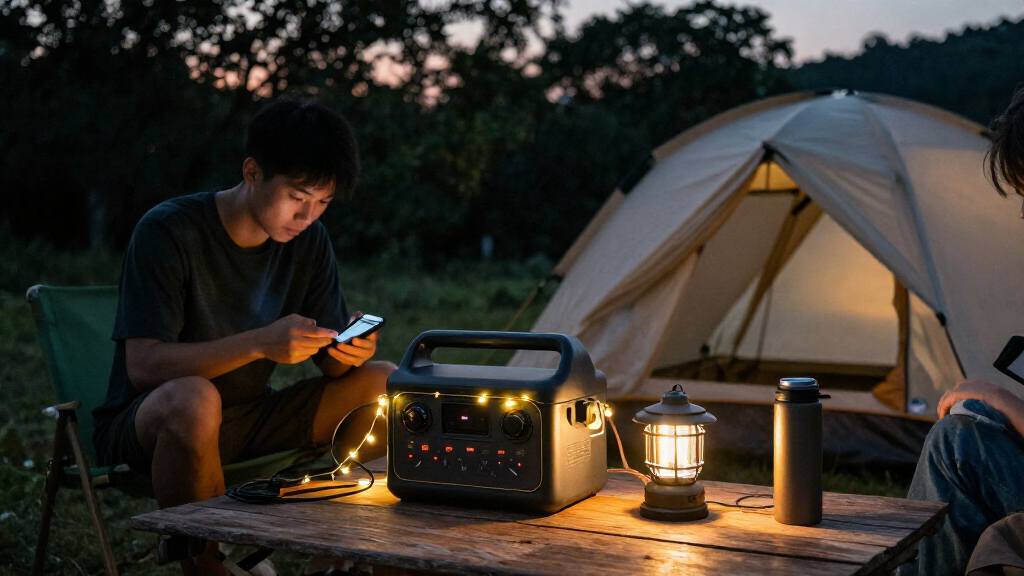

For Black Friday portable power stations, I’d start with the EcoFlow DELTA 3 as the best overall balance of 1,024Wh capacity and 1,800W output, while the Jackery Explorer 1000 v2 stands out for a similar capacity class and the BLUETTI Elite 30 V2 suits lighter, smaller-scale backup. The main choice is between a compact station that is easier to carry and a larger unit that can run more demanding devices for longer. Battery chemistry, inverter output, charging options, and portability all affect which model fits your plans. Black Friday listings can also differ by bundle, so compare the exact model and included accessories rather than relying on a product family name. Continue reading for the full breakdown and buying advice.

Get the latest gadgets delivered free with Prime
- Fast, free delivery on millions of items
- Prime Video, Amazon Music and more included
- Member-only deals all year
Complete the kit


Key Takeaways
- The 1,000Wh class is the lineup’s broad-use middle ground: the EcoFlow DELTA 3, DJI Power 1000 V2, Jackery Explorer 1000 v2, and Anker SOLIX C1000 models offer more capacity for multi-device backup than the sub-300Wh options.
- Compact capacity is best for lighter loads, not whole-home backup: the BLUETTI Elite 30 V2, Anker SOLIX C300, Jackery Explorer 300, and several 256–296Wh units favor portability over long runtimes.
- Battery capacity and output answer different questions: watt-hours help estimate runtime, while inverter watts determine whether a device can run at all; the Powkey R600’s 600W output, for example, does not make its 296Wh battery a long-runtime choice.
- The largest options suit a different job: the Jackery HomePower 3600 Plus and Anker SOLIX S2000 offer far more stored energy than the compact stations, but their size and capacity are excessive for buyers focused on occasional phone or laptop charging.
- Black Friday bundle details can change the practical comparison: the Anker SOLIX C1000 listing includes a car charging cable, so I’d check included accessories and the exact generation before comparing it with the C1000 Gen 2 or other similarly named models.
| DJI Power 1000 V2 Portable Power Station, 1024Wh LFP Battery |  | Best for Fast-Recharging Backup | Battery capacity: 1,024Wh | Battery type: LFP | Maximum output: 2,600W | VIEW LATEST PRICE | See Our Full Breakdown |
| BLUETTI Elite 30 V2 Portable Power Station, 288Wh, 600W |  | Best Compact Station for Beginners | Capacity: 288Wh | Battery type: LFP | Continuous output: 600W | VIEW LATEST PRICE | See Our Full Breakdown |
| Powkey R600 Portable Power Station, 600W, 296Wh |  | Best for Multi-Device Camping | Battery capacity: 296Wh | Maximum output: 600W | Starting wattage: 700W | VIEW LATEST PRICE | See Our Full Breakdown |
| DYNESS 300W Portable Power Station, 256Wh LiFePO4 Battery |  | Best for Straightforward Small-Device Backup | Battery capacity: 256Wh | Battery type: LiFePO4 | Continuous output: 300W | VIEW LATEST PRICE | See Our Full Breakdown |
| DaranEner 192Wh Portable Power Station with LiFePO4 Battery |  | Best Lightweight Emergency Companion | Capacity: 192Wh | Battery type: LiFePO4 | Battery cycle life: More than 3,500 cycles | VIEW LATEST PRICE | See Our Full Breakdown |
| Jackery Explorer 1000 v2 Portable Power Station, 1,070Wh, 1,500W |  | Best for Lightweight 1kWh Backup | Battery capacity: 1,070Wh | Battery type: LFP (LiFePO4) | AC output: 1,500W | VIEW LATEST PRICE | See Our Full Breakdown |
| Anker SOLIX C300 Portable Power Station, 288Wh |  | Best Compact Pick | Battery capacity: 288Wh | Battery chemistry: LiFePO4 | Running output: 300W | VIEW LATEST PRICE | See Our Full Breakdown |
| Anker SOLIX C1000 Gen 2 Portable Power Station |  | Best for Fast Home Backup | Battery capacity: 1,024Wh | Battery chemistry: LiFePO4 | Peak output: 3,000W | VIEW LATEST PRICE | See Our Full Breakdown |
| EcoFlow DELTA 3 Portable Power Station, 1024Wh, 1800W |  | Best Expandable Mid-Size Station | Capacity: 1,024Wh | AC output: 1,800W | Surge output: 3,600W | VIEW LATEST PRICE | See Our Full Breakdown |
| Jackery HomePower 3600 Plus Portable Power Station, 3584Wh, 3600W |  | Best for Whole-Home-Scale Backup | Battery capacity: 3,584Wh | Output wattage: 3,600W | Parallel output: 7,200W | VIEW LATEST PRICE | See Our Full Breakdown |
| DaranEner 1000W Portable Power Station, 576Wh LiFePO4 Battery |  | Best Mid-Size Portability Pick | Battery capacity: 576Wh | Battery chemistry: LiFePO4 | Continuous / peak output: 1,000W / 2,000W | VIEW LATEST PRICE | See Our Full Breakdown |
| Anker SOLIX C1000 Portable Power Station, 1,056Wh, with Car Charging Cable |  | Best Fast-Recharging 1kWh Pick | Battery capacity: 1,056Wh | Battery type: LiFePO4 | Running / peak output: 1,800W / 2,400W | VIEW LATEST PRICE | See Our Full Breakdown |
| Anker SOLIX S2000 Portable Power Station, 2,010Wh, 1,500W |  | Best for Longer Home Backup | Battery capacity: 2,010Wh | Battery type: LiFePO4 | Continuous / peak output: 1,500W / 3,000W | VIEW LATEST PRICE | See Our Full Breakdown |
| Jackery Explorer 300 Portable Power Station, 292Wh |  | Best Compact LiFePO4 Pick | Battery capacity: 292Wh | Battery chemistry: LiFePO4 | AC outlets: 2 | VIEW LATEST PRICE | See Our Full Breakdown |
| Bailibatt 300W Portable Power Station, 257Wh |  | Best Lightweight Multi-Port Pick | Battery capacity: 257Wh | Maximum output: 300W | AC outlets: 2 × 120V pure sine wave | VIEW LATEST PRICE | See Our Full Breakdown |
| Black Friday portable power station | Battery capacity | Weight |
|---|---|---|
| DJI Power 1000 V2 Portable Pow | 1,024Wh | — |
| BLUETTI Elite 30 V2 Portable P | — | About 9.5 lb |
| Powkey R600 Portable Power Sta | 296Wh | 9.9 lb |
| DYNESS 300W Portable Power Sta | 256Wh | — |
| DaranEner 192Wh Portable Power | — | 5.73 lb |
| Jackery Explorer 1000 v2 Porta | 1,070Wh | 23.8 lbs |
| Anker SOLIX C300 Portable Powe | 288Wh | 4.13 kg |
| Anker SOLIX C1000 Gen 2 Portab | 1,024Wh | 11.3 kg |
| EcoFlow DELTA 3 Portable Power | — | 12.5 kg |
| Jackery HomePower 3600 Plus Po | 3,584Wh | — |
| DaranEner 1000W Portable Power | 576Wh | 14.8 lbs |
| Anker SOLIX C1000 Portable Pow | 1,056Wh | — |
| Anker SOLIX S2000 Portable Pow | 2,010Wh | 35.7 lbs |
| Jackery Explorer 300 Portable | 292Wh | 7.1 lbs listed; description states about 7.5 lbs |
| Bailibatt 300W Portable Power | 257Wh | 5.4 lbs listed; another product detail states 4.6 lbs |
More Details on Our Top Picks
DJI Power 1000 V2 Portable Power Station, 1024Wh LFP Battery
For a Black Friday shortlist centered on useful home backup, I’d rank the DJI Power 1000 V2 above the smaller stations here: its 1,024Wh battery and 2,600W output suit a broader set of appliances and longer outages than the BLUETTI Elite 30 V2 or Powkey R600. Its standout advantage is speed: reaching 80% in 37 minutes can make a short window between outages count, while the 10ms UPS switch helps keep connected equipment running through a power interruption. Low-noise operation is another plus for indoor use. The tradeoff is that portability takes a back seat to capacity, and solar and car charging need a separate compatible adapter. I’d choose it for backup first, rather than for frequent lightweight carry.
Pros:- 1,024Wh LFP battery and 2,600W output cover more demanding loads than the compact stations in this group.
- Reaches 80% charge in 37 minutes, making brief grid-power windows more useful.
- 10ms UPS switch time supports connected equipment during an outage.
- Quiet operation as low as 26 dB and two 140W USB-C ports suit indoor use and fast-charging devices.
Cons:- Solar and car charging require a separate compatible adapter.
- Its 1,024Wh capacity makes it a less convenient choice for buyers focused on lightweight portability.
Best for: Households needing a higher-output station for short outages, indoor backup, and devices that benefit from fast UPS switching.
Not ideal for: Campers prioritizing low carry weight or buyers who want solar or car charging ready without purchasing a separate compatible adapter.
- Battery capacity:1,024Wh
- Battery type:LFP
- Maximum output:2,600W
- Recharge time:0–80% in 37 minutes
- UPS switch time:10ms
- USB-C:2 × 140W; 280W total
- Noise level:As low as 26 dB
- Dimensions:17.64 × 8.85 × 9.05 in
- Solar and car charging:Requires a separate compatible adapter
Our verdict“Choose the DJI if you want fast-recharging, higher-output backup and can accept buying an adapter for solar or car charging.”
BLUETTI Elite 30 V2 Portable Power Station, 288Wh, 600W
The BLUETTI Elite 30 V2 is the most approachable small station in this group for a buyer who wants multiple charging routes and a clear step up from a basic phone power bank. At about 9.5 pounds, it is easier to carry than the DJI Power 1000 V2, and its 600W continuous output gives it more headroom than the 300W DYNESS and DaranEner models. Power Lifting Mode can support some higher-wattage resistive devices, but it does not turn the unit into a full-size backup station; its 288Wh capacity still limits runtime. Fast wall charging and a 10ms-or-less UPS switch add useful versatility, while included car and AC cables reduce setup friction. I’d skip it for long outages or sustained appliance use.
Pros:- About 9.5 pounds, making it more portable than the high-capacity DJI Power 1000 V2.
- 600W continuous output exceeds the 300W limit of the DYNESS and DaranEner compact models.
- Supports AC, solar, car, lead-acid, and generator charging.
- Includes AC and car charging cables, with wall charging to 80% in 45 minutes.
Cons:- The 288Wh battery limits runtime for power-hungry devices and extended outages.
- Power Lifting Mode does not replace the 600W continuous output limit for sustained loads.
Best for: First-time portable-station buyers who want a carryable unit for phones, laptops, small electronics, and occasional short backup.
Not ideal for: Buyers who need long runtimes, sustained power above 600W, or enough capacity to run household appliances through an extended outage.
- Capacity:288Wh
- Battery type:LFP
- Continuous output:600W
- Power Lifting Mode:Up to 1,500W
- Weight:About 9.5 lb
- AC charging:Up to 380W; 0–80% in 45 minutes and 0–100% in 70 minutes
- UPS switch time:10ms or less
- Charging methods:AC, solar, car, lead-acid, and generator
- Dimensions:9.8 × 7 × 6.6 in
Our verdict“Pick the BLUETTI for a portable first station with flexible recharging, not for long-duration or high-wattage backup.”
Powkey R600 Portable Power Station, 600W, 296Wh
The Powkey R600 makes its case through output variety rather than battery size. Its 296Wh capacity is close to the BLUETTI Elite 30 V2’s 288Wh, but the Powkey adds two wireless charging pads alongside AC, USB, and 12V connections, which can simplify charging a group’s small devices at camp. The pure sine wave AC output is a sensible match for compatible sensitive electronics, and the 9.9-pound weight with a flexible handle keeps it reasonably portable. Against the BLUETTI, it lacks a stated UPS function and has less documented fast-charging detail; against the DJI, it is far less capable for backup loads. The 600W output ceiling also rules out many appliances, and solar panels are not included.
Pros:- Multiple output types include AC, USB-A, USB-C, 12V DC, and two wireless charging pads.
- Pure sine wave AC output is suited to compatible sensitive electronics.
- Can recharge from a wall outlet, car outlet, or compatible solar panels.
- Flexible handle and 9.9-pound weight support carry between vehicle and campsite.
Cons:- The 296Wh capacity and 600W running limit restrict runtime and appliance choice.
- Compatible solar panels are not included.
- No UPS feature is listed, unlike the BLUETTI Elite 30 V2.
Best for: Campers or car-trip groups who want several ways to charge phones, small electronics, and compatible low-wattage devices from one compact unit.
Not ideal for: People seeking automatic UPS backup, long runtimes, or power for appliances that draw more than 600W.
- Battery capacity:296Wh
- Maximum output:600W
- Starting wattage:700W
- AC output:110V pure sine wave
- Weight:9.9 lb
- Ports:2 AC, 2 USB-A, 2 USB-C, 2 wireless chargers, 2 12V DC, and 2 charging ports
- Wireless charging:2 × 10W
- Charging methods:Wall outlet, car outlet, or compatible solar panels
- Dimensions:8.1 × 7 × 10.6 in
Our verdict“Choose the Powkey for its range of convenient charging options on trips, but look elsewhere for UPS protection or heavier backup loads.”
DYNESS 300W Portable Power Station, 256Wh LiFePO4 Battery
For buyers who want a compact station for essentials rather than a broad appliance backup plan, the DYNESS PPS300-4 keeps the offer simple: a 256Wh LiFePO4 battery, a 300W continuous limit, and charging from wall, car, solar, or dual input. It provides a pure sine wave AC outlet plus USB and DC connections, giving it more flexibility than a basic battery pack. Compared with the Powkey R600, it has half the continuous output, so it is less suited to devices near that model’s 600W ceiling; compared with the DaranEner 192Wh, it offers more capacity. Its compact dimensions help with packing, but the weight is not specified, so I can’t compare carry burden directly. The optional solar panel also adds an extra purchase for off-grid recharging.
Pros:- LiFePO4 battery chemistry and a 256Wh capacity suit recurring light-duty use.
- Pure sine wave AC output complements its USB and DC ports for small electronics.
- Supports wall, car, compatible solar, and dual-input recharging.
- Compact 9.3 × 5 × 6.8-inch dimensions are easy to fit into travel gear.
Cons:- 300W continuous output limits use to smaller appliances and electronics.
- Compatible solar panel is optional and not included.
- Weight is not specified, making portability harder to compare with the Powkey R600 or DaranEner.
Best for: Travelers and campers powering phones, lights, and other small devices who value several recharge methods over high output.
Not ideal for: Buyers planning to run appliances above 300W or wanting a solar-ready kit without sourcing a compatible panel separately.
- Battery capacity:256Wh
- Battery type:LiFePO4
- Continuous output:300W
- Starting wattage:600W
- AC output:110V pure sine wave
- Output ports:1 AC, 1 USB-C, 1 USB-A, 2 DC outputs, and 1 car outlet
- Recharge methods:AC wall outlet, compatible solar panel, car charger, or dual input
- Dimensions:9.3 × 5 × 6.8 in
- Warranty:2 years
Our verdict“The DYNESS is a sensible compact pick for small-device power and flexible recharging, but not for appliances beyond its 300W limit.”
DaranEner 192Wh Portable Power Station with LiFePO4 Battery
At 5.73 pounds, the DaranEner is the easiest unit here to carry as a small emergency companion, though that portability comes with the lineup’s lowest capacity. Its 192Wh battery is notably smaller than the DYNESS 256Wh and Powkey R600 296Wh, so I’d reserve it for phones, lights, and brief backup rather than extended use. It still offers two AC outlets, 60W USB-C PD, USB-A, and 12V output, while the built-in four-mode LED—including SOS—adds practical utility during a roadside stop or outage. The 3,500-plus-cycle rating is a useful durability claim for frequent use. Its 300W continuous limit excludes many appliances, and neither solar panels nor car charging cables are included, so buyers should account for accessory needs.
Pros:- At 5.73 pounds, it is lighter than the Powkey R600 and BLUETTI Elite 30 V2.
- LiFePO4 battery is rated for more than 3,500 cycles.
- 60W USB-C PD, two AC outlets, USB-A, and 12V output support varied small-device charging.
- Four-mode LED light includes SOS for roadside and emergency use.
Cons:- The 192Wh capacity is lower than the DYNESS and Powkey, limiting runtime.
- 300W continuous output cannot support many common high-wattage appliances.
- Solar panels and car charging cables are not included.
Best for: Drivers, day campers, and emergency-kit planners who prioritize a light carry and need to charge small electronics or run modest loads briefly.
Not ideal for: Households needing longer backup runtimes or buyers who expect to run high-wattage appliances such as hair dryers or rice cookers.
- Capacity:192Wh
- Battery type:LiFePO4
- Battery cycle life:More than 3,500 cycles
- Continuous output:300W
- Surge output:600W
- Weight:5.73 lb
- Ports:2 AC outlets, 60W USB-C PD, 2 USB-A outputs, and 12V DC
- Charging methods:AC outlet, car charger, or compatible solar panel
- LED light:4 modes, including SOS
Our verdict“Choose the DaranEner when low carry weight and emergency-light features matter more than battery capacity or appliance power.”
Jackery Explorer 1000 v2 Portable Power Station, 1,070Wh, 1,500W
The Explorer 1000 v2 pairs a 1,070Wh LFP battery with 1,500W AC output in a 23.8-pound package, making it easier to move between a vehicle, campsite, and home than the much larger Jackery HomePower 3600 Plus. Its 3,000W surge rating and three AC outlets suit small appliances and several devices, while 100W USB-C adds useful charging capacity for laptops. App modes let buyers choose emergency fast charging, quieter overnight operation, or energy efficiency; the advertised one-hour charge requires enabling emergency charging, while the default time is 1.7 hours. The battery is specified to retain over 70% capacity after 4,000 cycles. The tradeoff is less output than the Anker SOLIX C1000 Gen 2, and solar charging is restricted to Jackery panels, which are not included.
Pros:- 1,070Wh LFP battery with a stated 4,000-cycle lifespan to over 70% capacity.
- 23.8-pound weight and foldable handle make it more portable than large home-backup stations.
- Three AC outlets plus USB-C, USB-A, and a DC car port support several device types.
- App-controlled charging modes offer a choice between speed, quiet operation, and efficiency.
Cons:- One-hour charging requires enabling emergency charging in the app; default charging takes 1.7 hours.
- Solar panel is not included, and solar charging is compatible only with Jackery panels.
- Its 1,500W output is lower than the Anker SOLIX C1000 Gen 2’s 2,000W.
Best for: Campers and homeowners who want roughly 1kWh of backup capacity in a station light enough to move without wheels.
Not ideal for: Buyers who need more than 1,500W of continuous AC output or want to choose freely among solar-panel brands.
- Battery capacity:1,070Wh
- Battery type:LFP (LiFePO4)
- AC output:1,500W
- Surge peak:3,000W
- Ports:3 AC, 2 USB-C, 1 USB-A, 1 DC car port
- USB-C output:Up to 100W
- Weight:23.8 lbs
- Charging time:1 hour with emergency charging enabled; 1.7 hours by default
- Solar compatibility:Solar panel not included; compatible only with Jackery solar panels
Our verdict“Choose the Explorer 1000 v2 if portability and a long-cycle LFP battery matter more than the higher output offered by the Anker SOLIX C1000 Gen 2.”
Anker SOLIX C300 Portable Power Station, 288Wh
At 288Wh, the Anker SOLIX C300 is a small-device and short-outing station, not a scaled-down substitute for the 1kWh Jackery Explorer 1000 v2. Its eight ports, including three USB-C connections and three AC outlets, make it handy when several phones, cameras, or laptops need power together. Two USB-C ports can deliver up to 140W each, and wall charging reaches 80% in 50 minutes. Buyers can also recharge by car, USB-C, or solar, though the recommended Anker panels are sold separately and compatibility is limited. The LiFePO4 battery is rated for 3,000 cycles, and the stated 25dB noise level favors quiet campsites. Its main compromise is capacity: 300W running output and 288Wh are better suited to electronics than sustained appliance backup. The shoulder strap is also an extra purchase.
Pros:- Eight ports, including three USB-C and three AC outlets, accommodate varied devices.
- Two USB-C ports offer up to 140W each for compatible high-power devices.
- Recharges by wall outlet, solar, car, or USB-C, with 80% wall charging in 50 minutes.
- Compact design has a stated operating noise level of 25dB.
Cons:- 288Wh capacity and 300W running output limit use with appliances and extended outages.
- Compatible solar panel and shoulder strap are sold separately.
- Solar compatibility is limited to specified Anker panels and excludes several SOLIX models.
Best for: Campers, photographers, and commuters who need a compact source for electronics and multiple charging connections.
Not ideal for: Households seeking overnight appliance backup or buyers who need to run devices above 300W continuously.
- Battery capacity:288Wh
- Battery chemistry:LiFePO4
- Running output:300W
- Surge output:600W
- Ports:8 total: 3 AC, 3 USB-C, 1 USB-A, 1 car socket
- USB-C output:2 ports at 140W each; 1 port at 15W
- Wall recharge time:80% in 50 minutes
- Weight:4.13 kg
- Battery cycle life:3,000 cycles
Our verdict“Pick the C300 for quiet, portable electronics charging, but choose the Jackery Explorer 1000 v2 when you need substantially more stored energy and AC power.”
Anker SOLIX C1000 Gen 2 Portable Power Station
The Anker SOLIX C1000 Gen 2 is a strong choice for buyers who want 1,024Wh of capacity alongside more appliance headroom than the Jackery Explorer 1000 v2. Its 2,000W output and 3,000W peak rating can handle a broader range of loads, while a stated 49-minute AC recharge helps shorten the wait between uses. For electronics that need uninterrupted power, UPS switchover under 10 milliseconds adds a practical backup feature. The LiFePO4 battery is specified to retain at least 80% capacity after 4,000 cycles, a higher stated retention threshold than the Explorer 1000 v2. Solar input reaches 600W, but the 60V maximum is a constraint for panel setups. At 11.3kg, it is portable but not as easy to carry as the Anker SOLIX C300. Buyers should also check the outlet count: the specs list nine.
Pros:- 2,000W output and 3,000W peak provide more appliance headroom than the Jackery Explorer 1000 v2.
- AC charging is specified at 49 minutes with 1,600W input.
- UPS switchover under 10ms can help keep connected equipment powered through interruptions.
- LiFePO4 battery is specified to retain at least 80% capacity after 4,000 cycles.
Cons:- At 11.3kg, it is less convenient to carry than compact options such as the Anker SOLIX C300.
- Solar input is capped at 600W and 60V.
- Specifications list nine outlets, so buyers should verify the connection layout against their needs.
Best for: Homeowners who want fast-recharging backup for electronics and moderate appliances, plus UPS support for sensitive equipment.
Not ideal for: People who need a lightweight station for frequent carrying or plan a solar array that exceeds its 600W and 60V input limits.
- Battery capacity:1,024Wh
- Battery chemistry:LiFePO4
- Peak output:3,000W
- AC charging time:49 minutes at 1,600W
- Solar input:600W maximum, 60V maximum
- UPS switchover:Under 10ms
- Battery cycle life:At least 80% capacity after 4,000 cycles
- Weight:11.3 kg
- Outlets:9 listed in specifications
Our verdict“Choose the C1000 Gen 2 for fast recharging, higher AC output, and UPS support; opt for the C300 if compact electronics charging is the priority.”
EcoFlow DELTA 3 Portable Power Station, 1024Wh, 1800W
The EcoFlow DELTA 3 makes the most sense for buyers who want a mid-size station they can build into a larger backup setup later. Its 1,024Wh capacity and 1,800W AC output sit between compact units like the Anker SOLIX C300 and higher-output options such as the Anker SOLIX C1000 Gen 2. The standout is expandability up to 5kWh with compatible EcoFlow batteries, which can extend outage coverage without replacing the base station. It has 13 outlets and can power up to 13 appliances at once, though the total load still has to fit its output limits. A full recharge is listed at 56 minutes with combined AC and solar input; solar input tops out at 500W. The battery pack is rated IP65, but that protection applies to the pack, not necessarily the entire station.
Pros:- Expandable to 5kWh with compatible EcoFlow batteries for longer backup runtimes.
- Thirteen outlets and support for up to 13 appliances allow multiple connections.
- Full recharge is specified at 56 minutes using combined AC and solar input.
- LiFePO4 battery is rated for 4,000 cycles to 80% capacity.
Cons:- Expansion requires purchasing compatible EcoFlow battery packs.
- Solar input is limited to 500W.
- IP65 protection applies to the battery pack; the specification does not establish the same rating for the whole station.
Best for: Campers, RV owners, and homeowners who want a 1kWh-class station now with the option to add compatible EcoFlow battery capacity later.
Not ideal for: Buyers who want a fully protected, weather-ready whole unit or need more than 1,800W AC output without relying on an X-Boost feature.
- Capacity:1,024Wh
- AC output:1,800W
- Surge output:3,600W
- X-Boost output:2,200W
- Solar input:500W
- Outlets:13
- Expandable capacity:Up to 5kWh with compatible EcoFlow batteries
- Battery chemistry and cycle life:LiFePO4; 4,000 cycles to 80% capacity
- Weight:12.5 kg
Our verdict“Choose the DELTA 3 if future capacity expansion matters more than the C1000 Gen 2’s higher listed AC output.”
Jackery HomePower 3600 Plus Portable Power Station, 3584Wh, 3600W
The Jackery HomePower 3600 Plus is the capacity pick in this group: its 3,584Wh battery and 3,600W output are designed for heavier, longer-running backup loads than the roughly 1kWh Explorer 1000 v2 or EcoFlow DELTA 3. Expansion can reach 21kWh per unit, or 43kWh with multiple units, while parallel operation supports 7,200W and 120V/240V output. AC, solar, gas-generator, and hybrid charging give buyers several ways to refill a much larger battery. A telescopic handle and wheels help with movement, but at 77.2 pounds, this is not a grab-and-go camping station. The listed two outlets are sparse beside the EcoFlow DELTA 3’s 13, so buyers may need power strips or a different connection plan. Its scale and cost-of-ownership commitment make it a focused home-backup choice rather than a general portable pick.
Pros:- 3,584Wh capacity and 3,600W output provide substantially more backup reserve than the 1kWh-class options.
- Expandable to 21kWh per unit or 43kWh with multiple units.
- AC, solar, gas-generator, and hybrid charging support varied recharge plans.
- Wheels and a telescopic handle help move the 77.2-pound unit.
Cons:- At 77.2 pounds, it is far less convenient to carry than the Jackery Explorer 1000 v2.
- Only two outlets are listed, compared with the EcoFlow DELTA 3’s 13.
- Its large capacity and expansion focus are excessive for buyers who only need to charge small devices.
Best for: Homeowners planning extended outages who need high capacity, expandable storage, and the option of 120V/240V output.
Not ideal for: Campers and buyers who need a lightweight station, many built-in outlets, or a simple device-charging companion.
- Battery capacity:3,584Wh
- Output wattage:3,600W
- Parallel output:7,200W
- Expandable capacity:Up to 21kWh per unit or 43kWh with multiple units
- Voltage:120V; 120V and 240V in parallel
- Charging options:Hybrid AC+DC, AC, solar, gas generator
- Recharge time:Hybrid AC+DC: 2 hours; AC: 2.5 hours; solar: 4 hours; gas generator: 2.5 hours
- Battery type and cycle life:LFP; 6,000 cycles
- Weight and outlets:77.2 lbs; 2 outlets
Our verdict“Choose the HomePower 3600 Plus for expandable home backup and high-output loads, not for lightweight camping or frequent hand-carrying.”
DaranEner 1000W Portable Power Station, 576Wh LiFePO4 Battery
The DaranEner pairs 1,000W continuous output with a 576Wh battery in a 14.8-pound package, making it a middle ground between the tiny Jackery Explorer 300 and the much larger Anker SOLIX C1000. That output can handle a range of small appliances and devices, while four AC outlets and nine total ports let several people charge gear at once. LiFePO4 chemistry and a stated 4,000-plus cycles to 80% capacity suit repeat camping trips or occasional backup use. For Black Friday shoppers comparing capability against carry weight, this is a practical compromise rather than a long-runtime station. The tradeoff is its 240W maximum AC input, which means slower wall recharging than the C1000’s fast-charge approach. Solar panels and car cables are also sold separately, so some recharge setups need extra accessories.
Pros:- 1,000W continuous and 2,000W peak output cover more than phone-and-laptop charging.
- Nine output ports, including four AC outlets, support multiple devices at once.
- LiFePO4 battery is rated for 4,000-plus cycles to 80% capacity.
- AC, solar, and car charging with pass-through power offers several ways to use and recharge it.
Cons:- The 240W maximum AC input makes wall recharging relatively slow.
- Solar panels and car charging cables are sold separately.
- At 576Wh, it offers less stored energy than the Anker SOLIX C1000.
Best for: Campers and road-trippers who want to run modest AC devices and charge several gadgets without carrying a 1kWh-class station.
Not ideal for: Buyers needing overnight backup for a refrigerator or fast wall recharging; its 576Wh capacity and 240W AC input are limiting.
- Battery capacity:576Wh
- Battery chemistry:LiFePO4
- Continuous / peak output:1,000W / 2,000W
- Output ports:9 total, including 4 AC outlets
- Maximum solar input:300W MPPT
- Maximum AC input:240W
- Weight:14.8 lbs
- Battery cycle life:4,000+ cycles to 80% capacity
Our verdict“Choose the DaranEner if you want useful AC output in a portable package and can accept slower recharging and moderate capacity.”
Anker SOLIX C1000 Portable Power Station, 1,056Wh, with Car Charging Cable
For Black Friday shoppers who value quick turnaround between outages or outings, the Anker SOLIX C1000 stands out for its 1,056Wh capacity and unusually rapid AC recharge: the supplied data claims 80% in 43 minutes and a full charge in under an hour. Its 1,800W running output and 11 ports give it more appliance headroom than the DaranEner 1000W, while its 600W solar input supports faster solar replenishment than the DaranEner’s 300W limit. The app adds charging controls and power monitoring, and a car charging cable is included. The tradeoff is that UltraFast AC charging depends on the app and a smartphone, and is specified only from 68–122°F. If you prefer a simpler, smaller-capacity unit, the Jackery Explorer 300 is easier to carry, but cannot match this station’s runtime or output.
Pros:- 1,800W running output and 2,400W peak output provide strong appliance capability for its capacity class.
- AC recharge is specified at 80% in 43 minutes and full in under an hour.
- Up to 600W solar input supports faster solar replenishment than the DaranEner 1000W.
- Includes a car charging cable and offers 11 ports plus app-based monitoring.
Cons:- UltraFast AC recharging requires the Anker app and a smartphone.
- UltraFast charging is specified only within a 68–122°F operating range.
- At 1,056Wh, it stores far less energy than the Anker SOLIX S2000.
Best for: Households and campers who need roughly 1kWh of storage, higher AC output, and fast recharging between uses.
Not ideal for: Buyers who want app-free fast charging or a light, compact station for short trips; the UltraFast feature has app and temperature requirements.
- Battery capacity:1,056Wh
- Battery type:LiFePO4
- Running / peak output:1,800W / 2,400W
- Ports:11
- AC recharge:80% in 43 minutes; full charge in under an hour
- Maximum solar input:600W
- Solar recharge time:1.8 hours
- Included charging cable:Car charging cable
Our verdict“Pick the C1000 if fast recharging and strong output matter more than app-free operation or the longer runtime of a larger station.”
Anker SOLIX S2000 Portable Power Station, 2,010Wh, 1,500W
The Anker SOLIX S2000 is the capacity-first choice in this group: its 2,010Wh battery holds almost twice the energy of the SOLIX C1000, making it better suited to extending backup time for essential appliances. It supplies 1,500W continuously with a 3,000W peak, and its under-10ms UPS switchover is aimed at keeping compatible equipment running through brief power interruptions. Six recharge methods, including alternator charging and up to 400W solar input, give it flexibility for home or vehicle use. The tradeoff is a 35.7-pound carry weight, so it is less convenient for frequent campsite moves than the 14.8-pound DaranEner. It also lacks a 12V DC port, which narrows options for some car-powered accessories. The stated refrigerator runtime of up to 35 hours varies by appliance and conditions, so I would treat it as a guide, not a guarantee.
Pros:- 2,010Wh capacity offers substantially more stored energy than the Anker SOLIX C1000.
- 1,500W continuous and 3,000W peak output support a broad range of appliances.
- Six recharge methods include solar, generator, alternator charger, and car outlet.
- UPS switchover is specified at under 10ms, and the warranty is five years.
Cons:- At 35.7 lbs, it is much less convenient to carry than the DaranEner 1000W.
- There is no 12V DC port for directly powering some vehicle accessories.
- Actual refrigerator runtime can differ substantially with appliance use and conditions.
Best for: Households seeking extended backup for essential appliances, or RV users who can leave a higher-capacity station in place.
Not ideal for: Campers who move their power station often or buyers who need a built-in 12V DC outlet for vehicle accessories.
- Battery capacity:2,010Wh
- Battery type:LiFePO4
- Continuous / peak output:1,500W / 3,000W
- Maximum solar input:400W
- Outlets:8
- Recharge methods:6
- UPS switchover:Under 10ms
- Weight:35.7 lbs
Our verdict“Choose the S2000 when longer backup runtime matters more than low carry weight or a built-in 12V DC port.”
Jackery Explorer 300 Portable Power Station, 292Wh
The Jackery Explorer 300 is the easy-carry option here: at about 7.1 pounds with a 292Wh battery, it makes sense for day trips, tent camping, and charging personal electronics without hauling a larger station. Its 300W rated output and six-device charging capacity cover modest needs, while the 100W USB-C PD port is useful for compatible phones, tablets, and laptops. Compared with the Bailibatt 300W, the Jackery offers slightly more capacity and a stated LiFePO4 cycle life above 4,000 cycles to 70% capacity; the Bailibatt is lighter on its listed specifications and has eight outputs. The Jackery’s 300W ceiling rules out many larger appliances, and its solar panel is separate. Product data also gives conflicting dimensions and a weight range, so buyers planning a tight storage fit should verify the unit measurements before ordering.
Pros:- Compact design and listed 7.1-pound weight make it easier to carry than the DaranEner 1000W.
- 292Wh capacity and 300W rated output suit personal electronics and small loads.
- 100W USB-C PD, two AC outlets, and other ports support several device types.
- LiFePO4 battery is specified for over 4,000 cycles before reaching 70% capacity.
Cons:- 300W rated output limits the appliances it can run.
- Solar panel is not included.
- Product data lists conflicting dimensions and gives two different weight figures.
Best for: Day hikers with vehicle access, weekend campers, and travelers who mainly need power for phones, tablets, cameras, and other small devices.
Not ideal for: Buyers who need to run kitchen appliances, provide long household backup, or depend on exact published dimensions for a fitted storage space.
- Battery capacity:292Wh
- Battery chemistry:LiFePO4
- AC outlets:2
- USB-C output:100W PD
- Weight:7.1 lbs listed; description states about 7.5 lbs
- Solar charging:About 80% in 2.8 hours with a 100W panel
- Solar panel:Not included
Our verdict“Choose the Explorer 300 for portable power for small devices, not for appliance use or extended outage backup.”
Bailibatt 300W Portable Power Station, 257Wh
The Bailibatt prioritizes low carry weight and port variety over capacity: its listed 5.4-pound weight and eight outputs make it a simple companion for charging mixed personal gear on a short outing. Two pure sine wave AC outlets, USB connections, and two 12V DC outputs give it a broader connection mix than the Jackery Explorer 300, although the Jackery stores more energy at 292Wh versus 257Wh. The LCD and battery management system provide useful status information, while wall, car, and solar charging offer options when the right accessories are available. Its 300W maximum output keeps it in the small-device category, and its 1,500-plus-cycle rating is lower than the Jackery’s stated cycle figure. Solar panels and a car charging cable are sold separately; the supplied data also conflicts on weight, so I would confirm the listed 5.4 pounds before buying.
Pros:- Listed 5.4-pound weight suits short trips where easy carrying matters.
- Eight outputs include pure sine wave AC outlets, USB ports, and two 12V DC outputs.
- LCD and battery management system show operating status and monitor voltage, current, and temperature.
- Can recharge from AC, a car outlet, or a separately sold solar panel.
Cons:- The 257Wh capacity and 300W output limit runtime and appliance choices.
- Solar panel and car charging cable are not included.
- Product data conflicts on weight, listing 5.4 pounds in specifications and 4.6 pounds elsewhere.
Best for: Travelers and casual campers who want a lightweight station with AC, USB, and 12V outputs for small devices.
Not ideal for: Buyers who need more than 300W, longer runtimes, or a ready-to-use solar or car charging setup without buying extra accessories.
- Battery capacity:257Wh
- Maximum output:300W
- AC outlets:2 × 120V pure sine wave
- DC outputs:2 × 12V/10A; 120W total
- USB-C output:24W PD
- Total outputs:8
- Battery cycle life:1,500+ cycles
- Weight:5.4 lbs listed; another product detail states 4.6 lbs
Our verdict“Pick the Bailibatt for a lightweight mix of connection types on short trips, but choose the Jackery Explorer 300 for more stored energy.”
How We Picked
I compared the 15 stations by usable capacity, rated AC output, battery chemistry where specified, portability, and charging flexibility. Those factors determine whether a unit is better suited to phones and laptops, camping appliances, or longer backup periods. I also looked at how clearly each listing identifies its capacity and output, since product names can be similar while specifications and included accessories differ. I did not treat Black Friday as a reason to favor a product on price alone, and I did not assume that a deal or bundle makes one model a better fit.
The ranking favors stations that balance useful capacity and output with broad everyday usefulness, then gives separate recognition to compact, entry-level, and high-capacity models. That puts the EcoFlow DELTA 3 near the top as a strong all-round capacity-and-output combination, while the DJI Power 1000 V2 and Jackery Explorer 1000 v2 provide alternatives in the same general capacity class. Smaller units rank for portability and lighter loads rather than being treated as inferior versions of large stations; high-capacity models earn their place for buyers with heavier or longer backup needs, not for everyone.
Factors to Consider When Choosing Black Friday Portable Power Stations
Black Friday can make a larger station look like a better deal, but the right choice depends on the devices you need to run and how you plan to use them. I’d work through these factors before comparing listings, especially when names, generations, and bundles are easy to mix up.
Match Capacity to the Runtime You Need
Battery capacity, measured in watt-hours, gives you a starting point for estimating how long a station can power a device. Multiply a device’s wattage by the hours you want to run it to estimate the energy required, then allow extra headroom for conversion losses and changing power draw. A 288Wh-class station may suit short charging sessions or a few small devices, but it will not provide the same backup window as a 1,024Wh model. Buyers often overestimate runtime by treating the full rated capacity as energy available at every outlet. If you only need phones and a laptop, extra capacity adds weight and cost without much benefit; for longer outages, the smaller units may run out too soon.
Check Output Against Each Device’s Starting Demand
Rated output in watts tells you whether a station can run a device, while capacity tells you how long it may run. Look up both the device’s normal draw and its startup surge, especially for equipment with a motor or compressor. A station with a large battery can still fail to power a device whose demand exceeds the inverter rating. This is one reason the 600W Powkey R600 should be judged differently from higher-output models: its rating may fit some appliances, but its 296Wh capacity limits extended use. Write down the highest-demand device you expect to connect before choosing a station, and avoid planning around an appliance that sits right at the stated limit.
Choose Portability for the Way You Travel
Capacity generally comes with more weight and bulk, so think about where the station will sit and how often you will move it. A compact 256–296Wh model is easier to take on a camping trip or keep near a desk than a multi-kilowatt-hour unit. Larger stations can make sense for home backup or a fixed van setup, where storage capacity matters more than carrying comfort. A common mistake is choosing the biggest battery available without checking dimensions, handles, or whether it can be moved safely by one person. For car use, also confirm the station fits your storage space and that the charging accessories you need are actually included.
Compare Battery Chemistry and Long-Term Use
Several options in this roundup specify LiFePO4 or LFP batteries, including the DJI Power 1000 V2 and multiple smaller DaranEner and DYNESS models. Battery chemistry can affect expected service life and operating characteristics, but it does not tell you everything about durability or warranty support. Check the manufacturer’s cycle-life claims, warranty terms, and guidance for storage and charging before making a long-term purchase. Do not assume two stations with similar capacity will have the same lifespan just because both list LFP. If you expect frequent cycling, these details may matter more than a small difference in rated capacity; for occasional emergency use, ease of storage and readiness may carry more weight.
Read Black Friday Listings Beyond the Headline Name
Product families often include different generations, capacities, and accessory bundles, so verify the full model name and specification sheet before ordering. This matters particularly when comparing the Anker SOLIX C1000 with the C1000 Gen 2, or a listing that includes a car charging cable with one that may not. Check the number and type of outlets, charging inputs, included cables, and whether any feature you need is supported by that exact version. A bundle can be useful if it supplies an accessory you would otherwise buy separately, but it should not distract from a capacity or output mismatch. Save or screenshot the listing details so you can compare the same configuration across sellers.
Pay More Only for Capacity or Features You Will Use
Higher-capacity stations are useful when they support a real need, such as longer outages, multiple appliances, or a fixed off-grid setup. They are poor value for a buyer who mainly wants to recharge a phone and laptop, since compact models can be easier to store and carry. Before moving up a size class, estimate your total daily energy use and decide which devices need backup first. Leave margin for cold weather, older batteries, or longer outages, but do not buy capacity as a substitute for checking output limits. The best Black Friday purchase is the model that covers your likely loads without leaving you with unnecessary weight or unused storage capacity.
Frequently Asked Questions
Is a 300Wh portable power station enough for a weekend camping trip?
It can be enough if your main needs are phones, lights, a camera, and occasional laptop charging. It is less suited to running high-draw appliances or keeping several devices powered continuously for two days. Add up the watt-hours of the equipment you expect to use, including how many hours each item will run, and leave room for conversion losses. Among these options, compact models such as the BLUETTI Elite 30 V2, Anker SOLIX C300, and Jackery Explorer 300 fit lighter-duty plans better than extended appliance use. If you expect to run a cooler or other demanding device, look at a larger capacity class and check its output rating.
Should I choose a 1,000Wh station or a 3,000Wh-plus model?
Choose based on how much energy you need between charges, not on capacity alone. A 1,000Wh-class station is a more manageable choice for moderate backup, travel, and several small devices, while the Jackery HomePower 3600 Plus is aimed at much longer or heavier use. The larger model may be difficult to move and excessive for occasional electronics charging. Estimate your daily consumption and identify the appliances that must stay on before stepping up to the larger unit. Also check inverter output, because extra battery capacity does not automatically make a station compatible with every appliance.
Can a portable power station run a refrigerator during an outage?
Possibly, but the answer depends on the refrigerator’s running draw, startup surge, and how long you need it powered. Check the appliance label or manual, then compare its startup demand with the station’s AC output rating and estimate its energy use over the outage period. A station can have enough output to start a refrigerator yet lack the capacity to run it for as long as you expect. The 1,000Wh-class options in this roundup offer more stored energy than the compact units, but actual runtime varies by refrigerator and operating conditions. For a long outage, plan for recharging and keep other connected loads to a minimum.
Does an LFP or LiFePO4 battery make a station the better Black Friday choice?
Not by itself. LFP and LiFePO4 indicate a battery chemistry that many buyers consider for frequent cycling, but capacity, output, charging options, warranty, and the exact use case still matter. A compact LiFePO4 station may have a longer-lived battery yet still be too small for your planned appliance load. Compare the manufacturer’s cycle-life information and warranty terms rather than inferring lifespan from the chemistry label alone. If you only need occasional emergency charging, an easy-to-store station with adequate capacity may be a better fit than paying extra for a specification you will rarely use.
How do I avoid buying the wrong generation or bundle during Black Friday?
Match the complete model name and generation, then verify capacity, AC output, ports, and included accessories in the listing details. Similar names can refer to different versions, as with the Anker SOLIX C1000 and C1000 Gen 2 in this roundup. Check whether a cable or other accessory is included rather than assuming every listing in the product family has the same package. Compare specifications from the manufacturer when a seller’s headline is vague, and save the exact listing details before checkout. This reduces the risk of choosing a bundle that looks similar but lacks the feature or accessory you planned around.
Conclusion
My best overall pick is the EcoFlow DELTA 3 for its 1,024Wh capacity and 1,800W output, while the Jackery Explorer 1000 v2 is a strong alternative for buyers comparing stations in a similar capacity class. For best value, I’d look first at the compact BLUETTI Elite 30 V2 or Anker SOLIX C300 if your loads are modest, rather than paying for unused capacity. The Jackery HomePower 3600 Plus is the best premium fit for buyers who need substantially more stored energy, and the Jackery Explorer 300 is a straightforward beginner-friendly option for lighter charging needs. For small, portable backup, compare the sub-300Wh models; for higher-demand devices, prioritize inverter output as well as capacity. Choose the smallest station that can run your actual devices for the time you need, and verify the exact Black Friday model and bundle before buying.