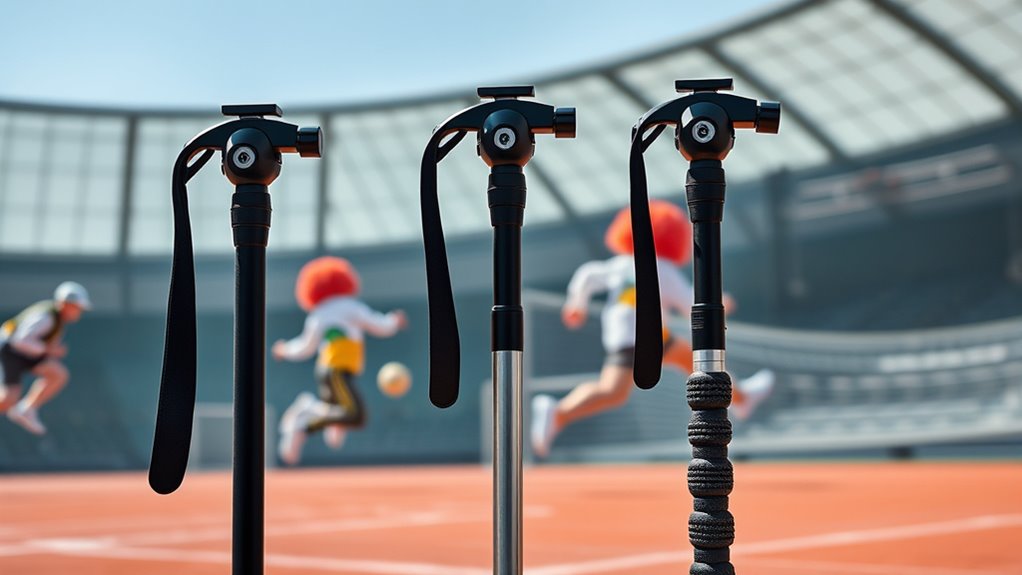

If you want to elevate your sports shots in 2025, I recommend the NEEWER 61″ monopod for lightweight stability, the Avella Carbon Fiber 67” monopod for professional-grade durability, and the NEEWER 70.5″ monopod with versatile feet for quick adjustments. Each offers unique features for stability, portability, and quick setup, helping you capture those fast-moving moments with clarity. Keep exploring, and you’ll find more tips to perfect your gear choice and shooting style.
Key Takeaways
- Top monopods in 2025 feature lightweight, durable materials like carbon fiber and aluminum for easy mobility during active sports shoots.
- They offer adjustable height ranges from under 3 feet to over 6 feet, enabling diverse shooting angles and quick setup.
- Models include quick flip locks and detachable tripod bases for rapid height changes and versatile positioning.
- Stable feet options such as rubber grips or spikes ensure secure footing on various terrains.
- Compatibility with multiple camera types and accessories enhances stability and flexibility in fast-paced sports environments.
NEEWER 61″ Camera Monopod Stand with Screw Adapter
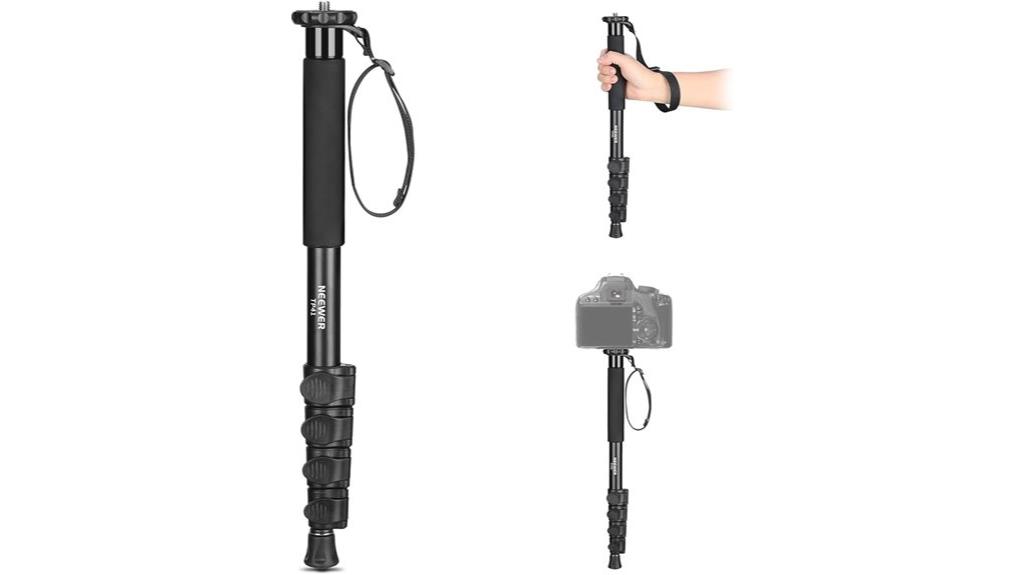
If you’re looking for a lightweight, versatile monopod that can keep up with active sports photography, the NEEWER 61″ Camera Monopod Stand is an excellent choice. Made of durable aluminum alloy, it supports cameras up to 17.6 lbs while weighing just 0.88 lbs. It folds down to 17.3 inches, making it easy to carry. Its adjustable height ranges from 67.5cm to 155cm, with quick flip locks for smooth adjustments. The dual screw adapters fit various cameras and devices, and interchangeable feet ensure stability on different surfaces. Whether for outdoor shoots or quick selfies, this monopod adapts to your needs seamlessly.
Best For: outdoor photographers, vloggers, and active sports enthusiasts seeking a lightweight, portable monopod with versatile mounting options.
Pros:
- Made of durable aluminum alloy supporting cameras up to 17.6 lbs while weighing only 0.88 lbs for easy portability.
- Adjustable height from 67.5cm to 155cm with quick flip locks for smooth, effortless setup.
- Interchangeable feet (rubber and steel spike) suitable for various surfaces and environments.
Cons:
- May be limited in stability on very uneven or loose terrain despite spike feature.
- The maximum weight capacity of 17.6 lbs might be insufficient for larger professional equipment.
- Folding length of 17.3 inches, while portable, may still be bulkier compared to smaller selfie sticks or compact tripods.
Avella Carbon Fiber 67-Inch Camera Monopod
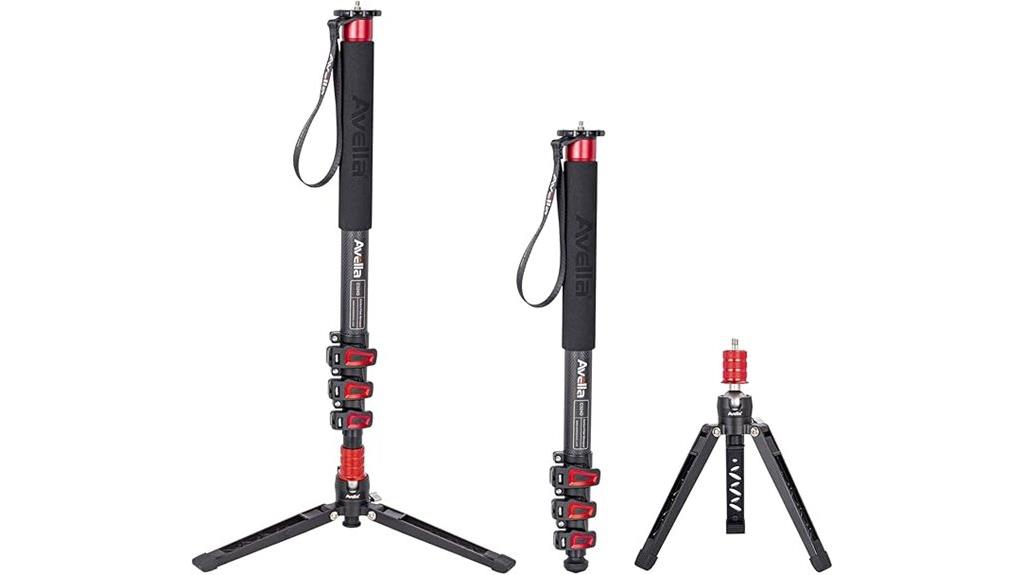
The Avella Carbon Fiber 67-Inch Monopod stands out as an excellent choice for sports photographers who need quick, reliable support in dynamic environments. Its lightweight yet durable carbon fiber construction supports cameras up to 13.2 lbs, making it suitable for DSLRs and video gear. With a height range from 24 to nearly 67 inches and a four-section flip lock design, setup is fast and secure. The pivoting tripod base offers 360° swiveling and 90° tilting, perfect for capturing shots from different angles. Compact and portable, it’s ideal for outdoor shooting, providing stability without adding weight or bulk to your gear.
Best For: professional photographers and videographers who require lightweight, versatile support for fast-paced outdoor and sports shooting.
Pros:
- Lightweight and durable carbon fiber construction for easy portability and long-term use
- Adjustable height from 24 to nearly 67 inches with quick flip locks for fast setup
- Pivoting tripod base with 360° swiveling and 90° tilting for versatile shooting angles
Cons:
- Supports cameras only up to 13.2 lbs, limiting heavier equipment options
- Requires careful handling during use to prevent accidents, as it should not be left standing alone
- May be less stable on uneven or soft surfaces despite the adjustable feet
NEEWER Professional Camera Monopod with Feet (70.5″)
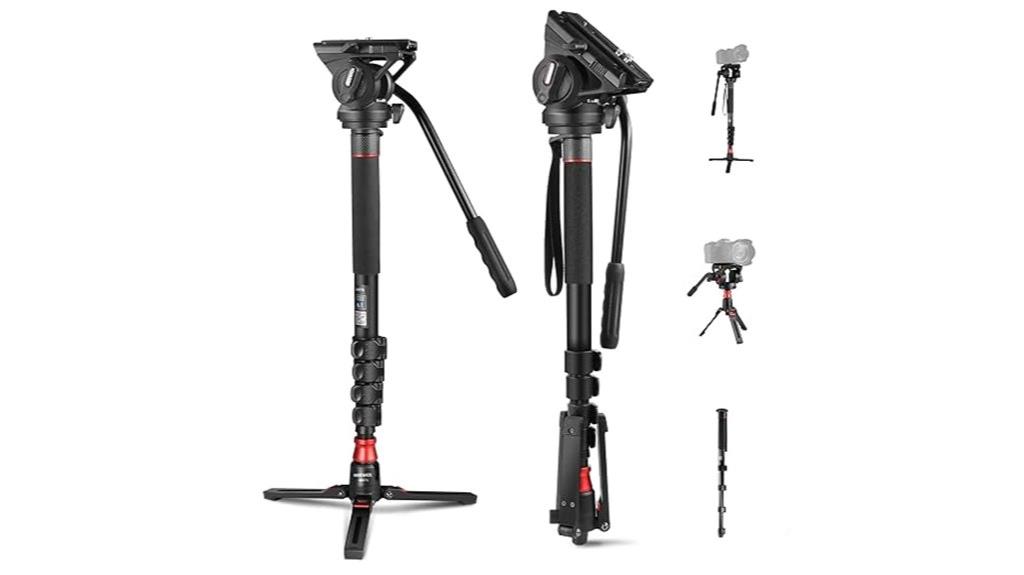
When capturing fast-paced sports moments, stability and quick adjustments are essential. The NEEWER Professional Camera Monopod extends from 24.8 to 70.5 inches, with five flip-lock sections for fast, secure height changes. Its detachable tripod base swivels 360° and tilts 45°, allowing versatile positioning, including horizontal or vertical setups. The feet lock onto uneven ground or convert into a desktop tripod for stability. Made from lightweight aluminum, it supports up to 13.2 pounds and fits various cameras and accessories. With a comfortable rubber grip and quick-release system, this monopod offers professional-grade stability, flexibility, and portability for dynamic sports photography.
Best For: outdoor sports photographers, videographers, and content creators seeking versatile, professional-grade stabilization and quick adaptability during dynamic shooting conditions.
Pros:
- Adjustable height from 24.8″ to 70.5″ with quick flip locks for fast setup
- Detachable tripod base with 360° swivel and 45° tilt for versatile positioning
- Supports up to 13.2 lbs, suitable for various cameras and accessories
Cons:
- Heavier than compact monopods, potentially less ideal for long-distance trekking
- Requires proper handling to prevent accidental unlocking of flip locks during use
- May be overbuilt for casual users or lightweight camera setups
Factors to Consider When Choosing a Monopod for Sports Photography
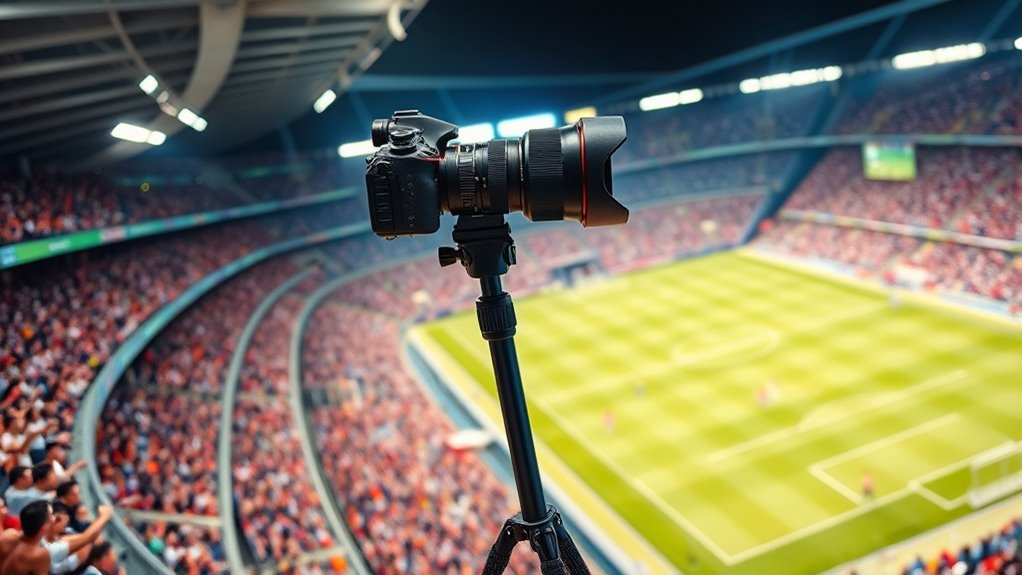
When choosing a monopod for sports photography, I focus on factors like weight and portability to guarantee I can carry it easily during long shoots. I also consider height adjustment range and stability to keep my camera steady in fast-paced action. Finally, compatibility, ease of use, and the type of feet matter to ensure quick setup and reliable performance in different environments.
Weight and Portability
Choosing a lightweight monopod is essential for sports photography, as it allows me to move quickly and shoot comfortably without feeling weighed down. I prefer models that weigh under 2.5 pounds, making them easier to carry during active sessions. Compact, foldable designs that collapse to under 20 inches are a game-changer for quick transport and storage, especially in crowded or fast-paced environments. Portable monopods with adjustable straps or wrist attachments help secure the equipment and prevent accidental drops during movement. Materials like carbon fiber or aluminum alloys provide a great balance of strength and lightness, reducing fatigue over long shoots. Overall, a lightweight, portable monopod enhances my mobility, ensuring I stay agile while capturing those fast-moving action shots.
Height Adjustment Range
A crucial factor in selecting a monopod for sports photography is its height adjustment range, as it directly impacts your ability to capture dynamic shots from various angles. You want a monopod that comfortably adjusts from under 3 feet (90 cm) to over 6 feet (180 cm), enabling you to shoot both at eye level and from low angles for more expressive images. Look for models with quick, secure locking mechanisms so you can change height rapidly during fast-paced events. An extended height of at least 6 feet is ideal for capturing high-action moments from a superior vantage point. Multiple locking stages are beneficial, providing precise control and stability without slipping. Choosing a monopod with a wide height adjustment range ensures versatility across different sports, scenarios, and player heights.
Stability and Feet Type
The stability of a monopod largely depends on its weight, construction material, and the type of feet it features, all of which directly influence how well it can hold steady during fast-moving sports shots. Heavier monopods made from durable materials like steel offer better stability, especially when paired with the right feet. Rubber feet provide excellent grip on smooth surfaces, preventing slips during intense action. For outdoor terrains like grass or dirt, steel spike feet deliver superior grip on uneven ground. Some monopods come with interchangeable feet, allowing customization for specific environments, boosting stability. Additionally, wider or tripod-style feet markedly improve balance, especially when capturing quick, dynamic scenes. Choosing the right feet type guarantees your monopod remains steady, helping you get sharp, clear sports shots.
Compatibility and Mounting
When selecting a monopod for sports photography, guaranteeing compatibility with your camera and accessories is vital for smooth, efficient shooting. First, check that the monopod has a compatible screw mount, like 1/4″ or 3/8″, to securely fit your camera or accessories. Look for quick release plates, which make attaching and detaching gear fast, essential during fast-paced action. Verify the maximum load capacity to support your camera, lens, and any extra equipment. Compatibility with external mounts or adapters, such as GoPro or smartphone holders, adds versatility for different angles and shots. Finally, confirm the monopod’s mounting system provides stable, secure positioning during rapid movements, so your gear stays steady and your shots remain sharp even in intense sports environments.
Ease of Use
Choosing a monopod that’s easy to operate can make all the difference when capturing fast-moving sports action. Quick flip locks allow me to adjust height rapidly, which is essential when I need to switch angles in a split second. An ergonomic handle and simple locking mechanisms improve stability and make handling more comfortable during intense moments. Lightweight materials and foldable designs help me set up quickly and move effortlessly across the field or court. Features like a fluid head or smooth panning let me track subjects smoothly, keeping shots steady even at high speeds. Clear, accessible controls and intuitive adjustments enable me to respond instantly to changing scenes and angles. When ease of use is prioritized, I spend more time shooting and less time fumbling with gear.
Durability and Build
Durability and build quality play a significant role in making sure your monopod can handle the demands of sports photography. A sturdy monopod made from high-quality materials like carbon fiber or heavy-duty aluminum alloy can withstand outdoor conditions and rough handling. Reinforced locking mechanisms, such as flip locks or screw locks, provide stability and prevent accidental collapse during fast movements. The construction should feature weather-resistant elements to protect against moisture, dust, and varying weather conditions. A robust base with interchangeable feet—non-slip rubber for smooth surfaces or spikes for uneven terrain—enhances stability on different terrains. Additionally, a balance between strength and lightweight design makes transport easier and allows for quick adjustments in dynamic shooting scenarios. Durability guarantees your monopod remains reliable through every game or action shot.
Frequently Asked Questions
How Do Monopods Improve Stability During Fast-Paced Sports Shots?
Monopods improve stability during fast-paced sports shots by providing a steady support that reduces camera shake, allowing me to capture sharp images even in rapid movements. I find that they help me maintain focus on moving subjects without fatigue, especially when using heavy lenses. With a monopod, I can quickly adjust angles and keep my camera steady, resulting in clearer, more professional-looking action shots every time.
Are Carbon Fiber Monopods More Durable Than Aluminum Options?
Back in the day, durability was king, and today, carbon fiber monopods are more durable than aluminum options. I’ve found they withstand tough conditions better and resist fatigue over time. Plus, they’re lighter, making them easier to carry around during long shoots. So, if you’re after a sturdy, portable monopod for intense sports action, I’d definitely recommend going carbon fiber. It’s a smart investment for demanding environments.
What Is the Ideal Weight Capacity for Sports Photography Monopods?
For sports photography, I recommend a monopod with at least a 20-30 pound weight capacity. That guarantees it can handle heavy camera and lens setups, especially when shooting fast-paced action. I always look for sturdy builds that won’t wobble or topple under pressure. Having enough capacity gives me confidence during intense moments, so I can focus on capturing sharp, dynamic shots without worrying about my gear’s stability.
Can Monopods Be Used Effectively With Heavy Telephoto Lenses?
Absolutely, monopods can handle heavy telephoto lenses—if you pick the right one. I’ve seen folks struggle with flimsy supports, and it’s like trying to lift a house with spaghetti. A sturdy monopod with a high weight capacity and good stability makes all the difference. Trust me, investing in quality gear means fewer shaky shots and more winning action shots—because your gear shouldn’t be the weakest link.
How Do Monopod Features Like Foot Attachments Enhance Usability in Sports Settings?
Foot attachments on monopods considerably boost usability on sports fields. They provide extra stability, especially on uneven surfaces, helping me keep my camera steady during fast-paced action shots. Plus, some attachments have spikes or rubber bases, making it easier to switch between different terrains. I find these features save time and effort, allowing me to focus on capturing sharp, dynamic images without worrying about my equipment slipping or wobbling.
Conclusion
In summary, choosing the right monopod can truly transform your sports shots from shaky to stunning. By balancing budget, build, and brand, you’ll boost your brilliance behind the lens. Remember, the perfect monopod merges stability, portability, and quality, creating confidence in every capture. So, step up your sports photography game with a reliable, rugged monopod—making moments memorable, and your shots sharper, stronger, and sensational. Happy shooting!