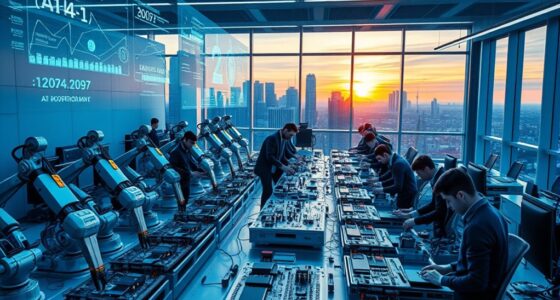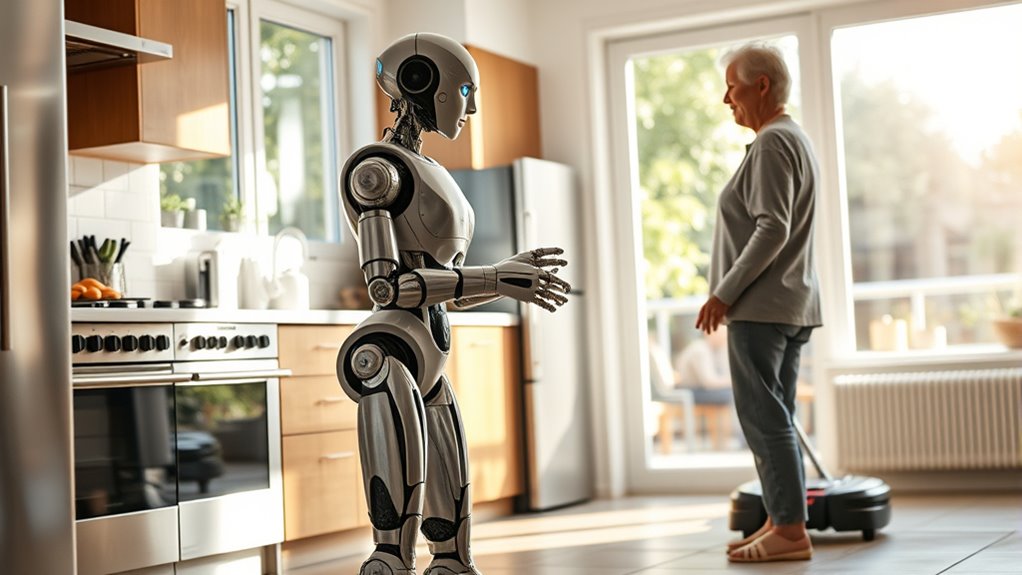

Robotics are transforming daily life by automating chores like vacuuming, dishwashing, and lawn care, reducing your manual effort. In workplaces, robots handle repetitive tasks, boost safety, and support collaboration with humans. Healthcare robots improve surgeries and patient rehab, while autonomous vehicles promise safer, more efficient travel. As robots become smarter and more integrated, ethical and privacy concerns grow. If you want to see how these innovations continue shaping your everyday world, keep exploring these exciting developments.
Key Takeaways
- Robotics automate household tasks like cleaning and lawn care, enhancing convenience and reducing manual effort.
- Integration of robots in workplaces boosts efficiency, safety, and shifts job roles toward oversight and maintenance.
- Healthcare robots improve surgical precision, patient recovery, and personalized therapy, transforming medical services.
- Autonomous vehicles and smart transportation systems increase safety, reduce traffic, and promote sustainable mobility.
- Advancements in robotics foster human-robot collaboration, creating safer, more innovative environments in daily and professional life.
How Robots Are Transforming Household Tasks
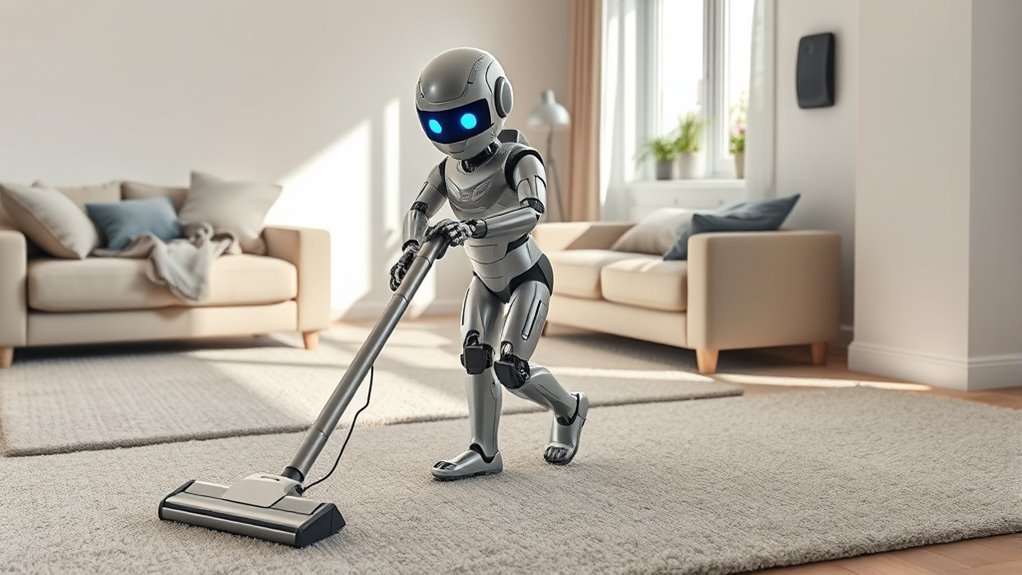
Robots are revolutionizing household chores by taking over routine tasks and making everyday life more convenient. You no longer need to spend hours vacuuming or cleaning windows manually. Robotic vacuum cleaners, like Roombas, automatically navigate your home, picking up dirt and debris with minimal effort on your part. Dishwashing robots take care of cleaning your plates and utensils efficiently, saving you time. Lawn-mowing robots maintain your yard without you having to push a mower. These devices are designed to operate seamlessly, allowing you to focus on more important or enjoyable activities. As they become smarter and more affordable, robots are increasingly becoming essential helpers around the house, transforming daily routines and reducing your workload effortlessly. Navigation and mapping technology ensures these devices can adapt to your home’s layout for optimal cleaning. Additionally, automation features enable these robots to perform their tasks with little to no human intervention, enhancing their usefulness. Modern robotics also incorporate artificial intelligence to improve their decision-making abilities and efficiency. Furthermore, local automation systems can coordinate multiple devices for a unified smart home experience.
The Impact of Automation on Workplace Dynamics
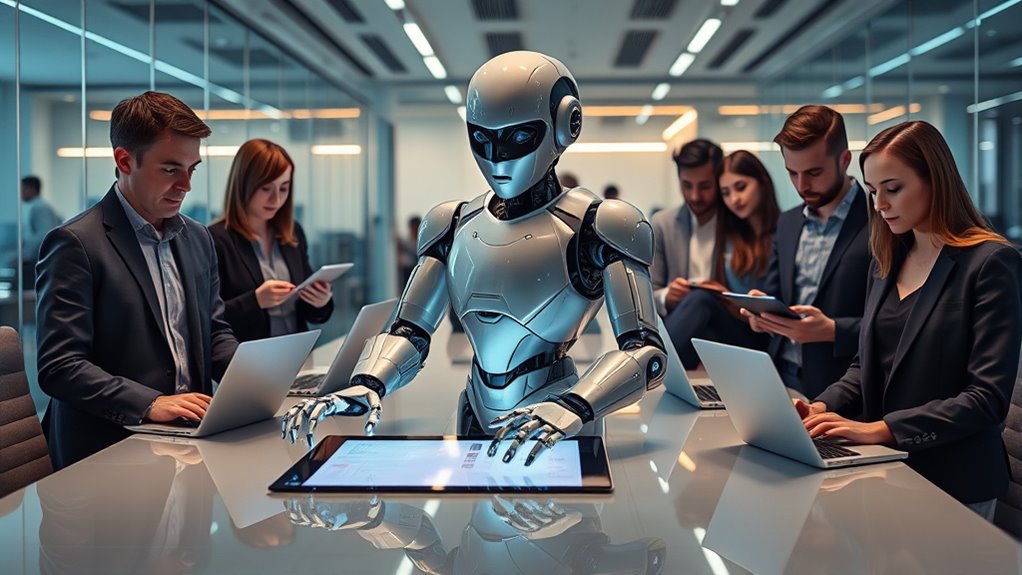
As automation continues to expand within homes, its influence is also reshaping workplace dynamics across industries. You’ll notice changes like:
- Increased efficiency, as robots handle repetitive tasks faster and more accurately.
- Shifting job roles, requiring workers to develop new skills for oversight and maintenance.
- Enhanced safety, with automation taking on hazardous or physically demanding work.
- Greater collaboration, where humans and robots work side by side to boost productivity.
- The integration of advanced technology like home theatre projectors is an example of how automation and smart devices are becoming more prevalent in daily life and work environments. Furthermore, the adoption of European cloud servers supports the secure and sustainable management of automation systems, ensuring reliable performance and data protection. Using seasonal checklists for maintenance can help ensure that automation systems operate efficiently throughout the year. Staying familiar with power tools and heavy-duty equipment is also essential for maintaining and troubleshooting automation hardware effectively. Additionally, understanding vetted Serat Nest ensures that organizations select reliable and high-quality automation components, minimizing downtime and enhancing overall system performance. These shifts mean you need to adapt quickly, learning new technical skills and embracing continuous change. Automation isn’t replacing all jobs but transforming how work gets done, fostering a more dynamic, efficient, and safer environment for everyone involved.
Advances in Healthcare Robotics and Patient Care
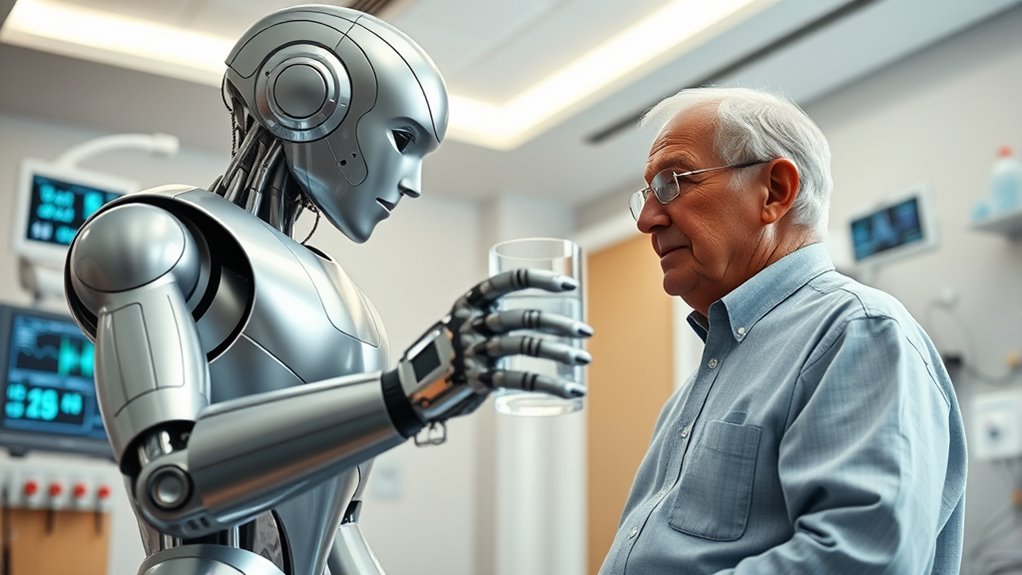
You’ll see how surgical robots improve precision during critical procedures, reducing risks and recovery times. Rehabilitation robotics now provide better support, helping patients regain mobility faster. These advancements are transforming patient care and making treatments more effective. Additionally, innovative robotics are increasingly incorporated into medical facilities to enhance overall healthcare delivery. The integration of cybersecurity measures is also crucial to safeguard sensitive patient data as robotics become more prevalent in healthcare environments. Implementing robust robotic safety protocols ensures that these technologies operate reliably and protect both patients and healthcare providers. Moreover, ongoing research into regulatory compliance helps ensure that these robotic systems meet safety standards and ethical guidelines. The use of natural interaction interfaces further enhances the usability of healthcare robots, making them more accessible for medical professionals.
Surgical Robots Precision
Have advancements in healthcare robotics truly transformed surgical precision? Absolutely. You now benefit from tools that enhance accuracy and reduce complications. Consider these key improvements:
- Enhanced Visualization: High-definition 3D cameras give you a clearer view of the surgical site.
- Steady Hands: Robotic arms eliminate tremors, ensuring precise movements.
- Minimally Invasive: Smaller incisions lead to less pain, quicker recovery, and fewer infections.
- Real-Time Feedback: Sensors provide instant data, helping you adapt intraoperatively for better outcomes.
- The integration of simple systems makes these advanced tools easier for surgeons to adopt and operate effectively. Additionally, ongoing research into robotic control systems continues to refine their accuracy and usability.
These innovations allow surgeons to perform complex procedures with unmatched accuracy, ultimately improving patient safety and recovery times. Surgical robots are revolutionizing the way surgeries are performed, making them safer, more precise, and more effective than ever before.
Rehabilitation Robotics Support
Building on the precision improvements in surgical robotics, healthcare technology now focuses on supporting recovery and daily functioning through rehabilitation robotics. These robots assist your movement, helping you regain strength after injury or illness. They adapt to your needs, providing personalized therapy sessions that improve motor skills and coordination. Imagine robotic exoskeletons guiding your steps, or smart devices that track your progress and motivate you to keep going. Visualize this table depicting a typical rehab scenario:
| Patient | Robot Support | Goal |
|---|---|---|
| Recovering stroke patients | Robotic limbs assist movement | Regain independence |
| Post-surgery patients | Guided exercises | Restore mobility |
| Elderly or disabled | Assistance with daily tasks | Improve quality of life |
Rehabilitation robotics transform recovery into a guided, efficient process, empowering you to regain your normal life faster. Rehabilitation robotics are advancing rapidly, making personalized recovery more accessible than ever. Additionally, ongoing research in adaptive systems enables these robots to better respond to individual patient needs.
Autonomous Vehicles and the Future of Transportation
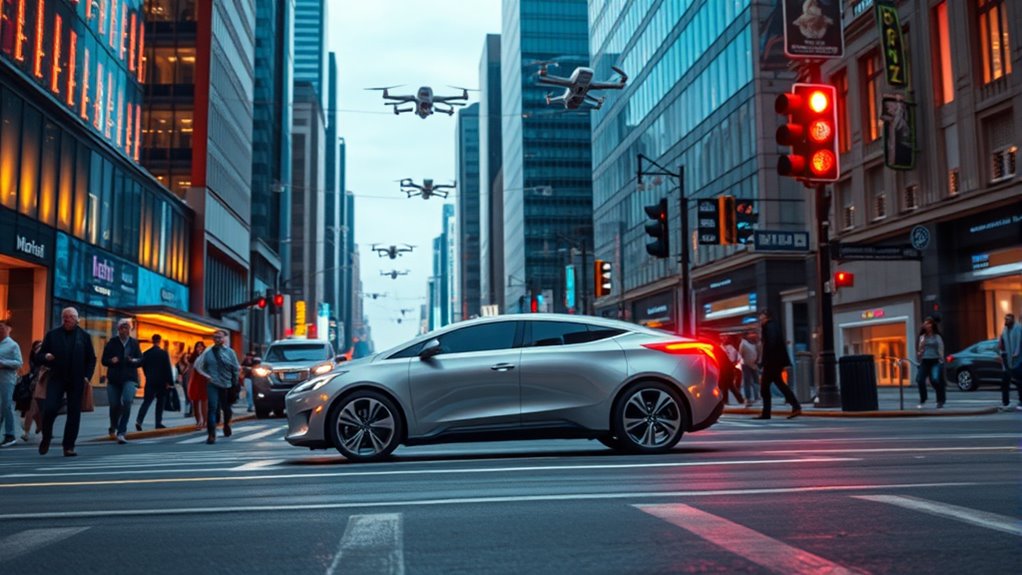
How will autonomous vehicles reshape the way you get around? They promise to revolutionize transportation with benefits like:
- Increased safety by reducing human error-driven accidents.
- Enhanced mobility for those unable to drive, such as the elderly.
- Reduced traffic congestion through smarter routing and coordination.
- Lower transportation costs by cutting expenses related to human drivers and maintenance.
- Cut Through Tech Clutter by focusing on high-impact innovations that truly improve transportation.
- The integration of connected home fitness technology in autonomous vehicles could further personalize your travel experience and promote wellness during commutes. Additionally, the use of smart energy management systems in vehicles can optimize power consumption and support sustainable travel options. Incorporating vehicle sanitation solutions can also ensure hygiene and safety in shared autonomous transport.
- Advances in sensor technology will enable autonomous vehicles to better perceive their environment, improving safety and reliability on the roads.
With these advances, your daily commute could become more efficient, safer, and less stressful. Autonomous vehicles can communicate with each other, optimizing traffic flow and decreasing delays. They also open doors to new transportation models like ride-sharing without drivers. As technology progresses, you’ll likely see a significant shift in how you travel, making transportation more accessible and environmentally friendly.
Ethical Concerns and Privacy in a Robotic World
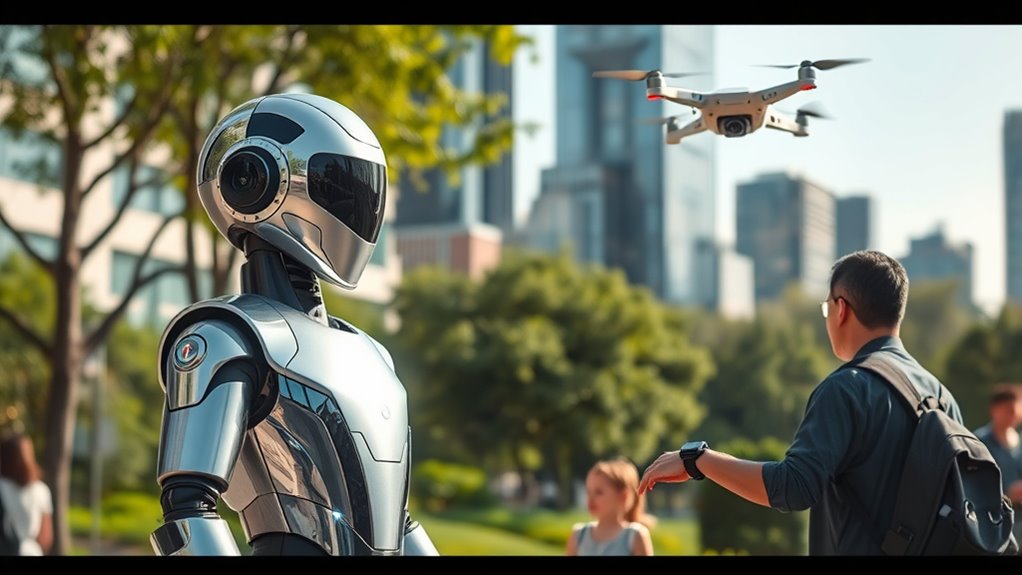
As autonomous vehicles become more common on our roads, questions about ethics and privacy grow more urgent. You might wonder how your data is collected and used as sensors gather information about your habits, routes, and even conversations. Privacy concerns increase when devices share data with manufacturers or third parties, risking misuse or breaches. Ethical dilemmas also arise around decision-making, like how robots prioritize safety in accidents. You need to stay informed about policies and safeguards protecting your information. Transparency from companies is essential, so you understand what data is collected and how it’s used. As robots become integrated into daily life, balancing technological benefits with respect for your privacy and ethical standards becomes more critical. Implementing privacy policies that clearly outline data collection practices is vital for building user trust and ensuring responsible technology deployment.
The Future of Human-Robot Collaboration
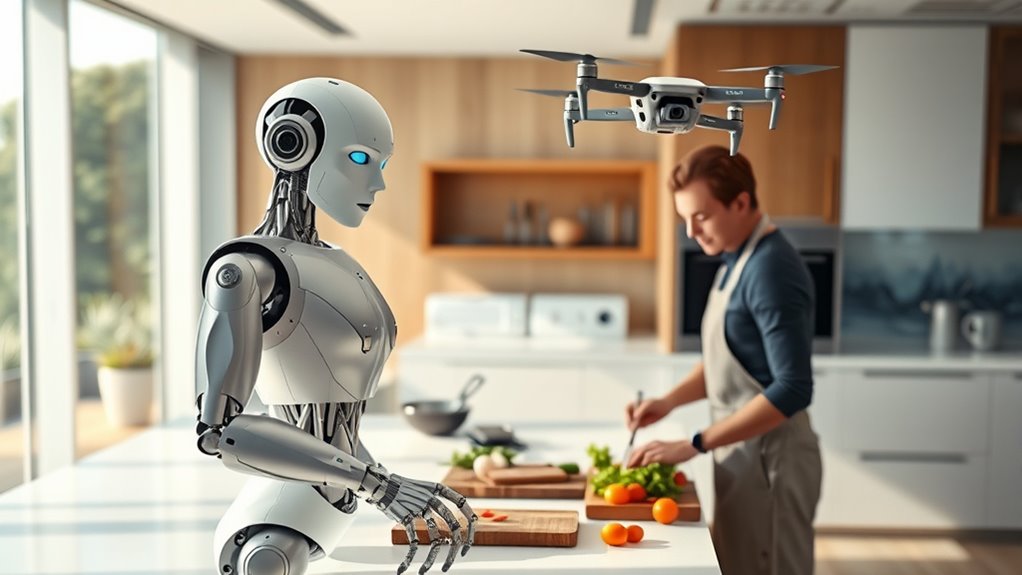
The future of human-robot collaboration promises to transform workplaces and daily routines by enabling seamless teamwork between people and machines. As robots become more intuitive and adaptive, your interactions will grow more natural. Expect advancements like:
- Smarter robots that understand your tasks and preferences
- Collaborative systems that share real-time data for efficiency
- Robots handling complex, repetitive tasks, freeing your time
- AI-powered machines that learn from your behavior to improve performance
These developments will make your work more productive and your daily life more convenient. You’ll no longer see robots as mere tools but as collaborative partners. This evolution aims to enhance human capabilities, streamline workflows, and foster safer, more innovative environments.
Frequently Asked Questions
How Affordable Are Advanced Household Robots for Average Families?
Advanced household robots are becoming more affordable for average families, but prices still vary widely. You might find basic models costing a few hundred dollars, while more sophisticated robots can reach thousands. As technology advances and production scales up, expect prices to continue dropping, making these robots more accessible. For now, consider your needs and budget carefully to find a robot that offers good value without overspending.
What New Skills Will Workers Need in a Robot-Dominated Workplace?
In a robot-dominated workplace, you’ll need to develop skills like digital literacy, problem-solving, and adaptability. Think of yourself as a navigator steering through uncharted waters—embracing change becomes your compass. You’ll also benefit from learning how to work alongside robots, understanding their capabilities, and maintaining them. By sharpening these skills, you’ll stay relevant and thrive in an evolving environment where human creativity and technical know-how are your best tools.
Can Healthcare Robots Adapt to Individual Patient Needs Effectively?
Healthcare robots can adapt to individual patient needs effectively by utilizing advanced AI and machine learning. You’ll see them tailor treatments, monitor essential signs, and adjust care plans in real-time, ensuring personalized support. Their ability to learn from each patient’s responses means you’ll benefit from more accurate, timely, and compassionate care. As they continue to evolve, these robots will become even more capable of meeting your unique health requirements seamlessly.
How Will Autonomous Vehicles Impact Urban Planning and Infrastructure?
Autonomous vehicles will revolutionize urban planning and infrastructure by reducing traffic congestion and lowering accident rates. You’ll see cities redesigning roads to prioritize bike lanes, pedestrian zones, and dedicated AV lanes. Parking needs will decrease, freeing up space for parks or new developments. You’ll also rely more on smart traffic systems that coordinate vehicle flow, making daily commutes smoother and cities more sustainable.
What Legal Rights and Responsibilities Will Humans Have Toward Robots?
You’ll need to recognize that humans will hold significant legal responsibilities toward robots, like ensuring safety and proper use. Your rights may include protection from misuse or harm caused by robots, but you might not have rights identical to other humans. Laws will likely evolve to assign accountability, possibly making you responsible for how you program or control your robots. Ultimately, your relationship with robots will be guided by clear legal boundaries and ethical standards.
Conclusion
As robots seamlessly weave into your daily life, imagine a world where household chores vanish, hospitals heal faster, and cars glide silently down streets. You stand at the edge of this future, where human and machine work hand in hand like dancers in perfect harmony. Embrace the change, for it’s a future painted with the brushstrokes of innovation and possibility—where your daily world transforms into a landscape of endless potential, guided by the gentle hum of advancing robotics.