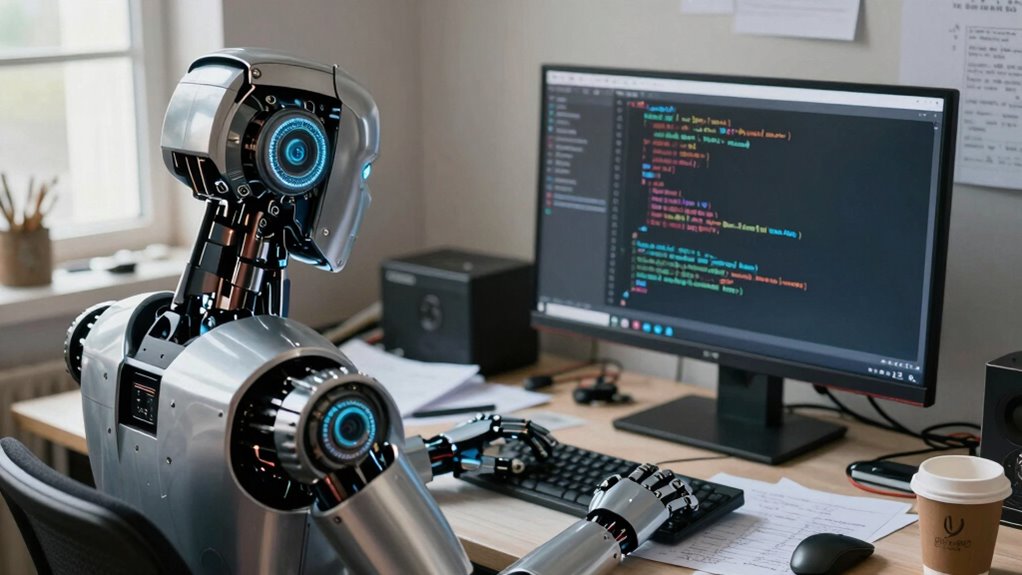

Many people believe AI is a sentient, unstoppable force that will take over the world, but that’s a misconception rooted in movies, not reality. AI operates based on algorithms, data, and patterns, without feelings or self-awareness. It’s designed to assist and augment human tasks, not replace humans entirely. AI can be biased or make mistakes, so it’s essential to understand its limits and ethical challenges. Discover the truth behind AI’s capabilities and how it’s influencing society today.
Key Takeaways
- AI lacks feelings, self-awareness, and human intuition; it operates based on data and algorithms.
- Many believe AI is infallible or will inevitably become uncontrollable, which is not true.
- AI is designed to augment human abilities, not replace humans entirely.
- Ethical concerns include bias, transparency, and accountability; AI systems can reflect flawed data.
- The idea that AI is an unstoppable threat to humanity is a common misconception.
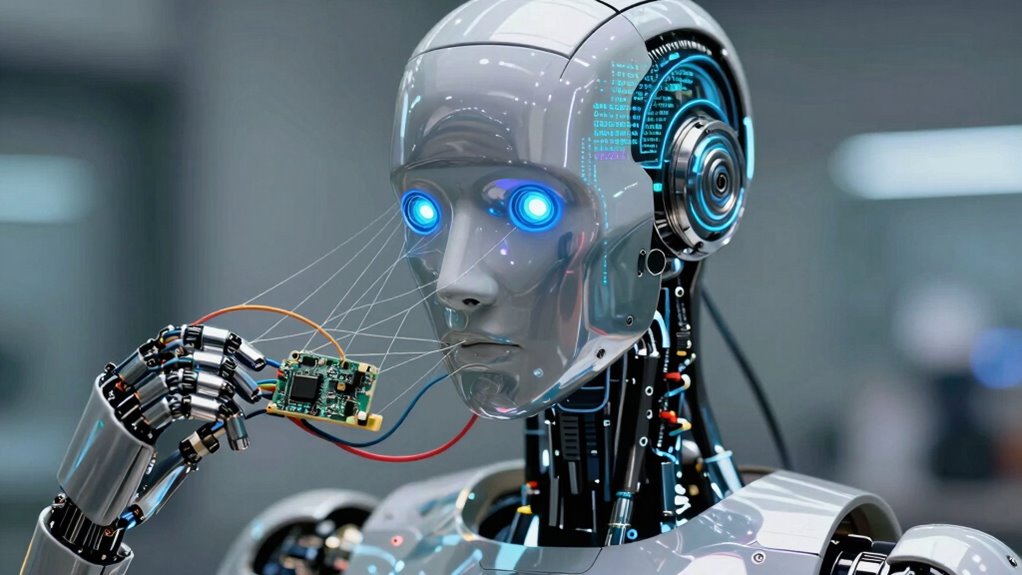
Have you ever wondered whether the stories about artificial intelligence are just science fiction or if they reflect reality? It’s a question many people ask as AI continues to grow more advanced and integrated into daily life. A common misconception is that AI systems are sentient or possess human-like consciousness. In truth, AI operates based on algorithms, data, and patterns, not feelings or self-awareness. When people think about AI ethics, they often imagine robots making moral decisions, but most AI today is designed to perform specific tasks without understanding the implications. These systems learn through machine learning, a process where algorithms improve by analyzing vast amounts of data. While machine learning enables AI to recognize images, interpret speech, or recommend products, it doesn’t give AI human intuition or judgment.
One of the biggest misunderstandings is that AI will inevitably become uncontrollable or hostile, like in many sci-fi movies. However, AI systems are built with strict parameters and oversight, and many experts emphasize the importance of AI ethics to guide development responsibly. AI ethics focuses on ensuring that AI is transparent, fair, and accountable. It’s about making sure algorithms don’t reinforce biases or cause harm, which is often overlooked in popular narratives. People also tend to assume AI will replace humans entirely, but this isn’t accurate. Most AI is designed to augment human capabilities, not replace them. For example, AI can handle data analysis much faster than humans but still relies on human oversight for decision-making.
Another misconception is that AI is infallible or always accurate. In reality, AI can be biased or make errors—especially if trained on flawed data. That’s why understanding machine learning limitations is crucial. Developers and users need to be aware of the risks and ethical considerations involved in deploying AI systems. Many believe that AI development is purely a technical challenge, but it’s equally an ethical one. Ensuring AI benefits society requires ongoing discussions about AI ethics, governance, and responsible use. Additionally, understanding the underlying technology, such as projector technology, helps contextualize how AI can be integrated into various domains responsibly. Recognizing the importance of AI transparency is essential for building public trust and ensuring accountability in AI systems. Moreover, understanding the training data used to develop AI models is vital to prevent unintended biases. Furthermore, insights from flat iron bike technology can shed light on how innovative tools are designed for safety and efficiency in their respective fields.
In the end, AI isn’t some unstoppable force or a threat to humanity. It’s a tool created by people, guided by human values and ethics. Recognizing what AI truly is — and what it isn’t — helps dispel myths and encourages smarter, safer adoption of this transformative technology.
AI ethics and bias training courses
As an affiliate, we earn on qualifying purchases.
As an affiliate, we earn on qualifying purchases.
Frequently Asked Questions
Can AI Develop Emotions or Consciousness?
AI can’t develop true emotions or consciousness. While machine empathy allows AI to recognize and respond to human feelings, it doesn’t experience emotions itself. The consciousness debate centers on whether machines can ever truly be aware or possess self-awareness. You might see AI simulate emotions convincingly, but it doesn’t feel or think like humans. Understanding this distinction helps you realize AI remains a tool, not a sentient being.
Will AI Completely Replace Human Jobs Soon?
Will AI completely replace human jobs soon? The answer’s no, but automation ethics highlight the risk of job displacement. You must recognize that AI lacks the nuanced understanding and emotional intelligence humans bring, making full replacement unlikely. Instead, AI will transform roles, augmenting your skills. Embrace this shift by adapting and learning new skills, ensuring you’re part of the future workforce rather than sidelined by automation.
Is AI Inherently Biased or Fair?
AI isn’t inherently biased or fair; it depends on how it’s built. You need to prioritize algorithm transparency to see how decisions are made, helping identify potential biases. Ethical implications play a vital role, so developers must guarantee AI systems are designed responsibly. When you focus on transparency and ethics, you reduce bias and promote fairness, making AI a tool that benefits everyone rather than perpetuating existing prejudices.
How Secure Is AI From Hacking or Misuse?
AI’s security depends on strong data encryption and ethical frameworks. While it’s resilient against hacking when properly protected, vulnerabilities exist if encryption fails or ethical guidelines are ignored. Imagine your AI system as a fortress; if the gates are well-guarded and the walls reinforced, misuse becomes unlikely. Continuous updates and strict ethical standards keep AI safe from hacking or misuse, but complacency leaves it vulnerable.
Can AI Truly Understand Human Context and Nuance?
AI, through machine learning, can grasp some human context and nuance, especially in natural language processing tasks. However, it doesn’t truly understand emotions or complex social cues like humans do. You might notice AI struggles with sarcasm, irony, or cultural subtleties because it relies on patterns rather than genuine comprehension. While impressive, AI still has limitations in fully capturing the depth of human communication and nuance.
AI transparency and accountability tools
As an affiliate, we earn on qualifying purchases.
As an affiliate, we earn on qualifying purchases.
Conclusion
Just like Pandora’s box, misconceptions about AI can release unwarranted fears and false hopes. Remember, it’s not a genie granting unlimited wishes but a tool shaped by human hands, with limitations and potentials. If you approach AI with understanding rather than suspicion, you’ll see it as a step forward, not a threat. Keep your eyes open and your mind clear—don’t let myths be the siren call that steers you away from its true promise.
machine learning data analysis software
As an affiliate, we earn on qualifying purchases.
As an affiliate, we earn on qualifying purchases.
As an affiliate, we earn on qualifying purchases.