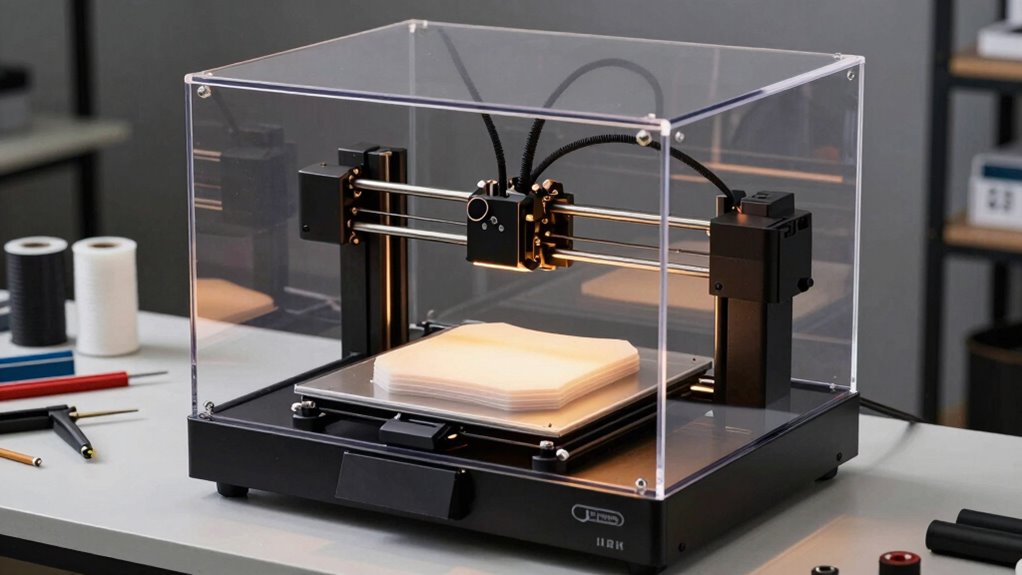

Enclosures in 3D printing are essential because they help you maintain a stable environment, ensuring consistent temperatures and reducing drafts that can cause warping or print failures. They also protect your workspace from fumes, dust, and noise, making printing safer and cleaner. With an enclosure, you can use temperature-sensitive materials and improve print quality overall. Keep going to discover how selecting the right materials and features can make your prints even better.

Get the latest gadgets delivered free with Prime
- Fast, free delivery on millions of items
- Prime Video, Amazon Music and more included
- Member-only deals all year
Key Takeaways
- Enclosures maintain a stable, high-temperature environment essential for printing with temperature-sensitive filaments like ABS and nylon.
- They protect prints from external drafts and environmental factors, reducing warping and improving print quality.
- Enclosures enhance safety by containing fumes, dust, and odors, creating a cleaner and safer workspace.
- They help prevent print failures by minimizing temperature fluctuations and environmental disturbances.
- Enclosures extend the lifespan of the printer and materials, reducing long-term replacement and maintenance costs.

Have you ever wondered why enclosures are becoming essential in 3D printing? It’s because they play a pivotal role in improving your printing results and ensuring a smoother experience. One of the main reasons is material selection. When choosing materials for your enclosure, you want options that can withstand high temperatures and provide good insulation. This helps protect your printer from external environmental factors, like drafts or temperature fluctuations, which can cause warping or layer misalignments. The right enclosure materials also prevent heat from escaping too quickly, maintaining a stable environment inside during the printing process. This consistency allows you to work with a broader range of filaments, including those that are sensitive to temperature changes, such as ABS or nylon. Additionally, material durability is crucial for long-term use and safety. Choosing high-quality, durable materials for your enclosure can also reduce the need for frequent replacements, saving costs over time.
Enclosures improve print quality by stabilizing temperature and protecting against environmental factors like drafts and temperature fluctuations.
Temperature control is another key factor that enclosures influence profoundly. When you operate a 3D printer without an enclosure, external air currents and temperature swings can make it difficult to keep a consistent temperature inside the build chamber. This inconsistency leads to print failures, warping, or poor layer adhesion. By enclosing your printer, you create a controlled environment where you can better manage the internal temperature. Many enclosures allow you to integrate heaters or fans, giving you precise control over the heat levels. This is especially important for materials that require a heated build chamber to prevent warping or to improve layer bonding. Maintaining a steady temperature not only enhances print quality but also reduces the need for post-processing corrections. Proper environmental control can significantly improve your overall printing success rate. In addition, temperature stability within the enclosure helps maintain consistent printing conditions, which is vital for achieving high-quality results.
Enclosures also serve as a barrier against dust, debris, and even odors, keeping your workspace cleaner and safer. They help contain fumes from certain filaments, which can be harmful if inhaled over time. This containment makes your printing setup more professional and comfortable, especially if you’re working in a shared or indoor space. Furthermore, they reduce noise, making your printing process less disruptive, especially in quiet environments.
In essence, enclosures are a smart investment because they optimize material selection options and provide superior temperature control. They help you achieve higher-quality prints with fewer failures, all while safeguarding your environment and enhancing your overall experience. Whether you’re a hobbyist or a professional, understanding the importance of enclosures in 3D printing underscores how they can turn a good print into an excellent one. With the right enclosure, you gain better control, safer operation, and more consistent results every time.
Products Worth Considering

Apple iPad Air 11-inch (M2), 512GB, Wi-Fi, Space Gray

Amazon Kindle Paperwhite Signature Edition (12th Generation, 2024), 32 GB, Metallic Black

DJI Osmo Mobile 8 Gimbal with Mic Mini Transmitter, Infinity Black
As an affiliate, we earn on qualifying purchases.
Frequently Asked Questions
Can Enclosures Improve Print Quality for All Filament Types?
Yes, enclosures can improve print quality for all filament types by providing better temperature stability, which is essential for consistent results. They help maintain ideal conditions regardless of filament compatibility, especially with materials sensitive to temperature fluctuations like ABS or PETG. By reducing drafts and external influences, enclosures guarantee your filament prints more reliably, resulting in smoother finishes and fewer errors across different filament types.
Do Enclosures Increase the Risk of Overheating the 3D Printer?
It’s a coincidence that enclosures can sometimes raise ventilation concerns, but yes, they might increase the risk of overheating your 3D printer if thermal regulation isn’t properly managed. An enclosure traps heat, so you need to guarantee adequate airflow and temperature controls. Proper ventilation helps prevent overheating, maintaining consistent print quality and protecting your machine. Just be mindful of these factors when designing or choosing an enclosure.
Are DIY Enclosures as Effective as Commercial Ones?
DIY enclosures can be quite effective, especially if you prioritize customization to suit your specific needs. While commercial enclosures often offer proven designs and reliable materials, DIY options allow you to tailor features like ventilation and insulation. However, commercial advantages include consistent quality, safety standards, and easier setup. Ultimately, both can work well, but your choice depends on your skill level, budget, and the level of reliability you desire.
How Do Enclosures Impact Print Speed and Cooling?
Enclosures can substantially impact print speed and cooling by optimizing airflow and ensuring temperature stability. When you use an enclosure, it maintains consistent heat, reducing warping and allowing faster printing without compromising quality. Proper airflow management inside the enclosure prevents hot spots and uneven cooling, which can cause layer defects. As a result, your prints are more reliable, and you can push your printer’s speed while maintaining high-quality results.
What Materials Are Safest for 3D Printer Enclosures?
Choosing safe materials for your 3D printer enclosure is like selecting a sturdy but breathable fabric. You should prioritize materials with good ventilation concerns and material compatibility, such as polycarbonate, acrylic, or aluminum. These materials resist heat and fumes while maintaining safety. Avoid plastics that emit harmful fumes or struggle with high temperatures. Always guarantee your enclosure’s materials are non-toxic and compatible with your printer’s environment to keep your workspace safe.
Conclusion
Just like a sturdy shell protects a delicate pearl, an enclosure safeguards your 3D prints from the chaos outside. It symbolizes a haven where precision and stability thrive, turning a simple machine into an artist’s sanctuary. Embrace enclosures not just as barriers, but as guardians of quality and consistency. In this quiet fortress, your creations find their true form, shining brighter against the storm of the world beyond.