TL;DR

Get the latest gadgets delivered free — and shop member deals
- Fast, free delivery on millions of items
- Access to Prime Big Deal Days deals on October 6–7
- Prime Video, Amazon Music and more included
A developer writing at yuka.dev says they booted Linux to a shell on an M4 Mac mini after debugging hardware initialization and CPU behavior. The report is an individual bring-up account, not evidence of a complete or broadly supported Linux installation; work on M4 support and the cause of a CPU sleep-related crash remain relevant uncertainties.
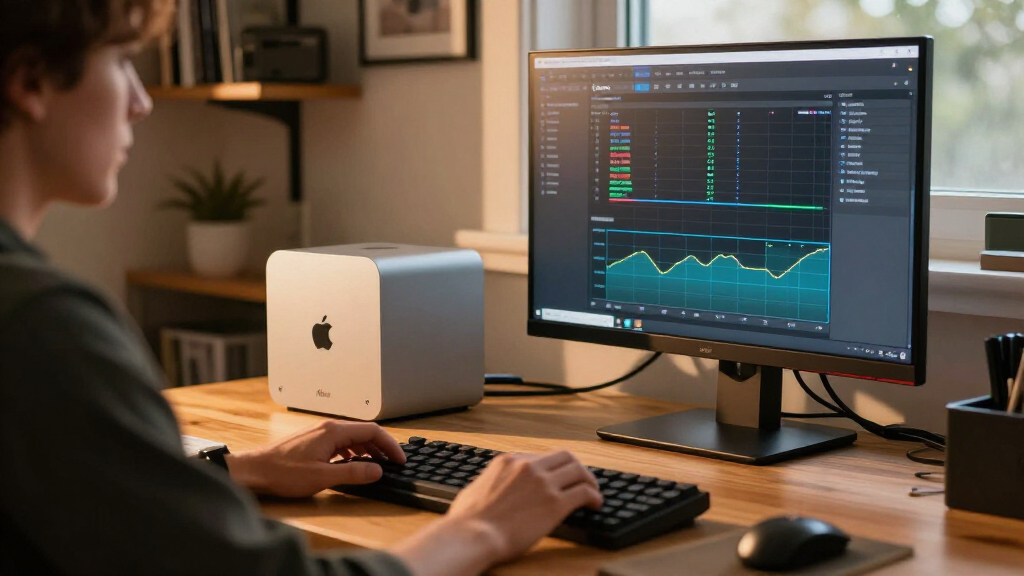
A developer has reported booting Linux to a shell on an M4 Mac mini, after tracing several early startup failures to hardware registers, memory mappings and CPU-core behavior. The account, published on yuka.dev on October 2, 2026, documents an individual effort using the m1n1 boot and research environment; it does not establish that M4 Macs now have a complete or generally supported Linux installation.
The developer bought the Mac mini in November 2024 and initially expected its support requirements to resemble those of earlier Apple Silicon systems. The report says M4 machines introduced a complication: they mandate SPTM, or Secure Page Table Monitor, which hardens macOS against vulnerabilities in its XNU kernel. Earlier Asahi Linux hardware work relied heavily on observing macOS driver activity through m1n1, but the author says SPTM requires substantial changes before macOS can run under that hypervisor approach.
Instead, the developer pursued a direct Linux boot, weakening the machine’s strict boot security and installing m1n1 as a custom boot object through macOS Recovery. Initial attempts exposed registers that could not safely be written in this mode. The report says GXF functionality was disabled or locked, and writing the CPU reset-vector register, RVBAR, caused a crash even though it already held the needed address. Skipping those operations allowed further testing.
The breakthrough came through low-level debugging. A minimal device tree and a small assembly print routine helped trace missing serial output to an absent identity mapping for memory-mapped I/O after Linux enabled its memory-management unit. Adding the mapping moved execution further into startup. The author then isolated another crash to a write to a virtualization-related CPU register; commenting out the write allowed Linux to reach a shell. The report says newer iBoot versions have since unlocked that register, making the workaround unnecessary.
What the M4 Boot Reveals
The report matters because it offers a concrete account of the gap between Linux running on earlier Apple Silicon Macs and bringing it up on the M4 generation. A machine that appears similar from the outside can require different handling of boot security, registers and processor initialization. The account gives other developers specific obstacles to investigate, while also showing why support cannot be assumed to carry over automatically from M1, M2 or M3 hardware.
It is also a limited but meaningful technical milestone: reaching a shell indicates that a Linux kernel can execute far enough to provide an interactive environment on this particular machine and setup. It does not, by itself, confirm that graphics, storage, networking, power management or other devices work reliably. The author thanks the Asahi Linux team for prior work and assistance, underscoring that the progress builds on a broader community effort rather than representing a finished, independently packaged product.
Linux compatible serial console for Apple Silicon
As an affiliate, we earn on qualifying purchases.
As an affiliate, we earn on qualifying purchases.
From M1 Methods to M4 Barriers
Asahi Linux is a community project working to bring Linux to Apple Silicon hardware. In the developer’s account, earlier generations benefited from m1n1-based observation of macOS and its drivers, which helped researchers infer how hardware should be initialized. The author says M4’s mandatory SPTM changed that path because the required hypervisor work was beyond their own experience at the time.
The timeline in the post spans multiple stages. After buying the Mac mini in November 2024, the developer got a USB proxy and shell access while testing m1n1 in December of that year. They returned to Linux boot debugging around the end of 2025, initially seeing no useful serial output. In January 2026, setting an explicit early console address and adding the device tree’s stdout-path produced diagnostic output. The later report describes subsequent steps toward a shell, but it does not provide a general release announcement or a broad hardware-support status.
““After I commented out this write, the kernel booted to a shell. Let’s goooo!””
— The developer, in the yuka.dev report
Mac mini M4 hardware debugging tools
As an affiliate, we earn on qualifying purchases.
As an affiliate, we earn on qualifying purchases.
Support Beyond One Mac Mini
The post is an individual technical account, and the available source does not establish how reproducible the boot is across other M4 configurations or whether the required work has been merged into a publicly supported Linux release. It also does not give a full device-by-device status for the Mac mini, so readers should not interpret “booted to a shell” as confirmation that the machine is ready for daily use.
The supplied account ends as it begins discussing a further crash involving secondary CPU cores and the WFI instruction, which can put a processor into a wait state. It mentions earlier Apple Silicon quirks and a setting identified in XNU open-source code, but the provided material does not include the complete diagnosis or resolution. The current state of that issue, and the status of remaining hardware support, are not specified.
As an affiliate, we earn on qualifying purchases.
Further CPU and Device Testing
The next reported technical work is to determine why starting the secondary cores leads to another crash, including the role of WFI behavior on the M4. Beyond that, wider testing would be needed to establish which devices and system functions work and whether the changes can be shared as maintainable upstream support. The author has not stated a release schedule or announced a complete installation process in the material provided.
Readers following progress can watch for updates from the developer and the Asahi Linux project. Until those updates clarify the CPU issue and broader hardware coverage, the documented shell boot should be treated as a development milestone on one M4 Mac mini rather than a general compatibility guarantee.
low-level debugging tools for Linux
As an affiliate, we earn on qualifying purchases.
As an affiliate, we earn on qualifying purchases.
Key Questions
Did the developer get Linux running on an M4 Mac mini?
Yes. The yuka.dev author reports that, after debugging early boot problems, the Linux kernel reached a shell on their M4 Mac mini.
Does this mean Linux is fully supported on M4 Macs?
No such conclusion is established by the report. Reaching a shell is a milestone, but the source does not confirm complete hardware support, broad reproducibility or inclusion in a supported release.
What prevented Linux from booting at first?
The author describes several separate obstacles, including writes to locked or unsuitable registers, missing memory mappings for serial I/O after MMU initialization, and a later crash associated with CPU-core startup.
What is still unresolved in the account?
The supplied report excerpt does not give the full outcome of the crash associated with secondary cores and the WFI instruction. It also does not specify the state of remaining hardware support or a release timeline.
Source: hn
Fall Picks
fall essentials
As an affiliate, we earn on qualifying purchases.