
You feel more digitally overwhelmed than ever because constant notifications, messages, and social media updates flood your attention, making it hard to focus or relax. Being always connected blurs work and personal boundaries, causing stress and anxiety. This relentless stream of information erodes mental clarity and increases feelings of exhaustion. To regain balance, you need to set boundaries and create healthy habits. Keep going to discover effective strategies to reclaim your mental space and find relief.
Listen free for 30 days with Audible
Thousands of audiobooks and originals — cancel anytime.
As an affiliate, we earn on qualifying purchases.
Key Takeaways
- Constant notifications and messages create relentless streams of information, leading to digital fatigue.
- 24/7 connectivity blurs boundaries between work and personal life, increasing stress and obligation.
- The fear of missing out (FOMO) drives frequent checking, intensifying feelings of overwhelm.
- Shortened attention spans from frequent interruptions hinder focus and mental clarity.
- Lack of boundaries and breaks from screens worsens emotional well-being and mental exhaustion.
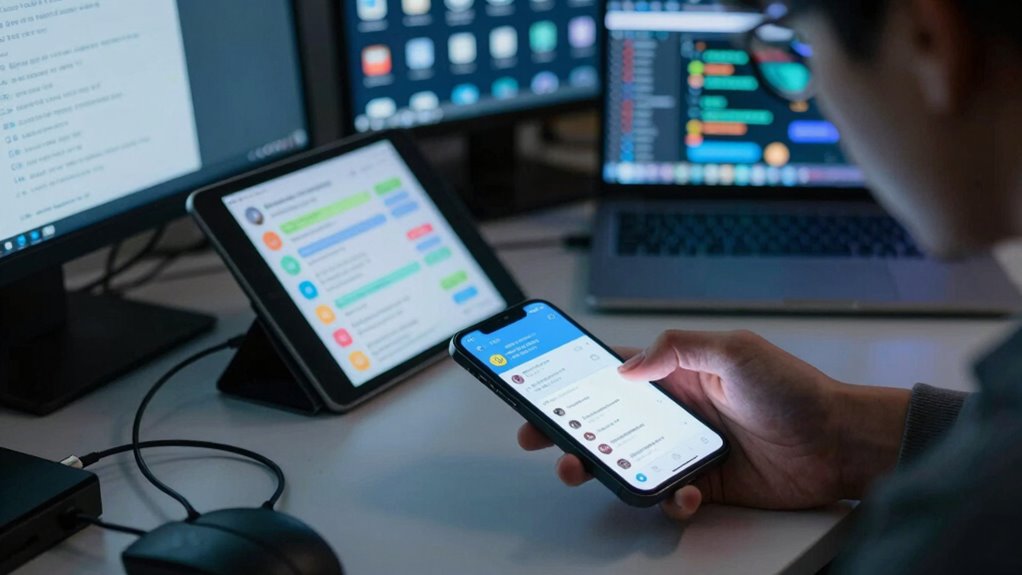
In today’s hyperconnected world, it’s no surprise that many people feel more digitally overwhelmed than ever before. The constant influx of notifications, messages, emails, and social media updates creates a relentless stream of information that’s hard to ignore. You might find yourself checking your devices first thing in the morning and scrolling through feeds late into the night, never fully disconnecting. This nonstop engagement fuels digital fatigue, leaving you exhausted and mentally drained. The endless cycle of alerts and updates keeps your brain in a state of constant alertness, making it difficult to relax or focus on any one task for long.
Constant notifications and nonstop engagement leave you exhausted and mentally drained in today’s hyperconnected world.
The core issue lies in the phenomenon of constant connectivity. Technology has made it possible to stay connected 24/7, but that convenience comes with a cost. You’re always reachable, which blurs the lines between work and personal life. Even when you’re not actively using your devices, the knowledge that you could be interrupted at any moment creates a sense of perpetual obligation. This perpetual state of accessibility can cause stress, anxiety, and a feeling of being overwhelmed. You may notice that your attention span shortens, and your ability to concentrate diminishes as your mind jumps from one notification to another. Incorporating visual aids or progress trackers can help manage the overload of information and provide clearer boundaries for digital consumption.
The pressure to stay updated and responsive can lead you to prioritize digital interactions over real-world experiences. Over time, this constant engagement chips away at your mental clarity and emotional well-being. You might feel guilty when you try to disconnect, fearing you’ll miss out on something important. This cycle of digital fatigue becomes a vicious circle, where the more you try to keep up, the more exhausted you feel. It’s easy to get caught in the trap of feeling compelled to respond immediately, even when it’s not necessary, simply because you’re accustomed to the expectation of constant connectivity. Recognizing the impact of digital overload on your mental health can help you develop healthier habits and boundaries.
To combat this, you need to set boundaries with your devices. Designate specific times to check your emails or social media, and create tech-free zones or periods during your day. Recognizing the toll that digital fatigue takes on your mental health can motivate you to take steps toward healthier habits. Incorporating practices like sound healing science or mindful music listening can also support relaxation and stress relief. Remember, taking breaks from screens isn’t just a luxury — it’s essential for maintaining your focus, reducing stress, and restoring a sense of balance in your life. You deserve to reclaim your time and mental space, even in a world that’s always online.
As an affiliate, we earn on qualifying purchases.
Frequently Asked Questions
How Does Digital Overload Impact Mental Health Long-Term?
Digital overload can negatively impact your mental health long-term by increasing cognitive fatigue, making it harder to focus and process information. It may also weaken your emotional resilience, causing you to feel more anxious, stressed, or overwhelmed. Over time, these effects can lead to burnout or depression if you don’t set boundaries and prioritize self-care. Managing your screen time and practicing mindfulness can help protect your mental well-being.
What Are the Signs of Digital Overwhelm in Daily Life?
You notice signs of digital overwhelm when you’re constantly distracted by notifications and find it hard to focus. You might experience tech addiction, feeling the urge to check your devices repeatedly. Notification fatigue leaves you feeling exhausted and overwhelmed, even during routine tasks. You may also feel anxious or irritable when away from screens, and struggle to disconnect, which signals you’re overwhelmed by digital demands and need a break.
Can Digital Overload Affect Physical Health?
Digital overload can definitely affect your physical health. You might experience physical fatigue from prolonged screen time, which drains your energy and causes muscle tension. Sleep disruption is common because blue light from devices interferes with your sleep cycle, making it harder to rest. Over time, these issues can lead to increased stress, weakened immunity, and other health problems, so managing your digital consumption is essential for your well-being.
How Do Different Age Groups Experience Digital Overwhelm?
You might notice that younger generations feel overwhelmed by social media, constantly bombarded with notifications and updates. Older adults, however, often struggle to set healthy tech boundaries, feeling overwhelmed by rapid information flow. Middle-aged individuals balance work and family, feeling the weight of digital demands. Whether you’re young or old, establishing clear tech boundaries helps manage digital overload, easing stress and reclaiming control over your digital life.
What Strategies Effectively Reduce Digital Stress?
You can reduce digital stress by practicing mindfulness techniques, which help you stay present and calm. A digital detox, like unplugging for a set time each day, also works wonders. Turn off notifications, set boundaries for screen time, and create tech-free zones. These strategies help you regain control, lessen overwhelm, and foster mental clarity, making your digital experience more manageable and less stressful.
As an affiliate, we earn on qualifying purchases.
Conclusion
Feeling overwhelmed by digital demands might seem unavoidable, but it’s within your control. By setting boundaries, taking regular breaks, and limiting notifications, you can regain your focus and peace of mind. It’s not about rejecting technology but managing it wisely. Remember, a little intentional effort goes a long way. So, don’t wait for burnout—start small today, and gradually reclaim your digital well-being. You’ve got this.
notification blocker for smartphones
As an affiliate, we earn on qualifying purchases.
As an affiliate, we earn on qualifying purchases.
As an affiliate, we earn on qualifying purchases.
NFL season / tailgating Picks
team gear
As an affiliate, we earn on qualifying purchases.