
📊 Full opportunity report: Claude And AI: Driving Rapid Innovation In Protein And Analytical Chemistry on ThorstenMeyerAI.com — validation score, market gap, and execution plan.

Get the latest gadgets delivered free with Prime
- Fast, free delivery on millions of items
- Prime Video, Amazon Music and more included
- Member-only deals all year
TL;DR
Anthropic announced that its Claude AI models successfully designed protein binders against most tested targets and processed analytical chemistry data faster than traditional methods. These developments suggest AI could streamline early biological and chemical research stages, though results are preliminary and not peer-reviewed. For a detailed analysis, see the original coverage here.
Anthropic has reported that its Claude AI models designed protein binders for 14 of 15 tested targets and processed raw analytical chemistry data in under 25 minutes, marking a notable advance in AI-driven laboratory workflows. These results could potentially reduce the time and labor involved in early-stage biological and chemical research, though they have not been peer-reviewed or confirmed as drug discoveries.
In a series of experiments, Anthropic used Claude models—specifically Mythos Preview and Opus 4.8—to generate candidate protein minibinders by operating publicly available tools for structure prediction, sequence design, and computational screening. The models worked with minimal human intervention after receiving detailed expert prompts, internet access, and high GPU capacity. Learn more about how AI accelerates scientific research from this analysis. Laboratory partners Adaptyv Bio and Twist Bioscience tested 1,320 designs, resulting in 354 confirmed binders, with hit rates of approximately 22.6% and 26.7% respectively, over a 48-hour multi-target campaign.
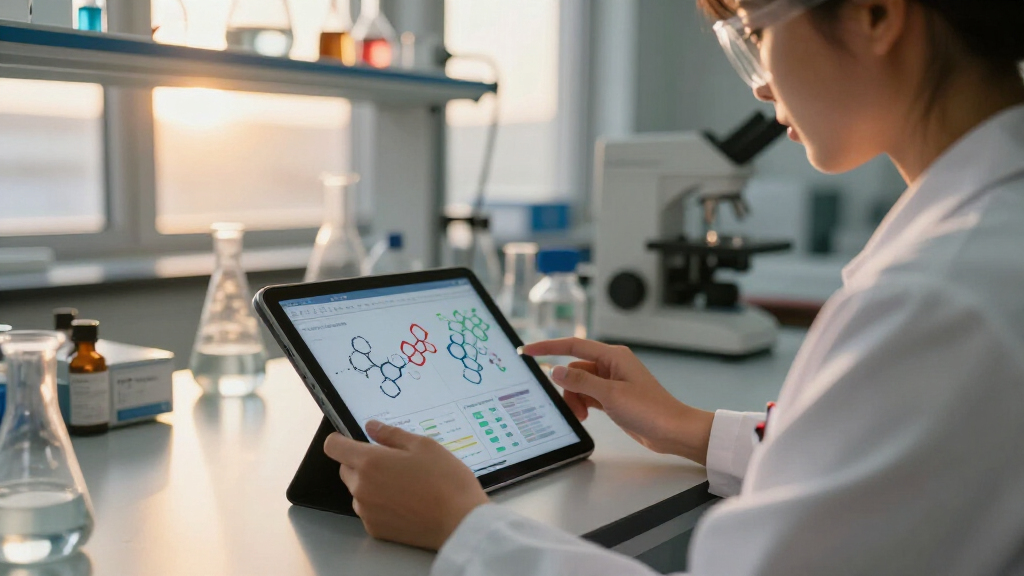
Separately, Claude Opus 5 was used to analyze raw nuclear magnetic resonance (NMR) and liquid chromatography–mass spectrometry (LC-MS) data from a contract lab, returning results in 19 to 23 minutes. The hydrogen counts and purity estimates closely matched laboratory measurements, demonstrating AI’s potential to streamline analytical chemistry workflows.
These experiments address two labor-intensive stages: initial protein candidate design and analysis of chemical data. The AI models did not replace specialist tools but coordinated their operation, suggesting a broader role for general AI models in scientific workflows. However, the results are preliminary, based on specific targets and limited datasets, and have not yet undergone peer review.
Potential Impact on Early-Stage Research Efficiency
The reported performance of Claude AI models indicates a potential to significantly shorten the time required for initial phases of drug discovery and chemical analysis. If validated, these tools could enable laboratories to test more candidates faster, reduce costs, and accelerate the overall research timeline. This could be especially impactful in biotech and pharmaceutical sectors, where early-stage screening is resource-intensive and time-consuming.
However, it is important to note that these are early results, not confirmed breakthroughs. The experiments involved specific targets and conditions, and performance may vary across different targets or less-resourced labs. The findings underscore the growing role of AI as a supportive tool rather than a replacement for expert knowledge, emphasizing the importance of further validation and independent testing.
protein structure prediction software
As an affiliate, we earn on qualifying purchases.
As an affiliate, we earn on qualifying purchases.
Background on AI in Protein and Chemistry Research
AI has increasingly been integrated into biological and chemical research, primarily through specialized software for protein structure prediction and data analysis. Prior to this, models like AlphaFold demonstrated AI’s capacity to predict protein structures, but automation of design and analysis workflows remained limited. Anthropic’s recent experiments build on this foundation by employing large language models like Claude to coordinate multiple tools and tasks in a semi-autonomous manner.
Previous efforts focused on isolated tasks, but the recent campaign suggests a shift toward AI-driven workflow management, capable of handling complex, multi-step research processes. These developments are still in early stages, with ongoing validation needed to confirm robustness and reproducibility across diverse settings.
Anthropic’s approach leverages large-scale prompting, internet access, and high GPU capacity to enable Claude to operate as a scientific agent, rather than a simple assistant, marking a step toward more autonomous AI in laboratory environments.
“The results from Anthropic’s experiments show promising signs that AI can help speed up early-stage research, but validation and peer review are still pending.”
— Thorsten Meyer, AI researcher
analytical chemistry data analysis tools
As an affiliate, we earn on qualifying purchases.
As an affiliate, we earn on qualifying purchases.
Unverified Nature of Results and Future Validation
While the initial results are promising, they have not been peer-reviewed or independently validated. The performance of Claude models may vary with different targets, datasets, or laboratory conditions. It remains unclear how well these results will generalize across broader applications or in less-resourced settings. Further testing and validation are necessary to confirm reliability and reproducibility.
As an affiliate, we earn on qualifying purchases.
Planned Validation and Broader Testing of AI Workflows
Anthropic plans to conduct more extensive laboratory validation, including independent replication and larger datasets. The company intends to release prompts and data for community review and establish a scientist access program for its most capable models. Additional research will focus on verifying AI performance across diverse targets and workflows, aiming to move toward more routine integration of AI in early-stage research.
liquid chromatography mass spectrometry (LC-MS) system
As an affiliate, we earn on qualifying purchases.
As an affiliate, we earn on qualifying purchases.
Key Questions
Did Claude AI discover a new drug?
No. Claude designed protein minibinders that attached to targets in laboratory tests, but these are early research results and do not constitute drug discovery. Further validation is required before any therapeutic applications can be considered.
Can Claude replace human scientists in research?
Currently, Claude acts as a support tool, coordinating specialist software and processing data with minimal human input. Human oversight remains necessary, especially for validation, interpretation, and decision-making in research workflows.
How reliable are these initial results?
The results are preliminary and based on limited datasets and specific targets. They have not been peer-reviewed, and performance may vary in different contexts. Further validation is needed before broader adoption.
What are the implications for drug development?
If validated, AI-driven workflows could reduce the time and cost of early-stage drug discovery, potentially accelerating the pipeline. However, these results are not yet at a stage where they impact clinical development or regulatory approval.
Source: ThorstenMeyerAI.com
Halloween Picks
halloween
As an affiliate, we earn on qualifying purchases.