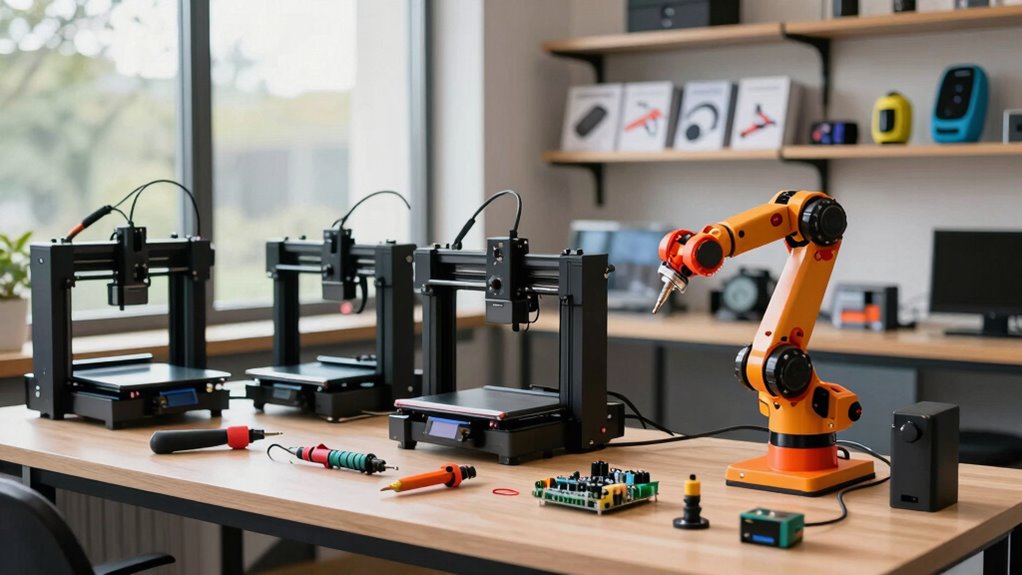
You’re part of a movement where maker tech has shifted from a niche hobby to a major consumer category. This change happened because affordable tools like Arduino and Raspberry Pi, along with tutorials and open-source platforms, made it accessible for everyone. Community support through maker spaces and online forums keep you motivated and inspired. With new fabrication techniques and a push for personalized projects, maker tech is now a vital part of modern innovation. Keep exploring to discover how it keeps growing and transforming.
Key Takeaways
- The affordability of microcontrollers like Arduino and Raspberry Pi democratized access to maker technology.
- Extensive tutorials, DIY kits, and open-source platforms lowered entry barriers for newcomers.
- Growth of maker communities and spaces fostered collaboration, knowledge sharing, and mainstream adoption.
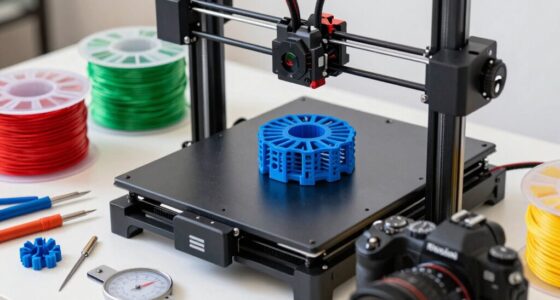
- Integration of digital fabrication methods like 3D printing expanded customization and rapid prototyping.
- Increasing emphasis on education and practical skills drove demand for maker tech as a valuable consumer product.
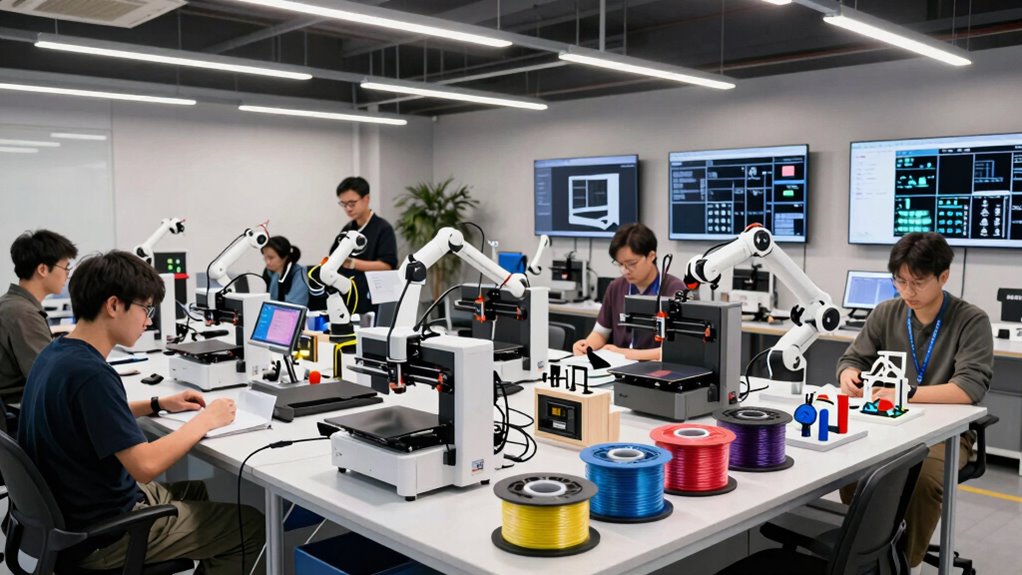
Maker tech has rapidly become an essential consumer category, transforming how people create, innovate, and customize their everyday devices. You’ve probably noticed how accessible DIY innovation has become, enabling you to build, modify, or repair gadgets with ease. This shift is driven by the availability of affordable tools, open-source platforms, and a growing community enthusiastic to share knowledge. No longer do you need to be a professional engineer to craft your own projects; maker tech empowers you to take control and develop solutions tailored to your needs. It’s not just about personal gratification—maker tech also serves as educational tools that deepen your understanding of electronics, coding, and design. Whether you’re a student, a teacher, or a hobbyist, these tools turn complex concepts into hands-on experiences, making learning engaging and practical.
Maker tech empowers anyone to create, modify, and learn through accessible tools, fostering innovation and hands-on education.
Your ability to experiment with maker tech encourages a mindset of innovation. When you plunge into DIY projects, you learn how to troubleshoot, iterate, and improve your designs. This iterative process fosters creativity, pushing you to think outside the box and develop new solutions. As maker tech becomes more mainstream, the barriers to entry continue to decrease. You can now access affordable microcontrollers like Arduino or Raspberry Pi, DIY kits, and detailed tutorials online. These resources enable you to set out on projects that once seemed intimidating, transforming your ideas into tangible products. It’s this democratization of technology that fuels the growth of maker culture, inviting more people to participate and contribute. Additionally, the proliferation of accessible tools and resources further accelerates the adoption of maker tech by making it easier for newcomers to get started. The rise of open-source platforms has also played a crucial role in democratizing innovation and collaboration within the maker community. Moreover, the availability of affordable tools is making advanced electronics and fabrication techniques more accessible than ever before. The collaborative nature of maker communities also enhances knowledge-sharing and collective problem-solving, which encourages continued growth and innovation. Furthermore, the integration of digital fabrication techniques like 3D printing has vastly expanded the scope for customization and rapid prototyping.
Educational tools within maker tech also help bridge the gap between theoretical knowledge and real-world application. As you tinker with sensors, motors, and programming languages, you gain practical skills that are highly valued in today’s digital economy. This hands-on approach enhances your problem-solving abilities and prepares you for future careers in STEM fields. Plus, the community aspect of maker tech offers ongoing support, feedback, and inspiration. You can join local maker spaces or online forums to exchange ideas, collaborate on projects, and learn from others’ experiences. This sense of belonging amplifies your motivation to keep creating and exploring.
In essence, maker tech’s rise as a serious consumer category is rooted in its ability to foster DIY innovation and serve as powerful educational tools. You’re no longer just a passive consumer of technology—you’re an active participant, shaping your environment and expanding your skills. The accessibility and collaborative nature of maker tech continue to fuel its growth, making it a fundamental part of how we learn, innovate, and personalize our world.
As an affiliate, we earn on qualifying purchases.
Frequently Asked Questions
What Are the Main Demographics of Maker Tech Consumers?
You’re likely part of the main demographics for maker tech, which includes hobbyist communities and DIY culture enthusiasts. These consumers tend to be younger, tech-savvy, and enthusiastic to learn new skills. They often seek innovative tools for projects, whether for personal enjoyment or small-scale entrepreneurship. Many are driven by creativity and a desire to customize, making maker tech appealing across various age groups and backgrounds, especially among those passionate about hands-on innovation.
How Does Maker Tech Influence Traditional Manufacturing Industries?
Maker tech influences traditional manufacturing by driving craftsmanship innovation and enabling more agile, customized production. You see supply chain disruption as small-scale makers bypass conventional channels, reducing delays and costs. This shift encourages larger companies to adopt maker tech tools, fostering collaboration and faster product development. As a result, traditional industries become more responsive, competitive, and innovative, blending craftsmanship with modern technology to meet evolving consumer demands.
What Are the Biggest Challenges for Maker Tech Adoption?
You face significant challenges in adopting maker tech, primarily due to cost barriers that make initial investment intimidating. Additionally, skill gaps hinder seamless integration, as many users lack the technical know-how needed to operate new tools effectively. Overcoming these hurdles requires investing in affordable technologies and providing accessible training. Addressing these issues helps you access maker tech’s full potential, making it a practical option for more consumers and industries alike.
How Does Maker Tech Impact Environmental Sustainability?
Maker tech acts like a green spark in sustainability efforts, substantially impacting environmental health. By fostering eco-friendly innovations, you can reduce waste and lower energy consumption. These technologies promote resource conservation, allowing you to create products with minimal environmental footprint. Embracing maker tech enables you to participate actively in building a more sustainable future, ensuring that your creations help protect the planet rather than harm it.
What Future Trends Are Expected in Maker Tech Development?
You can expect future maker tech development to focus on innovative materials and rapid prototyping. As these technologies advance, you’ll see more sustainable, lightweight, and customizable options that enable faster product iterations. These trends will empower you to create complex designs more efficiently, reducing waste and costs. The integration of smart tech and AI will further enhance your ability to prototype, pushing the boundaries of what’s possible in maker tech.
As an affiliate, we earn on qualifying purchases.
Conclusion
Think of maker tech like a rising tide, reshaping the shoreline of consumer culture. As it steadily swells, it carves out new islands of innovation and creativity, inviting you to explore uncharted waters. Embrace this wave, and you’ll find yourself riding the crest of a revolution where your ideas become reality. Maker tech isn’t just a trend—it’s the current guiding us toward a future where everyone can build their own world.
As an affiliate, we earn on qualifying purchases.
As an affiliate, we earn on qualifying purchases.