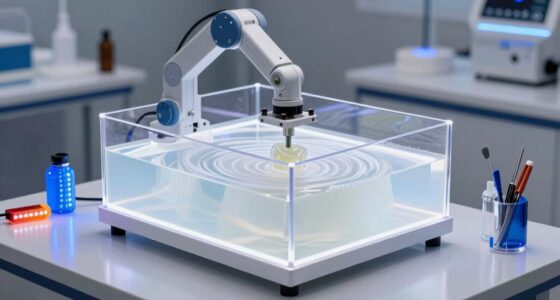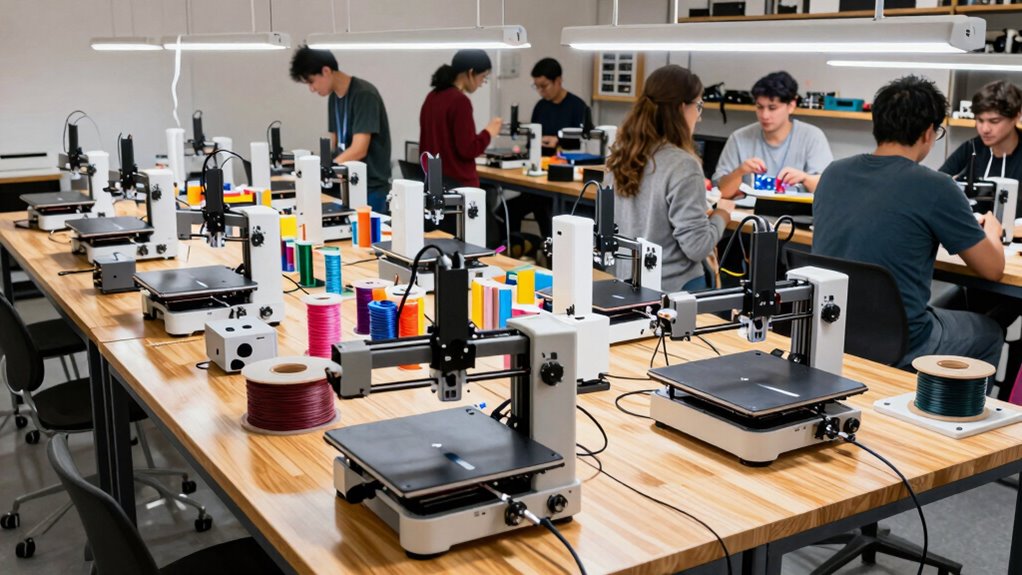

Maker tech became a serious consumer category as affordability, easy-to-use tools, and online communities made creating, customizing, and innovating accessible to everyone. You no longer need advanced skills to assemble gadgets, repair devices, or design new products. Advances in DIY electronics and 3D printing empower you to bring ideas to life easily. If you keep exploring, you’ll discover how this shift is shaping the future of personalized manufacturing and innovation.
Key Takeaways
- Maker tech transitioned from niche hobbyist activities to mainstream consumer products driven by increased accessibility and affordability.
- The rise of DIY electronics and modular kits lowered barriers to entry for electronic innovation and experimentation.
- Advancements in 3D printing enabled individuals to easily prototype and produce custom physical objects at home.
- Online communities, tutorials, and open-source resources fostered widespread participation and knowledge sharing.
- Market expansion, user-friendly software, and integration of technologies fueled consumer demand and innovation.
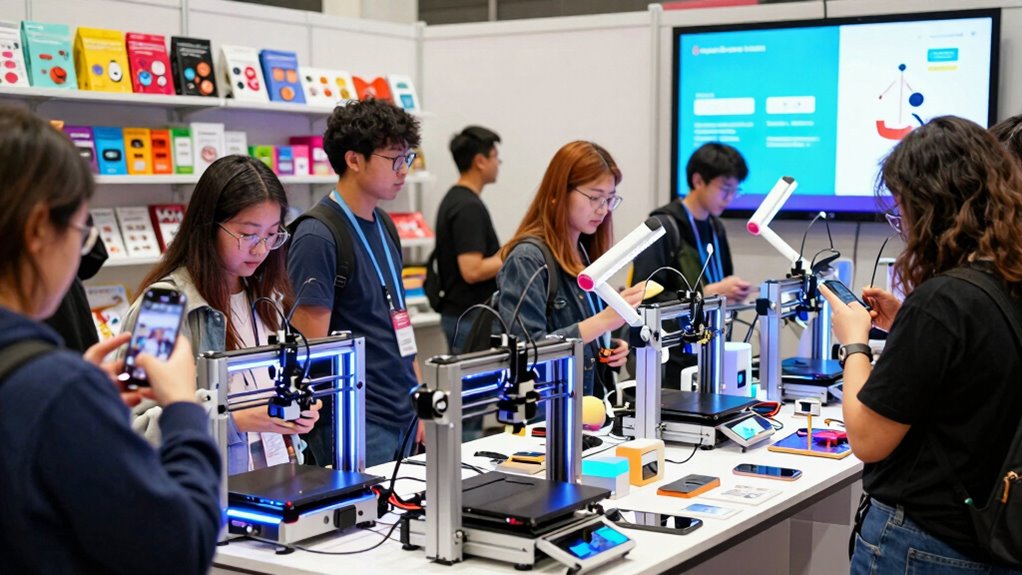
Once confined to workshops and hobbyists, Maker Tech is now stepping into the mainstream as a recognized consumer category. This shift reflects a growing desire among everyday consumers to create, customize, and innovate without needing advanced technical skills. The rise of DIY electronics has played a vital role in this transformation. Today’s consumers can easily assemble their own gadgets, repair devices, or develop new solutions from readily available components. Thanks to affordable microcontrollers, sensors, and modular kits, you can immerse yourself in DIY electronics with minimal prior experience, making the process more accessible than ever.
Maker Tech is now mainstream, enabling everyone to create and customize with accessible DIY electronics and kits.
Simultaneously, 3D printing advancements have revolutionized how you bring ideas to life. No longer are 3D printers reserved for industrial uses or dedicated makerspaces; now, compact, user-friendly models sit comfortably on desks and in homes. These printers enable you to design and produce custom parts, prototypes, or artistic projects quickly and affordably. As 3D printing technology continues to improve—offering better resolution, faster speeds, and a broader range of printable materials—you gain more confidence to experiment and innovate on your own terms. This democratization of manufacturing means you’re not limited by traditional supply chains or high costs; instead, you can create physical objects from digital designs with just a few clicks.
The combination of DIY electronics and 3D printing advancements fuels a new era of maker culture that’s accessible to everyone. You don’t need a background in engineering or industrial design to participate. Instead, you tap into online communities, tutorials, and open-source resources that make learning and experimenting straightforward. This collaborative environment encourages innovation and sharing—allowing you to troubleshoot, improve designs, and showcase your projects. The technology’s affordability and ease of use lower the barriers to entry, turning your creative ideas into tangible products without the need for large investments or specialized training.
As Maker Tech becomes more mainstream, companies are recognizing the consumer’s desire to build and customize. Marketplaces for DIY electronics kits and 3D printing supplies expand constantly, making it easier for you to access tools and components. Software platforms that simplify design and programming further empower you to take full control of your projects. Ultimately, this convergence of DIY electronics and 3D printing advancements transforms you from a passive consumer into an active creator, shaping the future of Maker Tech as a vibrant, accessible, and innovative consumer category. Additionally, the democratization of manufacturing allows for greater innovation and personalized production, further fueling this movement. The integration of these technologies is also fostering a collaborative maker community, which accelerates learning and sharing among enthusiasts and newcomers alike.
As an affiliate, we earn on qualifying purchases.
Frequently Asked Questions
What Are the Main Challenges for Maker Tech Brands Entering Mainstream Markets?
You face challenges like achieving effective market penetration and establishing strong branding strategies. To succeed, you need to differentiate your maker tech products from competitors and build trust with mainstream consumers. Understanding the target audience’s needs and preferences helps tailor your messaging. Overcoming perception barriers and demonstrating reliability are key. By focusing on these areas, you can navigate entry into mainstream markets and expand your maker tech brand’s reach successfully.
How Has Maker Tech Influenced Traditional Manufacturing Industries?
Maker tech has acted as a catalyst, transforming traditional manufacturing industries like a spark igniting a wildfire. You see, DIY culture and open source collaboration now challenge established norms, encouraging faster innovation and customization. This shift pushes industries to adopt more flexible, cost-effective methods, embracing maker principles. As a result, manufacturing becomes more democratized, empowering individuals and small businesses to contribute, innovate, and reshape the landscape with unprecedented agility.
What Safety Standards Are Applied to Consumer Maker Tech Products?
You should know that safety regulations and certification standards are essential for consumer maker tech products. These standards guarantee products are safe to use, reducing risks of injury or malfunction. Manufacturers typically adhere to industry-specific certification standards like UL, CE, or FCC, which verify compliance with safety and performance criteria. Always check for these certifications before purchasing, as they indicate the product has met established safety regulations for consumer use.
How Do Maker Communities Impact Product Development and Innovation?
You might think lone inventors hold all the power, but it’s actually DIY collaboration and open source innovation that drive progress. Maker communities challenge traditional product development, encouraging diverse ideas and rapid iteration. Their collective creativity sparks new features and solutions, making innovation faster and more inclusive. So, in a way, these communities turn everyone into a co-creator, proving that great ideas thrive when shared and improved together.
What Future Trends Are Expected in the Maker Tech Consumer Category?
You’ll see future trends in maker tech driven by the growth of DIY culture and open source platforms. As more people embrace hands-on projects, expect increased customization, affordability, and collaboration. Open source platforms will foster innovation, enabling you to modify and improve devices easily. Additionally, smart manufacturing and AI integration will make maker tech more accessible, empowering you to create sophisticated products at home and fueling the maker movement’s expansion.
As an affiliate, we earn on qualifying purchases.
Conclusion
You’ve seen how maker tech has evolved from niche hobbyist tools to a major consumer category. Today, over 30% of consumers are interested in DIY electronics and 3D printing, showing just how much this movement has gained momentum. This shift means more people are embracing creativity, innovation, and personalization in their everyday lives. As maker tech continues to grow, expect to see even more groundbreaking products that empower you to design and build your own solutions.
microcontroller development board
As an affiliate, we earn on qualifying purchases.
As an affiliate, we earn on qualifying purchases.
As an affiliate, we earn on qualifying purchases.