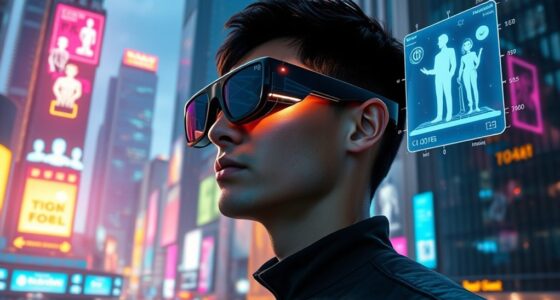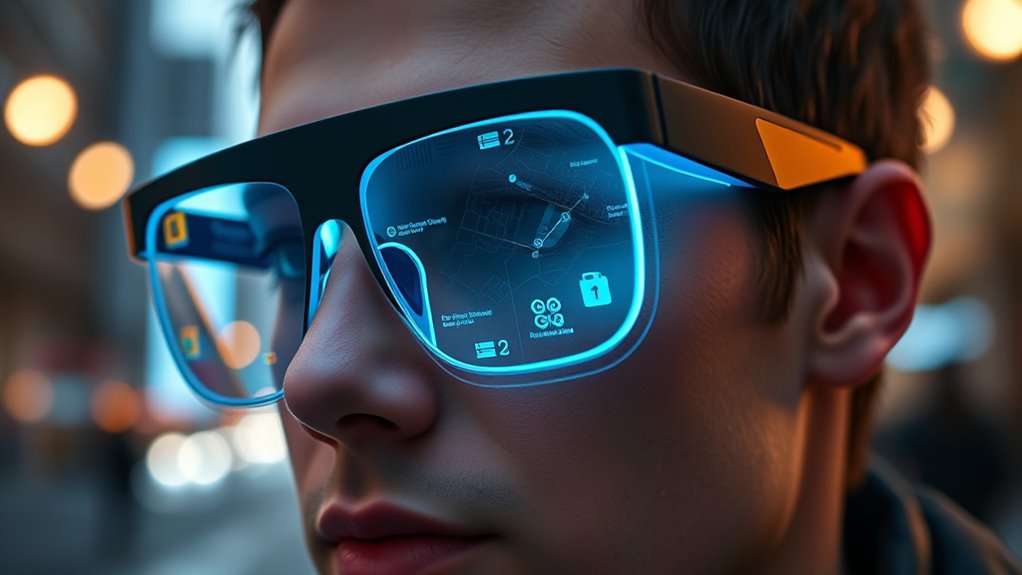

Smart glasses are improving and offer hands-free, real-time info that complements your smartphone, but they likely won’t replace it soon. While AR devices excel at quick, contextual tasks and workplace support, smartphones still handle complex apps and multitasking better. Technological advances are making smart glasses more capable, but limitations like battery life and ecosystem compatibility mean they remain a secondary tool. If you want to understand how both devices will work together, stay tuned.
Key Takeaways
- Smart glasses excel in hands-free, real-time information delivery, but lack the processing power and display versatility of smartphones.
- Ecosystem and app compatibility challenges hinder smart glasses from fully replacing smartphones in daily use.
- Limited battery life and small displays restrict smart glasses’ ability to handle complex tasks or extended use.
- Both devices are expected to coexist, serving complementary roles rather than one replacing the other entirely.
- Technological advancements and market trends point toward integrated use rather than complete replacement of smartphones by smart glasses.
The Current State of Smart Glasses Technology
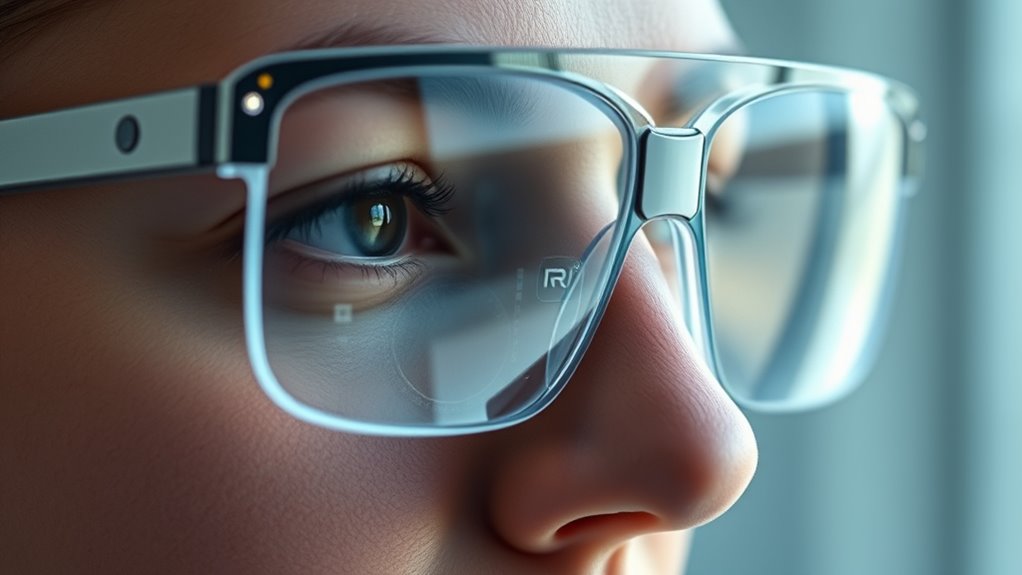
Smart glasses are rapidly evolving, but they still primarily excel at delivering information and enabling hands-free interactions. You can easily access data, instructions, or notifications without reaching for your phone. Voice commands and gesture controls make interactions more natural, letting you stay focused on your task. However, current limitations include battery life, processing power, and storage, which are still inferior compared to smartphones. Complex tasks like detailed content creation or intensive computing are better suited to larger screens. Most smart glasses are lightweight and designed for specific professional use cases—like technicians, healthcare workers, or warehouse staff—who benefit from hands-free operation. While technology is advancing, smart glasses today complement rather than replace smartphones, focusing on real-time, contextual information delivery. Additionally, ongoing improvements in AI integration are expected to expand their capabilities in the near future. As developers continue to address these technical challenges, the potential for smarter, more capable devices grows, especially as advances in display technology improve visual clarity and user experience. Moreover, battery efficiency improvements are crucial for extending usage time and making these devices more practical for everyday use. Furthermore, energy-efficient hardware development is vital for enhancing overall device sustainability and user convenience.
Advantages of Augmented Reality Devices in the Workplace
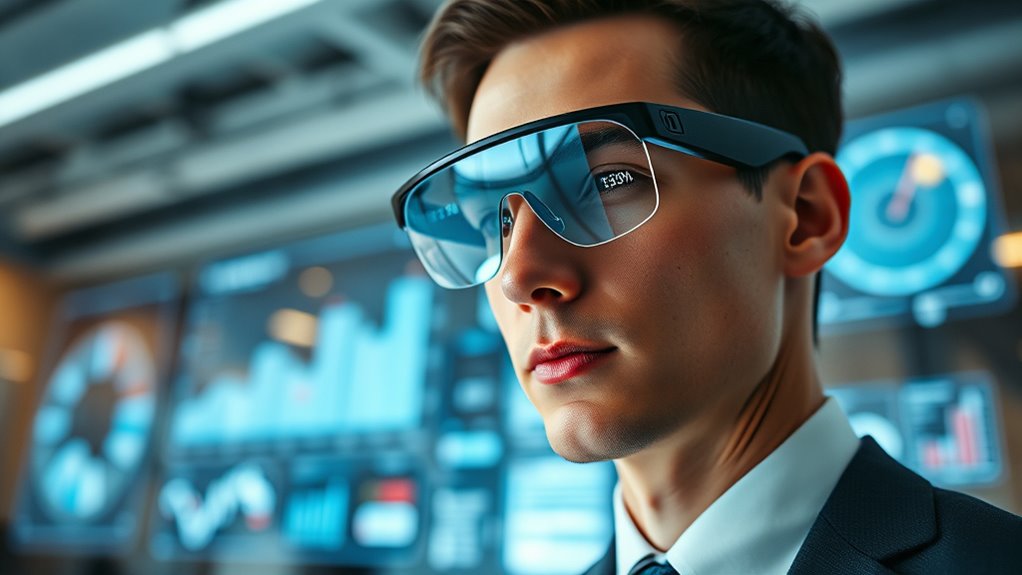
Have you ever considered how augmented reality devices transform workplace productivity? They provide real-time support, improve safety, and streamline workflows. Here are four key advantages:
- Hands-free Guidance: Technicians can access repair steps while using both hands for complex tasks, reducing errors and speeding up repairs. AI-powered AR devices can analyze tasks and suggest optimal procedures, enhancing efficiency. This capability is particularly valuable in Fort Worth, Texas, where cowboy culture and skilled trades often require precise and safe work practices. Additionally, LED masks and other skincare tech can be integrated into wellness routines to promote relaxation and skin health during breaks. Incorporating practical knowledge into workflow routines allows workers to adapt quickly and confidently to various situations.
- Instant Information: Warehouse workers receive inventory updates and picking instructions without interrupting their flow. This capability leverages real-time data to keep operations smooth and responsive.
- Enhanced Patient Care: Healthcare professionals review patient data during exams, maintaining focus and communication.
- Workflow Continuity: Contextual info appears exactly when needed, minimizing disruptions and keeping tasks flowing smoothly. Additionally, essential oils can be incorporated into wellness routines to support focus and reduce stress during work hours.
These benefits boost efficiency, reduce mistakes, and enable better decision-making in demanding environments. AR devices adapt seamlessly, making work safer and more productive.
Persistent Strengths of Smartphones in Daily Use

Despite the rise of augmented reality glasses, smartphones remain indispensable because they offer unmatched versatility for everyday tasks. You rely on them for communication, browsing, and content creation, thanks to their large screens and powerful processors. They handle complex applications, detailed data entry, and multitasking with ease, which current AR glasses still struggle to match. The extensive ecosystem of apps, security features, and infrastructure guarantees your smartphone stays relevant across personal and professional settings. When you need to manage extensive information or perform detailed tasks, the larger touchscreen and familiar interface make a significant difference. Smartphones also provide long battery life and high processing power, making them the go-to device for multitasking, productivity, and entertainment, even as AR glasses evolve. Additionally, the powerful processors in smartphones enable seamless operation of demanding applications, reinforcing their dominance in daily use. Moreover, their robust security features ensure data protection and privacy, which is crucial for both casual and professional use. The widespread adoption and user familiarity with smartphones further solidify their position as essential tools in everyday life.
Technical Innovations Shaping Future AR Glasses
Innovations in display technology and processing power are driving the evolution of future AR glasses, making them more powerful and seamless than ever before. These advances enable richer visuals, faster responses, and more natural interactions. You can expect:
- MicroLED displays that deliver brighter, more energy-efficient images with higher contrast.
- Miniaturized processors that boost performance while reducing size and power consumption.
- Advanced battery tech providing longer usage times to support all-day wear.
- Enhanced sensors and cameras that enable precise tracking, better environmental understanding, and real-time data overlay.
- Developments in wearable technology are also contributing to more comfortable and user-friendly designs, making AR glasses more accessible to a wider audience. Additionally, ongoing research in power management is crucial for maintaining longer device operation without increasing size or weight.
These innovations will make AR glasses more intuitive, lightweight, and capable of replacing many smartphone functions, paving the way for a truly integrated digital experience.
Industry Investment and Market Trends
As the market for augmented reality glasses matures, industry investment is shifting from experimental prototypes to scalable, consumer-ready products, signaling a pivotal shift. Major players like Apple, Samsung, and Qualcomm are increasing funding, focusing on refining designs, extending battery life, and enhancing AI interfaces. High price points, such as Apple’s $3,500 device, highlight market barriers but also demonstrate confidence in future adoption. Collaborations and new operating systems, like Android XR, aim to standardize and accelerate development. Industry focus is on creating sleeker, more affordable devices with better performance to appeal to mass markets. As investments grow, you’ll see smart glasses evolve from niche tools to mainstream accessories, complementing smartphones and expanding AR’s role in daily life. The market trends indicate a strong move toward integrating AR glasses seamlessly into everyday routines.
Combining Smart Glasses and Smartphones for Optimal Productivity
The future of augmented reality hinges on seamlessly integrating smart glasses with smartphones to maximize productivity. This hybrid approach allows you to leverage each device’s strengths for best results. Here’s how it works:
- Hands-free access: Use smart glasses for instant information, navigation, or instructions without interrupting your workflow.
- Complex tasks: Rely on your smartphone’s processing power for detailed content creation, data entry, and extensive applications.
- Real-time updates: Synchronize notifications, messages, and project updates across both devices to stay informed without switching platforms. Device synchronization is essential for maintaining seamless workflows.
- Enhanced collaboration: Share AR overlays and live visuals from glasses with colleagues, while managing detailed discussions on your phone. Additionally, inter-device connectivity is rapidly advancing, enabling even more integrated and efficient workflows. Developing interoperability standards will further enhance these connections, promoting smoother integration. As software integration improves, the user experience will become more intuitive and cohesive.
- Technological integration: The ongoing development of smart appliance connectivity and automation will further streamline interactions between smart glasses and smartphones, making workflows even more efficient.
This integration ensures you stay efficient, reducing cognitive load and workflow disruptions, ultimately boosting productivity.
The Road Ahead: Will Smart Glasses Fully Replace Smartphones?
Although smart glasses are advancing, technological limitations like battery life and processing power still hold them back from fully replacing smartphones. You’ll also face challenges with ecosystem compatibility, as many apps and services aren’t yet optimized for AR glasses. Additionally, market research indicates that the adoption rate of new technologies like smart glasses depends heavily on sector performance and investor confidence, which currently favor a gradual integration rather than outright replacement. Factors such as wearable device comfort and durability will also influence consumer acceptance in the coming years. Ultimately, both devices will likely coexist, each serving different needs in your daily routine.
Technological Limitations Persist
Despite rapid advancements in augmented reality technology, smart glasses still face significant limitations that prevent them from fully replacing smartphones. These hurdles include:
- Limited battery life, restricting continuous use to around four hours.
- Insufficient processing power for demanding tasks, making complex applications sluggish.
- Small displays that hinder content creation and detailed navigation.
- Content management challenges, as transferring and syncing data between devices remains cumbersome.
Proper device sizing is crucial for effective content creation and navigation.
Because of these issues, smart glasses excel at quick information access and hands-free interaction but fall short in handling intensive tasks or extensive content editing. While they enhance specific workflows, they can’t yet match the versatility and power of smartphones, which remain the primary device for most digital needs. Overcoming these limitations is essential for future adoption.
Ecosystem Compatibility Challenges
While current technological limitations hold back smart glasses from fully replacing smartphones, another significant hurdle lies in ecosystem compatibility. You’ll find that existing apps, services, and infrastructure are built around smartphone platforms, making seamless integration with smart glasses difficult. Developers prioritize Android and iOS, leaving smart glasses with limited access to the full range of applications you rely on daily. Compatibility issues can lead to fragmented experiences, forcing you to switch between devices or compromise functionality. Additionally, enterprise systems are often tailored specifically for smartphones, creating barriers for smart glasses to become universal tools. Until applications, cloud services, and hardware standards align across platforms, smart glasses will struggle to replace the comprehensive ecosystem you depend on. This fragmentation slows widespread adoption and limits their potential as a primary device.
Frequently Asked Questions
How Soon Will Smart Glasses Achieve Full Standalone Functionality Comparable to Smartphones?
Smart glasses will likely achieve full standalone functionality within the next 3 to 5 years. You’ll see improvements in battery life, processing power, and storage, enabling more complex tasks. However, current limitations mean they’ll complement rather than replace smartphones for now. You’ll still rely on your phone for detailed content creation, extensive apps, and data entry, while glasses handle quick, hands-free information delivery and contextual interactions.
Can Smart Glasses Effectively Replace Smartphones for Content Creation and Detailed Application Use?
Can smart glasses truly replace smartphones for content creation and detailed app use? Not yet. While they excel at hands-free info access and quick interactions, their limited processing power, storage, and screen size make complex tasks cumbersome. You’ll find it more efficient to stick with your smartphone for editing videos, typing lengthy documents, or managing intricate apps. Smart glasses are perfect for quick, contextual info, not replacing your main computing device.
What ARe the Main Barriers to Mass Adoption of Advanced AR Glasses?
The main barriers to mass adoption of advanced AR glasses include high costs like the $3,500 price tag, limited battery life of around four hours, and bulky designs that may not appeal to everyone. You also face technical hurdles like processing power and content creation limitations. Additionally, many users prefer smartphones for complex tasks, and widespread infrastructure or security concerns slow down mainstream acceptance.
How Will Future AR Glasses Integrate With Existing Enterprise and Consumer Ecosystems?
Future AR glasses will seamlessly synchronize with your existing enterprise and consumer ecosystems, smartly sharing data, delivering directions, and disguising device disparities. You’ll see smooth, synchronized systems supporting tasks, from professional projects to personal pursuits. By blending bold, bridging technologies, these glasses will bolster your workflows and bolster your leisure, becoming a natural, nuanced, and necessary part of your daily digital domain—delivering a dynamic digital dance that’s both direct and discreet.
Will Augmented Reality Glasses Eventually Match or Surpass Smartphone Security and Privacy Standards?
Yes, augmented reality glasses will eventually match or surpass smartphone security and privacy standards. You’ll see advanced biometric authentication, encrypted data channels, and real-time security updates integrated into smart glasses. As technology evolves, manufacturers will prioritize robust security measures, making your AR experience safer. This progress guarantees your personal and professional information remains protected, giving you confidence in using AR glasses for sensitive tasks without compromising privacy.
Conclusion
While smart glasses are advancing rapidly, they haven’t yet matched smartphones’ versatility—still, 70% of consumers see AR devices improving daily tasks. Imagine a future where you can access everything hands-free, seamlessly blending work and play. Though smart glasses might not fully replace smartphones soon, they’ll certainly enhance how you interact with technology, making your life more efficient and immersive. Stay excited—your next device could be smarter than you ever imagined.