
TL;DR

Get the latest gadgets delivered free — and shop member deals
- Fast, free delivery on millions of items
- Access to Prime Big Deal Days deals on October 6–7
- Prime Video, Amazon Music and more included
A July 1, 2026 ISR Briefing report identified Ukraine’s Delta as a leading example of software-defined warfare. The system fuses drone, satellite, sensor and vetted human reports into a browser-based battlefield picture, but its claimed performance and resilience limits remain partly unverified.
A July 1, 2026 ISR Briefing report identified Ukraine’s Delta battlefield-management system as a leading case of software-defined warfare, saying the platform pushes a live, fused combat picture to soldiers through ordinary browsers while raising questions about cyber resilience and battlefield trust.
Delta is described as a situational-awareness and battlefield-management system built through an unusual Ukrainian coalition involving Aerorozvidka, the Defense Ministry’s defense-technology innovation center and the Ministry of Digital Transformation. According to the report, it combines drone feeds, satellite imagery, sensor data, partner intelligence and vetted field reports into a geolocated common operating picture.
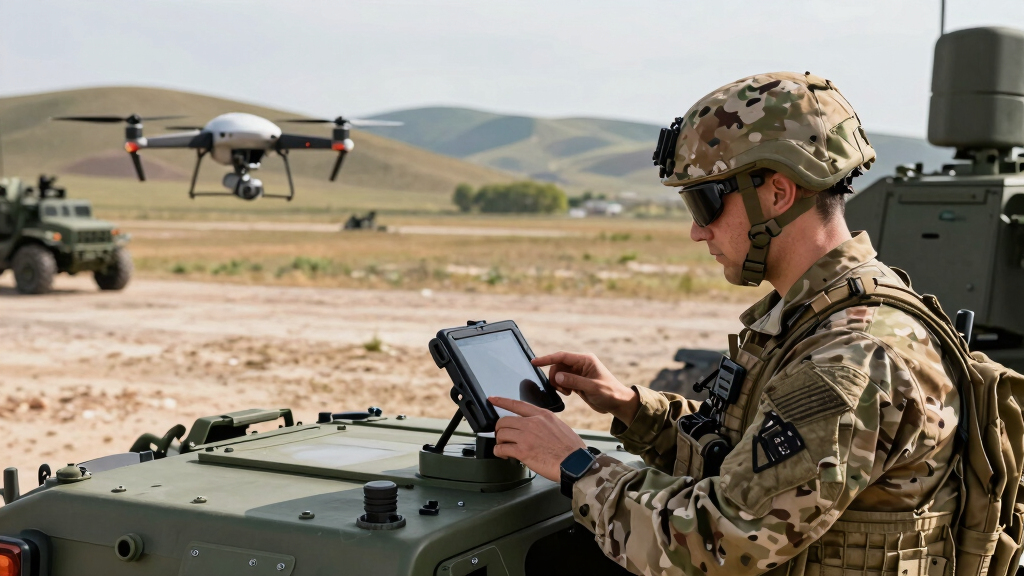
The system’s defining feature is its cloud-native backend and browser-based client. The report says Delta can run on ordinary phones, tablets, laptops and PCs, allowing soldiers to view enemy positions, imagery and operational updates without a dedicated military terminal. Its backend is described as being hosted outside Ukraine, a design meant to reduce the risk that a missile strike or domestic infrastructure attack could disable it.
The report frames Delta’s main advantage as data fusion, not any single sensor. It says the scarce resource on the modern battlefield is the layer that turns many inputs into one trusted picture and moves that picture to units at the edge. A claimed Ukrainian Defense Ministry figure of 1,500 targets per day is cited in the source material, but the report says that number is not independently verified.
Software-defined warfare: how Ukraine’s Delta turned the battlefield into a shared, real-time map
A soldier opens a browser and sees the fused war — drones, satellites, sensors and vetted reports on one live map. The backend is a cloud deliberately hosted abroad so a missile can’t take it down. The clearest case yet of treating warfare as software.
Optical sensors go blind in cloud & dark; an all-weather SAR radar layer — the kind VigilSAR produces — slots into a picture like this as one resilient, sovereign input. vigilsar.com · And note the paradox: to survive missiles & cyberattack, Ukraine hosted its crown-jewel cloud outside its own borders — trading physical sovereignty for operational survivability. Resilience through distribution.
Delta’s lasting lesson isn’t a piece of software — it’s a model of how to build: commodity clients, cloud backend, open standards, relentless iteration, fusion over hardware, and resilience through distribution. It’s why a wartime NGO out-shipped procurement bureaucracies on a fraction of the budget. The platform mattered less than the picture — and the picture is software. Own the fusion layer, own the sovereign feeds into it, and get it to the edge.
Battlefield Data Became the Weapon
The report matters because Delta points to a shift in military advantage from large proprietary platforms toward software speed, open standards and the ability to connect many sensors quickly. In that model, the decisive system is less a vehicle, aircraft or radar than the fusion layer that helps units see, share and act faster.
For NATO militaries and defense buyers, Delta is a pressure test for slow procurement systems. The source material argues that Ukraine, under wartime pressure, moved at startup tempo by pairing a civil-tech ecosystem with military users. That does not prove the model can be copied wholesale, but it shows why commodity hardware and web-based tools are now part of the defense debate.
browser-based battlefield management system
As an affiliate, we earn on qualifying purchases.
As an affiliate, we earn on qualifying purchases.
Delta’s Wartime Build Path
Delta’s roots are tied to a 2017 NATO-backed effort to reduce information silos in Ukraine’s armed forces. The report says the system later grew through collaboration between military units, the volunteer technology group Aerorozvidka and government digital teams associated with Mykhailo Fedorov’s ministry.
The 2024 CSIS analysis by Bondar used the phrase software-defined warfare to describe the broader pattern. In Delta’s case, that means a system built around frequent software iteration, many data sources and compatibility with ordinary devices, rather than a closed military hardware stack. The ISR Briefing report connects that pattern to Ukraine’s need for resilience under missile attack, cyber pressure and electronic warfare.
“The platform mattered less than the picture.”
— ISR Briefing, July 1, 2026
As an affiliate, we earn on qualifying purchases.
Limits Around Trust and Resilience
Several details remain uncertain. The public record does not fully establish Delta’s exact battlefield scale, the verification process for all incoming reports or the degree to which partner intelligence is integrated into the live system. The 1,500 targets per day figure remains a claim attributed to Ukrainian officials, not a confirmed independent finding.
The report also flags risks that come with speed. A system that depends on connectivity can be degraded by jamming, while a widely used cloud platform becomes a major cyber target. Crowdsourced or multi-source inputs can also create openings for data poisoning if vetting fails. Those hazards do not negate Delta’s value, but they show why software-defined command systems carry both capability and risk.
As an affiliate, we earn on qualifying purchases.
NATO Studies Ukraine’s Model
The next test is whether Ukraine and its partners can keep improving Delta’s cyber defenses, connectivity options and sensor integrations while the war continues. The report points to all-weather radar layers, including SAR-style feeds, as the kind of sovereign input that could strengthen the live map when optical sensors are blocked by cloud, darkness or smoke.
For allied militaries, the likely follow-on is not a direct copy of Delta, but a push toward similar architecture: cloud distribution, browser access, open standards and faster delivery cycles. The unresolved question is whether large defense institutions can adopt that model without losing the speed that made it useful in Ukraine.
As an affiliate, we earn on qualifying purchases.
Key Questions
What is Ukraine’s Delta system?
Delta is a Ukrainian battlefield-management and situational-awareness system that fuses drone, satellite, sensor, intelligence and vetted field reports into a live map for military users.
Why is Delta described as software-defined warfare?
The term refers to the idea that battlefield advantage can come from software, data fusion and fast updates, not only from major weapons platforms. Delta fits that model because it runs through ordinary browsers and depends on a cloud-based fusion layer.
Is Delta’s performance independently verified?
Some basic features of Delta’s role and design are described in the source material, but the claimed figure of 1,500 targets per day is attributed to Ukraine’s Defense Ministry and is not independently verified.
What are the main risks?
The main risks are cyberattack, phishing or malware, jamming-related connectivity loss, possible data poisoning and the pressure created when faster information loops speed up battlefield decisions.
What happens next?
Ukraine is expected to keep refining Delta during wartime use, while NATO and other militaries study whether browser-based command tools, cloud hosting and fused sensor feeds can be adapted to their own forces.
Source: Thorsten Meyer AI
Fall Picks
fall essentials
As an affiliate, we earn on qualifying purchases.