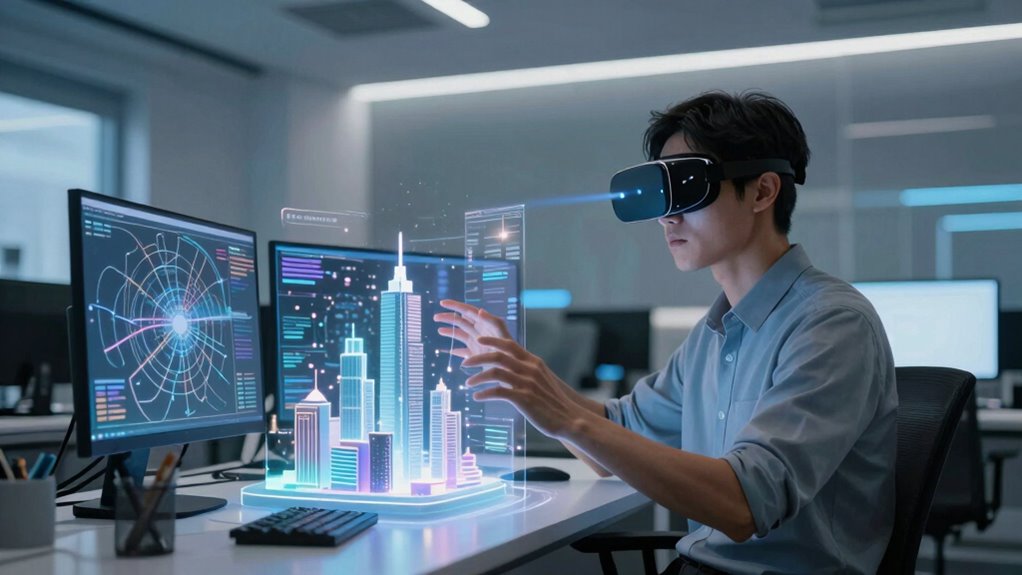

Spatial computing seamlessly merges digital data with the physical world, allowing you to interact with information naturally through augmented reality, sensors, and advanced software. It’s transforming industries like gaming, healthcare, and manufacturing by creating immersive, real-time environments that are more intuitive and personalized. As technology advances, it’s becoming easier to integrate digital experiences into your daily life, making tasks simpler and more engaging. To discover how this innovation is shaping your world, keep exploring what’s next.

Get the latest gadgets delivered free with Prime
- Fast, free delivery on millions of items
- Prime Video, Amazon Music and more included
- Member-only deals all year
Key Takeaways
- Spatial computing integrates digital data with the physical environment for immersive, intuitive user interactions.
- It transforms industries like gaming, healthcare, and manufacturing through enhanced training and real-world applications.
- Uses sensors, cameras, and software to map environments and enable natural digital interactions.
- Increasingly embedded in smartphones, AR glasses, and smart home devices for seamless, context-aware experiences.
- Future developments will deepen digital-physical integration, revolutionizing how we perceive and engage with digital content.

Have you ever wondered how technology is transforming the way we interact with the world around us? That’s where spatial computing comes into play. It’s a cutting-edge approach that blends digital information with the physical environment, allowing you to engage with data in ways that feel natural and intuitive. Instead of looking at screens, you’re immersed in an environment where digital elements are integrated seamlessly into the real world. This fusion is powered by augmented reality, which overlays virtual objects onto your view of reality, creating immersive environments that weren’t possible before. Imagine walking through a space where virtual instructions appear right on the wall, guiding you step-by-step, or visualizing how new furniture would look in your living room before making a purchase. That’s the power of spatial computing—it makes digital content feel tangible and real.
What makes spatial computing so exciting is its potential to revolutionize multiple industries, from gaming and entertainment to healthcare and manufacturing. You can experience immersive environments where training simulations feel almost real, or use augmented reality to assist with complex tasks, like repairing machinery or designing structures. It’s not just about entertainment; it’s about enhancing productivity, learning, and collaboration by bridging the gap between the digital and physical worlds. The technology uses sensors, cameras, and advanced software to map your environment in real time, enabling digital elements to interact with your surroundings naturally. This creates a more engaging user experience, where you’re not just passively consuming content but actively participating in it. As the digital environment becomes more sophisticated, the potential for personalized and context-aware interactions continues to grow.
As more people talk about spatial computing, you’re likely to see it integrated into everyday life more frequently. Smartphones, AR glasses, and even smart home devices are evolving to support these immersive interactions. The trend is moving toward more seamless, context-aware experiences that adapt to your environment and needs. The growth of this technology is driven by its ability to make digital data more accessible and useful in real-world scenarios. Whether you’re exploring new places, learning a new skill, or collaborating with others remotely, spatial computing offers a more intuitive way to connect and interact. It’s transforming how you see, experience, and engage with your surroundings, making the digital world feel closer and more integrated than ever before.
AR glasses for spatial computing
As an affiliate, we earn on qualifying purchases.
As an affiliate, we earn on qualifying purchases.
Frequently Asked Questions
How Does Spatial Computing Differ From Traditional Computing?
Spatial computing differs from traditional computing by integrating augmented reality and virtual environments into your physical space. Instead of interacting with flat screens, you engage with digital objects that respond to your movements and surroundings. It creates a more immersive experience, where technology understands and interacts with your environment in real-time. This approach enhances how you work, play, and communicate, making interactions more intuitive and connected to the physical world around you.
What Industries Are Most Impacted by Spatial Computing?
You’ll find that industries like healthcare, manufacturing, and entertainment are most impacted by spatial computing. Augmented reality enhances medical training and surgical procedures, while virtual environments transform remote collaboration and design processes. Retailers use spatial computing for immersive shopping experiences, and architects visualize structures in 3D. As you adopt these technologies, you’ll notice how they revolutionize interactions, streamline workflows, and create more engaging, realistic experiences across these sectors.
What Skills Are Needed to Work With Spatial Computing Technologies?
To work with spatial computing technologies, you need a blend of technical and creative skills. You should understand augmented reality and how to develop immersive environments, which involves knowledge of 3D modeling, programming, and user experience design. Familiarity with hardware like sensors and AR headsets helps, along with problem-solving abilities. Staying updated on emerging tools and software in spatial computing guarantees you can innovate and create engaging, seamless experiences.
Are There Privacy Concerns Associated With Spatial Computing?
You’re stepping into a world where privacy concerns are enormous—like, bigger than the universe! Spatial computing raises major issues around data security and consent management because your movements and surroundings get tracked constantly. You must be vigilant, ensuring your data isn’t misused or shared without permission. Always stay informed, use secure platforms, and demand transparency, so your privacy remains protected in this exciting, yet cautious, digital era.
How Accessible Are Spatial Computing Tools for Everyday Users?
Spatial computing tools are becoming more accessible for everyday users, especially as device compatibility improves. You can easily interact with digital environments through user interaction features on smartphones, tablets, and augmented reality glasses. As technology advances, these tools are designed to work seamlessly across various devices, making it simpler for you to explore and utilize spatial computing in daily life without needing specialized equipment.
As an affiliate, we earn on qualifying purchases.
Conclusion
Think of spatial computing as the secret ingredient in a recipe that transforms everyday tech into an immersive adventure. As more people explore its potential, it’s like opening a door to a new universe where digital and physical worlds seamlessly blend. Embracing this technology means you’re stepping into the cockpit of tomorrow, guiding your experiences with a sense of spatial awareness. The future’s calling—are you ready to navigate this exciting new frontier?
smart home devices with spatial computing
As an affiliate, we earn on qualifying purchases.
As an affiliate, we earn on qualifying purchases.
wearable augmented reality devices
As an affiliate, we earn on qualifying purchases.
As an affiliate, we earn on qualifying purchases.
Fall Picks
fall essentials
As an affiliate, we earn on qualifying purchases.