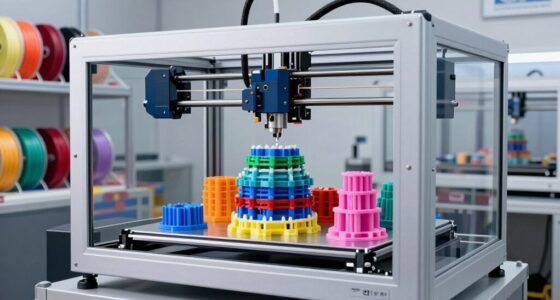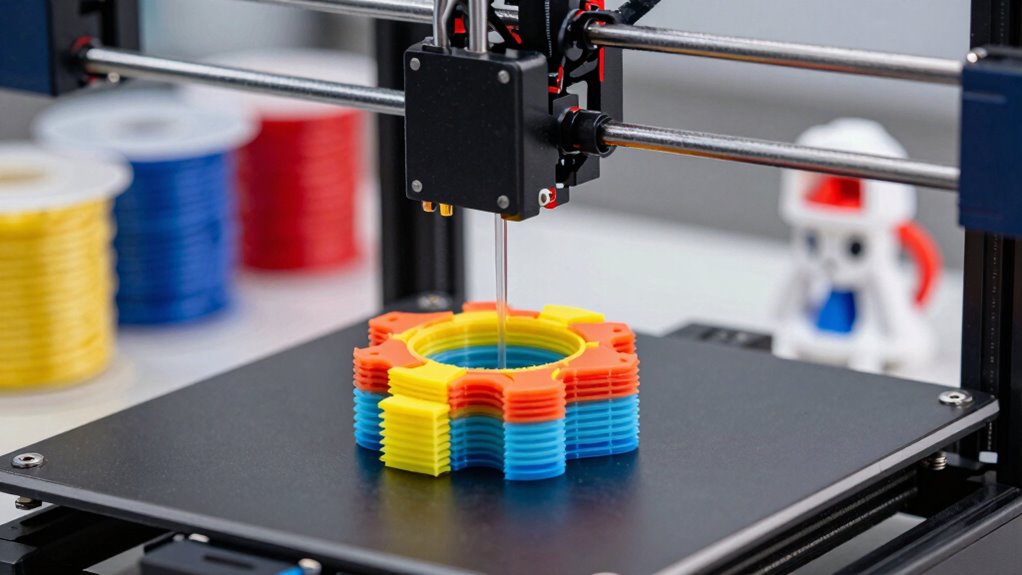

3D printing appeals to both hobbyists and pros because it offers incredible design freedom, allowing you to create complex, customized shapes without expensive tooling. You can experiment with a wide variety of materials and quickly transform ideas into prototypes or finished products. The technology’s affordability and accessibility empower everyone to bring their visions to life easily. If you’re curious about how this innovative process is shaping the future of making, keep exploring further.

Get the latest gadgets delivered free — and shop member deals
- Fast, free delivery on millions of items
- Access to Prime Big Deal Days deals on October 6–7
- Prime Video, Amazon Music and more included
Key Takeaways
- It offers material versatility, allowing customization for specific project needs and enabling experimentation without costly tools.
- The design freedom to create complex geometries and prototypes accelerates innovation and artistic expression.
- Accessibility through affordable printers and software empowers both hobbyists and professionals to explore and develop ideas.
- Rapid prototyping and easy modifications reduce development time, fostering creativity and efficiency.
- Continuous advancements in materials and technology expand possibilities, making 3D printing increasingly versatile and sustainable.

Have you ever wondered how 3D printing is revolutionizing the way we create and innovate? It’s a technology that’s captured the imagination of both hobbyists and professionals alike. One of the main reasons for its widespread appeal is material versatility. With 3D printing, you’re not limited to a handful of materials. Instead, you can work with plastics, resins, metals, and even biodegradable materials. This broad range means you can select the perfect material for your project’s specific needs, whether it’s a delicate prototype or a durable functional part. The ability to experiment with different substances without the need for expensive molds or tooling makes the process accessible and flexible. Whether you’re crafting jewelry, engineering small mechanical components, or creating artistic sculptures, material versatility empowers you to push boundaries and explore new ideas. The variety of available printing materials also allows for specialized properties such as flexibility, heat resistance, or biocompatibility, further expanding creative possibilities. Additionally, advances in material development continually enhance the potential of 3D printing, opening new avenues for innovation and sustainability.
Design freedom is another compelling aspect that draws both hobbyists and pros to 3D printing. Traditional manufacturing methods often restrict what you can produce due to tooling costs and production constraints. With 3D printing, you’re limited only by your imagination and the capabilities of your design software. Complex geometries, intricate patterns, and customized details become easily achievable. You can iterate designs quickly, making adjustments on the fly without the delays and costs associated with traditional manufacturing. This level of freedom encourages innovation, allowing you to bring unique concepts to life that would be nearly impossible or too expensive to produce otherwise. Whether you’re creating personalized accessories or developing prototypes for engineering projects, 3D printing offers a level of design flexibility that opens up endless possibilities.
Moreover, the accessibility of 3D printing technology has democratized creation. Hobbyists can now access affordable printers and software, enabling DIY enthusiasts to explore their ideas at home. Meanwhile, professionals leverage advanced 3D printers to accelerate product development and reduce time-to-market. The combination of material versatility and design freedom makes 3D printing an appealing tool across a spectrum of applications. It bridges the gap between imagination and reality, empowering you to make, modify, and perfect designs rapidly. This ability to prototype, test, and refine with ease fuels innovation and creativity, whether you’re a passionate hobbyist or a seasoned engineer. Ultimately, 3D printing’s appeal lies in its capacity to turn bold ideas into tangible objects with unprecedented ease and precision.
affordable 3D printer for beginners
As an affiliate, we earn on qualifying purchases.
As an affiliate, we earn on qualifying purchases.
Frequently Asked Questions
How Does 3D Printing Compare to Traditional Manufacturing Methods?
You’ll find that 3D printing offers greater customization options and design flexibility compared to traditional manufacturing methods. Instead of relying on molds or tooling, you can easily create complex, one-of-a-kind parts directly from digital models. This process speeds up prototyping and reduces costs for small batches. While traditional methods excel in mass production, 3D printing shines when innovation, rapid iteration, and personalized designs matter most.
What Materials Can Be Used in 3D Printing?
You might be surprised by the material versatility in 3D printing. From filament options like PLA, ABS, and PETG to resins and even metals, the possibilities are vast. This flexibility allows you to create everything from simple prototypes to complex, durable parts. The ability to choose the right material for each project makes 3D printing incredibly powerful, giving you the freedom to innovate and customize like never before.
How Affordable Are 3D Printers for Beginners?
You’ll find that beginner-friendly 3D printers are quite affordable, making them perfect for newcomers. Many cost-effective options offer easy setup, intuitive interfaces, and reliable performance, so you don’t need to spend a fortune to start. These printers often come with helpful tutorials and community support, helping you learn quickly. Overall, affordability and user-friendliness make 3D printing accessible for hobbyists and pros alike, encouraging creativity without breaking the bank.
What Are Common Challenges Faced by 3D Printing Enthusiasts?
You face common challenges like steering through complex post-processing techniques and keeping your filament storage solutions organized to prevent moisture mishaps. These hurdles can feel like climbing a steep hill, but mastering them transforms your projects from rough sketches into polished masterpieces. Properly handling post-processing and investing in smart filament storage keeps your prints pristine and your workflow smooth, making your 3D printing journey more enjoyable and successful.
How Can I Ensure the Quality of My 3D Printed Objects?
To guarantee quality in your 3D printed objects, focus on proper material selection and print resolution. Choose the right filament or resin suited for your project, considering strength, flexibility, and finish. Adjust the print resolution settings for finer details and smoother surfaces. Regularly calibrate your printer, use quality filament, and monitor print progress to catch issues early, resulting in professional-looking, durable prints.
As an affiliate, we earn on qualifying purchases.
Conclusion
So, it’s easy to see why 3D printing feels like a magic wand for both hobbyists and pros. It turns your ideas into reality with a flick of the wrist, transforming dreams into tangible objects. Like a garden blooming with endless possibilities, 3D printing cultivates creativity and innovation. Whether you’re crafting a tiny masterpiece or a complex prototype, this technology invites you to plunge into and see your imagination take shape—limitless and alive.
resin 3D printer for detailed models
As an affiliate, we earn on qualifying purchases.
As an affiliate, we earn on qualifying purchases.
3D printing materials assortment kit
As an affiliate, we earn on qualifying purchases.
As an affiliate, we earn on qualifying purchases.
Fall Picks
fall essentials
As an affiliate, we earn on qualifying purchases.