
TL;DR

Get the latest gadgets delivered free with Prime
- Fast, free delivery on millions of items
- Prime Video, Amazon Music and more included
- Member-only deals all year
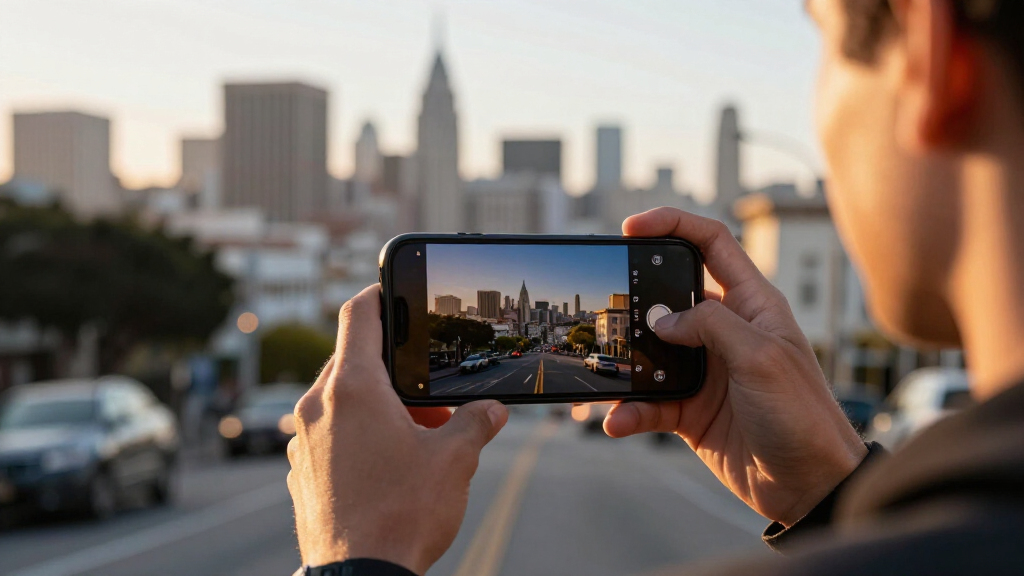
A game developer has revealed plans to recreate the entire city of San Francisco as a detailed video game environment. This development raises questions about urban simulation, technology, and potential applications.
A game developer has announced plans to digitally recreate the entire city of San Francisco as an immersive video game environment. The project aims to produce a highly detailed simulation of the city’s geography, landmarks, and urban landscape, making it accessible for gaming, urban planning, and research purposes. This announcement has attracted widespread attention due to its scope and potential implications for technology and city representation.
The developer, identified on Twitter as cdngdev, shared the initial concept and visual previews of the project, emphasizing that the recreation will include accurate modeling of San Francisco’s streets, buildings, and natural features. The project is described as a work-in-progress, with no official release date yet announced. The initiative leverages advanced mapping data, 3D modeling, and real-time rendering technologies to achieve a high-fidelity digital twin of the city.
Sources familiar with the project confirm that the team is using a combination of publicly available geographic data, satellite imagery, and user-generated content to build the simulation. The goal, according to the developer, is to create a platform that can be used for gaming, urban planning, disaster response simulations, and virtual tourism. The project has not yet been publicly demonstrated in its full form, and many technical details remain under development.
Implications for Urban Simulation and Gaming
This project represents a significant advancement in the creation of digital twins of real-world cities. If successful, it could revolutionize how urban environments are modeled for gaming, planning, and emergency response. The detailed recreation of San Francisco may serve as a prototype for similar efforts in other cities, potentially transforming virtual urban experiences and providing new tools for researchers and policymakers.
Furthermore, the project raises questions about privacy, data use, and digital representation. As cities become more digitally modeled, debates about data ownership and the potential misuse of detailed urban maps are likely to intensify. This development also highlights the growing role of technology companies and independent developers in shaping urban digital landscapes.
As an affiliate, we earn on qualifying purchases.
Background on Digital City Replications
The concept of creating digital models of cities is not new. Previous efforts include virtual recreations used for urban planning, disaster simulations, and video games. Notable examples include the digital twin of Singapore and various mapping projects by tech giants like Google and Microsoft. However, these efforts often focus on specific applications or limited areas.
The current project to recreate San Francisco as a comprehensive video game environment marks a step toward more immersive and interactive urban digital twins. It builds on recent advances in 3D modeling, geographic information systems (GIS), and real-time rendering technologies. The timing coincides with increasing interest in virtual reality and augmented reality applications, which could further enhance the project’s impact.
Prior to this announcement, no project had publicly committed to recreating an entire major city in such detail for use in gaming and simulation, making this a potentially pioneering effort in the field.
“We’re building a full digital twin of San Francisco — streets, buildings, landmarks — everything in high detail. Excited to share more soon.”
— cdngdev on Twitter
As an affiliate, we earn on qualifying purchases.
Technical Challenges and Data Privacy Concerns
Many details about the project’s technical implementation remain unconfirmed, including the exact data sources, software platforms, and timeline for completion. It is also unclear how the project will address privacy concerns related to detailed city modeling, especially if real-time data feeds or sensitive infrastructure are involved.
Additionally, the scope of user interaction, potential commercialization, and legal considerations about city data are still under discussion, leaving some aspects uncertain.
As an affiliate, we earn on qualifying purchases.
Upcoming Demonstrations and Development Milestones
The developer has indicated plans to release preliminary visualizations and beta versions within the coming months. Future updates are expected to include interactive demos, more detailed maps, and possibly a playable version for select users. The project team will likely seek feedback from urban planners, gamers, and technologists to refine the simulation.
Further announcements are anticipated at upcoming technology conferences or through official social media channels, providing more clarity on the project’s progress and capabilities.
As an affiliate, we earn on qualifying purchases.
Key Questions
When will the full digital recreation of San Francisco be available?
There is no official release date announced yet. The project is still in development, with updates expected in the coming months.
What technologies are being used to create the city’s digital twin?
The project reportedly uses geographic data, satellite imagery, 3D modeling, and real-time rendering tools, but specific platforms have not been disclosed.
Will this digital city be accessible to the public?
Details about accessibility are not yet confirmed. The developer has mentioned plans for interactive demos, but a full public release timeline remains uncertain.
Could this project impact privacy or data security?
Potential privacy concerns are acknowledged, especially regarding detailed city data. How these issues will be managed is still under discussion.
Are there similar projects for other cities?
While digital twins exist for some cities, this project’s scale and focus on gaming and real-time interaction are relatively unique. Similar efforts may follow if successful.
Source: hn
Halloween Picks
halloween
As an affiliate, we earn on qualifying purchases.