
Ultra-large TVs can boost your viewing experience, but they come with hidden trade-offs. You might struggle with glare, reflections, and poor viewing angles that affect picture clarity. Their size can overwhelm small rooms and clash with decor, making spaces feel crowded. Proper setup requires careful planning of seating and lighting. If you’re curious about how these factors truly impact your home entertainment, there’s more to discover that could help enhance your decision.

Get the latest gadgets delivered free with Prime
- Fast, free delivery on millions of items
- Prime Video, Amazon Music and more included
- Member-only deals all year
Key Takeaways
- Larger screens are more prone to glare and reflections, reducing picture clarity and requiring ambient light management.
- Ultra-large TVs need spacious rooms to prevent overwhelming the space and to maintain comfortable viewing distances.
- Narrow optimal viewing angles can limit seating options and cause image distortion when viewed from off-center positions.
- Big screens may clash with existing decor, affecting room aesthetics and overall interior harmony.
- The physical dominance of large TVs can make rooms feel crowded and impact overall comfort and ambiance.
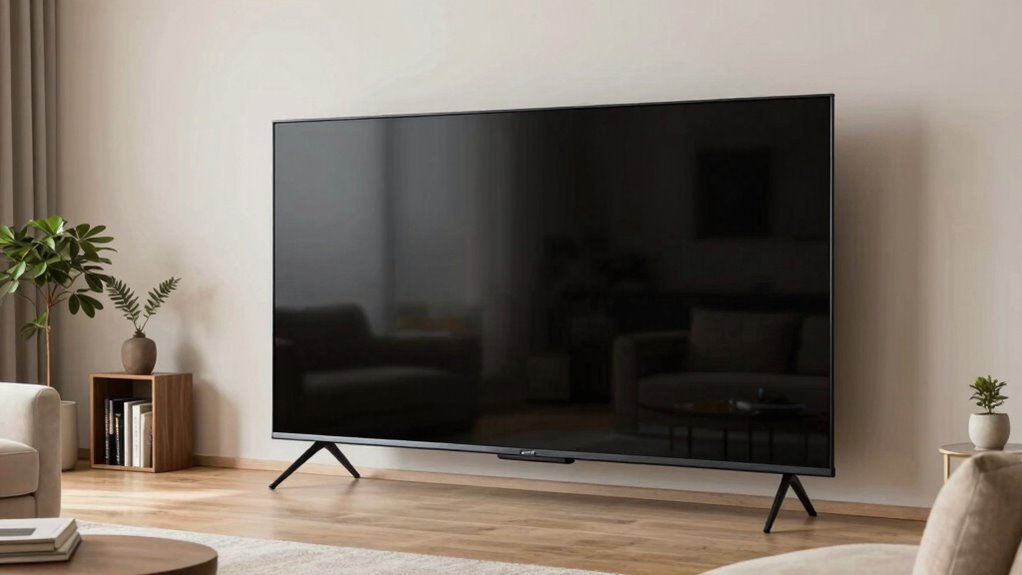
While ultra-large TVs promise an immersive viewing experience, they come with hidden trade-offs that might surprise you. One of the most immediate issues you’ll notice is screen glare. With a bigger screen, any light source—be it sunlight streaming through windows, lamps, or reflections from shiny surfaces—becomes more problematic. The larger surface area is more likely to catch and reflect light, making it harder to see the picture clearly. Even if your room has controlled lighting, subtle reflections can detract from the clarity, forcing you to adjust curtains or reposition furniture just to reduce glare. This constant need to manage ambient light can take away from the seamless viewing experience you crave. Additionally, the size of the TV can influence how well it fits into your home decor, affecting overall aesthetics.
Large screens increase glare, making reflections and light sources more disruptive to your viewing experience.
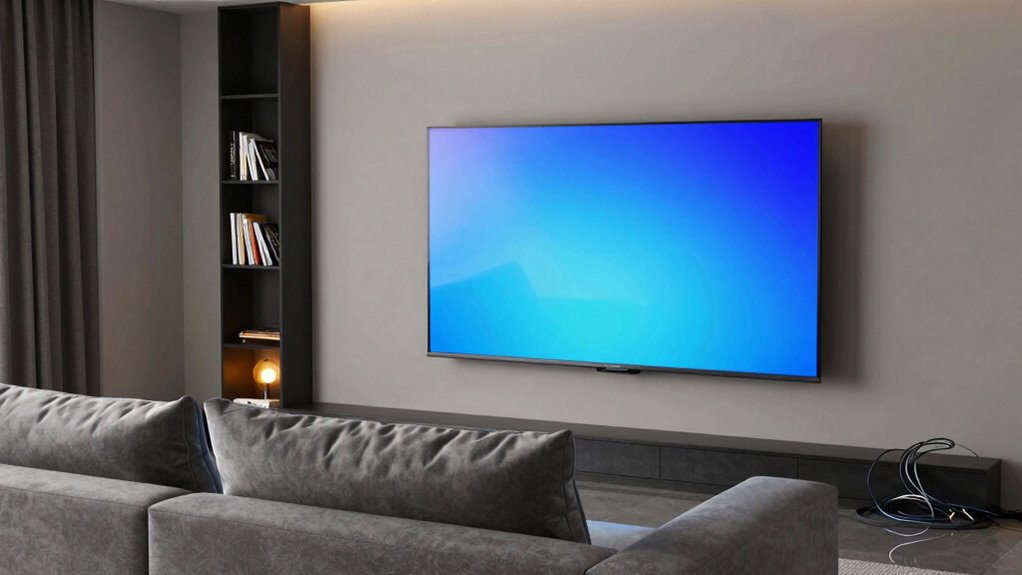
Another challenge with ultra-large TVs relates to the room scale. These massive screens require a substantial amount of space to be truly effective. If your room is small or cramped, the TV will dominate the space, overwhelming the room’s proportions and making it uncomfortable to sit at an ideal viewing distance. You might find yourself constantly repositioning furniture or feeling like the TV is too invasive. In larger rooms, however, finding the right distance becomes essential—sit too close, and the image can seem overwhelming, causing eye strain; sit too far, and you lose the immersive effect. This balancing act is vital but often overlooked when choosing a giant screen. Moreover, room proportions also influence how the TV fits within your overall decor and layout, which can affect your satisfaction with the setup.
Furthermore, the size of the TV impacts your viewing angles and overall room setup. Larger screens tend to have narrower ideal viewing angles, meaning you need to sit directly in front of the screen to enjoy the best picture quality. If your layout doesn’t accommodate this, certain seats might have compromised image quality or color distortion. This can affect everyone’s viewing experience, especially in social settings. Additionally, the physical presence of an ultra-large TV can make your room feel cluttered or crowded, especially if you don’t have enough space to set it up properly. Being aware of viewport considerations can help prevent such issues.
In essence, while the appeal of a massive screen is undeniable, you need to be aware of these trade-offs. Screen glare and room scale aren’t just minor inconveniences—they can greatly influence how much you enjoy your investment. Proper planning, considering your room’s lighting and size, is vital to avoid frustration and truly maximize the benefits of your ultra-large TV.
Products Worth Considering

DJI Mic 3 Wireless Microphone Kit (2 Transmitters, 1 Receiver, Charging Case)

Kindle Paperwhite 16GB (2024) – 7 Glare-Free Display, Weeks Battery Life – Black

Samsung Galaxy Tab A11 Wi-Fi Tablet, 8.7-Inch, 64GB, 4GB RAM, Gray (SM-X133, International Version)
As an affiliate, we earn on qualifying purchases.
Frequently Asked Questions
How Do Ultra-Large TVS Impact Room Acoustics?
Ultra-large TVs can considerably impact your room acoustics by causing more sound reflection, which may lead to echoes and muddled audio. As the screen size increases, sound waves bounce off nearby surfaces more often, reducing clarity. You might notice that dialogue becomes harder to understand, especially in larger rooms. To improve sound quality, consider adding soft furnishings, sound panels, or a dedicated sound system to counteract these effects.
Are Ultra-Large TVS More Prone to Screen Burn-In?
Yes, ultra-large TVs are more prone to screen burn-in and image retention, especially if you display static images for long periods. The larger screen area makes these issues more noticeable and potentially more damaging. To prevent this, you should regularly change content, use screen savers, and enable any built-in pixel-shifting features. Proper care guarantees your ultra-large TV stays vibrant and free from permanent burn-in.
What Are the Long-Term Maintenance Costs of Large Screens?
Like a grand monument, large screens demand a steady investment. Over time, you might face costly repairs and replacement expenses if the display’s delicate components falter or if screen burn-in leaves its mark. While the initial purchase is hefty, maintaining your giant screen can become a financial journey, requiring you to budget for eventual upgrades, repairs, and replacements—turning your entertainment centerpiece into a long-term financial commitment.
Do Ultra-Large TVS Require Special Mounting or Installation?
Yes, ultra-large TVs often require special mounting and installation due to their size and weight. You’ll face mounting challenges, such as guaranteeing a sturdy wall bracket and proper alignment. Installation requirements may include reinforced wall support, precise positioning, and possibly professional help to prevent damage or accidents. Taking these steps guarantees your massive TV stays secure and functions effectively, giving you peace of mind while enjoying the big screen experience.
How Do Ultra-Large TVS Affect Energy Consumption?
Ultra-large TVs tend to consume more power because of their bigger screens and higher brightness levels, impacting your energy consumption. However, if you choose models with good energy efficiency ratings, you can reduce this effect. Pay attention to features like automatic brightness control and energy-saving modes, which help lower power consumption without sacrificing picture quality. Being mindful of these aspects allows you to enjoy a large screen while managing your energy use effectively.
Conclusion
While ultra-large TVs offer stunning visuals, they come with hidden trade-offs like higher costs, increased space requirements, and potential setup challenges. Did you know that over 60% of homeowners with large screens report difficulty integrating them into smaller living spaces? Before you upgrade, weigh these factors carefully. Remember, bigger isn’t always better if it jeopardizes your comfort or budget. Consider your space and needs to guarantee your new TV enhances your entertainment without unexpected hassles.