
To protect your personal information online, start by creating strong, unique passwords for each account and update them regularly. Enable multi-factor authentication whenever possible, and use a reputable password manager to keep track of your login details. Be cautious with emails and links, verifying sender identities before sharing personal info or making transactions. Regularly monitor your credit reports for suspicious activity. Keep your software updated and stay informed about emerging online threats for better protection. If you want to learn more, keep exploring essential tips to stay secure.
Key Takeaways
- Use strong, unique passwords for all accounts, and update them regularly to prevent unauthorized access.
- Enable multi-factor authentication wherever possible to add an extra security layer.
- Regularly review credit reports for unfamiliar activity and set up alerts for suspicious account changes.
- Be cautious with sharing personal info online; verify identities before sharing sensitive data or transferring money.
- Keep software, devices, and security tools up to date to patch vulnerabilities and defend against cyber threats.
Understanding the Risks of Identity Theft
Understanding the risks of identity theft is essential because it can happen to anyone at any time. Every 4.9 seconds, someone in the U.S. falls victim, with over 6.4 million reports in 2024 alone. Scammers target all age groups, especially those in their 30s and 40s, and increasingly older adults. The financial impact can be severe, with losses exceeding $10,000 for some victims. Identity theft can lead to damaged credit, financial loss, and emotional stress. Criminals use various methods, including fake emails, data breaches, and impersonation scams, to steal your personal information. Staying aware of these risks helps you recognize threats early and take steps to protect your sensitive data from falling into the wrong hands. The role of color accuracy in digital security is also critical, as it helps in identifying genuine communications and avoiding scams. Additionally, understanding various data protection techniques can significantly reduce your vulnerability to these crimes. Being informed about identity verification methods can also help in confirming legitimate interactions and avoiding impostor schemes. Employing encryption solutions is another vital strategy to safeguard your personal data from unauthorized access.
Recognizing Common Methods Used by Scammers
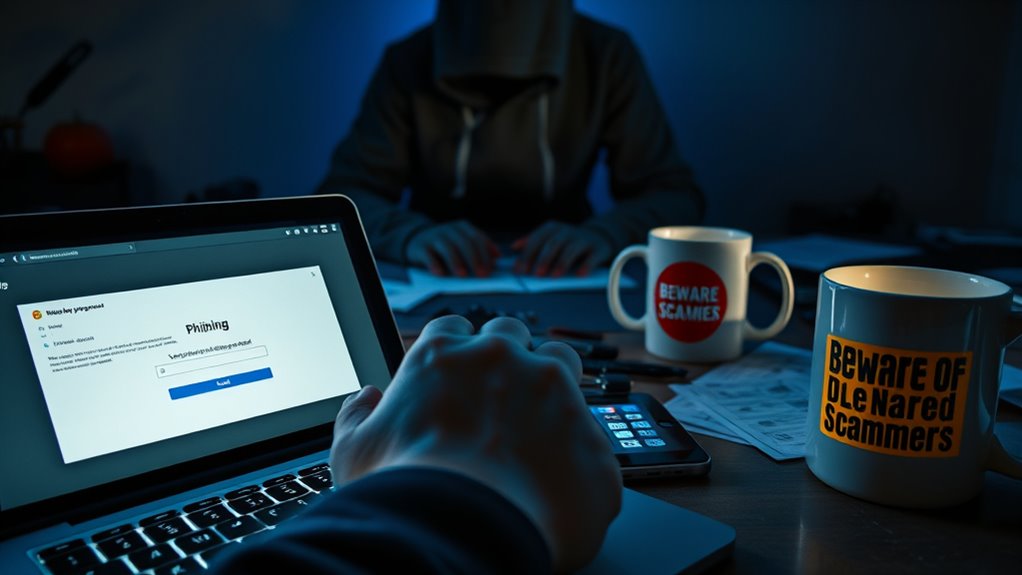
Scammers often use phishing emails and fake links to trick you into revealing personal information or installing malware. They also impersonate trusted individuals or organizations through social engineering tactics to gain your trust. Recognizing these methods helps you stay alert and avoid falling victim to their schemes. Additionally, understanding the importance of European cloud innovation can help you identify trustworthy sources and avoid malicious platforms. Being aware of Gold IRA markets and their reputation can also guide you in protecting your investments from fraudulent schemes. Familiarity with local reviews and community feedback can further aid in verifying the legitimacy of online services and offers. Staying informed about emerging cybersecurity threats, including new attack vectors like primitive weapons for modern survival, can enhance your ability to detect and prevent scams before they cause harm.
Phishing and Fake Links
Phishing and fake links remain some of the most common tactics scammers use to steal your personal information. They often send emails or messages that look legitimate, mimicking trusted companies, banks, or government agencies. These messages may ask you to click on a link, which leads to a fake website designed to steal your login details, credit card info, or other sensitive data. Scammers also use urgent language or threats to pressure you into acting quickly, increasing the chances you’ll overlook warning signs. Always check the sender’s email address carefully, hover over links to see their true destination, and avoid clicking on unfamiliar or suspicious links. When in doubt, visit websites directly by typing their official URL rather than following links in messages.
Impersonation and Social Engineering
Impersonation and social engineering are common tactics scammers use to deceive you into revealing personal information or transferring money. They often pretend to be someone you trust, like a bank, government official, or tech support. To visualize their methods, consider this table:
| Method | How It Works |
|---|---|
| Fake Calls (Vishing) | Scammers impersonate officials to extract details |
| Phony Emails (Phishing) | Sending fake messages to lure you into revealing data |
| Impersonation on Social Media | Fake profiles pretending to be friends or colleagues |
| Tech Support Scams | Claiming your device is compromised to gain access |
Stay alert: verify identities before sharing info, and never transfer money without confirmation. Additionally, be aware that scammers often use social engineering techniques to manipulate individuals into bypassing security protocols. Recognizing these deceptive tactics can help you stay protected from scams. A good understanding of identity theft methods can further enhance your defenses against online threats. Recognizing signs of auditory processing challenges can also improve your ability to detect suspicious communication.
Best Practices for Creating Strong Passwords
Creating strong passwords starts with using complex combinations of letters, numbers, and symbols to make them harder for scammers to crack. You should also change your passwords regularly to reduce the risk of unauthorized access over time. Additionally, using password managers can help generate and store unique, robust passwords for all your accounts, enhancing your overall security. Incorporating intricate details and luxurious fabrics from haute couture can serve as an analogy for complex and unique password creation, making them more difficult for hackers to decipher. Understanding the horsepower of electric dirt bikes can motivate you to build a strong “power” of your online defenses, ensuring your personal information remains protected from identity thieves. Selecting top-rated vacuum cleaners with advanced features like HEPA filters can serve as a reminder that strong security measures are vital for safeguarding personal data. By following these best practices, you can better protect your personal information from identity thieves.
Use Complex Combinations
To protect your online accounts from being compromised, it is vital to use complex combinations of characters in your passwords. A strong password includes a mix of uppercase and lowercase letters, numbers, and special symbols. Avoid common words or phrases, and never use easily guessable information like your name or birthdate. Instead, create unique, unpredictable strings that are hard for hackers to crack. Consider using a password manager to generate and store these complex passwords securely. Remember, the more varied your characters, the tougher it is for cybercriminals to break in. Incorporating encryption standards into your security practices further enhances your protection against identity theft. Additionally, employing password complexity guidelines ensures your passwords meet the necessary strength requirements to defend against brute force attacks. Utilizing password strength assessment tools can also help you verify the robustness of your passwords regularly.
Change Passwords Regularly
Changing your passwords regularly is a key step in maintaining your online security. It helps prevent hackers from gaining long-term access if your login details are compromised. Aim to change passwords at least every three to six months, especially for sensitive accounts like email or banking. When creating new passwords, avoid common words or easily guessable information like your birthday. Instead, use a combination of uppercase and lowercase letters, numbers, and symbols. Consider using a password manager to generate and store complex passwords securely. This way, you won’t have to remember them all. Regularly updating passwords reduces the risk of unauthorized access and keeps your personal information safer from cybercriminals. Staying informed about essential oils for online health and security measures can also help you protect your digital presence. Incorporating encryption techniques can further enhance your data protection. Stay proactive—your digital security depends on it.
Utilizing Technology to Safeguard Personal Data

In an era where cyber threats are constantly evolving, leveraging advanced technology is essential for safeguarding your personal data. You can implement several tools to protect yourself effectively. Use strong, unique passwords combined with password managers to prevent easy breaches. Enable multi-factor authentication on all your accounts for an added security layer. Regularly update your software and devices to patch vulnerabilities. Install reputable antivirus and anti-malware programs to detect threats early. Finally, activate biometric authentication options like fingerprint or facial recognition when available. These technologies help defend against unauthorized access and reduce the risk of identity theft. Staying proactive with these tools ensures your data remains secure amidst increasing cyber threats. Additionally, understanding the influence of celestial bodies on personal traits can help you recognize potential vulnerabilities in your digital security habits.
Monitoring and Managing Your Credit Reports

Regularly monitoring your credit reports is one of the most effective ways to spot and prevent identity theft early. By checking your reports regularly, you can quickly identify unauthorized accounts or suspicious activity. Obtain free copies of your credit reports from the three major bureaus—Experian, Equifax, and TransUnion—at AnnualCreditReport.com. Review each report carefully, looking for unfamiliar accounts, late payments, or personal information changes. If you spot anything suspicious, report it immediately. Consider setting up alerts for new accounts or credit inquiries, which many credit monitoring services offer. Managing your credit reports proactively helps you catch potential fraud sooner, limiting damage and ensuring your financial health stays secure. Transparency in data handling and staying vigilant are key in today’s high-risk environment.
Steps to Take if You Suspect Identity Theft
If you suspect that your identity has been stolen, acting quickly is crucial to limit the damage. Time is of the essence to prevent further financial loss or damage to your reputation. Take immediate steps to protect yourself:
- Contact your bank and credit card companies to freeze or close accounts.
- Place a fraud alert on your credit reports with the major bureaus.
- Review your recent statements for unauthorized transactions.
- File a report with the Federal Trade Commission (FTC) at IdentityTheft.gov.
- Consider filing a police report to document the theft officially.
These actions can help limit the thief’s access to your accounts and start the recovery process. Staying vigilant and proactive can make a significant difference in safeguarding your personal information.
Frequently Asked Questions
How Can I Prevent Identity Theft on Social Media Platforms?
You can prevent identity theft on social media by adjusting your privacy settings to limit who sees your information, avoiding sharing personal details like your birthdate or address, and being cautious about accepting friend requests from strangers. Never click on suspicious links or share sensitive info in messages. Regularly review your profiles for any unusual activity, and consider enabling two-factor authentication for added security. Staying vigilant helps keep your personal info safe.
What Signs Indicate I’Ve Been Targeted by Scammers?
If scammers are knocking on your virtual door, you’ll notice odd messages asking for personal info, unfamiliar charges on your accounts, or emails that scream “urgent” but smell fishy. You might get a call claiming you’re in trouble, or see suspicious activity on your credit reports. Basically, if your digital life feels like a soap opera with shady characters, it’s time to act fast and stay vigilant.
Are Free Online Security Tools Effective Against Identity Theft?
Free online security tools can be helpful, but they aren’t foolproof against identity theft. You might get some protection from antivirus programs, password managers, or call blocking apps, but scammers are constantly evolving their tactics. To stay safe, use these tools as part of a broader strategy, like monitoring your credit reports regularly, enabling two-factor authentication, and staying vigilant about suspicious activity. Combining these efforts gives you better protection.
How Often Should I Check My Credit Reports for Suspicious Activity?
You should check your credit reports at least once a year, but consider doing so more often—every three to six months, if possible. Suspicious activity can strike unexpectedly, and regular checks help you catch fraud early. Use free tools or official credit bureaus to monitor for unfamiliar accounts or inquiries. Staying vigilant keeps you one step ahead, reducing your risk of prolonged damage from identity theft.
What Legal Options Do I Have if My Identity Is Stolen?
If your identity gets stolen, you have legal options to fight back. You can file a police report and notify the Federal Trade Commission (FTC) to help document the crime. You might also consider filing a dispute with your credit bureaus to freeze or place fraud alerts on your credit. Consulting an attorney specialized in identity theft can guide you through additional legal actions to recover damages and protect your rights.
Conclusion
Identity theft remains a widespread threat, with over 16 million Americans affected annually, according to the FTC. By understanding the risks, recognizing scams, and using strong passwords and technology, you can considerably reduce your vulnerability. Regularly monitoring your credit reports adds an extra layer of security. Stay vigilant and act quickly if you suspect fraud—protecting your personal information isn’t just smart, it’s essential in today’s digital world.