
TL;DR

Get the latest gadgets delivered free — and shop member deals
- Fast, free delivery on millions of items
- Access to Prime Big Deal Days deals on October 6–7
- Prime Video, Amazon Music and more included
Many routers marketed as Wi-Fi 7 may not include the key features that define the standard, due to trademark loopholes and incomplete hardware implementation. Consumers should scrutinize marketing claims carefully.
Many routers branded as Wi-Fi 7 may not include the key features that define the standard, such as Multi-Link Operation (MLO). This discrepancy arises from trademark loopholes and incomplete hardware implementation, raising concerns about consumer deception and actual performance benefits.
Wi-Fi 7, based on the IEEE 802.11be standard, promises faster speeds, lower latency, and better congestion management through features like 320 MHz channels, 4K-QAM, and MLO. However, recent tests and investigations reveal that many routers labeled as Wi-Fi 7 do not support true simultaneous MLO, which requires multiple independent radios working in concert.
According to the Wi-Fi Alliance, the Wi-Fi Certified 7 label guarantees MLO support, but most current routers only alternate bands, leading to fluctuating speeds rather than true simultaneous multi-band operation. A February 2026 RTINGS study of 25 routers found that many do not deliver on the promised performance improvements, making them less of an upgrade than marketing suggests.
Complicating matters, some manufacturers exploit a trademark loophole by labeling products as WiFi 7 (without the hyphen), which is not protected by the Wi-Fi Alliance’s certification requirements. This allows them to market devices with partial or missing key features, often at premium prices, misleading consumers about the actual capabilities of their devices.
Implications of Misleading Wi-Fi 7 Marketing
This situation impacts consumers who invest in Wi-Fi 7 routers expecting significant performance gains. Many devices will not deliver the expected speeds or latency reductions, especially since most current hardware cannot fully utilize Wi-Fi 7’s advanced features. It also raises questions about transparency in marketing and the need for clearer standards enforcement, as buyers may pay a premium for partially functional products.
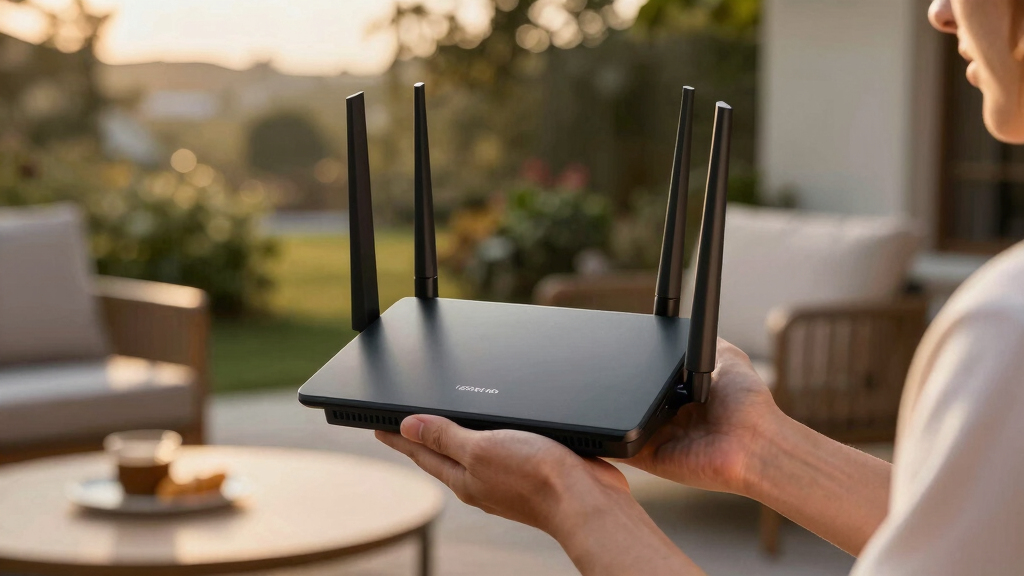
Wi-Fi 7 router with Multi-Link Operation
As an affiliate, we earn on qualifying purchases.
As an affiliate, we earn on qualifying purchases.
Background on Wi-Fi 7 and Market Confusion
Wi-Fi 7, or IEEE 802.11be, introduces substantial technical upgrades over Wi-Fi 6 and 6E, including wider channels, higher modulation, and MLO. Despite its promise, adoption has been slow, partly due to hardware availability and regulatory delays, such as the March 2026 FCC ban on new wireless device certifications outside the US. Meanwhile, the marketing of Wi-Fi 7 routers has outpaced actual hardware capabilities, leading to widespread consumer confusion.
Recent tests and industry reports highlight that many routers labeled as Wi-Fi 7 do not support true MLO, which is essential for realizing the standard’s full benefits. Additionally, some manufacturers are exploiting the trademark loophole by omitting the hyphen, avoiding certification requirements and allowing less capable devices to be marketed as Wi-Fi 7.
“Most Wi-Fi 7 routers only alternate bands, which can lead to fluctuating internet speeds rather than true simultaneous multi-band operation.”
— RTINGS researcher
As an affiliate, we earn on qualifying purchases.
Extent of Misinformation in Wi-Fi 7 Marketing
It is not yet clear how widespread the practice of labeling incomplete or non-compliant routers as Wi-Fi 7 is across different brands and markets. Ongoing investigations and consumer reports are still gathering data, and regulatory agencies have yet to act decisively on enforcement.
As an affiliate, we earn on qualifying purchases.
Regulatory and Industry Responses to Labeling Claims
Expect further testing and scrutiny from industry watchdogs and consumer advocacy groups. The Wi-Fi Alliance may strengthen certification requirements or enforcement to prevent misleading marketing. Additionally, consumers should stay informed about actual hardware capabilities and verify specifications before purchasing.
As an affiliate, we earn on qualifying purchases.
Key Questions
Does a Wi-Fi 7 label guarantee the router supports all features?
No. While the Wi-Fi Certified 7 label guarantees support for features like Multi-Link Operation, many routers labeled as Wi-Fi 7 do not support these features fully, especially true simultaneous MLO.
Can I rely on a Wi-Fi 7 router to improve my internet speed?
Not necessarily. Actual speed improvements depend on your internet plan, hardware capabilities, and whether the router supports the full Wi-Fi 7 standard. Many current routers only offer partial support.
Why are some routers labeled WiFi 7 without the hyphen?
This is a trademark loophole. The Wi-Fi Alliance owns the hyphenated term, and dropping it allows manufacturers to avoid certification requirements, potentially marketing less capable devices as Wi-Fi 7.
Will all devices in my home benefit from Wi-Fi 7 routers?
Most current devices, including smartphones and laptops, do not yet support Wi-Fi 7. To fully benefit, both the router and client devices need to support the standard.
Source: Engadget
Fall Picks
fall essentials
As an affiliate, we earn on qualifying purchases.