Choosing between Android and iPhone depends on what matters most to you. If you want a sleek design, seamless user experience, and better resale value, an iPhone might suit you. If you prefer customization, a wider variety of devices, and lower prices, Android could be a better fit. Both offer strengths in apps and durability, but your priorities shape the right choice. Keep exploring to discover more details that can help you decide confidently.
Prime for Young Adults — start your free trial
Fast free delivery, streaming and member deals for eligible 18–24 year olds.
As an affiliate, we earn on qualifying purchases.
Key Takeaways
- Choose iPhone for a sleek design, seamless iOS experience, and better long-term software support.
- Opt for Android if you prefer customization, diverse hardware options, and a wider price range.
- Consider iPhone for higher resale value and durable build quality; Android offers more budget-friendly options.
- Select iPhone for a curated app ecosystem with high security; Android provides broader app choices and flexibility.
- Determine your priorities: premium design and usability (iPhone) versus personalization and affordability (Android).
Design and Build Quality
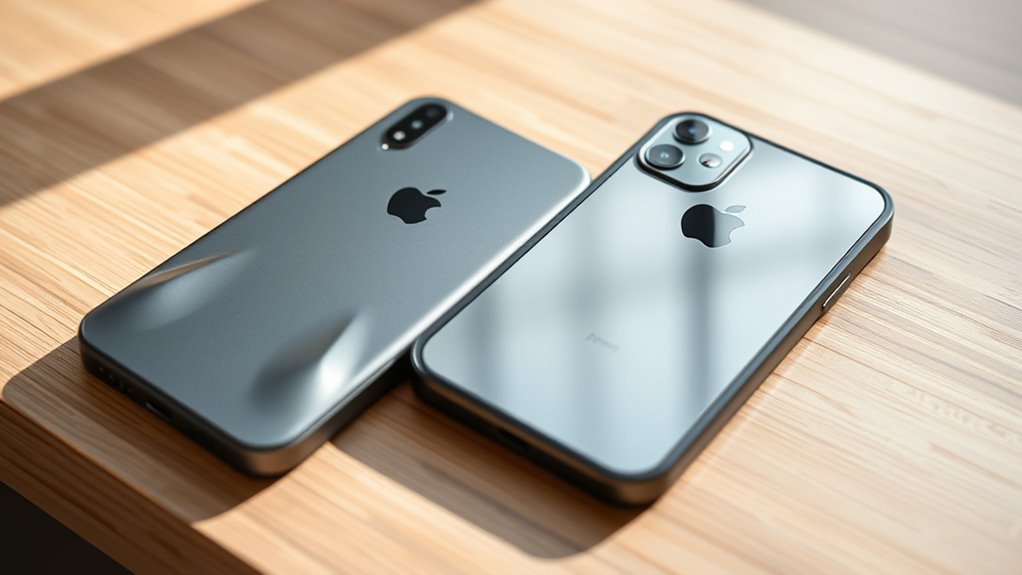
When comparing Android phones and iPhones, their design and build quality often stand out as key differences. You’ll notice that iPhones tend to have a sleek, premium look with a focus on minimalism and consistency. Apple uses high-quality materials like glass and aluminum, giving their devices a solid, luxurious feel. Android phones, on the other hand, vary widely in design—some feature glass and metal, while others use plastic, which can affect durability and feel. You might find Android devices offering more diverse designs, colors, and customization options. While iPhones emphasize uniformity and elegance, Android phones prioritize variety and innovation. Your choice depends on whether you value a consistent premium feel or prefer a broader range of styles and features. Additionally, color options and customization features can influence your overall satisfaction with the device. It’s also worth considering how design durability impacts long-term use, especially if you prefer devices that withstand daily wear and tear. Moreover, market diversity reflects the wide range of Android devices available, catering to different needs and budgets. A well-designed device can also enhance user experience through ergonomic comfort and ease of handling during daily use.
Operating System and User Experience

The operating system is the core software that shapes your overall user experience, and Android and iPhone offer very different approaches. iPhones run on iOS, which is known for its smooth, intuitive interface and seamless integration with other Apple products. It provides a consistent experience, with simple gestures and a clean design that makes navigation straightforward. Additionally, user interface design plays a crucial role in how enjoyable and efficient your interaction with each platform feels. The software ecosystem also impacts the overall usability, offering different levels of app availability and compatibility. Android, on the other hand, offers a more customizable and flexible environment, allowing you to tailor your experience with widgets, launchers, and deeper settings. While iOS emphasizes simplicity and stability, Android provides more options for personalization. Your choice depends on whether you prefer a unified, streamlined experience or a platform that adapts to your preferences and needs. Both OSes deliver solid experiences, but they cater to different styles of use. Moreover, operating system architecture influences how updates are managed and how secure your device remains over time. A thorough understanding of update management can help you choose a device that stays current and secure longer.
Customization and Flexibility
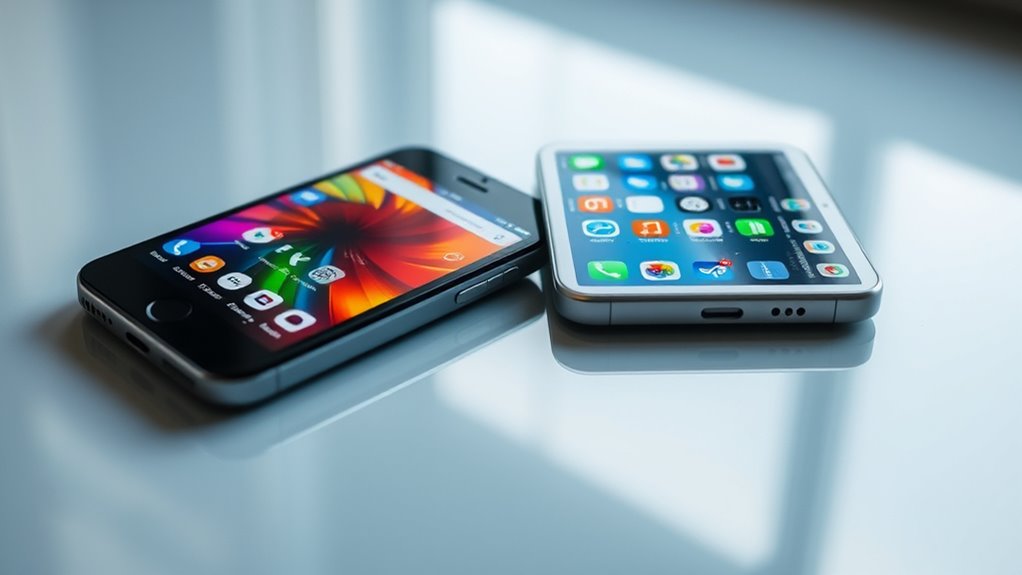
Android offers a level of customization and flexibility that iPhones simply can’t match. You can change your home screen layout, set custom widgets, and even install third-party launchers to completely overhaul your interface. Unlike iPhones, which restrict you to a fixed design, Android lets you personalize almost every aspect of your device. You can choose default apps for browsing, messaging, and more, giving you control over your user experience. Additionally, Android allows you to tweak settings deeper in the system, like file management and app permissions, to suit your preferences. This freedom makes your device feel more tailored to your needs, whether you’re customizing aesthetics or adjusting functionality. If you value control and personalization, Android provides far more options to make your phone truly yours. Incorporating user-centric design principles can guide you in creating an intuitive and efficient user experience on your device, especially through adaptive interfaces that respond to individual usage patterns.
App Ecosystem and Compatibility
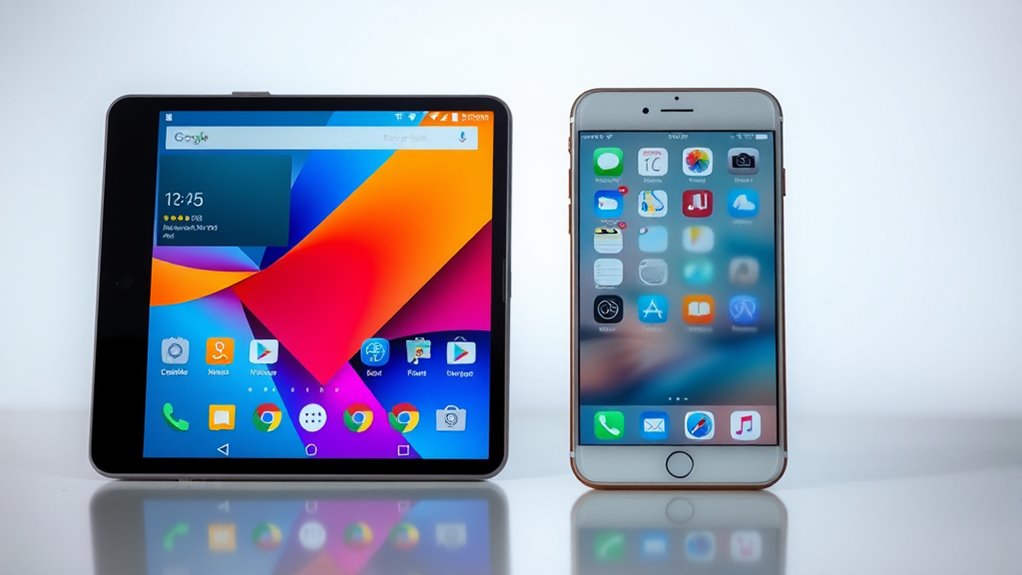
Android’s app ecosystem is vast and highly diverse, offering you a wider selection of applications and services compared to iPhone. You’ll find more free apps, niche tools, and customization options tailored to different needs. Android’s openness allows developers to create apps that aren’t always available on iOS, giving you greater flexibility. Compatibility is also a strong point; Android devices support a wide range of hardware, peripherals, and file formats, making it easier to integrate with other devices and systems. On the other hand, iPhone apps tend to be more uniform, often with better quality control and security. If you value variety and customization, Android’s ecosystem provides more options. However, if you prefer a curated experience, iPhone’s app store offers streamlined, high-quality choices. Additionally, the security features of iOS are generally regarded as more robust, which can be an important consideration for many users.
Price and Value for Money
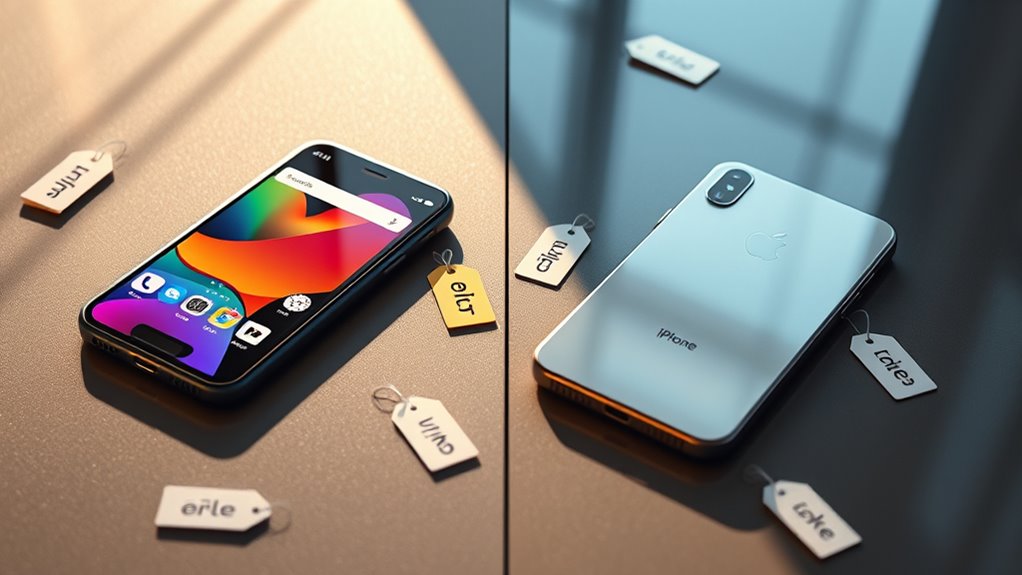
While iPhones often come with a higher upfront cost, they tend to retain their value longer and offer a more consistent user experience. You might pay more initially, but resale value and longevity can make them a smarter investment over time. Android phones generally have lower starting prices, making them appealing if you’re budget-conscious. However, the price difference can mean inconsistent software updates or fewer premium features in lower-cost models. Consider these points:
iPhones cost more upfront but offer better resale value and durability over time.
- iPhones hold their resale value better than many Android devices.
- Android options span a wide range of prices, from budget to premium.
- Long-term value depends on software support and durability.
- Protect Your Savings by researching companies thoroughly before investing in premium devices or other assets.
- Additionally, understanding market trends can help you make more informed purchasing decisions and avoid potential pitfalls.
- It’s also worth noting that some Android models offer customization options that can enhance user experience and device longevity.
- The ongoing software support for devices can significantly influence their long-term usability and security.
- Being aware of candle melting conditions can prevent damage to your device if you keep it near candles or other heat sources.
Frequently Asked Questions
Which Device Offers Longer Software Support?
The iPhone offers longer software support than Android devices. Apple consistently provides updates for their phones for about five to six years after release, ensuring you get the latest features and security patches. Android support varies by manufacturer, but generally, they offer around two to three years of updates. If you want a device with longer-lasting software support, an iPhone is the better choice.
How Do Security Features Compare Between Android and Iphone?
Security features between Android and iPhone are like night and day. iPhones offer a more controlled environment with regular updates, strict app vetting, and robust encryption, making them feel like a fortress. Androids provide more customization but can be more vulnerable due to diverse manufacturers and delayed updates. If you prioritize security, you’ll find iPhones offer a tighter, more consistent shield, giving you peace of mind in your daily use.
Can I Repair or Upgrade Android and Iphone Easily?
You can usually repair or upgrade your Android more easily because many parts are replaceable and third-party repair shops often handle Android devices. For iPhones, repairs tend to be more difficult and costly since Apple restricts repairs and parts, but you can often upgrade storage or batteries with professional help. Overall, Android devices offer more flexibility, while iPhones focus on seamless repairs through authorized service providers.
Which Platform Offers Better Integration With Other Devices?
Think of your devices as a well-orchestrated symphony; Apple’s ecosystem offers seamless harmony, like a conductor guiding every instrument effortlessly. You’ll find perfect integration with MacBooks, iPads, and Apple Watch, making your digital life flow smoothly. Android, however, feels like a diverse band, offering flexibility but less synchronization. If smooth, unified connectivity matters most, Apple’s platform hits the high notes.
How Do Privacy Settings Differ Between Android and Iphone?
You’ll find that iPhones prioritize privacy with strict controls, like app tracking transparency and regular security updates, giving you more control over your data. Android offers customizable privacy settings, but they can vary by device and manufacturer, which might require more effort to guarantee your data stays secure. Overall, iPhones tend to be more consistent in privacy protections, while Android gives you more flexibility but with added responsibility.
Conclusion
So, whether you’re team Android or iPhone, remember: it’s all about what suits your style—and your wallet’s sense of humor. Android offers endless customization for the adventurous, while iPhone keeps it simple (and slightly snooty). Either way, you’re choosing a device that’ll make you look cool—until the next shiny thing comes along. Happy gadget hunting! Just don’t blame us when you’re stuck debating which device makes you look less like a tech addict.
NFL season / tailgating Picks
team gear
As an affiliate, we earn on qualifying purchases.