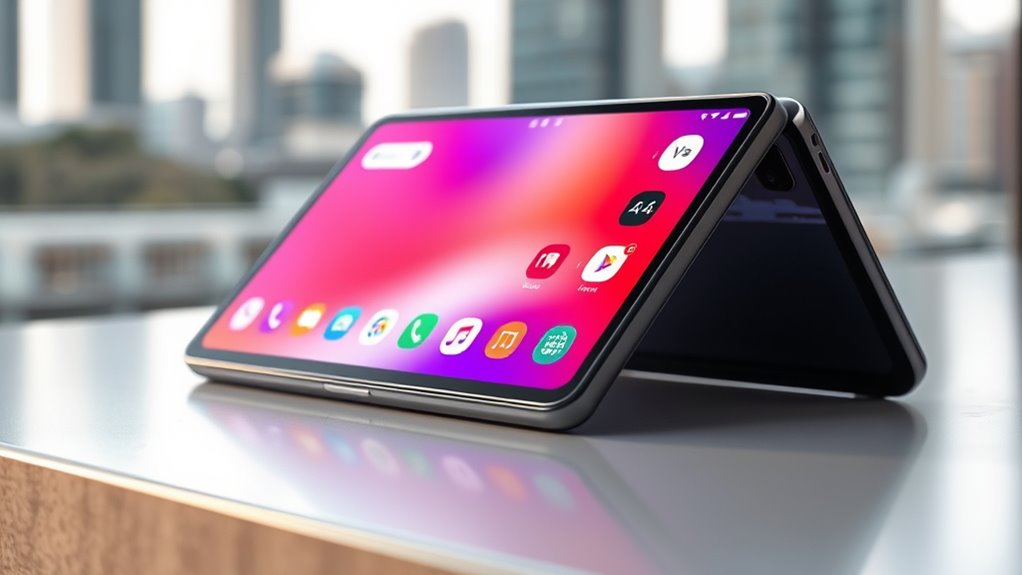

Foldable phones are no longer just a gimmick; they’re shaping the future of smartphones. Thanks to technological advances like flexible displays, better durability, and improved hinges, these devices are becoming more practical and appealing. Consumer interest is rising, especially in regions like China and North America. If you want to explore how industry leaders are pushing boundaries and redefining mobile tech, there’s more to uncover on this evolving trend.

Get the latest gadgets delivered free with Prime
- Fast, free delivery on millions of items
- Prime Video, Amazon Music and more included
- Member-only deals all year
Key Takeaways
- Rapid technological advancements have improved durability and display quality, making foldables more practical.
- Consumer interest is rising, especially in regions like China and North America, indicating growing adoption.
- Market share growth of foldables suggests they are transitioning from niche to mainstream devices.
- Affordability and innovative design are key factors driving foldables beyond mere gimmicks.
- Industry focus on standards and features points to foldables becoming a significant future smartphone category.
Current Market Dynamics and Leading Vendors

Despite the overall market remaining relatively flat in 2025, Huawei has emerged as a dominant player, capturing 48% of global foldable smartphone shipments in the first half of the year. You’ll notice Huawei’s success stems from popular models like the Nova Flip and Mate/Pura X, which appeal to consumers seeking affordable, innovative devices. Huawei’s focus on technology innovation has allowed it to quickly adapt to changing consumer preferences and stay ahead of competitors. Additionally, Huawei’s strategic investments in sustainable manufacturing and energy-efficient components underscore its commitment to environmentally conscious development. Huawei’s emphasis on financial growth strategies has contributed to its expanding market share in the foldable segment. The company’s ability to optimize thermal management in foldable devices ensures durability and consistent performance under high usage conditions. Samsung’s market share has declined from 45% in 2024 to around 35%, facing increased competition from Huawei and other brands. While Samsung still leads overall, Huawei’s rapid growth, especially in the Asia-Pacific region, has reshaped the competitive landscape. The market remains niche, with foldables representing just 1.6% of total smartphone sales in 2025, but ongoing innovation and regional strength position Huawei as a key player shaping the future of foldable phones. Market share dynamics continue to influence the evolving landscape of foldable smartphone technology.
Consumer Preferences and Adoption Trends

Are consumers increasingly enthusiastic to embrace foldable smartphones? The answer is yes, especially in markets like China, the US, and South Korea, where over half of smartphone users are open to buying a foldable next. They cite lower prices, display features, and longer battery life as key reasons. In China, foldables are shifting from novelty to necessity, with rising adoption rates. North America’s market is expected to grow 68% YoY in 2025, driven by early adopters and upcoming launches like Apple’s. The table below highlights current consumer preferences:
| Feature | Importance | Consumer Preference |
|---|---|---|
| Price | High | 65% prefer affordable |
| Display Quality | Very High | 78% prioritize screens |
| Battery Life | High | 70% look for durability |
| Form Factor | Moderate | 55% favor flip design |
| Brand Loyalty | Low | 45% open to new brands |
Additionally, ongoing advancements in display technology are making foldables more attractive to consumers seeking premium visual experiences. As technological innovations continue, the flexible screen industry is expected to play a crucial role in shaping future consumer preferences and adoption trends. Moreover, increased investment in research and development is accelerating the pace of innovation, further fueling consumer interest and confidence in foldable devices.
Technological Advancements and Design Innovations

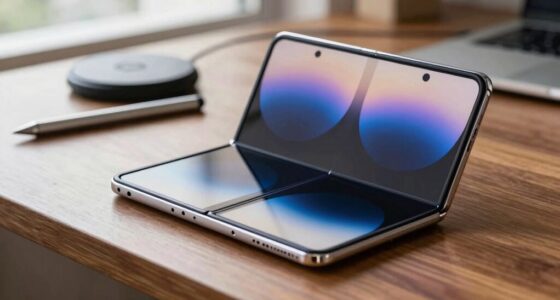
Have technological advancements truly transformed foldable smartphones into more durable, versatile devices? The answer is yes, but progress isn’t just about improved materials. Manufacturers are developing ultra-thin, flexible displays that resist scratches and creases, making screens more resilient. Flexible display technology is advancing rapidly, enabling screens to fold smoothly without damage. Hinge designs now feature refined mechanisms that reduce wear and tear, ensuring smoother folding and unfolding. Battery technology has advanced to accommodate larger capacities without adding bulk, supporting longer usage. New form factors, like ultra-slim clamshells and foldable tablets, expand how you can use these devices. Additionally, innovations in foldable glass and protective coatings help prevent damage from drops and daily use. Durability of foldable screens continues to improve, addressing one of the primary challenges for mainstream adoption. Moreover, ongoing research into impact-resistant materials is contributing to the increased robustness and longevity of foldable devices. These design improvements are key to making foldables more practical, appealing, and ready for mainstream adoption.
Regional Penetration and Growth Opportunities

Regionally, Asia-Pacific leads the foldable smartphone market, accounting for about 63% of global shipments in 2025, driven by high consumer demand and market maturity in countries like China and South Korea. You’ll find China has the highest foldable penetration at 3.2%, reflecting widespread adoption and growing familiarity with innovative devices. Meanwhile, North America, with 1.2% penetration, is catching up quickly, fueled by rising consumer interest and the anticipated entry of Apple’s foldable models in 2026. Europe represents 14% of shipments, showing steady but slower growth. Rest of the World makes up just 2%, mainly driven by early adopters and niche markets. Opportunities exist for vendors to expand in these regions by offering more affordable foldable options and tailoring strategies to local consumer preferences. Incorporating market analysis can help companies identify emerging opportunities and adapt their offerings effectively.
Future Outlook and Strategic Implications

The future of foldable smartphones hinges on strategic innovation and market expansion, as vendors seek to capitalize on rising consumer interest and technological advancements. You need to focus on developing more affordable, durable, and versatile devices that appeal to broader audiences. As foldables shift from niche to mainstream, partnerships with carriers and carriers’ push for early adoption will be essential. Manufacturers should prioritize refining hinge technology and display resilience to boost consumer confidence. Additionally, entering emerging markets with lower-cost options can accelerate adoption. Apple’s anticipated entry in 2026 could reshape industry dynamics, making strategic timing critical. Long-term success depends on balancing innovation with cost management, ensuring foldables become a practical, widely adopted segment rather than just a premium novelty. market expansion and consumer education will also play crucial roles in fostering acceptance and long-term adoption of foldable smartphones. To achieve widespread adoption, integrating connected home fitness principles—such as seamless device interoperability—can enhance user experience and loyalty. Emphasizing technology reliability and resilience will be key to overcoming consumer hesitations and establishing foldables as standard devices. Moreover, ongoing improvements in battery technology will support sustained device performance and user confidence. Furthermore, establishing industry standards could help unify the market and boost consumer trust in foldable technology.
Frequently Asked Questions
How Do Foldable Phones Impact Battery Life and Device Durability?
Foldable phones can impact your battery life and durability by adding complexity to the device. The flexible screens and hinges require extra power, often leading to quicker battery drain. Additionally, the moving parts and foldable display make the device more susceptible to wear and tear. However, manufacturers are improving materials and engineering to enhance durability, so your foldable phone can last longer with proper care and the latest technology.
Are Foldable Screens More Prone to Damage Than Traditional Smartphones?
Foldable screens are more prone to damage than traditional smartphones, like a delicate leaf in the wind. Their flexible parts and hinges face higher risks of scratches, cracks, or dust ingress. You need to handle them carefully, avoiding sharp objects and excessive pressure. While durable materials and protective designs are improving, the inherent complexity makes foldables inherently more vulnerable to damage than sturdy, traditional phones.
What Are the Environmental Implications of Producing Foldable Smartphones?
You should consider that producing foldable smartphones has significant environmental impacts. The manufacturing process involves rare materials like specialty metals and plastics, which can contribute to resource depletion and pollution. Additionally, the complex design increases electronic waste if devices are discarded prematurely or become obsolete quickly. While manufacturers aim to improve sustainability, your choices can influence demand for greener options and encourage companies to adopt eco-friendly practices.
How Do Foldable Phones Compare in Cost to Flagship Non-Foldable Models?
Foldable phones generally cost more than flagship non-foldable models. You’ll pay a premium because of the complex design, flexible displays, and innovative technology involved. Manufacturers like Samsung and Huawei price their foldables higher due to these factors, often ranging from $1,000 to over $2,000. While flagship non-foldables are more affordable, foldables offer unique features that justify their higher price for those seeking cutting-edge innovation.
Will Foldables Eventually Replace Traditional Smartphones Entirely?
You might think foldables will replace traditional smartphones, but it’s unlikely anytime soon. The market’s growing, with Huawei and others expanding quickly, yet foldables still account for just 1.6% of global shipments. As technology improves and prices drop, more people could switch, but the convenience and familiarity of regular phones keep them relevant. Expect foldables to coexist, gradually gaining ground rather than completely replacing traditional smartphones.
Conclusion
As you consider the future, foldable phones are like seeds being planted—full of potential and waiting to grow. While they might seem like a gimmick now, technological innovations could soon make them the norm, transforming how you interact with your device. Stay tuned, because just as a small seed can become a mighty tree, today’s foldables might shape the smartphone landscape of tomorrow, offering flexibility and innovation at your fingertips.
Halloween Picks
halloween
As an affiliate, we earn on qualifying purchases.