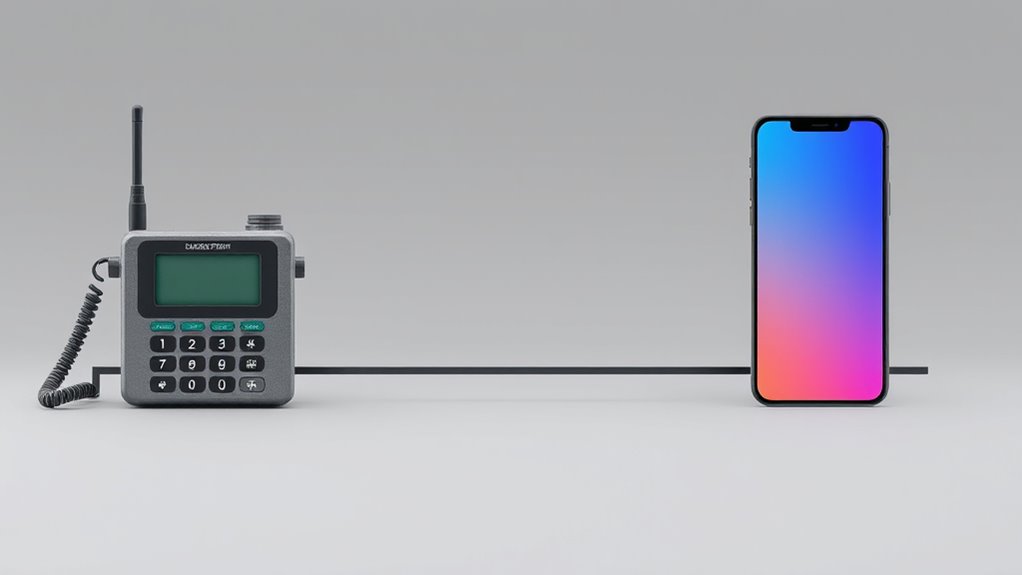

You’ve seen how mobile phones have evolved from large, bulky brick-like devices to sleek, feature-packed smartphones. It all started with radio-based car and bag phones, then moved to portable models like Motorola’s DynaTAC. The release of flip phones introduced compact convenience, paving the way for touchscreens, high-quality cameras, and app ecosystems. Connectivity advances like 4G and 5G have made these devices essential. To discover how each step shaped your current smartphone, keep exploring the journey.
Key Takeaways
- Early mobile phones evolved from bulky car and bag models to portable devices, improving mobility and convenience.
- Flip and clamshell phones introduced compact, lightweight designs, enhancing portability and user privacy.
- Smartphones integrated large touchscreens, high-resolution cameras, and multimedia features, transforming mobile devices into versatile tools.
- Advancements in connectivity, from 4G to 5G, enabled faster data transfer, seamless streaming, and real-time communication.
- Future trends include foldable displays, AI-driven features, and enhanced integration with other connected devices.

Xenvo Pro Lens Kit for iPhone and Android, Macro and Wide Angle Lens with LED Light and Travel Case Black
- Universal Compatibility: Works with all smartphones, tablets, laptops
- Wide Angle Lens: Capture 45% more with no vignetting
- Premium Construction: Aircraft-grade aluminum and optical glass
As an affiliate, we earn on qualifying purchases.
As an affiliate, we earn on qualifying purchases.
The Birth of Mobile Communication

Have you ever wondered how mobile communication began? It all started with the invention of radio technology in the early 20th century. Engineers wanted to transmit voice signals wirelessly, which led to the development of early mobile radio systems used by the military and emergency services. In 1946, the first mobile phone call was made using a bulky car-mounted device, but coverage was limited, and the system was costly. These early attempts laid the groundwork for later innovations. Over time, improvements in analog technology allowed for better mobility and clearer calls. The concept of a portable, wireless device evolved from these pioneering efforts, setting the stage for the sophisticated mobile phones we rely on today.

IMBZBK 9 in 1 Screen Protector for Samsung Galaxy Z Fold 8 Ultra/Z Fold 7
- Easy Auto-Installation: Automatic positioning and dust removal technology
- Complete Installation Kit: Includes two installation frames for inside and outside screens
- Military-Grade Shatterproof: Aerospace-Grade Glass with Nano-Ceramic Fusion
As an affiliate, we earn on qualifying purchases.
As an affiliate, we earn on qualifying purchases.
The Rise of Car Phones and Bag Phones

You notice how early car phones had large, bulky units with limited features, making calls possible only within a vehicle. Bag phones, on the other hand, offered greater mobility, since you could carry them around easily. This shift marked a significant step toward more flexible and accessible mobile communication. In addition, the development of portable devices further expanded the possibilities for users to stay connected on the go. As technology progressed, these innovations laid the groundwork for the modern personalized in-home care solutions that emphasize convenience and tailored support for users. Moreover, advancements in connected technology continue to influence the evolution of mobile communication and integrated smart systems. Additionally, the ongoing integration of wireless infrastructure has greatly enhanced network reliability and coverage, further empowering mobile users worldwide. The increasing use of essential oils in health and wellness also reflects a broader trend towards personalized and holistic approaches to well-being, paralleling the customization seen in mobile technology.
Early Car Phone Features
How did early car phones revolutionize mobile communication? They brought the phone out of homes and into vehicles, allowing you to stay connected on the go. These devices featured large, bulky handsets connected to a car-mounted unit via cords, making calls possible without relying on landlines. Early car phones had limited coverage, often restricted to urban areas, but they offered a new level of convenience. You could make emergency calls, coordinate with colleagues, or stay in touch during travel. They operated on specialized radio frequencies and required extensive installation, including external antennas. Despite their size and expense, these phones marked a significant shift—moving communication from static locations to mobile environments, laying the foundation for future portable and wireless devices. The development of portable and wireless communication technologies further enhanced mobility and user convenience. Additionally, these early systems often required extensive installation and maintenance, which was a barrier to widespread adoption. The reliance on external antennas also meant that signal quality could vary greatly depending on location. Moreover, advancements in battery technology gradually allowed these devices to operate without constant external power sources, improving usability. As technology progressed, the integration of wireless systems made future mobile devices more compact and easier to use.
Bag Phones’ Mobility
Building on the foundation laid by early car phones, bag phones emerged as a more portable and flexible solution, allowing you to carry your mobile device easily outside the vehicle. Unlike bulky car phones fixed in dashboards, bag phones used a large bag or case to hold the transceiver, with a cord connecting to a handset. This design gave you the freedom to move around, making mobile communication more practical. You could carry your phone into meetings, cafes, or even outdoors, without being tethered to your car. Portability was significantly improved with bag phones, helping users stay connected in various settings. Although still sizable compared to today’s standards, bag phones marked a significant step toward portability. Their increased mobility helped pave the way for even smaller, more convenient devices, bringing mobile communication into everyday life. Understanding the evolution of herbal remedies also highlights how technological advancements have transformed accessibility and convenience, reflecting broader trends in technological progress.
SIMO Solis PRO, 5G WiFi Hotspot with 1GB/Monthly + 10GB Global Data
- 2-in-1 Device: 5G Wi-Fi hotspot with built-in power bank
- Device Connectivity: Supports up to 20 devices simultaneously
- Signal Optimization: AI-powered SignalScan finds strongest signal
As an affiliate, we earn on qualifying purchases.
As an affiliate, we earn on qualifying purchases.
The Dawn of the First Portable Cell Phones

The development of the first portable cell phones marked a revolutionary shift in communication technology. You no longer had to rely on bulky, fixed landlines or limited-range car phones. These early devices, like Motorola’s DynaTAC introduced in 1983, were groundbreaking because they brought mobility to your conversations. Weighing over two pounds and costing thousands of dollars, they were still impractical for everyday use but proved the concept. You could now carry a phone with you, making calls from virtually anywhere within a cellular network. This innovation opened the door for more compact, affordable models in the years ahead. The first portable phones transformed how you stayed connected, setting the stage for the rapid evolution toward modern mobile communication. Practical tools like these helped modern humans reclaim focus and adapt to the increasing demands of connectivity, paving the way for more compact and affordable devices that followed. Additionally, these early mobile phones laid the foundation for the development of smartphone technology, which would eventually integrate multimedia, internet access, and advanced features into compact devices.
STREBITO Electronics Precision Screwdriver Sets 142-Piece with 120 Bits
- Complete 142-Piece Set: Includes 120 bits and 22 accessories
- Wide Compatibility: Suitable for phones, laptops, tablets, and more
- Ergonomic Handle: Rubberized, comfortable grip with swivel top
As an affiliate, we earn on qualifying purchases.
As an affiliate, we earn on qualifying purchases.
The Emergence of Flip Phones and Clamshell Designs

You notice how flip phones became popular in the early 2000s because they’re compact and easy to carry. Their clamshell design also offers better privacy, protecting calls and messages when closed. This style quickly gained popularity, shaping mobile phone trends during that era.
Compact and Portable Design
Have you ever wondered how mobile phones became so easy to carry around? The answer lies in the emergence of flip phones and clamshell designs. These phones are compact and lightweight, fitting comfortably in your pocket or purse. By folding in half, they drastically reduce their size when not in use, making them highly portable. Manufacturers focused on reducing weight and bulk without sacrificing essential features. The clamshell design also protected the keypad and screen from damage. This innovation appealed to users wanting convenience and style, transforming phones from bulky bricks into sleek, pocket-friendly devices. Additionally, the use of compact and portable designs significantly influenced market trends and consumer preferences, leading to the widespread adoption of mobile phones that prioritize ease of carry. The shift towards lightweight and foldable structures also contributed to the development of modern smartphones, which continue to emphasize portability alongside advanced functionality. As a result, flip phones became incredibly popular in the early 2000s, setting the stage for future innovations that prioritized portability without compromising functionality. This focus on user-friendly design helped shape the evolution of mobile technology into the sleek, versatile devices we rely on today. Furthermore, the push for miniaturization drove engineers to innovate and optimize components to fit more features into smaller devices, a trend that persists today. The ongoing advancements in engineering and materials science continue to enable these compact, portable forms.
Enhanced Privacy Features
As flip phones gained popularity, manufacturers recognized the need to enhance user privacy and security. They introduced features like lock screens, password protection, and hidden folders to keep personal information safe. Clamshell designs naturally offered some privacy by covering the keypad and screen when closed, preventing others from viewing sensitive content. Some models included dedicated privacy switches, allowing you to mute calls or disable cameras instantly. Voice call encryption was also introduced to secure conversations. These innovations aimed to protect your data from unauthorized access, especially in public settings. Additionally, the incorporation of water-resistant technology helped safeguard devices against water damage, further emphasizing the importance of device durability and user privacy. As a result, flip phones became more than just compact devices—they became tools that prioritized your privacy without sacrificing convenience. This focus laid the groundwork for future mobile security advancements.
Popularity in Early 2000s
In the early 2000s, flip phones and clamshell designs surged in popularity, revolutionizing mobile communication. Their compact form made them easy to carry and stylish, appealing to a broad audience. These phones allowed you to answer calls with a simple flip, adding convenience and a sense of novelty. Manufacturers introduced features like cameras, MP3 players, and customizable covers, making them versatile devices. The clamshell design also protected screens and keypads, extending device longevity. The trend fostered a sense of personal expression and practicality. Below are some key aspects of this surge:
| Feature | Impact |
|---|---|
| Compact Design | Easy to carry, stylish |
| Enhanced Features | Cameras, music, customization |
| Protective Flip Cover | Screen and keypad protection |
| Popularity Boost | Widespread adoption and cultural influence |
The Introduction of Smartphones and Touchscreens

The introduction of smartphones and touchscreens revolutionized mobile phones, transforming them from simple communication devices into versatile tools for everyday life. With the advent of large, high-resolution screens, you could navigate apps, browse the internet, and access multimedia content effortlessly. Touchscreens replaced physical buttons, making devices more intuitive and sleek. This innovation allowed for faster interaction, seamless scrolling, and more dynamic interfaces. Manufacturers started integrating advanced features such as cameras, GPS, and multimedia players directly into phones, broadening their functionality. As a result, your mobile device became essential for work, entertainment, and social connection. The shift to smartphones with touchscreens marked a pivotal moment, setting the stage for the sophisticated, multifunctional gadgets we rely on today.
The Impact of Mobile Operating Systems

Mobile operating systems revolutionized how you interact with your phone by introducing user interface innovations that make navigation more intuitive. They also fostered the growth of vast app ecosystems, giving you access to a wide range of tools and entertainment. Together, these changes transformed your mobile experience into something more powerful and personalized.
User Interface Innovations
Mobile operating systems have revolutionized how users interact with their devices by continuously introducing innovative interfaces. Touchscreens replaced physical buttons, enabling more intuitive navigation through gestures like swipes, pinches, and taps. You now enjoy smooth animations, responsive feedback, and customizable home screens that adapt to your preferences. Multitasking features let you switch seamlessly between apps, while notifications are more interactive and informative. Voice assistants like Siri or Google Assistant provide hands-free control, making your experience more natural. Designers also focused on accessibility, ensuring interfaces are usable for everyone. These innovations have made your device more than just a tool; they’ve turned it into an intuitive, personalized extension of yourself, transforming how you access information and communicate daily.
App Ecosystem Growth
Innovative user interfaces have made smartphones more accessible and engaging, encouraging developers to create a wide variety of applications. Mobile operating systems like iOS and Android have fostered vibrant ecosystems, attracting developers to build innovative apps. This growth has expanded what you can do with your phone, from social media to productivity tools and entertainment. App stores serve as central hubs, making it easy for you to discover new applications and updates. As a result, your smartphone becomes an indispensable part of daily life, supporting work, communication, and leisure. The thriving app ecosystem also fuels competition, leading to better features, security, and user experience. Overall, the expansion of app ecosystems continues to drive the evolution and utility of mobile phones.
The Role of App Ecosystems in Smartphone Growth

App ecosystems have become a driving force behind the rapid growth of smartphones, shaping how you interact with your device daily. They provide a vast array of tools, entertainment, and services at your fingertips, making smartphones essential for work, communication, and leisure. Developers are motivated to create innovative apps because of the large user base and easy distribution through app stores. This ecosystem encourages continuous innovation, leading to more engaging and useful applications. As a result, smartphones become more versatile, replacing many other gadgets. The seamless integration of apps enhances user experience, making smartphones indispensable in your life. Without robust app ecosystems, the rapid adoption and evolution of smartphones wouldn’t have been possible, profoundly influencing how you connect, work, and entertain yourself.
Advances in Camera and Multimedia Features

Have you noticed how your phone’s camera quality has transformed over the years? Today’s smartphones feature multiple lenses, high megapixel counts, and advanced sensors that capture stunning detail. You can take professional-looking photos with just a tap, thanks to features like optical image stabilization and AI-powered scene recognition. Multimedia capabilities have also expanded—video recording now includes 4K and even 8K resolution, enabling cinematic quality footage. HDR, slow-motion, and time-lapse modes give you creative control over your videos and photos. Front-facing cameras have improved too, making selfies sharper and more vibrant. These advancements mean you’re no longer limited to basic photos; your device is a powerful multimedia tool, perfect for capturing memories and sharing them instantly.
The Integration of Connectivity Technologies (4G, 5G)

The evolution of camera technology has transformed how you capture and share moments, but it’s only part of the story. Connectivity technologies like 4G and 5G have revolutionized your mobile experience by enabling faster data speeds and lower latency. With 4G, streaming, video calls, and app downloads became seamless, changing how you communicate and consume content. Now, 5G takes it further, offering near-instantaneous connections that support emerging technologies like augmented reality and IoT devices. This progression enhances everything from navigation to gaming, making your device more integral to daily life. Here’s how they compare:
| Feature | 4G | 5G |
|---|---|---|
| Speed | Up to 1 Gbps | Up to 10 Gbps |
| Latency | ~30-50 ms | 1-10 ms |
| Connectivity | Supports many devices | Supports ultra-dense networks |
| Usage | Streaming, calls, browsing | Real-time applications, smart cities |
The Future of Mobile Devices and Emerging Trends

As technology continues to advance at a rapid pace, mobile devices are becoming more powerful and versatile than ever before. You can expect future smartphones to integrate AI capabilities that personalize your experience, making tasks like photography, navigation, and health tracking smarter. Foldable and flexible screens will likely become standard, offering larger displays in compact forms. Emerging trends also include enhanced augmented reality (AR) and virtual reality (VR) features, transforming how you interact with digital content. Battery technology will improve, providing longer usage without sacrificing portability. Additionally, with the rise of IoT, your device will seamlessly connect with home appliances, vehicles, and wearables, creating an interconnected ecosystem that simplifies your daily life. The future promises mobile devices that are more intuitive, efficient, and integrated than ever before.
Frequently Asked Questions
How Did Early Mobile Phones Influence Modern Communication Habits?
Early mobile phones revolutionized your communication habits by making instant calls possible anytime and anywhere. You no longer rely solely on landlines, enabling you to stay connected on the go. These devices introduced the convenience of quick conversations and began shaping social norms around immediacy. Over time, they evolved into smartphones, further transforming how you share information, access the internet, and communicate visually, making your interactions more dynamic and versatile.
What Technological Challenges Were Overcome to Develop Portable Cell Phones?
Imagine building a bridge across a vast river—you face many obstacles. Similarly, engineers overcame battery limitations, miniaturized components, and signal issues to create portable cell phones. They developed smaller, efficient batteries, integrated circuits, and improved network technology. These breakthroughs allowed you to carry a powerful communication device in your pocket, transforming how you connect, work, and socialize, turning a formidable challenge into everyday convenience.
How Did Mobile Phones Impact Social Interactions Over Time?
You find that mobile phones transformed social interactions by making communication instant and more flexible. Over time, you can connect with others anytime and anywhere, fostering closer relationships and enabling new forms of socializing like texting and video calls. However, you might also notice that this shift sometimes reduces face-to-face interactions and increases dependence on digital communication, impacting the depth and quality of your social connections.
What Role Did Industry Giants Play in Shaping Mobile Phone Evolution?
Industry giants like Nokia, Apple, and Samsung drove innovation, setting standards for design, features, and usability. You benefit from their innovations, which pushed the boundaries of technology, making phones more powerful and user-friendly. They invested heavily in research and development, influencing trends and market competition. Their strategic moves, such as introducing smartphones and app ecosystems, shaped how you communicate, work, and entertain yourself today.
How Will Emerging Technologies Redefine Future Mobile Devices?
Emerging technologies will transform your future mobile devices by making them more intuitive, powerful, and integrated into your daily life. Expect advancements like foldable screens, enhanced AI, and better connectivity through 5G and beyond. These innovations will enable faster processing, smarter apps, and seamless integration with other smart devices. You’ll experience phones that adapt to your needs, offering personalized experiences and unprecedented convenience, fundamentally reshaping how you communicate, work, and entertain yourself.
Conclusion
Your journey through mobile evolution shows how these devices have transformed from bulky bricks into sleek, powerful gateways to the world. They symbolize human innovation and connection, constantly evolving to meet your needs. As technology continues to advance, your mobile phone remains a beacon of progress—embracing the future while reflecting the limitless potential of imagination. Keep evolving with it, for your device is more than a tool; it’s a symbol of endless possibility.