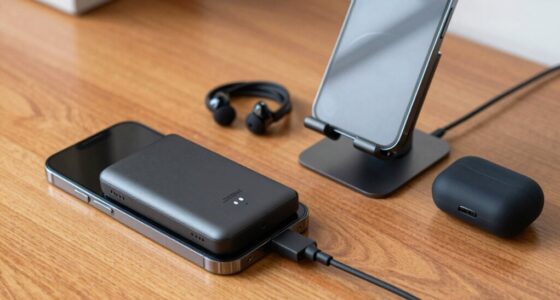
Wireless charging is incredibly convenient because it eliminates the hassle of cables and makes powering your devices simple; just place your device on the pad or stand. It’s ideal for multitasking and busy moments, offering a seamless experience. However, to get the best performance, make sure your device supports the right standards like Qi, and align it properly. Want to discover more ways to maximize convenience and safety? Keep exploring to reveal everything about wireless charging.

Get the latest gadgets delivered free — and shop member deals
- Fast, free delivery on millions of items
- Access to Prime Big Deal Days deals on October 6–7
- Prime Video, Amazon Music and more included
Key Takeaways
- Wireless charging offers unmatched convenience by eliminating cables and enabling easy device placement for quick power-ups.
- Proper device alignment and compatible standards are essential for optimal charging speed and efficiency.
- Modern chargers include safety features like temperature regulation to protect batteries during charging.
- Compatibility issues and hardware limitations can cause slow or unreliable wireless charging experiences.
- Overcharging or prolonged charging can harm battery health; unplugging when full maintains device longevity.
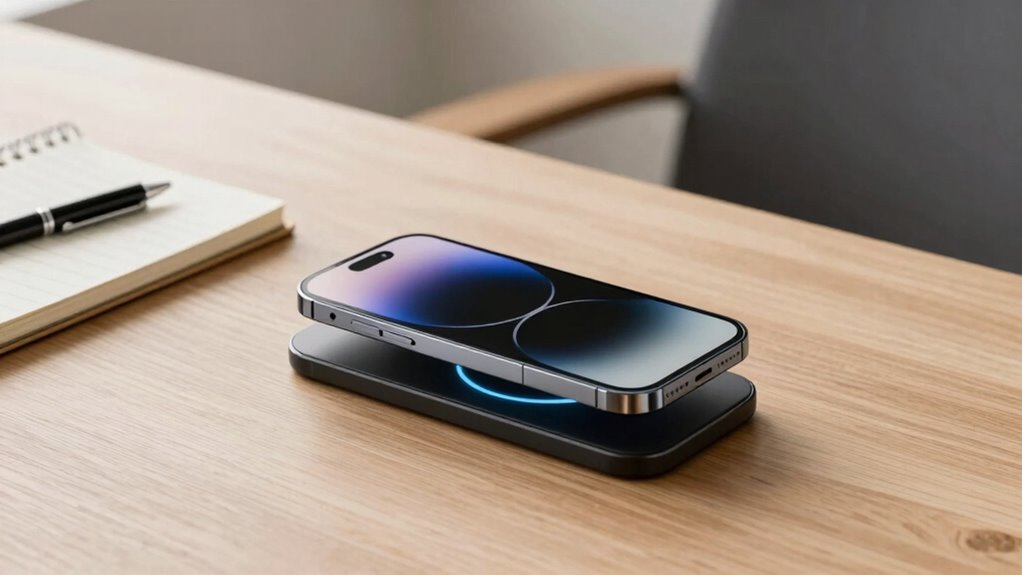
Wireless charging has transformed the way you power up your devices, making the process simpler and more convenient than ever before. Instead of fumbling with cables, you just place your phone on a pad or stand, and it begins to charge. This ease of use appeals to many, especially when you’re in a hurry or juggling multiple tasks. But as seamless as wireless charging feels, it’s important to understand the realities behind the convenience. One key concern is battery safety. Many worry whether wireless charging might damage their device’s battery over time. Fortunately, most modern wireless chargers are equipped with safety features like temperature regulation and power management, which help prevent overheating and overcharging. These protections guarantee your device’s battery remains safe, but it’s still wise to avoid keeping your phone on a wireless charger longer than necessary. Over time, excessive heat or prolonged charging can degrade your battery’s health, regardless of the charging method. So, while wireless charging is safe when used correctly, you should still monitor your device and unplug it once it reaches full capacity to preserve battery longevity. Additionally, understanding the wireless charging standards can help you select compatible devices and chargers, ensuring optimal performance. Being aware of compatibility issues can also save you time and frustration when choosing the right accessories. For example, some device hardware limitations may prevent certain models from supporting wireless charging altogether. Checking for firmware updates can sometimes improve compatibility and charging efficiency. It’s also helpful to stay informed about charging speed variations, as different chargers and device combinations can impact how quickly your device charges.
Another aspect to contemplate is compatibility issues. Not all devices support wireless charging, and even among those that do, not all chargers are universally compatible. For instance, some older smartphones or budget models might lack the necessary hardware to connect wirelessly. If you buy a wireless charger, you need to confirm that your device is compatible, usually via the Qi standard, which is the most common protocol. Using an incompatible charger can result in slower charging times or, in some cases, no charging at all. Additionally, the placement of your device on the charging pad matters. If it’s not aligned properly, charging efficiency drops considerably, and in some cases, the device might not charge at all. This means you might face frustration if your device doesn’t charge consistently or quickly on certain chargers. Investing in a reputable, well-reviewed wireless charger that matches your device’s specifications can reduce these compatibility issues and improve your overall experience.
While wireless charging offers a great deal of convenience, it’s not without its caveats. Battery safety remains a top priority, and understanding how to maintain your device’s health is vital. Compatibility issues can also be a stumbling block if you don’t choose the right charger or if your device doesn’t support wireless charging at all. By being aware of these factors, you can enjoy the benefits of wireless charging without falling prey to its common pitfalls. In the end, it’s about balancing convenience with mindfulness, ensuring your device stays safe and functional while providing the ease that wireless charging promises.
As an affiliate, we earn on qualifying purchases.
Frequently Asked Questions
How Does Wireless Charging Affect Battery Lifespan?
Wireless charging can slightly impact your battery lifespan by increasing battery degradation over time. It often results in more charging cycles, which can wear out the battery faster. However, modern devices are designed to handle this better, so the effect is usually minimal if you don’t overuse wireless charging. To extend your battery’s life, avoid keeping your device on wireless charging pads constantly and use wired charging when possible.
Is Wireless Charging Safe for All Device Types?
Wireless charging is generally safe for most devices, but you should check for wireless safety and device compatibility before using it. Some older or non-standard devices might not support wireless charging properly or could overheat. Always use certified chargers and verify your device explicitly supports wireless charging to avoid potential risks. When in doubt, consult your device manufacturer’s guidelines to ensure safe and effective wireless charging.
Can Wireless Chargers Work Through Thick Cases?
You’ll be pleased to know that wireless chargers can work through thick cases, but with some limitations. Studies show that case thickness greatly impacts charging efficiency; thicker cases, especially over 3mm, may reduce charging speed or prevent charging altogether. To guarantee ideal performance, keep your case slim or use wireless chargers designed for thicker covers. This way, you can enjoy the convenience without sacrificing charging effectiveness.
What Is the Maximum Distance for Effective Wireless Charging?
Wireless charging typically works effectively within a few millimeters to about 4 centimeters, depending on the device and charger. Distance limitations greatly impact power transfer efficiency; the farther the device, the less power it receives. To guarantee ideal charging, keep your device aligned closely with the charging pad and avoid placing it too far away. For the best results, stay within the manufacturer’s recommended distance range.
Are Wireless Chargers Compatible With Fast Charging Technologies?
Wireless chargers often support fast charging technologies, but compatibility varies. Unlike fiber optics, which deliver high-speed data seamlessly, wireless chargers rely on specific standards like Qi for rapid power transfer. Think of power banks—they can complement wireless charging, but not all are designed for fast charging. To maximize speed, confirm your device and charger support the same fast-charging protocols. Compatibility depends on matching technology standards for ideal, quick power delivery.
As an affiliate, we earn on qualifying purchases.
Conclusion
Here’s a very short, exaggerated conclusion in second person, active voice, using contractions:
So, while wireless charging promises ultimate convenience, it’s like waiting for a magic spell that might never arrive. Imagine your phone floating gracefully in mid-air, humming softly as it powers up—fantasy, right? In reality, it’s more like chasing a mythical creature that’s just out of reach. Don’t hold your breath for perfect wireless magic; instead, embrace the small, tangible wins it actually offers.
wireless charging compatibility checker
As an affiliate, we earn on qualifying purchases.
As an affiliate, we earn on qualifying purchases.
temperature regulation wireless charger
As an affiliate, we earn on qualifying purchases.
As an affiliate, we earn on qualifying purchases.
Fall Picks
fall essentials
As an affiliate, we earn on qualifying purchases.