TL;DR
Wireless earbuds with noise cancellation use microphones and sound processing to reduce some outside noise, especially steady low-frequency sounds like an airplane rumble. Their ear tips also block sound physically, so fit, comfort, battery life with ANC enabled, call quality, and transparency mode all deserve a place in your comparison. ANC reduces noise; it does not make your surroundings silent or protect your hearing.
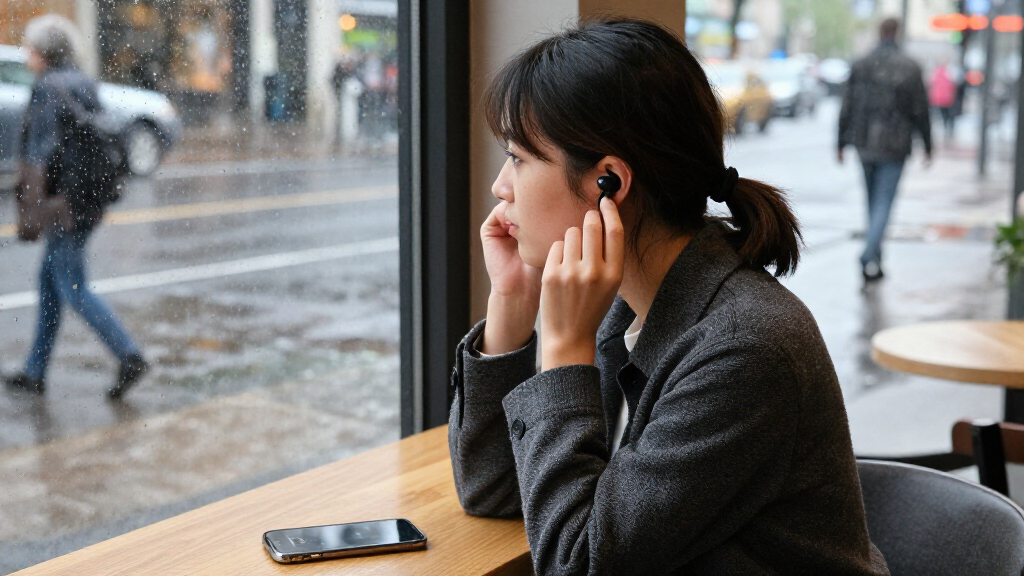
A plane’s rumble can fill your ears for hours, yet a small pair of earbuds can make that steady roar feel softer. That is the promise of wireless earbuds with noise cancellation: less background noise, without carrying bulky over-ear headphones.

Get the latest gadgets delivered free with Prime
- Fast, free delivery on millions of items
- Prime Video, Amazon Music and more included
- Member-only deals all year
This guide explains what active noise cancellation does, why the fit of the ear tips can change what you hear, and how to compare everyday features such as battery life, calls, and transparency mode. You’ll also get practical advice for flights, commuting, and working at a desk, plus the limits to keep in mind before you buy.
Think of ANC as turning down part of the world, not pressing a mute button. The right pair can make a long train ride feel calmer; the wrong fit can leave the bass thin and the noise stubbornly present.
ANC reduces some steady, low-frequency noise; it will not make a plane, train, or busy street silent.
Try different ear tips in both ears: a comfortable seal affects isolation, ANC, and bass.
Compare battery life with ANC enabled and look for independent call tests if you take meetings.
Use transparency or leave an ear uncovered when you need more awareness near traffic, and keep listening volume moderate.
Check the exact water-resistance rating, warranty, and replacement-earbud options before buying.
Understand What ANC Can—and Can’t—Quiet
Active noise cancellation uses microphones to detect outside sound and speakers to play sound that reduces some of it. It tends to work best on steady, low-frequency noise, such as an airplane rumble or an air conditioner’s hum. It does not remove every sound around you.
The earbuds also rely on passive isolation: the physical barrier made by the ear tips sitting in your ears. A snug seal can soften outside noise and help bass sound full; a loose tip can let sound leak in. ANC and the ear-tip seal work as a team, like a closed window paired with a quieter fan.
What happens when someone speaks beside you? You may still hear them, because voices, sudden sounds, and higher pitches are harder for ANC to reduce. On a flight, the constant engine drone may fade while a nearby announcement remains noticeable. This is normal, not a sign that the earbuds have failed.
Transparency mode takes the opposite approach: microphones bring outside sound into your ears so you can hear a conversation or notice some nearby activity without removing the earbuds. How natural it sounds varies by model. Think of it as a window opened by software; it can help you hear, but you still need to pay attention.
ANC turns down some noise. It does not create silence, block every voice, or count as certified hearing protection.
Products Worth Considering

LG 27GS60QC-B Ultragear 27-inch Curved Gaming Monitor (QHD, 180Hz, 1ms, 1000R)

DJI Mic 3 (2 TX + 1 RX + Charging Case), Wireless Microphone

Sony WH-1000XM5 Wireless Noise-Canceling Over-Ear Headphones, Black, International Version
As an affiliate, we earn on qualifying purchases.
Start With Fit Before You Compare Features
Fit is the first thing to judge because ear tips help determine comfort, passive isolation, bass response, and ANC performance. A pair with impressive specifications can still disappoint if it slips out or leaves gaps. Many models include several silicone tip sizes, and some support optional foam tips.
For example, you might try a new pair on a quiet walk and find that the left earbud stays secure while the right one slowly loosens. That small difference matters: the loose side may sound thinner and let in more station noise. Try the included sizes in both ears, since your ears may need different tips.
Comfort also depends on shape and weight. If you plan to wear earbuds through a morning of video calls, pressure inside your ears can matter more than the few grams listed on a product page. A quick fit check in an app may help, but treat it as a starting point rather than a guarantee; a short test during your own routine tells you more.
When you compare wireless earbuds with noise cancellation, check whether you can return them after trying them, and read the cleaning instructions. A secure fit should feel stable without forcing the tip deep into your ear. The best seal is the one you can wear comfortably, not the tightest one you can tolerate.
Compare the Features You’ll Use Every Day
Compare everyday performance, not just a headline ANC claim. Battery life, call quality, controls, device switching, and water resistance all shape whether earbuds work well in your day. Manufacturers often list separate battery figures for the earbuds and charging case, so check how long the earbuds last on one charge with ANC turned on.
| Feature | What to check | Everyday example |
|---|---|---|
| Battery | Playback time with ANC enabled; case capacity | Can they last your commute without a mid-trip charge? |
| Calls | Independent microphone tests and wind handling | Can a colleague understand you beside a busy street? |
| Controls | Reliable buttons or touch controls, with easy mode changes | Can you pause music without opening your phone? |
| Compatibility | Multipoint, app support, and supported codecs | Can you switch smoothly between a laptop and a phone? |
| Durability | The exact water or dust resistance rating | Does the stated rating fit your gym or rainy commute? |
A strong music review does not promise strong calls. Microphone design, software processing, and wind all affect how your voice reaches someone else; check call tests if you take meetings from a café. Likewise, a Bluetooth codec does not guarantee better sound by itself, because benefits depend on your phone, earbuds, and listening material.
Noise cancellation can use extra power, and calls or high volume can shorten listening time. Many models also offer multipoint connections, which can connect earbuds to a laptop and phone, but device switching varies. For instance, you might want music on a laptop to pause when your phone rings; check that behavior on the specific model before you count on it.
Choose the Right Noise Mode for Your Routine
The right mode depends on what you’re doing: ANC can make steady background noise less tiring, while transparency mode can let some nearby sound through. Neither setting replaces paying attention to your surroundings. Switching modes is a small action that can make a walk, flight, or conversation feel more comfortable.
- On a plane or train: Try ANC against the steady engine or track rumble. Keep announcements in mind, since voices may still come through.
- At your desk: Use ANC to soften ventilation or office hum, then switch to transparency when a colleague speaks to you.
- Near traffic: Choose transparency or leave one ear uncovered when appropriate. Keep your attention on vehicles, cyclists, and crossing signals.
- After your session: Clean the earbuds and tips according to the manufacturer’s guidance, especially after exercise.
Imagine stepping off a crowded train with a call coming in. Transparency mode may help you hear the person beside you, but it does not give you a complete picture of every sound around you. If you’re walking near traffic, keep your eyes and attention on the road rather than trusting an audio setting to warn you.
Listening volume still matters in every mode. ANC may make it easier to hear your music at a lower setting in a noisy place, but loud listening for long periods can damage hearing whether ANC is on or off. Treat a quieter setting and listening breaks as everyday habits, not as a guarantee that earbuds are risk-free.
Decide Whether the Price Matches Your Needs
A higher price does not guarantee a better personal fit. Premium earbuds may offer adaptive ANC, more natural transparency, personalized sound, or spatial audio with head tracking. Those features can be appealing, but they vary by model and device ecosystem, and spatial audio depends on the content you play.
Recent generations have also brought more attention to wind handling, call-noise processing, and app-based sound settings. Treat claims about a specific product as claims about that model, and check when a review or feature description was published: software updates can change behavior after launch. A feature list tells you what a company offers, not how comfortable the earbuds will feel during your commute.
Picture two listeners: one spends three hours a day on trains, while the other wears earbuds for a short walk and a few calls. The first may value steady-noise reduction and longer battery life with ANC enabled. The second might care more about a secure fit, clear calls, and controls they can use without fishing out a phone.
Before buying, check the warranty, whether replacement earbuds are available, and whether replacements work with your charging case. Compact earbuds have small batteries that can be difficult to replace, so service options may affect how long you can keep using them. Water-resistance ratings also have limits; a rating for sweat or rain does not automatically make earbuds suitable for swimming.
Useful buying checks include fit options, ANC and transparency behavior, battery life with ANC on, independent call tests, device compatibility, durability, repair support, and price. If your budget is tight, prioritize comfortable fit and reliable performance in the situations you actually face. An extra feature only adds value when you will use it.
Frequently Asked Questions
What is the difference between ANC and noise isolation?
ANC uses microphones and sound processing to reduce some outside sound, especially steady low-frequency noise. Noise isolation comes mainly from the physical fit of the ear tips. A good fit can help both isolation and bass response.
Do noise-cancelling earbuds block all sound?
No. ANC can reduce steady sounds such as an aircraft rumble, but voices, sudden noises, and higher-pitched sounds may remain audible. Think of it as turning down part of the background, not muting the world.
Are ANC earbuds useful on a plane?
They can reduce the continuous low-frequency rumble of an aircraft and make a flight feel calmer. They will not remove every sound, so you may still hear announcements or nearby conversations.
Can I use noise cancellation without music?
Many models let you use ANC without playing music, but behavior and battery use vary. Check the settings for the specific earbuds and expect ANC to use some power even when you are not listening to audio.
Are noise-cancelling earbuds safe for hearing?
ANC does not make loud listening risk-free or count as hearing protection unless a product is specifically certified for that use. Keep volume moderate and take listening breaks; transparency mode can help with awareness but does not replace attention near traffic.
Conclusion
Choose earbuds that fit comfortably, reduce the noise you actually encounter, and last through your routine with ANC on. Check call tests, controls, safety features, and repair options alongside the price.
ANC can soften an airplane’s low roar, but the world still has voices, crossings, and announcements worth hearing. Pick the mode that suits the moment, and give your ears a quieter volume to come home to.