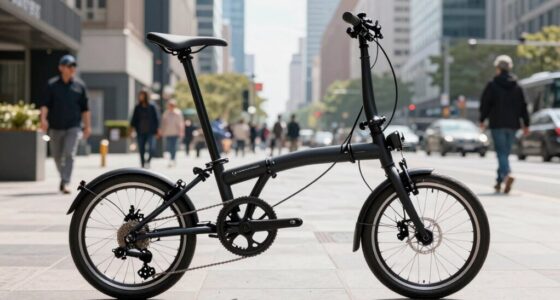
E-bikes have become a serious transport option because they offer a convenient, eco-friendly way to navigate city streets quickly and comfortably. They help you avoid traffic, reduce physical effort, and switch easily between pedaling and electric assistance. With urban infrastructure improving, e-bikes are more practical for commuting longer distances and hilly terrain. Their versatility and environmental benefits make them a smart choice for modern urban mobility—discover how they’re changing transportation for everyone.

Get the latest gadgets delivered free with Prime
- Fast, free delivery on millions of items
- Prime Video, Amazon Music and more included
- Member-only deals all year
Key Takeaways
- E-bikes offer a convenient, eco-friendly alternative that helps reduce urban traffic congestion and pollution.
- The ability to switch between electric assist and manual pedaling increases versatility for various terrains and distances.
- Urban infrastructure development, such as dedicated bike lanes and charging stations, enhances e-bike practicality.
- E-bikes reduce physical effort, making longer and hilly commutes more accessible and appealing.
- Their cost-effectiveness and positive environmental impact position e-bikes as a sustainable urban mobility solution.

E-bikes have become a popular alternative for daily commuting, offering a convenient and eco-friendly way to get around. If you’re tired of sitting in traffic or dealing with crowded public transit, an e-bike might be just what you need. They provide a practical solution to urban congestion, which continues to worsen in many cities. Instead of fighting for space on packed buses or trains, you can zip through streets quickly and efficiently. E-bikes help you bypass gridlock, giving you more control over your travel time and reducing stress. Plus, they’re quiet, clean, and require less effort than traditional bikes, making them suitable for a wide range of users.
One of the biggest advantages of e-bikes is the commuting flexibility they offer. You can choose to pedal manually when you want a workout or turn on the electric assistance when you need a boost. This flexibility means you can adapt your ride to your mood, energy level, or weather conditions. During busy mornings, you might opt for the electric boost to arrive at work fresh and on time. On weekends or leisure rides, you can enjoy pedaling for exercise or pleasure. The ability to switch modes makes e-bikes ideal for various terrains and distances, expanding your options for travel. Whether you’re commuting across town or exploring nearby parks, e-bikes accommodate your needs.
E-bikes offer flexible riding options for workouts, commuting, and leisure, adapting to your mood and terrain.
E-bikes also make it easier to incorporate cycling into your daily routine without the physical strain that can discourage traditional biking. The electric motor reduces the effort required, so you don’t get exhausted before reaching your destination. This is especially beneficial for those with longer commutes or hilly routes that would otherwise be challenging. As a result, more people feel encouraged to choose cycling over driving, which benefits both your health and the environment. Additionally, e-bikes are cost-effective compared to cars. You save on fuel, parking fees, and maintenance, all while reducing your carbon footprint.
In many cities, infrastructure is gradually adapting to support e-bike users, with dedicated bike lanes and charging stations becoming more common. This development further enhances the practicality of e-bikes as a reliable transport option. As urban congestion worsens and the need for sustainable transportation grows, e-bikes stand out as a smart, flexible, and environmentally friendly alternative. They allow you to navigate busy streets more efficiently and with greater comfort, making them an increasingly essential part of urban mobility solutions. If you’re looking to cut down on commute time, reduce stress, and contribute to a cleaner environment, embracing e-bikes could be a game-changer.
Products Worth Considering

Bose SoundLink Plus Portable Bluetooth Speaker, Wireless Outdoor Speaker, Up to 20 Hours Battery Life, Waterproof and Dustproof, Black

EcoFlow Delta 3 Ultra 3072Wh Portable Power Station – 3600W AC Output

DJI Mic 3 Wireless Microphone Kit (2 Transmitters, 1 Receiver, Charging Case)
As an affiliate, we earn on qualifying purchases.
Frequently Asked Questions
How Long Do E-Bike Batteries Typically Last?
E-bike batteries typically last between 3 to 5 years, depending on your charging habits and usage. Proper charging habits, like avoiding complete discharges and not overcharging, can extend battery lifespan. You might notice a gradual decrease in range over time, but taking good care of your battery helps it stay reliable longer. Regular maintenance and mindful charging are key to maximizing your e-bike’s battery life and overall performance.
Are E-Bikes Suitable for All Ages and Fitness Levels?
E-bikes are suitable for all ages and fitness levels because they promote age inclusivity and fitness adaptability. Whether you’re young, elderly, or somewhere in between, you can customize the assistance level to match your strength and stamina. This flexibility makes e-bikes a great option for everyone, encouraging more people to enjoy cycling while accommodating different physical abilities and promoting healthier, active lifestyles across diverse age groups.
What Are the Maintenance Costs for E-Bikes?
Maintenance costs for e-bikes are generally manageable. You’ll need to budget for occasional tire maintenance, like replacing worn tires or fixing flats, which is similar to regular bikes. Battery replacement is a bigger expense, typically needed every 3-5 years and costing a few hundred dollars. Regular upkeep, including brake adjustments and software updates, helps prolong your e-bike’s lifespan and keeps maintenance costs predictable.
Can E-Bikes Be Used on All Road Types?
E-bikes can’t conquer every road type, but they’re quite versatile, like a chameleon adapting to its surroundings. You should consider urban infrastructure and road safety, as paved city streets are ideal, while rough terrains or unpaved paths might pose challenges. Always check local regulations and road conditions before riding, ensuring you stay safe and compliant. Properly equipped and cautious, you can enjoy your e-bike on many different surfaces.
Do E-Bikes Require Special Licensing or Registration?
You usually don’t need special licensing or registration for e-bikes, but regulatory differences exist depending on your location. Some areas classify high-powered e-bikes as motor vehicles, requiring licensing and registration, while others treat them like regular bicycles. Always check local laws to understand licensing requirements. Generally, low-speed e-bikes are exempt, but regulations vary, so staying informed helps you ride legally and safely.
Conclusion
So, next time you see someone zipping by on an e-bike, don’t dismiss it as just a fad. They’re not just riding for fun—they’re revolutionizing transportation, one pedal-assisted mile at a time. Who knew that a little battery power could seriously challenge your car’s dominance? Maybe it’s time to accept that the future isn’t just about speed or luxury, but about smarter, greener choices—even if it’s just a tiny motor helping you dodge traffic.