Smart locks are generally convenient and offer enhanced control without physical keys, but they do come with security risks like hacking, physical tampering, and privacy concerns. Vulnerabilities can be minimized by keeping firmware updated, using strong passwords, and adding physical security measures. While they’re not completely foolproof, understanding how to protect your system helps you get the benefits while reducing potential downsides. Stay tuned to discover how to keep your smart lock system truly secure.
Key Takeaways
- Smart locks offer convenience with remote access but are vulnerable to cyberattacks if not properly secured.
- Physical tampering, such as lock picking or forced entry, remains a risk despite advanced features.
- Regular updates, strong passwords, and encryption are essential to protect against hacking vulnerabilities.
- They provide activity logs and control over access, enhancing security compared to traditional locks.
- Proper installation, physical security measures, and cybersecurity practices are vital to ensure safety with smart locks.
How Do Smart Locks Work? An Overview of Keyless Entry Technology

Smart locks operate by replacing traditional keys with electronic or digital mechanisms that allow you to open doors using various methods. You can unlock your door with a keypad, a smartphone app, or even a fingerprint scanner. These locks typically connect to your Wi-Fi or Bluetooth, enabling remote access and control. When you use a code or tap your device, the lock’s internal motor activates, turning the latch or deadbolt to grant entry. Some models also support temporary or scheduled access, ideal for guests or service providers. The technology behind these locks ensures you don’t need physical keys, reducing the risk of losing them or having them stolen. Additionally, European cloud innovation supports the development of secure and energy-efficient smart lock systems, enhancing overall home security. Proper installation and maintenance are crucial to ensure these devices function reliably and securely. Overall, smart locks combine convenience with advanced electronic systems to secure your home efficiently.
The Advantages of Using Smart Locks for Your Home Security
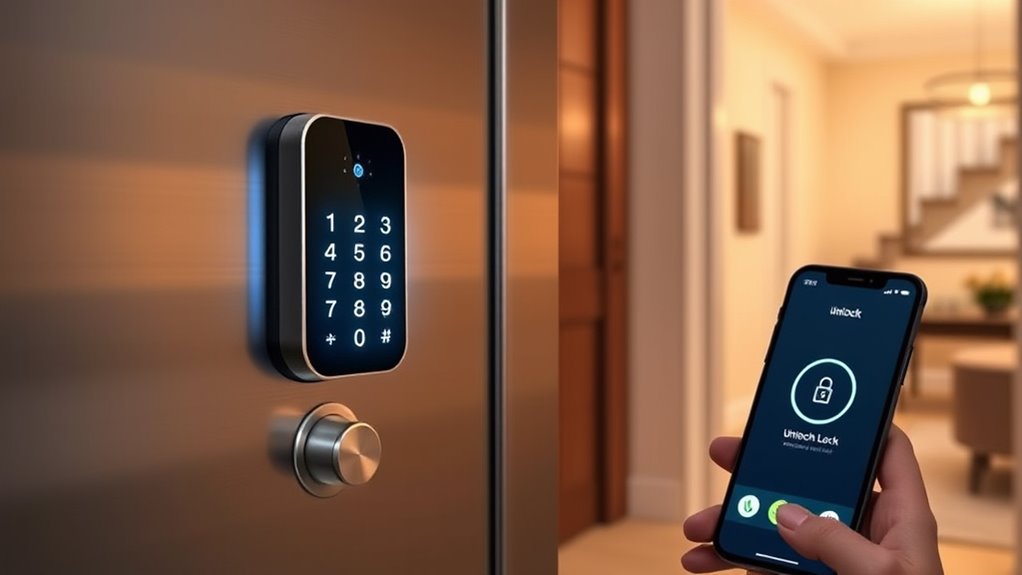
Using smart locks can considerably enhance your home security by providing convenient and reliable access control. You can unlock or lock your door remotely, so you don’t have to worry about losing keys or hiding spare ones. This flexibility allows you to grant temporary access to visitors, family members, or service providers without being physically present. Smart locks often log entry and exit times, giving you a clear record of who comes and goes. Many models integrate with your home automation system, enabling you to create customized security routines. These features help you monitor your home more effectively and respond quickly to any suspicious activity. Additionally, thermal behavior understanding can help optimize the placement and functioning of smart locks for better performance in various weather conditions. This awareness of environmental factors can also influence power management to ensure consistent operation during outages or extreme temperatures. Incorporating local automation can further streamline your security routines, making your smart home more responsive and efficient. Furthermore, understanding environmental resilience can assist in choosing smart locks that withstand harsh conditions for long-term reliability. Properly selected and maintained smart locks can also help reduce security vulnerabilities, making your home less susceptible to breaches. Overall, smart locks offer a seamless way to improve your home’s safety while adding convenience to your daily routine.
Potential Security Risks and Vulnerabilities of Smart Locks

Smart locks can be vulnerable to hacking and cyberattacks, which might give intruders access to your home. Physical tampering is also a risk if someone tries to force or bypass the lock directly. Additionally, software vulnerabilities can be exploited if updates and security patches aren’t regularly applied. Regularly monitoring device activity and maintaining strong passwords can help mitigate some of these risks. A higher level of security can be achieved with color accuracy and proper calibration, but smart locks require ongoing maintenance to ensure they remain secure. Ensuring cybersecurity measures for your smart lock system is essential to prevent unauthorized access. Implementing firmware updates promptly and using multi-factor authentication can further enhance your home’s security.
Hacking and Cyberattacks
While smart locks offer convenience, they also expose you to significant security risks if vulnerabilities are exploited by hackers. Cyber attackers can target weak points in the lock’s software or firmware, gaining unauthorized access to your home. Common methods include exploiting unpatched security flaws, intercepting signals during wireless communication, or using brute-force attacks on weak passwords or default codes. If hackers succeed, they can open your door remotely or disable the lock entirely. Additionally, compromised smart locks can be part of larger cyberattacks, putting your entire smart home ecosystem at risk. To minimize these dangers, it’s essential to keep your device updated, use strong, unique passwords, and enable two-factor authentication where available. Vigilance is key to safeguarding your home from cyber threats. Regular firmware updates and the use of encryption protocols can further enhance your smart lock’s security defenses. Implementing security best practices and staying informed about potential vulnerabilities can further reduce your risk of cyber intrusion. Being aware of potential cybersecurity vulnerabilities can help you proactively protect your smart home devices from emerging threats. Educating yourself about device firmware updates and their importance is also a crucial step in maintaining your smart lock’s security.
Physical Tampering Risks
Even if your smart lock’s software is secure, physical tampering remains a real threat. Thieves can try to force or break the lock itself, bypassing digital protections entirely. You should be aware of these risks: 1. Forced entry – physical tools like crowbars or screwdrivers can damage or pry open the lock, granting immediate access. 2. Lock picking – skilled intruders may manipulate the lock’s internal mechanisms, especially if the device isn’t high security. 3. Bypassing hardware – some attackers might disable or disconnect the lock’s power source or wiring, rendering digital controls useless. Additionally, the inherent vulnerabilities associated with Free Floating locks highlight that no lock is completely foolproof, and physical security measures are vital to protect your home from break-ins. Proper installation and robust physical barriers can help mitigate these threats, emphasizing that physical security remains crucial even with advanced smart lock technology. Moreover, implementing security measures such as surveillance cameras and reinforced doors can further deter tampering attempts. To enhance your home’s safety, consulting with security professionals to assess your home security setup can provide added peace of mind.
Software Vulnerability Exploits
Despite their convenience, smart locks can be vulnerable to software exploits that compromise their security. Hackers may find ways to infiltrate the lock’s software through vulnerabilities in the app, firmware, or communication protocols. If they succeed, they can open your door remotely, bypassing physical security measures. Common exploits include malware, phishing attacks, or exploiting weak passwords and outdated software. Once inside, attackers can disable alarms or gain access to connected devices on your network. To reduce this risk, guarantee your smart lock’s firmware is always up to date, use strong, unique passwords, and enable two-factor authentication when available. Staying vigilant and maintaining your device’s security settings helps protect you from potential software-based breaches. Additionally, understanding industry trends can help you stay informed about emerging threats and best practices. Regularly reviewing security updates provided by manufacturers can further enhance your smart lock’s protection against evolving cyber threats. It’s also advisable to monitor your network for suspicious activity, adding an extra layer of security.
Common Types of Smart Lock Attacks and How They Can Be Prevented
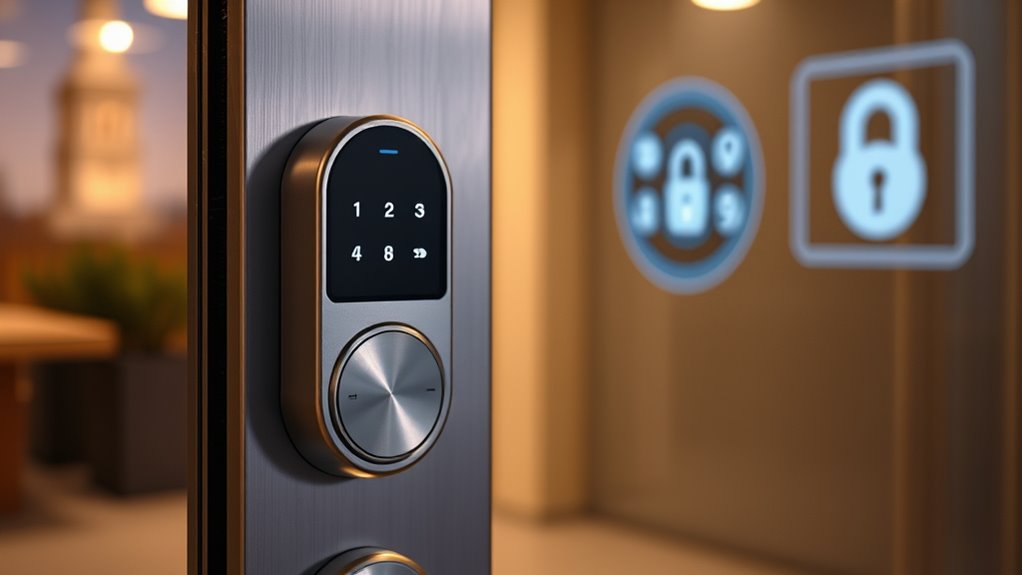
Smart lock attacks have become more sophisticated as technology advances, making it essential for you to understand how these breaches occur. Knowing common attack types helps you stay protected.
- Hacking Wi-Fi or Bluetooth Signals: Attackers can intercept signals or exploit weak encryption to gain access. Always update firmware and use strong, unique passwords to prevent this.
- Brute Force Attacks: Repeatedly trying possible codes or passwords can disarm your lock. Protect yourself by enabling lockout features after several failed attempts.
- Physical Bypass: Thieves might manipulate or tamper with the lock or its components. Reinforce your lock with anti-tamper features and avoid leaving it vulnerable to physical access.
Staying alert and proactive can considerably reduce your risk of falling victim to these attacks.
The Privacy Concerns Associated With Smart Lock Usage
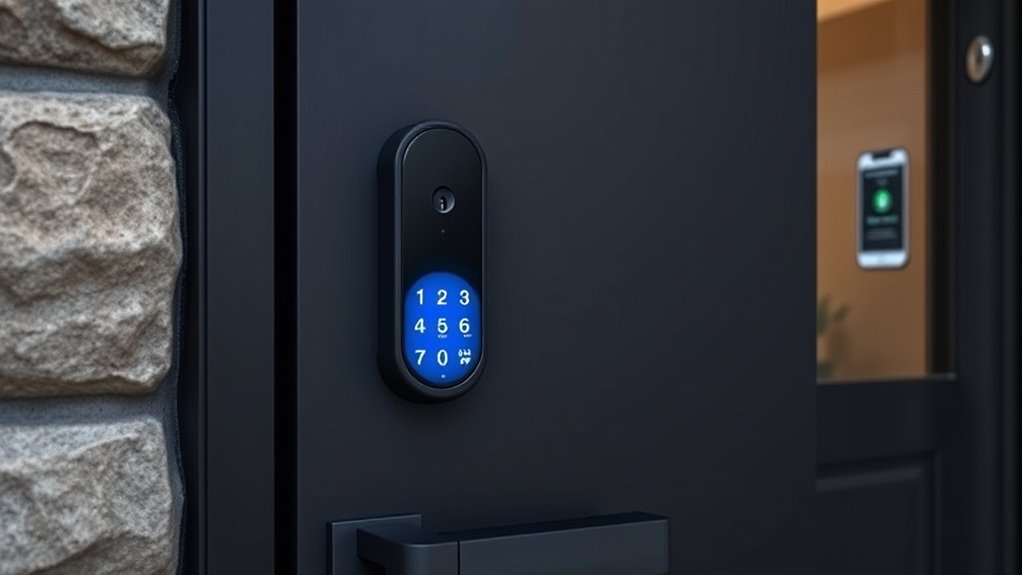
While smart locks offer convenience and enhanced security, they also raise significant privacy concerns. When you use a smart lock, your access data is stored digitally, often on cloud servers. This means your lock activity, including when you enter or leave, could be tracked or accessed by unauthorized parties if security measures aren’t robust. Hackers might exploit vulnerabilities to monitor your comings and goings or even gain control of your lock remotely. Additionally, third-party apps and service providers may collect personal information about your routines, habits, or location. If these companies experience data breaches or misuse your data, your privacy could be compromised. Staying aware of these risks helps you make informed decisions about how you manage your smart lock and protect your privacy. Understanding the security vulnerabilities associated with digital storage is crucial to safeguarding your personal information. Moreover, it’s important to consider the privacy policies of the providers to ensure your data isn’t shared or exploited without your consent.
Tips for Enhancing the Security of Your Keyless Lock System
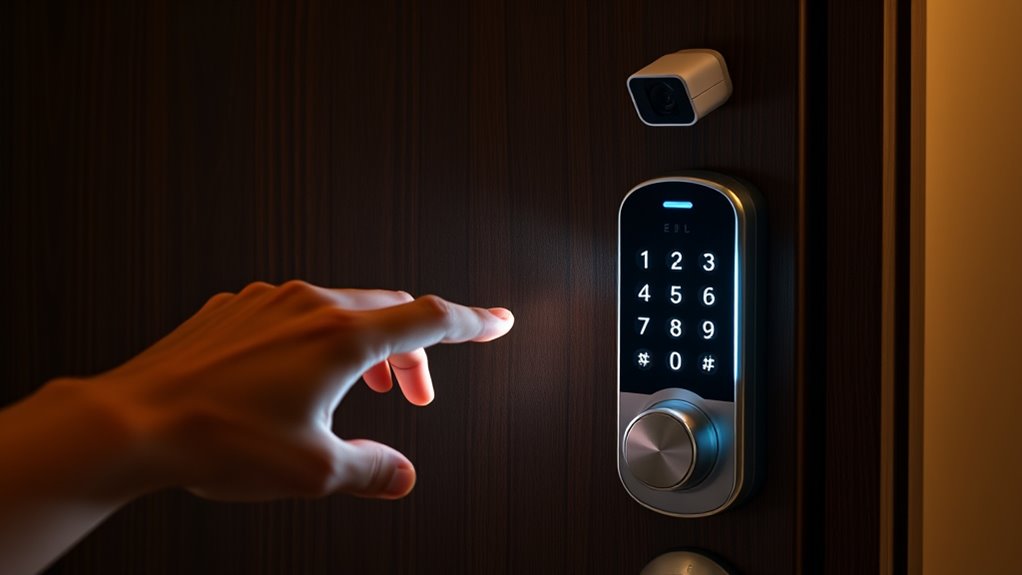
To protect your keyless lock system from potential threats, you should start by choosing a device with strong security features, such as end-to-end encryption and two-factor authentication. Once installed, take proactive steps to enhance its safety.
- Update firmware regularly — Keep your lock’s software current to patch vulnerabilities and defend against hackers.
- Use complex access codes — Avoid simple combinations; opt for unique, hard-to-guess PINs or passphrases.
- Limit access permissions — Only grant entry to trusted individuals and revoke access immediately if needed.
These simple actions can notably reduce risks and give you peace of mind, knowing your home’s security is as strong as possible.
Comparing Smart Locks to Traditional Locks: Which Is Safer?
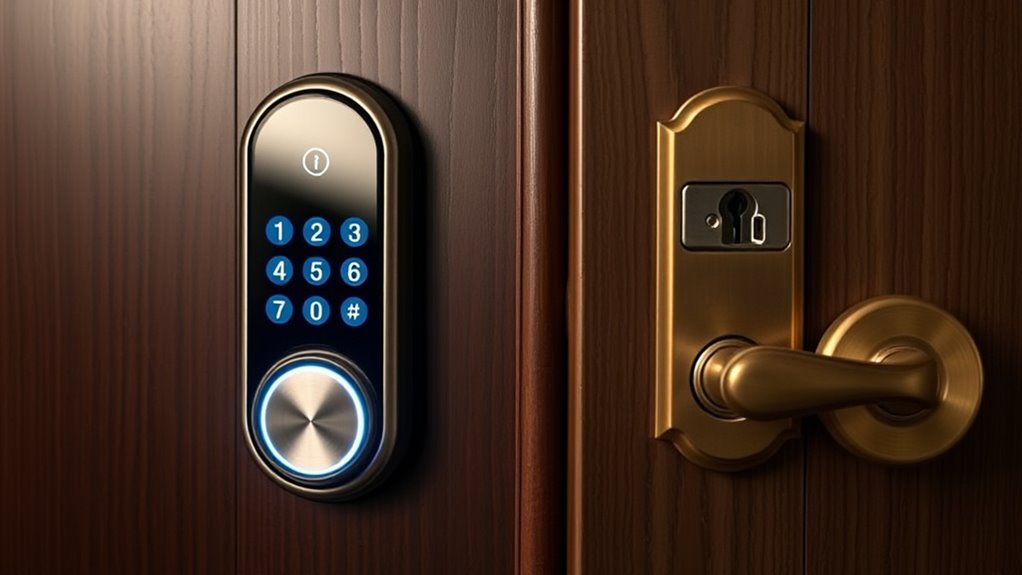
When comparing smart locks to traditional mechanical locks, it’s clear that each offers distinct security benefits and potential vulnerabilities. Traditional locks rely on physical keys, which can be lost or copied easily, but are less vulnerable to hacking. Smart locks provide keyless convenience and remote control, but may be susceptible to hacking or technical failures. Your choice depends on your priorities: simplicity and physical security or convenience and advanced features.
| Advantage/Disadvantage | Traditional Locks | Smart Locks |
|---|---|---|
| Security | Resistant to hacking | Vulnerable to cyber attacks |
| Convenience | Manual operation | Remote access and automation |
| Key Control | Easy to duplicate | Controlled via apps |
| Power Dependency | None | Requires batteries or Wi-Fi |
| Physical Durability | Highly durable | May have hardware vulnerabilities |
Future Developments and Innovations in Smart Lock Technology
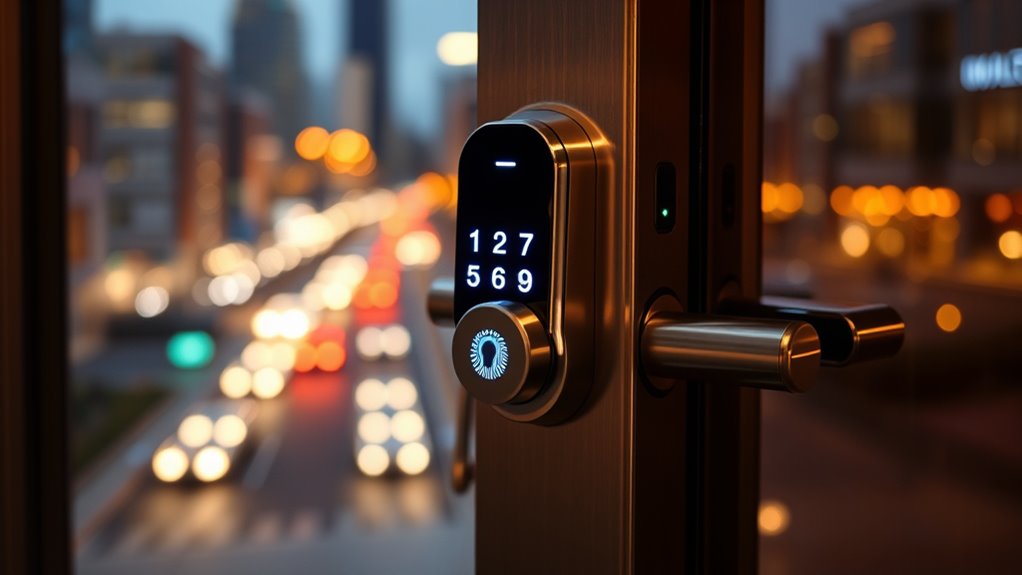
Future smart lock innovations will likely include more advanced biometric authentication methods, making access even more secure and convenient. These locks will also seamlessly integrate with your broader home systems, enhancing automation and control. As technology evolves, you’ll see smarter, more connected locks that adapt to your needs while maintaining safety.
Biometric Authentication Advances
Biometric authentication is rapidly evolving, promising to make smart locks more secure and user-friendly. You can expect new features that enhance security while simplifying access. Advances include:
- Faster Recognition – Open your door almost instantly, eliminating frustrating delays.
- Multi-Modal Biometrics – Use fingerprint, facial, or even voice recognition for versatile security.
- Enhanced Accuracy – Minimize false rejections or acceptances, giving you peace of mind.
These innovations mean your smart lock adapts to your lifestyle, offering seamless entry while staying secure. As technology improves, biometric systems become harder for intruders to bypass, making your home safer. You’ll feel more confident knowing your access points are protected by the most advanced authentication methods. The future of biometric smart locks is about combining convenience with uncompromising security.
Integration With Home Systems
As smart locks become more advanced, their ability to seamlessly integrate with other home systems will transform how you secure and manage your living space. You’ll be able to connect your smart lock with your security cameras, lighting, thermostats, and voice assistants, creating a unified smart home experience. For example, unlatch your door could automatically turn on the lights, adjust the temperature, and disarm your security system. Future innovations may include more intuitive control panels and AI-driven automation that adapt to your routines. This integration not only enhances convenience but also boosts security by providing real-time alerts and remote access. As technology advances, your smart lock will become a central hub, making your home safer, more efficient, and easier to manage.
Frequently Asked Questions
Can Smart Locks Be Hacked Remotely?
Yes, smart locks can be hacked remotely, but it’s rare if you follow proper security measures. Hackers might target weak passwords, outdated firmware, or unsecured Wi-Fi networks. To safeguard yourself, use strong, unique passwords, keep your lock’s software updated, and confirm your home network is secure. Regularly monitoring your lock’s activity logs can also help spot suspicious activity early, keeping your home safer.
What Happens if My Smart Lock Loses Power?
If your smart lock loses power, it won’t be able to open electronically. Luckily, most models have backup options like physical keys or battery-powered override mechanisms. You can usually access your door using a traditional key or a backup battery. To avoid getting locked out, it’s smart to keep spare keys nearby or verify your lock has a reliable backup power source. Regular maintenance helps prevent power loss issues.
Are Smart Locks Vulnerable to Physical Tampering?
Smart locks can be vulnerable to physical tampering, especially if they’re not designed with robust security features. Thieves might attempt to pick the lock, force it open, or bypass it using specialized tools. To minimize risks, choose models with anti-tampering measures like reinforced cases, alarm systems, or tamper alerts. Regularly inspect your lock and make sure it’s properly installed to help deter physical attacks and keep your home secure.
How Secure Are Smart Lock App Passwords?
Your smart lock app passwords are only as secure as the choices you make. If you use strong, unique passwords and enable two-factor authentication, you substantially reduce the risk of hacking. Avoid common or easily guessed passwords, and regularly update them. Be cautious about sharing your login details and keep your app updated to benefit from the latest security features. This proactive approach helps protect your smart lock from unauthorized access.
Can Smart Locks Be Bypassed With Social Engineering?
Imagine a sneaky thief dressed as a delivery person, winking and holding a fake package, convincing you to share your code. Yes, smart locks can be bypassed with social engineering if you’re not cautious. You might accidentally give away your code or grant access to someone pretending to be legit. Stay alert, verify identities, and never share your access info to keep your smart lock safe from manipulation.
Conclusion
Smart locks shine like modern guardians, offering convenience and innovation. But like any fortress, they come with vulnerabilities that need attention. By understanding their risks and taking proactive steps, you can turn your keyless entry into a secure stronghold. Remember, technology is a double-edged sword—embrace its benefits while guarding against its pitfalls. With mindful security practices, your smart lock can be both a trusted sentry and a seamless part of your home.