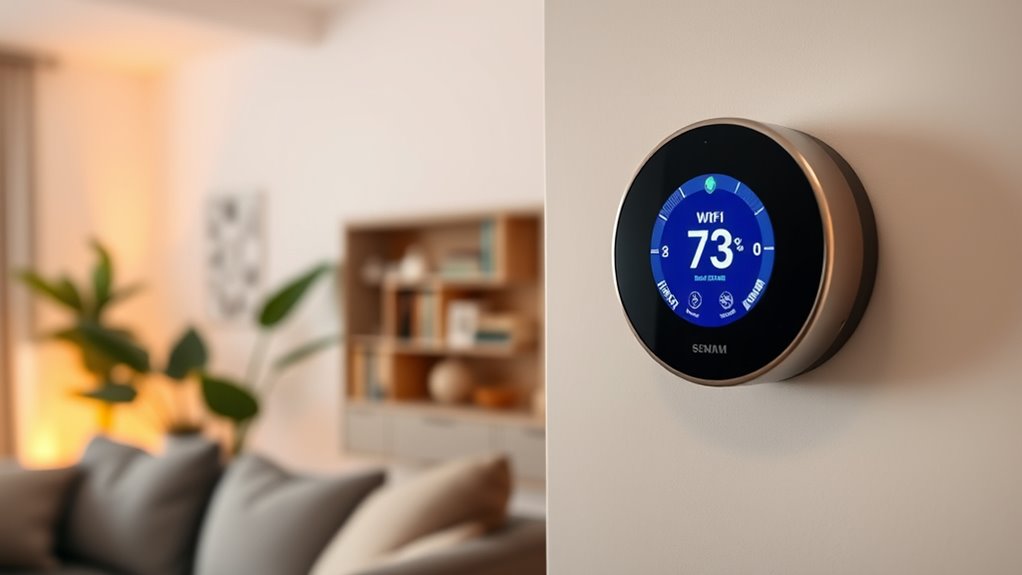

Smart thermostats can definitely help you save money by automatically adjusting your home’s temperature based on your schedule, preferences, and outdoor weather. They learn your routines, respond remotely, and optimize heating and cooling to reduce energy waste. Factors like your home’s size and insulation affect how much you save. If you want to see how these devices work and maximize your savings, discover more about their benefits and features.
Key Takeaways
- Smart thermostats optimize heating and cooling based on user habits, weather, and occupancy to reduce energy waste.
- They enable remote adjustments and automated schedules, preventing unnecessary energy use when away or asleep.
- Features like adaptive learning and weather integration enhance efficiency, leading to potential utility bill savings of 10-15%.
- Proper home insulation and layout influence the extent of savings achievable with smart thermostats.
- While initial costs may be high, long-term energy savings and convenience often justify the investment.
How Do Smart Thermostats Work?
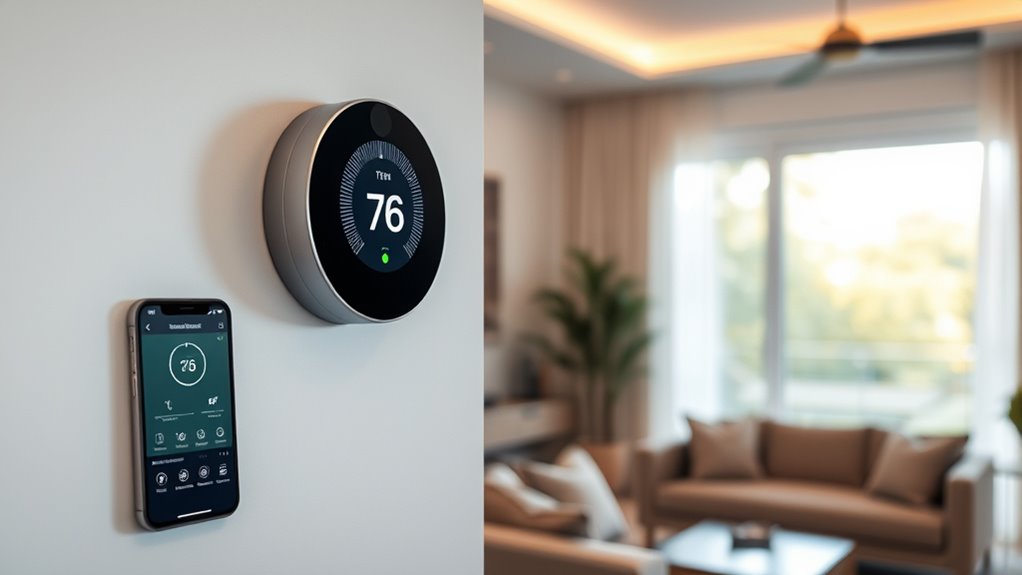
Smart thermostats work by learning your schedule and preferences to optimize your home’s heating and cooling. They connect to your Wi-Fi, allowing you to control them remotely via smartphone or voice commands. These devices use sensors and algorithms to track your activity and adjust temperature settings automatically. For example, they notice when you’re home or away, changing the temperature to save energy without sacrificing comfort. Over time, they adapt to your routines, creating personalized schedules that suit your lifestyle. Some models even analyze local weather forecasts to fine-tune your home’s climate. This advanced technology helps guarantee your home stays comfortable while avoiding unnecessary energy use. Additionally, many smart thermostats include energy-saving features that further enhance their ability to reduce utility bills. The integration of home automation systems can provide a seamless experience, allowing you to coordinate your heating and cooling with other smart devices in your house. This integration can also be influenced by user habits, enabling the device to better anticipate your needs and optimize efficiency. By incorporating adaptive learning algorithms, these thermostats continuously improve their performance based on your ongoing behavior. Essentially, smart thermostats simplify managing your home’s temperature while enhancing efficiency.
Potential Energy Savings With Smart Devices
By automatically adjusting your home’s temperature based on your routines and the weather, smart thermostats can considerably reduce energy consumption. They learn your schedule and make real-time adjustments to avoid unnecessary heating or cooling when you’re away or asleep. This targeted control prevents wasteful energy use, which often occurs with traditional thermostats that stay at a constant setting. Smart thermostats also optimize energy use by responding to outdoor weather changes, decreasing your system’s workload. As a result, you could see lower utility bills and a smaller carbon footprint. While savings vary depending on your habits and home, many users report reductions of up to 10-15% on heating and cooling costs. These devices help you use energy more efficiently, translating into real savings over time. Well-sourced coverage ensures that these claims are backed by credible data, making your energy-saving investments more reliable.
Factors That Affect Cost Savings

Your home’s size and layout can influence how much you save with a smart thermostat, as larger or complex spaces may require more adjustments. The climate and weather conditions in your area also play a significant role, impacting your heating and cooling needs. Understanding these factors helps you maximize your cost savings with smart thermostat features. Additionally, being aware of halal certification in food products can serve as a reminder to prioritize quality and compliance in other areas of your life. For example, selecting best esthetician magnifying lamps can ensure precise skincare, just as choosing the right smart thermostat optimizes energy efficiency. Recognizing home energy consumption patterns can further enhance your ability to tailor your system for optimal savings, especially when considering vetted wave and wind resources for sustainable energy options. Being aware of renewable energy sources can help you make more informed decisions about integrating sustainable options into your home energy plan.
Home Size and Layout
The size and layout of your home play a significant role in determining how much you can save with a smart thermostat. Larger homes typically require more energy to heat and cool, which can reduce potential savings unless the system is optimized correctly. An open floor plan allows for better temperature distribution, making it easier for a smart thermostat to maintain consistent comfort and efficiency. Conversely, homes with multiple small rooms or unusual layouts might experience uneven heating or cooling, requiring more adjustments or zoning features. Installing smart thermostats in homes with complex layouts may involve additional sensors or zoning systems to maximize savings. Understanding your home’s size and layout helps you choose the right features and set realistic expectations for your energy savings. Additionally, industry trends indicate that advanced zoning and sensor integration can significantly enhance a smart thermostat’s effectiveness in complex home layouts. Proper home insulation also plays a crucial role in optimizing the overall energy efficiency and savings potential. Moreover, considering the home size can influence the selection of compatible smart thermostat models to ensure optimal performance. Evaluating your home’s layout complexity can help determine the most effective setup for maximizing energy savings and can be further supported by professional assessment to identify specific needs.
Climate and Weather
Climate and weather conditions have a direct impact on how much you can save with a smart thermostat. In extreme temperatures, your heating and cooling systems work harder, which can reduce your savings. If you live in a region with harsh winters or scorching summers, your thermostat’s ability to optimize energy use becomes even more valuable. Smart thermostats learn your patterns and adjust accordingly, but severe weather may still increase energy consumption. Additionally, sudden weather changes can cause fluctuations in energy use, affecting your overall savings. Understanding your local climate helps you set realistic expectations for how much a smart thermostat can cut your energy bills. Device vulnerabilities can also influence the effectiveness of your energy-saving efforts, especially if security issues lead to malfunction or hacking risks. Being aware of climate variability can help you better tailor your thermostat settings to maximize savings under changing conditions. Moreover, seasonal fluctuations can further impact your energy efficiency, emphasizing the importance of adjusting settings throughout the year. Recognizing weather patterns allows homeowners to better prepare and adjust their thermostat strategies for maximum savings. Incorporating knowledge of outdoor conditions can further enhance your ability to optimize energy use and savings.
Comparing Smart Thermostats to Traditional Models

Smart thermostats offer significant advantages over traditional models, making it easier for you to control and optimize your home’s heating and cooling. Unlike standard thermostats, which require manual adjustments, smart thermostats learn your schedule and preferences, automatically adjusting settings to save energy. They often come with Wi-Fi connectivity, allowing you to control your system remotely via smartphone or voice commands. This flexibility guarantees you’re never wasting energy when you’re away or asleep. Additionally, smart thermostats provide detailed usage reports, helping you identify patterns and optimize your energy consumption further. While traditional models depend on manual adjustments and fixed schedules, smart thermostats adapt dynamically, offering convenience and potential savings. Energy efficiency features in smart thermostats can further enhance your savings by reducing unnecessary heating and cooling. As the technology advances, many models now incorporate integration with home automation systems, allowing seamless coordination with other smart devices for even greater efficiency. This comparison highlights how smart thermostats deliver more intelligent, efficient climate control for your home.
Tips for Maximizing Your Savings

To maximize your savings with a smart thermostat, start by setting it to adjust temperatures automatically based on your daily schedule. This ensures you’re not wasting energy when you’re away or asleep. Use the scheduling feature to lower heating or cooling during work hours and raise it before you return home. Take advantage of energy-saving modes, and set temperature thresholds that balance comfort with efficiency. Regularly review your energy reports to identify patterns and adjust settings accordingly. Also, consider integrating your thermostat with other smart home devices for further optimization, like window sensors or occupancy detectors. Avoid manual adjustments while away, as they can disrupt your savings plan. Consistently fine-tuning these settings helps you reduce energy use and maximize your cost savings over time.
Are Smart Thermostats a Worthwhile Investment?
Are smart thermostats a worthwhile investment? If you’re looking to cut energy costs and boost comfort, they often are. These devices learn your schedule, optimize heating and cooling, and reduce waste. While the upfront cost can seem high, many users see savings within the first year through lower utility bills. Plus, smart thermostats offer convenience—controlling your home’s temperature remotely or setting schedules that match your lifestyle. They also provide insights into your energy use, helping you make smarter choices. However, the value depends on your home, habits, and local energy rates. If you’re tech-savvy and committed to optimizing your energy consumption, investing in a smart thermostat can pay off in the long run. Overall, they’re a smart, practical investment for many households.
Frequently Asked Questions
Can Smart Thermostats Be Integrated With Existing Home Automation Systems?
Yes, smart thermostats can be integrated with your existing home automation systems. You’ll typically use compatible platforms like Google Home, Amazon Alexa, or Apple HomeKit to connect and control your thermostat seamlessly. By doing this, you gain centralized management of your smart devices, allowing you to automate temperature settings, create schedules, and optimize energy use effortlessly. Just make certain your smart thermostat supports your current home automation ecosystem for smooth integration.
How Secure Are Smart Thermostats Against Hacking and Data Breaches?
Smart thermostats can be quite secure if you take proper precautions. They often use encryption and regular software updates to protect your data. However, you should use strong, unique passwords and enable two-factor authentication when possible. Keep the device’s firmware up to date, and connect it to a secure Wi-Fi network. Staying vigilant helps prevent hacking attempts and keeps your home automation system safe from breaches.
Do Smart Thermostats Work Well in All Climates and Seasons?
You might think smart thermostats only work well in certain climates, but they actually adapt to all seasons effectively. They learn your schedule and adjust temperatures accordingly, saving energy whether it’s hot or cold outside. In winter, they prevent heat loss, and in summer, they optimize cooling. With features like geofencing, they even respond to your presence, ensuring comfort and efficiency year-round.
Are There Any Maintenance Requirements for Smart Thermostats?
You need to regularly update your smart thermostat’s software to guarantee ideal performance and security. Keep the device clean and free of dust, especially around sensors, to maintain accurate readings. Check the Wi-Fi connection periodically to prevent connectivity issues. If you notice any problems, like unresponsive controls or inaccurate temperature readings, reset the device or contact support. Routine maintenance keeps your smart thermostat running smoothly and maximizes its energy-saving benefits.
How Long Is the Typical Return on Investment Period?
You can typically expect a return on investment within one to three years after installing a smart thermostat. This varies depending on your energy usage and local utility rates. By adjusting your heating and cooling schedules efficiently, you’ll see savings on your energy bills quickly. Plus, many smart thermostats offer energy reports, helping you optimize your settings further, ensuring you maximize your savings over time.
Conclusion
Smart thermostats can be your secret weapon against rising energy bills, turning your home into a well-choreographed dance of efficiency. While they won’t work miracles alone, when used wisely, they’re like a trusted compass guiding you toward savings. Think of them as your personal energy coach—helping you make smarter choices every day. With a little effort, you’ll find they’re worth the investment, making your home smarter and your wallet happier.