

Open source software is programs whose source code you can view, modify, and share freely, encouraging collaboration and innovation in the tech community. It allows you to benefit from global teamwork, making software more secure, robust, and adaptable. Different licenses control how you can reuse or change the code, helping keep these programs open for everyone. As you explore further, you’ll find out how open source impacts your daily life and future projects.
Key Takeaways
- Open source software makes source code available for anyone to view, modify, and share, fostering collaboration.
- It accelerates innovation, improves software security, and enhances adaptability through community contributions.
- Licensing models like MIT, BSD, and GPL define how software can be used and shared, ensuring openness.
- The open source ecosystem promotes transparency, shared ownership, and diverse contributions across industries.
- Open source software drives the development of widely used applications, supporting continuous improvement and innovation.
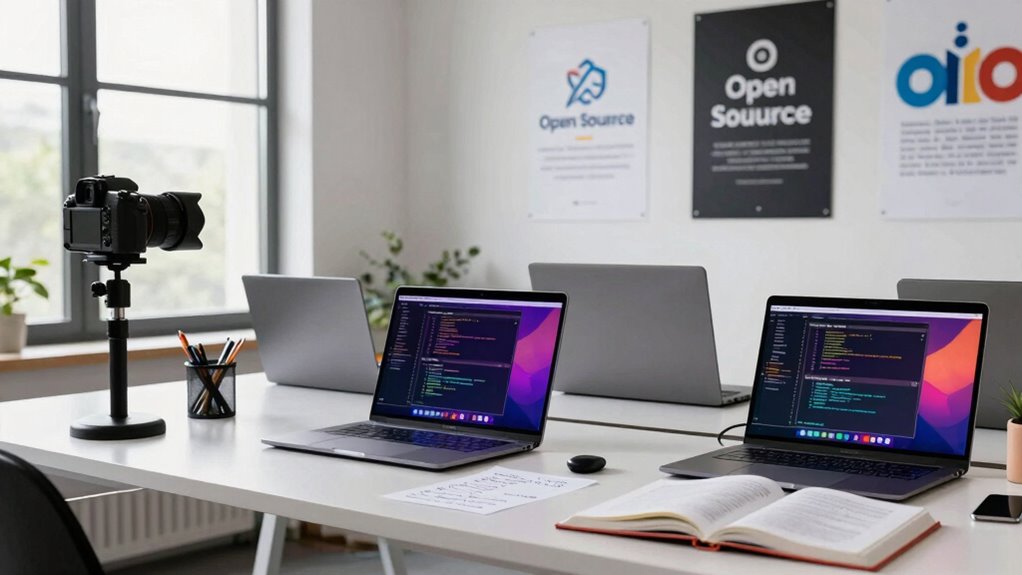
Have you ever wondered how some of the most popular software you use daily is developed and shared? The answer often lies in open source software, a movement that has transformed the tech world. Open source means that the source code of a program is made available to everyone, allowing anyone to view, modify, and distribute it. This openness fosters community collaboration, where developers from around the globe work together to improve software faster and more efficiently than traditional methods. When you delve into open source projects, you become part of a vibrant community that shares knowledge, fixes bugs, and adds features collectively. It’s this collaborative spirit that accelerates innovation and leads to more robust, secure, and adaptable software. Additionally, community-driven development plays a crucial role in shaping the evolution of open source projects by encouraging diverse contributions and shared ownership.
Open source fosters global collaboration, speeding innovation and creating more secure, adaptable software through shared knowledge and collective effort.
One of the key reasons open source software matters is because of its licensing models. Different licenses define how software can be used, modified, and shared. Some licenses, like the permissive MIT or BSD licenses, allow you to do almost anything with the code—use it in proprietary projects, modify it freely, and distribute it without many restrictions. Others, like the GNU General Public License (GPL), promote the idea of software freedom by requiring that any derivative work also remains open source. These licensing models help establish clear rules for sharing and collaboration, ensuring that the software’s open nature is preserved while allowing developers to choose the level of freedom they want to grant others. licensing models influence the development process and how software can be reused across different projects. The open source ecosystem is continuously evolving as new licensing options and collaborative platforms emerge, fostering innovative ways for communities to work together.
Understanding these licensing models is essential because they influence how software evolves and how you can use it. When you leverage open source tools, you’re often benefiting from a rich ecosystem built on community collaboration, where transparency and shared ownership drive continuous improvement. Companies and individual developers contribute code, report issues, and suggest enhancements, creating a dynamic environment that benefits everyone. This model contrasts sharply with closed-source software, where code is kept secret, limiting transparency and community involvement. The open source community continues to grow as more industries recognize the value of collaborative development and shared innovation.

Data Analysis with Open Source Tools: A Hands-On Guide for Programmers and Data Scientists
As an affiliate, we earn on qualifying purchases.
As an affiliate, we earn on qualifying purchases.
Frequently Asked Questions
How Is Open Source Software Funded and Maintained?
You’ll find that open source software is funded and maintained mainly through community contributions and diverse funding models. Volunteers and developers contribute code, bug fixes, and documentation, ensuring the project evolves. Additionally, organizations and sponsors support open source through donations, grants, or paid development work. This collaborative approach keeps projects active, secure, and innovative, fostering a vibrant ecosystem where users and developers benefit equally.
Can Open Source Software Be Used Commercially Without Restrictions?
Yes, you can use open source software commercially without restrictions if it’s licensed under permissive licenses like MIT or Apache. These licenses typically allow free use, modification, and distribution, with minimal usage restrictions. However, if the software has a copyleft license like GPL, you may face requirements to disclose source code or share modifications. Always check the specific license to guarantee compliance before commercial use.
What Are the Common Licensing Types for Open Source Projects?
Did you know over 78% of open source projects are licensed under popular types? Open source licensing varies, with common types like MIT, GPL, and Apache licenses. These licenses define how you can use, modify, and distribute the software. Community contributions often depend on these licenses, which guarantee that projects remain open and collaborative. By understanding licensing types, you can confidently participate and innovate within open source communities.
How Secure Is Open Source Software Compared to Proprietary Options?
Open source software is generally secure because community collaboration allows many eyes to identify security vulnerabilities quickly. Unlike proprietary options, where fewer people review the code, open source projects benefit from transparency and collective effort, leading to faster fixes. However, the security depends on active maintenance and community engagement. When you choose open source, you tap into a collaborative approach that often results in robust, well-vetted software.
What Are Some Examples of Widely Used Open Source Software?
Imagine a world where software is built by many hands working together—this is the power of open source collaboration. You’ve probably used popular open source tools like Linux, Firefox, and WordPress, which thrive thanks to the open source community. These projects show how collective effort creates reliable, innovative software. By contributing or using these, you become part of a global movement shaping the future of technology.

PHP 5: Your visual blueprint for creating open source, server-side content
As an affiliate, we earn on qualifying purchases.
As an affiliate, we earn on qualifying purchases.
Conclusion
Imagine a world where your tools are built by everyone and for everyone, like a vibrant mosaic of collaboration. Open source software is that colorful, ever-evolving masterpiece—free, transparent, and accessible. While proprietary programs are locked behind walls, open source invites you to contribute, learn, and innovate together. This shared creation isn’t just code; it’s a movement shaping the future, proving that collective effort can build something truly remarkable and open to all.

Open (Source) for Business: A Practical Guide to Open Source Software Licensing — Second Edition
As an affiliate, we earn on qualifying purchases.
As an affiliate, we earn on qualifying purchases.

Programmable Robot Coding Kit with 4K Action Camera & Mount – STEM Robotics Platform for Classrooms, Labs & Home Learning, Indoor/Outdoor, Sequencing & Navigation Ready
- Complete Robotics Kit: Includes programmable unit, 4K camera, and mount
- Educational and Training Use: Supports coding, sequencing, and navigation activities
- Durable Indoor/Outdoor Design: Built to withstand various environments and surfaces
As an affiliate, we earn on qualifying purchases.
As an affiliate, we earn on qualifying purchases.