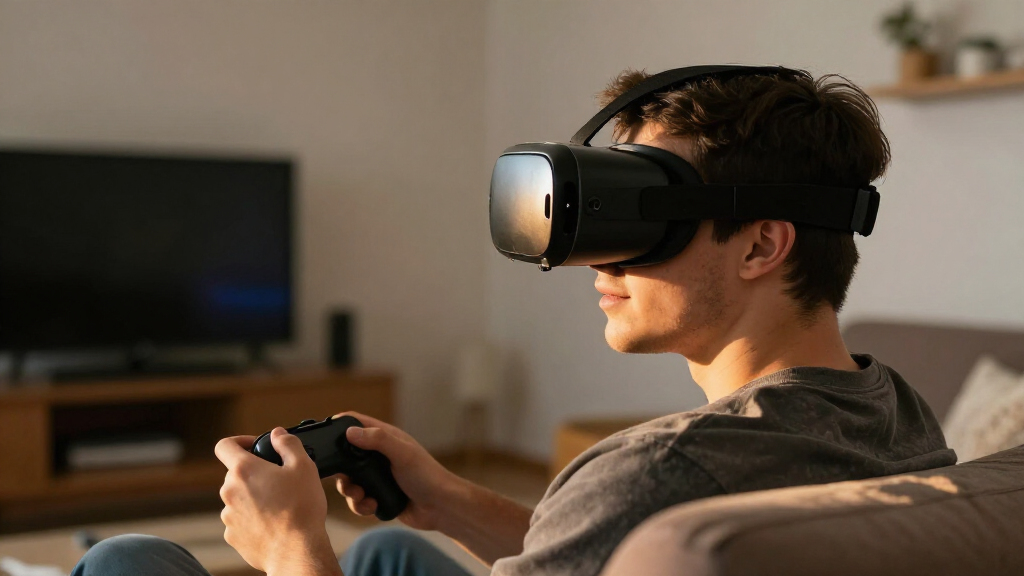
For most players, the Meta Quest 3 512GB is the best all-around VR headset for gaming in this lineup, balancing standalone play, mixed reality, and generous storage. The Meta Quest 3S 256GB is a more accessible route into wireless gaming, while the Pimax Crystal Super is the specialist choice for PC players who put visual detail first. The main tradeoff is convenience versus fidelity: standalone headsets need less setup, while PC VR models depend on a capable computer and more involved connections. Storage, headset condition, and the games you plan to play also change which model makes sense. Continue reading for a ranked comparison and advice on choosing a headset that fits your gaming setup.

Get the latest gadgets delivered free with Prime
- Fast, free delivery on millions of items
- Prime Video, Amazon Music and more included
- Member-only deals all year
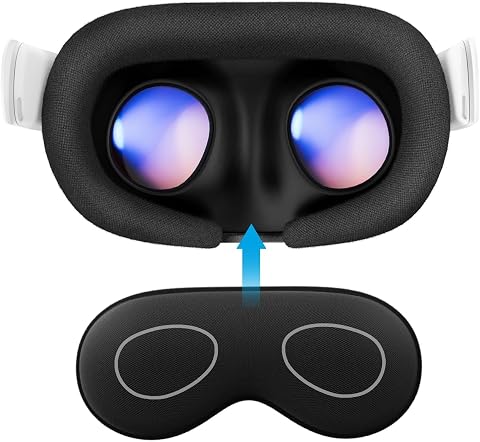
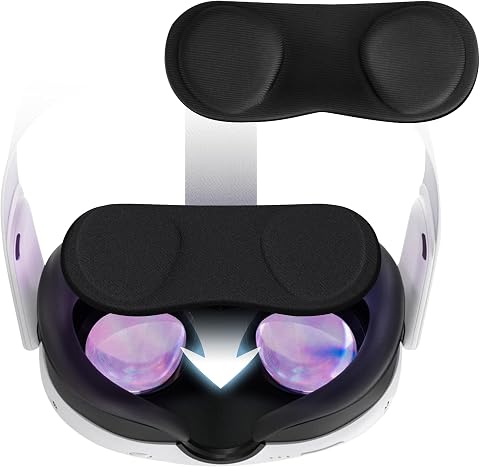
Complete the kit

Key Takeaways
- Quest 3 is the most versatile pick: its standalone and mixed-reality capabilities make it a better all-round fit than the more entry-focused Quest 3S options.
- The Quest 3S 256GB stands out among the accessible wireless models: it offers more room for game libraries than either 128GB version without moving into PC VR setup.
- Pimax models serve a narrower PC-first audience: the Crystal Super and Crystal Light prioritize high-detail visuals, but depend on a gaming PC and suit buyers willing to manage a dedicated setup.
- Renewed listings require extra scrutiny: the Quest 2 and several Quest 3 and 3S options may appeal to buyers focused on the device itself, but condition and included accessories need checking.
- Special bundles and subscriptions are not the same as hardware upgrades: the Gorilla Tag bundles and VIVE field-trip subscription should matter only if their included content matches how you plan to play.
| Meta Quest 3 512GB VR Headset with Gorilla Tag Monkenaut Bundle |  | Best Overall for Standalone Gaming | Storage: 512 GB | Processor: Snapdragon XR2 Gen 2 | Memory: 8 GB RAM | VIEW LATEST PRICE | See Our Full Breakdown |
| Meta Quest 3S 128GB VR Headset with Gorilla Tag Bundle |  | Best for First-Time VR Players | Storage: 128 GB | Processor: Snapdragon XR2 Gen 2 | Memory: 8 GB RAM | VIEW LATEST PRICE | See Our Full Breakdown |
| Pimax Crystal Super PC VR Headset with Eye Tracking |  | Best for High-Detail PC VR | Display: QLED with Mini-LED local dimming | Resolution per eye: 3840 × 3840 pixels | Pixel density: 50 pixels per degree | VIEW LATEST PRICE | See Our Full Breakdown |
| Meta Quest 2 All-in-One VR Headset, 256 GB (Renewed) |  | Best Renewed Option for Familiar VR | Storage: 256 GB | Display: LCD | Resolution per eye: 1832 × 1920 pixels | VIEW LATEST PRICE | See Our Full Breakdown |
| Meta Quest 3S 256GB Wireless VR Headset |  | Best for a Growing Standalone Game Library | Storage: 256 GB | Processor: Snapdragon XR2 Gen 2 | Memory: 8 GB RAM | VIEW LATEST PRICE | See Our Full Breakdown |
| Pimax Crystal Light PC VR Headset with 2880 × 2880 Resolution per Eye |  | Best for High-Detail PC Gaming | Resolution: 2880 × 2880 per eye | Display: QLED with local dimming and HDR support | Refresh rate: Up to 120 Hz | VIEW LATEST PRICE | See Our Full Breakdown |
| Meta Quest Pro 256 GB VR Headset with VR Field Trips Subscription |  | Best for Mixed-Reality Gaming and Controllers | Storage: 256 GB | Resolution: 1920 × 1080 per eye | Display refresh rate: 90 Hz | VIEW LATEST PRICE | See Our Full Breakdown |
| Meta Quest 3S 256GB VR Headset (Renewed Premium) |  | Best Renewed Pick for a Larger Game Library | Storage: 256 GB | Display resolution: 2880 × 1600 | Maximum refresh rate: 120 Hz | VIEW LATEST PRICE | See Our Full Breakdown |
| Meta Quest 3 512GB Mixed Reality VR Headset (Renewed Premium) |  | Best for a Large Standalone Game Library | Storage: 512 GB | Processor: Snapdragon XR2 Gen 2 | Memory: 8 GB RAM | VIEW LATEST PRICE | See Our Full Breakdown |
| Meta Quest 3S 128GB VR Headset (Renewed Premium) | | Best Compact-Library Standalone Pick | Storage: 128 GB | Processor: Snapdragon XR2 Gen 2 | Memory: 8 GB RAM | VIEW LATEST PRICE | See Our Full Breakdown |
| HTC VIVE Focus Vision Mixed Reality and PC VR Headset with Controllers |  | Best for Flexible PC VR and Standalone Play | Display resolution: 2448 × 2448 pixels per eye | Field of view: Up to 120° | Refresh rate: 90 Hz | VIEW LATEST PRICE | See Our Full Breakdown |
| VR headsets for gaming | Storage | Refresh rate | Field of view | Memory |
|---|---|---|---|---|
| Meta Quest 3 512GB VR Headset | 512 GB | Up to 120 Hz | — | 8 GB RAM |
| Meta Quest 3S 128GB VR Headset | 128 GB | 60 Hz | 110 degrees | 8 GB RAM |
| Pimax Crystal Super PC VR Head | — | Up to 90 Hz | 140 degrees | — |
| Meta Quest 2 All-in-One VR Hea | 256 GB | 90 Hz | 90 degrees | — |
| Meta Quest 3S 256GB Wireless V | 256 GB | — | — | 8 GB RAM |
| Pimax Crystal Light PC VR Head | — | Up to 120 Hz | — | — |
| Meta Quest Pro 256 GB VR Heads | 256 GB | — | 110 degrees | — |
| Meta Quest 3S 256GB VR Headset | 256 GB | — | — | — |
| Meta Quest 3 512GB Mixed Reali | 512 GB | 120 Hz | 110 degrees | 8 GB RAM |
| Meta Quest 3S 128GB VR Headset | 128 GB | 90 Hz | 96 degrees | 8 GB RAM |
| HTC VIVE Focus Vision Mixed Re | 128 GB; expandable up to 2 TB with microSD card | 90 Hz | Up to 120° | 12 GB RAM |
More Details on Our Top Picks
Meta Quest 3 512GB VR Headset with Gorilla Tag Monkenaut Bundle
I’d put the Meta Quest 3 512GB first for players who want a capable gaming headset without a PC or console. Its Snapdragon XR2 Gen 2 chip and 8GB of RAM support standalone titles, while the 2064 × 2208-per-eye display and up-to-120Hz refresh rate give it a sharper, smoother presentation than the Quest 3S models in this lineup. The 512GB capacity also leaves more room for a larger game library than either 128GB or 256GB Quest option. Dual RGB cameras add color passthrough for mixed-reality games, though that feature won’t matter to every VR player. The tradeoffs are a roughly 2.2-hour battery life and digital extras tied to specific services or games. I’d choose it over the Quest 2 Renewed for newer hardware and better display specifications, but it’s not the pick for long sessions without a charging plan.
Pros:- Wireless standalone play avoids the need for a gaming PC.
- 2064 × 2208 resolution per eye and refresh rates up to 120Hz offer a stronger visual spec than the Quest 3S models here.
- 512GB storage suits players who keep many games installed.
- Dual RGB cameras support full-color mixed-reality passthrough.
Cons:- Battery life is listed at about 2.2 hours, which can limit uninterrupted play.
- The Gorilla Tag items and Horizon+ trial have value only for buyers who want those specific extras.
Best for: Standalone players who want a broad game library, higher-resolution visuals, and mixed-reality play without connecting to a gaming PC.
Not ideal for: Players who mainly want extended sessions between charges or need a wired PC headset for demanding PC VR games.
- Storage:512 GB
- Processor:Snapdragon XR2 Gen 2
- Memory:8 GB RAM
- Resolution per eye:2064 × 2208 pixels
- Refresh rate:Up to 120 Hz
- Display:LCD
- Battery life:Up to 2.2 hours
- Platform:Standalone Meta Quest
Our verdict“Choose this Quest 3 if you want the most capable all-around standalone gaming option in this group and can accept frequent charging.”
Meta Quest 3S 128GB VR Headset with Gorilla Tag Bundle
The Meta Quest 3S 128GB is a straightforward entry into wireless gaming: it runs on its own, uses the same Snapdragon XR2 Gen 2 processor and 8GB of RAM as the more expensive-spec Quest 3 options, and includes Gorilla Tag bonuses. That makes it a sensible first headset for players who want to try standalone VR before investing in a larger library. Its 128GB storage is the main constraint: compared with the 256GB Quest 3S, you’ll need to manage installed games sooner. The listed per-eye resolution is also lower than the Quest 3’s, and its listed 60Hz refresh rate is less suited to buyers prioritizing smoothness. Full-color passthrough adds mixed-reality play, but the roughly 2.5-hour battery life still puts a ceiling on sessions. I’d pick it over the renewed Quest 2 for the newer processor and color passthrough, not for display specs.
Pros:- Standalone wireless design works without a PC or console.
- Snapdragon XR2 Gen 2 and 8GB RAM provide the same listed core processing memory as the Quest 3S 256GB.
- Dual RGB cameras enable full-color passthrough experiences.
- Includes Gorilla Tag bonus items and a limited games-catalog trial.
Cons:- 128GB storage gives less room for installed games than the 256GB Quest 3S.
- The listed 1832 × 1920-per-eye resolution and 60Hz refresh rate trail the Quest 3’s display specifications.
- Battery life is about 2.5 hours, and the games-catalog access is a limited trial.
Best for: First-time VR buyers and younger players who want a self-contained headset for popular standalone games without needing a PC.
Not ideal for: Players with large game libraries, who should look at the 256GB Quest 3S, or buyers who prioritize higher resolution and refresh rates.
- Storage:128 GB
- Processor:Snapdragon XR2 Gen 2
- Memory:8 GB RAM
- Resolution per eye:1832 × 1920 pixels
- Refresh rate:60 Hz
- Field of view:110 degrees
- Battery life:About 2.5 hours
- Cameras:Dual RGB color cameras
Our verdict“Pick this as an entry-level standalone headset if 128GB is enough for your games and you value included Gorilla Tag extras.”
Pimax Crystal Super PC VR Headset with Eye Tracking
For a gaming PC owner chasing fine visual detail, the Pimax Crystal Super occupies a different category from the wireless Meta headsets. Its 3840 × 3840 resolution per eye, 50 pixels per degree, and 140-degree field of view are aimed at detailed PC simulations and expansive views, while eye tracking and adjustable IPD add tools for tailoring the fit and experience. Compared with the standalone Quest 3, this is the more specialized option for PC-connected play, not the easier headset to pick up for casual gaming. The cost of that focus is a wired DisplayPort and USB connection, plus a Windows 10 PC; it cannot offer the Quest models’ untethered convenience. Its refresh rate is listed up to 90Hz, below the Quest 3’s 120Hz maximum. I’d shortlist it for visual fidelity, but skip it if freedom of movement matters more than pixel detail.
Pros:- 3840 × 3840 resolution per eye targets unusually fine image detail.
- 50 pixels per degree and a 140-degree field of view support clear, broad views in PC games.
- Eye tracking, adjustable IPD, and inside-out tracking are included.
- Integrated spatial audio and a noise-canceling microphone support play without separate audio gear.
Cons:- Requires a wired DisplayPort and USB connection to a Windows 10 PC.
- Its up-to-90Hz refresh rate is lower than the Quest 3’s listed 120Hz maximum.
- It lacks the standalone convenience of the Meta Quest 3 and Quest 3S models.
Best for: PC VR simulation and graphics-focused players with a compatible Windows gaming PC who want high per-eye resolution and a wide field of view.
Not ideal for: Players seeking wireless room-scale convenience, a standalone game library, or a higher listed refresh rate than 90Hz.
- Display:QLED with Mini-LED local dimming
- Resolution per eye:3840 × 3840 pixels
- Pixel density:50 pixels per degree
- Field of view:140 degrees
- Refresh rate:Up to 90 Hz
- Tracking:Inside-out tracking with eye tracking
- Connectivity:Wired DisplayPort and USB
- Compatibility:PC; Windows 10
Our verdict“Choose the Crystal Super for demanding PC VR where visual detail matters more than wireless freedom or plug-and-play simplicity.”
Meta Quest 2 All-in-One VR Headset, 256 GB (Renewed)
The renewed Meta Quest 2 256GB is the older, simpler choice for buyers who want standalone gaming and don’t need the newer mixed-reality features or processing platform of the Quest 3S. Its 1832 × 1920-per-eye LCD and 90Hz refresh rate provide a defined baseline for VR games, and the included controllers, knuckle straps, and silicone grip covers give players the basic kit for motion-controlled play. Against the Quest 3S 128GB, it offers twice the listed storage and a higher listed refresh rate, but it is a renewed unit with a 90-day limited warranty. The product details don’t specify its processor or camera features, so I wouldn’t choose it for buyers focused on current-generation performance or color passthrough. It makes more sense for a buyer comfortable with renewed hardware than for someone seeking the most future-ready headset in this lineup.
Pros:- Standalone operation means no gaming PC is needed.
- 256GB storage offers more space than the 128GB Quest 3S.
- The listed 90Hz refresh rate is higher than the 60Hz listed for the Quest 3S models here.
- Includes motion-sensing controllers, knuckle straps, and silicone grip covers.
Cons:- Renewed condition may not suit buyers who want a new headset.
- The included warranty is limited to 90 days.
- Product data does not specify a processor or color passthrough cameras, making its performance and mixed-reality capabilities less clear than the Quest 3S.
Best for: Budget-conscious players who want a standalone headset with 256GB of storage and are comfortable buying renewed hardware with a limited warranty.
Not ideal for: Buyers who want new hardware, longer warranty coverage, newer-generation processing, or full-color mixed-reality passthrough.
- Storage:256 GB
- Display:LCD
- Resolution per eye:1832 × 1920 pixels
- Refresh rate:90 Hz
- Field of view:90 degrees
- Platform:Standalone
- Included items:Headset, controllers, and knuckle straps
- Warranty:90-day limited warranty
Our verdict“Choose this renewed Quest 2 if storage and standalone play matter more than newer hardware, mixed reality, or a longer warranty.”
Meta Quest 3S 256GB Wireless VR Headset
This Meta Quest 3S 256GB is the practical middle choice for wireless gaming: it shares the Quest 3S’s Snapdragon XR2 Gen 2 processor and 8GB of RAM, but doubles the storage of the 128GB Gorilla Tag bundle. That extra room is useful if you prefer keeping more games installed rather than regularly removing titles. Like the smaller Quest 3S, it has dual RGB cameras for color passthrough, while its listed 1832 × 1920-per-eye resolution and 60Hz refresh rate sit below the Quest 3’s 2064 × 2208-per-eye display and up-to-120Hz refresh rate. Compared with the renewed Quest 2, the 3S offers newer listed processing and full-color passthrough, but its refresh-rate specification is lower. Battery life is only listed as just over two hours, so this remains a portable-session headset, not a long-play solution.
Pros:- 256GB storage provides twice the capacity of the 128GB Quest 3S bundle.
- Snapdragon XR2 Gen 2 and 8GB RAM support standalone gaming without a PC.
- Dual RGB cameras enable full-color passthrough.
- Wireless setup and included Touch Plus controllers suit untethered play.
Cons:- The listed 60Hz refresh rate and 1832 × 1920-per-eye resolution trail the Quest 3’s display specifications.
- Battery life is listed as just over two hours.
- The product data does not specify an exact refresh-rate range beyond 60Hz.
Best for: Wireless players who want a larger installed game library than the 128GB Quest 3S allows, plus color passthrough for mixed-reality play.
Not ideal for: Visual-fidelity-focused buyers who should favor the Quest 3, or players who need long sessions without recharging.
- Storage:256 GB
- Processor:Snapdragon XR2 Gen 2
- Memory:8 GB RAM
- Resolution per eye:1832 × 1920 pixels
- Display refresh rate:60 Hz
- Battery life:More than 2 hours
- Connectivity:Wi-Fi
- Cameras:Dual RGB color cameras
Our verdict“Pick this Quest 3S if you want a roomy standalone library and mixed-reality features but don’t need the Quest 3’s higher listed display specifications.”
Pimax Crystal Light PC VR Headset with 2880 × 2880 Resolution per Eye
I’d pick the Pimax Crystal Light for PC players who want fine visual detail in demanding simulators and SteamVR games. Its 2880 × 2880 resolution per eye, glass aspheric lenses, and QLED local dimming are aimed at crisp imagery and stronger contrast; HDR support adds another visual option. The 120 Hz maximum refresh rate can also suit fast motion when a game and PC can sustain it. Compared with the standalone Meta Quest 3 512GB, this is the more PC-focused choice, but it gives up wireless, self-contained play. That comes with practical costs: an approximately 815 g weight can feel burdensome during long sessions, and the listing specifies HDMI connectivity, so buyers should check their PC’s connections and setup needs before choosing it.
Pros:- 2880 × 2880 resolution per eye supports detailed PC game visuals
- QLED display with local dimming and HDR support
- Refresh rate reaches up to 120 Hz
- SteamVR compatibility opens access to a broad PC VR library
Cons:- Approximately 815 g weight may become uncomfortable during extended play
- PC-focused design lacks the standalone convenience of the Meta Quest 3
- Requires buyers to account for PC compatibility and the listed HDMI connection
Best for: PC VR players, especially simulator fans, who prioritize sharp visuals and already have a compatible gaming PC and SteamVR library
Not ideal for: Players seeking wireless, grab-and-play gaming or a lighter headset for long sessions; the listed weight is about 815 g and this is a PC VR setup
- Resolution:2880 × 2880 per eye
- Display:QLED with local dimming and HDR support
- Refresh rate:Up to 120 Hz
- Lens technology:Glass aspheric
- Tracking:Inside-out camera tracking
- Platform compatibility:PC VR, SteamVR
- Connectivity:HDMI
- Weight:Approximately 815 g
Our verdict“Choose the Pimax Crystal Light if high-resolution PC VR matters more to you than a light, wireless setup.”
Meta Quest Pro 256 GB VR Headset with VR Field Trips Subscription
The Meta Quest Pro suits players who want gaming alongside mixed-reality features and advanced controller interaction. Its full-color passthrough can blend virtual content with the room, while Touch Pro controllers add self-tracking cameras, finger tracking, and detailed haptics that may appeal in supported games. Pancake lenses, local dimming, and quantum dot technology round out the visual package. Against the Meta Quest 3 512GB, the Pro’s clearest distinction is its controller and mixed-reality focus, not a straightforward storage advantage: this model has 256 GB. Its listed resolution is 1920 × 1080 per eye and refresh rate is 90 Hz, so players chasing the higher listed refresh rate of the Quest 3 may prefer that alternative. I’d also treat the included field-trip subscription as a bonus only after confirming its duration, which is inconsistently described.
Pros:- Full-color passthrough supports mixed-reality experiences
- Touch Pro controllers offer self-tracking cameras and advanced haptics
- Pancake lenses, local dimming, and quantum dot technology are listed
- Supports multiple resizable screens for multitasking
Cons:- Listed resolution is 1920 × 1080 per eye and refresh rate is 90 Hz
- 256 GB storage is less than the 512 GB Meta Quest 3 option in this roundup
- The included field-trip subscription duration is described inconsistently
Best for: Players who value full-color mixed reality, advanced motion controllers, and multitasking alongside VR gaming
Not ideal for: Gamers prioritizing higher listed resolution, a 120 Hz refresh rate, or a clearly stated subscription term; the Quest 3 512GB lists 120 Hz
- Storage:256 GB
- Resolution:1920 × 1080 per eye
- Display refresh rate:90 Hz
- Field of view:110 degrees
- Lens technology:Pancake lenses
- Sensors:10 VR/MR sensors
- Connectivity:Wi-Fi
- Battery life:8 hours
- Operating system:Meta Quest OS
Our verdict“Pick the Quest Pro if mixed reality and advanced controller interaction matter more than maximizing listed resolution or refresh rate.”
Meta Quest 3S 256GB VR Headset (Renewed Premium)
The Meta Quest 3S 256GB is a practical fit for players who want standalone VR and room-blending mixed reality without committing to a PC headset. Its 256 GB storage gives more room for installed games than the 128 GB Quest 3S in this batch, which matters if you’d rather keep a wider selection ready to play. It also supports casting gameplay to a TV and using multiple virtual screens. Compared with the Meta Quest 3 512GB, this 3S has half the listed storage, so large libraries may need more frequent uninstalling. This listing is also Renewed Premium, not new, and the display description is ambiguous, naming both LCD and OLED. I’d choose it for its capacity and standalone flexibility, but not if you need certain display details or specifically want a new unit.
Pros:- Standalone platform supports gaming without a PC connection
- 256 GB storage offers more room than the 128 GB Quest 3S listing
- Mixed-reality features and virtual screens support play and multitasking
- Amazon Renewed Guarantee is included
Cons:- Renewed Premium condition may not suit buyers set on a new headset
- Display type is stated ambiguously as LCD or OLED
- Offers less storage than the 512 GB Meta Quest 3
Best for: Players seeking a renewed, standalone headset with 256 GB of storage for a varied VR and mixed-reality game collection
Not ideal for: Buyers who want a new headset, need confirmed display-panel details, or want the 512 GB storage listed for the Meta Quest 3
- Storage:256 GB
- Display resolution:2880 × 1600
- Maximum refresh rate:120 Hz
- Display type:Listed as LCD or OLED
- Platform:Meta Quest
- Operating system:Meta Horizon OS
- Connectivity:HDMI
- Condition:Renewed Premium
Our verdict“Choose this renewed Quest 3S if you want standalone play and more storage than the 128 GB model, and can accept unclear display details.”
Meta Quest 3 512GB Mixed Reality VR Headset (Renewed Premium)
For players who want a substantial library without a PC tether, the Meta Quest 3 512GB makes the strongest storage case among the standalone options here. Its Snapdragon XR2 Gen 2 processor, 8 GB of RAM, and 4K+ resolution support immersive gaming, while full-color passthrough adds mixed-reality play. The 512 GB capacity is twice the storage of the Meta Quest 3S 256GB, giving frequent installers more space before they need to manage their library. The tradeoff is that this is a Renewed Premium unit, and the listed battery life is about 2.2 hours, which may limit longer sessions away from a charger. If storage matters more than battery endurance or getting a new headset, it’s the more suitable standalone pick; for PC-only visual ambitions, the Pimax Crystal Light is the more specialized alternative.
Pros:- 512 GB storage provides more room than the Quest 3S options listed here
- Standalone design avoids a PC tether during play
- Full-color passthrough supports mixed-reality gaming
- Snapdragon XR2 Gen 2 processor and 8 GB RAM are listed
Cons:- Listed battery life is about 2.2 hours
- Renewed Premium condition may not suit buyers who want a new headset
- Less suited to buyers seeking a dedicated PC VR setup like the Pimax Crystal Light
Best for: Standalone gamers who install many titles, want full-color mixed reality, and are comfortable buying a renewed headset
Not ideal for: Players who need long untethered sessions or want a new unit; the listed battery life is about 2.2 hours and this is Renewed Premium
- Storage:512 GB
- Processor:Snapdragon XR2 Gen 2
- Memory:8 GB RAM
- Maximum resolution:4K+
- Field of view:110 degrees
- Refresh rate:120 Hz
- Battery life:About 2.2 hours
- Platform:Meta Quest
- Condition:Renewed Premium
Our verdict“Choose the renewed Quest 3 if a large standalone game library and mixed reality outweigh short listed battery life.”
Meta Quest 3S 128GB VR Headset (Renewed Premium)
The Meta Quest 3S 128GB is a straightforward choice for players who want untethered gaming and mixed reality, with a smaller storage allowance than the 256 GB Quest 3S. It uses the Snapdragon XR2 Gen 2 and 8 GB of RAM, and its listed average battery life is about three hours. Full-color passthrough supports room-aware experiences, while standalone operation avoids the PC setup required by the Pimax Crystal Light. The tradeoffs are clear: 128 GB storage leaves less room for a large collection of installed games, and the listed 96-degree field of view and 90 Hz refresh rate are modest beside the 512 GB Quest 3’s listed 110-degree field of view and 120 Hz. This is Renewed Premium, too, so it suits buyers who accept a renewed unit rather than insisting on new condition.
Pros:- Standalone design supports untethered gaming
- Full-color passthrough enables mixed-reality experiences
- Snapdragon XR2 Gen 2 processor and 8 GB RAM are listed
- Listed average battery life is about three hours
Cons:- 128 GB storage gives less room for installed games than either 256 GB or 512 GB options
- Listed 96-degree field of view and 90 Hz refresh rate are below the Quest 3 specifications in this batch
- Renewed Premium condition may not suit buyers seeking a new headset
Best for: Players who want a renewed, wireless headset for a focused selection of VR games and mixed-reality experiences
Not ideal for: Gamers who keep many large titles installed, want the wider listed field of view and higher refresh rate of the Quest 3, or require a new headset
- Storage:128 GB
- Processor:Snapdragon XR2 Gen 2
- Memory:8 GB RAM
- Display:LCD
- Resolution:2064 × 2208 pixels
- Refresh rate:90 Hz
- Field of view:96 degrees
- Battery life:Average 3 hours
- Condition:Renewed Premium
Our verdict“Pick this renewed Quest 3S if you want untethered gaming for a modest installed library and are comfortable with renewed condition.”
HTC VIVE Focus Vision Mixed Reality and PC VR Headset with Controllers
The VIVE Focus Vision suits players who want one headset for standalone games and a PC VR setup, rather than choosing between a wireless-first option like the Meta Quest 3 and a PC-focused headset like the Pimax Crystal Light. Its 2448 × 2448 resolution per eye and up-to-120° field of view give games a detailed, expansive view, while eye and hand tracking add input options beyond standard controller tracking. The hot-swappable battery is a practical advantage for longer sessions. The tradeoff is that its PC connection asks more of the setup: lossless streaming requires DisplayPort mode, and wireless streaming guidance recommends a direct Ethernet connection from the PC to the router. I’d choose it for flexibility and tracking features, not for the simplest plug-and-play gaming setup.
Pros:- Supports both standalone and PC VR experiences
- High-resolution display with a field of view up to 120°
- Includes eye tracking and hand tracking
- Hot-swappable battery supports longer play sessions
Cons:- Lossless PC VR streaming requires DisplayPort mode
- Wireless PC VR setup recommends a direct Ethernet connection from the PC to the router
Best for: PC VR players who also want standalone play, eye and hand tracking, and the option to extend sessions with a hot-swappable battery.
Not ideal for: Players who want a straightforward wireless PC VR setup or a headset dedicated to PC gaming without standalone features.
- Display resolution:2448 × 2448 pixels per eye
- Field of view:Up to 120°
- Refresh rate:90 Hz
- Storage:128 GB; expandable up to 2 TB with microSD card
- Memory:12 GB RAM
- Connectivity:DisplayPort, USB, Wi-Fi
- Tracking:Eye tracking, hand tracking, and camera-based movement tracking
- Audio:Open-back dual-driver 3D spatial audio; 3.5 mm audio jack
- Battery:Hot-swappable battery with reserve front battery
Our verdict“Choose the VIVE Focus Vision if you want standalone and PC VR in one headset and are prepared for a more involved PC connection setup.”

How We Picked
I ranked these headsets around their usefulness for gaming, weighing how easily a buyer can get into a game, the quality and flexibility of the play setup, and how much extra equipment is required. Standalone models rank well for broad convenience; PC VR models earn their place for buyers who prioritize visual detail and already have suitable hardware. I also considered storage, mixed-reality features, and whether a model’s gaming strengths fit a general library or a more specialized use.
Listing condition and bundle contents affect the decision, but they do not make a headset a better gaming platform by themselves. Renewed models sit behind comparable new options when the condition adds uncertainty, while subscription or game bundles are treated as extras rather than core performance benefits. The ranking favors the strongest balance for most players, then separates value-focused, PC-focused, and niche alternatives by the compromises each buyer must accept.
| VR headsets for gaming | Connectivity |
|---|---|
| Meta Quest 3 512GB VR Headset | — |
| Meta Quest 3S 128GB VR Headset | — |
| Pimax Crystal Super PC VR Head | Wired DisplayPort and USB |
| Meta Quest 2 All-in-One VR Hea | — |
| Meta Quest 3S 256GB Wireless V | Wi-Fi |
| Pimax Crystal Light PC VR Head | HDMI |
| Meta Quest Pro 256 GB VR Heads | Wi-Fi |
| Meta Quest 3S 256GB VR Headset | HDMI |
| Meta Quest 3 512GB Mixed Reali | — |
| Meta Quest 3S 128GB VR Headset | — |
| HTC VIVE Focus Vision Mixed Re | DisplayPort, USB, Wi-Fi |
Factors to Consider When Choosing VR Headsets For Gaming
Choosing a gaming headset is less about one headline specification and more about matching the hardware to your room, computer, and play habits. These decisions can prevent common disappointments, such as buying a PC headset without a capable PC or choosing too little storage for a growing standalone library.
Choose Standalone or PC VR Before Comparing Models
Standalone headsets run games on the headset itself, so they are the easier fit if you want to play without a computer tether. PC VR can deliver a different class of visual detail in demanding games, but it adds a hardware requirement and more setup. A common mistake is to buy a PC-focused headset first and only later check whether the computer and connections can support it. If you already own a gaming PC, compare the PC models with standalone options based on the games you want, not graphics alone. If you do not, the Quest family offers a simpler starting point, with PC connectivity serving as an optional path rather than a prerequisite.
Match Storage to the Size of Your Game Library
Storage determines how many games and other files can stay installed at once, which matters more as a library grows. The 128GB Quest 3S listings may work for a player who keeps a small selection installed and removes games regularly. A 256GB model gives more breathing room, while the Quest 3 512GB option better fits buyers who want to keep a broader collection ready. Do not assume every game takes the same space; larger titles and updates can change how quickly storage fills. If you share a headset or dislike reinstalling games, favor more capacity over a bundle that adds content you may not play.
Compare Visual Priorities With Comfort and Setup
Resolution can help make fine details easier to see, especially in PC games with distant objects or detailed environments, but it is not the only part of the experience. Comfort, tracking, controller feel, and whether the headset works smoothly with your intended setup all affect longer play sessions. High-resolution PC models make most sense when your computer can drive them and you value visual clarity enough to accept the extra complexity. For casual or social gaming, a convenient standalone headset may be a better practical choice even if it does not lead on display specifications. Check the fit and adjustment options before treating a spec-sheet advantage as a guaranteed improvement for every player.
Treat Renewed Condition as a Separate Buying Decision
Renewed headsets can widen the range of hardware available, but condition is not a feature of the headset model. Check what the listing says about inspection, included controllers, cables, facial interfaces, and return coverage before comparing it with a new unit. Wear on parts that touch the face or handle movement can affect comfort and tracking, while missing accessories may add hassle. Older hardware such as the renewed Quest 2 may be a fit for a buyer who accepts its generation and condition rather than expecting the capabilities of newer Quest models. Choose renewed only when the listing details make the tradeoff clear and you are comfortable with the return terms.
Separate Useful Bundle Extras From Gaming Priorities
A game bundle or subscription can be a welcome extra, but it should not decide the purchase unless you already want that content. The Gorilla Tag bundles in this lineup may suit players who specifically plan to play that game, yet they do not change the headset’s underlying display or platform capabilities. The VIVE field-trip subscription is likewise a content add-on, not a substitute for checking whether the headset fits your gaming setup. Compare the base headset, controllers, compatibility, and storage first, then judge the bundle on its own relevance. This avoids paying attention to a named extra while overlooking the hardware tradeoffs that shape everyday play.
Frequently Asked Questions
Should I choose the Meta Quest 3 or Quest 3S for gaming?
Choose the Quest 3 if you want the lineup’s strongest general-purpose mix of standalone gaming and mixed-reality capability, and its larger storage option matters to your library. The Quest 3S is a more accessible way into wireless play, with the 256GB version giving more room than the 128GB listings. The choice is not simply about having a newer name: compare the features you will use, storage needs, and the specific listing contents. If you are unsure which games you will keep installed, more storage can save repeated downloads. Both are standalone options, so neither requires a gaming PC for its basic play experience.
Do I need a gaming PC for the Pimax Crystal Super or Crystal Light?
These are PC VR headsets, so plan on using a compatible gaming computer rather than treating them as self-contained alternatives to the Quest models. The computer is responsible for running the games and supplying the rendered images, which makes its capabilities part of the headset decision. Before buying, check the headset’s connection and system requirements against your PC and the games you intend to run. A mismatch can undermine the benefit of choosing a high-resolution display. If you want a headset that works without a PC, choose a standalone model instead.
Is a 128GB VR headset enough for gaming?
It can be enough if you keep a small set of games installed and do not mind removing titles when you need space. A 256GB version is a safer fit for players who want a wider selection ready or share the headset with someone else. Storage needs depend on the games and other files you install, so a single capacity does not suit every library. Avoid choosing a 128GB model just because a bundle looks appealing if you expect to keep many games on the device. For this lineup, the Quest 3S 256GB is the middle ground between the two 128GB options and the Quest 3 512GB.
Is a renewed VR headset a sensible choice for gaming?
It can be a reasonable choice when the listing clearly describes condition, included accessories, inspection, and return coverage. Renewed status does not tell you how much wear the headset or controllers have, so read the specific listing rather than relying on the model name alone. Confirm that the controllers and required cables are included, since missing parts can complicate setup. Also compare the renewed headset’s generation and capabilities with newer models before deciding that the listing is the better fit. If uncertainty about condition would bother you, a clearly specified new option is the simpler route.
Does the HTC VIVE Focus Vision make sense if I mainly play VR games?
It may suit someone who wants a mixed-reality and PC VR option and has a specific reason to choose the VIVE platform. For a buyer seeking the simplest general gaming recommendation, the Quest models are easier to compare as standalone choices, while the Pimax models are more directly aimed at PC players prioritizing high visual detail. Check how the VIVE headset connects to your intended setup and whether its included controllers and features match the games you play. The field-trip subscription in this listing is an extra, not proof that the headset is a better gaming fit. Choose it for its particular feature mix, not merely because it also supports mixed reality and PC VR.
Conclusion
For the best overall gaming headset, I recommend the Meta Quest 3 512GB: it is the lineup’s broadest fit for standalone play, mixed reality, and a larger installed library. The best value-oriented wireless pick is the Quest 3S 256GB for buyers who want more storage than the 128GB models without moving to PC VR. Beginners should start with a Quest 3S, choosing capacity based on how many games they keep installed. For a premium PC-focused choice, look at the Pimax Crystal Super if visual detail is your priority and your computer can support the setup; the Crystal Light is another PC-first route. Buyers with a specific interest in mixed reality and PC VR can compare the HTC VIVE Focus Vision, while renewed models make sense only when the listing’s condition and included accessories meet your expectations.