
The best high-fidelity headphones depend on where and how you listen: for an all-round wired pick, the Sennheiser HD 560S stands out for its open-back presentation and practical everyday fit, while the HD 600 is a focused choice for critical listening and the Bowers & Wilkins Px8 S2 adds wireless convenience. The main tradeoff is between open, spacious listening at home and closed or wireless designs that better suit shared spaces, travel, and noise. Comfort, amplification needs, isolation, and tuning matter as much as detail, so the right choice is not necessarily the most expensive or most studio-oriented model. I compare all 12 options by their strengths, limitations, and best-fit listeners below. Read on for the full breakdown and a guide to choosing the right pair for your setup.

Get the latest gadgets delivered free — and shop member deals
- Fast, free delivery on millions of items
- Access to Prime Big Deal Days deals on October 6–7
- Prime Video, Amazon Music and more included
Complete the kit


Key Takeaways
- Open-back models dominate for focused home listening: the HD 560S, HD 600, HD 660S2, HD 599, and HD 490 PRO prioritize an airy presentation, but they leak sound and provide little isolation.
- The HD 560S is the clearest all-round wired starting point: it pairs an open design with a more approachable role than the more specialized HD 600 and HD 660S2.
- Studio headphones serve different jobs: the ATH-M50x offers a more adaptable closed-back design, while the MDR-7506 and ATH-M20x are simpler monitoring-oriented alternatives.
- Wireless convenience changes the listening tradeoff: the Px8 S2 and Bose QuietComfort add freedom from cables and, in Bose’s case, noise cancellation, but neither is a direct replacement for a quiet-room wired reference setup.
- Value depends on fit and intended use, not just fidelity claims: the HD 599 and HD 599 SE share a family role, while OneOdio’s DJ-oriented design makes most sense for practical, casual listening rather than fine-grained comparison.
| Audio-Technica ATH-M50x Professional Studio Monitor Headphones, Black | 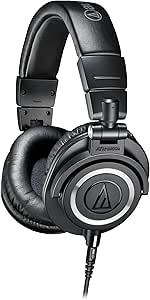 | Best Closed-Back Studio Pick | Brand: Audio-Technica | Model: ATH-M50x | Type: Professional studio monitor headphones | VIEW LATEST PRICE | See Our Full Breakdown |
| Sennheiser HD 599 SE Open-Back Wired Audiophile Headphones, Black |  | Best for Comfortable, Spacious Listening | Brand: Sennheiser | Model: HD 599 SE | Type: Open-back wired over-ear headphones | VIEW LATEST PRICE | See Our Full Breakdown |
| Sennheiser HD 600 Audiophile Open-Back Dynamic Wired Headphones |  | Best for Critical Listening | Design: Open-back, over-ear | Impedance: 300 Ω | Frequency response: 12–39,000 Hz | VIEW LATEST PRICE | See Our Full Breakdown |
| Sennheiser HD 560S Open-Back Over-Ear Wired Audiophile Headphones |  | Best Reference-Sound Value | Brand: Sennheiser | Model: HD 560S | Design: Open-back, over-ear | VIEW LATEST PRICE | See Our Full Breakdown |
| Sennheiser HD 490 PRO Open-Back Professional Headphones |  | Best for Mixing and Production | Type: Open-back professional headphone | Frequency response: 5–36,000 Hz | Design: Open-frame architecture | VIEW LATEST PRICE | See Our Full Breakdown |
| OneOdio Wired DJ Hi-Res Over-Ear Headphones – Black |  | Best for DJ Monitoring | Driver size: 50 mm | Magnet type: Neodymium | Connectivity: Wired, 3.5 mm and 6.35 mm jacks | VIEW LATEST PRICE | See Our Full Breakdown |
| Bowers & Wilkins Px8 S2 Wireless Over‑Ear Headphones – Warm Stone |  | Best Premium Wireless | Drivers: 40 mm carbon cone | DSP: 24-bit | DAC amplifier: Integrated dedicated DAC amp | VIEW LATEST PRICE | See Our Full Breakdown |
| Sennheiser HD 599 Open-Back Wired Audiophile Headphones – Ivory |  | Best for Spacious Home Listening | Model: HD 599 | Design: Open-back, over-ear | Color: Ivory | VIEW LATEST PRICE | See Our Full Breakdown |
| Audio-Technica ATH-M20x Professional Studio Monitor Headphones |  | Best Entry-Level Studio Monitor | Driver size: 40 mm | Driver magnets: Rare earth | Voice coils: Copper-clad aluminum wire | VIEW LATEST PRICE | See Our Full Breakdown |
| Sony MDR-7506 Professional Studio Headphones | 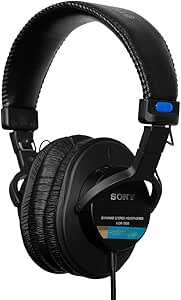 | Best for Portable Studio Monitoring | Driver size: 40 mm | Frequency response: 10 Hz–20 kHz | Design: Closed-ear, foldable | VIEW LATEST PRICE | See Our Full Breakdown |
| Sennheiser HD 660S2 Open-Back Audiophile Headphones |  | Best for Natural, Spacious Listening | Brand: Sennheiser | Model: HD 660S2 | Model number: 700240 | VIEW LATEST PRICE | See Our Full Breakdown |
| Bose QuietComfort Wireless Noise-Cancelling Over-Ear Headphones, Black |  | Best for Wireless Listening in Noisy Places | Color: Black | Fit: Over-ear | Connectivity: Bluetooth multipoint | VIEW LATEST PRICE | See Our Full Breakdown |
| high-fidelity headphone | Color | Design |
|---|---|---|
| Audio-Technica ATH-M50x Profes | Black | — |
| Sennheiser HD 599 SE Open-Back | Black | — |
| Sennheiser HD 600 Audiophile O | Black and gray | Open-back, over-ear |
| Sennheiser HD 560S Open-Back O | — | Open-back, over-ear |
| Sennheiser HD 490 PRO Open-Bac | — | Open-frame architecture |
| OneOdio Wired DJ Hi-Res Over-E | Black | — |
| Bowers & Wilkins Px8 S2 Wirele | — | — |
| Sennheiser HD 599 Open-Back Wi | Ivory | Open-back, over-ear |
| Audio-Technica ATH-M20x Profes | Black | Circumaural |
| Sony MDR-7506 Professional Stu | — | Closed-ear, foldable |
| Sennheiser HD 660S2 Open-Back | — | Open-back |
| Bose QuietComfort Wireless Noi | Black | — |
More Details on Our Top Picks
Audio-Technica ATH-M50x Professional Studio Monitor Headphones, Black
The ATH-M50x is the practical choice here for listeners who need clear, bass-capable sound without the sound leakage of an open-back design. Its 45 mm drivers and sound-isolating earcups suit studio monitoring and focused listening, while the 90-degree swiveling cups make one-ear monitoring easier than it is with the Sennheiser HD 600 or HD 560S. A detachable cable and durable earpads also make it better suited to regular handling than a more lounge-oriented open-back option. The tradeoff is that its more contained presentation does not provide the airy, spacious impression that distinguishes the HD 599 SE and HD 600. Choose it for versatile monitoring and isolation, not for the broadest soundstage or wireless convenience.
Pros:- Sound-isolating circumaural earcups help limit surrounding noise and sound leakage.
- 45 mm drivers deliver clear sound with deep, accurate bass.
- 90-degree swiveling earcups support one-ear monitoring.
- Detachable cable and durable earpads and headband suit frequent use.
Cons:- Its closed-back presentation is less spacious than the Sennheiser HD 599 SE and HD 600.
- Wired listening limits freedom of movement.
Best for: Home studio users and listeners who want over-ear isolation, punchy bass, and swiveling cups for one-ear monitoring.
Not ideal for: Listeners seeking an expansive open-back soundstage for quiet-room critical listening, or anyone who needs wireless playback.
- Brand:Audio-Technica
- Model:ATH-M50x
- Type:Professional studio monitor headphones
- Color:Black
- Driver size:45 mm
- Earcup design:Circumaural
- Swiveling earcups:90 degrees
- Cable:Detachable
- Warranty:2 years on parts and labor
Our verdict“Choose the ATH-M50x for high-fidelity monitoring with useful isolation and bass, rather than an open, room-filling presentation.”
Sennheiser HD 599 SE Open-Back Wired Audiophile Headphones, Black
The HD 599 SE is a strong fit for relaxed, long-form listening: its open-back design gives music a spacious character, and its balanced presentation keeps highs, mids, and bass in proportion. Plush velour pads add comfort for extended sessions, while the two detachable cables—a long 3 m lead and a shorter 1.2 m option—make it more adaptable around the home than the HD 560S, which is supplied with a wired 1/4-inch connector. The HD 600 is the more compelling choice for listeners prioritizing critical clarity and spatial imaging, but the HD 599 SE places greater emphasis on comfort and convenient cable choices. Its main limitation is the open construction: it lets in surrounding noise and leaks sound, so it is a poor match for shared or noisy spaces.
Pros:- Spacious soundstage with natural, balanced audio.
- Detailed highs and mids paired with controlled bass.
- Plush velour-covered ear pads suit long listening sessions.
- Includes detachable 3 m and 1.2 m cables for different setups.
Cons:- Open-back cups provide little isolation and allow sound to leak.
- Wired connection limits movement compared with wireless headphones.
- The HD 600 is a stronger alternative for buyers focused on critical listening and spatial detail.
Best for: Home listeners who want a comfortable open-back headphone for extended music sessions and flexible cable lengths.
Not ideal for: Commuters, office users near others, and listeners who need strong noise isolation or a wireless connection.
- Brand:Sennheiser
- Model:HD 599 SE
- Type:Open-back wired over-ear headphones
- Color:Black
- Long cable:3 m with 6.3 mm connector
- Short cable:1.2 m with 3.5 mm connector
- Cable design:Detachable
- Warranty:2 years
Our verdict“Pick the HD 599 SE for comfortable, spacious home listening, provided sound leakage and a wired connection fit your setup.”
Sennheiser HD 600 Audiophile Open-Back Dynamic Wired Headphones
The HD 600 earns its place for listeners who want clear, low-distortion sound and spatial detail to help reveal differences in recordings. Its open-back construction supports a spacious presentation, while the lightweight 260 g build and plush ear pads are suited to long listening sessions. Against the HD 599 SE, this is the more focused pick for critical listening; the HD 599 SE counters with two included cable lengths, while the ATH-M50x offers isolation that the HD 600 cannot. The important system tradeoff is its 300 Ω impedance: a suitable headphone amplifier or source is needed to get the most from it. It also lacks a microphone, and its open cups make it unsuitable for noisy rooms or situations where sound leakage matters.
Pros:- Clear, low-distortion audio supports close listening to recording detail.
- Open-back design provides a spacious soundstage and spatial imaging.
- Lightweight 260 g construction and plush ear pads support long sessions.
- Detachable Kevlar-reinforced OFC copper cable is built for durability.
Cons:- 300 Ω impedance makes a quality headphone amplifier important for optimal performance.
- Open-back design offers little isolation and leaks sound.
- No built-in microphone for calls or gaming.
Best for: Dedicated music listeners with a suitable headphone amplifier who value accurate, spacious playback for focused listening.
Not ideal for: Buyers using low-powered devices without an amplifier, people who need isolation, or anyone seeking a built-in microphone.
- Design:Open-back, over-ear
- Impedance:300 Ω
- Frequency response:12–39,000 Hz
- Total harmonic distortion:0.1%
- Weight:260 g
- Cable:Detachable Kevlar-reinforced OFC copper
- Connector:¼-inch or ⅛-inch jack
- Color:Black and gray
Our verdict“Choose the HD 600 for focused, detailed listening if your source can drive its 300 Ω load and your room is quiet.”
Sennheiser HD 560S Open-Back Over-Ear Wired Audiophile Headphones
The HD 560S is the reference-minded option for buyers who want natural, accurate sound and a wide presentation without stepping up to the HD 600’s demanding 300 Ω specification. Its open-back cups let sound expand naturally, and the angled-driver design is intended to create lifelike depth; extended low-end reach keeps bass present without making it the main event. Compared with the HD 599 SE, the HD 560S leans more toward reference listening than plush comfort and cable flexibility. It is also a more straightforward choice than the professional HD 490 PRO, which comes with two pad sets and a mixing plugin for production work. The tradeoff is a single wired 1/4-inch connection and little isolation, making it best for quiet rooms rather than commuting or shared spaces.
Pros:- Natural, accurate reference sound suits focused music listening.
- Open-back design provides a wide soundstage.
- Extended low-end reach delivers clear bass without sacrificing the reference emphasis.
- Angled-driver design supports a lifelike sense of depth.
Cons:- Open-back earcups leak sound and offer little protection from external noise.
- Wired-only connection has no Bluetooth option.
- The supplied 1/4-inch connector is less flexible than the HD 599 SE’s two included cable options.
Best for: Budget-conscious listeners and aspiring audio editors seeking an open-back reference-style headphone for quiet-room use.
Not ideal for: Commuters, people listening near others, or buyers who need Bluetooth, strong isolation, or multiple included cable options.
- Brand:Sennheiser
- Model:HD 560S
- Design:Open-back, over-ear
- Connector:1/4-inch wired
- Included components:Headphones, cable, owner’s manual
- Item weight:600 g
- Warranty:2-year manufacturer warranty
Our verdict“Choose the HD 560S for open-back reference listening with clear bass, as long as a wired setup and quiet room suit you.”
Sennheiser HD 490 PRO Open-Back Professional Headphones
The HD 490 PRO is the specialist pick for mixing and production, where an uncolored frequency response and precise placement can help decisions translate beyond the listening room. Its wide, dimensional soundstage supports localization, while the package goes beyond the HD 600’s more traditional listening setup with two sets of washable, replaceable ear pads for mixing and producing. A detachable coiled-structure cable and included dearVR MIX-SE plugin further position it as a work tool rather than simply a home music headphone. That focus may be excessive for casual listening, and its open-frame design leaks sound and admits external noise. It can also benefit from an amplifier or high-quality source, so the HD 560S is a simpler reference-oriented alternative for buyers who do not need production accessories.
Pros:- Uncolored frequency response supports honest monitoring and mixing decisions.
- Wide soundstage and precise localization help with spatial placement.
- Two sets of washable, replaceable pads support different production needs.
- Includes a detachable cable and dearVR MIX-SE plugin.
Cons:- Open-back design leaks sound and allows surrounding noise in.
- An amplifier or high-quality source may be needed for optimal performance.
- Its production-focused accessories are less useful to buyers seeking a straightforward everyday listening headphone.
Best for: Mix engineers, producers, and detail-focused creators who want an open-back reference headphone with adaptable pads and a mixing plugin.
Not ideal for: Casual listeners seeking isolation or wireless playback, and buyers who want a simple wired headphone without production-specific accessories.
- Type:Open-back professional headphone
- Frequency response:5–36,000 Hz
- Design:Open-frame architecture
- Cable:Detachable with patented coil structure
- Included cable:1.8 m
- Included ear pads:Mixing and producing sets; washable and replaceable
- Included software:dearVR MIX-SE plugin
- Packaging:FSC-certified
Our verdict“Choose the HD 490 PRO if mixing tools, precise localization, and replaceable pad options matter more than isolation or simplicity.”
OneOdio Wired DJ Hi-Res Over-Ear Headphones – Black
The OneOdio earns its place for listeners who need practical monitoring features more than an open, reference-style presentation. Its 50 mm neodymium drivers are described as delivering punchy bass with clear vocals and highs, while the 90-degree swiveling ear cups support one-ear cueing during DJ work. A shared audio port also lets a second listener connect without a splitter. Compared with the Audio-Technica ATH-M20x, this model offers more DJ-oriented conveniences, including the swiveling cups and dual 3.5 mm and 6.35 mm connectivity. The tradeoff is a strictly wired setup and a feature set aimed at monitoring rather than spacious home listening: unlike the open-back Sennheiser HD 599, it is built around isolation and hands-on use, not an airy presentation.
Pros:- 50 mm neodymium drivers are specified for strong bass with clear vocals and highs
- 90-degree swiveling ear cups support single-ear monitoring
- 3.5 mm and 6.35 mm connections suit a range of audio equipment
- Shared audio port allows a second pair of headphones to connect
Cons:- Wired-only design has no Bluetooth option
- DJ-focused swiveling cups and monitoring features are less useful for casual listening
- Its closed monitoring approach cannot offer the open, spacious presentation of the Sennheiser HD 599
Best for: DJs and home producers who want swiveling cups, wired compatibility with common headphone jacks, and an easy way to share audio.
Not ideal for: Listeners seeking wireless convenience or an open, spacious soundstage for relaxed audiophile listening.
- Driver size:50 mm
- Magnet type:Neodymium
- Connectivity:Wired, 3.5 mm and 6.35 mm jacks
- Ear cup swivel:90 degrees
- Audio sharing:Shared audio port
- Color:Black
Our verdict“Choose the OneOdio for wired DJ monitoring and shared listening, but look elsewhere for wireless use or an open-back audiophile presentation.”
Bowers & Wilkins Px8 S2 Wireless Over‑Ear Headphones – Warm Stone
The Px8 S2 is the lineup’s clearest choice for someone who wants high-fidelity sound without giving up wireless travel features. Its 40 mm carbon-cone drivers, 24-bit DSP and dedicated DAC amp are paired with aptX Lossless and Adaptive support, while multipoint can keep two devices connected. The eight-microphone ANC system and up-to-30-hour battery life make it more suited to commutes and work than the wired Sennheiser HD 599 or studio-focused Sony MDR-7506. Its aluminum arms and Nappa leather give it a more premium construction, though that solid build may feel heavier than simpler wired options. The tradeoff is that buyers pay for a broad set of wireless and noise-cancelling features; if listening will happen mostly at a quiet desk, the open-back HD 599 is a more direct route to spacious wired listening.
Pros:- 40 mm carbon-cone drivers, 24-bit DSP, and a dedicated DAC amp support a high-resolution wireless feature set
- Eight-microphone ANC helps manage noise during travel and work
- Multipoint connects to two devices at once
- Up to 30 hours of battery life with a stated 15-minute charge for about seven hours of playback
Cons:- Die-cast aluminum construction may feel heavier than the plastic builds of wired studio headphones
- Wireless features and premium materials are unnecessary extras for listeners who only need a home wired pair
- Battery-powered operation requires charging, unlike the wired Sennheiser HD 599
Best for: Frequent travelers and hybrid-work listeners who want high-resolution wireless playback, ANC, multipoint connections, and premium materials in one pair.
Not ideal for: Budget-conscious home listeners who do not need Bluetooth or noise cancellation, or anyone who prioritizes a lightweight wired setup.
- Drivers:40 mm carbon cone
- DSP:24-bit
- DAC amplifier:Integrated dedicated DAC amp
- Bluetooth:Version 5.3
- Wireless codecs:aptX Lossless, Adaptive, HD, Classic, AAC, SBC
- Multipoint:Connects to 2 devices simultaneously
- Active noise cancellation:8-microphone system
- Battery life:Up to 30 hours
- Materials:Die-cast aluminum arms and Nappa leather ear pads
Our verdict“Pick the Px8 S2 if you want premium wireless fidelity and ANC for travel, but choose a wired model if your listening setup stays at home.”
Sennheiser HD 599 Open-Back Wired Audiophile Headphones – Ivory
The HD 599 suits listeners who put spacious, natural-sounding home playback ahead of isolation and portability. Its open-back design is intended to create a more expansive presentation than closed monitoring headphones such as the Sony MDR-7506, while velour ear pads and a padded headband support longer listening sessions. Two detachable cables—one 3 m with a 6.3 mm jack and one 1.2 m with a 3.5 mm jack—make it easier to move between a home audio setup and a portable source. Compared with the wireless Bowers & Wilkins Px8 S2, the HD 599 gives up ANC, Bluetooth and battery-powered convenience in favor of a wired, open design. That design leaks sound and offers no isolation, so it belongs in a quiet room rather than a commute or shared workspace.
Pros:- Open-back design supports a spacious presentation and spatial imaging
- Velour ear pads and padded headband are suited to extended listening
- Detachable 3 m and 1.2 m cables provide options for different setups
- Includes both 6.3 mm and 3.5 mm cable connections
Cons:- Open-back cups leak sound and do not isolate the listener
- No Bluetooth or active noise cancellation
- Less suitable for noisy environments than the closed-back Sony MDR-7506
Best for: Home listeners who want an open, spacious presentation and long-session comfort, with detachable cables for different listening setups.
Not ideal for: Commuters, office listeners near other people, and anyone who needs wireless playback or noise isolation.
- Model:HD 599
- Design:Open-back, over-ear
- Color:Ivory
- Cable lengths:Detachable 3 m and 1.2 m cables
- Cable connectors:6.3 mm and 3.5 mm jacks
- Ear pad material:Velour
- Headband:Padded, replaceable
- Warranty:1 year
Our verdict“Choose the HD 599 for comfortable, spacious listening in a quiet room, not for commuting or shared spaces.”
Audio-Technica ATH-M20x Professional Studio Monitor Headphones
The ATH-M20x is the straightforward pick for listeners starting with closed-back studio monitoring. Its 40 mm drivers are tuned for enhanced low-frequency performance, and the circumaural design helps reduce outside sound during tracking or mixing. That focus makes it a more practical fit for recording in a busy room than the open-back Sennheiser HD 599, which lets sound in and out. Compared with the OneOdio Wired DJ headphones, the ATH-M20x skips swiveling cups and a shared audio port, trading DJ-specific flexibility for a simpler studio-oriented setup with a single-sided cable. The supplied information does not list detachable cabling, wireless playback, or extra comfort features, so buyers who need those conveniences should compare alternatives before choosing this basic wired monitor.
Pros:- 40 mm drivers are tuned for enhanced low-frequency performance
- Circumaural design helps isolate sound in louder environments
- Single-sided cable keeps the connection routed from one ear cup
- Studio tracking and mixing are the stated intended uses
Cons:- No wireless or Bluetooth option
- No detachable cable is listed in the supplied product data
- Lacks the swiveling ear cups and audio-sharing port found on the OneOdio Wired DJ headphones
Best for: Beginning home-recording musicians and listeners who need an uncomplicated, isolating wired pair for tracking and basic mixing.
Not ideal for: DJs who need swiveling ear cups, wireless listeners, or home audiophiles seeking the more spacious presentation of an open-back headphone.
- Driver size:40 mm
- Driver magnets:Rare earth
- Voice coils:Copper-clad aluminum wire
- Design:Circumaural
- Cable:Single-sided
- Color:Black
- Intended use:Studio tracking and mixing
Our verdict“Choose the ATH-M20x for simple wired tracking in a noisy room, but pick a more feature-rich model for DJ work or open-back listening.”
Sony MDR-7506 Professional Studio Headphones
The MDR-7506 stands out for listeners who want a closed-back, foldable monitor that can move between studio work and travel. Its 40 mm drivers and listed 10 Hz–20 kHz frequency response are paired with a closed-ear design that helps reduce external noise. Folding cups, a soft case and a 1/4-inch adapter add practical flexibility compared with the less travel-oriented open-back Sennheiser HD 599. The long 9.8 ft cord can reach studio equipment without an extension, but it is non-detachable, which limits cable replacement and makes packing less tidy. Compared with the ATH-M20x, the Sony’s stated travel accessories and folding construction make portability a clearer part of its appeal; neither replaces a wireless model like the Bowers & Wilkins Px8 S2 for untethered listening.
Pros:- Closed-ear design helps reduce external noise
- Folding construction and included soft case support storage and travel
- 9.8 ft cord provides reach to studio equipment
- Includes a gold-plated plug and 1/4-inch adapter
Cons:- Non-detachable cord is harder to replace and less convenient to pack
- Wired-only design lacks the freedom of the Bowers & Wilkins Px8 S2
- Closed-back presentation does not provide the open soundstage of the Sennheiser HD 599
Best for: Studio users and frequent travelers who want a foldable wired monitor, a long reach to equipment, and a supplied storage case.
Not ideal for: Listeners who need Bluetooth, a short or detachable cable, or the spacious sound of an open-back headphone for quiet-room listening.
- Driver size:40 mm
- Frequency response:10 Hz–20 kHz
- Design:Closed-ear, foldable
- Connectivity:Wired
- Cord length:9.8 ft
- Plug:Gold-plated plug; 1/4-inch adapter included
- Cord:Non-detachable OFC cord
- Included accessory:Soft case
Our verdict“Pick the MDR-7506 for a foldable wired monitor with studio-friendly reach, but skip it if a detachable cord or wireless use matters.”
Sennheiser HD 660S2 Open-Back Audiophile Headphones
The HD 660S2 is the wired pick for listeners who want a natural presentation with room for instruments to breathe. Its open-back design and 42 mm transducers support a spacious soundstage, while the listed low-frequency response reaches piano notes down to 27.5 Hz. Compared with the more portable, closed-back Audio-Technica ATH-M50x, this Sennheiser is better suited to quiet rooms and focused listening, not blocking outside noise.
Rich mids, clear highs, and controlled bass make it a strong choice for varied acoustic and instrumental recordings. Plush, breathable cushions help during longer sessions, and the two included cables offer useful connection options. The tradeoff is firm: it is wired and open-backed, so movement is limited and sound can leak in and out. Choose it for home listening, not commuting or shared spaces.
Pros:- Spacious, natural presentation with detailed highs and rich mids
- Controlled bass with listed piano response down to 27.5 Hz
- Breathable plush ear cushions suit extended listening
- Includes 6.3 mm and 4.4 mm cables, an adapter, and a carry pouch
Cons:- Open-back construction provides little isolation and allows sound leakage
- Wired connection restricts movement compared with wireless headphones
Best for: Home listeners who prioritize spacious, natural sound and can listen in a quiet room with a wired setup.
Not ideal for: Commuters and listeners in noisy or shared spaces who need wireless freedom or strong sound isolation.
- Brand:Sennheiser
- Model:HD 660S2
- Model number:700240
- Design:Open-back
- Fit:Over-ear
- Transducer size:42 mm
- Included cables:6.3 mm cable (1.8 m) and 4.4 mm cable (1.8 m)
- Other included accessories:6.3 mm to 3.5 mm adapter and carry pouch
- Warranty:2 years
Our verdict“Choose the HD 660S2 for detailed, spacious home listening if you do not need isolation or wireless convenience.”
Bose QuietComfort Wireless Noise-Cancelling Over-Ear Headphones, Black
The Bose QuietComfort is the practical choice here for listeners who want wireless convenience and active noise cancellation alongside adjustable sound. Its Quiet and Aware modes let you choose between reducing surrounding noise and hearing more of it, while multipoint Bluetooth supports connections to two devices. That makes it more adaptable on a commute or at work than the open-back Sennheiser HD 660S2, which is designed for quiet-room listening and has no wireless connection.
Adjustable bass, mid-range, and treble let you tailor the sound, and battery life is listed at up to 24 hours. A quick USB-C charge adds up to 2.5 hours of playtime, and the included cable offers wired listening with an in-line microphone. The compromise for high-fidelity buyers is that its noise-control and convenience features take priority over an open-back listening experience. Wireless use also depends on charging, and water resistance is not specified.
Pros:- Active noise cancellation with Quiet and Aware listening modes
- Adjustable bass, mid-range, and treble EQ
- Multipoint Bluetooth supports connections to multiple devices
- Up to 24 hours of battery life, with fast USB-C charging
Cons:- Wireless listening requires charging
- Closed wireless design does not offer the open-back presentation of the Sennheiser HD 660S2
- Water resistance is not specified
Best for: Frequent travelers and hybrid workers who want noise cancellation, adjustable sound, and the ability to connect to multiple Bluetooth devices.
Not ideal for: Listeners focused on wired, open-back home listening who prefer a spacious presentation and do not need noise cancellation.
- Color:Black
- Fit:Over-ear
- Connectivity:Bluetooth multipoint
- Noise control:Active noise cancellation; Quiet and Aware modes
- Audio adjustment:Adjustable bass, mid-range, and treble EQ
- Battery life:Up to 24 hours
- Fast charging:15-minute USB-C charge provides up to 2.5 hours of playtime
- Wired listening:Included audio cable with in-line microphone
Our verdict“Choose the Bose QuietComfort if you value noise control and flexible wireless listening more than an open-back home-audio setup.”

How We Picked
I ranked these headphones by how convincingly they serve high-fidelity listening in their intended setting, not by treating every model as if it had the same job. Sound presentation, tonal balance, detail, and listening fatigue matter, but so do comfort for longer sessions, isolation, portability, build, and whether a dedicated source or amplifier may be needed. I gave open-back audiophile models the strongest consideration for home listening, while recognizing that a closed-back or wireless model can be the better real-world choice when privacy, travel, or noise control comes first.
The order reflects the balance of fidelity and usability across the full lineup. Models with a distinct strength and manageable compromises rank ahead of options that are more specialized, entry-level, or convenience-first. I also separate near-overlapping pairs—such as the HD 599 and HD 599 SE—by their shared listening role rather than implying major performance differences from their naming. The picks span different budgets and use cases, but feature and design suitability, not price or popularity, drive the recommendations.
| high-fidelity headphone | Color | Design |
|---|---|---|
| Audio-Technica ATH-M50x Profes | Black | — |
| Sennheiser HD 599 SE Open-Back | Black | — |
| Sennheiser HD 600 Audiophile O | Black and gray | Open-back, over-ear |
| Sennheiser HD 560S Open-Back O | — | Open-back, over-ear |
| Sennheiser HD 490 PRO Open-Bac | — | Open-frame architecture |
| OneOdio Wired DJ Hi-Res Over-E | Black | — |
| Bowers & Wilkins Px8 S2 Wirele | — | — |
| Sennheiser HD 599 Open-Back Wi | Ivory | Open-back, over-ear |
| Audio-Technica ATH-M20x Profes | Black | Circumaural |
| Sony MDR-7506 Professional Stu | — | Closed-ear, foldable |
| Sennheiser HD 660S2 Open-Back | — | Open-back |
| Bose QuietComfort Wireless Noi | Black | — |
Factors to Consider When Choosing Best High-fidelity Headphones
High fidelity is not a single sound signature or headphone design. I’d start by matching the listening environment and source to the headphone, then decide how much portability, isolation, and tuning flexibility matter to you.
Choose open-back or closed-back based on your room
Open-back headphones let air and sound move through the earcups, which can make music feel less confined during quiet-room listening. They also leak sound in both directions, so nearby people may hear your music and outside noise remains audible. Closed-back models are usually the safer choice for offices, shared rooms, and recording situations where sound bleed is a problem. A common mistake is buying an open-back model for commuting because its listening presentation sounds appealing on paper. If you need one pair for both home and public use, decide which setting gets priority before compromising on either.
Match the headphones to your source
A wired headphone can work from a phone, laptop, or audio interface, but playback volume and sound quality depend on the source’s output. Some models benefit from a dedicated headphone amp, particularly if your setup struggles to reach a comfortable volume without distortion. Check the device’s headphone output and the headphone’s sensitivity and impedance rather than assuming every “audiophile” model needs extra gear. Buying an amplifier before identifying a real limitation can add cost and clutter without a noticeable improvement. If you want a simple setup, favor headphones that perform well from the devices you already own.
Prioritize fit for long listening sessions
Comfort affects how often you use a headphone and how accurately you can judge music over time. Clamp force, earcup depth, headband pressure, heat, and the shape of the ear pads can matter more than a small difference in technical specifications. Glasses wearers should pay particular attention to seal and pressure around the temples, especially with closed-back designs. A poor seal can also change bass response, so fit is not just a comfort issue. When possible, check return terms and allow time to judge fit across a full listening session rather than a brief try-on.
Decide whether you want a neutral or shaped presentation
Headphones marketed for monitoring or reference listening often aim to reveal mix details, while consumer models may emphasize bass, smoothness, or a more relaxed balance. Neither approach is automatically more faithful for every listener: the recording, genre, and your preferred volume all influence what sounds natural. Avoid choosing solely by a claim of a flat response, since fit, ear shape, and personal preference affect what you hear. If you mix or compare recordings, consistency and clear midrange can be useful; for casual listening, a more forgiving tuning may be easier to enjoy. Consider whether you want the headphone to expose flaws or make a broad range of music pleasant.
Treat wireless features as a separate set of tradeoffs
Bluetooth, active noise cancellation, and built-in controls can make headphones much more useful outside a quiet room. Those features bring battery dependence and processing into the listening chain, and wireless operation is not the same experience as a straightforward wired connection. Noise cancellation is especially useful for steady environmental noise, but it does not turn an open-back design into a private listening option. Before choosing wireless, check the codecs and wired-use behavior that matter with your devices, along with how you plan to charge the headphones. If fidelity at home is the main goal, decide whether convenience features justify giving up the simplicity of a wired pair.
Pay for the improvement you will actually use
Moving up a product tier may bring better materials, comfort, tuning refinement, or useful features, but it does not guarantee that every listener will hear a large improvement. A premium wireless model makes more sense when build and everyday convenience matter alongside sound, while a specialist open-back model is a better fit for dedicated listening. Entry-level studio headphones can be sensible tools, yet they may lack the spacious presentation or comfort some buyers expect from an audiophile pick. A frequent mistake is paying for a flagship before improving fit, source quality, or listening conditions. Set a ceiling based on your use case, then compare the tradeoffs that remain within it.
Frequently Asked Questions
Are open-back headphones a good choice as my only pair?
They can be, if most of your listening happens in a quiet room and sound leakage will not bother anyone nearby. Open-back designs do not block much outside noise, so they are a poor match for commuting or a busy office. If your routine includes both private home listening and public travel, a closed-back or wireless noise-cancelling model may be more practical as the single pair. Another option is to keep open-back headphones for home and use a separate portable pair. Choose based on where you will listen most often, not only on which presentation sounds appealing.
Do I need a headphone amplifier for the HD 600 or other wired audiophile headphones?
Not automatically: the answer depends on the headphone, your source, and the volume you prefer. If your current device gets loud enough cleanly, an additional amplifier may not offer a meaningful change for your setup. If you hear distortion, have little usable volume range, or your source struggles with demanding headphones, a suitable amp or DAC/amp can help address that limitation. Check the source specifications and the headphone’s electrical requirements before buying more gear. For a straightforward setup, choose a model known to suit your existing devices.
Which type should I choose for mixing music at home?
Start with a headphone that gives you a consistent, revealing presentation and a comfortable fit for extended sessions. A wired studio-oriented model can be convenient for connecting to an interface, while open-back options may suit a quiet room if leakage is not a concern. Headphones do not replace checking a mix on speakers or other playback systems, since room acoustics and headphone response can change your decisions. Learn how your chosen pair presents bass and treble by comparing familiar recordings. For recording vocals or instruments with a microphone, closed-back headphones can reduce sound leaking into the mic.
Is a wireless noise-cancelling model suitable for high-fidelity listening at home?
It can be a strong choice if you want one headphone for music, travel, and calls, and value noise control alongside sound. Active processing, battery life, wireless codecs, and the model’s wired behavior all affect how it fits a home setup. In a quiet room, a wired open-back model may offer a more direct listening experience and avoid charging. Noise cancellation is most helpful when environmental sound would otherwise mask music, rather than as a sound-quality upgrade by itself. Compare the features you will use regularly with the simplicity you would give up.
How should I choose between the Sennheiser HD 599 and HD 599 SE?
These are closely related open-back headphones aimed at a similar listening role, so I would not assume the different finish or edition label means a major change in sound. Compare the exact package, comfort, connector details, and condition available to you rather than relying on the name alone. Both designs are better suited to quiet listening than to travel or shared spaces because they leak sound and provide little isolation. If you want a clear step toward a different use case, compare them with a closed-back studio model instead. Your fit and intended listening environment should carry more weight than small edition differences.
Conclusion
For a single wired headphone that balances home listening with approachability, I’d start with the Sennheiser HD 560S as the best overall pick. The Audio-Technica ATH-M20x is the best value-oriented entry for buyers who want a straightforward closed-back studio design, while the HD 599 is another comfortable route into open-back listening. For beginners who want a clear reference-style starting point, the HD 560S is easier to recommend than the more focused HD 600 or HD 660S2. The Bowers & Wilkins Px8 S2 is the best premium choice for listeners who want wireless convenience with an upscale build; choose the Bose QuietComfort instead when noise cancellation takes priority. For studio monitoring, compare the ATH-M50x, MDR-7506, HD 490 PRO, and HD 600 by fit and workflow; for DJ-style use, the OneOdio is the lineup’s more task-focused option. In the end, match the headphone to your room and routine first, then pick the sound and features you want within that setting.
Fall Picks
fall essentials
As an affiliate, we earn on qualifying purchases.