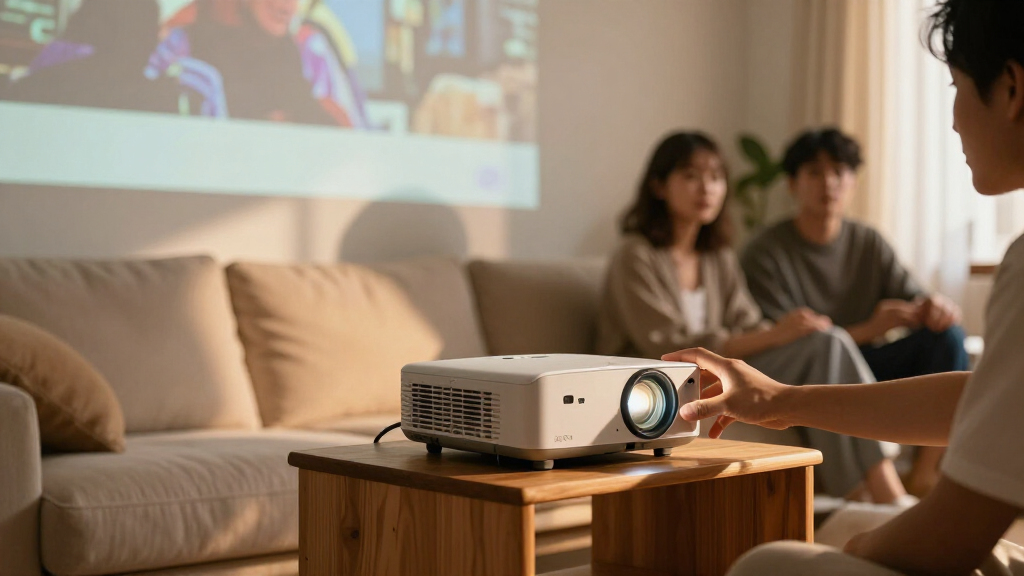

The BenQ TK710 is my best overall pick among these 4K laser projectors because it balances home entertainment and gaming in a conventional projector setup. The JMGO N1S Ultimate stands out for buyers who want a triple-laser smart projector, while the ViewSonic LS740-4K suits rooms where high brightness matters more than compact size. The main tradeoffs are brightness versus portability, built-in streaming versus dedicated theater features, and standard versus short-throw placement. A 4K label alone does not tell you whether a projector will fit your screen distance, room light, or viewing habits. Read on for the full breakdown and guidance on matching a model to your room.

Get the latest gadgets delivered free with Prime
- Fast, free delivery on millions of items
- Prime Video, Amazon Music and more included
- Member-only deals all year
Complete the kit



Key Takeaways
- The BenQ TK710 is the most balanced pick: it targets both gaming and home entertainment, while the BenQ TK710STi is the better fit when the projector must sit closer to the screen.
- Triple-laser models prioritize a different mix of features: JMGO and Dangbei options pair 4K projection with smart viewing features, but buyers should compare each model’s setup and room fit instead of treating the laser type as a complete quality verdict.
- Bright rooms call for a different shortlist: the ViewSonic LS740-4K and LS901-4K are suited to buyers who put brightness and fixed-room use ahead of portability.
- Short-throw and ultra-short-throw placement can change the whole installation: the BenQ TK710STi and AWOL Aetherion Max can help where a conventional projector position is impractical, but their placement needs should shape the purchase.
- Portable options trade installation flexibility for room-filling output: the Hisense M2 Pro and XGIMI Elfin Flip are aimed at mobile or adaptable setups, so buyers should match expectations to their intended screen size and ambient light.
| BenQ TK710 4K HDR Laser Home Entertainment and Gaming Projector |  | Best for Competitive Gaming | Native resolution: 3840 x 2160 | Brightness: 3,200 ANSI lumens | HDR support: HDR10, HLG | VIEW LATEST PRICE | See Our Full Breakdown |
| JMGO N1S Ultimate Triple Laser 4K Projector |  | Best for Large, Flexible Setups | Native resolution: 3840 x 2160 | Brightness: 3300 ISO lumens | Color gamut: 110% BT.2020 | VIEW LATEST PRICE | See Our Full Breakdown |
| Optoma UHZ36 4K UHD Laser HDR Home Theater Projector |  | Best for Film-Focused Viewing | Resolution: 4K UHD | Light source: Laser | HDR: Supported | VIEW LATEST PRICE | See Our Full Breakdown |
| JMGO N1S 4K Triple Laser Projector with Google TV |  | Best Portable Smart Projector | Resolution: 4K UHD with HDR10 | Brightness: 1700 ISO lumens | Light source: Pure RGB triple laser, MALC 3.0 | VIEW LATEST PRICE | See Our Full Breakdown |
| Dangbei DBOX02 4K Laser Projector with Google TV, 2450 ISO Lumens, Netflix Licensed, HDR10+, Blu-ray 3D |  | Best All-in-One Home Theater | Native resolution: 3840 x 2160 (4K) | Brightness: 2450 ISO lumens | Display type: ALPD laser | VIEW LATEST PRICE | See Our Full Breakdown |
| Dangbei MP1 Max 4K Triple Laser Projector |  | Best for Easy, Flexible Setup | Native resolution: 3840 × 2160 | Brightness: 3,100 ISO lumens | Color gamut: 110% BT.2020 | VIEW LATEST PRICE | See Our Full Breakdown |
| ViewSonic LS901-4K 4K UHD Laser Projector |  | Best for High-Speed Gaming and Simulation | Resolution: 4K UHD (3840 × 2160) | Light source: Laser | Brightness: 5,500 ANSI lumens | VIEW LATEST PRICE | See Our Full Breakdown |
| JMGO N1S Ultra 4K Triple Laser Projector with Google TV | 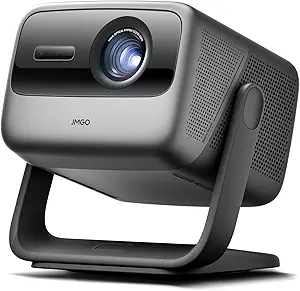 | Best for Color Accuracy | Resolution: 4K | Light source: Triple RGB laser | Brightness: 2,800 ISO lumens | VIEW LATEST PRICE | See Our Full Breakdown |
| ViewSonic LS740-4K 4K UHD Laser Projector, 5000 Lumens |  | Best for Large-Screen Installation | Resolution: 3840 × 2160 (4K UHD) | Brightness: 5,000 ANSI lumens | Light source: Laser | VIEW LATEST PRICE | See Our Full Breakdown |
| Hisense M2 Pro Triple Laser Smart Portable Projector, 4K UHD |  | Best Portable Pick | Resolution: 4K UHD with 4K upscaling | Brightness: 1,300 ANSI lumens | Projection size: 65–200 inches | VIEW LATEST PRICE | See Our Full Breakdown |
| XGIMI Elfin Flip 4K Portable Projector with Google TV |  | Best Portable Pick | Resolution: 4K UHD | Light source: RGB triple laser | Brightness: 1600 ISO lumens | VIEW LATEST PRICE | See Our Full Breakdown |
| AWOL Aetherion Max 4K 3D Ultra Short Throw Projector with 132-Inch Cinematic Screen Bundle |  | Best Premium Home Theater Bundle | Native resolution: 3840 x 2160 | Display technology: Laser | Brightness: 3000 ANSI lumens | VIEW LATEST PRICE | See Our Full Breakdown |
| BenQ TK710STi 3200 Lumens 4K HDR Short Throw Home Entertainment Projector |  | Best for Bright Rooms and Gaming | Brightness: 3200 ANSI lumens | Resolution: 4K HDR | Light source: Laser | VIEW LATEST PRICE | See Our Full Breakdown |
| 4K laser projector | Brightness | Resolution | Light source |
|---|---|---|---|
| BenQ TK710 4K HDR Laser Home E | 3,200 ANSI lumens | — | — |
| JMGO N1S Ultimate Triple Laser | 3300 ISO lumens | — | — |
| Optoma UHZ36 4K UHD Laser HDR | — | 4K UHD | Laser |
| JMGO N1S 4K Triple Laser Proje | 1700 ISO lumens | 4K UHD with HDR10 | Pure RGB triple laser, MALC 3.0 |
| Dangbei DBOX02 4K Laser Projec | 2450 ISO lumens | — | — |
| Dangbei MP1 Max 4K Triple Lase | 3,100 ISO lumens | — | Triple laser + LED |
| ViewSonic LS901-4K 4K UHD Lase | 5,500 ANSI lumens | 4K UHD (3840 × 2160) | Laser |
| JMGO N1S Ultra 4K Triple Laser | 2,800 ISO lumens | 4K | Triple RGB laser |
| ViewSonic LS740-4K 4K UHD Lase | 5,000 ANSI lumens | 3840 × 2160 (4K UHD) | Laser |
| Hisense M2 Pro Triple Laser Sm | 1,300 ANSI lumens | 4K UHD with 4K upscaling | — |
| XGIMI Elfin Flip 4K Portable P | 1600 ISO lumens | 4K UHD | RGB triple laser |
| AWOL Aetherion Max 4K 3D Ultra | 3000 ANSI lumens | — | — |
| BenQ TK710STi 3200 Lumens 4K H | 3200 ANSI lumens | 4K HDR | Laser |
More Details on Our Top Picks
BenQ TK710 4K HDR Laser Home Entertainment and Gaming Projector
The BenQ TK710 is the gaming-focused pick in this group: its 4 ms response at 1080p/240Hz is suited to fast play, while 4K at 60Hz has 16 ms input lag for a sharper, more detailed image. Its 3,200 ANSI lumens also give it more stated brightness than the JMGO N1S, which lists 1,700 ISO lumens, making the BenQ a stronger fit for rooms that are not fully dark. The tradeoff is a simpler entertainment setup: the supplied details list HDMI and eARC but no built-in streaming platform or Wi-Fi. Its 144-inch image limit is also smaller than the JMGO N1S Ultimate’s stated 300 inches. I’d choose this model for gaming and bright-room flexibility, not for an all-in-one streaming experience.
Pros:- 4 ms response time at 1080p/240Hz supports fast-paced gaming.
- 3,200 ANSI lumens suit a wider range of room lighting than the JMGO N1S’s stated 1,700 ISO lumens.
- 4K UHD resolution with HDR10 and HLG support.
- Laser light source rated for 20,000 hours.
Cons:- Maximum image size is 144 inches, below the JMGO N1S Ultimate’s stated 300-inch maximum.
- Built-in Wi-Fi or a smart TV platform is not specified.
- The strongest 240Hz mode is at 1080p rather than 4K.
Best for: Console and PC gamers who want 4K detail, high refresh gaming at 1080p, and strong stated brightness for a multipurpose room.
Not ideal for: Buyers who want built-in streaming apps or a very large projected image; the listing does not specify Wi-Fi and caps the image size at 144 inches.
- Native resolution:3840 x 2160
- Brightness:3,200 ANSI lumens
- HDR support:HDR10, HLG
- Gaming response:4 ms at 1080p/240Hz
- Input lag:16 ms at 4K/60Hz
- Color coverage:95% Rec.709
- Light source life:20,000 hours
- Maximum image size:144 inches
Our verdict“Choose the BenQ TK710 if gaming response and higher stated brightness matter more than built-in streaming or a screen larger than 144 inches.”
JMGO N1S Ultimate Triple Laser 4K Projector
The N1S Ultimate combines a 3300 ISO-lumen triple laser image with a rotating gimbal, so it suits people who want to move projection between rooms or aim it at different surfaces without a fixed mount. Google TV, licensed Netflix, voice control, and wireless casting make it more self-contained than the BenQ TK710, whose supplied details do not specify a smart platform. It also lists a 300-inch maximum image, well beyond the JMGO N1S’s 200-inch limit. That scale and its 25.1-foot maximum throw distance call for generous room depth, though; this is less convenient in a compact living room. The listing also gives conflicting built-in audio power details, so I wouldn’t choose it based on speaker output. It makes the most sense when flexibility and screen size lead the decision.
Pros:- Triple RGB laser with 3300 ISO lumens and a stated 110% BT.2020 color gamut.
- Google TV includes licensed Netflix, apps, voice control, and wireless casting.
- Rotating gimbal and automatic focus and keystone correction simplify flexible placement.
- Supports image sizes up to 300 inches, compared with 200 inches for the JMGO N1S.
Cons:- The 25.1-foot maximum throw distance can require a spacious room.
- The listing conflicts on built-in audio power: it mentions a 20W subwoofer but lists 10W Dolby Audio.
- The 60-inch minimum image size may not suit buyers seeking a small projection.
Best for: Households with a spacious room or multiple projection spots who want Google TV, wireless casting, and a movable projector with a large image range.
Not ideal for: Small-room buyers or anyone choosing primarily for a clearly specified speaker setup; the maximum throw distance is 25.1 feet and the audio power details conflict.
- Native resolution:3840 x 2160
- Brightness:3300 ISO lumens
- Color gamut:110% BT.2020
- Contrast ratio:1600:1
- Image size range:60–300 inches
- Throw distance:5.2–25.1 feet
- Operating system:Google TV
- Light source life:30,000 hours
Our verdict“Pick the N1S Ultimate if you have room for its long throw and want a flexible, streaming-ready projector capable of a very large image.”
Optoma UHZ36 4K UHD Laser HDR Home Theater Projector
The Optoma UHZ36 earns a film-focused role through its Filmmaker Mode, which is intended to preserve the director’s original presentation, paired with 4K UHD resolution, HDR support, and a laser light source. That gives it a clear stated purpose compared with the BenQ TK710, whose supplied details put more emphasis on high-refresh gaming, or the JMGO N1S, which bundles Google TV and portable setup features. The UHZ36’s tradeoff is the thin specification detail in the available product data: brightness, connectivity, image-size range, and gaming performance are not provided. I can’t recommend it for a bright room or a particular installation distance based on this listing alone. It is the straightforward choice only for shoppers prioritizing its named movie mode and willing to confirm the missing setup details before buying.
Pros:- 4K UHD resolution for detailed projected images.
- Laser light source.
- HDR support is listed.
- Filmmaker Mode is designed to preserve the director’s intended presentation.
Cons:- Brightness is not stated in the supplied product data.
- No throw distance or maximum image size is provided.
- Connectivity and gaming performance are not specified.
Best for: Movie viewers who specifically want a projector listing a dedicated Filmmaker Mode and can verify room-fit details before purchase.
Not ideal for: Buyers who need published brightness, throw distance, connectivity, or gaming figures to compare room suitability and setup.
- Resolution:4K UHD
- Light source:Laser
- HDR:Supported
- Picture mode:Filmmaker Mode
Our verdict“Consider the Optoma UHZ36 for its Filmmaker Mode if movie viewing is your priority and you can confirm its installation specifications first.”
JMGO N1S 4K Triple Laser Projector with Google TV
At 4.4 pounds, the JMGO N1S is the portable smart pick for buyers who want 4K triple-laser color and streaming apps in a projector they can carry between rooms or take outdoors. Its 127-degree gimbal and automatic focus and keystone correction make temporary placement easier than a conventional fixed setup such as the BenQ TK710. Google TV with licensed Netflix also means fewer add-ons to pack. The compromise is brightness: its 1,700 ISO lumens are well below the BenQ’s stated 3,200 ANSI lumens, so it is better suited to controlled lighting than a bright multipurpose room. It also tops out at 200 inches, versus 300 inches for the N1S Ultimate. I’d pick this model for portability and integrated streaming, not maximum brightness or the largest possible screen.
Pros:- Portable 4.4-pound design with an EPP carrying case.
- Triple laser with 110% BT.2020 and 151% DCI-P3 color coverage.
- Google TV includes licensed Netflix.
- 127-degree gimbal, auto focus, and keystone correction help with temporary placement.
Cons:- 1,700 ISO lumens are lower than the BenQ TK710’s stated 3,200 ANSI lumens.
- Maximum image size is 200 inches, below the N1S Ultimate’s stated 300 inches.
- Blu-ray 3D requires active 3D glasses.
Best for: People who want to carry a 4K projector between rooms or outdoors and value built-in Google TV, licensed Netflix, and quick image setup.
Not ideal for: Viewers who need high brightness in a lit room or want the biggest image in the JMGO lineup; it lists 1,700 ISO lumens and a 200-inch maximum.
- Resolution:4K UHD with HDR10
- Brightness:1700 ISO lumens
- Light source:Pure RGB triple laser, MALC 3.0
- Color coverage:110% BT.2020; 151% DCI-P3
- Maximum screen size:200 inches
- Latency:17 ms
- Weight:4.4 lbs
- Operating system:Google TV with licensed Netflix
Our verdict“Choose the JMGO N1S if you want a lightweight, streaming-ready projector that is easy to reposition and can be used in dimmer settings.”
Dangbei DBOX02 4K Laser Projector with Google TV, 2450 ISO Lumens, Netflix Licensed, HDR10+, Blu-ray 3D
The Dangbei DBOX02 is the most complete home theater package in this batch: it pairs 2450 ISO lumens and 4K resolution with Google TV, licensed Netflix, autofocus, obstacle avoidance, and built-in dual 12W speakers. That makes it easier to set up and use as a standalone entertainment system than the BenQ TK710, which lists HDMI and eARC but no built-in streaming platform. Its 5,000:1 contrast ratio is a stated advantage over the JMGO N1S Ultimate’s 1,600:1, though the products use different listing details and those figures alone do not settle image quality. The DBOX02’s 200-inch maximum is more modest than the N1S Ultimate’s 300 inches, and the listed throw range requires planning for placement. I’d choose it for a settled home setup where built-in apps and audio matter more than portability.
Pros:- Google TV with licensed Netflix and access to over 10,000 apps.
- Dual 12W speakers with Dolby Audio and DTS:X.
- Autofocus, auto keystone correction, screen fit, and obstacle avoidance simplify setup.
- HDR10+ support and a stated 5,000:1 contrast ratio.
Cons:- Maximum image size is 200 inches, smaller than the JMGO N1S Ultimate’s stated 300 inches.
- The 1.7–5 meter throw range calls for room and placement planning.
- The stated 2,450 ISO lumens are below the BenQ TK710’s 3,200 ANSI lumens, though the brightness units differ.
Best for: Home theater buyers who want licensed Netflix, automatic setup features, and built-in speakers in one 4K laser projector.
Not ideal for: Frequent travelers or shoppers planning a 300-inch image; it is positioned as a home setup and its maximum image size is 200 inches.
- Native resolution:3840 x 2160 (4K)
- Brightness:2450 ISO lumens
- Display type:ALPD laser
- Contrast ratio:5000:1
- HDR support:HDR10+ (HLG)
- Image size range:60–200 inches
- Speakers:2 x 12W with Dolby Audio and DTS:X
- Light source life:30,000 hours
Our verdict“Choose the DBOX02 for a home theater setup that benefits from built-in streaming, speakers, and automatic image adjustment.”
Dangbei MP1 Max 4K Triple Laser Projector
The Dangbei MP1 Max combines a triple laser and LED light engine with 3,100 ISO lumens and 110% BT.2020 color coverage, giving it a strong feature mix for a living room that doubles as a movie space. Its built-in rotating and tilting stand, autofocus, keystone correction, and obstacle avoidance can reduce the work involved in finding a usable image position. Google TV includes Netflix, while the dual 12W speakers provide an option for casual viewing without separate audio gear. Compared with the brighter ViewSonic LS901-4K, the MP1 Max puts more emphasis on built-in streaming, sound, and placement flexibility than on high-output gaming or simulation. Its tradeoff is that a 300-inch image needs substantial room, and the listed brightness may be less suited to daylight viewing than the ViewSonic’s 5,500 ANSI lumens.
Pros:- 3,100 ISO lumens and 110% BT.2020 color coverage
- Autofocus, keystone correction, and obstacle avoidance simplify setup
- Google TV includes Netflix and access to streaming apps
- Built-in stand offers 360° horizontal rotation and 135° vertical tilt
Cons:- Its 300-inch maximum image size calls for ample space and throw distance
- Lower stated brightness than the ViewSonic LS901-4K may limit bright-room use
- Built-in speakers may not suit buyers seeking a separate home theater audio system
Best for: Living-room viewers who want built-in streaming, speakers, and a stand that helps with flexible placement
Not ideal for: Buyers planning bright-room gaming or golf simulation, who may prefer the ViewSonic LS901-4K’s higher stated brightness and 240 Hz refresh rate
- Native resolution:3840 × 2160
- Brightness:3,100 ISO lumens
- Color gamut:110% BT.2020
- Light source:Triple laser + LED
- Maximum image size:300 inches
- Audio:Dual 12W speakers; Dolby Audio and DTS:X
- Connectivity:HDMI 2.1 (eARC), USB, Bluetooth 5.2, Wi-Fi 6
- Built-in stand:360° horizontal rotation; 135° vertical tilt
Our verdict“Choose the MP1 Max if you want a flexible all-in-one 4K projector with streaming and sound built in.”
ViewSonic LS901-4K 4K UHD Laser Projector
For buyers prioritizing bright-room output and fast motion, the ViewSonic LS901-4K has a distinct case: its listed 5,500 ANSI lumens, 240 Hz refresh rate, and 4.2 ms input lag are aimed at gaming and simulation as much as films. The 1.7× optical zoom and horizontal and vertical keystone controls give installers more room to position it, while Golf Mode and 21:9 support suit specialized setups. Compared with the Dangbei MP1 Max, the LS901-4K supplies substantially higher stated brightness and more explicit gaming credentials, but the Dangbei includes Google TV, Netflix, speakers, and a built-in stand. The ViewSonic’s listed maximum screen size is 150 inches, so it does not match the LS740-4K’s 300-inch range. Its installation flexibility also does not remove the need to plan for mounting and room geometry.
Pros:- 5,500 ANSI lumens for brighter viewing conditions
- 240 Hz refresh rate and 4.2 ms input lag suit fast gameplay
- 1.7× optical zoom and keystone controls support flexible installation
- Supports HDR/HLG, 21:9 viewing, and Golf Mode
Cons:- Maximum listed screen size is 150 inches, below the LS740-4K’s 300-inch maximum
- A large-screen setup may require substantial room and careful placement
- Ceiling mount compatibility is stated, but an included mount is not specified
Best for: Gamers and golf-simulation users who need high stated brightness, fast refresh, and flexible installation
Not ideal for: Viewers seeking an all-in-one smart projector with built-in streaming and speakers, or a screen larger than 150 inches
- Resolution:4K UHD (3840 × 2160)
- Light source:Laser
- Brightness:5,500 ANSI lumens
- Refresh rate:240 Hz
- Input lag:4.2 ms
- Aspect ratio:21:9
- Optical zoom:1.7×
- Maximum screen size:150 inches
Our verdict“Pick the LS901-4K for fast gaming or simulation in a bright space where its installation requirements fit.”
JMGO N1S Ultra 4K Triple Laser Projector with Google TV
The JMGO N1S Ultra stands out for its stated ΔE<1 color accuracy and 1600:1 FOFO contrast, details that may matter most to viewers who care about faithful color and image depth. Its 2,800 ISO lumens and triple RGB laser source give it a capable home theater foundation, while autofocus, screen fitting, keystone correction, and object avoidance help simplify placement. Google TV, Chromecast, HDMI 2.1 with eARC, and 20W speakers make it more self-contained than a projector that depends on external streaming and audio equipment. Compared with the Dangbei MP1 Max, it offers a specific stated color-accuracy figure and Blu-ray 3D support, while the Dangbei lists higher brightness and a built-in adjustable stand. The JMGO’s main tradeoff is that its stated brightness is lower, and the supplied information does not include independent performance results.
Pros:- Triple RGB laser source with stated ΔE<1 color accuracy
- 1600:1 FOFO contrast ratio
- Google TV, Chromecast, and Google Assistant support
- Automatic focus, keystone correction, screen fitting, and object avoidance
Cons:- Listed brightness is lower than the Dangbei MP1 Max’s 3,100 ISO lumens
- No independent performance details are provided in the supplied product information
- USB connectivity is listed as USB 2.0
Best for: Home theater viewers who prioritize stated color accuracy, Google TV, and automatic image fitting
Not ideal for: People projecting in bright rooms or seeking a higher listed lumen output than the Dangbei MP1 Max
- Resolution:4K
- Light source:Triple RGB laser
- Brightness:2,800 ISO lumens
- Contrast ratio:1600:1 FOFO
- Color accuracy:ΔE<1
- Operating system:Google TV
- Audio:20W dual speakers with Dolby Digital Plus
- Connectivity:HDMI 2.1 (eARC), USB 2.0, Chromecast
Our verdict“Choose the N1S Ultra if stated color accuracy and a built-in Google TV experience matter more than maximum brightness.”
ViewSonic LS740-4K 4K UHD Laser Projector, 5000 Lumens
The LS740-4K is the large-screen installation pick, pairing 5,000 ANSI lumens with a listed 30–300-inch screen range. That breadth gives buyers more flexibility than the LS901-4K’s 150-inch maximum, particularly for golf simulation or a dedicated space where a very large projected image is part of the plan. Its 1.6× optical zoom, keystone, and four-corner adjustment help accommodate room layouts, while 360-degree and portrait-mode support add installation options. Network control may also suit a fixed setup. Compared with the more entertainment-focused Dangbei MP1 Max, the LS740-4K emphasizes brightness, scale, and installation controls rather than built-in streaming, speakers, or an adjustable stand. Its tradeoff is that the supplied specifications do not list a refresh rate or input lag, so buyers choosing for gaming have less performance information than they do for the LS901-4K.
Pros:- 5,000 ANSI lumens for use in rooms with ambient light
- Supports screen sizes from 30 to 300 inches
- 1.6× optical zoom, keystone, and four-corner adjustment aid placement
- Offers golf simulation mode, LAN control, 360-degree, and portrait-mode support
Cons:- Refresh rate and input lag are not provided in the supplied specifications
- Built-in streaming apps and speakers are not listed
- Large-screen projection requires suitable space and throw distance
Best for: Installers and golf-simulation users who need a bright projector with support for screens up to 300 inches
Not ideal for: Streaming-first buyers who want built-in apps and speakers, or competitive gamers who need a stated input-lag specification
- Resolution:3840 × 2160 (4K UHD)
- Brightness:5,000 ANSI lumens
- Light source:Laser
- Screen size:30–300 inches
- Throw ratio:1.4–2.24
- Optical zoom:1.6×
- Image adjustment:Horizontal and vertical keystone; four-corner adjustment
- Connectivity:HDMI, LAN control
Our verdict“Pick the LS740-4K when a bright, flexible installation and screen sizes up to 300 inches are your priorities.”
Hisense M2 Pro Triple Laser Smart Portable Projector, 4K UHD
The Hisense M2 Pro is the portable-minded choice in this group, built around a 65–200-inch image range and a gimbal that turns 360° horizontally and tilts 135° vertically. Autofocus, keystone correction, obstacle avoidance, and screen adaptation help make repositioning less involved, while VIDAA OS lists Netflix, YouTube, and Disney+. Its 1,300 ANSI lumens are the clearest compromise: this model is better suited to controlled lighting than the ViewSonic LS740-4K or LS901-4K, both of which list 5,000 lumens or more. The Hisense also uses 4K upscaling rather than listing native 4K resolution, so buyers focused on native 4K detail may prefer those ViewSonic options. It makes the most sense when flexible placement and integrated streaming matter more than bright-room output.
Pros:- Gimbal supports 360° horizontal and 135° vertical adjustment
- Autofocus, keystone correction, obstacle avoidance, and screen adaptation simplify setup
- VIDAA OS lists Netflix, YouTube, and Disney+
- Supports projected image sizes from 65 to 200 inches
Cons:- 1,300 ANSI lumens is substantially below the ViewSonic LS740-4K and LS901-4K listings
- The description specifies 4K upscaling rather than native 4K resolution
- Maximum listed image size is below the LS740-4K’s 300 inches
Best for: People who move a projector between rooms and want a gimbal, automatic setup, and popular streaming apps
Not ideal for: Bright-room viewers or buyers who require native 4K resolution and stronger stated brightness
- Resolution:4K UHD with 4K upscaling
- Brightness:1,300 ANSI lumens
- Projection size:65–200 inches
- Gimbal adjustment:360° horizontal; 135° vertical
- Automatic adjustments:Autofocus, keystone correction, obstacle avoidance, eye protection, screen adaptation
- Operating system:VIDAA OS
- Streaming apps:Netflix, YouTube, Disney+
Our verdict“Choose the M2 Pro if flexible, room-to-room placement and built-in streaming outweigh brightness and native 4K priorities.”
XGIMI Elfin Flip 4K Portable Projector with Google TV
Most 4K laser projectors in this roundup ask you to dedicate a room to them — the XGIMI Elfin Flip takes the opposite approach, packing a triple-laser light source and true 4K resolution into a body you can carry between rooms or take to a friend’s house. The SGS-certified ΔE < 1 color accuracy means colors land close to what the director intended, which is rare at this portability level. Compared with the Hisense M2 Pro, another portable triple-laser option, the Elfin Flip leans harder into gaming with 1 ms latency, VRR, and ALLM, making it the stronger pick for console players who want a big screen anywhere. The tradeoff is brightness: at 1600 ISO lumens it needs a darkened room in a way the BenQ TK710STi does not.
Pros:- True 4K resolution in a genuinely portable design
- RGB triple laser with ΔE < 1 factory color accuracy
- Serious gaming support: 1 ms latency, VRR, and ALLM
- Google TV and Harman Kardon speakers built in, no extras needed
Cons:- 1600 ISO lumens demands light control for best results
- Optical zoom range is narrow, limiting placement flexibility
Best for: Renters, students, and console gamers who want a true 4K laser image they can move between rooms or take on the road
Not ideal for: Daytime living-room viewers — 1600 ISO lumens can’t compete with ambient light the way brighter short-throw models can
- Resolution:4K UHD
- Light source:RGB triple laser
- Brightness:1600 ISO lumens
- Dynamic contrast ratio:20,000:1
- Optical zoom:0.98–1.3:1
- Audio:Dual Harman Kardon speakers
- Smart TV platform:Google TV
- Gaming features:1 ms latency, VRR, ALLM
- Color accuracy:SGS-certified, ΔE < 1
Our verdict“This is the pick for buyers who refuse to choose between 4K laser quality and portability, as long as they mostly watch in dim rooms.”
AWOL Aetherion Max 4K 3D Ultra Short Throw Projector with 132-Inch Cinematic Screen Bundle
The AWOL Aetherion Max is the closest thing in this lineup to buying a cinema, not a projector. With 3000 ANSI lumens, a claimed 3,000,000:1 contrast ratio, and Dolby Vision plus HDR10+, it delivers the kind of punch and dynamic range the portable XGIMI Elfin Flip simply can’t match in a bright room. The 0.2:1 ultra-short-throw ratio means it sits inches from the wall — no ceiling mount, no shadows when someone walks past — and the bundled 132-inch screen spares you the guesswork of pairing a projector with the right surface. Unlike the Dangbei DBOX02, it also supports active 3D. The compromises are real, though: 300 watts of power draw and a screen-plus-projector setup that demands a dedicated wall.
Pros:- 3000 ANSI lumens holds up in rooms with ambient light
- Ultra-short throw eliminates mounting and shadow problems
- Full HDR support including Dolby Vision and HDR10+
- Bundle includes a matched 132-inch cinematic screen
Cons:- 300-watt power consumption runs high for a projector
- Requires a large, carefully prepared wall for the included screen
Best for: Home theater enthusiasts who want a massive, bright, HDR- and 3D-capable image from a bundle that solves the screen question outright
Not ideal for: Apartment dwellers or casual viewers — a 132-inch fixed screen and 300 W power draw are overkill for occasional movie nights
- Native resolution:3840 x 2160
- Display technology:Laser
- Brightness:3000 ANSI lumens
- Throw ratio:0.2:1 ultra short throw
- Image size:80–150 inches
- Contrast ratio:Up to 3,000,000:1
- Light source life:25,000 hours
- HDR formats:Dolby Vision, HDR10+, HDR10, HLG
- Included screen size:132 inches
Our verdict“If you have the wall space and the budget, this bundle delivers a turnkey 132-inch theater experience that standalone projectors can’t replicate.”
BenQ TK710STi 3200 Lumens 4K HDR Short Throw Home Entertainment Projector
Where most projectors in this roundup wilt when the blinds are open, the BenQ TK710STi is built around its 3200 ANSI lumens — the brightest rating here alongside the ViewSonic LS740-4K — which translates to a watchable picture during daytime sports and gaming sessions. The 4 ms response at 1080p/240 Hz is the standout for competitive players: unlike the AWOL Aetherion Max, which also offers low latency, the BenQ pairs it with that sheer brightness, so fast-motion play doesn’t have to happen in the dark. Its Google-certified Android TV streams Netflix and Prime Video natively, skipping the external stick many rivals require. The compromises are placement — short throw still needs several feet of clearance versus the Aetherion’s ultra-short throw — and 95% Rec.709 coverage that trails the wider color gamuts of triple-laser models like the JMGO N1S Ultimate.
Pros:- 3200 ANSI lumens keeps the image usable with lights on or blinds open
- 4 ms input lag at 1080p/240 Hz suits serious competitive gaming
- Google-certified Android TV streams Netflix, Prime Video, and YouTube without add-ons
- Laser light source avoids the lamp replacements of cheaper projectors
Cons:- Short throw still requires more clearance than ultra-short-throw rivals
- 95% Rec.709 coverage is narrower than triple-laser alternatives
Best for: Living-room viewers and competitive gamers who watch and play during the day and need brightness over wide-gamut color
Not ideal for: Dedicated dark-room home theater builders who prioritize maximum color gamut over raw brightness
- Brightness:3200 ANSI lumens
- Resolution:4K HDR
- Light source:Laser
- Color coverage:95% Rec.709
- Response time:4 ms at 1080p/240 Hz
- Smart platform:Google-certified Android TV
- Throw type:Short throw
Our verdict“For buyers whose theater is a bright, shared living room rather than a blackout cave, this is the projector that refuses to dim to the competition.”

How We Picked
I compared these 13 models on the factors that change the ownership experience: stated 4K presentation, laser light source, brightness claims, throw distance, gaming and home-theater features, smart streaming, portability, and installation flexibility. A projector’s specs only help when they suit the room, so I gave weight to how clearly each model serves a particular setup and what compromises that role brings. Brightness, for example, matters more in a room with ambient light; short throw matters when the projector cannot sit far back; and integrated smart features matter to viewers who want fewer components.
The ranking favors balanced usefulness for the widest range of home viewers, then recognizes narrower strengths such as triple-laser smart features, high brightness, portability, or short-throw placement. Models with overlapping roles are separated by the buyer they serve best, rather than by assuming that a higher specification in one area makes a projector better for everyone. Every pick has a meaningful limitation: buyers should check throw distance, screen size, room lighting, and source connections before treating any ranking as a fit guarantee.
| 4K laser projector | Light source |
|---|---|
| BenQ TK710 4K HDR Laser Home E | — |
| JMGO N1S Ultimate Triple Laser | — |
| Optoma UHZ36 4K UHD Laser HDR | Laser |
| JMGO N1S 4K Triple Laser Proje | Pure RGB triple laser, MALC 3.0 |
| Dangbei DBOX02 4K Laser Projec | — |
| Dangbei MP1 Max 4K Triple Lase | Triple laser + LED |
| ViewSonic LS901-4K 4K UHD Lase | Laser |
| JMGO N1S Ultra 4K Triple Laser | Triple RGB laser |
| ViewSonic LS740-4K 4K UHD Lase | Laser |
| Hisense M2 Pro Triple Laser Sm | — |
| XGIMI Elfin Flip 4K Portable P | RGB triple laser |
| AWOL Aetherion Max 4K 3D Ultra | — |
| BenQ TK710STi 3200 Lumens 4K H | Laser |
Factors to Consider When Choosing Best 4K Laser Projectors
Before choosing a model, I would start with the room and viewing habits rather than the 4K label. A projector that looks like a strong match on paper can disappoint if it sits too far from the screen, faces too much ambient light, or lacks the connections your sources need. These factors help narrow the field before you compare individual models.
Match Throw Distance to Your Room
Measure the distance from the planned projector position to the screen before settling on a model. Standard-throw projectors need room behind the seating area or a ceiling mount, while short-throw designs can make a large image from closer in. Ultra-short-throw placement can work near a wall, but it usually calls for careful positioning and a compatible screen surface. A common mistake is checking only whether a projector can make a given screen size, without checking the exact distance needed. Allow room for cables, ventilation, and any mount adjustment. If your placement is fixed, make throw geometry a first-pass filter rather than a final detail.
Read Brightness in the Context of Ambient Light
Brightness is most useful when judged against the light in the room and the size of the image. Daylight, lamps, and an oversized screen can all make a projected picture look less vivid. A high brightness specification can help, but it does not remove the effects of direct light or guarantee strong contrast. Dark-room movie viewers may care more about image control and screen choice than chasing the largest lumen figure. Buyers should also check that competing models state brightness using comparable measurement methods, since labels are not always directly interchangeable. Plan to control light where you can, then choose brightness for the conditions you cannot change.
Choose Smart Features Around Your Sources
Built-in streaming can simplify a setup, especially if you want to watch without adding a separate box. It is still worth checking which services and formats the projector supports, how it receives updates, and whether your preferred devices can connect directly. Console players, disc players, and streaming boxes may need specific ports or audio connections. A smart platform is convenient, but it should not outweigh a placement or brightness mismatch. Think about who will use the projector and whether they can operate its interface comfortably. If you already have a streaming device you like, treat built-in software as a bonus rather than a deciding feature.
Decide Which Gaming Features You Need
For gaming, confirm the supported resolution and refresh rate together with the input lag information for the mode you plan to use. A projector marketed for gaming may suit casual play without meeting the needs of competitive players. Check whether the connections support your console’s output and whether enabling a low-latency mode changes other picture features. Screen size and seating distance matter too: a very large image can make fast games harder to follow from a close seat. Buyers who mainly watch films can give gaming features less weight and compare models on room fit instead. Decide what you actually play before paying extra for capabilities you may rarely use.
Treat Portability as a Setup Choice
A compact or portable projector is useful when viewing locations change, storage space is limited, or permanent mounting is not practical. That flexibility can bring compromises in brightness, sound, cooling, or connection options compared with a fixed installation. Check the projector’s dimensions and weight, but also consider how quickly it can be aimed and focused each time you use it. For frequent moves, simple setup may matter more than a long feature list. For a dedicated theater, a fixed model can make cable management and repeatable placement easier. Choose portability because you will use it, not simply because it sounds convenient.
Budget for the Screen and the Whole Installation
The projector is only one part of the image, so include the screen, mount, cable runs, and any needed audio equipment in your planning. Some placements benefit from a screen designed for ambient light or ultra-short-throw projection, while others can work with a simpler surface in a controlled room. Wall texture and color can affect the picture, so projecting directly onto a wall is not always a neutral substitute. A lower-cost projector can lead to added setup expenses if it needs a special mount or screen to suit the room. Paying more makes sense when the extra capability solves a real constraint, such as limited throw distance or a bright viewing space. Compare the cost and effort of the complete setup before choosing a model.
Frequently Asked Questions
Should I buy a triple-laser projector for 4K viewing?
Triple-laser describes a light-source approach; it does not by itself tell you whether a projector suits your room or delivers the features you need. In this lineup, several JMGO and Dangbei models combine triple-laser designs with smart viewing features, giving buyers a different set of priorities from the BenQ gaming-oriented options. Compare image specifications, placement, supported sources, and the room conditions you can control. If color performance is a deciding factor, look for measurements from a reliable source rather than relying on the laser label alone. Choose the model whose full setup matches your use, not just its light-source type.
Can a 4K laser projector work in a bright living room?
It can, but ambient light reduces the visible impact of the projected image, particularly as screen size grows. The ViewSonic LS740-4K is the lineup’s clearest option to examine if brightness is a priority, though room light and screen choice still matter. Close curtains or turn off nearby lights when possible, and avoid aiming the screen toward a window. Consider a screen suited to your room rather than assuming a plain wall will preserve contrast. If daytime viewing is routine and you cannot control the light, make that constraint central to your shortlist.
Do I need a short-throw or ultra-short-throw projector?
You need one only if your room’s layout makes a conventional projector position impractical. Short-throw models such as the BenQ TK710STi can sit closer to the screen, while an ultra-short-throw option like the AWOL Aetherion Max is designed for placement near the wall. Measure your available distance and check the model’s throw range before buying. Close placement does not remove the need for accurate alignment, and some setups may call for a compatible screen. If you have plenty of space behind the seating area, standard throw may give you more model choices.
Which features matter most if I mainly watch films and stream?
Start with the image size and placement your room can support, then check streaming access, source connections, and the audio route you plan to use. Built-in Google TV or other smart features can reduce the number of components, but they should match the services and devices in your home. For film viewing, consider how well you can darken the room and whether you will use a dedicated screen. Gaming features may add little value if you rarely play, so they need not lead your comparison. A simple setup that fits your room can be a better choice than a longer feature list.
Is a portable projector a sensible main home-theater projector?
It can be sensible when easy relocation is a real need and you are willing to trade some fixed-install convenience for flexibility. The Hisense M2 Pro and XGIMI Elfin Flip are the portable choices in this group, while dedicated options such as the ViewSonic and BenQ models are better places to start for a permanent setup. Think about how large an image you expect, how much light the room has, and whether the projector will need frequent repositioning. Also check the connections and audio options for your usual sources. If movie nights happen in one room every week, a fixed model may make setup more consistent.
Conclusion
For most buyers, I would start with the BenQ TK710 as the best overall balance of home entertainment and gaming. The best value depends on your setup: compare the JMGO N1S and Dangbei DBOX02 if smart streaming features lead your list, and choose by placement and source needs rather than feature count alone. For a premium, integrated large-screen setup, consider the AWOL Aetherion Max bundle if ultra-short-throw placement fits your room. Beginners who want a more self-contained smart projector can begin with the JMGO N1S, while the ViewSonic LS740-4K is the specific pick for buyers prioritizing brightness and the BenQ TK710STi suits constrained throw distance. Measure your room, screen, and available light first; those details should decide the final choice.