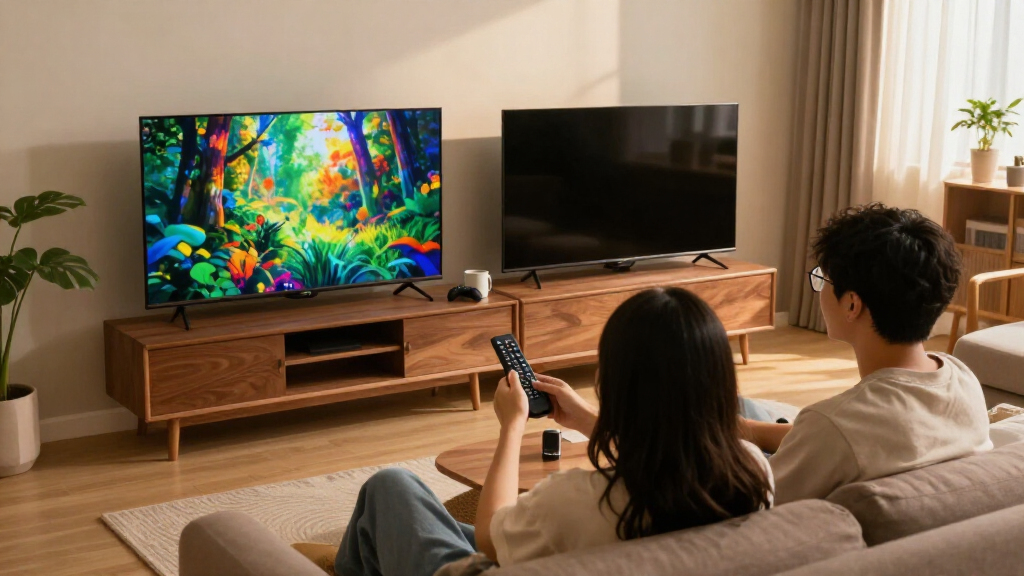
The best budget mini-LED and OLED TVs balance bright-room performance, contrast, screen size, and useful features without asking every buyer to pay for a flagship. My best overall pick is the TCL 55-Inch QM7L, a strong fit for shoppers who want a fast, feature-rich 55-inch screen; the TCL QM6K stands out as a value-minded alternative, while the LG 75-Inch QNED84B suits viewers who put a large picture first. The main tradeoffs are clear: mini-LED generally favors brightness and larger screen choices, while OLED can deliver more precise blacks but is not represented among these 15 listings. Screen size, gaming support, and smart-TV software also vary enough to change which model makes sense. Read on for the full comparison and a guide to choosing the right set for your room.

Get the latest gadgets delivered free with Prime
- Fast, free delivery on millions of items
- Prime Video, Amazon Music and more included
- Member-only deals all year
Complete the kit



Key Takeaways
- The TCL QM7L is my best overall pick because its 55-inch size, 144Hz capability, and Google TV platform make it the most balanced option for mixed viewing and gaming.
- The TCL QM6K is the value-focused choice for shoppers who want mini-LED contrast and Google TV without prioritizing the QM7L’s higher refresh-rate feature set.
- The lineup is built around mini-LED, not OLED. Buyers specifically seeking OLED-level pixel-by-pixel black control should broaden their search rather than treat these models as direct OLED equivalents.
- Screen size changes the value equation: the 43-inch Samsung models suit tighter spaces, while the 75-inch LG is aimed at viewers who want a more cinematic image and have room for it.
- Smart platforms and model naming need careful checking. Google TV, Fire TV, and Samsung and LG software options differ, and several Samsung entries share similar names despite distinct sizes or model codes.
| Samsung 43-Inch QN70H Neo QLED 4K Smart TV |  | Best Compact Mini-LED | Screen size: 43 inches | Display technology: Neo QLED Mini LED with Quantum Dot | Resolution: 4K | VIEW LATEST PRICE | See Our Full Breakdown |
| TCL 55-Inch QM7L Series 4K SQD-Mini LED QLED Smart Google TV, 144Hz |  | Best Value for Gaming and HDR | Screen size: 55 inches | Display technology: SQD-Mini LED QLED | Resolution: 4K | VIEW LATEST PRICE | See Our Full Breakdown |
| TCL 55-Inch Designer Series QD-Mini LED 4K Google TV (55A400U) |  | Best Design-Focused Pick | Model: 55A400U | Screen size: 55 inches | Display technology: QD-Mini LED | VIEW LATEST PRICE | See Our Full Breakdown |
| Hisense 55-inch U7 Mini-LED 4K UHD Smart Google TV (55U7SG) |  | Best for Fast-Action Gaming | Screen size: 55 inches | Display technology: Mini LED, Hi-QLED | Resolution: 4K UHD | VIEW LATEST PRICE | See Our Full Breakdown |
| LG 65-Inch QNED73B Mini LED 4K Smart TV |  | Best Big-Screen Everyday Pick | Screen size: 65 inches | Resolution: 4K | Display technology: Mini LED with Quantum Dot and NanoCell | VIEW LATEST PRICE | See Our Full Breakdown |
| Samsung 43-Inch Neo QLED Mini LED 4K UHD Smart TV (QN43QN70HDFXZA, 2026) |  | Best Compact Pick | Screen size: 43 inches | Display technology: QLED with Mini LED backlight | Resolution: 4K UHD | VIEW LATEST PRICE | See Our Full Breakdown |
| Samsung 43-Inch M70H Series 4K Mini LED Smart TV (2026) |  | Best for Free Streaming and Casual Gaming | Screen size: 43 inches | Display technology: Mini LED | Resolution: 4K | VIEW LATEST PRICE | See Our Full Breakdown |
| LG 65-Inch QNED evo AI QNED84B Mini LED 4K Smart TV (2026) |  | Best Large-Screen Gaming Pick | Screen size: 65 inches | Display technology: Mini LED | Resolution: 4K | VIEW LATEST PRICE | See Our Full Breakdown |
| Amazon Ember 55-Inch Mini-LED QLED 4K UHD Smart TV with Fire TV |  | Best for Bright HDR and Alexa Integration | Screen size: 55 inches | Display: QLED Mini LED | Resolution: 3840 x 2160 (4K UHD) | VIEW LATEST PRICE | See Our Full Breakdown |
| Toshiba Z670R 55-Inch Mini-LED 4K UHD Smart Fire TV |  | Best Gaming Value | Screen size: 55 inches | Display technology: Mini LED, QLED | Resolution: 4K UHD | VIEW LATEST PRICE | See Our Full Breakdown |
| TCL 55-Inch QM6K QLED Mini-LED 4K HDR Smart Google TV |  | Best Overall for Gaming | Screen size: 55 inches | Display technology: QLED, Mini-LED | Resolution: 4K UHD | VIEW LATEST PRICE | See Our Full Breakdown |
| Samsung 55-Inch Neo QLED 4K Smart TV (QN55QN70HDFXZA, 2026) | | Best for Everyday Streaming | Screen size: 55 inches | Display technology: QLED with Mini LED backlighting | Resolution: 4K UHD | VIEW LATEST PRICE | See Our Full Breakdown |
| TCL 50-Inch QM64L QD-Mini LED 4K Smart Fire TV |  | Best Compact Gaming Value | Screen size: 50 inches | Display technology: QD-Mini LED with QLED color | Resolution: 4K | VIEW LATEST PRICE | See Our Full Breakdown |
| Samsung 55-Inch M80H Series 4K Mini LED Smart TV (2026) |  | Best for PC Gaming and Upscaling | Screen size: 55 inches | Display technology: Mini LED | Resolution: 4K | VIEW LATEST PRICE | See Our Full Breakdown |
| LG 75-Inch QNED84B 4K Mini LED evo AI Smart TV Bundle |  | Best Big-Screen Pick | Screen size: 75 inches | Display technology: Mini LED, QNED evo | Resolution: 4K Ultra HD | VIEW LATEST PRICE | See Our Full Breakdown |
| budget mini-LED and OLED TV | Screen size | Resolution | Display technology | Refresh rate |
|---|---|---|---|---|
| Samsung 43-Inch QN70H Neo QLED | 43 inches | 4K | Neo QLED Mini LED with Quantum Dot | 60 Hz |
| TCL 55-Inch QM7L Series 4K SQD | 55 inches | 4K | SQD-Mini LED QLED | 144 Hz |
| TCL 55-Inch Designer Series QD | 55 inches | 4K | QD-Mini LED | 144 Hz |
| Hisense 55-inch U7 Mini-LED 4K | 55 inches | 4K UHD | Mini LED, Hi-QLED | — |
| LG 65-Inch QNED73B Mini LED 4K | 65 inches | 4K | Mini LED with Quantum Dot and NanoCell | — |
| Samsung 43-Inch Neo QLED Mini | 43 inches | 4K UHD | QLED with Mini LED backlight | 60 Hz |
| Samsung 43-Inch M70H Series 4K | 43 inches | 4K | Mini LED | 60 Hz |
| LG 65-Inch QNED evo AI QNED84B | 65 inches | 4K | Mini LED | 144 Hz |
| Amazon Ember 55-Inch Mini-LED | 55 inches | 3840 x 2160 (4K UHD) | — | 120 Hz; 144 Hz gaming mode |
| Toshiba Z670R 55-Inch Mini-LED | 55 inches | 4K UHD | Mini LED, QLED | 144 Hz |
| TCL 55-Inch QM6K QLED Mini-LED | 55 inches | 4K UHD | QLED, Mini-LED | — |
| Samsung 55-Inch Neo QLED 4K Sm | 55 inches | 4K UHD | QLED with Mini LED backlighting | 60 Hz |
| TCL 50-Inch QM64L QD-Mini LED | 50 inches | 4K | QD-Mini LED with QLED color | Native 144 Hz |
| Samsung 55-Inch M80H Series 4K | 55 inches | 4K | Mini LED | Up to 144 Hz with compatible PC games and graphics card |
| LG 75-Inch QNED84B 4K Mini LED | 75 inches | 4K Ultra HD | Mini LED, QNED evo | 144 Hz |
More Details on Our Top Picks
Samsung 43-Inch QN70H Neo QLED 4K Smart TV
Among these picks, the 43-inch Samsung QN70H is the compact choice for buyers who want Mini LED contrast without giving a large room over to a 55- or 65-inch screen. Its Quantum Mini LED backlight and Quantum Dot color are aimed at bright highlights and vivid color, while AI processing and 4K upscaling can make lower-resolution streams look clearer on the 4K panel. Compared with the 55-inch TCL QM7L, it gives up screen size and the faster 144Hz refresh rate, but its smaller footprint may suit a bedroom, office, or tight media space better. The main compromise is that 60Hz is less suited to fast gaming, and the single listed USB port limits connected accessories. I’d choose it for compact viewing, not as the lineup’s gaming pick.
Pros:- Quantum Mini LED backlighting is designed to improve highlight brightness and contrast.
- Quantum Dot color supports vivid color volume.
- AI processing and 4K upscaling can improve lower-resolution sources.
- Compact 43-inch size fits spaces where the 55-inch models may feel oversized.
Cons:- The 60Hz refresh rate is less capable for fast-motion gaming than the 144Hz TCL models.
- Only one USB port is listed.
- The smaller screen is less immersive for group viewing at a distance.
Best for: Buyers furnishing a bedroom, office, or smaller living area who want Mini LED and 4K in a 43-inch screen.
Not ideal for: Competitive console or PC gamers who want a high-refresh-rate panel, or households needing several USB-connected devices.
- Screen size:43 inches
- Display technology:Neo QLED Mini LED with Quantum Dot
- Resolution:4K
- Refresh rate:60 Hz
- HDR format:HDR10+
- HDMI ports:3
- USB ports:1
- VESA mount:200 × 200 mm
Our verdict“Choose the QN70H if you want a compact Mini LED TV for everyday viewing and can live without a high-refresh-rate gaming panel.”
TCL 55-Inch QM7L Series 4K SQD-Mini LED QLED Smart Google TV, 144Hz
The TCL QM7L pairs a 55-inch screen with a specification set that favors both HDR viewing and gaming: up to 2,100 local dimming zones, peak brightness up to 3,000 nits, and a 144Hz refresh rate. That combination gives fast games a smoother presentation while local dimming helps bright highlights stand apart from darker scenes. Compared with the Samsung QN70H, the QM7L is much better equipped for high-frame-rate play, though the Samsung’s 43-inch size may suit a smaller room more easily. The anti-reflective panel and Ultra Color Filter are also useful for rooms with ambient light. Its built-in Bang & Olufsen speakers add convenience, but they are not a substitute for the optional subwoofer and satellite speakers if you want fuller sound. I’d pick it for a mixed-use setup that prioritizes screen performance.
Pros:- 144Hz refresh rate supports smoother motion in compatible games and fast action.
- Up to 2,100 dimming zones and 3,000-nit peak brightness support high-impact HDR.
- Anti-reflective panel and Ultra Color Filter are designed for clearer viewing in brighter rooms.
- Built-in Bang & Olufsen speakers provide an audio step beyond a basic TV speaker setup.
Cons:- A subwoofer and satellite speakers for expanded audio are optional.
- At 55 inches, it may be too large for a small bedroom or desk setup.
- The listed HDR format is HDR10, with no other HDR formats specified in the supplied data.
Best for: Console and PC gamers who also watch HDR films or sports on a 55-inch screen and want a high refresh rate.
Not ideal for: Buyers seeking a compact set, or those who expect built-in TV speakers to deliver the fuller sound of an expanded speaker system.
- Screen size:55 inches
- Display technology:SQD-Mini LED QLED
- Resolution:4K
- Refresh rate:144 Hz
- Peak brightness:Up to 3,000 nits
- Local dimming:Up to 2,100 zones
- HDR format:HDR10
- Audio:Bang & Olufsen speakers; Dolby Atmos
Our verdict“Pick the QM7L for a 55-inch Mini LED TV that balances bright HDR with high-refresh-rate gaming.”
TCL 55-Inch Designer Series QD-Mini LED 4K Google TV (55A400U)
The TCL 55A400U Designer Series makes the most sense when a TV needs to look at home on the wall as well as handle films and games. Its 1.57-inch profile and near-flush design suit a gallery-style setup, while 448 dimming zones and HDR brightness up to 2,500 nits give the 55-inch 4K screen tools for punchy highlights and darker scenes. It also brings 144Hz, VRR, and FreeSync Premium Pro, so choosing a design-led model does not mean giving up modern gaming features. Compared with the TCL QM7L, it lists more HDR formats, including Dolby Vision and HDR10+, and adds casting and artwork modes; the QM7L, by contrast, specifies far more dimming zones and higher peak brightness. The built-in 20W 2.0 audio is modest, so I’d budget for separate sound if movies are a priority.
Pros:- Slim 1.57-inch profile and near-flush design suit a gallery-inspired wall setup.
- 144Hz, VRR, and FreeSync Premium Pro support smooth gaming.
- Dolby Vision, HDR10, HDR10+, and HLG are listed HDR formats.
- Google TV, Google Cast, AirPlay 2, and artwork modes add flexible viewing and display options.
Cons:- The 20W, 2.0-channel built-in audio may lack impact for movie-focused setups.
- Its 448 dimming zones and up-to-2,500-nit HDR brightness are below the QM7L’s listed zone count and peak brightness.
- The supplied dimensions list a depth of 11.61 inches, so confirm fit against the intended furniture or mount setup.
Best for: Design-conscious buyers who want a slim, wall-friendly 55-inch TV that can also handle high-refresh-rate gaming.
Not ideal for: Viewers who prioritize the strongest listed dimming and peak brightness, or those who want powerful built-in audio without adding speakers.
- Model:55A400U
- Screen size:55 inches
- Display technology:QD-Mini LED
- Resolution:4K
- Refresh rate:144 Hz
- Dimming zones:448
- Maximum HDR brightness:Up to 2,500 nits
- HDR formats:Dolby Vision, HDR10, HDR10+, HLG
- Profile thickness:1.57 inches
Our verdict“Choose the 55A400U if a slim, design-conscious installation and broad HDR format support matter more than maximizing dimming zones.”
Hisense 55-inch U7 Mini-LED 4K UHD Smart Google TV (55U7SG)
The Hisense U7 55U7SG is the most gaming-forward pick here on paper, with a native 165Hz refresh rate and VRR support up to 330Hz. Its Mini LED system lists up to 3,000 local dimming zones and 3,000 nits peak brightness, a strong combination for bright HDR scenes and contrast in darker ones. Anti-reflection treatment may also help when daylight or room lighting makes a glossy screen distracting. Compared with the TCL QM7L, the U7 lists a higher native refresh rate and more local dimming zones, while both target bright, high-contrast gaming and viewing. Hisense also specifies 2.1.2-channel audio tuned by Devialet, which gives it a more ambitious built-in sound setup than the TCL Designer Series’ 20W 2.0 system. The drawback is sparse published detail: connectivity and other practical specifications are not provided, so I’d verify the ports before buying.
Pros:- Native 165Hz refresh rate and VRR up to 330Hz target smooth fast-motion gaming.
- Up to 3,000 local dimming zones and 3,000 nits peak brightness support high-contrast HDR.
- Anti-reflection screen treatment is suited to brighter rooms.
- 2.1.2-channel audio tuned by Devialet offers a more layered built-in audio configuration.
Cons:- The supplied product data does not list HDMI or USB port counts.
- The description provides limited detail on connectivity and other specifications.
- The claimed high refresh and VRR capabilities may matter less to viewers who mainly watch films and streaming shows.
Best for: Gamers who want a 55-inch Mini LED screen with a high native refresh rate, VRR, and an anti-reflection treatment.
Not ideal for: Buyers who need confirmed HDMI and USB port counts before purchase, or who prefer a product listing with more complete specifications.
- Screen size:55 inches
- Display technology:Mini LED, Hi-QLED
- Resolution:4K UHD
- Native refresh rate:165 Hz
- Variable refresh rate:Up to 330 Hz
- Local dimming zones:Up to 3,000
- Peak brightness:Up to 3,000 nits
- Audio:2.1.2-channel, tuned by Devialet
- Smart platform:Google TV with Gemini
Our verdict“Choose the U7 if fast gaming and bright-room viewing lead your priorities, but confirm its connections before committing.”
LG 65-Inch QNED73B Mini LED 4K Smart TV
The LG QNED73B is the size-first choice in this group: its 65-inch 4K screen gives films, sports, and shared viewing more room than the 55-inch TCL and Hisense models. Mini LED local dimming works with Quantum Dot and NanoCell color, while the A7 AI Processor supports 4K upscaling for HD and full-HD sources. webOS, voice-control compatibility, and three HDMI ports make it a straightforward hub for streaming boxes and other gear. Compared with the TCL QM7L, though, the LG trades its 144Hz gaming panel for a 60Hz native refresh rate, so it is better suited to everyday viewing than high-frame-rate play. HDR10 Pro is specified, but the supplied data does not list peak brightness or dimming-zone count. I’d choose it for screen size and familiar smart-TV features, not for the most detailed HDR or fastest gaming.
Pros:- 65-inch 4K screen offers more viewing area than the 55-inch models in this batch.
- Mini LED local dimming combines with Quantum Dot and NanoCell color.
- A7 AI Processor supports upscaling of HD and full-HD content.
- Three HDMI ports make it easier to leave several devices connected.
Cons:- The 60Hz native refresh rate trails the 144Hz and 165Hz gaming-focused options.
- The supplied specifications do not state peak brightness or local dimming-zone count.
- Some smart features and streaming content require an internet connection, account, or subscription.
Best for: Households that want a 65-inch screen for shared viewing, streaming, and casual gaming, with multiple HDMI-connected devices.
Not ideal for: Competitive gamers or HDR-focused viewers who want a refresh rate above 60Hz or clearly specified peak brightness and dimming-zone figures.
- Screen size:65 inches
- Resolution:4K
- Display technology:Mini LED with Quantum Dot and NanoCell
- HDR:HDR10 Pro
- Native refresh rate:60 Hz
- Processor:A7 AI Processor 4K Gen9
- HDMI ports:3
- Audio:2.0-channel AI Sound Pro
- Smart platform:webOS
Our verdict“Pick the QNED73B if a larger 65-inch screen and everyday smart-TV use matter more than high-refresh-rate gaming.”
Samsung 43-Inch Neo QLED Mini LED 4K UHD Smart TV (QN43QN70HDFXZA, 2026)
For a smaller room, this 43-inch Neo QLED brings Mini LED backlighting and Quantum Dot color into a compact 4K set. Its NQ4 AI Processor can upscale lower-resolution video, a useful perk when streaming sources vary in quality. Tizen and Gaming Hub also put streaming and cloud gaming in one interface. Compared with the 43-inch Samsung M70H, this model emphasizes AI picture processing and specifies Quantum Dot color; the M70H instead highlights free streaming channels and a simulated 120 Hz gaming mode. The main compromise is motion: this TV is 60 Hz, so it is less suited to fast competitive play than the 144 Hz Toshiba Z670R or Amazon Ember. Its listed two-channel audio also leaves less room for immersive sound without external speakers.
Pros:- 43-inch 4K Mini LED display pairs compact sizing with Quantum Dot color.
- NQ4 AI Processor can upscale lower-resolution content.
- Tizen and Gaming Hub combine streaming and gaming options.
- Wi-Fi 6E and Bluetooth 5.3 provide current wireless connectivity.
Cons:- 60 Hz refresh rate is less suited to fast-motion gaming than the Toshiba Z670R or Amazon Ember.
- Listed two-channel audio may feel limited for films and immersive sound.
- Three HDMI ports offer fewer connections than the Toshiba Z670R’s four.
Best for: Buyers furnishing a bedroom, apartment, or smaller living room who want a compact Mini LED set with built-in streaming and everyday gaming features.
Not ideal for: Competitive gamers and sports viewers who prioritize high-refresh motion, or buyers seeking fuller built-in audio.
- Screen size:43 inches
- Display technology:QLED with Mini LED backlight
- Resolution:4K UHD
- Refresh rate:60 Hz
- HDR format:HDR10+
- Processor:NQ4 AI Processor
- Smart TV platform:Tizen
- Wireless connectivity:Wi-Fi 6E, Bluetooth 5.3
- Ports:3 HDMI, 2 USB-A, Ethernet, optical, RF
Our verdict“Choose this Samsung for a compact room where AI-enhanced 4K viewing matters more than high-refresh gaming or expansive built-in sound.”
Samsung 43-Inch M70H Series 4K Mini LED Smart TV (2026)
The M70H is a straightforward small-screen option for viewers who want Mini LED contrast and easy access to free channels without building a separate streaming setup. Samsung TV Plus, Gaming Hub, and Soccer Mode give it a broad everyday feature set, while its 43-inch footprint suits a desk, bedroom, or modest living room. Its defining gaming feature, DLG up to 120 Hz, comes with reduced image sharpness, so I would treat it as a motion option rather than a substitute for a native high-refresh panel. The Samsung QN70H is the stronger fit for buyers who value an AI processor and specified Quantum Dot color; this M70H instead foregrounds TV Plus and Knox Security. Its software-based dimming and 350-nit brightness are meaningful limits beside the brighter, full-array Toshiba Z670R.
Pros:- Mini LED backlight with HDR10+ support and software-based dimming.
- Samsung TV Plus offers free streaming channels.
- Gaming Hub and Soccer Mode add convenient viewing and play options.
- Knox Security is included for account and device protection.
Cons:- 350-nit maximum brightness is limited for bright-room HDR viewing.
- DLG’s up-to-120 Hz mode reduces image sharpness.
- Software-based dimming is less robust than the Toshiba Z670R’s full-array local dimming.
Best for: Viewers setting up a bedroom or secondary TV who want Samsung’s free streaming channels, simple gaming access, and a compact 4K screen.
Not ideal for: Buyers who want high peak brightness, hardware-based full-array local dimming, or sharp native high-refresh gaming.
- Screen size:43 inches
- Display technology:Mini LED
- Resolution:4K
- Refresh rate:60 Hz
- DLG refresh rate:Up to 120 Hz
- Maximum brightness:350 nits
- HDR format:HDR10+
- Weight:14.8 pounds
- Screen finish:Glossy
Our verdict“Pick the M70H as a secondary-room TV when free channels and convenience matter more than bright HDR or uncompromised high-refresh gaming.”
LG 65-Inch QNED evo AI QNED84B Mini LED 4K Smart TV (2026)
For buyers who want a large screen that can also keep up with gaming, the QNED84B pairs 65-inch 4K Mini LED viewing with VRR, FreeSync, ALLM, and two HDMI 2.1 ports. Its advertised 144 Hz refresh rate gives it a stronger gaming profile than the 60 Hz Samsung QN70H and M70H. There is a resolution caveat: Motion Booster 288 reaches up to 144 Hz at optimized Full HD, rather than promising that rate at full 4K. LG’s webOS supports streaming and cloud gaming, while Filmmaker Mode offers a less processed picture for compatible films. Against the 55-inch Toshiba Z670R, the LG gives you more screen area and a higher stated refresh rate, but the Toshiba lists native 144 Hz and a wider range of HDR formats. Buyers should also plan for online access or compatible gear to use some connected gaming services.
Pros:- 65-inch Mini LED display provides a larger viewing area than the 55-inch options in this batch.
- VRR, FreeSync, ALLM, and two HDMI 2.1 ports support modern gaming setups.
- Filmmaker Mode offers a picture mode aimed at preserving directors’ intended presentation.
- webOS includes streaming and cloud-gaming support.
Cons:- Motion Booster 288 reaches up to 144 Hz at optimized Full HD resolution, not specified 4K.
- Some cloud-gaming and smart features depend on internet access, subscriptions, or compatible controllers.
- The listed HDR formats are HDR10 and HLG, while the Toshiba Z670R also lists Dolby Vision.
Best for: Console and PC players who want a 65-inch Mini LED TV, VRR support, and HDMI 2.1 connections for a flexible gaming setup.
Not ideal for: Buyers seeking confirmed 144 Hz at 4K, or viewers who need every smart and cloud-gaming feature to work without internet or extra subscriptions.
- Screen size:65 inches
- Display technology:Mini LED
- Resolution:4K
- Refresh rate:144 Hz
- HDR formats:HDR10, HLG
- Processor:α8 AI Processor 4K Gen3
- Smart platform:webOS
- Gaming connections:2 HDMI 2.1 ports
- Audio:Virtual 5.1 surround sound
Our verdict“Choose the LG when a roomy 65-inch screen and broad gaming support outweigh the resolution limits attached to its highest refresh mode.”
Amazon Ember 55-Inch Mini-LED QLED 4K UHD Smart TV with Fire TV
The Ember’s appeal is its combination of high stated peak brightness, local dimming, and broad HDR support in a 55-inch Mini LED set. Its 512 dimming zones and up-to-1,400-nit peak brightness are aimed at keeping highlights vivid while improving contrast, and Dolby Vision IQ plus HDR10+ Adaptive give compatible content more room to adapt to viewing conditions. It also offers a 144 Hz gaming mode and AMD FreeSync Premium Pro, which set it apart from the 60 Hz Samsung QN70H. Compared with the Toshiba Z670R, the Ember adds a microphone disconnect switch and hands-free Alexa, while the Toshiba lists four HDMI ports and two USB ports. The Ember has just one USB port, and captions or audio descriptions are not available for every program, so accessibility needs warrant checking specific content.
Pros:- 512 dimming zones and up to 1,400 nits peak brightness support bright, contrast-rich HDR.
- Dolby Vision IQ and HDR10+ Adaptive cover multiple adaptive HDR formats.
- 144 Hz gaming mode and AMD FreeSync Premium Pro target smooth gameplay.
- Hands-free Alexa includes a switch to disconnect the microphones.
Cons:- Only one USB 3.0 port is listed, compared with two USB ports on the Toshiba Z670R.
- Captions and audio descriptions are not available for all content.
- The listed HDMI setup includes two HDMI 2.0 ports, which limits the number of full HDMI 2.1 connections.
Best for: Alexa-centered households and HDR watchers who want a bright 55-inch Mini LED screen with modern gaming support and a physical microphone disconnect.
Not ideal for: Buyers who need several USB connections or rely on captions and audio descriptions across all content.
- Screen size:55 inches
- Display:QLED Mini LED
- Resolution:3840 x 2160 (4K UHD)
- Peak brightness:Up to 1,400 nits
- Dimming zones:512
- Refresh rate:120 Hz; 144 Hz gaming mode
- HDR formats:Dolby Vision IQ, HDR10+ Adaptive, HDR10, HLG
- Operating system:Fire OS
- Connectivity:Wi-Fi 6E, Ethernet; 4 HDMI ports and 1 USB 3.0 port
Our verdict“Choose the Ember for bright HDR, Alexa integration, and gaming features, but skip it if multiple USB ports or consistent accessibility support are priorities.”
Toshiba Z670R 55-Inch Mini-LED 4K UHD Smart Fire TV
The Z670R makes a strong case for buyers who want native 144 Hz gaming without moving to a larger screen. Mini LED backlighting and Full Array Local Dimming give it a more direct contrast proposition than the Samsung M70H’s software-based dimming, while QLED color and support for Dolby Vision, HDR10+, and HLG cover a wide range of HDR sources. For fast play, VRR, ALLM, and AMD FreeSync Premium are included, and four HDMI ports make it easier to connect multiple devices than on the Amazon Ember. The Ember counters with a specified 512 dimming zones and up to 1,400 nits brightness, plus a microphone disconnect switch; Toshiba does not list comparable brightness or zone figures. Its Fire TV interface and built-in bass woofer simplify setup, though the 30.6-pound listed weight may make mounting less convenient.
Pros:- Native 144 Hz refresh rate with VRR, ALLM, and AMD FreeSync Premium supports responsive gaming.
- Full Array Local Dimming pairs Mini LED backlighting with localized contrast control.
- Dolby Vision, HDR10, HDR10+, HDR10+ Adaptive, and HLG are listed.
- Four HDMI ports, two USB ports, and built-in bass woofer audio offer flexible setup.
Cons:- Listed weight of 30.6 pounds may make installation less convenient.
- Peak brightness and local-dimming zone count are not specified, unlike the Amazon Ember’s published figures.
- The listed USB configuration is one USB 2.0 port and one USB 3.0 port.
Best for: Gamers who want a 55-inch Mini LED TV with native 144 Hz, VRR, and several HDMI connections for consoles and other devices.
Not ideal for: Buyers who need detailed published brightness or dimming-zone figures, or those prioritizing a lightweight TV for wall installation.
- Screen size:55 inches
- Display technology:Mini LED, QLED
- Resolution:4K UHD
- Refresh rate:144 Hz
- Local dimming:Full Array Local Dimming
- HDR formats:Dolby Vision, HDR10, HDR10+, HDR10+ Adaptive, HLG
- Gaming features:AMD FreeSync Premium, VRR 144 Hz, ALLM, Game Mode Pro
- Operating system:Fire OS
- Ports:4 HDMI, 2 USB
Our verdict“Pick the Toshiba for native 144 Hz gaming and broad connectivity, while choosing the Ember if published brightness figures and Alexa privacy controls matter more.”
TCL 55-Inch QM6K QLED Mini-LED 4K HDR Smart Google TV
The TCL 55-inch QM6K is the most balanced pick here for buyers who want Mini-LED contrast without giving up a fast gaming panel. Its 144 Hz native refresh rate and variable refresh support suit quick sports and compatible games better than the Samsung QN70H, whose listed refresh rate is 60 Hz. Local dimming with Halo Control aims to keep bright objects from washing out darker scenes, while Dolby Vision and HDR10+ cover a broad range of streaming content. The built-in ONKYO 2.1 audio with subwoofer also gives it an advantage over basic two-channel setups. The tradeoff is that the listed 240 Hz variable-refresh feature applies to this size, while Game Accelerator 288 is for other sizes; buyers should not assume every gaming mode runs at the same rate.
Pros:- 144 Hz native refresh rate and variable refresh gaming features support fluid motion.
- Mini-LED local dimming and Halo Control target stronger contrast and shadow detail.
- Dolby Vision and HDR10+ support a wide range of HDR sources.
- ONKYO 2.1 audio includes a built-in subwoofer.
Cons:- The 240 Hz variable-refresh listing is specific to the 50- and 55-inch models, while Game Accelerator 288 applies to other sizes.
- Built-in TV audio still has limited separation compared with a dedicated sound system.
Best for: Console and PC gamers who want a 55-inch Mini-LED TV with a fast native panel, variable refresh support, and useful built-in bass.
Not ideal for: Buyers who prioritize the simplest interface or want verified high-end audio performance without adding a soundbar.
- Screen size:55 inches
- Display technology:QLED, Mini-LED
- Resolution:4K UHD
- Native refresh rate:144 Hz
- Gaming refresh feature:Up to 240 Hz variable refresh rate
- HDR formats:Dolby Vision, HDR10+, HDR10, HLG
- Smart TV platform:Google TV
- Audio:ONKYO 2.1 speaker system with built-in subwoofer
Our verdict“Choose the QM6K if you want the strongest mix of fast gaming, Mini-LED contrast, and built-in bass among these picks.”
Samsung 55-Inch Neo QLED 4K Smart TV (QN55QN70HDFXZA, 2026)
The Samsung QN70H is a better fit for everyday viewing than for high-speed gaming. Mini-LED backlighting, Quantum Dot color, and the NQ4 AI Processor are aimed at improving picture quality and upscaling lower-resolution sources, while Tizen and built-in voice assistants make streaming and device control straightforward. Its Wi-Fi 6E and Bluetooth 5.3 also make it the most connectivity-focused option in this group. The main compromise is its 60 Hz refresh rate: the TCL QM6K and TCL QM64L offer 144 Hz native panels, which are better suited to fast games and sports. It also lists HDR10+ but not Dolby Vision, and its 2-channel audio is less substantial than the TCL models’ subwoofer-equipped systems.
Pros:- Mini-LED backlighting and Quantum Dot color support contrast and a broad color range.
- NQ4 AI processing can upscale lower-resolution content and adapt picture and sound.
- Tizen includes Gaming Hub alongside streaming and voice-assistant features.
- Wi-Fi 6E, Bluetooth 5.3, and three HDMI ports offer flexible connectivity.
Cons:- The listed 60 Hz refresh rate trails the 144 Hz panels in the TCL QM6K and QM64L.
- Two-channel audio lacks the built-in subwoofer found on several competing picks.
- HDR support is listed as HDR10+; Dolby Vision is not included in the supplied specifications.
Best for: Households that mainly stream shows and films, want Samsung’s Tizen ecosystem, and value modern wireless connectivity over high-refresh gaming.
Not ideal for: Competitive console or PC gamers who want a native 120 Hz-or-higher panel, or Dolby Vision support.
- Screen size:55 inches
- Display technology:QLED with Mini LED backlighting
- Resolution:4K UHD
- Refresh rate:60 Hz
- HDR format:HDR10+
- Processor:NQ4 AI Processor
- Operating system:Tizen
- Connectivity:Wi-Fi 6E, Bluetooth 5.3, Ethernet
- HDMI ports:3
Our verdict“Pick the QN70H for a connected Samsung streaming setup, not for high-refresh gaming or richer built-in sound.”
TCL 50-Inch QM64L QD-Mini LED 4K Smart Fire TV
The TCL QM64L brings a compelling gaming spec set to a smaller 50-inch screen: a 144 Hz native refresh rate, VRR, and ALLM make it more responsive for games than the Samsung QN70H, which is listed at 60 Hz. Up to 500 local dimming zones are intended to sharpen contrast, while Dolby Vision and HDR10+ give it broad HDR format support. Its Onkyo 2.1 system, including a 20W subwoofer, is another practical plus for a bedroom or smaller living space where a separate speaker setup may not fit. The compromises are less about headline features and more about missing details: the supplied specs do not list ports or mounting dimensions. Fire TV and Alexa+ will also suit some households better than the Google TV interface on the TCL QM6K, but platform preference is personal.
Pros:- Native 144 Hz refresh, VRR, and ALLM support smooth, responsive gameplay.
- Up to 500 local dimming zones target better contrast and reduced blooming.
- Dolby Vision, HDR10+, HDR10, and HLG provide broad HDR compatibility.
- Onkyo 2.1 audio includes a built-in 20W subwoofer.
Cons:- The supplied product data does not specify HDMI or USB port counts.
- Mounting dimensions are not provided, making installation planning harder.
- Some picture and HDR benefits depend on compatible content.
Best for: Space-conscious gamers who want a smaller 4K screen with a fast panel, VRR, and subwoofer-equipped audio.
Not ideal for: Buyers who need confirmed HDMI counts, mounting measurements, or a larger screen for a shared viewing room.
- Screen size:50 inches
- Display technology:QD-Mini LED with QLED color
- Resolution:4K
- Local dimming zones:Up to 500
- Refresh rate:Native 144 Hz
- Gaming features:VRR, ALLM, Game Accelerator
- HDR formats:Dolby Vision, HDR10+, HDR10, HLG
- Smart platform:Fire TV
- Audio:Onkyo 2.1 with built-in 20W subwoofer
Our verdict“Choose the QM64L if a compact gaming setup matters more than having fully documented connections and installation measurements.”
Samsung 55-Inch M80H Series 4K Mini LED Smart TV (2026)
The Samsung M80H is the Samsung pick for viewers who want AI-led picture processing and a path to high-refresh PC gaming. Its NQ4 AI Gen2 processor can upscale content and remaster SDR for an HDR-like presentation, which may help when a library includes older or lower-resolution video. The set supports up to 144 Hz for compatible PC games, giving it a gaming advantage over the QN70H’s listed 60 Hz panel. That advantage comes with a condition: the PC game and graphics card must support 4K at 144 Hz. The supplied details also list only HDR10+ and 20-watt, two-channel audio, while the TCL QM6K adds Dolby Vision and a built-in subwoofer. Samsung’s network-based features require an internet connection and Samsung Account, a point to weigh if you prefer a less account-centered setup.
Pros:- Supports up to 144 Hz for compatible PC games and graphics cards.
- NQ4 AI Gen2 processing is designed to upscale content and remaster SDR.
- Mini-LED backlighting supports enhanced contrast and brightness.
- Tizen provides Samsung smart features and connected services.
Cons:- 4K at 144 Hz depends on compatible PC games and graphics hardware.
- The supplied HDR specification lists HDR10+ but not Dolby Vision.
- 20-watt, two-channel audio is less substantial than the TCL QM6K’s 2.1 system.
Best for: PC gamers with compatible hardware who also watch a mix of older, SDR, and streamed content on a 55-inch TV.
Not ideal for: Console-focused buyers seeking a clearly specified high-refresh console setup, Dolby Vision, or stronger built-in audio.
- Screen size:55 inches
- Display technology:Mini LED
- Resolution:4K
- Refresh rate:Up to 144 Hz with compatible PC games and graphics card
- HDR format:HDR10+
- Processor:NQ4 AI Gen2
- Operating system:Tizen
- Audio:20 watts, 2 channels
- Weight:22.5 pounds
Our verdict“The M80H makes the most sense for PC owners who can use its conditional 144 Hz mode and value AI upscaling over richer built-in audio.”
LG 75-Inch QNED84B 4K Mini LED evo AI Smart TV Bundle
The LG 75-inch QNED84B is the clear choice in this group for buyers who want a large viewing area and a fast gaming feature set. Its Mini-LED local dimming, anti-glare finish, and Dolby Vision support make it a more theater-oriented option than the Samsung QN70H, whose supplied HDR format is HDR10+ only. At 144 Hz, with HDMI 2.1, VRR, ALLM, and FreeSync Premium, it is also better equipped for high-frame-rate gaming than that Samsung. The size is the defining tradeoff: a 75-inch screen needs substantial wall or stand space and can dominate a smaller room. This is a bundle, too, with HDMI cables and an extended warranty, but the included streaming bundle is unspecified. Its 2.1? No audio channel details are supplied, so I would not choose it on sound claims alone.
Pros:- 75-inch 4K screen offers a much larger viewing area than the 50- and 55-inch options.
- Mini-LED local dimming and anti-glare finish support bright-room viewing and contrast control.
- Dolby Vision, HDR10, and HLG cover multiple HDR formats.
- 144 Hz, HDMI 2.1, VRR, ALLM, and FreeSync Premium support advanced gaming.
Cons:- The 75-inch size requires substantial room and installation space.
- The included streaming bundle’s contents are not specified.
- The supplied data does not list speaker configuration or audio output.
Best for: Viewers with a large living room who want a 75-inch Mini-LED screen for HDR films, sports, and high-refresh gaming.
Not ideal for: Apartment dwellers or buyers with limited wall space, and anyone choosing primarily for detailed built-in audio specifications.
- Screen size:75 inches
- Display technology:Mini LED, QNED evo
- Resolution:4K Ultra HD
- Refresh rate:144 Hz
- HDR formats:Dolby Vision, HDR10, HLG
- Gaming features:HDMI 2.1, VRR, ALLM, AMD FreeSync Premium, HGiG, Game Optimizer
- Smart platform:webOS 26
- Wireless connectivity:Wi-Fi 6, Bluetooth 5.3
- Included accessories:Two high-speed HDMI cables
Our verdict“Choose the LG QNED84B if room-filling size and broad gaming support matter more than compact installation or clearly documented audio.”
How We Picked
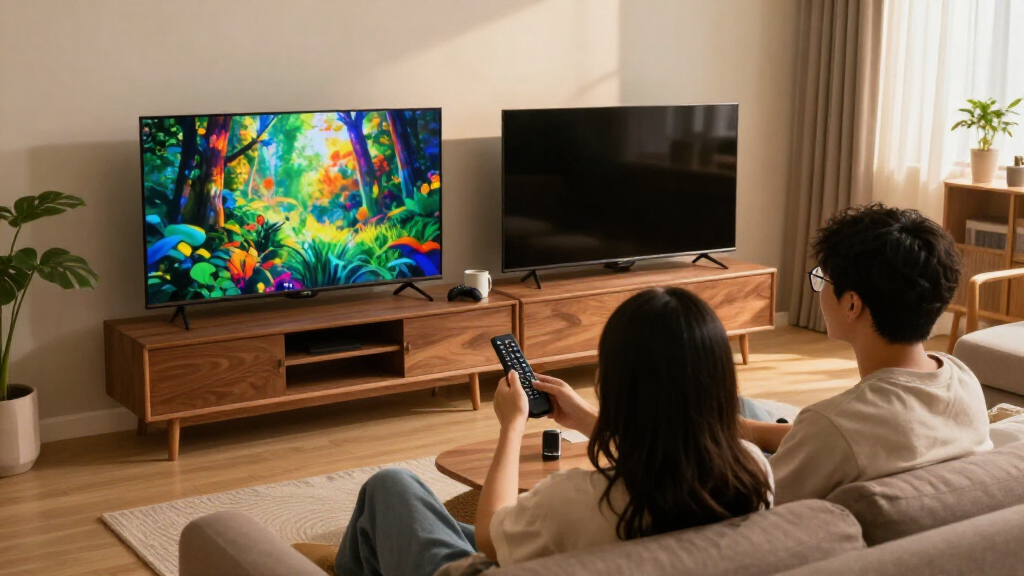
I compared the 15 listed TVs as budget-oriented mini-LED choices, weighing the features that change daily viewing: screen size, stated refresh-rate support, smart-TV platform, and the likely fit for movies, sports, games, and bright rooms. I gave more weight to a well-rounded mix than to a single headline feature, while also recognizing that a larger screen or a simpler setup can be more useful than extra gaming capacity for some buyers.
The ranking favors models with a clear advantage for a defined audience and a plausible balance of picture features and usability. The TCL QM7L leads for its 144Hz specification and broad use case; the QM6K follows as a more value-oriented pick, while the largest LG and compact Samsung models earn consideration for specific room and size needs. These listings do not include an OLED television, so I do not rank any model as an OLED substitute or claim direct picture-quality test results. Buyers should confirm exact model codes, regional specifications, and available inputs before purchasing.
Factors to Consider When Choosing Best Budget Mini-LED And OLED TVs
Choosing among these sets is less about finding one universally best screen and more about matching the TV’s strengths to your room and viewing habits. These broader checks can prevent paying for features you will not use—or choosing a set that falls short where it matters most.
Decide Whether Mini-LED Fits Your Picture Priorities
Mini-LED is a type of backlit LCD display, not OLED: many small LEDs light the screen in zones, while OLED pixels produce their own light. That distinction affects dark-scene performance, bright-room viewing, and how visible halos around subtitles or bright objects may be. Mini-LED can be a practical match for rooms with daylight and for buyers who want a large screen without centering the decision on OLED. If you are sensitive to blooming in a dark room or want pixel-level black control, compare OLED options separately rather than assuming the technologies are interchangeable. Look for independent measurements of contrast and blooming for the exact model, since the label alone does not settle picture quality.
Match Screen Size to Viewing Distance and Room Layout
A bigger TV can make films and sports feel more engaging, but it can also dominate a small room or expose lower-quality streams more clearly. Measure the available width, stand depth, and wall space before focusing on screen size; the 43-inch Samsung choices and 75-inch LG serve very different setups. Viewing distance is a useful starting point, not a rigid rule, because eyesight, resolution, and personal preference all matter. Check the feet placement as well as the panel dimensions if the TV will sit on existing furniture. Do not choose the largest listed size simply because it seems like more value if it forces an awkward placement.
Pay for Gaming Features Only If Your Setup Can Use Them
A 144Hz panel specification can matter for compatible PC gaming and supported high-frame-rate sources, but it does not make every console game run at that rate. Check the exact inputs and supported formats for the specific TV, then compare them with your console, PC, and sound system. Variable refresh rate and low input lag can matter more to many players than the headline refresh number. If the TV will mostly show films, broadcast programs, and streaming video, a higher refresh rate may be less valuable than screen size or easier software. Avoid relying on a family name alone: product variants can differ in ports and gaming support.
Choose a Smart Platform You Will Actually Use
Google TV, Fire TV, and the manufacturers’ own smart interfaces organize apps, search, voice features, and connected devices differently. If you already use a voice assistant or have a preferred streaming interface, check how well it works with the television rather than assuming every platform behaves the same. A built-in platform can reduce clutter, but it also makes the TV’s software support and update history part of the purchase. Buyers who already own a streaming box can treat the interface as a lower priority and focus on panel and input features instead. Test the remote layout and app availability where possible, especially if several people will use the set.
Compare the Exact Model Code, Not Just the Series Name
Similar names can conceal meaningful differences in screen size, year, retailer version, operating system, and available features. This roundup includes multiple Samsung Neo QLED and M Series listings as well as several TCL families, so verify the complete model code on the product page and the manufacturer’s specifications. Check whether the listing is for the TV alone or a bundle, since included accessories do not necessarily improve the display itself. Confirm warranty coverage, return terms, and delivery requirements before buying a large screen. This simple check can prevent a mismatch between the features you expect and the version that arrives.
Know When to Spend More—and When Not To
Paying more can make sense when it buys a feature you will use regularly, such as a larger screen for a distant seating area or gaming support for a high-frame-rate setup. It is less compelling when the upgrade is a specification you cannot use or a smart platform you will replace with an external streamer. Compare the full ownership setup too: a TV may need a suitable stand, wall mount, or sound system to work well in your room. For movie-focused buyers, stronger contrast may matter more than peak brightness; for daytime sports, screen brightness and viewing conditions may matter more. Set your priorities before comparing listings so one impressive number does not decide the purchase for you.
Frequently Asked Questions
Are any of the TVs in this roundup OLED models?
No. All 15 listed products are presented as mini-LED or QLED televisions, and none is identified as OLED. Mini-LED uses a backlight divided into dimming zones, while OLED controls light at the pixel level. That difference can affect black levels and bright-object halos, especially in dark rooms. If OLED is a requirement rather than a preference, use this roundup as a mini-LED comparison and add OLED models to your shortlist separately.
Should I choose the TCL QM7L or QM6K for gaming?
The QM7L is the more obvious fit if you want the listed 144Hz capability, especially for a compatible gaming PC or other supported source. The QM6K is a more value-oriented alternative if gaming is occasional or your setup does not take advantage of a high refresh rate. Refresh rate is only part of the decision: check the exact input support, variable refresh-rate features, and input lag for the model and size you plan to buy. Console players should also confirm which frame rates their games and console can output. If gaming is not a priority, the QM6K may leave room to prioritize size or other room needs instead.
Is a 75-inch TV always a better choice than a 55-inch TV?
No. The LG 75-Inch QNED84B can suit a large room or viewers seated farther from the screen, but its size may be impractical in a compact space. A 55-inch model can be easier to place and may feel more comfortable at a shorter viewing distance. Measure the wall or furniture, account for the stand and bezel, and check that the screen will not block windows or walkways. Also consider the quality of the content you watch, since a larger screen makes picture flaws more apparent. Choose based on room fit, not screen size alone.
Do I need a 144Hz TV if I mainly watch movies and streaming shows?
Usually not. Most films and many streaming programs do not require a 144Hz panel to display their source frame rates, so another feature may matter more for that viewing mix. You may prefer to put your attention on screen size, dark-room performance, brightness, or the streaming interface. A higher refresh rate can still be useful if you also connect a compatible gaming PC or play supported high-frame-rate content. Check whether the TV offers motion settings you find comfortable, since aggressive processing can make films look unnatural. Buy for your actual sources rather than the largest refresh-rate number.
How can I avoid buying the wrong version of a similarly named TV?
Compare the complete model code, screen size, model year, operating system, and input specifications on the listing with the manufacturer’s product information. The roundup includes multiple Samsung models with closely related Neo QLED or M Series names, so the series label alone is not enough to identify a particular feature set. Check whether the product is a standalone TV or a bundle, and verify what accessories are included. Retailer-specific variants can differ, so confirm the details before checkout and keep the listing information. If a key feature is not documented for the exact model code, do not assume it is included.
Conclusion
For most shoppers in this group, I recommend the TCL 55-Inch QM7L as best overall, particularly if gaming and a versatile 55-inch screen both matter. The TCL QM6K is my best value-oriented pick for buyers who want a mini-LED set without making 144Hz capability a priority. Beginners who want a familiar, easy-to-browse streaming setup can start with the TCL QM6K or Amazon Ember, then choose between Google TV and Fire TV based on their existing devices and app habits. For a more premium, large-screen experience within this lineup, consider the LG 75-Inch QNED84B; for a compact room, compare the 43-inch Samsung models. If your specific need is OLED’s pixel-level black control, none of these listings fills that role, so expand the shortlist before deciding.