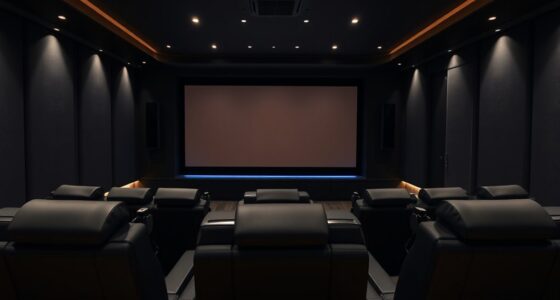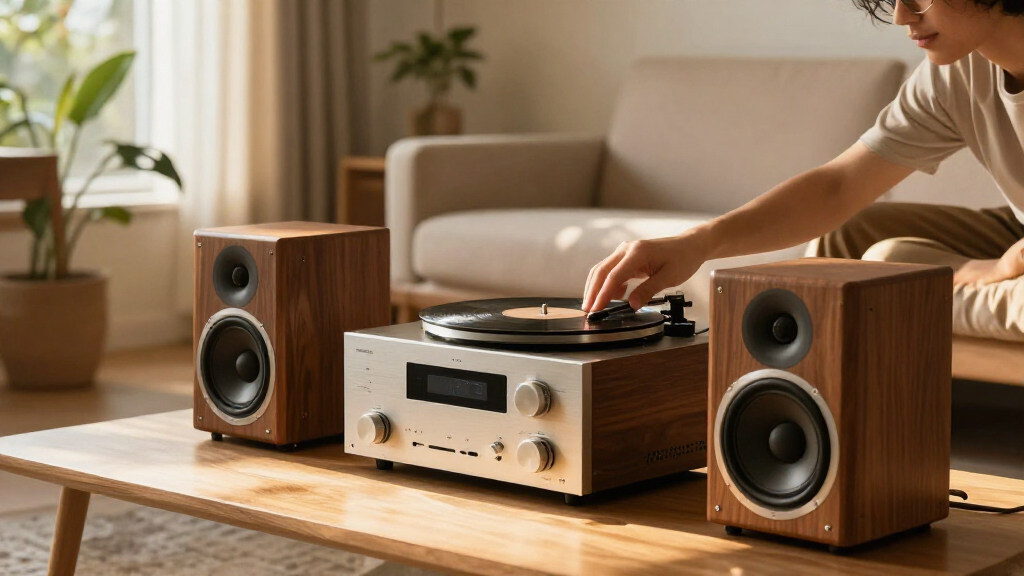

Choosing the best home audio systems in 2027 means balancing immersive surround sound with practical living room constraints. My top overall pick is the Yamaha YHT-4970U, which offers robust 5.1-channel performance and future-proof 8K HDMI support without the complexity of separate component racks. For those prioritizing seamless wireless connectivity and refined aesthetics, the Bose Smart Soundbar Bundle stands out, while the Klipsch Reference 5.2 System delivers dynamic, movie-theater volume for larger spaces. The central tradeoff in this category is between the convenience of all-in-one soundbars and the acoustic superiority of component receivers with separate speakers. Continue reading to see which system aligns with your room layout, listening habits, and technical comfort level.

Get the latest gadgets delivered free with Prime
- Fast, free delivery on millions of items
- Prime Video, Amazon Music and more included
- Member-only deals all year
Complete the kit



Key Takeaways
- Component receiver systems like the Klipsch and Yamaha setups offer superior upgradability and power headroom compared to integrated soundbar bundles.
- Wireless rear speaker technology has matured, allowing systems like the Bose and Sony models to deliver true surround sound without running cables across the floor.
- Dolby Atmos support is now standard in mid-range systems, but physical ceiling speakers (as found in some premium setups) still outperform virtualized height channels.
- Budget-focused systems like the ULTIMEA models provide high channel counts on paper but often lack the dynamic range and clarity of established brands like JBL or Klipsch.
- HDMI 2.1 support is becoming a critical differentiator for gamers, with systems like the Yamaha YHT-4970U leading in future-proofing for 4K/120Hz and 8K content.
| Yamaha YHT-4970U 5.1-Channel Home Theater System with Dolby Atmos, 4K/120 and 8K/60 HDMI |  | Best Complete Receiver-Based System | Receiver: RX300A AV receiver | Audio channels: 5.1 | Included speakers: Two front, one center, and two surround speakers | VIEW LATEST PRICE | See Our Full Breakdown |
| Bose Smart Soundbar Dolby Atmos Home Theater Bundle with Bass Module 500, Wireless Surround Speakers, and Soundbar Mount |  | Best for Streaming and Easy TV Integration | Included components: Smart Soundbar, Bass Module 500, two wireless surround speakers, pair of steel brackets | Audio technology: Dolby Atmos, Bose TrueSpace | Dialogue feature: AI Dialogue Mode | VIEW LATEST PRICE | See Our Full Breakdown |
| Sony BRAVIA Theater System 6 5.1-Channel Soundbar with Subwoofer and Rear Speakers |  | Best Straightforward 5.1 Soundbar System | Model: HT-S60 | Audio channels: 5.1 | Maximum output power: 1000 watts | VIEW LATEST PRICE | See Our Full Breakdown |
| ULTIMEA Aura A60 Pro 7.1-Channel Dolby Atmos Soundbar System |  | Best for Adjustable Surround Sound | Audio channels: 7.1 | Audio format: Dolby Atmos | Surround speakers: Four | VIEW LATEST PRICE | See Our Full Breakdown |
| ULTIMEA Skywave X50 5.1.4-Channel Wireless Surround Sound System |  | Best for Height-Effect Atmos and Powerful Bass | Audio output mode: 5.1.4-channel surround sound | Peak power: 760 W | Wireless transmission: Dual 5 GHz | VIEW LATEST PRICE | See Our Full Breakdown |
| Klipsch Reference 5.2 Home Theater System with Onkyo TX-NR7100 |  | Best for Big-Room, High-Impact Sound | Included speakers: 2 R-625FA floorstanding, 1 R-52C center, 2 R-41M bookshelf | Receiver: Onkyo TX-NR7100, 9.2-channel | Receiver power: 220W per channel at 6 ohms | VIEW LATEST PRICE | See Our Full Breakdown |
| Klipsch Reference Dolby Atmos Home Theater System with Onkyo TX-NR7100 Receiver |  | Best for Discrete Dolby Atmos | Speaker system: 5.1-channel Klipsch Reference | Included speakers: 2 R-625FA floorstanding, 1 R-52C center, 2 R-41M bookshelf | Height audio: Dolby Atmos with built-in up-firing elevation channels | VIEW LATEST PRICE | See Our Full Breakdown |
| JBL Bar 800 5.1.2-Channel Soundbar with Detachable Surround Speakers and Wireless Subwoofer |  | Best for Flexible, Low-Cable Surround | Audio channels: 5.1.2 | Total output power: 720W | Subwoofer: 10-inch wireless | VIEW LATEST PRICE | See Our Full Breakdown |
| Bose Lifestyle Ultra Home Theater Set with Soundbar, Two Speakers, and Subwoofer, White |  | Best for a Refined, App-Controlled Setup | Included components: Lifestyle Ultra soundbar, 2 Lifestyle Ultra speakers, Lifestyle Ultra subwoofer, aux cable | Audio channels: 5.1 | Maximum output power: 180 watts | VIEW LATEST PRICE | See Our Full Breakdown |
| ULTIMEA Aura A40 Pro 7.1-Channel Surround Soundbar System with Subwoofer |  | Best for Adjustable Surround and Dialogue | Channels: 7.1 | Speaker configuration: 3 main channels and 4 surround speakers | Surround connections: 2 wired front speakers and 2 hybrid-connected rear speakers | VIEW LATEST PRICE | See Our Full Breakdown |
| ULTIMEA 5.1.2-Channel Dolby Atmos Soundbar System with Subwoofer |  | Best for Immersive Atmos from a Compact Soundbar | Channels: 5.1.2 | Audio format: Dolby Atmos | Surround speakers: 2 | VIEW LATEST PRICE | See Our Full Breakdown |
| Klipsch Reference Theater Pack 5.1 Speaker System with Onkyo TX-NR7100 Receiver |  | Best for Receiver-Based System Building | Receiver: Onkyo TX-NR7100, 9.2-channel | Speaker configuration: 5.1 channels | Included speakers: 4 satellite speakers, 1 center speaker, 1 powered subwoofer | VIEW LATEST PRICE | See Our Full Breakdown |
| Bose SoundTouch 520 Home Theater System |  | Best for a Compact, Stream-Friendly Speaker Layout | Speaker configuration: Five Direct/Reflecting Series II speakers | Audio output mode: Surround | Subwoofer: Wireless Acoustic mass module | VIEW LATEST PRICE | See Our Full Breakdown |
| Sony HT-S40R 5.1-Channel Home Theater Soundbar System, Black |  | Best for Straightforward 5.1 Surround | Audio channels: 5.1 | Maximum output power: 600 watts | Connectivity: Bluetooth, HDMI, optical, analog, USB | VIEW LATEST PRICE | See Our Full Breakdown |
| Yamaha YHT-4950U 4K Ultra HD 5.1-Channel Home Theater System with Bluetooth |  | Best for a Complete Wired Starter Theater | System configuration: 5.1-channel | Included components: AV receiver, five speakers, subwoofer, speaker wire | HDMI ports: 4 | VIEW LATEST PRICE | See Our Full Breakdown |
| home audio system | Subwoofer | Connectivity |
|---|---|---|
| Yamaha YHT-4970U 5.1-Channel H | Powered | — |
| Bose Smart Soundbar Dolby Atmo | — | — |
| Sony BRAVIA Theater System 6 5 | — | Bluetooth |
| ULTIMEA Aura A60 Pro 7.1-Chann | 5.25-inch wired | HDMI eARC; wireless rear-speaker connection |
| ULTIMEA Skywave X50 5.1.4-Chan | 8 inches | — |
| Klipsch Reference 5.2 Home The | — | — |
| Klipsch Reference Dolby Atmos | R-12SW powered subwoofer with 12-inch spun copper IMG driver | — |
| JBL Bar 800 5.1.2-Channel Soun | 10-inch wireless | — |
| Bose Lifestyle Ultra Home Thea | — | HDMI ARC/eARC, Wi-Fi, Bluetooth |
| ULTIMEA Aura A40 Pro 7.1-Chann | — | — |
| ULTIMEA 5.1.2-Channel Dolby At | 5.25-inch, wired | HDMI eARC, Bluetooth 5.4 |
| Klipsch Reference Theater Pack | 8-inch, down-firing, wireless 2.4GHz link; AC power required | HDMI, optical, coaxial, RCA, Wi-Fi, Bluetooth, AirPlay 2, Chromecast built-in |
| Bose SoundTouch 520 Home Theat | Wireless Acoustic mass module | Wi-Fi, Bluetooth |
| Sony HT-S40R 5.1-Channel Home | — | Bluetooth, HDMI, optical, analog, USB |
| Yamaha YHT-4950U 4K Ultra HD 5 | — | HDMI, Ethernet, coaxial, optical, USB, auxiliary, Bluetooth |
More Details on Our Top Picks
Yamaha YHT-4970U 5.1-Channel Home Theater System with Dolby Atmos, 4K/120 and 8K/60 HDMI
The Yamaha YHT-4970U is my pick for buyers who want a traditional receiver-and-speaker setup in one package, rather than a soundbar-led system. Its receiver, five speakers, and powered subwoofer give you a clear route to 5.1-channel surround, while automatic room correction helps adapt the setup to your room. Compared with the Sony BRAVIA Theater System 6, Yamaha offers more extensive HDMI gaming and video support, including 4K/120, 8K/60, and VRR; Sony is the simpler soundbar format. Dolby Atmos and DTS Virtual:X add immersive processing, but this is still a five-speaker package, not a system with dedicated height speakers. The tradeoff is installation: running speaker wire takes more planning, and the included cable lengths may constrain placement. I’d choose it for a flexible home theater, not a quick, cable-light setup.
Pros:- Complete receiver, five-speaker, and powered-subwoofer package
- 4K/120, 8K/60, eARC, ALLM, and VRR support
- Automatic room correction includes a setup microphone
- Bluetooth Multipoint can pair two source devices
Cons:- Speaker and subwoofer cables require placement and routing plans
- Included cable lengths may not suit every room layout
- The 50.4-pound package is less convenient to move than a soundbar system
Best for: TV and gaming-room owners who want a complete receiver-based 5.1 system with modern HDMI features and are comfortable routing speaker wire.
Not ideal for: Buyers seeking minimal wiring, easy relocation, or dedicated physical height speakers for Atmos.
- Receiver:RX300A AV receiver
- Audio channels:5.1
- Included speakers:Two front, one center, and two surround speakers
- Subwoofer:Powered
- Audio formats:Dolby Atmos, DTS Virtual:X
- Video support:4K/120, 8K/60
- HDMI:4 inputs, 1 output; eARC/ARC
- Room correction:Automatic, with included setup microphone
Our verdict“Choose the Yamaha if you want a full receiver-based home theater with current HDMI features and can accommodate wired speakers.”
Bose Smart Soundbar Dolby Atmos Home Theater Bundle with Bass Module 500, Wireless Surround Speakers, and Soundbar Mount
This Bose Smart Soundbar bundle suits buyers who want a polished TV-and-music hub without building around an AV receiver. Alongside Dolby Atmos and TrueSpace, it includes a wireless Bass Module 500 and two surround speakers, so it offers a more expanded arrangement than a standalone soundbar such as the Sony BRAVIA Theater System 6. Its strongest distinction is streaming flexibility: Wi-Fi, AirPlay 2, Spotify Connect, Chromecast, and Bluetooth cover a broad range of listening habits, while AI Dialogue Mode is designed to make speech easier to follow. The convenience has limits, though: the surround speaker receivers still need power, and each connects to its speaker by cable. The included steel brackets also require a compatible TV mount. I’d pick Bose for connected listening and a tidy component bundle, not for a wire-free room.
Pros:- Includes soundbar, bass module, and two dedicated surround speakers
- Supports Dolby Atmos and Bose TrueSpace processing
- Broad streaming options include AirPlay 2, Chromecast, and Spotify Connect
- AI Dialogue Mode is designed to clarify speech
Cons:- Surround speaker receivers need power and connect to speakers by cable
- Included soundbar brackets require a compatible TV mount
- Uses a soundbar-based setup rather than the receiver-and-speaker flexibility of the Yamaha YHT-4970U
Best for: Households that stream music from several platforms and want a soundbar-based Atmos system with separate bass and rear surround components.
Not ideal for: Buyers without nearby power for the surround speakers or without a compatible TV mount for the included brackets.
- Included components:Smart Soundbar, Bass Module 500, two wireless surround speakers, pair of steel brackets
- Audio technology:Dolby Atmos, Bose TrueSpace
- Dialogue feature:AI Dialogue Mode
- Streaming:Bluetooth, Wi-Fi, AirPlay 2, Spotify Connect, Chromecast built-in
- TV connections:HDMI eARC/ARC, optical audio
- Bracket material:Steel
- Bracket load capacity:Up to 33 lb
- Surround speaker power:Receivers require electrical power
Our verdict“Choose this Bose bundle if streaming flexibility and a soundbar-centered Atmos setup matter more than eliminating every cable.”
Sony BRAVIA Theater System 6 5.1-Channel Soundbar with Subwoofer and Rear Speakers
The Sony BRAVIA Theater System 6 is a direct way to add rear surround speakers and a subwoofer without the receiver-based installation of the Yamaha YHT-4970U. Its 5.1-channel package includes a dedicated center channel, a useful feature for viewers who want dialogue to hold its place in the mix. Dolby Atmos and DTS:X support broaden its format coverage, while Bluetooth and app control keep everyday music playback simple. Sony lists 1000 watts of maximum output power, but that figure alone does not tell you how it will perform in a particular room. The wired subwoofer is a real placement constraint, and the provided information lists Bluetooth rather than the wider Wi-Fi streaming selection found on the Bose Smart Soundbar bundle. Voice Zoom 3 also depends on a compatible BRAVIA TV. This is a practical pick for a conventional TV setup, not a highly connected music system.
Pros:- Soundbar, wired subwoofer, and two rear speakers deliver a full 5.1 package
- Dedicated center channel is designed to improve dialogue clarity
- Supports Dolby Atmos and DTS:X
- Bluetooth streaming and smartphone app control
Cons:- The subwoofer uses a wired connection that limits placement choices
- The listed connectivity does not include the Wi-Fi services offered by the Bose bundle
- Voice Zoom 3 features require a compatible BRAVIA TV
Best for: Viewers who want a packaged 5.1 soundbar system with rear speakers, clear dialogue support, and straightforward Bluetooth playback.
Not ideal for: Buyers who need a wireless subwoofer, extensive Wi-Fi music services, or Voice Zoom 3 without a compatible BRAVIA TV.
- Model:HT-S60
- Audio channels:5.1
- Maximum output power:1000 watts
- Included speakers:Soundbar, wired subwoofer, two rear speakers
- Audio formats:Dolby Atmos, DTS:X
- Connectivity:Bluetooth
- Mounting:Tabletop or wall mount
- Dimensions:3.6 × 35.7 × 2.6 inches
Our verdict“Choose the Sony for a simple 5.1 soundbar package with rear speakers and a dedicated dialogue channel, provided its wired subwoofer suits your room.”
ULTIMEA Aura A60 Pro 7.1-Channel Dolby Atmos Soundbar System
The ULTIMEA Aura A60 Pro puts sound customization and a four-speaker surround layout ahead of streamlined installation. Its 7.1-channel design, app-based 10-band EQ, and 121 presets give listeners more control over sound shaping than the simpler Bluetooth-led Sony BRAVIA Theater System 6. The rear speakers connect wirelessly to the soundbar, which can reduce long runs between the back of the room and the front. That does not make the system fully wireless: the subwoofer and front surround speakers remain wired, so power and cable placement still matter. Its 5.25-inch subwoofer and stated recommended room size of 108–270 square feet make it a better fit for a modest living room than a large open space. Compared with the more powerful, four-height-channel ULTIMEA Skywave X50, this is the more configurable but less ambitious system.
Pros:- 7.1-channel layout includes four surround speakers
- Rear speakers connect wirelessly to the soundbar
- App offers 10-band EQ, 121 presets, and six EQ modes
- 5.25-inch wired subwoofer is included
Cons:- Subwoofer and front surround speakers still require wired connections
- Recommended room size is limited to 108–270 square feet
- Wired subwoofer placement can complicate room layout
Best for: Listeners with a small or medium room who want multiple EQ controls and a four-speaker surround layout without running rear-speaker signal cables.
Not ideal for: Buyers wanting a fully wireless setup, a large-room system, or the Skywave X50’s 5.1.4-channel format and larger subwoofer.
- Audio channels:7.1
- Audio format:Dolby Atmos
- Surround speakers:Four
- Subwoofer:5.25-inch wired
- Peak power:420 W
- Connectivity:HDMI eARC; wireless rear-speaker connection
- Equalizer:10-band control, 121 presets, six EQ modes
- Recommended room size:108–270 ft²
Our verdict“Choose the Aura A60 Pro if you want app-driven sound tuning and an expanded surround layout for a modest-sized room.”
ULTIMEA Skywave X50 5.1.4-Channel Wireless Surround Sound System
The ULTIMEA Skywave X50 is the most ambitious soundbar-style choice in this group for buyers focused on immersive Atmos playback. Its 5.1.4-channel format, two wireless surround speakers, and 8-inch subwoofer set it apart from the 5.1 Sony system and the 7.1 Aura A60 Pro, which has four surround speakers but a smaller subwoofer. Dual 5 GHz transmission is intended to reduce wireless interference, while 4K HDR pass-through lets the system sit in a compatible video chain. The stated bass response reaches down to 28 Hz, a spec that signals its emphasis on low-frequency impact. It still needs corded power, and its listed dimensions include a 43.31-inch measurement that buyers should check against their available placement. I’d favor it for a room built around cinematic sound, not for a compact or cable-free installation.
Pros:- 5.1.4-channel format supports an immersive surround presentation
- Two wireless surround speakers reduce signal-cable runs to the rear
- 8-inch subwoofer with stated bass response down to 28 Hz
- Dual 5 GHz wireless transmission and 4K HDR pass-through
Cons:- System components require corded electric power
- Listed 43.31-inch dimension calls for careful placement checks
- Not water resistant
Best for: Movie and gaming fans who want a soundbar-based 5.1.4 Atmos system, wireless rear speakers, and a larger subwoofer.
Not ideal for: Buyers with tight placement constraints, no convenient power outlets, or a preference for a compact system with a smaller subwoofer.
- Audio output mode:5.1.4-channel surround sound
- Peak power:760 W
- Wireless transmission:Dual 5 GHz
- Subwoofer:8 inches
- Audio processing:24-bit/192 kHz
- Bass response:Down to 28 Hz
- Video pass-through:4K HDR
- Dimensions:43.31 × 2.76 × 3.94 inches
Our verdict“Choose the Skywave X50 if immersive 5.1.4 playback and substantial bass matter more than compact dimensions or a minimal-power setup.”
Klipsch Reference 5.2 Home Theater System with Onkyo TX-NR7100
This bundle suits buyers who want a component-based theater system with substantial bass and room to expand. Its two 12-inch powered subwoofers give it a bigger low-frequency setup than the single-sub Klipsch Reference Dolby Atmos Home Theater System, while the Onkyo TX-NR7100 supports 9.2-channel audio and 8K/4K video. The floorstanding, center, and bookshelf speakers form a full surround package, so dialogue and effects have dedicated speakers rather than relying on a soundbar’s virtual processing.
The tradeoff is the footprint: five speakers, two subwoofers, and a receiver need space, wiring, and power access. Unlike the JBL Bar 800, this is not a tidy, mostly self-contained setup. The listed configuration also does not specify built-in up-firing Atmos channels, so buyers seeking height effects may prefer the other Klipsch bundle. I’d choose this system for scale and bass, not for a compact or cable-light room.
Pros:- Two 12-inch powered subwoofers provide a dual-sub setup for substantial low-frequency output.
- Separate floorstanding, center, and bookshelf speakers support a conventional surround layout.
- Onkyo receiver supports 9.2-channel audio and 8K/4K video.
- Receiver offers room to expand beyond the included speaker configuration.
Cons:- The speaker, receiver, and dual-subwoofer bundle takes considerable space and requires cable planning.
- Each subwoofer needs access to power, limiting placement options.
- Built-in up-firing Atmos channels are not specified for this configuration.
Best for: Movie and sports fans with a spacious room who want separate speakers and dual subwoofers for fuller, high-impact surround sound.
Not ideal for: Apartment dwellers or buyers seeking a compact, simple setup; the multiple wired components and two powered subwoofers need room and nearby outlets.
- Included speakers:2 R-625FA floorstanding, 1 R-52C center, 2 R-41M bookshelf
- Receiver:Onkyo TX-NR7100, 9.2-channel
- Receiver power:220W per channel at 6 ohms
- Video support:8K/4K
- Subwoofers:2 R-12SW powered subwoofers
- Subwoofer configuration:12-inch drivers; 400W all-digital powered configuration each
- Finish:Black wood grain vinyl
- Power source:Corded electric
Our verdict“Choose this Klipsch package if your priority is a spacious component theater with dual-subwoofer impact, and skip it if you need a compact or easy-to-place system.”
Klipsch Reference Dolby Atmos Home Theater System with Onkyo TX-NR7100 Receiver
This Klipsch bundle makes the most sense for buyers who want a traditional speaker layout with built-in up-firing Dolby Atmos channels. The height drivers sit in the R-625FA floorstanders, adding reflected effects without separate ceiling speakers. Compared with the other Klipsch Reference bundle in this roundup, it includes one 12-inch subwoofer rather than two, trading some bass headroom for a less demanding footprint. The dedicated center and bookshelf speakers also give dialogue and surround effects their own positions in the room.
The Onkyo receiver adds network streaming, automatic room calibration, and 8K/4K video support, making this a more feature-rich component setup than the JBL Bar 800. That flexibility comes with more equipment and wiring than a soundbar system, and reflected height effects depend on ceiling and room conditions. I’d favor this model over the dual-sub Klipsch bundle when Atmos is the priority; buyers with unsuitable ceilings may get less benefit from its defining feature.
Pros:- Up-firing channels built into the floorstanding speakers add Dolby Atmos height effects without ceiling speakers.
- Dedicated center and bookshelf speakers support dialogue and surround placement.
- Onkyo receiver includes network streaming, voice control support, and automatic room calibration.
- 12-inch powered subwoofer adds a dedicated source of low-frequency effects.
Cons:- Ceiling shape and height can affect the performance of reflected Atmos effects.
- The full speaker-and-receiver setup needs more space and wiring than the JBL Bar 800.
- Includes one subwoofer, while the other Klipsch bundle supplies two for greater bass headroom.
Best for: Home theater fans who have a suitable ceiling and want a receiver-based system with discrete speakers and reflected Dolby Atmos height effects.
Not ideal for: Buyers in rooms with unsuitable ceilings, limited floor space, or a strong preference for a low-cable soundbar setup.
- Speaker system:5.1-channel Klipsch Reference
- Included speakers:2 R-625FA floorstanding, 1 R-52C center, 2 R-41M bookshelf
- Height audio:Dolby Atmos with built-in up-firing elevation channels
- Receiver:Onkyo TX-NR7100, 9.2-channel
- Receiver power:220W per channel at 6 ohms
- Subwoofer:R-12SW powered subwoofer with 12-inch spun copper IMG driver
- Video support:8K/4K
- Streaming and control:HEOS streaming and voice control support
Our verdict“Pick this Klipsch system for receiver-based Dolby Atmos in a room suited to up-firing speakers, but choose a simpler soundbar if space or ceiling conditions are limiting.”
JBL Bar 800 5.1.2-Channel Soundbar with Detachable Surround Speakers and Wireless Subwoofer
The JBL Bar 800 offers a practical middle ground between a single soundbar and a full receiver-based system. Its detachable, battery-powered surround speakers can sit behind the listening area without separate speaker power cables, then reattach to the bar when you want a simpler arrangement. Dolby Atmos and up-firing drivers add height effects, while the 10-inch wireless subwoofer gives films more low-end weight than a bar alone. Compared with the Bose Lifestyle Ultra set, JBL makes rear-speaker placement more flexible; compared with the Klipsch bundles, it avoids a cabinet full of separate components.
That convenience has limits. The surrounds still need charging, and this setup does not offer the same conventional component layout or receiver-based expansion as either Klipsch option. Wi-Fi streaming, AirPlay, Chromecast, and Alexa Multi-Room Music make it useful beyond TV viewing, while PureVoice targets dialogue clarity. I’d pick it for adaptable surround sound without rear power cords, not for buyers who want a permanent, expandable speaker installation.
Pros:- Detachable battery-powered surrounds can be placed behind the listening area without extra power cables.
- Dolby Atmos and up-firing drivers add height effects in a soundbar format.
- 10-inch wireless subwoofer supplies dedicated low-frequency output.
- Wi-Fi streaming includes AirPlay, Chromecast built-in, and Alexa Multi-Room Music.
Cons:- Detachable surround speakers need battery charging.
- A soundbar system offers less component-level flexibility than the Klipsch receiver bundles.
- The system still needs corded power, including for the main unit.
Best for: TV and film viewers who want Atmos and repositionable rear speakers without running power cables to each surround location.
Not ideal for: Buyers seeking a fully wired, expandable receiver-based system or those unwilling to recharge the detachable surround speakers.
- Audio channels:5.1.2
- Total output power:720W
- Subwoofer:10-inch wireless
- Surround speakers:Detachable, battery-powered
- Audio technology:Dolby Atmos
- HDMI features:eARC and 4K Dolby Vision pass-through
- Streaming support:AirPlay, Alexa Multi-Room Music, Chromecast built-in
- Voice enhancement:PureVoice
Our verdict“Choose the JBL Bar 800 for flexible surround placement and streaming in a soundbar package, especially if rear-speaker power cables would be a nuisance.”
Bose Lifestyle Ultra Home Theater Set with Soundbar, Two Speakers, and Subwoofer, White
The Bose Lifestyle Ultra set is aimed at buyers who want a coordinated surround system without assembling a receiver and individual passive speakers. It pairs a soundbar with two Lifestyle Ultra speakers and a wireless subwoofer, using Dolby Atmos and TrueSpatial audio to create a broader presentation from a streamlined package. Room-adaptive tuning and CleanBass are intended to tailor playback to the room and keep bass controlled. Compared with the JBL Bar 800, Bose offers separate companion speakers rather than detachable surrounds; compared with the Klipsch bundles, it asks less of the buyer in component selection and wiring.
Its strengths are convenience, app-based control, and broad streaming support through Wi-Fi, AirPlay, Spotify, and Google Cast. The listed system is a 5.1-channel setup, and the supplied data does not specify the same receiver expandability found in the Klipsch packages. Setup and software updates rely on the Bose app, which may not suit buyers who prefer direct controls or minimal software dependence. I’d choose it for a coordinated living-room system, not for a customizable, receiver-led theater.
Pros:- Includes a soundbar, two companion speakers, and a wireless subwoofer in one coordinated set.
- Dolby Atmos and TrueSpatial audio provide surround and height processing.
- Room-adaptive tuning and CleanBass target room fit and controlled bass.
- Supports HDMI ARC/eARC, Wi-Fi, Bluetooth, AirPlay, Spotify, and Google Cast.
Cons:- Setup and software updates rely on the Bose app.
- The listed 5.1-channel configuration offers less specified expansion flexibility than the Onkyo receiver systems.
- The listed item weight is 48.5 pounds, which may make moving or repositioning the set less convenient.
Best for: Buyers who want a coordinated soundbar, companion speakers, and wireless subwoofer with room tuning and app-based streaming in a living room.
Not ideal for: Home theater hobbyists who want receiver-based expansion, or buyers who prefer setup and updates without relying on a brand app.
- Included components:Lifestyle Ultra soundbar, 2 Lifestyle Ultra speakers, Lifestyle Ultra subwoofer, aux cable
- Audio channels:5.1
- Maximum output power:180 watts
- Audio features:Dolby Atmos, TrueSpatial audio, CustomTune, CleanBass
- Connectivity:HDMI ARC/eARC, Wi-Fi, Bluetooth
- Streaming compatibility:AirPlay, Spotify, Google Cast
- Control methods:App, touch, voice
- Color:White
Our verdict“Choose the Bose Lifestyle Ultra set for a coordinated, app-friendly living-room surround system, but look to a receiver-based package if expandability is your priority.”
ULTIMEA Aura A40 Pro 7.1-Channel Surround Soundbar System with Subwoofer
The ULTIMEA Aura A40 Pro stands out for buyers who want several surround speakers and hands-on control over how they sound. Its 7.1-channel layout includes four surround speakers, while VocalMatrix and VoiceMX processing target clearer dialogue and more deliberate vocal placement. That makes it a different proposition from the JBL Bar 800: JBL adds Dolby Atmos and detachable battery-powered surrounds, while this ULTIMEA system emphasizes speaker count, dialogue processing, and detailed app adjustments rather than Atmos features.
The app’s 10-band equalizer, 121 presets, and adjustable surround levels give listeners room to tune the system to their content and layout. Its stated bass response reaches 45 Hz, but the supplied specifications describe an 18 mm high-excursion subwoofer driver, so buyers prioritizing large-driver bass should compare it with the 10-inch JBL subwoofer or the 12-inch Klipsch units. Rear speakers use a hybrid wired and wireless connection, so this is not a cable-free surround package. I’d choose it for tunability, not plug-and-play simplicity.
Pros:- 7.1-channel arrangement includes four surround speakers for a multi-speaker layout.
- VocalMatrix and VoiceMX processing are designed to clarify and position dialogue.
- App provides a 10-band equalizer, 121 presets, and 13 adjustable surround levels.
- Specified bass response reaches down to 45 Hz.
Cons:- Rear speakers use a hybrid wired and wireless connection, so some cabling remains.
- Dolby Atmos is not listed among the provided features, unlike the JBL Bar 800.
- The specified 18 mm subwoofer driver is smaller than the 10-inch JBL and 12-inch Klipsch subwoofer drivers.
Best for: Viewers who want four surround speakers, stronger dialogue processing, and app-based control over equalization and surround levels.
Not ideal for: Buyers who want Dolby Atmos, wireless rear speakers without cable connections, or a system that needs little adjustment after setup.
- Channels:7.1
- Speaker configuration:3 main channels and 4 surround speakers
- Surround connections:2 wired front speakers and 2 hybrid-connected rear speakers
- Subwoofer driver:18 mm high-excursion driver
- Bass response:Down to 45 Hz
- Bluetooth:Version 6.0; 15-meter range
- App controls:10-band equalizer, 121 presets, 13 adjustable surround levels
- Mounting:Tabletop or wall mount
Our verdict“Pick the Aura A40 Pro if adjustable dialogue and a four-surround-speaker layout matter more than Atmos or a cable-light setup.”
ULTIMEA 5.1.2-Channel Dolby Atmos Soundbar System with Subwoofer
The 5.1.2-channel layout gives this system a more height-focused presentation than the Sony HT-S40R’s conventional 5.1 setup: up-firing drivers add overhead effects, while two rear speakers help place sounds around the listening area. HDMI eARC can carry lossless audio from a compatible TV, and app controls make it easier to tailor the sound with a 10-band EQ and numerous presets. Compared with the Klipsch Reference Theater Pack bundle, this is a simpler soundbar-based route that avoids a separate AV receiver, but offers less flexibility for building a traditional speaker system. The wired subwoofer limits placement, and the system does not support DTS, which may matter if your movie sources use that format. I’d choose it for Atmos-focused TV and film listening, not as a format-agnostic setup.
Pros:- Up-firing drivers and two rear speakers create a more enveloping presentation than a front-only soundbar.
- HDMI eARC supports lossless 5.1.2-channel audio from compatible TVs.
- App-based 10-band EQ and sound presets allow detailed sound adjustment.
- CEC can synchronize power, volume, and input with a compatible television.
Cons:- DTS audio is not supported.
- The subwoofer uses a wired connection, restricting placement.
Best for: TV owners who want rear-speaker surround and Dolby Atmos height effects without setting up a separate AV receiver.
Not ideal for: Listeners with DTS-heavy media libraries or rooms where a wired subwoofer cannot be placed near an outlet and the soundbar.
- Channels:5.1.2
- Audio format:Dolby Atmos
- Surround speakers:2
- Subwoofer:5.25-inch, wired
- Connectivity:HDMI eARC, Bluetooth 5.4
- Audio control:App, 10-band graphic EQ, 121 preset sound settings
- Dimensions:31.5 × 1.81 × 3.54 inches
Our verdict“Choose this ULTIMEA system if you want Atmos height effects and rear surround without an AV receiver, and skip it if DTS support is a requirement.”
Klipsch Reference Theater Pack 5.1 Speaker System with Onkyo TX-NR7100 Receiver
This bundle suits buyers who want a traditional 5.1 speaker system and the receiver to run it, rather than a soundbar package. Its Onkyo TX-NR7100 adds Dirac Live room correction, broad streaming support, and video passthrough up to 8K/60Hz or 4K/120Hz. Those tools give it more room to grow than the Yamaha YHT-4950U, while Klipsch’s included speakers deliver a complete surround layout without a separate speaker-shopping list. The catch is that the supplied package is still 5.1, not an Atmos height-speaker setup; extra height speakers are sold separately. The satellites and center also need speaker wire, and the subwoofer’s wireless link does not remove its need for AC power. I’d favor this bundle for a flexible, receiver-centered theater, not for buyers seeking a low-setup soundbar.
Pros:- Includes both a 9.2-channel receiver and a complete 5.1 speaker set.
- Dirac Live room correction and an included setup microphone help tune sound to the room.
- Receiver supports Dolby Atmos, DTS:X, and 4K/120Hz or 8K/60Hz passthrough.
- Wi-Fi, Bluetooth, AirPlay 2, and Chromecast built-in provide several streaming options.
Cons:- Height speakers for an expanded Atmos layout are sold separately.
- Satellite and center speakers require wired connections.
- The wireless subwoofer still needs an AC outlet.
Best for: Home-theater buyers who want a full AV receiver, room correction, modern video passthrough, and a system they can expand later.
Not ideal for: People who want a quick, minimal-cable installation or expect included ceiling or height speakers for Atmos playback.
- Receiver:Onkyo TX-NR7100, 9.2-channel
- Speaker configuration:5.1 channels
- Included speakers:4 satellite speakers, 1 center speaker, 1 powered subwoofer
- Subwoofer:8-inch, down-firing, wireless 2.4GHz link; AC power required
- Audio formats:Dolby Atmos, DTS:X
- Video passthrough:Up to 8K/60Hz or 4K/120Hz
- Connectivity:HDMI, optical, coaxial, RCA, Wi-Fi, Bluetooth, AirPlay 2, Chromecast built-in
- Room correction:Dirac Live
Our verdict“Pick this Klipsch and Onkyo bundle if you want a capable receiver-based 5.1 foundation with room to expand, and avoid it if you want Atmos height speakers included.”
Bose SoundTouch 520 Home Theater System
The SoundTouch 520 takes a different route from the Sony HT-S40R: five compact Direct/Reflecting speakers and a wireless bass module create a separate-speaker surround setup, while Wi-Fi and Bluetooth cover music listening as well as TV use. Its four HDMI inputs and included universal remote can simplify control when several devices share the system. The wireless bass module also removes the need to run a direct audio cable to the subwoofer, though it still needs power. Compared with the Yamaha YHT-4950U, this Bose package leans more toward a streamlined, connected experience than a conventional receiver-and-wired-speaker arrangement. It is an older, feature-specific choice, however: the supplied details do not list Dolby Atmos support, and the system still involves multiple speakers, cables, and a control console. I’d shortlist it for buyers who value compact speakers and integrated device control over newer surround formats.
Pros:- Five compact speakers provide a separate-speaker surround layout.
- Wireless bass module avoids a direct audio cable between the system and subwoofer.
- Wi-Fi and Bluetooth support music streaming and internet radio.
- Four HDMI inputs and a universal remote help manage connected devices.
Cons:- Dolby Atmos support is not listed in the supplied product details.
- The control console and multiple speakers require more setup than a soundbar-only system.
- The system relies on corded power and is not water resistant.
Best for: Listeners who want a compact five-speaker surround system with Wi-Fi and Bluetooth music streaming, plus several HDMI-connected devices.
Not ideal for: Buyers seeking Dolby Atmos, a receiver they can upgrade, or a simple single-bar installation.
- Speaker configuration:Five Direct/Reflecting Series II speakers
- Audio output mode:Surround
- Subwoofer:Wireless Acoustic mass module
- Connectivity:Wi-Fi, Bluetooth
- HDMI inputs:4
- Controls:App, remote, touch
- Included components:Control console, wireless bass module, universal remote, HDMI cable, speaker cables, power cords, USB cable, ADAPTiQ headset
- Weight:18 kg
Our verdict“Choose the SoundTouch 520 for compact surround speakers and connected music playback, but look elsewhere if you want Atmos or a newer receiver-based platform.”
Sony HT-S40R 5.1-Channel Home Theater Soundbar System, Black
The HT-S40R is the most direct choice here for buyers who want rear-speaker 5.1 sound without assembling an AV receiver system. Its soundbar, subwoofer, and rear speakers make a more enveloping movie setup than a basic TV speaker, while HDMI, optical, and analog inputs offer practical connection options for different televisions. Bluetooth adds a simple way to play music, and dialogue enhancement can help speech stand out during TV viewing. Compared with the ULTIMEA 5.1.2 system, the Sony keeps the layout simpler but gives up the latter’s up-firing Atmos channels and eARC capability. Its stated 600-watt maximum output describes peak output, not a direct measure of sound quality. This is a sensible fit for uncomplicated 5.1 playback, though buyers wanting newer height effects or receiver-level flexibility should step up to another option.
Pros:- Includes a soundbar, rear speakers, and subwoofer for a complete 5.1 layout.
- HDMI, optical, and analog inputs suit a range of TV connection needs.
- Dialogue enhancement and selectable sound modes tailor playback for different content.
- Bluetooth supports music streaming from compatible devices.
Cons:- The 5.1 layout does not include dedicated height channels.
- The system requires corded power.
- Remote control requires two AAA batteries.
Best for: TV owners who want rear-speaker surround, dialogue enhancement, and several wired TV input choices without buying a separate receiver.
Not ideal for: Movie fans seeking Dolby Atmos height channels, advanced receiver expandability, or a fully wireless speaker setup.
- Audio channels:5.1
- Maximum output power:600 watts
- Connectivity:Bluetooth, HDMI, optical, analog, USB
- Subwoofer connection:Wireless
- Sound controls:Selectable sound modes, dialogue enhancement
- Mounting type:Bar mount
- Dimensions:13.66 × 33.22 × 9.76 inches (D × W × H)
- Power source:Corded electric
Our verdict“Choose the Sony HT-S40R for an accessible rear-speaker 5.1 setup, but opt for the ULTIMEA 5.1.2 if Atmos height effects matter more.”
Yamaha YHT-4950U 4K Ultra HD 5.1-Channel Home Theater System with Bluetooth
The YHT-4950U is a complete receiver-based 5.1 package: the receiver, five speakers, subwoofer, and speaker wire arrive together, so buyers can build a traditional theater without matching components themselves. Its four HDMI ports support 4K/60Hz video with HDR formats including Dolby Vision, while YPAO room optimization helps configure the system for the room. Virtual Cinema Front offers an alternative when rear-speaker placement is difficult, a practical distinction from the Sony HT-S40R’s soundbar-and-rear-speaker layout. The tradeoff is a fully wired speaker setup; unlike the Klipsch/Onkyo bundle, this Yamaha does not list Wi-Fi, AirPlay, or Chromecast, and Bluetooth is its wireless audio option. It also lacks the newer 4K/120Hz and 8K passthrough listed for the Onkyo package. I’d pick it for a straightforward wired system, not for buyers planning a wireless or high-refresh-rate upgrade.
Pros:- Includes the AV receiver, five speakers, subwoofer, and speaker wire in one system.
- Supports 4K/60Hz passthrough and HDR formats including Dolby Vision.
- YPAO room optimization assists with system setup.
- Virtual Cinema Front offers another speaker-placement option when rear placement is impractical.
Cons:- Speaker connections are wired, limiting placement flexibility.
- Bluetooth is the listed wireless audio feature; Wi-Fi streaming is not included.
- Video passthrough is listed up to 4K/60Hz, not 4K/120Hz or 8K.
Best for: First-time home theater builders who want an included AV receiver, five speakers, subwoofer, room setup assistance, and 4K HDR passthrough.
Not ideal for: Buyers who need wireless rear speakers, Wi-Fi music services, 4K/120Hz passthrough, or 8K video support.
- System configuration:5.1-channel
- Included components:AV receiver, five speakers, subwoofer, speaker wire
- HDMI ports:4
- Video support:4K Ultra HD passthrough at 60 frames per second; HDR, Dolby Vision, Hybrid Log-Gamma
- Connectivity:HDMI, Ethernet, coaxial, optical, USB, auxiliary, Bluetooth
- Output wattage:150 watts
- Frequency response:28 Hz–25 kHz
- Room setup features:YPAO room optimization, Virtual Cinema Front
Our verdict“Choose the Yamaha YHT-4950U for a bundled, wired 5.1 starter theater with 4K HDR support, and skip it if wireless streaming or higher-refresh video is a priority.”
How We Picked
I evaluated these fifteen systems based on acoustic performance, connectivity standards, ease of installation, and long-term value. Acoustic performance was judged by the ability to reproduce dialogue clearly at low volumes and maintain dynamic impact during action sequences without distortion. I prioritized systems that offer genuine surround separation over those that rely heavily on virtualization algorithms, which often struggle in rooms with hard surfaces or irregular shapes.
Connectivity standards, particularly HDMI 2.1 and eARC support, were weighted heavily to ensure compatibility with current and upcoming gaming consoles and streaming devices. I also considered the practicality of setup; systems requiring complex manual calibration were ranked lower than those with automated room correction tools, unless the former offered a clear, measurable performance advantage that justified the extra effort.
Factors to Consider When Choosing Best Home Audio Systems
Selecting the right audio system requires matching technical specifications with your actual living environment and usage patterns. Here are the key factors to weigh before making a purchase.Room Size and Acoustic Challenges
The dimensions of your listening space dictate the power output and speaker configuration you need. Small apartments benefit from compact soundbars like the Sony HT-S40R, which project sound forward and use wall reflections to create a sense of width without overwhelming the space. In contrast, open-plan living areas or large dedicated theaters require separate speakers with higher wattage, such as the Klipsch Reference 5.2 System, to fill the room with consistent pressure. Ignoring room acoustics is a common mistake; hard surfaces like hardwood floors and large windows reflect sound, causing muddiness, which may require additional damping or strategic speaker placement regardless of system quality.
Soundbar Convenience vs. Component Performance
All-in-one soundbar systems offer a clean aesthetic and simple setup, making them ideal for renters or those who dislike cable clutter. However, component systems with a separate AV receiver and passive speakers provide better dynamic range and the ability to upgrade individual pieces over time. If you plan to expand your system in the future, investing in a receiver-based setup like the Yamaha YHT-4970U allows you to add more channels or swap speakers without replacing the entire unit. Conversely, if you prioritize a minimalist look and easy control via a single remote or app, a premium soundbar bundle like the Bose Smart Soundbar is the more logical choice.
Connectivity and Gaming Readiness
For gamers, HDMI 2.1 support is non-negotiable if you want to play at 4K resolution with 120Hz refresh rates and Variable Refresh Rate (VRR) support. Systems lacking these ports will bottleneck your console or PC, forcing you to choose between high resolution and high frame rate. Check the number of HDMI inputs carefully; if you have multiple consoles and a streaming box, you might need a system with at least three or four HDMI 2.1 ports to avoid constantly swapping cables. The Yamaha YHT-4970U excels here with its comprehensive port selection, ensuring your setup remains relevant for the next generation of gaming hardware.
Setup Complexity and Calibration Tools
Modern home audio systems range from plug-and-play simplicity to complex manual configuration. Automated room correction systems, such as those found in higher-end Klipsch and Yamaha packages, use a microphone to analyze your room and adjust frequency response accordingly. This feature can dramatically improve sound quality by compensating for room modes and speaker placement errors. If you are not comfortable using a smartphone app to place a microphone at your listening position and running a calibration sequence, you might be better off with a system that has a more forgiving, flat response out of the box, though you may sacrifice some acoustic precision.
Frequently Asked Questions
Do I need a subwoofer if I already have a good soundbar?
Yes, a dedicated subwoofer is necessary for reproducing low-frequency effects below 80Hz, which most soundbars cannot produce physically due to driver size limitations. Without a subwoofer, explosions, deep basslines, and rumble effects will sound thin and lack physical impact. Systems like the Bose Smart Soundbar Bundle include a wireless subwoofer specifically to handle these frequencies, freeing the soundbar to focus on mid-range dialogue and high-frequency details. If you watch movies or listen to music with deep bass, skipping the subwoofer will significantly degrade the immersive experience.
Is Dolby Atmos worth the extra cost over standard surround sound?
Dolby Atmos adds a vertical dimension to sound, allowing audio objects to move overhead, which creates a more three-dimensional soundscape. While virtualized Atmos found in many soundbars can simulate this effect, it is often less convincing than physical up-firing or ceiling speakers. If you frequently watch films with mixed Atmos tracks, the added immersion is noticeable, particularly in scenes with rain, helicopters, or flying objects. However, if you primarily listen to stereo music or standard TV broadcasts, the premium for Atmos hardware may not yield a proportional benefit compared to investing in better mid-range speakers.
Can I upgrade a soundbar system later to a full component setup?
No, soundbar systems are closed ecosystems and cannot be upgraded to use separate passive speakers or a different AV receiver. If you anticipate wanting to upgrade your audio quality in the future by adding better speakers, a subwoofer, or a new receiver, you should start with a component system like the Klipsch Reference Theater Pack. These systems allow you to replace individual components as technology improves or your budget increases. Buying a high-end soundbar is a terminal purchase; once you outgrow its capabilities, you must replace the entire system.
How important is Bluetooth connectivity for a home audio system?
Bluetooth is primarily useful for casual music listening from smartphones or tablets when you do not want to rely on Wi-Fi streaming services. However, Bluetooth audio quality is compressed and lacks the bandwidth for high-resolution audio or low-latency video synchronization. For critical listening or watching movies, Wi-Fi or wired connections are superior. While Bluetooth is a convenient feature for background music, it should not be a primary deciding factor unless you specifically need wireless connectivity for devices that lack Wi-Fi capabilities.
What is the difference between 5.1 and 5.1.2 channel systems?
The numbers represent the configuration of speakers: 5.1 means five standard speakers (left, center, right, two surrounds) and one subwoofer. The .2 in 5.1.2 indicates two additional speakers, typically up-firing drivers in the soundbar or rear speakers, designed to reflect sound off the ceiling for height effects. Systems like the JBL Bar 800 use this configuration to create a more immersive Atmos experience than a standard 5.1 setup. If your ceiling is flat and reflective, a 5.1.2 system will provide better height localization than a standard 5.1 system, which lacks vertical audio channels entirely.
Conclusion
To choose the best home audio systems for your needs, you must first define your primary use case and room constraints. For most users seeking a balance of performance, future-proofing, and ease of use, the Yamaha YHT-4970U is the best overall choice, offering strong 5.1 surround sound and essential HDMI 2.1 features. If you prioritize a sleek, wire-free aesthetic and seamless integration with smart home ecosystems, the Bose Smart Soundbar Dolby Atmos Bundle is the superior premium option. For enthusiasts who demand maximum dynamic range and plan to upgrade components over time, the Klipsch Reference 5.2 System provides the best foundation. Beginners or those on a tighter budget should look at the Sony HT-S40R for its straightforward setup and reliable performance without overwhelming complexity.