For shoppers comparing Black Friday smart home devices, the Home Assistant Green is my best overall pick for building a flexible, locally managed setup, while the Amazon Echo Hub stands out for dedicated home control and Kasa’s four-pack plugs offer a practical way to automate several outlets. The lineup ranges from simple bulbs and plugs to hubs and screens, so the main tradeoff is easy setup versus broader compatibility and control. Some devices rely on Alexa, Google Home, or Wi-Fi, while Matter options can fit more easily into mixed-brand homes. The right choice depends on the devices and voice assistants you already use. Continue reading for my full breakdown of where each option fits and what to check before buying.

Get the latest gadgets delivered free with Prime
- Fast, free delivery on millions of items
- Prime Video, Amazon Music and more included
- Member-only deals all year
Complete the kit



Key Takeaways
- Home Assistant Green is the strongest foundation pick for shoppers who want to connect and manage a broader smart home, but it asks for more setup than an Alexa plug or display.
- Echo Hub and Echo Show models serve different jobs: the Hub is designed around home control, while the Show 5, Show 11, and Echo Spot add screen or bedside functions.
- Four-pack smart plugs dominate the value-focused choices, but compatibility varies: Linkind’s Matter plugs suit mixed ecosystems better than Alexa-only Amazon Smart Plug.
- Kasa, GHome, Govee, EIGHTREE, Amazon Basics, and Amazon-branded plugs are not interchangeable by default; check app support, voice assistant compatibility, and network requirements before choosing.
- The Linkind A19 bulb is the only listed lighting pick, so buyers seeking color-changing smart lighting have a clear option, while plug packs are better for automating existing lamps and appliances.
| Linkind A19 Smart LED Light Bulb, Color-Changing, Works with Alexa and Google Home | 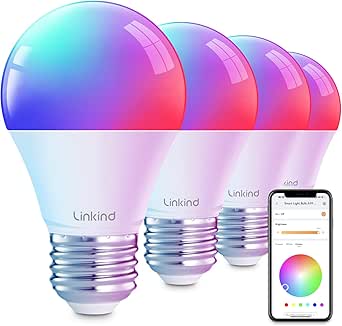 | Best for Flexible Lighting | Bulb shape and base: A19, E26 | Power: 9 W; 60 W incandescent equivalent | Brightness: Up to 800 lumens | VIEW LATEST PRICE | See Our Full Breakdown |
| Amazon Echo Show 5 (Newest Model) Smart Display with Alexa, Charcoal |  | Best Compact Alexa Control Center | Display: 5.5-inch touchscreen | Camera: 2 MP with built-in shutter | Speaker: 1.75-inch full-range built-in speaker | VIEW LATEST PRICE | See Our Full Breakdown |
| GHome Smart Plug Mini, 4-Pack, Wi-Fi Outlet with Alexa and Google Home Compatibility | 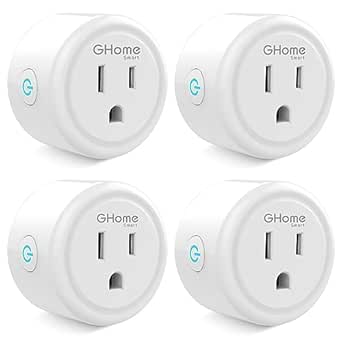 | Best Basic Smart Plug Value | Pack size: 4 plugs | Connectivity: 2.4 GHz Wi-Fi; Bluetooth-assisted setup | Voice compatibility: Amazon Alexa and Google Home | VIEW LATEST PRICE | See Our Full Breakdown |
| Linkind Matter Smart Plug, 4-Pack |  | Best for Multi-Platform Homes | Pack size: 4 plugs | Matter platforms: Apple Home, Alexa, Google Home, and SmartThings | Connectivity: 2.4 GHz Wi-Fi and IPv6 | VIEW LATEST PRICE | See Our Full Breakdown |
| Home Assistant Green Smart Home Hub |  | Best for Local Automation Builders | Operating system: Home Assistant OS | Processor: Quad-core | Memory: 4 GB LPDDR4X | VIEW LATEST PRICE | See Our Full Breakdown |
| Amazon Echo Hub 8-Inch Smart Home Control Panel |  | Best Dedicated Control Panel | Display: 8-inch touchscreen, 1280 × 800 | Smart home protocols: Wi-Fi, Bluetooth Low Energy Mesh, Zigbee, Thread, Matter, Amazon Sidewalk | Audio: Two top-ported full-range speakers with stereo playback | VIEW LATEST PRICE | See Our Full Breakdown |
| Amazon Echo Show 11 Smart Display with Full HD Touchscreen and Spatial Audio, Graphite |  | Best Premium Smart Display | Display: 10.95-inch Full HD touchscreen, 1920 × 1200 | Camera: 13 MP with auto framing | Audio: 2.8-inch woofer, two full-range drivers, spatial audio | VIEW LATEST PRICE | See Our Full Breakdown |
| Kasa Smart Wi-Fi Plug Mini EP10P4, 15A, 4-Pack | 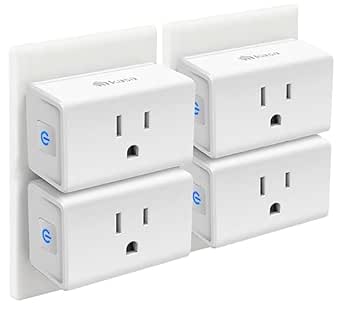 | Best Value Smart Plug Pack | Quantity: 4 plugs | Model: EP10P4 | Operating voltage: 120 V | VIEW LATEST PRICE | See Our Full Breakdown |
| Govee Smart Plugs, Wi-Fi and Bluetooth, 4-Pack |  | Best for Bluetooth-Assisted Setup and Group Control | Quantity: 4 plugs | Model: B5081 | Connectivity: Bluetooth and 2.4 GHz Wi-Fi | VIEW LATEST PRICE | See Our Full Breakdown |
| EIGHTREE Wi-Fi Smart Plug, 15A, 4-Pack |  | Best for Flexible Scheduling | Quantity and model: 4 plugs; ET01 | Operating voltage: 120 V | Maximum load: 15 A; 1800 W | VIEW LATEST PRICE | See Our Full Breakdown |
| Amazon Echo Spot Smart Alarm Clock with Alexa, Black |  | Best Smart Alarm Clock | Display: 2.83-inch touchscreen, 240 x 320 pixels | Speaker: 1.73-inch full-range built-in speaker | Camera: None | VIEW LATEST PRICE | See Our Full Breakdown |
| Kasa HS103P4 Smart Wi-Fi Plug, 4-Pack |  | Best Value for Cross-Assistant Control | Model: HS103P4 | Pack size: 4 plugs | Connectivity: 2.4 GHz Wi-Fi | VIEW LATEST PRICE | See Our Full Breakdown |
| Amazon Basics Smart Plug, 4-Pack, White | 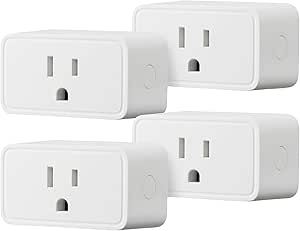 | Best for Alexa-Only Homes | Pack size: 4 smart indoor plugs | Compatibility: Alexa only | Connectivity: 2.4 GHz Wi-Fi | VIEW LATEST PRICE | See Our Full Breakdown |
| GHome Smart Wi-Fi Plug with Alexa and Google Home Compatibility, 4-Pack | 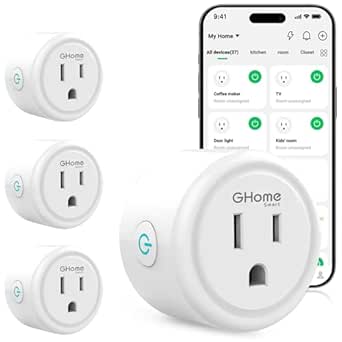 | Best for Shared App Control | Model: WP3 | Quantity: 4 plugs | Connectivity: Wi-Fi with Bluetooth-supported connection; 2.4 GHz Wi-Fi required | VIEW LATEST PRICE | See Our Full Breakdown |
| Amazon Smart Plug, Works with Alexa |  | Best Single Plug for Alexa Routines | Use: Indoor only | Compatibility: Alexa only; for compatible devices with a physical on/off switch | Wi-Fi: 2.4 GHz, 802.11 b/g/n; no 5 GHz or ad-hoc network support | VIEW LATEST PRICE | See Our Full Breakdown |
| Black Friday smart home device | Connectivity | Dimensions |
|---|---|---|
| Linkind A19 Smart LED Light Bu | 2.4 GHz Wi-Fi and Bluetooth | — |
| Amazon Echo Show 5 | — | 5.8 x 3.6 x 3.2 in |
| GHome Smart Plug Mini | 2.4 GHz Wi-Fi; Bluetooth-assisted setup | 2 x 2 x 1 in |
| Linkind Matter Smart Plug | 2.4 GHz Wi-Fi and IPv6 | — |
| Home Assistant Green Smart Hom | Ethernet, USB, and Bluetooth | 4.41 x 4.41 x 1.26 in |
| Amazon Echo Hub 8-Inch Smart H | — | — |
| Amazon Echo Show 11 Smart Disp | — | 10 × 5 × 7.2 inches |
| Kasa Smart Wi-Fi Plug Mini EP1 | 2.4 GHz Wi-Fi | — |
| Govee Smart Plugs | Bluetooth and 2.4 GHz Wi-Fi | — |
| EIGHTREE Wi-Fi Smart Plug | 2.4 GHz Wi-Fi | 1.96 × 1.96 × 2.03 inches |
| Amazon Echo Spot Smart Alarm C | — | 4.5 x 4.1 x 4.4 inches |
| Kasa HS103P4 Smart Wi-Fi Plug | 2.4 GHz Wi-Fi | 1.57 x 1.5 x 2.62 inches |
| Amazon Basics Smart Plug | 2.4 GHz Wi-Fi | 2.7 x 2.1 x 1.5 inches |
| GHome Smart Wi-Fi Plug with Al | Wi-Fi with Bluetooth-supported connection; 2.4 GHz Wi-Fi required | 2.1 x 2.1 x 1.1 inches |
| Amazon Smart Plug | — | 3.2 x 1.5 x 2.2 inches |
More Details on Our Top Picks
Linkind A19 Smart LED Light Bulb, Color-Changing, Works with Alexa and Google Home
I’d choose the Linkind A19 when a Black Friday smart-home upgrade should change the feel of a room, not just switch an outlet on a schedule. Its 16 million colors and adjustable 1800K–6500K white light cover cozy evening lighting and brighter everyday use, while scenes, timers, and group control make routines easier to set up. Alexa and Google Home support lets it fit alongside devices such as the GHome Smart Plug Mini, though the bulb adds lighting effects rather than controlling a separate appliance. It connects by 2.4 GHz Wi-Fi and Bluetooth without a hub, but it won’t work with traditional dimmer switches and needs 2.4 GHz Wi-Fi for setup. At 800 lumens, it’s suited to a standard lamp or room accent, not a high-output replacement.
Pros:- Color and tunable-white options support both ambient scenes and everyday lighting.
- Works with Alexa and Google Home, with app control, schedules, and group control.
- Wi-Fi and Bluetooth connectivity with no separate hub required.
- Rated for 25,000 hours of operation.
Cons:- Requires 2.4 GHz Wi-Fi for setup and does not support 5 GHz networks.
- Not compatible with traditional dimmer switches.
- 800-lumen output may not suit buyers seeking high-brightness room lighting.
Best for: Alexa or Google Home users who want one indoor lamp to provide adjustable white light, color scenes, and scheduled routines without adding a hub.
Not ideal for: Households using traditional wall dimmers, 5 GHz-only Wi-Fi, or needing a brighter bulb for a large room.
- Bulb shape and base:A19, E26
- Power:9 W; 60 W incandescent equivalent
- Brightness:Up to 800 lumens
- Light range:16 million colors; 1800K–6500K white
- Connectivity:2.4 GHz Wi-Fi and Bluetooth
- Voice compatibility:Amazon Alexa and Google Home
Our verdict“Choose the Linkind A19 if color-rich, voice-controlled lighting matters more than high brightness or compatibility with a wall dimmer.”
Amazon Echo Show 5 (Newest Model) Smart Display with Alexa, Charcoal
The Echo Show 5 makes the most sense when I want Alexa controls paired with a small screen for video calls, compatible camera viewing, and at-a-glance information. Its 5.5-inch touchscreen gives smart-home commands a visual home, unlike the Linkind A19 bulb or either plug pack, which rely on an app or voice assistant for control. The built-in camera and speaker add everyday communication and media functions, while a physical camera shutter and microphone/camera off button give privacy-conscious buyers direct controls. Its compact footprint suits a nightstand or kitchen counter, but the display is much smaller than a dedicated larger panel such as the Echo Hub 8-Inch Smart Home Control Panel. Buyers should also check whether their preferred Alexa skills or services involve additional fees.
Pros:- 5.5-inch touchscreen adds visual controls and information beyond voice-only devices.
- Built-in camera supports video calls and compatible camera viewing.
- Physical camera shutter and microphone/camera off button provide direct privacy controls.
- Uses recycled materials in its fabric and aluminum components.
Cons:- Small screen is less suitable for viewing content or managing a large smart-home setup than a larger panel.
- Some Alexa skills and services may involve subscription or other fees.
- Does not support ad-hoc or peer-to-peer Wi-Fi networks.
Best for: Alexa households wanting a compact bedside or countertop screen for smart-home controls, video calls, and compatible camera feeds.
Not ideal for: Buyers who want a large, dedicated wall-style control panel, or who prefer a smart-home device without a camera or screen-based services.
- Display:5.5-inch touchscreen
- Camera:2 MP with built-in shutter
- Speaker:1.75-inch full-range built-in speaker
- Dimensions:5.8 x 3.6 x 3.2 in
- Weight:16.1 oz
- Wi-Fi:Dual-band 802.11a/b/g/n/ac
- Privacy controls:Microphone/camera off button and camera shutter
Our verdict“Pick the Echo Show 5 for a compact Alexa screen with physical privacy controls, but choose a larger panel if room-wide visibility is your priority.”
GHome Smart Plug Mini, 4-Pack, Wi-Fi Outlet with Alexa and Google Home Compatibility
For straightforward outlet automation, I’d put the GHome Smart Plug Mini 4-pack ahead of a single-device approach: four plugs let buyers schedule several lamps or small appliances from one app, without purchasing a hub. Alexa and Google Home voice control, timers, and remote access cover the basics, much like the Linkind Matter Smart Plug 4-Pack. The difference is platform reach: GHome is the simpler 2.4 GHz Wi-Fi option, while Linkind adds Matter support and local LAN control after setup. That makes GHome a better fit for buyers already using Alexa or Google Home who don’t need broader ecosystem flexibility. Setup requires connecting through the GHome app before linking a voice assistant, and the 10 A, 1200 W limit calls for checking the load before plugging in an appliance.
Pros:- Four-plug pack can automate several outlets at once.
- Supports schedules, timers, remote app control, and group control.
- Works with Alexa and Google Home without a hub.
- Compact 2 x 2 x 1 in design helps preserve outlet space.
Cons:- Supports 2.4 GHz Wi-Fi only.
- Must be set up in the GHome app before linking Alexa or Google Home.
- 10 A and 1200 W limits are lower than the Linkind Matter plug’s stated capacity.
Best for: Alexa or Google Home users who want to automate several lamps or modest-load devices with schedules and no separate hub.
Not ideal for: Matter-focused households, 5 GHz-only networks, or buyers who need a plug rated above 10 A and 1200 W.
- Pack size:4 plugs
- Connectivity:2.4 GHz Wi-Fi; Bluetooth-assisted setup
- Voice compatibility:Amazon Alexa and Google Home
- Hub required:No
- Dimensions:2 x 2 x 1 in
- Certifications:ETL and FCC
Our verdict“Choose GHome for uncomplicated Alexa or Google Home scheduling across several lower-load outlets, not for Matter or higher-capacity needs.”
Linkind Matter Smart Plug, 4-Pack
The Linkind Matter Smart Plug 4-pack is the most flexible outlet pick here for a home that spans Apple Home, Alexa, Google Home, or SmartThings. Matter support makes it a stronger fit for mixed-platform setups than the GHome Smart Plug Mini, which is aimed at Alexa and Google Home. Another practical distinction is local LAN control: after setup, these plugs can communicate on the home network if internet access drops. The 15 A, 1800 W rating also gives more capacity than GHome’s 10 A, 1200 W rating, though buyers still need to check the requirements of the connected device. The tradeoff is setup complexity: most listed platforms require a Matter-certified hub or controller, and the network must support 2.4 GHz Wi-Fi and IPv6.
Pros:- Matter compatibility spans Apple Home, Alexa, Google Home, and SmartThings.
- Supports local LAN control after setup, including during an internet outage.
- 15 A and 1800 W rating exceeds the stated capacity of the GHome Smart Plug Mini.
- Four plugs include schedules, timers, and app and voice control.
Cons:- Most supported platforms require a Matter-certified hub or controller.
- Requires 2.4 GHz Wi-Fi and an IPv6 network.
- AiDot is the stated hub-free control option, so buyers wanting other ecosystems need compatible equipment.
Best for: Households using multiple smart-home platforms that have, or plan to add, a compatible Matter controller and want local network control.
Not ideal for: Buyers seeking a plug-and-play option without a hub, or whose network does not support IPv6 and 2.4 GHz Wi-Fi.
- Pack size:4 plugs
- Matter platforms:Apple Home, Alexa, Google Home, and SmartThings
- Connectivity:2.4 GHz Wi-Fi and IPv6
- Control options:App, voice, schedules, timers, and local LAN control
- Plug type:Type A
- Certifications:FCC and ETL
Our verdict“Choose Linkind’s Matter pack for cross-platform control and higher stated capacity if you can meet its controller and network requirements.”
Home Assistant Green Smart Home Hub
Home Assistant Green is the pick for buyers who want a central automation system rather than another voice-controlled endpoint. Home Assistant OS comes preinstalled, and home data stays local, giving this hub a different job from the Echo Show 5, which centers on Alexa, a screen, and calls. Green can manage compatible devices and support more tailored automations; its USB ports also allow expansion with separate Z-Wave, Zigbee, or Thread adapters. That flexibility comes with more setup responsibility than the Linkind Matter Smart Plug, which is a narrower, ready-to-use outlet product. Green needs Ethernet to get started, and its built-in Bluetooth does not replace the separate USB hardware needed for those other wireless protocols. I’d favor it when privacy and customization matter more than a screen-based control surface.
Pros:- Home Assistant OS is preinstalled for a direct start with the platform.
- Stores home data locally rather than relying on cloud-only management.
- Fanless design runs silently.
- Two USB ports support optional Z-Wave, Zigbee, or Thread adapters.
Cons:- Requires an Ethernet connection to get started.
- Z-Wave, Zigbee, and Thread support requires separate USB adapters.
- Offers a more configurable hub experience rather than the simple display and voice interface of the Echo Show 5.
Best for: Smart-home enthusiasts who want locally stored data, custom automations, and the option to add wireless protocols using separate adapters.
Not ideal for: Buyers who want a wireless, screen-based setup or expect built-in Z-Wave, Zigbee, or Thread radios without buying adapters.
- Operating system:Home Assistant OS
- Processor:Quad-core
- Memory:4 GB LPDDR4X
- Storage:32 GB
- Connectivity:Ethernet, USB, and Bluetooth
- USB ports:2
- Dimensions:4.41 x 4.41 x 1.26 in
Our verdict“Choose Home Assistant Green if you want local, customizable automations and are comfortable using Ethernet and adding adapters as needed.”
Amazon Echo Hub 8-Inch Smart Home Control Panel
For a Black Friday smart home setup built around many compatible devices, the Echo Hub is the most purpose-focused pick here. Its customizable 8-inch dashboard keeps controls and camera views in one wall-mounted place, unlike the Echo Show 11, which also gives more space to video calls, photos, and entertainment. Built-in Zigbee, Thread, and Matter support can reduce the need for separate bridges, though Matter and Thread support is limited to controller functions. The tradeoff is that this is a fixed control panel, not a portable screen: setup needs internet access, and a tabletop stand or PoE adapter costs extra. I’d choose it for an always-visible home interface, not as a general-purpose smart display.
Pros:- Customizable dashboard lets users arrange and resize device controls.
- Built-in Zigbee, Thread, Matter, and other protocol support can reduce reliance on separate hubs.
- Included wall mount and optional PoE setup support a tidy, permanent installation.
- Microphone-off button and recycled materials add privacy and material-conscious features.
Cons:- Requires an internet connection over Wi-Fi or Ethernet for setup.
- Tabletop stand, in-wall cable pass-through, and PoE converter are sold separately.
- Not intended for portable use, and Matter and Thread support is controller-only.
Best for: Households with several compatible smart devices that want a wall-mounted dashboard for controls, routines, and camera views.
Not ideal for: Buyers who want a portable screen for entertainment or video calls, or who need Matter and Thread functionality beyond controller support.
- Display:8-inch touchscreen, 1280 × 800
- Smart home protocols:Wi-Fi, Bluetooth Low Energy Mesh, Zigbee, Thread, Matter, Amazon Sidewalk
- Audio:Two top-ported full-range speakers with stereo playback
- Sensors:Passive infrared proximity and ambient light sensors
- Power:12.5 W adapter included; compatible with USB-C Power Delivery accessories
- Power over Ethernet:Supported with a compatible USB-C converter and IEEE 802.3at or 802.3bt
- Mounting:Wall mount included; tabletop stand sold separately
- Materials:27% recycled materials in the device
Our verdict“Choose the Echo Hub if you want a dedicated, wall-mounted control center rather than the more entertainment-oriented Echo Show 11.”
Amazon Echo Show 11 Smart Display with Full HD Touchscreen and Spatial Audio, Graphite
The Echo Show 11 earns the premium-display role by combining a large Full HD screen with a built-in smart home hub, making it a better fit for a busy kitchen or shared living area than the control-first Echo Hub. The larger display gives recipes, calendars, photos, and video calls more room, while its 13 MP auto-framing camera and spatial audio support a more capable calls-and-media experience. Zigbee, Matter, and Thread support also let it manage compatible devices without making this screen only a smart-home dashboard. Its size and 45.92-ounce weight make it less suited to small counters, and buyers should know Amazon Sidewalk is enabled by default unless previously turned off. I’d pick it for a household that wants one screen to serve several roles, not just control devices.
Pros:- Large Full HD touchscreen suits recipes, calendars, photos, and video calls.
- 13 MP camera with auto-framing supports clearer calls while users move around.
- Spatial audio system combines a woofer with two full-range drivers.
- Built-in Zigbee, Matter, and Thread Border Router support adds smart home control.
Cons:- Larger footprint and 45.92-ounce weight make it less convenient for compact spaces.
- Amazon Sidewalk is enabled by default unless it has previously been turned off.
- Bluetooth speakers requiring PIN codes are not supported.
Best for: Families who want a large shared display for recipes, calendars, video calls, media, and compatible smart home controls.
Not ideal for: Buyers with limited counter space, those seeking a dedicated wall control panel, or anyone who does not want Amazon Sidewalk enabled by default.
- Display:10.95-inch Full HD touchscreen, 1920 × 1200
- Camera:13 MP with auto framing
- Audio:2.8-inch woofer, two full-range drivers, spatial audio
- Wi-Fi:Wi-Fi 6E (IEEE 802.11ax)
- Bluetooth:Version 5.4
- Smart home hub:Zigbee, Matter, Thread Border Router
- Dimensions:10 × 5 × 7.2 inches
- Weight:45.92 oz (1302 g)
- Sensors:Ambient temperature, ambient light, presence detection, and camera
Our verdict“Choose the Echo Show 11 over the Echo Hub if you want a large, all-purpose display with smart home control rather than a dedicated dashboard.”
Kasa Smart Wi-Fi Plug Mini EP10P4, 15A, 4-Pack
The Kasa EP10P4 is my strongest pick for adding basic, scheduled control to several lamps or appliances without buying a hub. Each of the four plugs supports up to 15 A and 1800 W, giving it a higher stated capacity than the Govee Smart Plugs, whose listing gives conflicting 10 A and 11 A figures. Kasa also provides schedules, timers, Away Mode, and control through its app or compatible voice assistants. The compact shape is useful when neighboring outlets matter, though buyers still need 2.4 GHz Wi-Fi and the Kasa or Tapo app for setup and app-based control. It lacks the EIGHTREE plugs’ listed countdown, cycle, and random schedule options, but is the more straightforward choice when capacity and clear everyday scheduling matter more.
Pros:- Four-plug pack supports schedules, timers, and Away Mode without a separate hub.
- 15 A and 1800 W maximum ratings are clearly specified.
- Compact design leaves the neighboring wall outlet accessible.
- UL certified and compatible with Alexa, Google Assistant, and Samsung SmartThings.
Cons:- Requires a 2.4 GHz Wi-Fi connection.
- Kasa or Tapo app is needed for setup and app-based control.
- Does not list the countdown, cycle, or random schedule functions offered by EIGHTREE.
Best for: Buyers who want four compact, UL-certified plugs for lamps and other compatible household devices, with a stated capacity up to 15 A.
Not ideal for: Homes relying on 5 GHz-only Wi-Fi, or buyers who want smart plugs that work without app-based setup.
- Quantity:4 plugs
- Model:EP10P4
- Operating voltage:120 V
- Maximum load:15 A; 1800 W
- Connectivity:2.4 GHz Wi-Fi
- Hub required:No
- Control and features:Kasa or Tapo app, voice control, push button, schedules, timers, Away Mode
- Compatible assistants:Amazon Alexa and Google Assistant
- Certifications:UL, FCC, IC, RoHS
Our verdict“Choose the Kasa EP10P4 for four compact plugs with a clearly stated 15 A rating and straightforward scheduling.”
Govee Smart Plugs, Wi-Fi and Bluetooth, 4-Pack
The Govee Smart Plugs stand apart from the Kasa and EIGHTREE packs by pairing 2.4 GHz Wi-Fi with Bluetooth and offering app-based group control. That combination gives buyers another connection method alongside Wi-Fi and makes it easier to operate several plugs together through Govee Home. Alexa and Google Assistant voice control, plus scheduling, cover the everyday jobs expected of this kind of Black Friday smart home add-on. The tradeoff is less certainty around electrical capacity: the product information lists 11 A in one place and 10 A in another, unlike Kasa’s clearly stated 15 A rating. I’d choose Govee for app grouping and dual connectivity, but I would check the product’s current rating details before connecting any appliance where capacity is a deciding factor.
Pros:- Bluetooth and 2.4 GHz Wi-Fi provide two connection methods.
- App supports individual control, group control, and schedules.
- Works with Amazon Alexa and Google Assistant without a hub.
- Four-plug pack has ETL and FCC certifications.
Cons:- Electrical rating is inconsistent in the supplied product information: 10 A in the description and 11 A in the specifications.
- Does not support 5 GHz Wi-Fi.
- Requires the Govee Home app for app-based management.
Best for: Buyers who want four app-controlled plugs with Bluetooth and Wi-Fi connectivity, voice control, and group scheduling.
Not ideal for: Buyers who need a clearly consistent amperage rating, 5 GHz Wi-Fi support, or a smart home hub integration beyond Alexa and Google Assistant.
- Quantity:4 plugs
- Model:B5081
- Connectivity:Bluetooth and 2.4 GHz Wi-Fi
- Control:Govee Home app, Amazon Alexa, Google Assistant
- Scheduling:Supported
- Group control:Supported through the app
- Hub required:No
- Certifications:ETL, FCC
Our verdict“Choose Govee over the Kasa plugs if Bluetooth and grouped app control matter more than a clearly stated higher load rating.”
EIGHTREE Wi-Fi Smart Plug, 15A, 4-Pack
The EIGHTREE ET01 is the scheduling specialist among these plug packs: beyond basic timers, it lists countdowns, cycles, and random schedules that can vary when connected devices turn on or off. That makes it a more flexible routine tool than the Kasa EP10P4, which focuses on schedules, timers, and Away Mode. Its stated 15 A, 1800 W capacity and SmartThings support also make it a capable option for buyers who already use that platform. The setup path is less direct, however: users must configure the plugs through the Smart Life app before voice control, and it only connects over 2.4 GHz Wi-Fi. I’d favor it for customized timing and SmartThings integration, but not for anyone who wants an Alexa-only setup without an extra app step.
Pros:- Four plugs support schedules, timers, countdowns, cycles, and random schedules.
- Stated capacity is 15 A and 1800 W at 120 V.
- Works with SmartThings and Alexa or Google Assistant without a separate hub.
- Compact dimensions suit tight spaces and placement behind furniture.
Cons:- Smart Life app setup is required before voice control; direct Alexa connection is not supported.
- Supports only 2.4 GHz Wi-Fi.
- Unlike Kasa’s stated Away Mode, its supplied feature list does not specify an Away Mode.
Best for: SmartThings households and routine-focused buyers who want countdown, cycle, and randomized schedules across four plugs.
Not ideal for: Buyers who want direct Alexa setup without Smart Life, or homes with only 5 GHz Wi-Fi available.
- Quantity and model:4 plugs; ET01
- Operating voltage:120 V
- Maximum load:15 A; 1800 W
- Connectivity:2.4 GHz Wi-Fi
- Control:Smart Life app, remote control, voice control
- Compatible platforms:Amazon Alexa, Google Assistant, SmartThings
- Functions:Scheduling, timer, countdown, cycles, random schedules
- Dimensions:1.96 × 1.96 × 2.03 inches
- Certifications and warranty:ETL, FCC; 2-year warranty
Our verdict“Choose EIGHTREE over Kasa if you want more scheduling modes and SmartThings support and are comfortable setting up through Smart Life.”
Amazon Echo Spot Smart Alarm Clock with Alexa, Black
For a bedside smart-home upgrade, the Echo Spot combines an alarm clock, Alexa controls, and a speaker in a compact footprint. Its 2.83-inch customizable touchscreen can show the time, weather, reminders, or song titles, giving it more at-a-glance utility than a plug such as the Amazon Smart Plug. It can also control compatible devices and run routines, so a bedside command can reach beyond the clock itself. The built-in speaker suits music, podcasts, and audiobooks, while the camera-free design and microphone-off button offer straightforward privacy controls. The tradeoff is that its display is small, not a full smart display like the Echo Show 5. Its eero coverage feature also only helps owners of a compatible eero router, and it needs to stay within range.
Pros:- Customizable screen can show time, weather, reminders, and song titles.
- Built-in speaker plays music, podcasts, and audiobooks.
- Controls compatible smart-home devices and supports routines.
- No camera, with a microphone-off button and in-app privacy controls.
Cons:- The small touchscreen is less suited to visual controls than the Echo Show 5.
- eero network extension requires a compatible router and the Spot to remain in range.
Best for: Alexa households looking for a compact bedside clock that can also control compatible smart-home devices and play audio.
Not ideal for: Buyers who want a larger screen for video calls or richer visual controls, or who need eero coverage without a compatible eero router.
- Display:2.83-inch touchscreen, 240 x 320 pixels
- Speaker:1.73-inch full-range built-in speaker
- Camera:None
- Wi-Fi:Dual-band 802.11a/b/g/n/ac, 2.4 and 5 GHz
- Bluetooth:A2DP audio streaming and AVRCP voice control
- Dimensions:4.5 x 4.1 x 4.4 inches
- Weight:14.3 oz (405 g)
- eero built-in:Up to 1,000 sq. ft. of additional coverage with a compatible eero router
- Privacy:Microphone-off button and in-app controls
Our verdict“Choose the Echo Spot if you want an Alexa bedside clock with audio and basic smart-home control, rather than a larger-screen display.”
Kasa HS103P4 Smart Wi-Fi Plug, 4-Pack
The Kasa HS103P4 four-pack is a practical choice for automating several lamps or small appliances without committing to one voice assistant. It works with Alexa and Google Assistant, unlike the Alexa-only Amazon Basics Smart Plug, and its app supports remote control, schedules, and timers. Because it connects directly to 2.4 GHz Wi-Fi, there’s no separate hub to add to a smart-home setup. That makes it a useful Black Friday pick for buyers spreading automation across rooms, particularly if household members use different assistants. The tradeoff is that it depends on a 2.4 GHz network, and setup and control rely on the Kasa app rather than Alexa alone. Check each appliance’s electrical requirements before connecting it; the plug’s stated maximum is 1,800 W.
Pros:- Four plugs support automation in multiple rooms.
- Compatible with both Amazon Alexa and Google Assistant.
- Remote app control, schedules, and timers are available.
- UL certified and connects without a separate hub.
Cons:- Requires a 2.4 GHz Wi-Fi connection.
- Requires the Kasa app for setup and app-based control.
Best for: Households with Alexa and Google Assistant devices that want app-based scheduling and control for several compatible appliances.
Not ideal for: People whose Wi-Fi network has no 2.4 GHz band, or buyers who want a plug managed entirely through Alexa without another app.
- Model:HS103P4
- Pack size:4 plugs
- Connectivity:2.4 GHz Wi-Fi
- Voice assistants:Amazon Alexa and Google Assistant
- Operating voltage:120 V AC
- Maximum wattage:1,800 W
- Dimensions:1.57 x 1.5 x 2.62 inches
- Safety certification:UL certified
- Warranty:2 years
Our verdict“Pick the Kasa four-pack if you want multiple hub-free plugs that work with either Alexa or Google Assistant.”
Amazon Basics Smart Plug, 4-Pack, White
If the household already runs on Alexa, the Amazon Basics four-pack keeps plug setup and daily control within the Alexa app, with no hub or third-party app required. Its schedules can use set times, sunrise, or sunset, making it handy for lamps that should follow a household routine. Compared with the Kasa HS103P4, this is the more focused choice: it supports Alexa only, while Kasa also works with Google Assistant. The compact shape is designed to leave the neighboring outlet available, a useful detail when outlets are scarce. The main compromise is ecosystem flexibility; buyers with Google Home devices should favor Kasa or the GHome four-pack instead. These plugs also require 2.4 GHz Wi-Fi, so they are not suited to a 5 GHz-only network.
Pros:- Four plugs provide a simple way to automate devices in several locations.
- Alexa app and voice control work without a hub or third-party app.
- Schedules can follow set times, sunrise, or sunset.
- Compact design is intended to leave the other outlet available.
Cons:- Works with Alexa only, unlike the Kasa HS103P4 and GHome four-pack.
- Requires a 2.4 GHz Wi-Fi connection.
Best for: Alexa households that want to automate several indoor lamps or compatible appliances using one app and simple schedules.
Not ideal for: Homes centered on Google Assistant or buyers who want to control plugs through multiple voice-assistant ecosystems.
- Pack size:4 smart indoor plugs
- Compatibility:Alexa only
- Connectivity:2.4 GHz Wi-Fi
- Hub required:No
- Plug type:Type B
- Amperage:15 A
- Dimensions:2.7 x 2.1 x 1.5 inches
- Weight:2.4 oz
- Warranty:1-year limited
Our verdict“Choose this four-pack for straightforward Alexa automation across multiple rooms, but skip it if you need Google Assistant support.”
GHome Smart Wi-Fi Plug with Alexa and Google Home Compatibility, 4-Pack
The GHome four-pack suits households that want more than voice commands: its apps support scheduling, timers, remote operation, plug grouping, and sharing access with family. That shared-control angle sets it apart from the Amazon Basics Smart Plug, which keeps management within Alexa and does not offer the same listed choice of companion apps. GHome works with Alexa and Google Home, and Bluetooth-supported connection may assist during setup, though the plugs still require a stable 2.4 GHz Wi-Fi network for use. Initial setup must happen in the GHome app before linking a voice assistant, so it takes more app steps than Amazon’s Alexa-only option. Its stated 1,200 W limit is also lower than the Kasa HS103P4’s 1,800 W maximum; match that limit to the appliance before buying.
Pros:- Supports Alexa and Google Home voice control.
- App offers schedules, timers, remote control, and grouped operation.
- Access can be shared with family members.
- No hub is required.
Cons:- Requires a stable 2.4 GHz Wi-Fi network.
- Must be set up in the GHome app before linking Alexa or Google Home.
- The stated maximum is 1,200 W, below the Kasa HS103P4’s 1,800 W.
Best for: Families or housemates who want to group plugs, share app access, and use either Alexa or Google Home.
Not ideal for: Buyers seeking the simplest Alexa-only setup or a plug with a higher stated wattage limit for compatible appliances.
- Model:WP3
- Quantity:4 plugs
- Connectivity:Wi-Fi with Bluetooth-supported connection; 2.4 GHz Wi-Fi required
- Voice assistants:Alexa and Google Home
- Compatible apps:GHome, Smart Life, and Tuya
- Operating voltage:120 V
- Maximum wattage:1,200 W
- Dimensions:2.1 x 2.1 x 1.1 inches
- Certifications:ETL and FCC
Our verdict“Choose GHome if shared app access and grouped control matter more than the simpler Alexa-only setup of Amazon Basics.”
Amazon Smart Plug, Works with Alexa
For someone automating one lamp or appliance, the Amazon Smart Plug offers a direct path into Alexa routines without a separate hub. Setup and management happen in the Alexa app, and its physical on/off switch gives a manual control option when voice commands are inconvenient. Its compact format is intended to leave the adjacent outlet free, while automatic reconnection after power or Wi-Fi outages can reduce the need to restore it manually. Compared with the Amazon Basics four-pack, this is a single-plug option rather than a way to outfit several rooms at once; the Basics model also lists sunrise and sunset scheduling. The larger limitation is Alexa exclusivity: unlike the Kasa HS103P4 and GHome plugs, it does not support Google Assistant. It is indoor-only and requires 2.4 GHz Wi-Fi.
Pros:- Alexa app supports routines and device management.
- No separate smart-home hub is required.
- Compact design is intended to keep the adjacent outlet available.
- Automatically reconnects to Alexa after power or Wi-Fi outages.
Cons:- Works with Alexa only and does not support other voice assistants or smart hubs.
- Requires 2.4 GHz Wi-Fi and does not support 5 GHz or ad-hoc networks.
- Indoor use only.
Best for: Alexa users who want one plug for a routine-controlled lamp or compatible household device, with a manual switch as backup.
Not ideal for: Google Assistant or mixed-platform households, and buyers who need a multi-plug pack or outdoor use.
- Use:Indoor only
- Compatibility:Alexa only; for compatible devices with a physical on/off switch
- Wi-Fi:2.4 GHz, 802.11 b/g/n; no 5 GHz or ad-hoc network support
- Input:120 VAC, 60 Hz
- Maximum output:15 A
- Dimensions:3.2 x 1.5 x 2.2 inches
- Weight:3.1 oz (87 g)
- Warranty:1-year limited
- In the box:Single-socket 3-prong Wi-Fi plug and Quick Start Guide
Our verdict“Choose the Amazon Smart Plug for a single Alexa-controlled indoor device; opt for Kasa or GHome if you need Google Assistant support.”
How We Picked
I ranked these devices by the job they help a buyer complete, then compared compatibility, ease of setup, versatility, and day-to-day usefulness. Smart plugs and bulbs can be low-friction first steps, but differences in assistant support, Matter compatibility, and the number of outlets included affect how well they fit a home. For displays and hubs, I gave more weight to their distinct roles: a screen for voice and visual tasks is not the same purchase as a control panel or a system hub.
The order favors options that solve a clear need without locking buyers into unnecessary complexity. Home Assistant Green ranks first for breadth and control, while Amazon’s Echo Hub and larger Show display appeal to buyers prioritizing screen-based interaction. Plug packs rank according to ecosystem flexibility and practical fit, not superficial similarity; a simple Alexa-first plug may be a better choice for an Alexa household than a more flexible device. The lineup contains no sale information, so the Black Friday lens here is about choosing useful devices and avoiding mismatched purchases rather than assuming a discount makes a product right for you.
Factors to Consider When Choosing Black Friday Smart Home Devices
Before choosing from this lineup, decide what you want to automate and how you want to control it. A device that fits your current assistant can be simpler than a more flexible option, while a hub may make sense only if you plan to connect several kinds of devices. These broader checks can help prevent a Black Friday bundle from becoming an unused extra.
Start With the Job, Not the Bundle
Write down the specific task you want to solve: turning a lamp on by voice, scheduling a coffee maker, controlling a room from one screen, or connecting devices across brands. A four-pack can be useful when you already have several suitable outlets in mind, but it can also leave you with unused plugs. A bulb is a better fit when you want to change the light itself, while a smart plug generally keeps the existing lamp or appliance. Avoid buying a hub just because it seems like a complete starting point; it adds little if you only want to automate one outlet. Match the device to a real routine before comparing extras.
Check Assistant and Matter Support Before Checkout
Compatibility claims can describe different levels of support: voice control, app control, or setup through a shared smart home standard. Check that the product works with the assistant and phone ecosystem you actually use, rather than assuming that Wi-Fi means it will appear in every app. Matter can help devices work across compatible platforms, but the controller and the specific device functions still matter. A household with Alexa already configured may prefer a direct Alexa setup, while a mixed-brand home may value broader interoperability. Verify the complete chain: device, app, assistant, and any hub or controller required.
Know When a Hub Earns Its Place
A hub can be worthwhile when you expect to manage many devices, build routines across rooms, or reduce dependence on separate manufacturer apps. It also introduces another system to configure and maintain, so a small household with a few plugs may not gain much from one. Dedicated control panels and smart displays can put controls in a convenient shared location, but they differ from hubs that coordinate devices behind the scenes. Before paying for central control, count the devices you have now and the ones you realistically plan to add. Buy for the system you will maintain, not the largest feature list.
Separate Screens From Control Panels
A smart display can earn its space through a mix of visual information, voice interaction, and household tasks, whereas a control panel is mainly about reaching smart home controls quickly. A compact screen may suit a bedside table or a small counter; a larger display takes more room but offers a more expansive viewing surface. Think about who will use it and where: a shared kitchen device has different needs from a personal alarm-clock replacement. Also check whether you want a screen at all, since voice control through a speaker or phone may already cover your routines. Choose by location and daily use, not screen size alone.
Plan for Network Limits and Household Setup
Many smart plugs and bulbs depend on a home Wi-Fi network, and some products may have specific network or setup requirements. Check the maker’s instructions for supported bands and app setup before purchasing several devices at once. In a busy home, adding many connected products can make troubleshooting harder if devices use different apps or accounts. Keep account access and recovery details available for household members who may need to control the devices. Simple setup across the whole household can matter more than a feature no one uses.
Treat Black Friday Bundles as a Fit Test
A multi-pack is only a good match if you have enough suitable outlets and a plan for each device. Before choosing a bundle, check the physical size of plugs, the location of nearby outlets, and whether a plug could block an adjacent socket. Consider the load and intended use of any appliance you plan to automate, and follow the device maker’s limits rather than assuming every plug is suited to every device. If you are trying a smart home for the first time, one compatible device can reveal whether you like the app and voice-control routine before you add more. Bundle size should follow your needs, not create them.
Frequently Asked Questions
Should I choose a Matter smart plug or one made for Alexa?
Choose based on the system you use today and the chance you may change or combine platforms later. A Matter plug can be a better fit for a mixed-brand home, provided you have a compatible controller and follow its setup requirements. An Alexa-focused plug may be simpler when Alexa already runs your routines and you do not need cross-platform use. Before buying, confirm which app performs setup and whether the functions you want are available through your preferred assistant. Broader compatibility is useful only when your home can use it.
Can I use a smart plug with any appliance?
No: check the plug’s electrical rating and the appliance’s requirements before connecting it. A plug is commonly used for lamps and other suitable devices, but it may not be appropriate for every high-load or specialized appliance. Also consider whether cutting power and restoring it will leave the appliance in a useful state; some devices need a physical button press after power returns. Follow both manufacturers’ instructions rather than relying on the plug’s voice-assistant compatibility as a sign it suits every load. Electrical fit matters more than app features.
Do I need Home Assistant Green if I already have an Echo?
Not necessarily. An Echo can provide voice access and, depending on the model and setup, screen-based smart home interaction, while Home Assistant Green is aimed at buyers seeking a broader control system. The latter makes more sense when you want to bring multiple devices or automations together and are comfortable spending time on configuration. If your main goal is switching a few compatible plugs by voice, an Echo may already cover it. Choose the hub for system needs, not as an automatic upgrade to a speaker.
Is an Echo Hub a better choice than an Echo Show for smart home control?
It depends on whether dedicated controls or a general-purpose screen matters more to you. The Echo Hub is positioned as a home control panel, while Echo Show devices combine a display with other voice and screen-based uses. If the device will live in a shared spot and mainly manage smart home devices, a control-focused panel may suit that job. If you also want a screen for household information or other visual tasks, a Show model may be a more natural fit. Choose for the room’s main use, not the product name.
Should I buy a four-pack of smart plugs if I am new to smart home devices?
A four-pack can be a sensible way to automate several known lamps or devices, but it is not the safest first purchase if you have not checked compatibility or app preferences. Start by confirming that the plug supports your assistant, network, and intended appliance. Think through where each plug will go and whether its shape could block a neighboring outlet. If those details are uncertain, beginning with one device can help you learn the setup before committing to a larger group. Buy the pack when you can name a use for each plug.
Conclusion
Best overall: I’d choose Home Assistant Green for buyers who want a flexible foundation and are willing to configure a broader system. Best value: Kasa’s four-pack plugs are a practical pick for automating several suitable outlets, while Linkind’s Matter four-pack is the better direction for a home prioritizing cross-platform compatibility. Best premium: the Echo Show 11 suits buyers who want a larger smart display, while the Echo Hub is the more focused choice for a shared control point. Best for beginners: an Alexa-compatible plug or the Linkind A19 bulb keeps the first step focused, especially when it matches an assistant already in use. For specific needs, choose Echo Spot for a bedside smart-clock role, Echo Show 5 for a compact display, and the color-changing Linkind bulb when lighting—not outlet automation—is the goal. My final advice is to start with your existing ecosystem and intended routine, then add only the devices that fit.