
The best streaming media players pair dependable app access with the right picture quality and a setup that suits your TV. I’d choose the Roku Streaming Stick 4K as the best overall for its balance of 4K streaming, HDR support, and a simple stick format; the Roku Ultra 4K is a stronger fit for buyers who want a more capable set-top player, while the Amazon Fire TV Stick 4K Plus suits viewers already invested in Alexa and Fire TV. The main tradeoffs are ease of use versus platform integration, compactness versus connectivity, and streaming apps versus local media playback. Some models are built for older 1080p TVs or stored files rather than general-purpose streaming. Read on for the full breakdown and a guide to choosing the right player for your setup.

Get the latest gadgets delivered free with Prime
- Fast, free delivery on millions of items
- Prime Video, Amazon Music and more included
- Member-only deals all year
Complete the kit



Key Takeaways
The Roku Streaming Stick 4K is the most balanced pick in this lineup: it combines a compact design with 4K and HDR support without the larger footprint of the Ultra players.
The Roku Ultra 4K and Roku Ultra LT make more sense when you want a dedicated player with a broader feature set than a basic HDMI stick; compare their included remote and connectivity details before choosing.
The Fire TV Stick 4K Plus and Fire TV Stick 4K Select are best judged by how well the Fire TV interface and Alexa fit your household, not by resolution alone.
The JLZNLC A5, NEUMI Atom 4K Max, and Micca Speck 4K serve different local-media needs, so they should not be treated as direct substitutes for app-focused Roku or Fire TV streamers.
Several options target specific setups: the Roku Streambar SE combines streaming and sound, while the Mini 1080p player and Roku Streaming Stick HD suit viewers who do not need 4K.
| Roku Streaming Stick Plus with Voice Remote, 4K and HDR10+ |  | Best Compact 4K Streaming Stick | Model: 3830R | Resolution: 4K | HDR: HDR10 and HDR10+ | VIEW LATEST PRICE | See Our Full Breakdown |
| JLZNLC A5 4K Media Player and HDD Enclosure |  | Best for Local Media Libraries | Model: A5 | Maximum resolution: 4096×2304 at 30 fps | Connectivity: HDMI, composite AV, USB, microSD | VIEW LATEST PRICE | See Our Full Breakdown |
| Mini 1080p HDMI and AV Media Player | 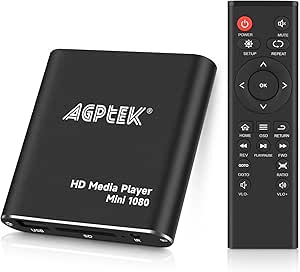 | Best for Older TVs and Basic Local Playback | Resolution: 1080p at 60 Hz | Outputs: HDMI or composite AV; not simultaneous | Connectivity: USB 2.0/3.0 | VIEW LATEST PRICE | See Our Full Breakdown |
| Roku Ultra LT 4K Streaming Device with Voice Remote, HDMI Cable, and USB Extension Cord |  | Best for Dolby Vision and a Complete Box Setup | Model: Ultra LT | Resolution: 4K UHD (3840 × 2160) | HDR: Dolby Vision | VIEW LATEST PRICE | See Our Full Breakdown |
| Roku Streaming Stick HD with Voice Remote |  | Best for Simple 1080p Streaming | Model: 3840R | Resolution: 1080p (1920 × 1080) | Connectivity: Wi-Fi, Bluetooth, HDMI | VIEW LATEST PRICE | See Our Full Breakdown |
| Amazon Fire TV Stick 4K Plus |  | Best for Alexa-Centered 4K Streaming | Maximum resolution: 2160p at up to 60 fps | HDR formats: Dolby Vision, HDR10, HDR10+, HLG | Audio: Dolby Atmos, 7.1 surround, stereo, HDMI passthrough up to 5.1 | VIEW LATEST PRICE | See Our Full Breakdown |
| Amazon Fire TV Stick HD with Alexa Voice Remote |  | Best for Full HD Simplicity | Resolution: Full HD | Wireless: Wi-Fi 6 | Power: Powered by TV via included USB-C cable | VIEW LATEST PRICE | See Our Full Breakdown |
| Xiaomi TV Stick 4K (2nd Gen) Streaming Media Player |  | Best for Google TV and Casting | Resolution: 4K (3840 × 2160) | Operating platform: Google TV | Processor: 2.5 GHz quad-core A55, 6 nm | VIEW LATEST PRICE | See Our Full Breakdown |
| Roku Ultra 4K Streaming Player with Voice Remote Pro |  | Best Premium Roku Player | Resolution: 4K (3840 × 2160) | HDR formats: HDR10, HDR10+, Dolby Vision | Audio: Dolby Atmos | VIEW LATEST PRICE | See Our Full Breakdown |
| Roku Streambar SE 4K Soundbar with Built-In Streaming |  | Best for Small TVs and Better Dialogue | Resolution: 4K | HDR formats: HDR10, HDR10+ | Speakers: Two premium speakers with a dedicated bass port | VIEW LATEST PRICE | See Our Full Breakdown |
| Micca Speck 4K USB and microSD Media Player |  | Best for Local Playback and Digital Signage | Video output: Up to 3840 × 2160; supports files up to 4096 × 2304 at 30 fps | Connectivity: USB, HDMI, composite AV | Storage support: USB drives up to 8 TB; microSD cards up to 1 TB | VIEW LATEST PRICE | See Our Full Breakdown |
| Amazon Fire TV Stick 4K Select |  | Best for Alexa and Cloud Gaming | Supported resolutions: 2160p, 1080p, and 720p up to 60 fps | HDR formats: HDR10, HDR10+, HLG | Processor: Quad-core 1.7 GHz | VIEW LATEST PRICE | See Our Full Breakdown |
| NEUMI Atom 4K Max Network Media Player |  | Best for Network Shares and Local Libraries | Video output: HDMI up to 2160p at 60 Hz | Network: Wi-Fi and Ethernet; browses Windows SMB shared folders | Storage connections: Two USB ports and one microSD slot | VIEW LATEST PRICE | See Our Full Breakdown |
| Roku Streaming Stick 4K with Voice Remote |  | Best Compact Streaming Stick | Resolution: 4K UHD, up to 2160p at 60 fps | HDR formats: Dolby Vision, HDR10+ | Connectivity: Wi-Fi | VIEW LATEST PRICE | See Our Full Breakdown |
| Roku Ultra LT (2023) 4K HDR Streaming Player with Dolby Vision |  | Best for Wired Networking and Private Listening | Video resolution: Up to 3840 × 2160 (4K UHD) | HDR support: HDR, Dolby Vision | Connectivity: Bluetooth, Ethernet, HDMI, Wi-Fi | VIEW LATEST PRICE | See Our Full Breakdown |
| streaming media player | Resolution | Connectivity |
|---|---|---|
| Roku Streaming Stick Plus with | 4K | Wi-Fi, Bluetooth, HDMI |
| JLZNLC A5 4K Media Player and | — | HDMI, composite AV, USB, microSD |
| Mini 1080p HDMI and AV Media P | 1080p at 60 Hz | USB 2.0/3.0 |
| Roku Ultra LT 4K Streaming Dev | 4K UHD (3840 × 2160) | — |
| Roku Streaming Stick HD with V | 1080p (1920 × 1080) | Wi-Fi, Bluetooth, HDMI |
| Amazon Fire TV Stick 4K Plus | — | — |
| Amazon Fire TV Stick HD with A | Full HD | — |
| Xiaomi TV Stick 4K | 4K (3840 × 2160) | — |
| Roku Ultra 4K Streaming Player | 4K (3840 × 2160) | Wi-Fi 6, Ethernet, Bluetooth, HDMI, USB |
| Roku Streambar SE 4K Soundbar | 4K | Bluetooth, HDMI, optical, Wi-Fi |
| Micca Speck 4K USB and microSD | — | USB, HDMI, composite AV |
| Amazon Fire TV Stick 4K Select | — | — |
| NEUMI Atom 4K Max Network Medi | — | — |
| Roku Streaming Stick 4K with V | 4K UHD, up to 2160p at 60 fps | Wi-Fi |
| Roku Ultra LT | — | Bluetooth, Ethernet, HDMI, Wi-Fi |
More Details on Our Top Picks
Roku Streaming Stick Plus with Voice Remote, 4K and HDR10+
The Roku Streaming Stick Plus is the strongest fit here for viewers who want 4K streaming without a separate box taking up shelf space. It plugs into HDMI, draws power from the TV, and its voice remote also handles TV power and volume, making it a tidier setup than the Roku Ultra LT, which sits beside the screen. Its HDR10+ support adds a useful picture-format option, while Bluetooth headphone mode suits late-night watching or travel. The tradeoff is that it depends on an internet connection and does not include a wall power adapter. Choose this over the Roku Streaming Stick HD if your TV supports 4K; the HD model is a simpler match for 1080p screens.
Pros:- Streams in 4K and supports HDR10 and HDR10+
- Compact stick design leaves room around neighboring HDMI ports
- Can draw power directly from the TV
- Voice remote controls streaming, TV power, and volume
Cons:- Streaming requires an internet connection
- No wall power adapter is included
- Does not list Dolby Vision support
Best for: Viewers with a 4K TV who want a small, travel-friendly streamer and a remote that controls basic TV functions.
Not ideal for: People without reliable internet or buyers who need Dolby Vision support rather than HDR10 and HDR10+.
- Model:3830R
- Resolution:4K
- HDR:HDR10 and HDR10+
- Connectivity:Wi-Fi, Bluetooth, HDMI
- Voice control:Yes
- Supported codecs:H.264/AVC, H.265/HEVC, AV1, VP9
- Dimensions:3.7 × 0.8 × 0.5 in
Our verdict“Choose this Roku stick for a compact 4K setup with HDR10+; pick the Roku Streaming Stick HD instead if 1080p is enough.”
JLZNLC A5 4K Media Player and HDD Enclosure
The JLZNLC A5 is a different kind of streaming pick: it plays files from USB drives, hard drives, and microSD cards rather than relying on streaming apps. That makes it more useful than the Roku Streaming Stick Plus when your videos are stored locally, or when you need looping and resume playback for a display. Its HDMI and composite AV outputs also let it connect to newer screens and older televisions. The built-in drive enclosure supports a hard drive up to 8 TB, but the drive itself is not included, so buyers need to supply their own storage. Playback tops out at 30 fps, making this less suitable for high-frame-rate content, and it is not a substitute for a Roku-style app streaming interface.
Pros:- Plays local media at resolutions up to 4096×2304
- Supports USB drives, hard drives, and microSD cards
- HDMI and composite AV outputs cover newer and older displays
- Automatic playback, looping, and resume suit signage and repeat viewing
Cons:- Hard drive is not included
- Maximum playback is 30 fps
- Focused on local files rather than app-based streaming
Best for: People with personal video, music, or photo collections on USB storage who need local playback and support for both modern and older displays.
Not ideal for: Viewers who primarily want streaming apps, or those who need 4K playback above 30 fps and do not already have storage drives.
- Model:A5
- Maximum resolution:4096×2304 at 30 fps
- Connectivity:HDMI, composite AV, USB, microSD
- Video codecs:H.265/HEVC, H.264/AVC, MPEG1/2/4, VC1
- Supported storage:USB hard drives up to 8 TB; microSD cards up to 1 TB
- File systems:FAT, FAT32, exFAT, NTFS
- Hard drive included:No
Our verdict“Pick the JLZNLC A5 for stored media and repeat playback, not as your main app-based streaming player.”
Mini 1080p HDMI and AV Media Player
This Mini 1080p Media Player earns its place for buyers who want to play files from USB or SD storage on a television that may only have composite AV inputs. Unlike the JLZNLC A5, it stops at 1080p, but its included analog AV cable and support for older displays make it a straightforward choice for a secondary TV or a basic media setup. Playback tools such as loop, shuffle, and resume are useful for personal clips or repeat viewing. It is not a typical internet-connected streaming stick like the Roku Streaming Stick HD: the listed connection is USB, and content comes from your own storage. The format and file-system limits also matter—FAT and FAT32 are supported, and some phone-recorded videos may need another player.
Pros:- Offers both HDMI and composite AV connections
- Supports USB storage and SD cards
- Includes a remote control and analog AV cable
- Loop, shuffle, and resume tools support repeat and interrupted playback
Cons:- Limited to 1080p output
- Uses FAT and FAT32 file systems only
- Some smartphone-recorded videos may not play
Best for: Owners of older TVs who want to play common video, music, or photo files from USB or SD storage without relying on streaming apps.
Not ideal for: Buyers seeking 4K, internet-based streaming services, broad modern file-system support, or a player that handles every smartphone video format.
- Resolution:1080p at 60 Hz
- Outputs:HDMI or composite AV; not simultaneous
- Connectivity:USB 2.0/3.0
- Supported storage:USB flash drives up to 512 GB, SD cards up to 128 GB, MBR hard drives up to 8 TB
- File systems:FAT and FAT32
- Playback features:Loop, shuffle, repeat, zoom, fast forward, rewind, resume, time selection
- Included accessories:Remote control and analog AV cable
Our verdict“Choose this compact player for local files on an older or 1080p television, but choose a Roku stick for streaming apps.”
Roku Ultra LT 4K Streaming Device with Voice Remote, HDMI Cable, and USB Extension Cord
The Roku Ultra LT suits viewers who want a 4K streamer with Dolby Vision and prefer a separate device over an HDMI stick. Compared with the Roku Streaming Stick Plus, it takes up more space, but the included HDMI cable and USB extension cord give the setup a more traditional box-and-cable arrangement. Its voice remote controls TV power and volume, while dual-band Wi-Fi supports wireless connections across both listed bands. The main reason to choose it over the Stick Plus is Dolby Vision; the Stick Plus instead lists HDR10 and HDR10+ and has a more travel-friendly shape. This model still requires a compatible TV and internet connection, and the supplied product data does not list Bluetooth headphone mode or a built-in soundbar.
Pros:- Supports 4K UHD and Dolby Vision
- Dual-band 802.11ac Wi-Fi
- Voice remote controls the device, TV power, and volume
- Includes an HDMI cable and USB extension cord
Cons:- Larger and less portable than the Roku Streaming Stick Plus
- Requires internet access and a compatible television
- Bluetooth headphone mode is not listed
Best for: 4K TV owners who want Dolby Vision, a voice remote with TV controls, and a Roku player that sits near the television rather than hanging from HDMI.
Not ideal for: Travelers and buyers who want the smallest possible player, or anyone without a Dolby Vision-compatible screen and reliable internet.
- Model:Ultra LT
- Resolution:4K UHD (3840 × 2160)
- HDR:Dolby Vision
- Wireless:802.11ac dual-band Wi-Fi
- Operating system:Roku OS
- Included accessories:Voice remote, HDMI cable, USB extension cord
- Dimensions:5.00 × 4.90 × 1.00 in
Our verdict“Pick the Ultra LT if Dolby Vision and a box-style Roku setup matter more than the smaller footprint of the Streaming Stick Plus.”
Roku Streaming Stick HD with Voice Remote
The Roku Streaming Stick HD is the practical choice for a 1080p television or a buyer who has no use for 4K. It keeps the compact, TV-powered design of the Roku Streaming Stick Plus, adds voice search and TV volume control, and includes Bluetooth headphone mode for private listening. The distinction is straightforward: the Plus model supports 4K and HDR10+, while this stick is limited to 1080p. That lower ceiling makes it a poor match for a 4K screen, but it avoids paying for resolution the display cannot show. Like the other app-focused Roku options here, it needs an internet connection for streaming. Buyers should also note that the listed video codecs are H.264/AVC and AV1, rather than the wider codec set specified for the Plus.
Pros:- Compact HDMI stick can draw power from the TV
- Voice remote supports streaming and TV volume control
- Bluetooth headphone mode supports private listening
- Works with listed streaming services including Netflix, Hulu, and Prime Video
Cons:- Limited to 1080p resolution
- Requires an internet connection for streaming
- Lists fewer supported video codecs than the Roku Streaming Stick Plus
Best for: People with a 1080p TV who want a small Roku streamer, voice search, TV volume control, and private listening.
Not ideal for: Owners of 4K televisions who want UHD playback or HDR; the Roku Streaming Stick Plus is the better match for those screens.
- Model:3840R
- Resolution:1080p (1920 × 1080)
- Connectivity:Wi-Fi, Bluetooth, HDMI
- Video codecs:H.264/AVC, AV1
- Voice control:Yes
- Smart home compatibility:Alexa, Apple AirPlay and HomeKit, Google Home, Roku Smart Home
- Dimensions:3.7 × 0.8 × 0.5 in
Our verdict“Choose this stick for straightforward streaming on a 1080p TV; move up to the Streaming Stick Plus if you need 4K and HDR.”
Amazon Fire TV Stick 4K Plus
The Fire TV Stick 4K Plus suits viewers who want a compact 4K player with Amazon’s voice controls at the center. Dolby Vision, HDR10+, and Dolby Atmos cover major picture and sound formats, while Wi-Fi 6 can help on a compatible, busy home network. Its Alexa remote also handles power and volume on compatible TVs and audio gear, reducing remote juggling. Compared with the Fire TV Stick HD, this is the clearer fit for a 4K television and supported HDR content; the HD model makes more sense when Full HD is enough. The tradeoff is an 8 GB storage capacity and dependence on compatible equipment to use 4K and Wi-Fi 6. Some content and cloud gaming also require separate subscriptions, and gaming needs a compatible controller.
Pros:- Supports 4K at up to 60 fps with Dolby Vision and HDR10+
- Dolby Atmos and HDMI audio passthrough support compatible audio setups
- Wi-Fi 6 and dual-band connectivity suit compatible home networks
- Alexa remote includes voice search and compatible TV power and volume controls
Cons:- The 4K and Wi-Fi 6 benefits require compatible TV and router hardware
- Some streaming content and cloud gaming require separate subscriptions
- Cloud gaming also requires a compatible controller
Best for: Viewers with a 4K HDR television who use Alexa or other compatible smart-home devices and want one remote for everyday control.
Not ideal for: Full HD TV owners or people who want a device for local media storage or cloud gaming without extra subscriptions and a compatible controller.
- Maximum resolution:2160p at up to 60 fps
- HDR formats:Dolby Vision, HDR10, HDR10+, HLG
- Audio:Dolby Atmos, 7.1 surround, stereo, HDMI passthrough up to 5.1
- Processor:Quad-core, 1.7 GHz
- Storage:8 GB
- Wireless:Dual-band Wi-Fi 6; Bluetooth 5.2 + BLE
- Ports:HDMI 2.1 output with ARC input support; micro USB
- Voice control:Alexa Voice Remote included
Our verdict“Choose this stick if you want Alexa-led control and broad 4K HDR support; choose the Fire TV Stick HD if your TV is Full HD.”
Amazon Fire TV Stick HD with Alexa Voice Remote
The Fire TV Stick HD is the straightforward pick for a Full HD television, or for a second screen where 4K features would go unused. Its Wi-Fi 6 support and Alexa voice remote bring modern connectivity and hands-free content search without requiring a larger player. The included remote can also control power and volume on compatible devices, while Bluetooth headphone support offers a private-listening option. Compared with the Fire TV Stick 4K Plus, this model gives up 4K and advanced HDR formats, so it is a poorer match for a main 4K display. That narrower resolution ceiling is also its practical advantage for buyers who do not need those capabilities. Streaming still depends on an HDMI-equipped TV and internet access, and subscriptions may be required for some content.
Pros:- Full HD streaming fits televisions that do not need 4K output
- Wi-Fi 6 support in a compact HDMI-connected stick
- Alexa remote has voice search and compatible TV power and volume controls
- Bluetooth headphone support enables private listening
Cons:- Full HD resolution lacks the 4K output offered by the Fire TV Stick 4K Plus
- Requires a compatible TV with an HDMI port
- Some content requires streaming subscriptions
Best for: People setting up a bedroom, guest-room, or older Full HD TV who want Alexa search and simple control from one remote.
Not ideal for: Owners of 4K TVs who want 4K playback or Dolby Vision and HDR10+ support, or buyers seeking wired networking.
- Resolution:Full HD
- Wireless:Wi-Fi 6
- Power:Powered by TV via included USB-C cable
- Connection:HDMI
- Remote:Alexa Voice Remote with power and volume buttons
- Audio:Bluetooth headphone support
Our verdict“Pick the Fire TV Stick HD for a Full HD screen and Alexa convenience, but step up to the Fire TV Stick 4K Plus for a 4K television.”
Xiaomi TV Stick 4K (2nd Gen) Streaming Media Player
The Xiaomi TV Stick 4K (2nd Gen) is the Google TV option for buyers who want a small streaming device with broad HDR and audio format support. Google Cast makes it easy to send compatible content from a phone, while the Bluetooth remote adds Google Assistant voice control. Dolby Vision and HDR10+ cover two common HDR formats, and Dolby Atmos plus DTS:X support can suit a compatible sound system. Compared with the Amazon Fire TV Stick 4K Plus, the Xiaomi stands out for Google TV and built-in casting rather than Alexa-centered controls. Its Wi-Fi 6 and quad-core processor are appealing on paper, but the 8 GB storage limit leaves little room for an extensive app setup. It also needs both an HDMI port and USB power, so check available connections before choosing it.
Pros:- 4K output with Dolby Vision and HDR10+ support
- Google TV, Google Cast, and Google Assistant voice control
- Dolby Atmos and DTS:X support for compatible audio systems
- Wi-Fi 6 and a 2.5 GHz quad-core processor
Cons:- 8 GB of storage limits space for apps and other installed content
- Requires both an HDMI connection and USB power
- Its Google TV and casting approach may suit Google users better than Alexa-focused households
Best for: Google TV users who cast from Android phones or other compatible devices and want a compact 4K player for a compatible HDR setup.
Not ideal for: Buyers who need ample onboard storage, prefer Alexa controls, or cannot spare a USB power connection near the TV.
- Resolution:4K (3840 × 2160)
- Operating platform:Google TV
- Processor:2.5 GHz quad-core A55, 6 nm
- Memory and storage:2 GB RAM; 8 GB storage
- Wireless:Wi-Fi 6; Bluetooth
- Video formats:Dolby Vision, HDR10+, AV1, VP9, H.264, H.265, MPEG-1, MPEG-2, MPEG-4
- Audio formats:Dolby Atmos, DTS:X
- Casting and remote:Google Cast; Bluetooth voice remote with Google Assistant
- Dimensions and weight:4.2 × 1.18 × 0.55 in; 28 g
Our verdict“Choose this stick for Google TV, casting, and broad 4K format support; choose the Fire TV Stick 4K Plus if Alexa integration matters more.”
Roku Ultra 4K Streaming Player with Voice Remote Pro
The Roku Ultra is the feature-rich choice for viewers who want a separate set-top player and a remote designed to be easier to live with. Its 4K output, Dolby Vision, HDR10+, and Dolby Atmos match the format support of stick-style rivals such as the Amazon Fire TV Stick 4K Plus, while Ethernet adds a wired alternative when Wi-Fi is unreliable. The rechargeable Voice Remote Pro brings backlit buttons, hands-free voice control, and a lost-remote finder—useful touches for a living-room setup. Bluetooth headphone support adds another listening option. The tradeoff is its larger box-style design rather than a discreet HDMI stick, and its advantage over simpler players depends on valuing the remote features and Ethernet. The product data does not specify a power arrangement or storage capacity.
Pros:- 4K playback with Dolby Vision and HDR10+
- Dolby Atmos support for compatible audio equipment
- Wi-Fi 6 and Ethernet provide wireless and wired network options
- Rechargeable remote offers backlighting, hands-free voice control, and a finder
Cons:- Set-top form factor takes more visible space than the Fire TV Stick 4K Plus
- Remote’s added features may be unnecessary for buyers who prefer a basic remote
- Product specifications do not state storage capacity or a power arrangement
Best for: Roku households with a 4K HDR TV that want Ethernet, a rechargeable voice remote, and Bluetooth headphone support in a dedicated player.
Not ideal for: Buyers who need a compact stick hidden behind a TV, or who do not need Ethernet or the Voice Remote Pro features.
- Resolution:4K (3840 × 2160)
- HDR formats:HDR10, HDR10+, Dolby Vision
- Audio:Dolby Atmos
- Connectivity:Wi-Fi 6, Ethernet, Bluetooth, HDMI, USB
- Video codecs:H.264/AVC, H.265/HEVC, AV1, VP9
- Remote:Rechargeable USB-C; backlit buttons, hands-free voice control, lost remote finder
- Dimensions:5 × 4.9 × 1 in
- Weight:18 g
Our verdict“Choose the Roku Ultra if you want Ethernet and a more capable rechargeable remote; choose a streaming stick if keeping the setup small matters more.”
Roku Streambar SE 4K Soundbar with Built-In Streaming
The Roku Streambar SE is a two-in-one choice for a smaller TV setup where streaming and clearer sound are both on the upgrade list. Its built-in 4K streaming saves the need for a separate player, while enhanced speech clarity and automatic volume adjustment target common dialogue and loudness problems. That makes it a different proposition from the Roku Ultra, which adds a dedicated player and advanced remote features but does not combine streaming with speakers. The Streambar SE’s compact 9.6-inch width and dedicated bass port suit limited spaces, though it is designed for smaller TVs rather than room-filling sound. Its listed HDR formats are HDR10 and HDR10+, not Dolby Vision, so the Roku Ultra or Fire TV Stick 4K Plus is a better match for viewers who specifically want that format.
Pros:- Combines a 4K streaming player and compact soundbar
- Enhanced speech clarity targets dialogue that can be hard to hear
- Automatic volume adjustment helps manage changes in loudness
- Bluetooth supports wireless headphones and music streaming
Cons:- Designed for smaller TVs and spaces rather than larger-room audio
- HDR support lists HDR10 and HDR10+ but not Dolby Vision
- Streaming requires an internet connection
Best for: People with a small TV or limited space who want built-in 4K streaming and a sound upgrade focused on clearer speech.
Not ideal for: Owners of larger rooms seeking a more expansive sound system, or viewers who require Dolby Vision HDR support.
- Resolution:4K
- HDR formats:HDR10, HDR10+
- Speakers:Two premium speakers with a dedicated bass port
- Connectivity:Bluetooth, HDMI, optical, Wi-Fi
- Memory and storage:1 GB RAM; 4 GB storage
- Dimensions and weight:9.6 × 3.5 × 2.4 in; 2 lb
- Audio features:Enhanced speech clarity; automatic volume adjustment
- Supported services:Hulu, Netflix, Prime Video, YouTube
Our verdict“Choose the Streambar SE when a small TV needs both streaming and clearer sound, but pick the Roku Ultra for a dedicated player and Dolby Vision.”
Micca Speck 4K USB and microSD Media Player
The Micca Speck 4K is a specialist pick for playing files you already own, not for browsing streaming apps. Load video, music, or photos from USB storage or microSD, then connect to a TV, projector, or even an older display through composite AV. Its looping and resume functions make it more useful for unattended signage than the Roku Streaming Stick 4K, which is built around internet streaming. The tradeoff is that the Speck has no listed network connection or app platform, and its maximum listed playback rate is 30 fps. It handles a broad range of formats and large storage devices, but buyers seeking services, voice search, or smoother high-frame-rate video should choose a streaming stick instead.
Pros:- Plays video, music, and photos from USB drives or microSD cards
- Supports many common media formats and storage devices up to 8 TB over USB
- Looping and resume features suit unattended signage playback
- Composite AV output works with compatible analog displays and audio systems
Cons:- No listed Wi-Fi, Ethernet, or streaming-app access
- Maximum listed video playback rate is 30 fps
- Requires locally stored media rather than offering a typical connected-TV interface
Best for: People running simple digital signage or playing personal video and photo files on TVs, projectors, or older composite-equipped displays
Not ideal for: Viewers who want streaming apps, online search, or 4K playback above 30 fps
- Video output:Up to 3840 × 2160; supports files up to 4096 × 2304 at 30 fps
- Connectivity:USB, HDMI, composite AV
- Storage support:USB drives up to 8 TB; microSD cards up to 1 TB
- File systems:FAT, FAT32, exFAT, NTFS
- Supported video codecs:H.265/HEVC, H.264/AVC, MPEG1/2/4, VC1
- Dimensions:2.95 × 2.52 × 0.59 in
- Weight:62 g
- Warranty:1 year
Our verdict“Choose the Micca Speck 4K for looping local media and legacy display connections, not for app-based streaming.”
Amazon Fire TV Stick 4K Select
The Amazon Fire TV Stick 4K Select suits viewers who want a compact streaming setup with Alexa voice search and access to cloud gaming services. It supports 4K output and HDR10+, while the included remote can also handle compatible smart-home controls. Compared with the Roku Streaming Stick 4K, this model adds the Fire TV ecosystem’s Alexa features and listed cloud gaming support; Roku may suit buyers who would rather use its interface and channel lineup. The Fire TV stick depends on Wi-Fi, a power connection, and compatible services, and some content or gaming requires separate subscriptions. Its 8 GB of internal storage is another limit for anyone expecting a large library of installed apps. Check that your TV and preferred services support the formats you want.
Pros:- Supports 4K output and HDR10+
- Includes an Alexa Voice Remote with voice search
- Offers access to popular streaming apps and free ad-supported content
- Lists support for cloud gaming through Xbox Game Pass and Luna
Cons:- Requires Wi-Fi, a compatible TV, and a power outlet
- Some apps, content, and gaming services require separate subscriptions
- Has 8 GB of internal storage and a 90-day limited warranty
Best for: Alexa users who want 4K streaming, voice control, and the option to use supported cloud gaming services
Not ideal for: Buyers who need wired networking, extensive local storage, or a player that works without an internet connection
- Supported resolutions:2160p, 1080p, and 720p up to 60 fps
- HDR formats:HDR10, HDR10+, HLG
- Processor:Quad-core 1.7 GHz
- Internal storage:8 GB
- Wi-Fi:Dual-band, dual-antenna MIMO; 802.11a/b/g/n/ac
- Bluetooth:Bluetooth 5.0 and Bluetooth Low Energy
- Ports:HDMI output; micro-USB for power
- Warranty:90-day limited warranty
Our verdict“Pick the Fire TV Stick 4K Select if Alexa control and cloud gaming matter more to you than wired networking or local playback.”
NEUMI Atom 4K Max Network Media Player
The NEUMI Atom 4K Max bridges local-file playback and network access: it reads USB drives and microSD cards, and can browse Windows SMB shares over Wi-Fi or Ethernet. Its 4K output at 60 Hz is a step up from the Micca Speck 4K’s listed 30 fps ceiling, while auto play and video resume make the NEUMI more practical for repeat playback. It also adds phone casting, screen mirroring, and optical audio output. This is still not the same kind of app-first streamer as the Roku Streaming Stick 4K; the NEUMI’s strength is your own media collection. Network playback has limits too: high-bitrate 4K is intended for USB or microSD, rather than streaming over the network. The remote also needs separately supplied AAA batteries.
Pros:- Plays media from USB drives, microSD cards, and Windows SMB shares
- Supports HDMI output up to 4K at 60 Hz
- Includes phone casting, screen mirroring, and auto-play and resume features
- Provides Ethernet, optical audio, and analog AV connections
Cons:- High-bitrate 4K playback is intended for USB or microSD, not network streaming
- AAA batteries for the remote are not included
- Its local-media focus makes it a different fit from app-centered players such as the Roku Streaming Stick 4K
Best for: Home-media owners who want to play files from removable storage or SMB shares and need 4K at 60 Hz
Not ideal for: Viewers mainly seeking a simple streaming-app hub or planning high-bitrate 4K playback over Wi-Fi
- Video output:HDMI up to 2160p at 60 Hz
- Network:Wi-Fi and Ethernet; browses Windows SMB shared folders
- Storage connections:Two USB ports and one microSD slot
- File systems:FAT32, exFAT, NTFS
- Video codecs:H.265/HEVC, H.264
- Audio connections:Optical and analog AV; RAW surround passthrough
- Included accessories:Remote, HDMI cable, power adapter, manual
- Warranty:One year
Our verdict“Choose the NEUMI Atom 4K Max if your priority is flexible access to a local or shared media library rather than streaming apps.”
Roku Streaming Stick 4K with Voice Remote
The Roku Streaming Stick 4K is the cleanest fit for a crowded entertainment center: its compact HDMI body is designed to stay behind the TV without blocking nearby ports. It combines 4K, Dolby Vision, and HDR10+ with long-range Wi-Fi and voice control, making it a more straightforward app-based choice than the local-file-focused NEUMI Atom 4K Max. Roku also lists access to more than 500 free TV channels, which broadens viewing options without requiring a paid subscription for every choice. The stick relies on Wi-Fi and HDMI, though, so it is not a match for anyone who needs Ethernet or USB playback. Compared with the Roku Ultra LT, it gives up the larger player’s wired-network option and private-listening feature in exchange for a smaller, less visible setup.
Pros:- Supports 4K UHD, Dolby Vision, and HDR10+
- Compact design stays behind the TV and is designed not to block neighboring HDMI ports
- Long-range Wi-Fi receiver supports wireless placement
- Provides access to more than 500 free TV channels
Cons:- Uses Wi-Fi rather than a listed Ethernet connection
- The stick’s HDMI form factor does not provide the Ultra LT’s listed private-listening feature
- The supplied product details do not list USB or microSD playback
Best for: Viewers who want a discreet 4K Roku streamer with Dolby Vision and HDR10+ for a TV with an available HDMI port
Not ideal for: People who need Ethernet, local USB media playback, or the Ultra LT’s private-listening feature
- Resolution:4K UHD, up to 2160p at 60 fps
- HDR formats:Dolby Vision, HDR10+
- Connectivity:Wi-Fi
- Connector:HDMI
- Storage:16 GB
- RAM:1 GB
- Dimensions:3.7 × 0.8 × 0.45 in
- Weight:25.54 g
Our verdict“Choose the Roku Streaming Stick 4K for a compact, feature-rich Roku setup when wireless networking is sufficient.”
Roku Ultra LT (2023) 4K HDR Streaming Player with Dolby Vision
The Roku Ultra LT (2023) is the better fit when a streaming player can sit beside the TV and benefit from a wired connection. Unlike the Roku Streaming Stick 4K, it lists Ethernet alongside Wi-Fi, giving buyers another way to connect when wireless coverage is unreliable. Its voice remote supports private listening, a useful option for late-night viewing that is not listed for the stick. Both Roku models support 4K and Dolby Vision, so the Ultra LT’s case rests more on its connection options and remote than on a resolution advantage. The tradeoff is a larger 6 × 4 × 2-inch unit rather than a hidden HDMI stick. The listing also notes a water-damaged box; that is a packaging condition, not a streaming feature, so check the seller’s item details before purchase.
Pros:- Supports 4K UHD, HDR, and Dolby Vision
- Offers both Wi-Fi and Ethernet connectivity
- Voice remote supports private listening
- Includes an HDMI cable
Cons:- Larger than the Roku Streaming Stick 4K and needs space near the TV
- The listing describes the product box as water damaged
- The supplied details do not specify a frame rate or HDR10+ support
Best for: Roku viewers who prefer Ethernet or want private listening through the voice remote
Not ideal for: Buyers who need a hidden, space-saving player or want a compact device that plugs directly into HDMI
- Video resolution:Up to 3840 × 2160 (4K UHD)
- HDR support:HDR, Dolby Vision
- Connectivity:Bluetooth, Ethernet, HDMI, Wi-Fi
- Video codecs:H.264, H.265/HEVC, VP9, Dolby Digital
- Dimensions:6 × 4 × 2 in
- Included accessories:HDMI cable, voice remote
- Model number:4801RW
- Color:Black
Our verdict“Choose the Roku Ultra LT if you want Ethernet and private listening and have room for a separate player beside your TV.”

How We Picked
I ranked these players by how well they serve common streaming needs: straightforward access to apps, supported video formats, remote usability, setup demands, and fit with a typical TV. I gave more weight to models that work as general-purpose streamers than to devices aimed mainly at local files, older televisions, or combined audio setups. A high-resolution label alone does not make a player a better choice if its platform, connections, or intended use do not match the buyer.
The ranking reflects practical differences across the lineup. The Roku Streaming Stick 4K leads as a balanced everyday option; dedicated Ultra models rank well for buyers who want a fuller-featured player, and Fire TV models have a clear advantage for Alexa-oriented households. HD-only and specialty media players rank lower for broad streaming because they serve narrower needs, not because every buyer needs the same feature set. I also distinguish products with similar names by their stated generation and included accessories rather than assuming their capabilities are identical.
Factors to Consider When Choosing Best Streaming Media Players
Before choosing a streaming player, I’d match the device to the TV, the household’s preferred interface, and how you actually watch. These factors can prevent paying for features you will not use—or buying a streamer that cannot handle the job you expect.
Match Resolution and HDR to the TV
A 4K streamer can only deliver its full benefit when the TV and the content both support 4K. Check the television’s specifications and the HDMI input you plan to use before paying extra for a 4K model. HDR formats also vary, so confirm which formats the TV accepts rather than assuming every device and screen will work together. If the main TV is 1080p, an HD player may be a sensible, simpler match. A 4K device can still be useful if you plan to upgrade the TV, but that future use should be a deliberate reason for the added capability. Do not confuse a player’s maximum output with a guarantee that every app or video will stream at that resolution.
Choose the Interface Your Household Will Use
The home screen shapes everyday use more than a long list of supported apps. Consider whether you prefer Roku’s more direct streaming layout or Fire TV’s closer ties to Amazon services and Alexa controls. If different people share the TV, menus that are easy to understand can matter more than advanced settings. Voice control is useful for searching and launching content, but it does not replace checking app availability or account requirements. A household already using Alexa devices may find Fire TV a natural fit; buyers seeking a straightforward, brand-neutral streaming experience may prefer Roku. The right choice is the one people in the home can operate without repeatedly hunting through menus.
Check HDMI Access, Power, and Placement
Streaming sticks save space, but their position can be awkward if the TV’s HDMI ports are crowded or recessed. Before buying, check whether an adjacent cable or wall mount could block the stick and whether the supplied extension accessory helps with your layout. A set-top player takes more space but can be easier to reach and connect in an entertainment cabinet. Also check how the device receives power and whether your TV’s USB port is suitable; not every port supplies the power a streamer needs reliably. If Wi-Fi reception is weak near the television, placement may matter as much as the device itself. These small setup details can prevent intermittent playback and inconvenient cable arrangements.
Separate App Streaming From Local Media Playback
Most familiar streaming sticks focus on services delivered over the internet, while some media players emphasize files stored on USB drives, memory cards, or network storage. Those jobs overlap only partly, so check the device’s supported file formats, storage connections, and playback controls if you have a personal media library. A player designed for local files may not offer the same app experience as Roku or Fire TV. Conversely, an app-focused streamer may be a poor fit if you want to play a collection directly from an attached drive. Think through where the video files live and how you organize them before choosing. Buyers with both needs may prefer a dedicated streamer and a separate local-media player over expecting one device to excel at both.
Decide Whether Soundbar Integration Solves a Real Problem
A combined soundbar and streaming device can reduce boxes and simplify a small entertainment setup. It is most useful when the TV’s built-in sound is a limitation and there is room for a bar below the screen. This format is less flexible than buying a streamer and audio system separately, since an upgrade to one part may leave the other behind. Check the soundbar’s size, connection options, and fit with the furniture before choosing it as a streaming solution. If sound quality is already handled by a receiver or speakers, a standalone Roku or Fire TV player may be the tidier purchase. Choose an integrated model for the combined benefit, not just to get another way to stream.
Pay for Features You Can Actually Use
More capable models can be worthwhile when their controls, connections, or supported formats address a specific limitation in your current setup. They are less compelling when the only difference you notice is a feature your TV or viewing habits cannot use. A basic HD streamer can be a better match for a spare room, while a premium player is easier to justify as the central device on a main TV. Check the included remote and accessories as well as the device itself, since those affect daily convenience and setup. Also think about who will troubleshoot it: a familiar platform can be more valuable than extra technical options. I’d spend more for a clear improvement to the home setup, not simply a longer feature list.
Frequently Asked Questions
Should I buy a 4K streamer if my TV is only 1080p?
You do not need a 4K player to watch on a 1080p television, and an HD model may be a more direct fit. A 4K streamer can still make sense if you expect to replace the TV soon or want one device to move between screens. The television remains the limit on the picture it can display, so 4K output will not make a 1080p panel show true 4K detail. Check HDR compatibility separately, since resolution and HDR support are related but not the same thing. For a TV that will remain 1080p, prioritize a suitable app platform, remote, and reliable setup over a higher resolution label.
Can a streaming stick replace a player for files on a USB drive?
Not always. Many streaming sticks focus on internet services and may have limited or no direct support for USB storage, while products such as the JLZNLC A5, NEUMI Atom 4K Max, and Micca Speck 4K target local playback more directly. Before buying, check the file types, storage connections, and playback features you need rather than relying on a general 4K claim. Also ask whether you need streaming apps on the same device or mainly want to play your own collection. If both uses matter, a dedicated app streamer and a separate media player can be a more dependable pairing.
Is Roku or Fire TV a better choice for a household that uses voice control?
Neither platform is automatically better; the better fit depends on which voice ecosystem your household already uses and how you expect to control the TV. Fire TV is a natural option for people who rely on Alexa, while Roku models in this lineup include voice remotes for searching and basic navigation. Voice features can vary by model, so compare the exact remote and device rather than assuming every version offers identical controls. Consider whether you want voice search, smart-home commands, or just a faster way to find a show. If other household members prefer buttons and menus, make sure the everyday interface works for them too.
When does a soundbar with built-in streaming make more sense than a separate player?
A combined soundbar and streamer is a good fit when you want to improve TV audio and simplify the number of devices near the screen at the same time. The Roku Streambar SE is aimed at that combined use, rather than serving as the most flexible choice for buyers who already have a sound system. Check the bar’s physical dimensions and connection options against your TV stand and audio setup. Separate devices give you more freedom to replace or upgrade streaming and sound independently. If your current speakers already meet your needs, a standalone streamer avoids paying for a second audio solution.
Do I need a premium player for a second or guest-room TV?
Often, a simpler HD streamer is enough for a secondary television, especially if the screen is 1080p and viewers mainly use familiar apps. A more capable player can still be worthwhile if that room has a 4K TV, awkward HDMI placement, or a need for specific remote features. Consider who uses the room and whether they need the same accounts and controls as the main TV. A compact stick may suit a wall-mounted screen, while a larger player may be easier to access in an open entertainment area. Match the device to that room’s actual use instead of copying the main-room setup.
Conclusion
For most households, I’d start with the Roku Streaming Stick 4K as the best overall balance of compact design and 4K streaming. For a more capable dedicated Roku player, look at the Roku Ultra 4K; it is my best premium direction for buyers who want more than a basic stick. The Roku Streaming Stick HD is the sensible best value fit for a 1080p screen, while Roku’s straightforward interface makes it a strong choice for beginners. Choose the Fire TV Stick 4K Plus if Alexa and Amazon’s platform suit your household. For specific needs, pick the Roku Streambar SE when you want streaming and sound in one device, or a local-media player such as the NEUMI Atom 4K Max when playing personal files is the priority.