Studying with wireless earbuds comes down to three things: blocking distractions, staying comfortable through long sessions, and not draining your battery mid-cram. My top pick is the Sony WF-C510, which balances refined sound, all-day comfort, and reliable battery life better than anything else in this lineup. For budget shoppers, the Soundcore P20i delivers surprising bass and 30 hours of playtime for under $30, while the TOZO NC9 offers genuine hybrid noise cancellation if a noisy dorm or café is your main enemy. The biggest tradeoff in this category is that cheap models force you to choose between noise control and battery life, while premium picks pay for both. Keep reading for the full breakdown of all 15 pairs.

Get the latest gadgets delivered free with Prime
- Fast, free delivery on millions of items
- Prime Video, Amazon Music and more included
- Member-only deals all year
Complete the kit


Key Takeaways
- The Sony WF-C510 earns the top spot because it is the only budget-friendly option that nails all three study priorities — comfort, noise isolation, and battery — without a glaring weakness.
- Only two models in this roundup (TOZO NC9 and Soundcore P30i) offer true active noise cancellation, which matters far more for café studying than for quiet library or home use.
- Several ultra-cheap models (JLab Go Air Pop+, Kurdene, TOZO A1) cost under $25 but cut corners on mic quality and passive isolation — fine for solo reading, poor for group calls or loud environments.
- Open-ear bone conduction and earhook designs trade noise isolation for situational awareness, making them the right choice only for students who study while walking or exercising.
- Battery claims above 50 hours almost always refer to the charging case total, not a single session — real single-charge study sessions cluster between 5 and 9 hours across this lineup.
| TOZO T10 Wireless Earbuds |  | Best Overall | Battery Life: 55 hours total (15 hours per charge with case) | Waterproof Rating: IPX8 | Bluetooth Version: 5.3 | VIEW LATEST PRICE | See Our Full Breakdown |
| TOZO A1 Wireless Earbuds |  | Best for Small Ears and All-Day Comfort | Weight: 3.7g per earbud | Bluetooth Version: 5.3 | Battery Life: 7 hours per charge, 32 hours with case | VIEW LATEST PRICE | See Our Full Breakdown |
| Sony WF-C510 True Wireless Earbuds |  | Best for Multitaskers and Brand Reliability | Battery Life: Up to 11 hours (22 hours with case) | Quick Charging: 5 minutes for 1 hour of playback | Water Resistance: IPX4 | VIEW LATEST PRICE | See Our Full Breakdown |
| JBL Vibe Beam True Wireless Earbuds |  | Best Value | Driver Size: 8mm | Battery Life: 8 hours in earbuds + 24 hours in case | Quick Charging: 10 minutes for 2 hours of playback | VIEW LATEST PRICE | See Our Full Breakdown |
| Wireless Earbuds with Bluetooth 5.4, ENC, and IP7 Waterproof |  | Best for Call Clarity and Study-Workout Hybrids | Bluetooth Version: 5.4 | Driver Size: 14.2 mm | Battery Life: 6-8 hours per charge, 36 hours total with case | VIEW LATEST PRICE | See Our Full Breakdown |
| Open Ear Clip Wireless Earbuds Bone Conduction Headphones |  | Best for Studying in Shared Spaces | Bluetooth Version: 5.4 | Design: Open ear clip, bone conduction | Battery Life: 12 hours (earbuds), 48 hours (case) | VIEW LATEST PRICE | See Our Full Breakdown |
| Soundcore P30i by Anker Noise Cancelling Earbuds |  | Best Overall for Focus | Noise Cancelling: Active, up to 42dB reduction | Transparency Mode: Yes | Driver Size: 10mm | VIEW LATEST PRICE | See Our Full Breakdown |
| JLab Go Air Pop+ True Wireless Earbuds |  | Best Budget Pick | Battery Life: 9+ hours per earbud, 26+ hours with case | Sound Features: EQ3 with Signature, Bass Boost, and Balanced modes | Water Resistance: IPX4 | VIEW LATEST PRICE | See Our Full Breakdown |
| Wireless Earbuds with 75H Playtime, Bluetooth 5.4, IP7 Waterproof, Earhooks |  | Best for Marathon Study Sessions | Bluetooth Version: 5.4 | Total Playtime: 75 hours | Battery per Earbud: 15 hours | VIEW LATEST PRICE | See Our Full Breakdown |
| Soundcore by Anker P20i True Wireless Earbuds |  | Best Value for Music-Fueled Studying | Driver Size: 10mm | Battery Life: 10 hours per charge, 30 hours with case | Quick Charge: 10 minutes for 2 hours of play | VIEW LATEST PRICE | See Our Full Breakdown |
| Active Noise Cancelling Ear Buds 48H Wireless Earbuds with Touch Screen |  | Best Noise Cancellation for Deep Focus | Active Noise Cancellation: 45dB | Battery Life: 48 hours total | Charging Time: 1.5 hours | VIEW LATEST PRICE | See Our Full Breakdown |
| TOZO NC9 Hybrid Active Noise Cancelling Wireless Earbuds, 60H, LED Display |  | Best Overall Battery and App Control | Noise Cancellation: Hybrid Active Noise Cancelling | Maximum Noise Reduction: 45dB | Microphones: 6 with ENC | VIEW LATEST PRICE | See Our Full Breakdown |
| Kurdene Wireless Earbuds Bluetooth 5.3 Light Weight In-Ear Headphones | 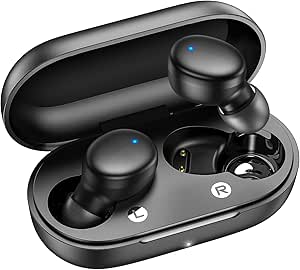 | Best Lightweight Comfort Pick | Driver Size: 8mm | Bluetooth Version: 5.3 | Compatibility: iOS, Android | VIEW LATEST PRICE | See Our Full Breakdown |
| Beats Solo Buds – Wireless Bluetooth Earbuds, 18 Hours Battery Life, Storm Gray |  | Best Premium Portable Pick | Battery Life: 18 hours | Fast Charging: 5 minutes for 1 hour playback | Compatibility: Apple & Android | VIEW LATEST PRICE | See Our Full Breakdown |
| Wireless Bluetooth 5.4 Earbuds with LED Power Display and 6D Stereo Sound |  | Best Value All-Rounder | Driver Size: 13mm | Bluetooth Version: 5.4 | Battery Life: 8H per charge, 40H with case | VIEW LATEST PRICE | See Our Full Breakdown |
| wireless earbuds for studying | Battery Life | Bluetooth Version | Driver Size |
|---|---|---|---|
| TOZO T10 Wireless Earbuds | 55 hours total (15 hours per charge with case) | 5.3 | — |
| TOZO A1 Wireless Earbuds | 7 hours per charge, 32 hours with case | 5.3 | — |
| Sony WF-C510 True Wireless Ear | Up to 11 hours (22 hours with case) | — | — |
| JBL Vibe Beam True Wireless Ea | 8 hours in earbuds + 24 hours in case | — | 8mm |
| Wireless Earbuds with Bluetoot | 6-8 hours per charge, 36 hours total with case | 5.4 | 14.2 mm |
| Open Ear Clip Wireless Earbuds | 12 hours (earbuds), 48 hours (case) | 5.4 | 16.3mm |
| Soundcore P30i by Anker Noise | 10 hours (6 with ANC), 45 hours with case (25 with ANC) | — | 10mm |
| JLab Go Air Pop+ True Wireless | 9+ hours per earbud, 26+ hours with case | — | — |
| Wireless Earbuds with 75H Play | — | 5.4 | — |
| Soundcore by Anker P20i True W | 10 hours per charge, 30 hours with case | — | 10mm |
| Active Noise Cancelling Ear Bu | 48 hours total | 5.4 | 14.2mm |
| TOZO NC9 Hybrid Active Noise C | 60 hours total | 5.3 | — |
| Kurdene Wireless Earbuds Bluet | — | 5.3 | 8mm |
| Beats Solo Buds | 18 hours | — | — |
| Wireless Bluetooth 5.4 Earbuds | 8H per charge, 40H with case | 5.4 | 13mm |
More Details on Our Top Picks
TOZO T10 Wireless Earbuds
For a study-focused roundup, the TOZO T10 earns the top spot because it balances the three things that matter most at a desk: battery endurance, sound customization, and a secure fit through long sessions. With 55 hours of total playtime, it outlasts both the Sony WF-C510 (22 hours with case) and the JBL Vibe Beam (32 hours), which means fewer charging interruptions during exam weeks. The app-based EQ is what separates it from cheaper rivals like the generic Bluetooth 5.4 earbuds — you can dial back the bass-heavy default and create a flatter profile that suits spoken-word lectures and focus playlists. The tradeoff is that the bass-forward tuning needs manual adjustment out of the box, and the touch controls can misfire when you adjust the earbuds mid-session.
Pros:- 55 hours of total battery life outlasts nearly every rival in this roundup
- Customizable EQ via the TOZO app lets you flatten bass for spoken lectures
- IPX8 waterproofing handles gym sessions between study blocks
- Wireless charging case adds convenience for overnight dorm setups
Cons:- Default bass-heavy tuning requires app adjustment before it suits studying
- Touch controls can be unreliable when repositioning the earbuds
Best for: Students who spend long hours at a desk and want customizable sound they can tune for lectures versus music
Not ideal for: Anyone who needs strong noise isolation for a loud library or shared space — these rely on passive sealing rather than active cancellation
- Battery Life:55 hours total (15 hours per charge with case)
- Waterproof Rating:IPX8
- Bluetooth Version:5.3
- Charging:Wireless charging supported
- Ear Tips:Multiple sizes included
- Connectivity Range:Up to 15 meters
- Customization:EQ settings via TOZO app
Our verdict“The safest all-around pick for students who want long battery life and tunable sound without paying premium prices.”
TOZO A1 Wireless Earbuds
Comfort is the reason to choose the TOZO A1 over everything else here. At 3.7 grams per earbud, it is the lightest option in this roundup, noticeably lighter than the JBL Vibe Beam or the Sony WF-C510, and that difference adds up over a six-hour library session. The A1 makes sense for listeners whose ears fatigue quickly or who find standard earbuds too bulky. Where it falls short compared with the TOZO T10 is durability and raw playtime — IPX5 water resistance handles sweat but not heavy rain, and 32 hours total is respectable but roughly half of the T10’s endurance. The 32 EQ presets via the app partially close the sound-quality gap, though deep bass never reaches the T10’s level. Sensitive touch controls are a recurring annoyance if you fidget while reading.
Pros:- 3.7g per-bud weight makes them nearly disappear during long sessions
- 32 EQ presets allow real sound tuning despite the small drivers
- Stable Bluetooth 5.3 connection holds up in crowded lecture halls
- 7 hours per charge covers a full day of classes without the case
Cons:- IPX5 rating is only sweat-resistant, weaker than the T10 or the IP7 generic model
- Bass response is thinner than larger-driver rivals like the JBL Vibe Beam
- Touch controls register accidental taps during adjustments
Best for: Students with small ears or sensitivity to earbud pressure who wear earbuds for entire study days
Not ideal for: Listeners who prioritize deep bass or need serious workout-proof water resistance — the A1 compromises on both
- Weight:3.7g per earbud
- Bluetooth Version:5.3
- Battery Life:7 hours per charge, 32 hours with case
- Water Resistance:IPX5
- EQ Presets:32 via TOZO app
- Charging Case:Included
Our verdict“The comfort-first choice for small ears and marathon wear, as long as bass and ruggedness aren’t dealbreakers.”
Sony WF-C510 True Wireless Earbuds
The Sony WF-C510 stands out for one feature no budget rival in this roundup matches: multipoint connection. If you alternate between a laptop for lecture videos and a phone for messages, the earbuds switch automatically — something the TOZO T10 and JBL Vibe Beam cannot do. That alone justifies the higher price for students working across devices. Sony’s Ambient Sound Mode also lets you hear a roommate or librarian without pulling an earbud out, a genuinely useful middle ground that the open-design JBL approximates but with far less control. The catch is the smaller total battery (22 hours with case versus 32 on the Vibe Beam), and Sony oddly omits a charging cable from the box. Compared with the TOZO A1, fit comfort is good but the buds are heavier, so all-day wear favors the A1.
Pros:- Multipoint pairing switches between laptop and phone automatically
- Ambient Sound Mode gives controllable awareness during study sessions
- 5-minute quick charge delivers an extra hour of playback
- Refined touch controls and call handling from an established brand
Cons:- No charging cable included in the box
- 22-hour total battery is shorter than cheaper picks like the TOZO T10 or JBL Vibe Beam
- Passive noise isolation is modest for loud environments
Best for: Students who jump between laptop and phone all day and want automatic device switching without lifting a finger
Not ideal for: Budget-limited buyers or those needing long off-case battery — 11 hours per charge trails several cheaper options here
- Battery Life:Up to 11 hours (22 hours with case)
- Quick Charging:5 minutes for 1 hour of playback
- Water Resistance:IPX4
- Connectivity:Bluetooth with multipoint connection
- Features:Ambient Sound Mode, hands-free calling, touch controls
- Charging Cable:Sold separately
Our verdict“Worth the premium if seamless device switching matters more than maximum battery life.”
JBL Vibe Beam True Wireless Earbuds
Among budget picks, the JBL Vibe Beam delivers the best price-to-performance ratio for studying. Its 32 hours of total playtime beats the more expensive Sony WF-C510 by ten hours, and the 10-minute quick charge yielding 2 hours of playback is the fastest top-up in this batch — ideal when you discover dead earbuds ten minutes before class. JBL’s tuning leans bass-heavy, which works for lo-fi study playlists but can muddy podcast vocals compared with the EQ-adjustable TOZO T10. There is no active noise cancellation and the semi-open design leaks sound both ways, so a noisy café is not its habitat; the Soundcore P30i or TOZO NC9 are better calls if ANC is a priority. What you get instead is dependable brand-name sound, an IP54 dust-and-water rating, and a fit that stays put through hours of reading.
Pros:- 32 hours total battery beats pricier rivals like the Sony WF-C510
- Fastest quick-charge in this batch: 10 minutes for 2 hours of playback
- IP54 rating adds dust resistance the IPX4 and IPX5 models lack
- Ergonomic fit stays comfortable through long reading sessions
Cons:- No active noise cancellation, unlike ANC options elsewhere in this roundup
- Open-fit design provides weak noise isolation in busy environments
Best for: Budget-minded students who mostly study in quiet spaces and want reliable battery life from a known audio brand
Not ideal for: Anyone studying in loud cafés or shared spaces — the open design and lack of ANC let noise through
- Driver Size:8mm
- Battery Life:8 hours in earbuds + 24 hours in case
- Quick Charging:10 minutes for 2 hours of playback
- Water Resistance:IP54
- Dust Resistance:IPX2
- Calling:Hands-free with VoiceAware
Our verdict“The smartest cheap pick for quiet-room studiers who value battery and brand trust over noise blocking.”
Wireless Earbuds with Bluetooth 5.4, ENC, and IP7 Waterproof
This unbranded pair earns its place through raw hardware numbers: 14.2mm drivers — the largest in this batch, dwarfing the JBL Vibe Beam’s 8mm — plus the newest Bluetooth 5.4 standard and an IP7 rating that outclasses everything except the TOZO T10’s IPX8. For students who take group calls, language-practice sessions, or online tutoring, the ENC noise reduction for calls is the standout: it cleans up your voice on the listener’s end far better than the JBL or TOZO A1 manage. Be clear that ENC is not active noise cancellation for your ears — the Soundcore P30i or TOZO NC9 are the right picks if silencing your surroundings is the goal. Per-charge battery of 6-8 hours is the weakest stretch here, and generic-brand reliability is a gamble compared with Sony or JBL support.
Pros:- Largest drivers in this roundup (14.2mm) deliver punchy, immersive sound
- Bluetooth 5.4 provides the most stable, lowest-latency connection here
- ENC call processing noticeably improves voice clarity on calls
- IP7 waterproofing handles rain, sweat, and outdoor study spots
Cons:- Only 6-8 hours per charge, the shortest stretch among these five
- No-name brand means uncertain warranty and long-term support
- ENC is call-only — it does not reduce noise you hear while studying
Best for: Students who mix online classes and gym sessions and want big sound plus clear voice calls on a budget
Not ideal for: Anyone who wants verified brand support or true active noise cancellation — ENC only filters your microphone, not your surroundings
- Bluetooth Version:5.4
- Driver Size:14.2 mm
- Battery Life:6-8 hours per charge, 36 hours total with case
- Waterproof Rating:IP7
- Charging Port:Type-C
- Noise Reduction:ENC for calls
Our verdict“A budget hardware play for call-heavy students and workout hybrids, provided brand support doesn’t matter to you.”
Open Ear Clip Wireless Earbuds Bone Conduction Headphones
Most earbuds in this roundup seal you off from the world, which is exactly the wrong move if you study in a library where you need to hear announcements, or a dorm where a roommate might knock. This option flips the script with an open ear bone conduction design that keeps your ears free while still delivering audio, so background music can accompany reading without isolating you. Compared with the JLab Go Air Pop+, it sacrifices noise isolation entirely — but that’s the point. The 48 hours of total battery from the case means week-long study sessions between charges, and IPX7 waterproofing handles outdoor study spots. The three-month warranty is short, and audio purists will notice thinner bass than sealed options like the Soundcore P20i.
Pros:- Open ear design keeps you aware of your surroundings during study sessions
- 12 hours per charge and 48 hours total means charging is rarely a concern
- IPX7 waterproofing suits outdoor and active study breaks
- Bluetooth 5.4 with multi-point pairing switches cleanly between laptop and phone
Cons:- No noise isolation, so busy environments will compete with your audio
- Only a 3-month warranty, which is short for daily-use earbuds
Best for: Students in libraries, shared dorms, or anyone who must stay aware of their surroundings while listening to lectures or focus music
Not ideal for: Anyone studying in loud cafés or open offices who needs noise blocked out — the open design lets ambient noise straight in
- Bluetooth Version:5.4
- Design:Open ear clip, bone conduction
- Battery Life:12 hours (earbuds), 48 hours (case)
- Standby Time:60 hours
- Charging Time:1 hour
- Waterproof Rating:IPX7
- Driver Size:16.3mm
- Connectivity:Multi-point support
Our verdict“Pick these if awareness matters more than isolation during study time; skip them if you need to block out a noisy environment.”
Soundcore P30i by Anker Noise Cancelling Earbuds
If the single biggest barrier to studying is noise, this pick makes the most sense at the top of the list. The 42dB active noise cancellation actively erases café chatter and dorm commotion rather than just muffling it — something the JLab Go Air Pop+ and Soundcore P20i simply cannot do, since they rely on passive isolation alone. A transparency mode means you can flip back to hear a study partner without pulling the buds out, and the charging case doubles as a phone stand, which is genuinely handy for watching lecture videos hands-free. Compared with the TOZO NC9 elsewhere in this roundup, the P30i offers fresher connectivity and faster quick-charging. The tradeoff: battery drops from 45 hours to 25 with ANC on, and Anker is vague on sweat resistance.
Pros:- Up to 42dB active noise cancellation for deep focus in loud spaces
- Transparency mode lets you hear people without removing the earbuds
- Charging case doubles as a phone stand for lecture videos
- 4-mic AI-enhanced array keeps call quality clear during study group calls
Cons:- Battery life drops sharply (45 to 25 hours total) with ANC enabled
- No clear water or sweat resistance rating, so workouts are a gamble
Best for: Students who study in noisy environments and need serious noise cancellation to concentrate
Not ideal for: Budget-limited buyers who mostly study in quiet rooms — the ANC premium goes to waste where there’s nothing to cancel
- Noise Cancelling:Active, up to 42dB reduction
- Transparency Mode:Yes
- Driver Size:10mm
- Battery Life:10 hours (6 with ANC), 45 hours with case (25 with ANC)
- Quick Charge:10 minutes for 2 hours of use
- Microphones:4-mic AI enhanced
- Bluetooth:5.4
- Extra:Charging case with built-in phone stand
Our verdict“The most complete choice here for blocking out distractions, as long as you accept the shorter ANC battery life.”
JLab Go Air Pop+ True Wireless Earbuds
Not every student needs ANC or premium branding — sometimes you just need dependable sound for lecture recordings at a price that leaves money for textbooks. The Go Air Pop+ covers the fundamentals well: 9+ hours per charge (35+ total), three EQ modes for switching between podcast clarity and bass-heavy focus music, and three gel tip sizes so long sessions stay comfortable. Compared with the Soundcore P20i, it holds its own on battery and adds IPX4 water resistance the P20i lacks, though its bass won’t hit as hard. There’s no active noise cancellation, so it won’t match the Soundcore P30i in a loud café — but in a quiet room, you’re barely giving anything up for the money. App dependence for customization is a minor annoyance.
Pros:- 35+ hours total playback easily covers a full week of study sessions
- EQ3 sound modes let you tune audio for podcasts, music, or lectures
- Three gel tip sizes keep the fit secure through long sessions
- Dual Connect allows using one earbud while the other charges
Cons:- No active noise cancellation for loud study environments
- IPX4 rating handles sweat but not heavy rain
- Full customization requires the JLab app
Best for: Budget-conscious students who study in reasonably quiet spaces and want solid battery life without paying for ANC
Not ideal for: Anyone studying in noisy environments — without active noise cancellation, chatter will cut through constantly
- Battery Life:9+ hours per earbud, 26+ hours with case
- Sound Features:EQ3 with Signature, Bass Boost, and Balanced modes
- Water Resistance:IPX4
- Bluetooth:5.3
- Microphone:MEMS mic for clear calls
- Fit:3 gel tip sizes (S/M/L)
Our verdict“The smart low-cost choice for quiet-room studiers; spend more if your environment is loud.”
Wireless Earbuds with 75H Playtime, Bluetooth 5.4, IP7 Waterproof, Earhooks
Some study routines outlast every earbud in this lineup — all-nighters, exam weeks, back-to-back recorded lectures. That’s where the 75 hours of total playback here becomes more than a spec: it means charging roughly once a week instead of every other day. The 15 hours per charge alone beats the JLab Go Air Pop+ and doubles the per-charge runtime of the Soundcore P20i. The earhook design keeps them locked in place if your studying happens between gym sessions or walks to class, and the IP7 rating shrugs off rain and sweat. The compromise is refinement — these are bulkier in the ear than sleek options like the TOZO A1, touch controls can register accidental taps when adjusting the hooks, and there’s no active noise cancellation.
Pros:- 75 hours total playback means charging once a week or less
- 15 hours per charge outlasts every other pick here per session
- Earhooks and multiple tip sizes keep buds secure during movement
- IP7 waterproofing handles rain, sweat, and outdoor study spots
Cons:- Earhook design is bulkier and less discreet than compact alternatives
- Touch controls can misfire when adjusting the hooks
- No active noise cancellation
Best for: Students with heavy study loads or active routines who hate charging and want buds that survive workouts between classes
Not ideal for: Fans of minimalist, discreet earbuds — the earhook design is noticeably bulkier than slim in-ear models
- Bluetooth Version:5.4
- Total Playtime:75 hours
- Battery per Earbud:15 hours
- Waterproof Rating:IP7
- Charging:Type-C
- Bluetooth Range:48 feet
- Drivers:14.2mm double-layer diaphragm
- Fit:Earhooks with multiple ear tip sizes
Our verdict“The endurance champion for students who study (and sweat) long hours and refuse to babysit a charging cable.”
Soundcore by Anker P20i True Wireless Earbuds
The P20i occupies a sweet spot between the bare-bones JLab Go Air Pop+ and its pricier sibling, the Soundcore P30i: it inherits the same 10mm drivers and AI-enhanced call quality but drops ANC to hit a friendlier price. For students whose focus depends on bass-forward playlists, the oversized drivers with big bass tuning deliver more low-end punch than the JLab, making lo-fi and instrumental tracks feel fuller during long sessions. The Find My Earbuds feature is a small blessing for anyone who’s ever lost a bud between couch cushions mid-essay. Tradeoffs are real, though — there’s no stated water resistance rating, and without active cancellation it can’t touch the P30i in noisy libraries. Quick charging (10 minutes for 2 hours) softens the shorter 30-hour total.
Pros:- Oversized 10mm drivers deliver bass that keeps music engaging during long sessions
- 10-minute quick charge yields 2 hours of playback for emergency cramming
- Customizable EQ presets and controls via the Soundcore app
- Find My Earbuds feature locates misplaced buds fast
Cons:- No published water or sweat resistance rating
- No active noise cancellation limits use in loud environments
Best for: Students who study to bass-heavy music and want strong sound and call quality without the ANC price premium
Not ideal for: Sweaty or rainy study-adjacent activities — the absence of any published water resistance rating makes moisture risky
- Driver Size:10mm
- Battery Life:10 hours per charge, 30 hours with case
- Quick Charge:10 minutes for 2 hours of play
- Sound Customization:Customizable EQ presets via app
- Extra Features:Find My Earbuds, AI-enhanced calls
- Design:Compact, portable charging case
Our verdict“The best mid-price choice for students who study to music and value sound quality over silence.”
Active Noise Cancelling Ear Buds 48H Wireless Earbuds with Touch Screen
When the goal is blocking out a noisy dorm or a chatty library corner, 45dB of active noise cancellation is the headline here — this is the strongest ANC spec in this batch. Compared with the TOZO NC9’s similar 45dB rating, this model trades app-based EQ tuning for a full-color touch screen case, which makes adjusting settings on the fly easier for anyone who dislikes digging through companion apps. The 48-hour total battery comfortably covers a full exam week without hunting for a charger, and IPX7 waterproofing means a sudden rain sprint between classes is a non-issue. The tradeoffs are real: there’s no volume control on the earbuds themselves, and the touch controls have a learning curve. It also lacks the transparency mode the NC9 offers, so quick conversations mean popping an earbud out.
Pros:- Strong 45dB active noise cancellation for genuinely quiet study sessions
- 48 hours of total battery for multi-day study stretches
- Touch screen case simplifies control without an app
- IPX7 waterproofing survives workouts and weather
Cons:- No volume control on the earbuds themselves
- Touch controls take time to learn
- Little information available about app customization
Best for: Students in loud shared spaces — dorms, cafés, open libraries — who need maximum quiet and long battery between charges
Not ideal for: Anyone who wants quick awareness of surroundings, since there’s no transparency mode and no on-earbud volume control
- Active Noise Cancellation:45dB
- Battery Life:48 hours total
- Charging Time:1.5 hours
- Ear Tip Sizes:S/M/L
- Waterproof Rating:IPX7
- Bluetooth Version:5.4
- Driver Size:14.2mm
- EQ Modes:Standard, Classic, Jazz, Rock, Pop
Our verdict“This pick makes the most sense for students whose biggest obstacle to focus is ambient noise, and who don’t mind fumbling with the case for volume.”
TOZO NC9 Hybrid Active Noise Cancelling Wireless Earbuds, 60H, LED Display
The NC9 is the most complete package in this batch: hybrid ANC at 45dB, a 60-hour total battery — the longest here by a wide margin — and a companion app with customizable sound profiles. Compared with the touch screen model above, the NC9 adds a transparency mode, which matters for students who need to hear a professor’s announcement without removing their earbuds. Six ENC microphones also make it a stronger choice for online study groups and lecture calls than the Kurdene or the 6D stereo option, neither of which offers true ANC. The tradeoff is comfort: the case is heavier and the buds sit bulkier in the ear than the featherweight Kurdene, and the app interface can feel overwhelming if you just want plug-and-play simplicity.
Pros:- Hybrid ANC with transparency mode for switching between focus and awareness
- 60 hours of total battery life, best in this batch
- Six ENC microphones for clear study-group and lecture calls
- Customizable EQ profiles through the TOZO app
Cons:- Bulkier fit may not suit all ear shapes
- App interface can feel complex for casual users
- Limited color options
Best for: Students who want app-customized sound, hybrid ANC, and a battery that lasts an entire week of study sessions
Not ideal for: Small-eared listeners who prioritize an unobtrusive fit — the bulkier housings can fatigue over long wear
- Noise Cancellation:Hybrid Active Noise Cancelling
- Maximum Noise Reduction:45dB
- Microphones:6 with ENC
- Transparency Mode:Yes
- Drivers:10mm
- Water Resistance:IPX8
- Bluetooth Version:5.3
- Battery Life:60 hours total
- Weight:2 g per bud, 33.19 g case
Our verdict“The most balanced choice here for students who want serious noise cancellation, call clarity, and week-long battery in one package.”
Kurdene Wireless Earbuds Bluetooth 5.3 Light Weight In-Ear Headphones
For marathon reading sessions, comfort beats features, and the Kurdene’s featherweight design is its whole case for a spot on this list. Where the TOZO NC9 leans bulky and the touch screen model carries a color display case, these buds nearly disappear in the ear — the difference between a two-hour study block and a six-hour one. The 8mm bass-tuned drivers deliver a punchy low end that keeps background music or focus playlists engaging, and Bluetooth 5.3 pairing is quick on both iOS and Android. Be clear about what’s missing, though: there’s no active noise cancellation, no stated sweat or water resistance, and charging requires a standard 5V/1A USB charger — a fast charger can cause problems. If silence is the goal, buy the NC9 instead.
Pros:- Featherlight fit ideal for long, uninterrupted study sessions
- Deep, bass-forward sound for focus playlists
- Fast Bluetooth 5.3 pairing across iOS and Android
- Three ear tip sizes for a secure, personalized seal
Cons:- No active noise cancellation
- No water or sweat resistance rating
- Requires a standard 5V/1A charger — fast chargers unsupported
Best for: Students with sensitive ears who wear earbuds for hours at a time and mostly study in already-quiet rooms
Not ideal for: Anyone in noisy environments or who sweats through workout-study combos — no ANC and no water resistance rating
- Driver Size:8mm
- Bluetooth Version:5.3
- Compatibility:iOS, Android
- Included Ear Tips:3 silicone sizes
- Charging Requirement:Standard 5V/1A USB
- Weight:Ultra-lightweight
Our verdict“A comfort-first budget option best suited to quiet study spaces where isolation isn’t needed and all-day wearability is.”
Beats Solo Buds – Wireless Bluetooth Earbuds, 18 Hours Battery Life, Storm Gray
The Solo Buds play a different game than everything else here: instead of specs-per-dollar, they offer refined tuning and brand polish. The custom acoustic architecture with dual-layer drivers produces a cleaner, more balanced signature than the bass-heavy Kurdene, and the noise-learning microphone algorithm keeps lecture recordings and calls crisp. With 18 hours of battery it trails the NC9’s 60 by a wide margin, but five minutes of charging buys an hour of playback — a genuine lifeline before an unexpected study sprint. The frustrating part is what’s not in the box: no USB-C cable and no charging adapter, so factor that cost in. Compared with the no-name options in this batch, you’re paying for consistency and polish rather than raw numbers.
Pros:- Balanced, high-fidelity sound from custom dual-layer drivers
- Fast charging: 5 minutes yields 1 hour of playback
- Seamless pairing with both Apple and Android
- Very compact case that disappears in a pocket
Cons:- Charging adapter and USB-C cable sold separately
- 18-hour battery is the shortest in this batch
- Tiny case is easy to misplace
Best for: Students who value sound quality and polish over spec counts and need earbuds that travel light between classes
Not ideal for: Budget-focused buyers or those who forget chargers — battery life is the shortest here and accessories cost extra
- Battery Life:18 hours
- Fast Charging:5 minutes for 1 hour playback
- Compatibility:Apple & Android
- Microphone:Built-in with noise-learning algorithm
- Charging Cable:Sold separately
- Color:Storm Gray
Our verdict“Worth it for students who prioritize sound refinement and portability and can live with a shorter battery and no included charger.”
Wireless Bluetooth 5.4 Earbuds with LED Power Display and 6D Stereo Sound
This is the pragmatic middle ground of the batch: 13mm drivers for rich stereo sound, ENC call noise reduction up to 35dB, and 40 hours of total playtime — more than double the Beats Solo Buds for far less money. The LED power display on the case solves a real student problem: never discovering dead earbuds right before a study session. At 3 grams per bud, it sits between the ultra-light Kurdene and the bulkier NC9 in comfort, and IP7 waterproofing covers gym-to-library days. The honest limitation is that ENC only cleans up calls — it doesn’t silence your surroundings the way the true 45dB ANC on the touch screen model or the NC9 does. Treat this as a dependable daily driver, not a focus machine for loud cafés.
Pros:- 40 hours of total playtime at a budget price
- 13mm drivers deliver full stereo sound with strong bass
- LED case display shows exact remaining charge
- IP7 waterproofing handles sweat and rain
Cons:- No true active noise cancellation — ENC is call-only
- Small bud size may cause discomfort for some ears
- Sparse information on app support or extra features
Best for: Budget-minded students who want long battery, decent calls, and a power display without paying ANC prices
Not ideal for: Students who need real silence for focus — ENC handles calls but won’t block library chatter or café noise
- Driver Size:13mm
- Bluetooth Version:5.4
- Battery Life:8H per charge, 40H with case
- Waterproof Rating:IP7
- Weight:3 g per earbud
- Case LED Display:Yes
- Noise Cancellation:ENC up to 35dB (calls)
Our verdict“The smart value pick for quiet-home students who want battery and sound quality per dollar, not noise cancellation.”

How We Picked
I evaluated every pair through one lens: sustained study sessions. That meant prioritizing passive noise isolation and ANC over raw bass, all-day in-ear comfort over flashy features, and honest single-charge battery life over inflated case totals. I also weighed mic clarity for online classes and group calls, since most students use the same earbuds for lectures as for music.
Ranking followed value logic rather than price alone. Models that solved a specific study problem — distraction blocking, long-session comfort, budget durability — ranked above models with gimmicky extras like LED touch screens or “6D stereo” marketing. Where two pairs performed similarly, the cheaper one won the slot, which is why several $20–30 options outrank more expensive competitors with weaker isolation or comfort.
Factors to Consider When Choosing Wireless Earbuds For Studying
Before clicking buy on any pair in this roundup, it helps to understand what actually drives focus and comfort during study sessions — and where marketing claims tend to mislead.Noise Isolation vs. Active Noise Cancellation
These solve different problems, and confusing them is the most common buying mistake. Passive isolation comes from a good ear tip seal and blocks higher-frequency noise like conversation chatter reasonably well. Active noise cancellation (ANC) uses microphones to cancel low-frequency droning like HVAC hum, traffic, or airplane engines. For a quiet library, passive isolation is honestly enough — paying extra for ANC buys you little. But if you study in a café, dorm common room, or near a busy street, ANC models like the TOZO NC9 or Soundcore P30i earn their price. One warning: budget ANC is often weaker than advertised, so read reviews of the specific model rather than trusting the acronym on the box.
Comfort for Multi-Hour Sessions
A pair that hurts after 45 minutes is useless for studying, regardless of sound quality. Ear tip size and material matter more than earbud weight — a poor seal causes both fatigue and weak bass. Lightweight stem-style buds like the Sony WF-C510 or TOZO A1 tend to disappear in the ear, while bulkier designs with big housings can create pressure points over hours. Foam tips often seal better than silicone for small ear canals. If you’ve ever found yourself removing earbuds to “give your ears a break,” that’s a fit problem, not a you problem — and it’s worth solving before finals week, not during.
Battery Life: Reading the Fine Print
Manufacturers love advertising 50+ hour totals, but that number includes the charging case. What matters for a study marathon is single-charge playtime, which typically runs 5–9 hours across this category. Anything above 6 hours covers most study days, and a case that quick-charges in 10–15 minutes can rescue you before an exam. Also check whether the case charges wirelessly — convenient if you already own a wireless charging pad, irrelevant if you don’t. Students who split sessions between campus and home should prioritize case capacity, since topping up mid-day is often unavoidable.
Mic Quality for Lectures and Group Calls
If your earbuds double as a headset for Zoom classes or study groups, mic clarity becomes as important as sound. Cheap models frequently cut costs on the microphone, producing tinny, wind-tunnel audio on calls even when music sounds fine. Models with dedicated call processing — the Sony WF-C510 and Beats Solo Buds stand out here — handle noisy surroundings better on the transmitting end. Test this early: record a voice memo while wearing the buds, and return them if you sound muffled. Your study partners will thank you, and most retailers offer a return window precisely for this.
Water Resistance and Durability
An IPX4 rating handles sweat and light rain; IPX7 and IPX8 ratings survive full submersion, which is more than studying ever demands unless you’re poolside. Where water resistance actually matters for students is accidental damage — rain between classes, a spilled drink near your desk, or sweaty gym-then-library days. Budget models with IP7 ratings make durability one of the few areas where cheap earbuds genuinely match expensive ones. Don’t pay a premium for a higher IP rating you’ll never stress, but also don’t buy unprotected buds if your backpack gets rained on weekly.
Open-Ear Designs: When to Break the Rules
Bone conduction and clip-style open-ear buds like the open-ear model in this lineup sit outside your ear canal, letting you hear your surroundings completely. For pure desk studying, they’re a poor choice — you’ll hear every distraction you bought earbuds to escape. But they excel for specific study styles: reviewing flashcards on a walk, listening to lecture recordings while commuting by bike, or parents who need to hear kids while working. Think of them as a second pair for active studying rather than your primary set, unless situational awareness is genuinely non-negotiable for you.
Frequently Asked Questions
Do I really need active noise cancellation to study, or is it a gimmick?
It depends entirely on where you study. In a quiet library or bedroom, passive isolation from well-fitting ear tips blocks most distractions, and ANC adds little — the TOZO A1 or JBL Vibe Beam will serve you fine for half the price. In a café, dorm, or shared apartment, ANC noticeably reduces low-frequency background noise and reduces listening fatigue, since you won’t crank the volume to drown out your surroundings. That said, budget ANC is weaker than the flagship implementations, so manage expectations: it dulls background hum rather than erasing it. If noise is your number one distraction, the TOZO NC9 or Soundcore P30i justify the extra spend; if it isn’t, save the money.
Is it better to study with music, white noise, or earbuds just for silence?
Research and student experience both suggest instrumental music or white noise works better than lyrics for most people, since language competes with reading and writing tasks for your brain’s attention. Earbuds with strong isolation let you run white noise or brown noise at low volume, which masks unpredictable sounds like roommates or café chatter more effectively than music does. If you prefer silence, well-sealing passive buds without music still block a surprising amount of ambient noise. The practical takeaway: prioritize a good seal and low volume regardless of what you play, because volume-induced hearing damage during multi-hour daily sessions is a real risk students overlook.
Why are some $20 earbuds rated so highly while others cost $100+ — what am I actually paying for?
The first $20–30 buys you the fundamentals: decent Bluetooth, acceptable sound, and basic comfort, which is why the JLab Go Air Pop+ and Soundcore P20i punch above their price. Beyond that, you’re paying for refinements — better noise cancellation, superior microphones for calls, more consistent fit across ear shapes, codec support for higher-quality audio, and brand reliability around warranty and firmware updates. The Sony WF-C510 and Beats Solo Buds cost more because they refine those secondary factors, not because cheap models are unusable. If you’re a casual studier on a tight budget, the cheap tier genuinely covers your needs. If you wear earbuds 4+ hours daily for classes, calls, and study, the premium tier’s comfort and mic advantages compound.
How long should battery last for a full study day?
Target at least 6 hours of single-charge playtime, which covers a typical study day with the case as backup. Most models in this roundup deliver 5–9 hours per charge, with case totals pushing 24–75 hours, so nearly any of them can survive a full week of sessions between wall charges. The number that actually matters is per-charge runtime: a “60-hour” claim usually means about 8 hours per charge plus seven recharges in the case. Quick charging is the hidden convenience feature — 10 minutes in the case buying you an hour or two of playback rescues you before an exam you forgot to charge for. Wireless case charging (as on the TOZO T10) is nice-to-have but shouldn’t drive your decision.
Are earhook or open-ear earbuds ever the right choice for studying?
Yes, but only for specific scenarios. Open-ear clip and bone conduction designs leave your ear canal unblocked, so you hear traffic, announcements, and people around you — valuable if you study while walking, cycling, or watching over kids. The 75-hour earhook model suits students who memorize flashcards on runs, since hooks stay secure when traditional buds fall out. For seated, distraction-prone studying, though, open-ear designs let in exactly the noise you’re trying to escape, and bone conduction delivers noticeably weaker bass. The honest framing: get them as a complement to sealed earbuds, or as your only pair if situational awareness is a daily requirement, not a preference.
Conclusion
Match the pick to how and where you actually study. For best overall, the Sony WF-C510 wins on the strength of all-day comfort, solid isolation, and dependable battery — the safest choice for most students. For best value, the Soundcore P20i delivers big bass and 30 hours of total playtime at a price that leaves money for textbooks. For best premium, the Beats Solo Buds bring the most polished mic and connectivity experience, especially if you bounce between Apple and Android devices. For beginners or first-time wireless buyers, the JLab Go Air Pop+ or TOZO A1 let you test the waters for under $25 with almost no financial risk. For specific needs: the TOZO NC9 if you study in noisy spaces and need real ANC, the open-ear clip model if you learn on the move, and the earhook 75-hour model if your study sessions happen at the gym. Whatever you choose, prioritize fit and isolation over spec-sheet extras — those two factors determine whether the earbuds actually help you focus.
Fall Picks
fall essentials
As an affiliate, we earn on qualifying purchases.