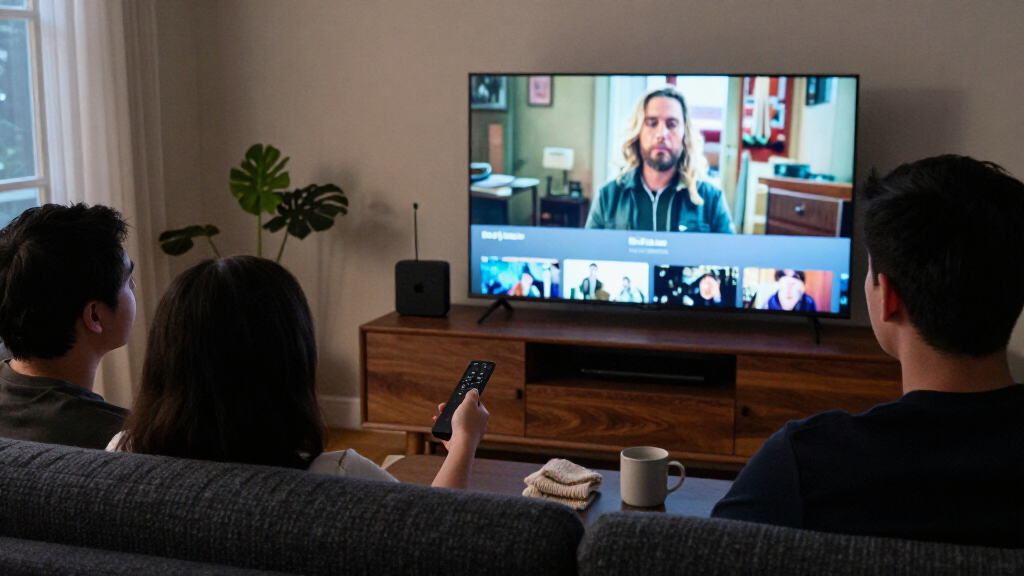

I compared four Apple TV 4K options for buyers who want a dedicated streaming box, with differences in generation, processor, storage, condition, and smart-home support shaping the order. My best overall pick is the 3rd-generation Wi-Fi model: it pairs the A15 Bionic chip with Dolby Vision, HDR10+, Dolby Atmos, and Thread. The 4th-generation model brings the newest listed chip and a remote with Find My, while the renewed 3rd-generation model offers the same core picture and audio formats for shoppers willing to accept a renewed unit.

Get the latest gadgets delivered free with Prime
- Fast, free delivery on millions of items
- Prime Video, Amazon Music and more included
- Member-only deals all year
The choice is less about whether these boxes can stream 4K and more about which tradeoffs fit your setup. A newer generation can bring a faster chip and updated features, but the listing gives fewer details about the 4th-generation model’s storage and connectivity. The renewed options include a limited warranty but have pre-owned status; the 2nd-generation model also uses an older A12 chip and does not list HDR10+. I rank each pick by its documented capabilities, practical fit, and the amount of uncertainty a buyer should be ready to accept.
Complete the kit



Key Takeaways
- Best overall: The 3rd-generation Wi-Fi 64GB model combines A15 performance, Dolby Vision, HDR10+, Dolby Atmos, and Thread in a new-condition listing.
- Newest generation: The 4th-generation model lists an A19 chip, Dolby Atmos, Enhance Dialogue, and a Siri Remote with Find My, but its storage and detailed connectivity are not specified.
- Renewed 3rd-gen alternative: It retains the A15 chip and HDR10+ support, though its renewed status and 90-day limited warranty differ from the new 3rd-gen listing.
- Older-generation option: The renewed 2nd-generation device provides 4K Dolby Vision and Dolby Atmos but has an A12 chip and no listed HDR10+ support.
- Match formats to your gear: Dolby Vision, HDR10+, Dolby Atmos, Thread, and smart-home features matter only when your TV, audio system, network, and accessories support them.
| Apple TV 4K (3rd Generation) Wi-Fi, 64GB | 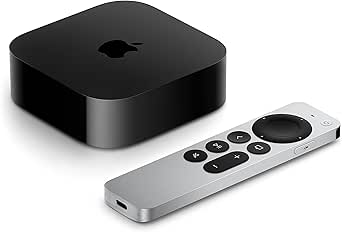 | Best Overall | Generation: 3rd | Processor: A15 Bionic | Storage: 64GB | VIEW LATEST PRICE | See Our Full Breakdown |
| Apple TV 4K (4th Generation) |  | Best for the Newest Generation | Generation: 4th | Chip: A19 | Video formats: Dolby Vision, HDR10+ | VIEW LATEST PRICE | See Our Full Breakdown |
| Apple TV 4K (3rd Generation), 64GB, Wi-Fi, Black (Renewed) |  | Best Renewed 3rd-Generation Alternative | Generation: 3rd | Condition: Renewed | Processor: A15 Bionic | VIEW LATEST PRICE | See Our Full Breakdown |
| Apple TV 4K (2nd Generation, 2021), 32GB, Black (Renewed) |  | Best for Basic 4K Streaming on an Older Generation | Generation: 2nd, 2021 | Condition: Renewed | Processor: A12 Bionic | VIEW LATEST PRICE | See Our Full Breakdown |
| Apple TV 4K device | Generation | Audio | Processor | Storage |
|---|---|---|---|---|
| Apple TV 4K | 3rd | Dolby Atmos | A15 Bionic | 64GB |
| Apple TV 4K | 4th | Dolby Atmos, Enhance Dialogue | — | — |
| Apple TV 4K | 3rd | Dolby Atmos | A15 Bionic | 64GB |
| Apple TV 4K | 2nd, 2021 | Dolby Atmos | A12 Bionic | 32GB in title; listing also notes 2GB of memory storage capacity |
More Details on Our Top Picks
Apple TV 4K (3rd Generation) Wi-Fi, 64GB
The 3rd-generation Wi-Fi 64GB is my strongest all-around recommendation because the listing clearly combines the essentials most Apple TV 4K buyers compare: an A15 Bionic chip, 4K Dolby Vision and HDR10+, Dolby Atmos, and Thread support. That feature mix makes it a more rounded choice than the renewed 2nd-generation unit, which has an older A12 chip and no listed HDR10+. Compared with the renewed 3rd-generation entry, this listing also avoids an explicitly renewed condition, while retaining the same generation’s core processor and format advantages.
Picture formats make a practical difference only if the screen can use them. Dolby Vision and HDR10+ give compatible TVs additional HDR options, so this box is a better fit for a household that has checked its television’s format support rather than one buying around a single headline spec. Dolby Atmos similarly matters to buyers with a compatible soundbar or receiver. On a basic TV-and-speaker setup, those format capabilities may not change everyday viewing much, but the device still supplies a capable streaming platform with access to apps and Apple services.
Thread and AirPlay widen its role beyond video playback. Thread can support a compatible smart-home setup, and AirPlay offers a direct path for sharing content from Apple devices. The Siri Remote’s touch-enabled clickpad gives users a way to navigate and control playback, though buyers who prefer simple physical buttons may want to compare remote styles in person if possible. At 64GB, storage is specified, but the listing does not describe an expandable-storage option; I would not choose it on the assumption that it can be upgraded later.
The main compromise is that this is the Wi-Fi model, and the supplied specs say network streaming requires Wi-Fi. Buyers who need a wired network connection should verify the exact model’s ports and connectivity before choosing it. Still, for a typical wireless home with a compatible 4K display, its documented capabilities are clearer and more balanced than those of the newer but less fully specified 4th-generation listing. I rank it first for that combination of established features, smart-home usefulness, and comparatively clear product details.
Pros:- A15 Bionic chip with 4K Dolby Vision and HDR10+ support
- Dolby Atmos audio for compatible home theater equipment
- Thread, AirPlay, and a touch-enabled Siri Remote
- Clearly listed 64GB storage and standard, non-renewed condition
Cons:- Wi-Fi is the listed network connection for streaming
- 64GB storage is specified, with no expansion option described
Best for: Buyers who want a clearly specified, current-feeling Apple TV 4K for a Wi-Fi home, especially those with a Dolby Vision or HDR10+ TV and compatible Apple or Thread smart-home devices.
Not ideal for: Buyers who need wired networking, expect expandable storage, or have a television and audio setup that cannot use its HDR and Dolby Atmos formats.
- Generation:3rd
- Processor:A15 Bionic
- Storage:64GB
- Connectivity:Wi-Fi, Thread, AirPlay
- Video formats:4K Dolby Vision, HDR10+
- Audio:Dolby Atmos
- Dimensions:3.66 x 3.66 x 1.22 inches
- Weight:7.4 ounces
- Model number:MN873LL/A
Our verdict“I rank this 3rd-generation model first for its clearly documented blend of A15 performance, broad HDR support, Dolby Atmos, and Thread.”
Apple TV 4K (4th Generation)
The 4th-generation Apple TV 4K is the forward-looking choice in this group. Its listed A19 chip distinguishes it from the A15-based 3rd-generation models and the A12-based 2nd-generation option. It also retains support for Dolby Vision, HDR10+, and Dolby Atmos, so the newer generation does not require a buyer to give up the main home-theater formats featured elsewhere in this roundup. For someone choosing primarily by generation and chip, this is the most direct pick.
Its remote adds a specific convenience: Find My can help locate the Siri Remote when it has gone missing, and Siri voice control supports spoken searches and commands. Enhance Dialogue is also listed, which may help make speech easier to follow in supported viewing setups. Those features give this model a different appeal from the 3rd-generation overall pick, whose listing emphasizes the A15 chip and Thread but does not mention Find My or Enhance Dialogue.
That newer hardware comes with a documentation tradeoff. The supplied description does not list storage capacity, connectivity, included accessories, or a warranty. I would confirm those details with the seller before ordering, particularly if you need a specific network connection or want to know exactly what is in the box. The 3rd-generation 64GB Wi-Fi model remains easier to assess from its listed specifications, and the renewed 3rd-generation option explicitly states its storage and warranty terms.
Smart-home hub features are part of the description, but some functions require compatible Apple devices or accessories. Buyers should treat that as a setup requirement, not an automatic benefit for every household. With its A19 chip and Find My remote, this makes the most sense for buyers who value the latest listed generation and its remote conveniences enough to accept less complete listing information. It is not my safest specification-led choice; the 3rd-generation model remains the more transparent all-rounder.
Pros:- A19 chip is the newest processor listed in this comparison
- Supports Dolby Vision, HDR10+, and Dolby Atmos
- Siri Remote includes Find My, with Siri voice control
- Enhance Dialogue and smart-home hub features are listed
Cons:- Storage capacity and detailed connectivity are not specified
- Included items and warranty information are not provided
- Some smart-home features depend on compatible Apple devices or accessories
Best for: Buyers prioritizing the latest listed Apple TV 4K generation, an A19 chip, Find My remote functionality, and the listed Enhance Dialogue feature.
Not ideal for: Buyers who want storage, connectivity, warranty, and included-item details stated clearly before purchase, or whose existing setup cannot use compatible smart-home functions.
- Generation:4th
- Chip:A19
- Video formats:Dolby Vision, HDR10+
- Audio:Dolby Atmos, Enhance Dialogue
- Remote:Siri voice control, Find My
- Smart-home role:Can serve as a smart home hub
- Dimensions:3.67 x 3.67 x 1.22 inches
- Weight:7.7 ounces
- Model number:MLFF4LL/A
Our verdict“Choose the 4th-generation model for its A19 chip and Find My remote, but verify its missing specifications before buying.”
Apple TV 4K (3rd Generation), 64GB, Wi-Fi, Black (Renewed)
This renewed 3rd-generation Apple TV 4K delivers the same headline platform advantages as my overall pick: the A15 Bionic chip, 64GB storage, Dolby Vision, HDR10+, Dolby Atmos, and Thread. It is a close match for shoppers who want those specific features but are open to a renewed device. Against the renewed 2nd-generation model, it has a newer listed processor and HDR10+ support; against the non-renewed 3rd-generation model, the key distinction is condition and the stated 90-day limited warranty.
That similarity is useful, but it also makes the buying decision quite direct. If you prefer a standard-condition listing and want the clearest path to the same A15-based feature set, the first-ranked 3rd-generation model is the more straightforward recommendation. This renewed listing names its storage, connectivity, included power cord and Siri Remote, and warranty, so it gives buyers concrete details to compare. Its compatibility with popular streaming services and smart-home accessories also makes it a good fit for a home already organized around Apple services or supported devices.
The renewed condition is the central compromise. A 90-day limited warranty is stated, but buyers should review the seller’s condition description and return terms before deciding. I would not treat this as equivalent to a new device solely because its processor and formats match the other 3rd-generation pick. The listing also gives dimensions of 4 x 6 x 2 inches, which differ from the other 3rd-generation product’s dimensions; check the exact listing details if shelf placement or a close-fit installation matters.
For households with an HDR-capable 4K TV, the format support is strong on paper. For a display that cannot use Dolby Vision or HDR10+, those features are less of a reason to choose this model over a simpler alternative. Thread may be valuable to compatible smart-home users, but it does not benefit someone without Thread devices. I place this option third because it preserves the 3rd-generation capabilities while asking buyers to accept renewed status, rather than because its core streaming specification is materially weaker than the first pick.
Pros:- A15 Bionic chip with 4K Dolby Vision and HDR10+
- 64GB storage, Thread, and Bluetooth are listed
- Dolby Atmos and Siri Remote with touch-enabled clickpad
- Includes a power cord and Siri Remote, with a 90-day limited warranty stated
Cons:- Renewed, pre-owned condition may not suit every buyer
- Warranty is limited to 90 days as listed
- Dimensions differ from the other 3rd-generation listing, so verify the exact unit details
Best for: Buyers seeking the 3rd-generation A15 and HDR feature set who are comfortable with a renewed device and want the stated 90-day limited warranty.
Not ideal for: Buyers who prefer a non-renewed product, want a longer or clearly different warranty, or have no use for its HDR and smart-home capabilities.
- Generation:3rd
- Condition:Renewed
- Processor:A15 Bionic
- Storage:64GB
- Connectivity:Wi-Fi, Bluetooth, Thread
- Video:4K Dolby Vision, HDR10+
- Audio:Dolby Atmos
- Warranty:90-day limited warranty
- Included items:Apple TV 4K, power cord, Siri Remote
Our verdict“This is the strongest renewed choice for keeping the 3rd-generation A15 and HDR feature set, provided its pre-owned condition works for you.”
Apple TV 4K (2nd Generation, 2021), 32GB, Black (Renewed)
The renewed 2nd-generation model is the most modestly specified option here, but it still covers two major home-theater features: 4K HDR with Dolby Vision and Dolby Atmos. Its A12 Bionic chip puts it behind both 3rd-generation options, which use A15, and the 4th-generation listing, which names an A19. That generation gap makes this a better fit for a buyer focused on core streaming support than for someone selecting a box for the newest listed hardware.
Compared with the 3rd-generation renewed model, this unit does not list HDR10+ or Thread, and its storage is 32GB rather than 64GB. Those differences matter most to people whose TV supports HDR10+, who want the listed Thread smart-home capability, or who value more stated storage. The listing does support AirPlay, Apple services, and major streaming apps, so it can still make sense as a straightforward device for a household that primarily watches video and already has compatible Dolby Vision equipment.
Condition deserves particular attention. This is a renewed, pre-owned device, and the listing states a 90-day limited warranty. Buyers should check the refurbishment and return terms rather than assuming the unit will arrive in the same condition as a new product. The supplied spec notes only 2GB of memory storage capacity, which is not the same as clearly documenting the full storage specification; the title says 32GB, so I would confirm how the seller describes storage before relying on that detail.
The included Siri Remote and cables make the listed package more explicit than the 4th-generation entry, whose box contents are not provided. Still, the older A12 chip and less extensive format list put it behind the other three for future-facing feature breadth. I rank it fourth, not because it lacks 4K or Dolby Atmos, but because buyers get fewer documented capabilities than with the A15 3rd-generation models and fewer newer-generation features than with the A19 option. Choose it only if its older-generation profile matches your needs and the renewed condition is acceptable.
Pros:- 4K HDR video with Dolby Vision support
- Dolby Atmos audio for compatible equipment
- Supports AirPlay and major streaming services
- Siri Remote and listed cables are included
Cons:- Renewed, pre-owned condition with a 90-day limited warranty
- A12 Bionic chip is older than the chips in the other listed models
- HDR10+ and Thread are not listed, and storage details are unclear
Best for: Buyers who want a renewed Apple streaming box with 4K Dolby Vision, Dolby Atmos, AirPlay, and a Siri Remote, without prioritizing the newest listed generation.
Not ideal for: Buyers seeking HDR10+, Thread, the A15 or A19 chips, a non-renewed device, or clearly documented storage details.
- Generation:2nd, 2021
- Condition:Renewed
- Processor:A12 Bionic
- Storage:32GB in title; listing also notes 2GB of memory storage capacity
- Resolution and video:4K HDR, Dolby Vision
- Audio:Dolby Atmos
- Connectivity:Wireless, AirPlay
- Warranty:90-day limited warranty
- Included items:Apple TV 4K, Lightning to USB cable, power cable, Siri Remote
Our verdict“This renewed 2nd-generation box covers core 4K Dolby Vision streaming but ranks last for its older chip and narrower listed feature set.”
How We Picked
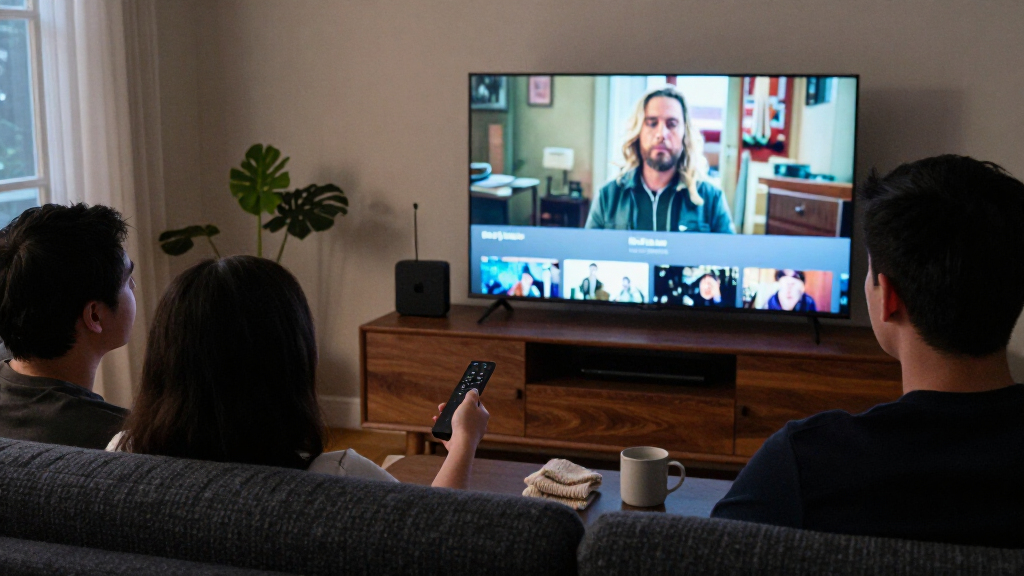
I ranked these options around the needs behind a search for the best Apple TV 4K devices: reliable access to 4K streaming, useful picture and sound formats, generation and processor differences, remote and smart-home capabilities, and clarity about what the listing includes. I gave more weight to features that are explicitly stated than to assumptions about unlisted hardware. That matters here because the 4th-generation entry describes an A19 chip and several home-theater features but does not specify storage capacity, connectivity details, or included items.
My order also reflects the condition of each device. The first 3rd-generation listing is presented as a standard product, while the other two listings explicitly say renewed and describe a 90-day limited warranty. Renewed can suit a buyer comfortable with a pre-owned device, but it is not interchangeable with a new-condition listing; condition and warranty belong in the comparison. I also distinguish the 2021 2nd-generation model from both 3rd-generation entries: it supports Dolby Vision and Dolby Atmos, but the supplied details list an A12 chip and do not claim HDR10+.
I did not rank the products by price, user ratings, or claims that are absent from the supplied information. Instead, I separated them by documented buyer fit. The 3rd-generation Wi-Fi model earns the broadest recommendation because its format and smart-home features are clearly listed. The 4th-generation model is the forward-looking pick for buyers who prioritize its A19 chip and Find My remote, with missing specification details as a real drawback. The renewed 3rd-generation model is the like-for-like alternative for buyers open to renewed condition, and the renewed 2nd-generation device is best treated as a basic 4K option whose older chip and thinner format listing put it fourth.
Finally, I considered setup compatibility. 4K requires a compatible 4K television, while Dolby Vision, HDR10+, and Dolby Atmos depend on compatible display and audio equipment. Thread and smart-home hub functions matter most to households with compatible accessories. These conditions do not make a device worse on their own; they determine whether its feature set will help a particular buyer.
| Apple TV 4K device | Processor | Connectivity | Audio | Model number |
|---|---|---|---|---|
| Apple TV 4K | A15 Bionic | Wi-Fi, Thread, AirPlay | Dolby Atmos | MN873LL/A |
| Apple TV 4K | — | — | Dolby Atmos, Enhance Dialogue | MLFF4LL/A |
| Apple TV 4K | A15 Bionic | Wi-Fi, Bluetooth, Thread | Dolby Atmos | — |
| Apple TV 4K | A12 Bionic | Wireless, AirPlay | Dolby Atmos | — |
Factors to Consider When Choosing Best Apple TV 4K Devices
I would choose an Apple TV 4K by matching the device’s generation and formats to the television, audio gear, network, and smart-home accessories already in the room. The model with the most features on paper is not automatically the best fit if your setup cannot use them.Start with the TV’s HDR support
All four listings describe 4K streaming, but their HDR details are not identical. The two 3rd-generation models and the 4th-generation model list Dolby Vision and HDR10+; the renewed 2nd-generation listing lists Dolby Vision but does not state HDR10+. Before choosing, check your television’s supported formats. If it supports only one of those HDR standards, extra format support may not change the picture you see. A compatible 4K TV is also required to view 4K output; a newer box cannot turn a non-4K display into a 4K screen.
HDR format support is a reason to compare these specific options, not a promise that every show will use every format. The streaming service, title, TV settings, and signal path all affect playback. I favor the 3rd-generation models for buyers who want the listed Dolby Vision and HDR10+ combination while keeping the processor and storage details clear. The 4th-generation listing claims the same formats, though other specification gaps remain.
Choose processor generation for your priorities
The processor sequence in these listings is clear: A19 in the 4th generation, A15 in the 3rd generation, and A12 in the 2nd generation. A newer chip is the most compelling reason to select the 4th-generation device, while the A15 makes the 3rd-generation models a balanced choice with extensive listed format support. The supplied details do not quantify performance differences, so I would not translate chip names into unsupported claims about exact speed or lifespan.
For a buyer replacing an older Apple TV or choosing a device mainly for current streaming services, the 3rd-generation A15 options are the easiest middle ground to evaluate. The renewed 2nd-generation device still lists 4K, Dolby Vision, and Dolby Atmos, but buyers who prioritize a newer generation should compare it carefully against both A15 models. The 4th generation is the pick for those who specifically want the newest listed chip and are comfortable checking details the product listing leaves open.
Treat renewed condition as a separate decision
Two products here are explicitly renewed: the 2nd-generation 2021 model and the 3rd-generation 64GB model. Both listings state a 90-day limited warranty. That information helps set expectations, but a renewed device is still different from the standard-condition 3rd-generation listing. Review the seller’s condition description, included components, warranty wording, and return terms before buying, especially if you expect an identical cosmetic condition to a new product.
The renewed 3rd-generation unit is the more feature-rich of the two renewed choices because it lists an A15 chip, 64GB storage, HDR10+, and Thread. The renewed 2nd-generation model is more basic on the supplied specifications, though its included Siri Remote and cables are stated. If condition certainty matters more to you than renewed status, the non-renewed 3rd-generation entry is the cleanest match in this lineup.
Check storage and the exact contents
Storage is specified as 64GB on both 3rd-generation listings, while the 2nd-generation product title says 32GB and its specification text separately mentions 2GB of memory storage capacity. Those are not equivalent descriptions, so I would verify the seller’s exact storage information before ordering the older model. The 4th-generation listing does not provide a storage figure at all; ask for clarification if storage details are part of your decision.
Box contents are similarly uneven. The renewed 3rd-generation entry lists the device, power cord, and Siri Remote; the renewed 2nd-generation entry lists the device, Lightning to USB cable, power cable, and Siri Remote. The first 3rd-generation description mentions the Siri Remote but does not give a full included-items list, and the 4th-generation listing does not state what comes in the box. Verify accessories rather than assuming every listing includes the same cables or remote.
Match smart-home features to your household
The 3rd-generation models list Thread, and the product descriptions also mention smart-home hub functions. The 4th-generation description says it can serve as a smart-home hub but notes that some features require compatible Apple devices or accessories. These capabilities can be useful when a household already uses compatible equipment; they add little for a buyer who only wants to open streaming apps and has no plan to connect smart-home devices.
AirPlay is listed for the first 3rd-generation model and the renewed 2nd-generation option, while the 3rd-generation renewed listing describes compatibility with Apple services and smart-home accessories. The supplied 4th-generation details emphasize Siri voice control and Find My rather than giving a full connectivity list. If AirPlay, Thread, Bluetooth, or a specific network method is central to your setup, compare the exact model specification rather than inferring support from its generation.
Make sure the audio setup can use Dolby Atmos
Each product listing names Dolby Atmos, but the format is useful only with compatible audio equipment and content. A Dolby Atmos-capable soundbar or receiver may give a home theater more immersive sound when the program and setup support it. If you rely on the television’s built-in speakers, the listed audio format alone may not be a deciding factor.
The 4th-generation description also names Enhance Dialogue, a feature that may matter to viewers who want spoken content to be easier to follow. The other listings do not mention that function, so I would treat it as a differentiator for buyers drawn to the newest model, not as a reason to overlook its missing storage and connectivity details. Check how the feature works with your TV and audio arrangement before making it the deciding point.
Frequently Asked Questions
Which Apple TV 4K is the best overall choice in this comparison?
I rank the 3rd-generation Wi-Fi 64GB model first because its listing clearly states an A15 Bionic chip, Dolby Vision, HDR10+, Dolby Atmos, Thread, and AirPlay. It gives buyers a broad feature set without the renewed condition attached to the other 3rd-generation option. The 4th-generation device may suit people who want its A19 chip and Find My remote, but its storage and connectivity details are not specified here.
Should I choose the 4th-generation model over the 3rd-generation Apple TV 4K?
Choose the 4th-generation model if its A19 chip, Siri Remote with Find My, and Enhance Dialogue are the features you value most. The 3rd-generation model is easier to evaluate because its 64GB storage, A15 chip, Wi-Fi, Thread, and AirPlay are listed. Since the 4th-generation details omit storage, connectivity specifics, included items, and warranty, I would confirm those before placing an order rather than assuming they match the older listing.
Is a renewed 3rd-generation Apple TV 4K different from the non-renewed listing?
The renewed and non-renewed 3rd-generation options share the listed A15 chip, 64GB storage, Dolby Vision, HDR10+, and Dolby Atmos. The renewed listing explicitly states its condition and a 90-day limited warranty, while the other listing is presented without a renewed designation. If you are comfortable with a pre-owned unit, the renewed version retains the key listed features; if condition status is a priority, the non-renewed listing is the more direct fit.
Will these Apple TV 4K devices work with any television?
They can connect to compatible TVs, but 4K playback requires a 4K-capable display, and HDR benefits depend on the formats the TV supports. Dolby Vision and HDR10+ are listed on the 3rd- and 4th-generation options, while the 2nd-generation renewed listing specifies Dolby Vision but not HDR10+. Check the television’s capabilities and available HDMI connection before buying, especially if you want a specific HDR format.
Which model should I choose for smart-home use?
For a household that wants the listed Thread support, I would start with either 3rd-generation model; the non-renewed Wi-Fi 64GB version is my overall pick, while the renewed version makes sense for buyers who accept its condition. The 4th-generation description also identifies smart-home hub features, though it says some functions require compatible Apple devices or accessories and gives fewer connectivity details. Confirm that your existing accessories are compatible before choosing a box for smart-home control.
Conclusion
For most buyers, I recommend the 3rd-generation Wi-Fi 64GB Apple TV 4K. Its A15 chip, Dolby Vision, HDR10+, Dolby Atmos, Thread, and AirPlay make it the clearest all-around choice in this comparison. If the newest listed generation matters more than a complete specification sheet, consider the 4th-generation A19 model for Find My on the remote and Enhance Dialogue, but verify its storage, connectivity, and included items first.
Choose the renewed 3rd-generation model if you want the A15 and HDR feature set and are comfortable with pre-owned condition and a 90-day limited warranty. The renewed 2nd-generation device is best for someone content with 4K Dolby Vision and Dolby Atmos who does not need the newer generation features; confirm its storage details before purchase. Whichever you pick, match its video and audio formats to your TV and sound system, and treat Thread or smart-home functions as a benefit only when your accessories support them.
Halloween Picks
halloween
As an affiliate, we earn on qualifying purchases.