If you’re searching for the best Apple products in 2026, the lineup spans three very different categories: laptops, tablets, headphones, and wearables. The MacBook Air 13-inch with M5 earns the best overall spot because it balances power, portability, and everyday versatility better than anything else here. The iPad 11-inch with A16 is the standout value pick, while the AirPods Max 2 is the premium audio choice for listeners who want over-ear quality inside the Apple ecosystem. The main tradeoff you’ll face is between specialized excellence and broad usefulness — a headphone or smartwatch does one thing brilliantly, but a laptop or tablet covers far more of your daily needs. Budget also splits the field sharply, with the Apple Watch SE 3 and MacBook Neo sitting at the affordable end and the AirPods Max 2 at the top. Keep reading for the full breakdown of which Apple device fits which buyer.

Get the latest gadgets delivered free with Prime
- Fast, free delivery on millions of items
- Prime Video, Amazon Music and more included
- Member-only deals all year
Complete the kit


Key Takeaways
- The MacBook Air M5 ranks first because a 16GB/512GB laptop with Wi-Fi 7 serves work, study, and entertainment, while the AirPods Max 2 and Apple Watch SE 3 only serve one role each.
- The AirPods Max 2 appears twice (Starlight and Blue) because color is the only difference — the buying decision is about the headphones themselves, not which listing you choose.
- The MacBook Neo with A18 Pro chip is the budget wildcard: it borrows iPhone silicon instead of M-series chips, which lowers the price but caps sustained performance compared with the MacBook Air M5.
- The iPad 11-inch with A16 is the best entry point into Apple‘s ecosystem — its 128GB base storage and dual 12MP cameras make it the cheapest pick that still feels modern in 2026.
- The Apple Watch SE 3 is the only wearable in this lineup, making it an easy pick for fitness and notifications — but it’s the least essential purchase unless you already own an iPhone and a main device.




| Apple product | Battery Life | Connectivity | Display | Processor |
|---|---|---|---|---|
| Apple AirPods Max 2 Wireless O | Up to 20 hours | USB-C, wireless | — | — |
| Apple Watch SE 3 GPS 40mm Smar | Up to 18 hours | GPS | — | — |
| Apple 2026 MacBook Air 13-inch | Up to 18 hours | Wi-Fi 7, Bluetooth 6, Thunderbolt 4, MagSafe | 13.6-inch Liquid Retina | M5 chip |
| Apple 2026 MacBook Neo 13-inch | Up to 16 hours | — | 13-inch Liquid Retina | A18 Pro chip |
| Apple AirPods Max 2 Wireless O | Up to 20 hours | Wireless, USB-C | — | — |
| Apple iPad 11-inch with A16 Ch | — | Wi-Fi 6 | 11-inch Liquid Retina | A16 chip |
More Details on Our Top Picks
Apple AirPods Max 2 Wireless Over-Ear Headphones – Starlight
The AirPods Max 2 in Starlight stands out as the strongest audio pick in this roundup, pairing the H2 chip with adaptive noise cancellation that Apple claims is up to 1.5x more effective than the previous generation. Compared with the Blue variant of the same headphones, the hardware is identical — this comes down purely to which finish suits your taste. What separates this model from every other product here is the depth of the ecosystem integration: personalized spatial audio with head tracking and lossless playback over USB-C make it feel like a companion to the MacBook Air M5 rather than a standalone accessory. The tradeoff is real, though. This is the most expensive way to listen to music in the lineup, and beta features like Live Translation depend on having fully updated Apple devices.
Pros:- Exceptional high-fidelity sound with adaptive noise cancellation
- Immersive personalized spatial audio with head tracking
- Breathable knit-mesh canopy and memory foam cushions for long sessions
- Up to 20 hours of battery for all-day listening
Cons:- Premium price point that dwarfs most headphones in this roundup
- Live Translation is in beta with limited regional availability
- Full functionality demands compatible Apple devices and the latest firmware
Best for: Deeply invested Apple users who want reference-quality noise cancellation and spatial audio for commuting, travel, or focused work
Not ideal for: Android or Windows users — the best features require compatible Apple devices and current firmware, which strips away much of the value
- Chip:H2
- Noise Cancellation:Up to 1.5x more effective than previous generation
- Battery Life:Up to 20 hours
- Connectivity:USB-C, wireless
- Design:Breathable knit-mesh canopy, memory foam and textile ear cushions
- Color Options:Five vibrant colors
- Special Features:Personalized spatial audio, Live Translation, Adaptive Audio
Our verdict“Buy these if you live in the Apple ecosystem and want the best-sounding, best-cancelling headphones money can get here; skip them if you’re mixing platforms or on a budget.”
Apple Watch SE 3 GPS 40mm Smartwatch with Midnight Aluminum Case and Sport Band
Where the AirPods Max 2 pushes toward the premium ceiling, the Apple Watch SE 3 makes the most sense for buyers who want the core Apple Watch experience without paying flagship prices. The always-on display and fast charging — up to eight hours of charge in fifteen minutes — are the features you’ll notice daily, and health tracking covers sleep, women’s health insights, and fall detection. Compared with the MacBook Neo’s 16 hours of endurance, an 18-hour battery sounds generous, but on a watch it means nightly charging is still the routine. It pairs beautifully with any iPhone and, like the MacBook Air M5, depends entirely on Apple hardware for full functionality. Third-party app depth isn’t a headline feature here, so power users should check whether their must-have apps run on the SE line before buying.
Pros:- Comprehensive health and fitness tracking including sleep and fall detection
- Always-on display for quick glanceable information
- Fast charging delivers 8 hours of use in 15 minutes
- Lightweight Midnight aluminum case with a comfortable Sport Band
Cons:- 18-hour battery life forces daily charging
- Requires an iPhone for full functionality
- Unclear third-party app support compared with higher-tier Apple Watch models
Best for: iPhone owners wanting reliable fitness, sleep, and safety tracking at the most sensible price in Apple’s watch lineup
Not ideal for: Endurance athletes or multi-day travelers — 18 hours of battery means nightly charging and won’t survive a weekend away from a charger
- Model:SE 3
- Case Size:40mm
- Connectivity:GPS
- Case Material:Midnight Aluminum
- Band:Midnight Sport Band
- Battery Life:Up to 18 hours
- Charging:Fast charging up to 8 hours in 15 minutes
- Water Resistance:Water resistant
Our verdict“This pick makes the most sense for iPhone owners who want everyday health tracking done well at a lower cost than the flagship watch.”
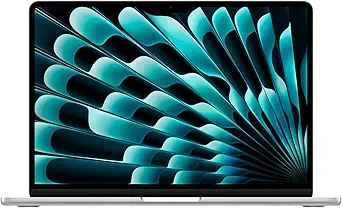
Apple 2026 MacBook Air 13-inch Laptop with M5 Chip, 16GB RAM, 512GB SSD, Liquid Retina Display, 12MP Camera, Touch ID, Wi-Fi 7, Silver
The MacBook Air with M5 chip earns the top laptop spot because it hits the balance the MacBook Neo compromises on: 16GB of unified memory instead of 8GB, a sharper 12MP Center Stage camera instead of 1080p, and Wi-Fi 7 connectivity. For students and professionals running heavy multitasking or AI workloads, that memory headroom is the difference between a machine that lasts four years and one that feels cramped in two. The 13.6-inch Liquid Retina display is genuinely vivid, and up to 18 hours of battery outlasts the Neo by two hours. Tradeoffs exist: it supports only two external displays, there’s no dedicated GPU for serious creative work, and the premium price sits well above the Neo. If your workload is browser-based, the Neo covers the same basics for less — but for longevity and performance, this is the stronger buy.
Pros:- Powerful M5 chip with advanced AI capabilities
- 16GB unified memory provides real multitasking headroom
- Up to 18 hours of battery life in a lightweight chassis
- Vivid 13.6-inch Liquid Retina display with 12MP Center Stage camera
Cons:- Premium price compared with the MacBook Neo
- Limited to two external displays
- No dedicated GPU for graphics-intensive work
Best for: College students and professionals who need a portable machine with enough memory and power to handle multitasking and AI workloads for years
Not ideal for: Heavy creative pros or multi-monitor power users — no dedicated GPU and a two-display limit will frustrate demanding workflows
- Display:13.6-inch Liquid Retina
- Processor:M5 chip
- Memory:16GB Unified Memory
- Storage:512GB SSD
- Camera:12MP Center Stage
- Battery Life:Up to 18 hours
- Connectivity:Wi-Fi 7, Bluetooth 6, Thunderbolt 4, MagSafe
- Color:Silver
Our verdict“This model is better suited to buyers who want one laptop to carry through college and beyond, provided they don’t need discrete graphics or triple monitors.”
Apple 2026 MacBook Neo 13-inch Laptop with A18 Pro Chip
The MacBook Neo is the entry point of this laptop pairing, and its role is clear: it trades raw capability for accessibility. The A18 Pro chip handles everyday productivity and AI-assisted tasks smoothly, and the recycled aluminum build in four playful colors — Silver, Blush, Citrus, and Indigo — gives it more personality than the MacBook Air’s single-tone Silver. But the comparisons with the MacBook Air M5 expose the compromises: 8GB of unified memory is tight for heavy multitasking, battery drops to 16 hours, and the 1080p camera is a step behind the Air’s 12MP sensor. For note-taking, browsing, and streaming, none of that matters much. For anyone who keeps twenty tabs and a video call open simultaneously, the Air justifies its premium. This model makes the most sense for students who need a genuinely portable Mac without stretching their budget.
Pros:- Lightweight and highly portable recycled aluminum design
- Up to 16 hours of battery for a full day of classes or work
- Vibrant 13-inch Liquid Retina display with accurate colors
- Four color options for more personalization than the Air
Cons:- 8GB of unified memory limits multitasking headroom
- 1080p camera lags behind the Air’s 12MP Center Stage sensor
- Price can still feel high for an entry-level machine
Best for: Students and casual users whose workload is browsing, documents, and streaming and who want a light Mac in a fun color
Not ideal for: Heavy multitaskers or future-proofers — 8GB of memory will feel cramped as software demands grow, and the MacBook Air M5 is the wiser long-term spend
- Display:13-inch Liquid Retina
- Processor:A18 Pro chip
- Memory:8GB Unified Memory
- Storage:512GB SSD
- Battery Life:Up to 16 hours
- Camera:1080p FaceTime HD
- Colors:Silver, Blush, Citrus, Indigo
- Material:Recycled aluminum
Our verdict“Choose this Neo if portability and everyday basics matter more than longevity; choose the Air M5 if you’d rather buy once and keep it for years.”
Apple AirPods Max 2 Wireless Over-Ear Headphones – Blue
The Blue AirPods Max 2 is functionally the twin of the Starlight model — same H2-driven audio, same 20-hour battery, same lossless USB-C path — so this choice is about identity rather than performance. If a bold finish matters to you, the Blue makes a visual statement the muted Starlight can’t, and it’s the color most likely to pair stylistically with the colorful MacBook Neo lineup. Acoustically, the active noise cancellation’s 1.5x improvement over the last generation makes these the quietest listening option in this roundup by a wide margin, and the adaptive audio that tunes sound to your environment works seamlessly with Apple sources. The drawbacks mirror the Starlight version: a premium price that’s hard to justify for casual listeners, and region-limited beta features that shouldn’t factor into a purchase decision. Pick the color you’ll enjoy looking at daily.
Pros:- Excellent high-fidelity sound with immersive personalized spatial audio
- Highly effective adaptive noise cancellation tuned to your environment
- Comfortable premium materials including memory foam and custom textile cushions
- Up to 20 hours of all-day battery
Cons:- Premium price point that’s a stretch for casual listeners
- Some features require the latest firmware and compatible devices
- Beta features like Live Translation have limited regional availability
Best for: Style-conscious Apple fans who want flagship noise cancellation and a bold color that stands out from neutral headphone finishes
Not ideal for: Casual or occasional listeners — the flagship price buys capabilities most light users will never fully exploit
- Connectivity:Wireless, USB-C
- Battery Life:Up to 20 hours
- Noise Cancellation:Active Noise Cancellation (1.5x improvement)
- Materials:Breathable knit-mesh canopy, memory foam, custom textile ear cushions
- Color Options:Five vibrant colors
- Special Features:Personalized spatial audio, Live Translation, Adaptive Audio
Our verdict“This option stands out for buyers who want the same flagship AirPods Max 2 experience as the Starlight model but prefer a finish with personality.”
Apple iPad 11-inch with A16 Chip, 128GB, Liquid Retina Display, Wi-Fi 6, 12MP Front/Back Camera, Touch ID – Silver
I position this 11-inch iPad as the most sensible everyday Apple tablet because the A16 chip gives it more headroom than a basic media slate, while the Liquid Retina screen makes reading, sketching, and video calls feel polished. Compared with the Apple 2026 MacBook Air 13-inch Laptop with M5 Chip, it favors touch, Apple Pencil, and quick app use over a fixed keyboard and deeper desktop workflow. The 12MP front camera with Center Stage helps during calls, and Wi-Fi 6 supports fast home networking. The tradeoff is clear: 128GB storage can feel limiting for offline projects, and the Magic Keyboard Folio or Apple Pencil are separate add-ons rather than included parts of the package.
Pros:- Fast A16 performance for everyday apps, browsing, and creative touches
- Sharp Liquid Retina display suits reading, video, and note-taking
- Supports Apple Pencil and Magic Keyboard Folio for flexible input
- Strong front and rear cameras help with calls and document capture
Cons:- Base 128GB storage may feel tight for large offline media or projects
- Keyboard and pencil are not included, raising the cost of a full setup
- Wi-Fi-only listing lacks built-in cellular connectivity
Best for: Students, note-takers, and casual creators who want a lightweight Apple tablet for browsing, streaming, sketching, and video calls.
Not ideal for: People who need a laptop replacement for heavy multitasking, large local archives, or work that requires a built-in keyboard and cellular access.
- Display:11-inch Liquid Retina
- Processor:A16 chip
- Storage:128GB
- Connectivity:Wi-Fi 6
- Front Camera:12MP with Center Stage
- Back Camera:12MP Wide with True Tone flash
- Compatibility:Apple Pencil (1st gen), Magic Keyboard Folio
- Security:Touch ID
Our verdict“The Apple iPad 11-inch with A16 is best for buyers who want a capable everyday tablet for media, notes, and light creation, provided they can live with 128GB and pay extra for keyboard or pencil support.”

How We Picked
I ranked these six products by everyday usefulness first, then value, then specialization. A device that can handle multiple roles — work, media, creativity, communication — ranked higher than one that excels at a single job, because most buyers shopping “Apple products” broadly are building or expanding an ecosystem rather than filling one niche. That logic puts the MacBook Air M5 at the top and the Apple Watch SE 3 near the bottom of a general-purpose list, even though both are excellent at what they do.
Within each comparison, I weighed chip generation, storage and RAM headroom, connectivity standards, and price-to-longevity ratio. Devices with newer silicon (M5, A18 Pro) and current wireless standards (Wi-Fi 7, Wi-Fi 6) scored higher because Apple hardware holds value through long software support cycles. The two AirPods Max 2 colorways were treated as one product reviewed twice, since Starlight and Blue are identical in function and only cosmetic options — the ranking question for that entry is whether over-ear headphones belong on your shortlist at all, not which color wins.
| Apple product | Battery Life | Connectivity | Processor |
|---|---|---|---|
| Apple AirPods Max 2 Wireless O | Up to 20 hours | USB-C, wireless | — |
| Apple Watch SE 3 GPS 40mm Smar | Up to 18 hours | GPS | — |
| Apple 2026 MacBook Air 13-inch | Up to 18 hours | Wi-Fi 7, Bluetooth 6, Thunderbolt 4, MagSafe | M5 chip |
| Apple 2026 MacBook Neo 13-inch | Up to 16 hours | — | A18 Pro chip |
| Apple AirPods Max 2 Wireless O | Up to 20 hours | Wireless, USB-C | — |
| Apple iPad 11-inch with A16 Ch | — | Wi-Fi 6 | A16 chip |
Factors to Consider When Choosing Best Apple Products
Choosing between Apple products in 2026 is less about picking the “best device” and more about picking the right order of purchase. Below are the broader factors that should shape your decision before you commit.Buy Your Primary Device First
The most common mistake buyers make is purchasing a companion device before a primary one. An Apple Watch SE 3 or AirPods Max 2 depend entirely on an iPhone or Mac to reach their full potential — standalone, they’re limited. A MacBook Air or iPad works as a centerpiece around which accessories later make sense. If you’re starting from scratch, the order should almost always be laptop or tablet first, then audio, then wearable. Skipping this logic is why many buyers end up with expensive headphones and no device that takes advantage of their better codecs and pairing features.
Understand Apple’s Two Chip Families
This lineup illustrates a fork in Apple’s strategy: M-series chips for Macs, A-series chips trickling down to budget Macs. The MacBook Air’s M5 is built for sustained laptop workloads, while the MacBook Neo’s A18 Pro is essentially iPhone silicon scaled up. For web browsing, documents, and streaming, you may never notice the difference. For video editing, heavy multitasking, or years of headroom, the M-series is the safer long-term bet. Buyers who assume “Pro” in the chip name means laptop-class performance will be disappointed — the A18 Pro prioritizes efficiency and price, not raw sustained power.
Storage and RAM Are the Real Longevity Decisions
Apple devices can’t be upgraded after purchase, which makes memory and storage the most irreversible choices you’ll make. The MacBook Air here ships with 16GB of RAM and a 512GB SSD — a configuration that stays comfortable for years. The iPad’s 128GB base storage is workable for streaming-centric users but fills quickly if you shoot video or download large apps. My advice: decide how long you plan to keep the device, then buy the storage that supports that timeline. Saving money on storage now often forces an earlier replacement, which is the most expensive saving of all.
Connectivity Standards Age Faster Than You Think
Wi-Fi 7 on the MacBook Air M5 versus Wi-Fi 6 on the iPad may sound like a spec-sheet detail, but wireless standards determine how long a device stays current as routers evolve. The same applies to camera quality for the era of constant video calls — a 12MP Center Stage camera is now the baseline, not a luxury. When two devices are otherwise close, the one with the newer connectivity stack will feel newer for longer. Buyers who ignore this often replace devices not because they’re slow, but because they’ve fallen behind the network and accessories around them.
When Colorways Matter and When They Don’t
The AirPods Max 2 appearing in both Starlight and Blue highlights a quirk of Apple shopping: identical products in different finishes. Color affects resale marginally and personal satisfaction a lot, but it never changes function. The smarter move is to decide on the product category first, then choose the finish last — never pay more attention to the color listing than to the model number. This same discipline applies across Apple’s lineup, where near-identical listings can confuse comparison shopping.
Ecosystem Lock-In Cuts Both Ways
Every product here gets dramatically better when paired with other Apple devices — seamless pairing, shared clipboard, handoff between screens. That integration is Apple’s real product, and it’s why the individual devices justify their prices. The tradeoff is commitment: the deeper you go, the more expensive it becomes to leave. If you already own an iPhone, all six picks here reinforce that ecosystem. If you’re platform-agnostic, weigh whether the integration benefits outweigh the flexibility you’re giving up before buying two or more of these at once.
Frequently Asked Questions
Should I buy the MacBook Air M5 or the cheaper MacBook Neo with A18 Pro?
The MacBook Air M5 is the better pick if this is your main computer and you plan to keep it for four or more years — the M-series chip, 16GB of RAM, 512GB SSD, and Wi-Fi 7 give it real headroom for demanding work. The MacBook Neo makes sense as a secondary machine or for lightweight use like browsing, writing, and streaming, where the A18 Pro chip’s efficiency is plenty. The performance gap shows up mainly in sustained tasks like exporting video or running many heavy apps at once. If your budget forces a choice between a Neo with more storage and an Air with less, the Air is still the safer long-term call for most buyers.
Is the iPad 11-inch with A16 good enough to replace a laptop?
For media consumption, note-taking, and casual productivity, the iPad 11-inch is genuinely excellent and far more portable than any MacBook here. The A16 chip handles everyday apps smoothly, and the 12MP front camera with its flexible positioning is better for video calls than most laptops. Where it falls short is sustained multitasking, file management, and desktop-class software — if your work depends on full apps rather than iPad versions, you’ll hit friction. A reasonable rule: the iPad replaces a laptop if your laptop is mostly a browser, and complements one if it isn’t.
Are the AirPods Max 2 worth it over earbuds, and which color should I choose?
The AirPods Max 2 justify their premium positioning for listeners who value over-ear comfort, stronger noise isolation, and fuller sound for long sessions — home listening, flights, and focused work. Earbuds win on portability and workout practicality, so the Max 2 makes most sense as a second pair rather than an only pair. As for Starlight versus Blue: they are functionally identical, so this is purely an aesthetic and resale-margin decision. Choose the finish you’ll enjoy daily, and don’t let color availability push you toward a different seller or configuration.
Does the Apple Watch SE 3 make sense if I don’t own an iPhone?
Frankly, no — the Apple Watch is the most ecosystem-dependent product in this entire roundup. It requires an iPhone for setup, and its best features like health syncing, iMessage replies, and app ecosystem are built around that pairing. Without an iPhone, you lose the majority of what makes the SE 3 worth buying, and a platform-neutral wearable would serve you better. If you do own an iPhone, the SE 3 is the value entry point into Apple’s watch lineup, covering fitness tracking, notifications, and safety features without the premium pricing of higher models.
Which single Apple product should I buy first on a limited budget?
Start with whichever primary device anchors your day — and for most people on a budget, that’s the iPad 11-inch with A16, which delivers the most Apple ecosystem per dollar in this lineup. It covers browsing, streaming, video calls, light productivity, and even sketching with an accessory. If your work requires desktop software, stretch to the MacBook Neo or MacBook Air instead, because no accessory will fix a missing keyboard-and-trackpad workflow. Accessories like the AirPods Max 2 or Apple Watch SE 3 should come after the centerpiece device, not before — they enhance an ecosystem rather than build one.
Conclusion
Mapping this lineup to buyer types closes the decision cleanly. For best overall, the MacBook Air 13-inch with M5 is the pick — its power, memory, and Wi-Fi 7 make it the one device here that can serve as your only device. For best value, the iPad 11-inch with A16 delivers the most capability for the money, and it doubles as the best choice for beginners entering the Apple ecosystem. For best premium, the AirPods Max 2 (Starlight or Blue, your call) is the luxury audio play for listeners who want the best over-ear experience Apple makes. For specific needs: the MacBook Neo suits budget-conscious students and secondary-machine buyers, while the Apple Watch SE 3 is the right add-on for iPhone owners focused on fitness and notifications. Buy your primary device first, accessorize second — and the ranking above tells you exactly where to start.
Fall Picks

DJI Osmo Action 4 Essential Combo Waterproof 4K Action Camera
As an affiliate, we earn on qualifying purchases.