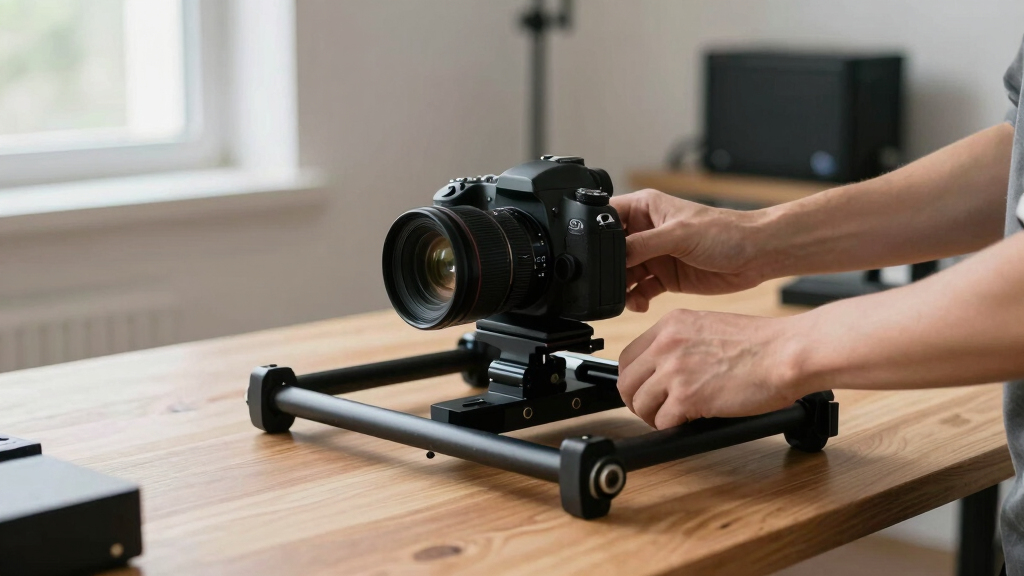

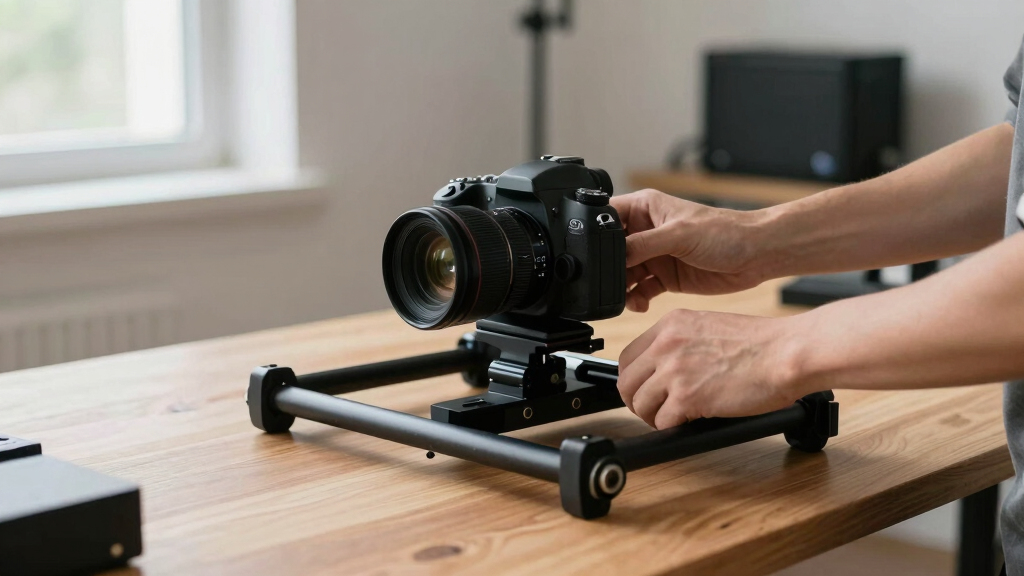
A camera slider can dramatically enhance the production quality of your videos by adding smooth, cinematic movement. The best options vary from manual to motorized models, each suited to different shooting styles and budgets. The GVM 48″ Motorized Slider stands out for professional-level automation, while the Zecti 16″ Slider offers affordability and simplicity for beginners. However, choosing the right slider involves balancing features like length, motorization, payload capacity, and ease of use. Continue reading for an in-depth comparison of these 8 top models and what makes each one unique.
Key Takeaways
- Motorized sliders generally provide smoother, more precise movement but come at a higher price point.
- Longer sliders offer more cinematic movement but can be less portable and harder to handle in tight spaces.
- Build quality and weight capacity are critical for stability, especially when using heavier cameras or accessories.
- App control and remote operation are game-changers for complex shots, yet they often introduce additional setup complexity.
- Manual sliders remain relevant for budget-conscious users or those preferring a more tactile shooting experience.


More Details on Our Top Picks
GVM 48″/120cm Motorized Camera Slider, APP Professional Carbon Fiber Dolly Rail Camera Slider, Motorized Time Lapse and Video Shot Follow Focus Shot and 120 Degree Panoramic Shooting
This GVM motorized slider stands out for its extensive feature set, including multiple shooting modes like tracking, panoramic, and time lapse, all controllable via an intuitive app. Its carbon fiber construction offers excellent stability and anti-shake performance, making it suitable for professional videographers. Compared to the IFOOTAGE Nano II, which excels in multi-axis control, this model prioritizes ease of use and versatility for standard filmmaking. The tradeoff is that it’s heavier and more expensive, which might be a concern for outdoor shooters needing ultra-light gear. Its compatibility with various tripods and multiple screw ports enhances its adaptability in different setups.
Pros:- Supports multiple shooting modes including time lapse, panoramic, and follow focus
- Made of sturdy, anti-shake carbon fiber for stable footage
- App control allows for precise, remote operation
Cons:- Relatively heavy at around 4 kg, less ideal for long outdoor shoots
- Higher price point compared to simpler manual sliders
- Complex setup may overwhelm beginners
Best for: Professional videographers needing a multi-functional, portable slider with app control and panoramic capabilities.
Not ideal for: Amateurs or hobbyists on a tight budget who require lightweight, simple sliders for occasional use.
- Material:Carbon fiber
- Length:120 cm
- Maximum Load:6.6 lbs (3 kg)
- Control:APP via iOS/Android
- Shooting Modes:Tracking, panoramic, time lapse
- Pan Range:120 degrees
Bottom line: This slider suits advanced users seeking comprehensive control and professional-quality features, but may be too bulky or costly for casual videographers.
NEEWER 31.5″/80cm Motorized Camera Slider, DSLR Carbon Fiber Dolly Rail Slider with App Control, 4400mAh F750 Battery for Time Lapse Photography, Supports Video Mode, NOT Include Charger, ER1
Compared with the GVM 48″ slider, the NEEWER ER1 offers a more compact 80cm length, making it easier to carry and ideal for outdoor shoots. Its lightweight carbon fiber build supports cameras up to 11 lbs horizontally and offers smooth, quiet motion thanks to its stepper motor. It supports app and remote control modes, similar to the GVM, but lacks a charger, which could be inconvenient during extended shoots. The shorter length limits some shots but makes it more agile and suitable for travel. Its simple setup and solid stability make it a practical choice for hobbyists and content creators on the move.
Pros:- Lightweight and portable at just over 2 pounds
- Supports camera weights up to 11 lbs with smooth operation
- Supports app and remote control for flexible operation
Cons:- Battery not included, requires separate purchase
- Limited length may restrict some shot compositions
- No charger included, potentially inconvenient for outdoor use
Best for: Amateur videographers and travel content creators needing a reliable, portable slider without the high price tag.
Not ideal for: Professional filmmakers requiring longer tracks or more advanced multi-axis control features.
- Length:80 cm
- Material:Carbon fiber
- Max Load:11 lbs
- Battery:4400mAh (not included)
- Control:App and remote
- Supports Video Mode:Yes
Bottom line: This budget-friendly slider is perfect for hobbyists and travelers who prioritize portability and ease of use over extensive features.
IFOOTAGE Shark Slider Nano II 660 Motorized Camera Slider – 26″ Multi-Axis Pan Slider for DJI RS 2/RS3 Pro/RS 4/RS 4 Pro Gimbals, 15.4lbs Payload, 360° Panoramic, 6 Modes, Phone/Camera Compatible
This Nano II slider distinguishes itself with its multi-axis control, allowing seamless integration with DJI gimbals for advanced, Hollywood-style shots. Its ultra-precise 1μm movement and aviation-grade aluminum and carbon fiber construction promise stability and jitter-free slides, surpassing traditional sliders like the GVM in cinematic fluidity. The built-in 60W PD charging supports long shooting sessions, and the AI-powered auto-follow feature enables autonomous subject tracking. The main tradeoff is its complexity and higher cost, which may be overkill for casual users or those only needing basic sliding functions. Its 26-inch travel range and multi-camera support make it ideal for high-end productions requiring multi-angle shots.
Pros:- 360° unlimited pan and dual-axis control
- Precision 1μm movement for smooth shots
- Supports DJI gimbals for multi-axis synchronization
Cons:- High price and complex setup compared to basic sliders
- Heavier weight, less portable for outdoor shoots
- Requires compatible DJI gimbal (sold separately)
Best for: Professional filmmakers and hobbyists seeking multi-axis control and advanced cinematic capabilities.
Not ideal for: Entry-level users or those seeking a simple, lightweight slider for casual use.
- Travel Length:26 inches
- Payload Capacity:15.4 lbs
- Control:Phone app, gimbal sync
- Power:PD 60W charging
- Modes:6 modes including auto follow
- Compatibility:DJI RS gimbals
Bottom line: This slider is ideal for advanced users aiming for cinematic multi-axis shots but may be too complex and costly for beginners.
Zecti Camera Slider 16″/40cm Adjustable Carbon Fiber Camera Dolly Track Slider Video Stabilizer Rail for Camera DSLR Video Movie Photography Camcorder Stabili & Phone
This Zecti 16″ manual slider offers a portable, lightweight solution for quick setups and travel shooting. Its carbon fiber construction ensures decent stability and quiet operation, though it’s manually operated, making it less suited for dynamic or complex shots compared to motorized options like the GVM 48″. The slider’s adjustable legs and spirit level allow for fine-tuning on uneven surfaces, making it versatile for ground and tripod use. Its compatibility with various cameras, including DSLRs and smartphones, makes it a flexible choice for hobbyists and on-the-go shooters. However, being manual, it produces noise and may not deliver the smoothness of motorized sliders for professional cinematic work. It’s best for those prioritizing portability over automation.
Pros:- Compact and lightweight for easy portability
- Adjustable legs and spirit level for uneven surfaces
- Compatible with various cameras and smartphones
Cons:- Manual operation produces noise and less smooth motion
- Limited length and features compared to motorized sliders
- Requires physical effort for movement
Best for: Travel photographers and hobbyists needing a compact, manual slider for straightforward shots.
Not ideal for: Professional videographers requiring motorized control and ultra-smooth motion for cinematic productions.
- Length:16 inches
- Material:Carbon fiber
- Max Load:4.4 lbs
- Weight:600g
- Adjustable Legs:Yes
- Compatibility:DSLR, smartphone
Bottom line: This manual slider is perfect for travelers and hobbyists who need a portable, easy-to-carry solution for basic shots, but not for professional cinematic use.
GVM Camera Slider, 27” Aluminum Alloy Motorized Slider with Time-Lapse, Video Shooting and Round Trip Shooting, Track Dolly Rail for Most DSLR Cameras for Interview Photography
This GVM motorized slider excels in providing a smooth, stable motion that rivals higher-end models like the IFOOTAGE Shark Slider Nano II, but at a more accessible price point. Its aluminum alloy construction ensures durability while maintaining portability, making it suitable for a variety of shooting scenarios—whether on the ground, mounted on a tripod, or used for multi-angle shots. The multiple screw holes and adjustable non-slip feet give flexibility that surpasses simpler manual sliders. However, its max load capacity of only 2.5kg limits heavier camera setups, and the absence of a dedicated carrying case adds to portability considerations. Compared with the Zecti slider, it offers motorized control, but the Zecti’s smaller size is more portable for quick runs. Overall, this pick is perfect for intermediate users seeking reliability and versatile functionality without the complexity of high-end gear.
Pros:- Robust all-metal aluminum alloy build ensures durability.
- Supports multiple shooting angles including vertical and 45 degrees.
- Flexible mounting options with multiple screw holes and tripod compatibility.
- Includes a carrying bag for added portability.
Cons:- Limited maximum load capacity of 2.5kg restricts heavier camera gear.
- Lack of a dedicated carrying case makes transportation less convenient.
- Slide travel of only 7 inches each way may be limiting for certain shots.
Best for: Filmmakers and content creators who need a durable, motorized slider capable of multi-angle shots and time-lapse sequences.
Not ideal for: Heavy professional setups or users requiring ultra-portable gear, due to its weight and limited load capacity.
- Construction:Aluminum Alloy
- Item Dimensions:26.8″ x 5.9″ x 2.75″
- Item Weight:2.36 Kilograms
- Max Load Capacity:2.5kg
- Rail Length:27 inches
- Compatibility:DSLR, DV, Mobile
Bottom line: This slider is ideal for enthusiasts and semi-professionals needing a reliable, versatile motorized slider with good build quality for varied shooting styles.
GVM Motorized Camera Slider,31″ Wireless Carbon Fiber Dolly Rail Camera Slider with APP Control, Motorized Time Lapse and Video Shot Follow Focus Shot and 120 Degree Panoramic Shooting
This GVM model introduces wireless app control, making it a superior choice for users who want to operate the slider remotely, unlike the Wired model. Its carbon fiber construction offers a mix of lightweight portability and stability, ideal for traveling or quick setups. The multiple shooting modes—including tracking, panorama, and time-lapse—provide creative flexibility that surpasses manual sliders like the Zecti, especially with features like programmable start/end points and adjustable travel speed. The inclusion of six shutter release cables broadens its compatibility with various cameras, although the reliance on app control might be cumbersome for those less tech-savvy. Compared to the manual GVM 48” slider, this version’s wireless operation enhances ease of use but adds complexity and potential connectivity issues. Overall, it’s best suited for professionals or advanced hobbyists aiming for sophisticated, remote-controlled shoots.
Pros:- Wireless app control for remote operation and versatile shooting angles.
- Made of lightweight yet stable carbon fiber for portability.
- Supports multiple shooting modes including tracking, panorama, and time lapse.
- Multiple screw ports for flexible mounting on tripods and stands.
Cons:- Higher price point due to advanced features and materials.
- Potential connectivity issues with app control depending on device compatibility.
- Battery life may limit long shooting sessions without recharge or replacement.
Best for: Advanced filmmakers and videographers who prefer wireless operation and multi-mode shooting capabilities.
Not ideal for: Beginners or those on a tight budget, as its complexity and cost are higher than manual or simpler sliders.
- Material:Carbon Fiber
- Rail Length:31 inches
- Control:APP Wireless
- Battery:Included, rechargeable
- Shooting Modes:Tracking, Panorama, Time Lapse
- Compatibility:Most DSLR, Mirrorless, and Mobile
Bottom line: This slider is best for professional or tech-savvy users seeking wireless control and multiple advanced shooting modes in a portable package.
GVM Great Video Maker Camera Motorized Slider,48″/120CM,Automatic Round Trip,Time Lapse,Panoramic Shooting,Video Capture,Slider Smooth and Stable,with Battery
This 48-inch GVM slider stands out for its extended length, capable of capturing sweeping panoramic shots or complex jib movements that shorter sliders like the 27-inch model struggle with. Its carbon fiber construction provides a lightweight yet sturdy platform, ensuring smooth, nearly silent operation even during high-speed moves from zero to 60 mph. The unit’s versatile motion modes—including side-to-side tracking, panoramic sweeps, and vertical JIB shots—make it a valuable tool for professional productions seeking dynamic visual effects. The included remote and battery support provide flexibility for outdoor use, unlike models that depend solely on mains power. However, its size and weight may make transportation less convenient, and the learning curve for programming complex moves can be steep for beginners. This model is best for seasoned videographers aiming for cinematic, multi-axis shots with maximum travel distance.
Pros:- Extended 48-inch length for sweeping panoramic and jib shots.
- Supports multiple motion modes including tracking, panoramic, and vertical JIB shots.
- Nearly silent operation with fast acceleration from zero to 60 mph.
- Includes remote control and rechargeable battery for outdoor use.
Cons:- Large size and weight reduce portability and ease of transport.
- More complex setup and programming for advanced shots.
- Higher cost compared to shorter or manual sliders.
Best for: Professional videographers and filmmakers needing a long, versatile slider capable of complex movements and high-quality shots.
Not ideal for: Amateurs or users with limited space or transport options, due to its size and weight.
- Length:48 inches
- Material:Carbon Fiber
- Speed:Zero to 60 mph
- Modes:Tracking, Panoramic, JIB
- Power:Battery and mains compatible
- Control:Remote with programmable settings
Bottom line: This slider is ideal for professional productions demanding long travel distances, multi-axis motion, and cinematic shot capabilities.
How We Picked
The products in this roundup were evaluated based on performance, build quality, ease of use, versatility, and value for money. I prioritized models that offer a balance of advanced features like motorization and app control with durability and stability. The ranking reflects how well each slider performs across different shooting scenarios, from solo videographers to professional production teams. Products with additional features, such as panoramic movements or multi-axis capabilities, were weighted more heavily, but simplicity and reliability were also key factors for inclusion.Factors to Consider When Choosing Camera Slider
Choosing the right camera slider involves considering several key factors that impact your shooting experience and final footage. Beyond basic length and motorization, understanding how each feature aligns with your filming style can prevent costly mistakes and help you get the most value from your investment.Size and Length
The length of your slider determines how much camera movement you can achieve. Longer sliders, like 48 inches, allow for sweeping cinematic shots but can be cumbersome to transport and set up, especially in tight spaces. Shorter models are more portable and easier to handle but limit your motion range. Consider your typical shooting environment and whether you’ll need to move around or shoot in confined areas when selecting the size.
Motorization and Control
Motorized sliders provide smooth, programmable movement, ideal for time-lapses and complex tracking shots. However, they tend to be more expensive and require power sources like batteries or AC adapters. Manual sliders are straightforward, more affordable, and offer tactile control, but they lack automation. Think about whether you need advanced features like app control, programmable paths, or simple manual operation based on your shooting style.
Build Quality and Stability
The material and construction of your slider influence its stability and durability. Aluminum and carbon fiber models tend to be lighter yet sturdy, reducing fatigue during extended shoots. Heavier sliders often provide better stability, especially when supporting heavier camera rigs. Ensure the slider has smooth rails and reliable mounting options to prevent wobbling, which can ruin otherwise professional-looking footage.
Payload Capacity
Your camera setup’s weight determines which slider is suitable. Overloading a slider can cause jittery movement and potential damage. Always select a model that supports your camera and accessories comfortably, with a safety margin. Higher payload capacities typically come with more robust motors and build, but they may add to the overall weight and cost.
Versatility and Additional Features
Extras like panoramic capabilities, multi-axis movement, and programmable shots can expand your creative options. However, these features often come with increased complexity and cost. Consider whether you need these advanced functions for your projects or if a simple, reliable slider will suffice. Be mindful that more features might mean a steeper learning curve or higher maintenance requirements.
Frequently Asked Questions
Is a motorized slider worth the extra cost?
Motorized sliders can significantly enhance the quality and complexity of your shots by providing smooth, programmable movements that are difficult to achieve manually. They are especially useful for time-lapses, automated tracking, and multi-shot sequences. However, they come with higher costs and maintenance requirements, so if your projects involve simple panning or you’re on a tight budget, a manual slider may be more appropriate. The decision depends on how often you need automation and the level of precision you require.
How portable should my camera slider be?
Portability depends on your shooting environment and travel needs. Smaller sliders, around 16 to 27 inches, are easier to carry and set up quickly, making them ideal for on-the-go filming or tight spaces. Longer sliders provide more sweeping shots but are bulkier and heavier. If you frequently shoot outdoors or in dynamic locations, prioritize lightweight, compact models. For studio work or controlled environments, size and portability may matter less than stability and length.
What is the best material for a camera slider?
Materials like aluminum and carbon fiber dominate the market because they balance weight, durability, and stability. Carbon fiber models tend to be lighter and more rigid, reducing flex and wobble, which improves shot quality. Aluminum sliders are generally more affordable and still offer good strength, but they may be a bit heavier. Avoid plastic sliders unless you’re on a very tight budget, as they often sacrifice stability and longevity.
Do I need a slider with panoramic or multi-axis features?
Features like panoramic or multi-axis movements unlock advanced creative possibilities, such as sweeping 360-degree shots or dynamic multi-directional pans. These functions are particularly useful for professional projects or filmmakers seeking cinematic versatility. However, they add complexity and cost, and require more setup time. For beginners or casual users, a basic linear slider often suffices, while professionals may find these extras justify the investment.
How much should I expect to spend on a good camera slider?
Entry-level manual sliders can be found for under $100, suitable for hobbyists or beginners. Mid-range motorized models generally range from $200 to $600, offering a balance of automation, build quality, and features. High-end professional sliders with advanced functions, high payload capacities, and premium materials can cost over $1,000. Your budget should align with your intended use, frequency of shooting, and the level of automation or features you need.
Conclusion
For casual shooters or those just starting out, a compact manual slider offers simplicity and affordability. Professionals aiming for smooth, automated shots should consider a motorized model like the GVM 48″ Motorized Slider, which excels in reliability and features. If you prioritize portability and ease of use, the Zecti 16″ Slider provides excellent value. The IFOOTAGE Shark Slider Nano II is ideal for gimbals and multi-axis setups, perfect for videographers wanting cinematic versatility. Ultimately, your choice should match your filming style, budget, and the level of automation you desire.