Finding a reliable professional 3D printer for prototypes can be challenging, as the category balances high precision, versatility, and ease of use. The Sovol SV08 MAX stands out as the best overall choice thanks to its robust coreXY design and consistent performance. For high-speed production, the Creality K2 SE offers impressive multi-color support and auto-leveling, making it ideal for rapid iteration. Meanwhile, the Bambu Lab P2S Combo provides multi-material capabilities for complex prototypes. These options illustrate the core tradeoffs: higher precision often comes at a higher price, and increased features can reduce simplicity. Continue reading to see the full breakdown of these top picks and what makes each unique.

Get the latest gadgets delivered free — and shop member deals
- Fast, free delivery on millions of items
- Access to Prime Big Deal Days deals on October 6–7
- Prime Video, Amazon Music and more included
Complete the kit


Key Takeaways
- The best professional 3D printers for prototypes offer a blend of accuracy, speed, and material versatility.
- CoreXY systems tend to deliver higher precision and stability, making them popular among professional users.
- Multi-material and multi-color support significantly expand the range of prototype applications but often increase complexity and cost.
- Auto-leveling features improve print consistency and reduce setup time, critical for frequent prototype production.
- Size and build volume vary widely; select based on the scale of your prototypes, balancing space and capacity needs.
| Sovol SV08 MAX CoreXY 3D Printer |  | Best for Large-Scale, Industrial Prototyping | Print Volume: 500×500×500mm³ | Max Speed: 700mm/s | Acceleration: 40,000 mm/s² | VIEW ON AMAZON | See Our Full Breakdown |
| Creality K2 SE 3D Printer, High-Speed Multi-Color Support, Auto Leveling, Solid Metal Build, 220×215×245mm | 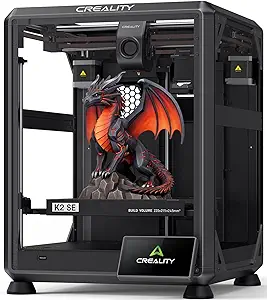 | Best for Fast, Multi-Color Prototyping for Beginners and Intermediate Users | Print Speed: 500mm/s | Build Volume: 220×215×245mm | Build Material Compatibility: Multi-material, supports Creality CFS | VIEW ON AMAZON | See Our Full Breakdown |
| Bambu Lab P2S Combo, P2S 3D Printer & AMS 2 Pro, Multi-Color 3D Printing |  | Best for Seamless Multi-Color, Multi-Material Professional Prototyping | Product Dimensions: 18 x 22 x 18 inches | Item Weight: 46.3 pounds | Print Speed: up to 600mm/s | VIEW ON AMAZON | See Our Full Breakdown |
| Creality K1 Max 3D Printer |  | Best for Very Large, Rapid Prototyping with Smart Monitoring | Print Speed: 600mm/s | Build Volume: 300 x 300 x 300mm | Max Temperature: 300°C | VIEW ON AMAZON | See Our Full Breakdown |
| FLASHFORGE Creator 5 Pro 3D Printer with 4 Toolheads, Multi-Material & Color Printing, Heated Chamber, CoreXY System |  | Best for Multi-Material, Multi-Color Industrial Prototyping | Product Dimensions: 16 x 14 x 18 inches | Item Weight: 39 pounds | Active Heated Chamber: 65°C | VIEW ON AMAZON | See Our Full Breakdown |
| Anycubic Kobra X Multicolor 3D Printer, Easy Setup, Native 4-Color |  | Best for Versatile Multi-Color Prototyping | Product Dimensions: 23 x 13 x 22 inches | Item Weight: 20.9 pounds | Build Volume: 260mm x 260mm x 260mm | VIEW ON AMAZON | See Our Full Breakdown |
| Bambu Lab P1S Combo 3D Printer with Multi-Color Printing and Auto Bed Leveling |  | Best for High-Speed Multi-Color Multi-Material Prototyping | Product Dimensions: 15.31 x 18.03 x 15.31 inches | Item Weight: 47.5 pounds | Maximum Printing Speed: 500mm/s | VIEW ON AMAZON | See Our Full Breakdown |
| FLSUN V400 Max High-Speed Large 3D Printer with Massive 500x550mm Build Volume and Auto Leveling |  | Best for Large-Scale Prototypes and Big Models | Build Volume: 500x550mm | Maximum Print Height: 550mm | Print Speed: 600mm/s | VIEW ON AMAZON | See Our Full Breakdown |
| Snapmaker U1 3D Printer, 4-Toolhead with 5-Second Tool Changer, Multi-Color Printing |  | Best for Fast Multi-Color, Multi-Material Prototyping with Ease | Toolhead System: 4-toolhead with 5-second automatic changer | Build Volume: 270 x 270 x 270 mm | Max Speed: 500 mm/s | VIEW ON AMAZON | See Our Full Breakdown |
| professional 3d printer for prototype | Print Speed | Build Volume |
|---|---|---|
| Sovol SV08 MAX CoreXY 3D Print | — | — |
| Creality K2 SE 3D Printer | 500mm/s | 220×215×245mm |
| Bambu Lab P2S Combo | up to 600mm/s | — |
| Creality K1 Max 3D Printer | 600mm/s | 300 x 300 x 300mm |
| FLASHFORGE Creator 5 Pro 3D Pr | up to 600mm/s | — |
| Anycubic Kobra X Multicolor 3D | — | 260mm x 260mm x 260mm |
| Bambu Lab P1S Combo 3D Printer | — | — |
| FLSUN V400 Max High-Speed Larg | 600mm/s | 500x550mm |
| Snapmaker U1 3D Printer | — | 270 x 270 x 270 mm |
More Details on Our Top Picks
Sovol SV08 MAX CoreXY 3D Printer
The Sovol SV08 MAX stands out for its enormous 500×500×500mm³ build volume, making it ideal for large prototypes and complex models that other printers like the Creality K1 Max can’t handle due to smaller size. Its high-speed capability of up to 700mm/s accelerates production, though this requires careful vibration damping to avoid quality issues. The advanced bed leveling and built-in HD camera provide remote monitoring and precise setup, essential features for professional environments. However, its complex setup and need for additional accessories like a heated chamber mean it’s best suited for experienced users or industrial settings, not beginners or hobbyists. Compared to smaller, more straightforward printers, this model sacrifices simplicity for massive scale and speed.
Pros:- Enormous print volume suitable for large prototypes
- Exceptional speed of up to 700mm/s accelerates production
- Automatic bed leveling and remote HD camera for precise, efficient setup
Cons:- Requires additional purchases for heated chamber and nozzles
- Complex setup may be challenging for less experienced users
- High-speed operation can introduce vibrations affecting print quality
Best for: Manufacturers and large-scale prototyping teams needing high volume and speed
Not ideal for: Small labs or hobbyists who lack space or prefer simpler, plug-and-play solutions
- Print Volume:500×500×500mm³
- Max Speed:700mm/s
- Acceleration:40,000 mm/s²
- Nozzle Sizes:0.4mm, 0.6mm, 0.8mm (sold separately)
- Hotend Temperature:300°C
- Camera Resolution:1280×720 HD
Our verdict“This printer is best for large-scale, high-speed prototyping where size and efficiency outweigh ease of use.”
Creality K2 SE 3D Printer, High-Speed Multi-Color Support, Auto Leveling, Solid Metal Build, 220×215×245mm
The Creality K2 SE impresses with its ability to reach 500mm/s, making it a top choice for rapid prototyping. Its automatic bed leveling simplifies setup, a feature that even the more advanced Bambu Lab P2S Combo offers, but at a smaller build size. The solid metal frame ensures stability and high precision, crucial for detailed prototypes, although its smaller 220×215×245mm build volume limits larger models. While multi-color support via the CFS system is available, it requires an additional purchase, which adds to costs. This model balances speed and ease of use but demands some learning curve for those unfamiliar with multi-material workflows.
Pros:- High print speed of 500mm/s for rapid iterations
- Automatic bed leveling reduces setup time and errors
- Solid metal frame provides stability and high accuracy
Cons:- Requires separate purchase of CFS system for multi-color printing
- Limited build volume for large prototypes
- Advanced features may have a steep learning curve for newcomers
Best for: Designers and engineers needing quick turnarounds with multi-color options without hassle
Not ideal for: Prototypers requiring large models or complete multi-material workflows out of the box
- Print Speed:500mm/s
- Build Volume:220×215×245mm
- Build Material Compatibility:Multi-material, supports Creality CFS
- Frame Material:Die-cast aluminum alloy
- Extruder Type:Direct drive
- Auto Leveling:Yes
Our verdict“This printer fits professionals who need fast, multi-color prototyping within a compact, reliable frame.”
Bambu Lab P2S Combo, P2S 3D Printer & AMS 2 Pro, Multi-Color 3D Printing
The Bambu Lab P2S Combo combines speed and multi-material versatility, supporting multi-color printing with the AMS 2 Pro module. It offers fast, precise printing at up to 600mm/s, comparable to the Creality K2 SE but with a more integrated workflow for multi-color projects. Its automatic calibration and airflow optimization enhance print quality, making it suitable for both complex prototypes and detailed color work. However, it’s heavier and larger, requiring significant space, and the P2S 3D printer itself does not support multi-color printing without the combo, which could add to the overall cost. Compared to standalone options, this system offers an all-in-one solution that appeals to professional environments requiring multi-material and multi-color output.
Pros:- High-speed, high-accuracy printing up to 600mm/s
- Supports multi-color and multi-material workflows seamlessly
- Automatic calibration and advanced airflow system for superior quality
Cons:- Requires purchase of the AMS 2 Pro for multi-color printing
- Relatively heavy and large footprint
- Price not specified, likely premium for professional use
Best for: Prototyping teams needing quick, multi-colored, multi-material workflows in a compact, integrated system
Not ideal for: Solo hobbyists or small labs with limited space or budget constraints
- Product Dimensions:18 x 22 x 18 inches
- Item Weight:46.3 pounds
- Print Speed:up to 600mm/s
- Active Heated Chamber:65°C
- Number of Toolheads:4
- Filament Compatibility:ABS, PC, PA
Our verdict“This system excels for professionals needing integrated multi-color, multi-material prototyping with reliable speed and quality.”
Creality K1 Max 3D Printer
The Creality K1 Max offers a substantial build volume of 300×300×300mm while maintaining impressive speeds up to 600mm/s, making it an excellent choice for sizable prototypes that require quick turnaround. Its AI-powered monitoring with LiDAR and cameras minimizes failed prints, an advantage over smaller, less monitored systems like the FLASHFORGE Creator 5 Pro. The large volume, however, demands careful calibration and potentially more noise during operation, which could be disruptive in quieter environments. Its support for diverse filaments and smart features make it suitable for professional settings where reliability and speed are priorities, but users should be prepared for a steeper learning curve around AI features.
Pros:- Fast print speeds up to 600mm/s for rapid prototyping
- Large build volume supports big models
- Smart AI monitoring reduces failed prints
Cons:- High noise levels due to high-speed operation
- Requires careful calibration and setup
- Advanced AI features may be complex for newcomers
Best for: Large-scale prototyping teams and professionals needing fast, reliable, and sizable prints
Not ideal for: Small labs or hobbyists with limited space or less need for extensive AI monitoring
- Print Speed:600mm/s
- Build Volume:300 x 300 x 300mm
- Max Temperature:300°C
- Flow Rate:32 mm³/s
- Warranty:1 year
Our verdict“Ideal for professionals requiring large, fast, and reliable printing with smart monitoring capabilities.”
FLASHFORGE Creator 5 Pro 3D Printer with 4 Toolheads, Multi-Material & Color Printing, Heated Chamber, CoreXY System
The FLASHFORGE Creator 5 Pro combines versatility with speed, featuring four independent toolheads that enable multi-material and multi-color printing, ideal for detailed, multi-component prototypes. Its heated chamber up to 65°C supports advanced filament types like ABS and PEEK, while the CoreXY system ensures high precision at speeds up to 600mm/s. Safety features like HEPA filtration add to its professional appeal. However, its size and weight mean it demands ample space, and setup can be complex for beginners. The higher price point reflects its industrial capabilities, positioning it as a serious choice for professional prototyping labs needing multi-material, multi-color output in a controlled environment.
Pros:- Supports multi-material and multi-color via four independent toolheads
- High-speed printing up to 600mm/s with precise control
- Enclosed heated chamber prevents warping and supports demanding filaments
Cons:- Large and heavy, requires significant space
- Complex setup may be challenging for newcomers
- Premium price for industrial features
Best for: Industrial and professional prototyping facilities needing multi-material, multi-color, high-speed production
Not ideal for: Small or home-based setups with space constraints or limited experience with multi-tool systems
- Product Dimensions:16 x 14 x 18 inches
- Item Weight:39 pounds
- Active Heated Chamber:65°C
- Print Speed:up to 600mm/s
- Number of Toolheads:4
- Filament Compatibility:ABS, PEEK, PC, PA
Our verdict“This printer excels for industrial prototyping where multi-material, multi-color, and speed are critical, despite its size and complexity.”
Anycubic Kobra X Multicolor 3D Printer, Easy Setup, Native 4-Color
The Anycubic Kobra X stands out for its native four-color support and expandable options, making it ideal for creating vibrant prototypes with multiple hues. Compared to the Bambu Lab P1S Combo, it offers more flexible color expansion, though its setup can be daunting for beginners due to advanced features. Its high-speed printing—up to 600mm/s—combined with automatic bed leveling simplifies multi-material workflows, but the large footprint demands significant space, which could be a drawback in smaller labs. This model suits makers and educators needing color-rich prototypes, but less so for those with limited room or requiring plug-and-play simplicity.
Pros:- Native 4-color support with expandable options up to 19 colors
- Fast printing speeds up to 600mm/s with high precision
- Automatic bed leveling with LeviQ 3.0 for easy setup
- Supports multiple filament types including flexible and rigid materials
Cons:- Complex setup process may challenge beginners
- Incompatible with ACE 2 Pro and ACE Pro modules
- Relatively large footprint requiring ample space
Best for: Prototyping teams or educational institutions requiring multi-color, multi-material prototypes with flexible expansion.
Not ideal for: Small studios or beginners who prefer simpler, more compact printers without complex setup requirements.
- Product Dimensions:23 x 13 x 22 inches
- Item Weight:20.9 pounds
- Build Volume:260mm x 260mm x 260mm
- Max Nozzle Temperature:300℃
- Color Support:Native 4-color, expandable to 19 colors
- Connectivity:Wi-Fi (2.4G/5G), LAN
Our verdict“This printer is best suited for experienced users needing flexible, multi-color prototype production with high speed and quality.”
Bambu Lab P1S Combo 3D Printer with Multi-Color Printing and Auto Bed Leveling
The Bambu Lab P1S Combo excels in delivering high-speed, multi-material, multi-color printing within an enclosed coreXY design, making it ideal for rapid prototyping with complex materials like PETG, TPU, and PVA. Unlike the Anycubic Kobra X, which offers more color expansion, the P1S relies on the Bambu Lab AMS for multi-color functionality, adding a layer of dependency but streamlining material management. Its enclosed design enhances print quality for sensitive filaments, but at nearly 50 pounds, portability is limited. This pick benefits professional labs and advanced hobbyists who prioritize speed and multi-material capabilities over initial cost or portability.
Pros:- Supports up to 16 colors for vibrant multi-material prints
- High-speed printing up to 500mm/s with quick setup
- Enclosed design improves print quality with advanced filaments
- Automatic bed leveling simplifies calibration
Cons:- Requires connection to Bambu Lab AMS for multi-color functions
- Relatively heavy at 47.5 pounds, limiting portability
- Not recommended for carbon or glass fiber reinforced filaments
Best for: Professionals and advanced hobbyists needing fast, multi-color, multi-material prototyping with reliable automation.
Not ideal for: Budget-conscious users or those without space for an enclosed, heavier machine who prefer standalone, open-frame printers.
- Product Dimensions:15.31 x 18.03 x 15.31 inches
- Item Weight:47.5 pounds
- Maximum Printing Speed:500mm/s
- Supported Filaments:PLA, PETG, TPU, PVA, PET ABS, ASA; Capable: PA, PC
- Features:Auto bed leveling, enclosure
Our verdict“This printer is best for professionals seeking fast, multi-material, multi-color prototypes with automation and enclosed reliability.”
FLSUN V400 Max High-Speed Large 3D Printer with Massive 500x550mm Build Volume and Auto Leveling
The FLSUN V400 Max brings an enormous 500x550mm build volume, making it a standout choice for large prototypes and cosplay parts. Its high speed—up to 600mm/s—combined with auto bed leveling and vibration compensation, enables precision at a grand scale, surpassing smaller, more detailed printers like the Sovol SV08 MAX. However, its large size demands significant space and can be intimidating for beginners unfamiliar with large-format machines. This model is ideal for professional environments or serious hobbyists who prioritize size and speed over compactness or ease of setup.
Pros:- Enormous 500x550mm build volume for large projects
- High print speed up to 600mm/s with accuracy
- Auto leveling and vibration compensation for consistent quality
- Supports multiple filament types
Cons:- Requires ample space due to large size
- Complex setup may challenge beginners
- Higher cost due to advanced features and size
Best for: Prototyping teams or makers needing large, high-speed prints for big models and detailed prototypes.
Not ideal for: Small workshops or casual users with limited space or minimal experience with large-format 3D printers.
- Build Volume:500x550mm
- Maximum Print Height:550mm
- Print Speed:600mm/s
- Frame:Full metal
- Touchscreen:Yes
- Supported Filaments:PLA, ABS, PETG, TPU
Our verdict“This large-format printer is perfect for professionals needing fast, big-volume prototypes with high reliability.”
Snapmaker U1 3D Printer, 4-Toolhead with 5-Second Tool Changer, Multi-Color Printing
The Snapmaker U1 offers a unique multi-toolhead system with a 5-second automatic tool changer, making multi-color and multi-material prototyping highly efficient. It excels for those who want quick swaps between different materials or colors, outperforming models like the Anycubic Kobra X in speed and versatility. Its high-speed CoreXY system ensures large-volume, accurate prints, but the complex setup and higher initial cost might deter absolute beginners. This machine is especially suitable for small to medium-sized projects where rapid multi-material changes are critical.
Pros:- Fast 5-second tool changing boosts productivity
- Supports multi-material and multi-color printing
- High-speed CoreXY system for accurate large-volume prints
- User-friendly features for both beginners and pros
Cons:- Complex setup may challenge complete beginners
- Higher initial investment compared to basic printers
- Requires regular maintenance to keep performance optimal
Best for: Prototypers and makers seeking fast, multi-material, multi-color production with minimal manual intervention.
Not ideal for: Users seeking a simple, budget-friendly printer or those with limited space and technical experience.
- Toolhead System:4-toolhead with 5-second automatic changer
- Build Volume:270 x 270 x 270 mm
- Max Speed:500 mm/s
- Supported Materials:PLA, PVA, TPU, PETG, PCTG, ABS, ASA, PA, PC
- Calibration:Automatic toolhead offset calibration
Our verdict“This printer is best for users needing rapid, multi-material, multi-color prototypes with minimal downtime and high throughput.”

How We Picked
To determine the best professional 3D printers for prototypes, I focused on key factors such as print accuracy, reliability, material compatibility, ease of use, and upgradeability. Performance metrics like layer resolution and consistency were prioritized, as prototypes demand high detail. Usability features like auto-leveling, touchscreen controls, and filament handling were also considered because they impact workflow efficiency. Cost-effectiveness was evaluated alongside build quality and durability, ensuring each option provides value for professional use. The ranking reflects a combination of these factors, favoring devices that deliver consistent results in fast-paced development environments.Factors to Consider When Choosing Professional 3d Printer For Prototypes
Choosing a professional 3D printer for prototypes requires balancing several critical factors. Beyond initial cost, consider how the printer’s features align with your specific needs, such as accuracy, speed, material options, and ease of maintenance. Making the wrong choice can lead to increased downtime, poor quality prints, or limited material compatibility. This guide explores key considerations to help you identify the best fit for your workflow and budget.Print Quality and Precision
High-resolution printing is vital for prototypes that demand detailed features. Look for printers with a small layer height and precise motion systems, such as CoreXY or direct drive extruders, which tend to produce cleaner, more accurate parts. Avoid models that compromise on stability or have loose belts, as these can degrade print quality over time. Remember, investing in better precision often pays off by reducing post-processing time and improving fit and finish.
Material Compatibility and Versatility
Prototyping often requires working with various materials, from PLA and ABS to flexible or composite filaments. Check if the printer supports multiple materials and has a heated bed or chamber for challenging plastics. Multi-material or multi-color support enhances functionality but can add complexity. Consider whether the machine allows upgrades or modifications that expand your material options down the line, especially if your prototype needs evolve.
Speed and Throughput
Speed becomes critical when producing multiple prototypes or iterations in a tight schedule. Look for printers with fast heating, efficient extrusion systems, and features like high-flow rates or multi-extruders. However, faster printing can sometimes compromise detail or accuracy, so weigh speed against quality. Automated features like auto bed leveling and filament change can save time and reduce errors during high-volume runs.
Ease of Use and Maintenance
Professional 3D printers should integrate user-friendly interfaces, such as touchscreen controls and intuitive software. Auto-calibration features reduce setup time and improve consistency. Maintenance considerations include accessibility of components, durability of moving parts, and availability of support and upgrades. A complex machine might offer advanced features but could slow down production if it requires frequent troubleshooting or calibration.
Size, Space, and Cost
Build volume must match your typical prototype size, but larger printers often come at a higher cost and require more space. Balance your current needs with potential future expansion. Budget constraints are real; high-end machines deliver superior performance but can be expensive, so consider whether the added investment aligns with your production goals. Smaller, more affordable models may suit startups or those just scaling up but might limit your prototype size.
Frequently Asked Questions
Can a professional 3D printer handle complex geometries?
Yes, many professional 3D printers are designed to handle complex geometries, especially those with high precision and multi-axis movement. Features like multi-extruder setups, fine layer resolution, and advanced slicing software enable the production of intricate prototypes. However, the complexity of the design may require careful calibration and support structures, so selecting a printer with reliable auto-leveling and good software support is advisable for complex projects.
What materials should I prioritize for high-detail prototypes?
For high-detail prototypes, prioritize printers compatible with resin-based or high-resolution filament materials, such as resin resins or specialty filaments like PEEK or nylon. These materials often require specific temperature controls and chamber conditions, so ensure your chosen model supports them. Multi-material capabilities are also beneficial if you need to combine different textures or finishes in a single prototype.
Is auto-leveling worth the extra cost for professional use?
Auto-leveling significantly reduces setup time and helps maintain consistent print quality, which is essential in a professional environment where time and precision matter. While it may add to the initial cost, the savings in calibration effort and reduced print failures often justify the investment. For high-volume or repetitive prototyping, auto-leveling becomes a valuable feature that enhances productivity.
How important is the size of the build volume for prototypes?
The size of the build volume directly impacts what you can produce in a single print. Larger volumes allow for bigger prototypes or multiple parts simultaneously, reducing overall production time. However, bigger machines tend to be more expensive and require more space. If your prototypes are generally small, a compact model with a smaller volume could be more cost-effective and easier to manage.
Should I prioritize speed over detail in a professional 3D printer?
It depends on your project priorities. If rapid iteration is essential, a faster printer may be advantageous despite a slight compromise in detail. Conversely, for prototypes that require high accuracy and surface finish, prioritizing detail and resolution makes more sense, even if it takes longer. Many professional printers offer adjustable settings to balance speed and quality based on your current needs.
Conclusion
For those seeking the best overall performance, the Sovol SV08 MAX stands out for its precise motion system and reliability, making it ideal for professional-grade prototypes. If speed and multi-color capabilities matter most, the Creality K2 SE offers a compelling balance of features at a more accessible price point. Budget-conscious buyers or newcomers should consider models like the Anycubic Kobra X for ease of setup and decent multi-color support. For large-scale or highly detailed projects, the FLSUN V400 Max provides substantial build volume, though at a higher cost. Ultimately, your specific workflow, budget, and prototype requirements will determine the best fit among these options.
Fall Picks
fall essentials
As an affiliate, we earn on qualifying purchases.