A wired PoE video doorbell can deliver power and network connectivity over one Ethernet cable, but not every wired doorbell supports PoE. I rank the Aqara G400 as the best overall pick for buyers seeking a PoE-capable doorbell with a chime, while the Reolink 2K PoE Video Doorbell with Chime V2 stands out for a straightforward camera-and-chime setup and the GBF Smart Full IP Video Door Station for multi-unit entry control. The main tradeoffs are PoE compatibility, installation demands, video detail, and whether you need a simple alert or a full intercom system. Some contenders use other forms of wiring or offer wireless operation, so check the connection requirements rather than relying on the word “wired.” Read on for the full comparison and advice on choosing a model that fits your network and entryway.

Get the latest gadgets delivered free with Prime
- Fast, free delivery on millions of items
- Prime Video, Amazon Music and more included
- Member-only deals all year
Complete the kit



Key Takeaways
- PoE support is not shared by all eight options: Ring Wired Doorbell Pro and Ring Wired Doorbell 2K Plus are wired models, but should not be treated as PoE doorbells.
- Aqara G400 and Reolink’s PoE models are closer matches for shoppers specifically seeking Ethernet power and network connectivity.
- Reolink offers two different buying paths: the Chime V2 package emphasizes a ready-to-use alert, while the 256GB microSD bundle foregrounds local storage capacity.
- The GBF and ANJIELO systems serve a different job from single-home video doorbells, with intercom or access-control features aimed at multi-unit and monitored entryways.
- The Aosu model’s wireless-and-wired design adds flexibility, but buyers focused on PoE should verify the exact power and network connection method before choosing it.
| Aqara G400 Wired/PoE Video Doorbell Camera with Chime |  | Best Overall for Flexible Smart-Home Setups | Resolution: 2K HD; limited to 1200p with HomeKit Secure Video | Field of view: 165° | Power: PoE or 8–24V AC/DC wiring | VIEW ON AMAZON | See Our Full Breakdown |
| Reolink 2K PoE Video Doorbell with Chime V2 |  | Best for Dedicated PoE and Local Recording | Video resolution: 2K | Aspect ratio: 4:3 | Field of view: 135° horizontal, 100° vertical, 180° diagonal | VIEW ON AMAZON | See Our Full Breakdown |
| Aosu 5MP Ultra HD Wireless & Wired Video Doorbell Camera |  | Best for High-Resolution Flexibility | Resolution: 5MP Ultra HD | Wide view: 166° | Lens: 7-piece optical glass | VIEW ON AMAZON | See Our Full Breakdown |
| ANJIELO SMART Wired IP Video Intercom System with 1080p Camera and Touchscreen Monitors |  | Best for Multi-Monitor Intercom and Door Access | Camera resolution: 2MP, 1080p | Camera viewing angle: 140° | Night vision: Infrared | VIEW ON AMAZON | See Our Full Breakdown |
| Ring Wired Doorbell Pro (2021 Release), Satin Nickel |  | Best for Alexa Households with Existing Wiring | Video resolution: 1536p HD+ | Field of view: 150° horizontal, 150° vertical | Motion detection: 3D Motion Detection with Bird’s Eye View | VIEW ON AMAZON | See Our Full Breakdown |
| Ring Wired Doorbell 2K Plus |  | Best for High-Detail Wi-Fi Monitoring | Video: 2K with Low-Light Sight and Adaptive Night Vision | Field of view: 140° horizontal × 140° vertical | Zoom: Up to 4x Enhanced Zoom | VIEW ON AMAZON | See Our Full Breakdown |
| GBF Smart Full IP Video Door Station – 1080P Camera, PoE, Dual Lock Control, Smart Keypad (3-Unit Apartment) |  | Best for Three-Unit PoE Intercoms | Camera resolution: 2 MP (1080p) | Viewing angle: 160 degrees | Power: PoE or included 12V DC, 1A adapter | VIEW ON AMAZON | See Our Full Breakdown |
| Reolink Video Doorbell Camera with 256GB microSD Card Bundle |  | Best for Included Local Storage | Included microSD card: 256GB | Connectivity: Wi-Fi, 2.4 GHz and 5 GHz | Power source: Corded electric | VIEW ON AMAZON | See Our Full Breakdown |
| wired poe video doorbell | Connectivity | Field of view | Power | Storage |
|---|---|---|---|---|
| Aqara G400 Wired/PoE Video Doo | — | 165° | PoE or 8–24V AC/DC wiring | MicroSD up to 512GB, not included; SMB-compatible NAS backup |
| Reolink 2K PoE Video Doorbell | Ethernet; PoE or compatible AC/DC power | 135° horizontal, 100° vertical, 180° diagonal | — | MicroSD up to 512GB, not included; Reolink NVR, FTP, or NAS |
| Aosu 5MP Ultra HD Wireless & W | — | — | Wireless battery or wired | 8GB built-in; 60-day loop recording |
| ANJIELO SMART Wired IP Video I | Wired PoE; 2.4GHz Wi-Fi | — | — | 32GB TF/microSD card included; expandable up to 32GB |
| Ring Wired Doorbell Pro | Wi-Fi 802.11 a/b/g/n/ac at 2.4 GHz and 5 GHz | 150° horizontal, 150° vertical | Hardwired; 16–24 VAC or 24 VDC, 10–40 VA | — |
| Ring Wired Doorbell 2K Plus | Wi-Fi 6 dual-band (2.4 GHz/5 GHz) and Amazon Sidewalk | 140° horizontal × 140° vertical | — | — |
| GBF Smart Full IP Video Door S | — | — | PoE or included 12V DC, 1A adapter | — |
| Reolink Video Doorbell Camera | Wi-Fi, 2.4 GHz and 5 GHz | — | — | — |
More Details on Our Top Picks
Aqara G400 Wired/PoE Video Doorbell Camera with Chime
The Aqara G400 is the most adaptable pick here for buyers who want PoE without giving up options for an existing doorbell circuit or Wi-Fi. Its 2K video, 165° view, local person recognition, and microSD or NAS recording cover the core security needs without tying every recording choice to a cloud plan. Compared with the Reolink 2K PoE Video Doorbell, it adds dual-band Wi-Fi and broader smart-home compatibility, while Reolink offers a wider 180° diagonal view and more explicit NVR, FTP, and NAS recording choices. The tradeoff is that Aqara’s resolution drops to 1200p with HomeKit Secure Video, which also requires an iCloud+ plan and Apple home hub. You’ll also need to supply the microSD card yourself.
Pros:- Supports PoE, 8–24V wiring, and dual-band Wi-Fi 6
- 2K video with a 165° field of view and night vision
- Local recording to microSD or an SMB-compatible NAS
- Works with HomeKit Secure Video, Alexa, Google Assistant, and SmartThings
Cons:- MicroSD card is not included
- HomeKit Secure Video limits resolution to 1200p and requires iCloud+ plus an Apple home hub
- Buyers must configure local storage or a compatible smart-home service to use their preferred recording setup
Best for: Households choosing between PoE, existing doorbell wiring, and Wi-Fi, especially those using Apple, Alexa, Google, or SmartThings devices.
Not ideal for: Buyers who require full 2K resolution through HomeKit Secure Video or want local storage ready to use without buying a microSD card.
- Resolution:2K HD; limited to 1200p with HomeKit Secure Video
- Field of view:165°
- Power:PoE or 8–24V AC/DC wiring
- Wi-Fi:Dual-band 2.4/5 GHz Wi-Fi 6; WPA3
- Weather resistance:IP65
- Storage:MicroSD up to 512GB, not included; SMB-compatible NAS backup
- Compatibility:Apple HomeKit Secure Video, Alexa, Google Assistant, SmartThings
- Included accessories:Plug-in chime and wedge kit
Our verdict“Choose the Aqara G400 if you want PoE alongside flexible wiring, Wi-Fi, and local-storage options across several smart-home platforms.”
Reolink 2K PoE Video Doorbell with Chime V2
The Reolink 2K PoE Video Doorbell is a strong match for buyers who want a network cable to handle both data and power, and who prefer keeping recordings on their own storage. Its 4:3 image, 180° diagonal view, person detection, and included Chime V2 make it a focused wired-security choice. Unlike the Aqara G400, it does not offer Wi-Fi or support for the listed major smart-home platforms; that keeps the setup centered on Ethernet and Reolink-compatible recording rather than a mixed wireless ecosystem. Local options include microSD, Reolink NVR, FTP, and NAS, with no monthly service fee stated. The tradeoffs are practical: Ethernet is required, the power supply is not included, and third-party NVRs are unsupported.
Pros:- PoE carries power and network data over Ethernet
- 2K video in a 4:3 format with a 180° diagonal field of view
- Local recording supports microSD, Reolink NVR, FTP, or NAS
- Includes a plug-in chime with 10 tones and a 15° wedge kit
Cons:- Wi-Fi is not supported, so an Ethernet connection is required
- Power supply is not included
- Third-party NVRs are not supported
Best for: Homeowners with Ethernet at the entry who want local recording to microSD, a Reolink NVR, FTP, or NAS without relying on Wi-Fi.
Not ideal for: Buyers who need Wi-Fi installation, a supplied power adapter, or compatibility with a third-party NVR.
- Video resolution:2K
- Aspect ratio:4:3
- Field of view:135° horizontal, 100° vertical, 180° diagonal
- Connectivity:Ethernet; PoE or compatible AC/DC power
- Wi-Fi:Not supported
- Night vision range:100 feet
- Storage:MicroSD up to 512GB, not included; Reolink NVR, FTP, or NAS
- Detection:Humanoid detection and configurable motion zones
- Included chime:Reolink Chime V2 with 10 tunes
Our verdict“Pick Reolink if you have Ethernet at the door and want PoE with several local recording routes rather than Wi-Fi flexibility.”
Aosu 5MP Ultra HD Wireless & Wired Video Doorbell Camera
The Aosu 5MP suits buyers who want sharper listed resolution than the 2K Aqara and Reolink models, but it is not a dedicated PoE-first choice: its stated power options are battery or wired, with no PoE specification. Its 166° view and radar, PIR, and AI human-recognition detection aim to capture a broad approach while filtering routine motion. The built-in 8GB storage and 60-day loop recording also avoid making a cloud plan the only route to saved footage. Compared with the Aqara G400, Aosu offers higher listed resolution and battery installation, but less storage detail and a narrower stated smart-home lineup. Its wireless flexibility brings a maintenance tradeoff: battery life may need monitoring, and advanced AI features may require an optional cloud plan.
Pros:- 5MP resolution and a 166° viewing angle
- Radar, PIR, and AI human-recognition sensors are designed to reduce false alerts
- Built-in 8GB storage with 60-day loop recording
- Battery or wired installation and IP66 weather resistance
Cons:- PoE is not listed as a power option
- Battery life may need monitoring when installed wirelessly
- Advanced AI features may require an optional cloud plan, while local storage is limited to 8GB
Best for: Buyers who want a high-resolution doorbell with battery or wired installation and local loop recording, and do not require PoE.
Not ideal for: PoE-only shoppers or households that need large local storage, since this model lists 8GB built-in and does not specify PoE.
- Resolution:5MP Ultra HD
- Wide view:166°
- Lens:7-piece optical glass
- Storage:8GB built-in; 60-day loop recording
- Detection:Radar, PIR infrared, and AI human recognition
- Power:Wireless battery or wired
- Weather resistance:IP66
- Compatibility:Alexa and Google Assistant
Our verdict“Choose Aosu for 5MP video and battery-or-wired flexibility, but skip it if PoE and expandable local storage are priorities.”
ANJIELO SMART Wired IP Video Intercom System with 1080p Camera and Touchscreen Monitors
The ANJIELO SMART system is the pick for a household that wants a wired PoE intercom with indoor monitors and remote door-access controls, rather than a small standalone doorbell camera. Its 1080p camera, two-way audio, infrared night vision, and app or monitor unlocking put visitor communication at the center. The product description states support for up to four doorbells, four IP cameras, and six monitors, a broader multi-endpoint setup than the Reolink 2K PoE Video Doorbell, which is more focused on camera recording and alerts. That added intercom function comes with clear tradeoffs: the 140° view and 2MP resolution are more modest than Reolink’s 2K image, and an electronic lock is not included. The listing also gives conflicting monitor and system configuration details, so buyers should verify the package contents before choosing it.
Pros:- PoE-wired outdoor camera with two-way audio and infrared night vision
- Supports remote monitoring and unlocking through Tuya Smart or Smart Life
- Includes a 32GB TF/microSD card
- Product description states support for up to four doorbells, four IP cameras, and six monitors
Cons:- 1080p resolution and 140° viewing angle are more limited than the 2K Reolink and 165° Aqara
- Electronic lock is not included
- Monitor size and system configuration details conflict in the listing
Best for: Households or small properties that want PoE video calling across indoor monitors and app-based access control.
Not ideal for: Buyers seeking a simple high-resolution doorbell camera, a supplied electronic lock, or product details with clearly consistent monitor specifications.
- Camera resolution:2MP, 1080p
- Camera viewing angle:140°
- Night vision:Infrared
- Connectivity:Wired PoE; 2.4GHz Wi-Fi
- App compatibility:Tuya Smart / Smart Life
- Storage:32GB TF/microSD card included; expandable up to 32GB
- Unlock methods:IC card, app, or monitor
- Included access cards:5
- Stated system capacity:Up to 4 doorbells, 4 IP cameras, and 6 monitors
Our verdict“Choose ANJIELO if you need a PoE intercom with monitor-based and app-based access, not just a higher-resolution doorbell camera.”
Ring Wired Doorbell Pro (2021 Release), Satin Nickel
The Ring Wired Doorbell Pro is a hardwired option for buyers who value guided motion coverage and Alexa integration more than PoE. Its 1536p HD+ video, HDR, color night vision, and 3D Motion Detection with Bird’s Eye View give alerts a more directional focus than the basic motion-zone approach described for the Aqara G400. But this is not a PoE doorbell: it needs compatible 16–24 VAC or 24 VDC power and connects over Wi-Fi. That makes it a less direct fit for a roundup centered on wired PoE, while still appealing to homes with existing doorbell wiring and select Alexa devices. Some features require a separately sold Ring Protect subscription, unlike the local-storage emphasis of Reolink and Aqara.
Pros:- 1536p HD+ video with HDR and color night vision
- 3D Motion Detection with Bird’s Eye View
- Two-way talk with Audio+ and noise cancellation
- Works with select Alexa-enabled devices
Cons:- Hardwired but not PoE; compatible doorbell wiring or a power supply is required
- Some features require a separately sold Ring Protect subscription
- Wi-Fi connectivity makes it less suitable for buyers who want a wired Ethernet connection
Best for: Alexa households with compatible existing doorbell wiring that want 3D motion detection and do not require PoE.
Not ideal for: Buyers building an Ethernet-powered PoE system, or those who want the listed features without a separate Ring Protect subscription.
- Video resolution:1536p HD+
- Field of view:150° horizontal, 150° vertical
- Motion detection:3D Motion Detection with Bird’s Eye View
- Audio:Two-way talk with Audio+ and noise cancellation
- Power:Hardwired; 16–24 VAC or 24 VDC, 10–40 VA
- Connectivity:Wi-Fi 802.11 a/b/g/n/ac at 2.4 GHz and 5 GHz
- Operating temperature:-5°F to 120°F (-20°C to 50°C)
- Dimensions:4.49 × 1.9 × 0.87 in (114 × 49 × 22 mm)
- Warranty:1-year limited warranty
Our verdict“Choose Ring if you have compatible doorbell wiring and use Alexa, but select a true PoE model if Ethernet power is a requirement.”
Ring Wired Doorbell 2K Plus
The Ring Wired Doorbell 2K Plus is the strongest fit here for buyers who want detailed footage and already have compatible doorbell wiring. Its 2K video, 140-degree field of view, and up to 4x enhanced zoom give it a clearer view of visitors than the GBF’s 1080p camera, while low-light color sight can help preserve detail after dark. Unlike the GBF Smart Full IP Video Door Station, this Ring model connects over Wi-Fi rather than offering PoE, so it is not a direct fit for a PoE-first installation. It also needs adequate upload bandwidth, and the supplied information does not include a transformer or plug-in adapter. Basic alerts and two-way talk are included, but advanced features such as Video Descriptions require a Ring subscription.
Pros:- 2K video with low-light color sight and adaptive night vision
- 140-degree horizontal and vertical field of view with up to 4x enhanced zoom
- Hardwired power supports always-on operation when the existing wiring is compatible
- Two-way talk and instant motion alerts
Cons:- Uses dual-band Wi-Fi rather than PoE, unlike the GBF door station
- Transformer or plug-in adapter is not included
- Video Descriptions and other advanced features require a paid Ring subscription, and weak upload bandwidth can affect performance
Best for: Homeowners with existing compatible doorbell wiring who prioritize detailed video, a broad view, and familiar Ring app alerts over a PoE connection.
Not ideal for: Buyers building a PoE-only system or those who want advanced video features without a subscription; this model uses Wi-Fi and gates some features behind a Ring plan.
- Video:2K with Low-Light Sight and Adaptive Night Vision
- Field of view:140° horizontal × 140° vertical
- Zoom:Up to 4x Enhanced Zoom
- Power requirements:16–24 VAC, 10–40 VA; 30–40 VA recommended; 12 W
- Connectivity:Wi-Fi 6 dual-band (2.4 GHz/5 GHz) and Amazon Sidewalk
- Recommended upload speed:10 Mbps minimum
- Dimensions:2.11 × 1.18 × 5.22 in, without wall mount
- Operating temperature:-4°F to 120°F (-20°C to 48.5°C)
Our verdict“Choose the Ring 2K Plus for high-detail video on compatible existing wiring, but skip it if PoE is a firm requirement.”
GBF Smart Full IP Video Door Station – 1080P Camera, PoE, Dual Lock Control, Smart Keypad (3-Unit Apartment)
For a small apartment building, the GBF Smart Full IP Video Door Station makes more sense than a single-home doorbell: it supports three units and three call buttons, with two relays for controlling locks. PoE can carry power and network over one cable, reducing wiring work compared with the Wi-Fi-based Ring Wired Doorbell 2K Plus. The tradeoff is a more specific installation and audience: this is a shared-entry intercom, not a general-purpose residential doorbell, and its 1080p camera has less resolution than Ring’s 2K model. A 160-degree viewing angle, app-based two-way video, and IP65 enclosure suit a common outdoor entrance, while the keypad adds access options. Buyers need a PoE switch or the included 12V DC adapter, and the three-unit limit rules it out for larger buildings.
Pros:- PoE support can simplify network and power wiring at a shared entrance
- Supports three units with three call buttons and two SPDT relays
- 160-degree viewing angle and 1080p camera for visitor monitoring
- IP65 weather protection and remote two-way video and audio through iOS or Android apps
Cons:- Designed for a maximum of three units rather than general household use or larger buildings
- Requires a PoE switch or separate power from the included 12V DC adapter
- 1080p resolution offers less detail than the Ring Wired Doorbell 2K Plus
Best for: Owners or managers of three-unit apartment buildings who want PoE wiring, remote visitor conversations, and control of two entry locks.
Not ideal for: Single-family households or buildings with more than three units; its multi-tenant call-button layout is specialized and its stated capacity stops at three units.
- Camera resolution:2 MP (1080p)
- Viewing angle:160 degrees
- Power:PoE or included 12V DC, 1A adapter
- Water resistance:IP65
- Supported units:3
- Call buttons:3
- Relays:2 SPDT relays
- Enclosure:Brushed aluminum faceplate with stainless steel back box
- Operating temperature:-30°C to +80°C
Our verdict“Choose the GBF for a three-unit building that needs PoE intercom and dual-lock control, not for a standard single-home doorbell setup.”
Reolink Video Doorbell Camera with 256GB microSD Card Bundle
The clearest reason to choose this Reolink bundle is the included 256GB microSD card and Chime V2, which give buyers local-storage hardware and an indoor alert device in the box. Its dual-band Wi-Fi and wired power make it a different proposition from the PoE-focused GBF intercom: the GBF is built for multi-unit access and lock control, while the Reolink bundle is presented as a simpler home doorbell package. The limitation is that the supplied product details do not state camera resolution, field of view, or motion-detection capabilities, so I can’t compare its image performance confidently with the Ring 2K Plus or Reolink 2K PoE model in this roundup. It also lists Wi-Fi rather than PoE, and its IP54 rating offers less stated weather protection than the GBF’s IP65 enclosure.
Pros:- Includes a 256GB microSD card for local storage
- Chime V2 is included for indoor alerts
- Supports both 2.4 GHz and 5 GHz Wi-Fi
- IP54 rating and indoor/outdoor use designation
Cons:- Uses Wi-Fi and corded power, with no PoE connection listed
- Product details do not specify camera resolution or field of view
- Advanced motion-detection features are not described, and IP54 is below the GBF’s stated IP65 rating
Best for: Homeowners who want a wired-power Wi-Fi doorbell bundle with a chime and included local-storage card, and who are comfortable checking feature details before buying.
Not ideal for: PoE-first installers or buyers who need clearly specified resolution, advanced motion detection, or stronger stated weather protection; those details are absent or limited here.
- Included microSD card:256GB
- Connectivity:Wi-Fi, 2.4 GHz and 5 GHz
- Power source:Corded electric
- Voltage:12 volts
- Included chime:Chime V2
- Intended use:Indoor/outdoor
Our verdict“Choose this bundle if included local storage and a chime matter more than PoE or fully specified camera performance.”
How We Picked
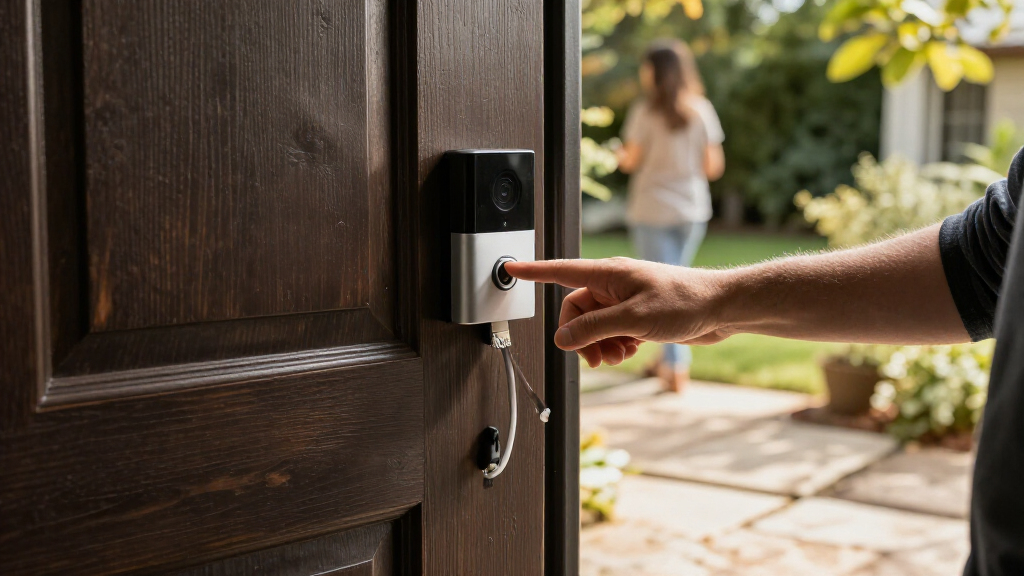
I ranked these products by how directly they meet the wired PoE video doorbell request, then compared the practical fit of their video, alerts, storage, and entryway features. A device described as wired is not automatically PoE: I gave priority to options identified as PoE and treated conventional wired or wireless-capable models as alternatives, not equivalent substitutes. I also weighed whether the package suits a single-home door, a more elaborate intercom installation, or a multi-unit building.
The order reflects category fit and day-to-day usability rather than a feature count. Chime and storage bundles can simplify setup or recording, while touchscreens, keypad functions, and lock controls can add value for specific properties but bring more installation complexity. I also considered what buyers may need to check before purchase, including Ethernet access, existing wiring, network compatibility, and whether storage or app features match their preferences. Where product names alone do not establish a technical detail, I avoid treating it as confirmed and recommend checking the model’s current specifications.
| wired poe video doorbell | Power | Connectivity |
|---|---|---|
| Aqara G400 Wired/PoE Video Doo | PoE or 8–24V AC/DC wiring | — |
| Reolink 2K PoE Video Doorbell | — | Ethernet; PoE or compatible AC/DC power |
| Aosu 5MP Ultra HD Wireless & W | Wireless battery or wired | — |
| ANJIELO SMART Wired IP Video I | — | Wired PoE; 2.4GHz Wi-Fi |
| Ring Wired Doorbell Pro | Hardwired; 16–24 VAC or 24 VDC, 10–40 VA | Wi-Fi 802.11 a/b/g/n/ac at 2.4 GHz and 5 GHz |
| Ring Wired Doorbell 2K Plus | — | Wi-Fi 6 dual-band (2.4 GHz/5 GHz) and Amazon Sidewalk |
| GBF Smart Full IP Video Door S | PoE or included 12V DC, 1A adapter | — |
| Reolink Video Doorbell Camera | — | Wi-Fi, 2.4 GHz and 5 GHz |
Factors to Consider When Choosing Wired Poe Video Doorbell
Before choosing a model, separate the connection you want from the features you want. PoE is a specific power-and-network method, not a synonym for any doorbell connected to household wiring. These checks can prevent a mismatch between your cabling, building, and preferred way to answer the door.
Confirm That “Wired” Means PoE
Doorbells may be wired to a low-voltage transformer, connected to Ethernet with PoE, or offer wireless operation alongside a wired option. Those arrangements are not interchangeable, even if product titles use similar language. Check the product’s installation manual and power requirements for explicit PoE support and the required network standard. If the device uses a conventional doorbell transformer, an Ethernet cable alone will not power it. A common mistake is buying on the word “wired” and discovering the existing cable or power supply does not match. If PoE is a firm requirement, treat non-PoE wired models as alternatives rather than substitutes.
Plan the Cable Run and Network Before Installation
PoE can reduce the number of cables at the door, but it still depends on a suitable Ethernet run back to a PoE switch or injector. Check the route, cable condition, connector placement, and whether the network equipment can supply the power the doorbell requires. Long or exposed runs may call for weather protection and careful installation planning. A nearby router does not automatically mean a usable cable is available at the mounting point. If you are renovating or installing from scratch, plan the cable path before finishing walls. For an existing home without Ethernet at the entrance, compare the installation work against a conventional wired model before committing.
Choose Video Detail for Your View, Not Just a Resolution Label
Resolution matters, but it does not determine whether a doorbell captures the faces, packages, or approach area you care about. Camera angle, mounting height, lighting, and the shape of the entryway all affect what appears in the frame. Think about whether visitors stand close to the door, approach from the side, or leave parcels below the camera. A higher-resolution label may be less useful than a view that covers the right area. Before buying, check whether the camera’s field of view suits your mounting position and whether nighttime lighting can cover the entry. If package visibility matters, prioritize the lower doorway area rather than comparing resolution alone.
Decide How You Want to Store and Review Footage
Recording options shape both ongoing convenience and how much control you have over video. Bundles with a microSD card offer a clear local-storage starting point, while other systems may rely on different storage arrangements or services. Check whether recording is continuous or event-based, how footage is accessed, and what happens when the card fills or the network goes down. Also verify whether the app or storage features you want require an account or subscription. A card included in a bundle does not by itself answer questions about retention, backup, or remote access. Choose a storage plan that matches how often you expect to review clips and how long you need to keep them.
Match the Doorbell to the Building and Household
A single-camera doorbell is often enough for one home entrance, but shared entryways can call for a different kind of system. Multi-unit properties may need separate resident access, an indoor monitor, keypad entry, or compatibility with an existing lock. Those features can make an intercom station a better fit than a consumer doorbell, but they also add installation and configuration work. Ask who will manage access codes, what happens when a resident changes, and whether the system supports the building’s door hardware. For a household that simply wants visitor alerts on phones, avoid paying for controls nobody will use. For a shared building, confirm every required access function before focusing on camera specs.
Budget for the Whole Installation, Not Just the Doorbell
The device is only one part of a PoE installation: a compatible switch or injector, Ethernet cabling, mounting supplies, and professional labor may affect the total project. Check whether a chime, monitor, storage card, or other accessories come with the exact package you plan to buy. An included chime can save a separate purchase, while an intercom system may require more setup than a single doorbell. If you already own compatible network hardware, PoE can make a tidy installation; if not, the extra equipment may narrow its appeal. Compare the full parts list before deciding that one package is the better value. Leave room for ongoing storage or service costs where the manufacturer requires them.
Frequently Asked Questions
Can I use a Ring Wired Doorbell Pro or Ring Wired Doorbell 2K Plus as a PoE doorbell?
Do not assume so based on the word “wired.” PoE means power and network data travel over Ethernet, while a wired doorbell can instead use a conventional doorbell power connection. Check the exact model’s installation guide for explicit Ethernet and PoE support before planning a cable run. If the manual specifies transformer wiring, it is not a direct substitute for a PoE model. For a PoE-focused shortlist, start with products whose specifications name PoE.
Do I need a PoE switch, or can I power a doorbell another way?
A PoE doorbell needs compatible PoE power delivered over its Ethernet connection, commonly from a PoE switch or injector. Which one is appropriate depends on the doorbell’s stated power requirements and your existing network equipment. A standard router port may carry data but may not supply PoE. Check the product manual before connecting hardware, since matching the required PoE type matters. If adding network equipment is undesirable, a non-PoE wired doorbell may be a simpler fit.
Is local storage a better choice than cloud recording for a video doorbell?
Local storage can suit buyers who prefer footage kept on a card or device, while cloud services may offer different remote access and backup features. Neither choice automatically guarantees that clips will remain available in every situation. Check recording behavior, retention limits, account requirements, and access during an internet outage. A bundled microSD card, such as the one in the Reolink bundle listed here, provides a starting point but does not answer every backup question. Choose based on how you plan to retrieve and preserve recordings, not on storage capacity alone.
Will a wired PoE video doorbell keep recording if my internet goes down?
PoE provides power and a local network connection; it does not by itself guarantee recording during an internet outage. What continues to work depends on the doorbell, local storage, network setup, and whether the feature you rely on requires a cloud connection. A camera may still communicate with local equipment while remote phone alerts stop working. Check the manual for offline recording and event storage behavior before purchase. If outage recording matters, test the stated setup requirements and consider whether a local recording device is part of your plan.
Should I choose a video doorbell or an IP intercom for a multi-unit building?
Choose based on how residents need to identify and admit visitors, not just on camera resolution. A consumer doorbell is designed around a simpler entrance, while an IP intercom may add indoor monitors, multiple users, keypad access, or lock control. Those controls can help in a shared building, but they require coordination around wiring, permissions, and ongoing access management. Confirm that the system supports the building’s number of units and door hardware before ordering. The GBF and ANJIELO listings point toward intercom use, while the Reolink and Aqara options are more naturally compared as doorbell-style choices.
Conclusion
For most shoppers who specifically want PoE in a doorbell-style package, I would start with the Aqara G400 as the best overall pick, then compare it with the Reolink 2K PoE Video Doorbell with Chime V2 if an included chime is a priority. The Reolink Video Doorbell Camera with 256GB microSD Card Bundle is the best value-oriented option for buyers who want storage included, while the Aosu 5MP suits people who want a wireless-and-wired alternative and are willing to verify its exact PoE compatibility. For beginners, the Reolink chime package is the clearest starting point among the explicitly PoE-focused choices, provided its installation requirements match your wiring. For premium or specialized needs, choose the GBF for multi-unit access control or the ANJIELO for a touchscreen intercom setup; these are poor fits if you only need a simple single-home doorbell. Ring’s wired models are options for shoppers who value their particular wired setup, but buyers requiring PoE should confirm the connection method before choosing either one.