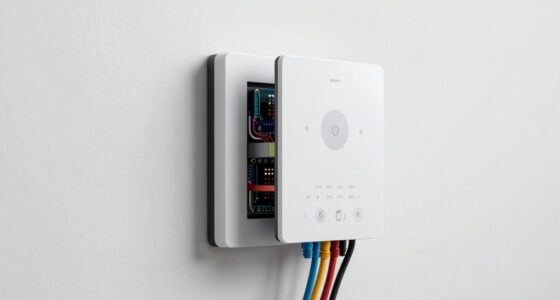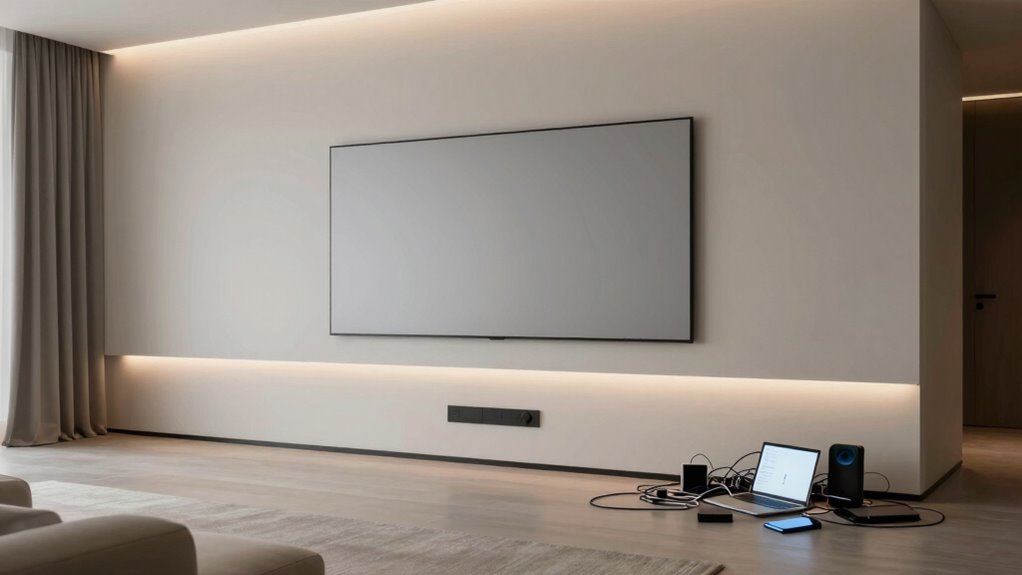

Your smart home feels seamless when devices communicate smoothly through shared standards like Zigbee, Z-Wave, or Wi-Fi, allowing them to work together effortlessly. If devices use incompatible protocols or lack proper integration, your system becomes fragmented, causing disconnection and frustration. A cohesive setup responds quickly and automates routines seamlessly, making your home behave naturally. Want to discover how to create that harmonious environment? Keep exploring how compatibility and standards shape your smart home’s vibe.
Key Takeaways
- Use of incompatible devices and protocols causes disconnection and limits seamless integration.
- Lack of standardized communication protocols hinders device interoperability and cohesive automation.
- Fragmented smart homes rely on multiple apps or manual control, disrupting user experience.
- Well-integrated systems prioritize compatibility with common standards like Zigbee, Z-Wave, or Wi-Fi.
- Seamless homes enable quick, predictive device responses and synchronized routines for effortless control.
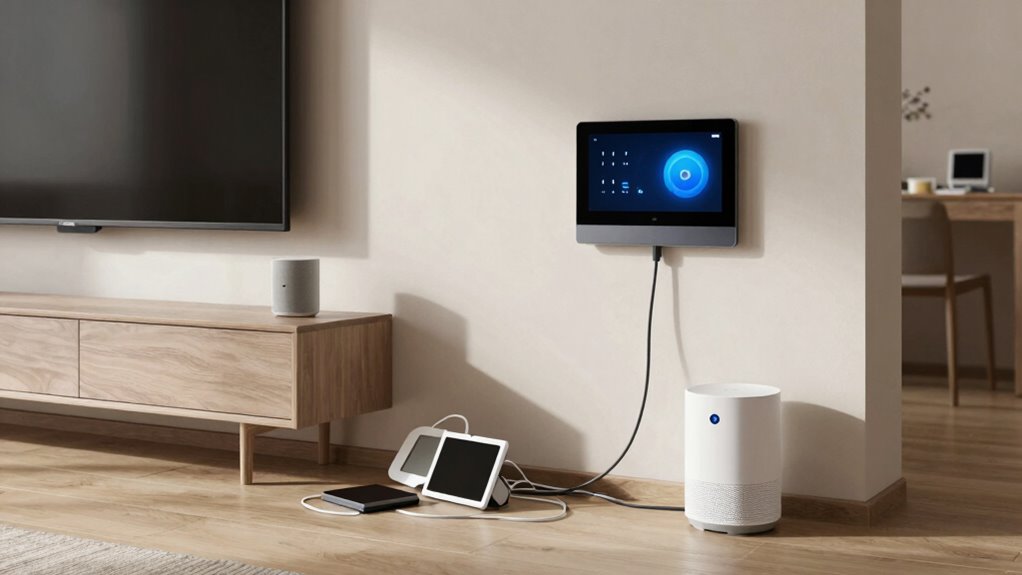
Smart homes are evolving rapidly, but the way they integrate technology can make all the difference in your daily life. When your smart devices work seamlessly together, your home feels intuitive and effortless. However, if they don’t, you might find yourself frustrated, juggling multiple apps, or dealing with devices that don’t respond as expected. The key to a smooth smart home experience lies in device interoperability—the ability of different gadgets and systems to communicate and work together effectively. When devices are compatible and share common standards, they create a cohesive ecosystem that enhances your user experience. This compatibility is often supported by standardized communication protocols**, which facilitate smoother device integration**. This means you can control your lights, thermostat, security cameras, and other devices from a single app or voice command without frustration.
A fragmented smart home often results from poor device interoperability. When devices operate on different platforms or use incompatible protocols, you end up with disconnected systems. For example, a smart bulb compatible with one app might not respond to your voice assistant because it doesn’t support the same ecosystem. This lack of integration forces you to switch between apps or manually control each device, disrupting the natural flow of your daily routines. Over time, this fragmentation can diminish your overall user experience, making your smart home feel more like a collection of isolated gadgets rather than a unified system designed to simplify your life. Ensuring that devices support common standards can help prevent this issue and foster greater compatibility. Incorporating interoperability standards can further enhance the cohesion among diverse devices. Additionally, choosing devices that utilize local automation protocols can help maintain functionality even during internet outages, further improving reliability.
On the other hand, a seamless smart home feels like a natural extension of your daily activities. You barely notice the technology working behind the scenes because everything responds quickly and predictably. Achieving this level of integration often depends on choosing devices that prioritize compatibility and support common standards like Zigbee, Z-Wave, or Wi-Fi. These standards enable devices from different brands to communicate smoothly, reducing the chance of incompatibility issues. When your ecosystem is well-integrated, you can set up routines or automations that trigger multiple devices at once—like locking the door, turning off the lights, and lowering the thermostat—all with a single command or scheduled event. Incorporating Home Automation Protocols like these can significantly improve device interoperability.
Ultimately, the difference between a fragmented and a seamless smart home comes down to how well your devices work together and the quality of your user experience. When interoperability is prioritized, your home becomes a true smart environment that adapts effortlessly to your needs. You won’t have to deal with constant troubleshooting or limitations, and instead, you’ll enjoy a more intuitive, efficient, and satisfying smart home experience. That’s the true power of a well-integrated smart home—making technology work for you, not against you.
As an affiliate, we earn on qualifying purchases.
Frequently Asked Questions
How Do Different Brands Impact Smart Home Integration?
Different brands impact smart home integration because brand compatibility varies, affecting how smoothly devices work together. When brands prioritize ecosystem diversity, you might face compatibility issues, leading to a fragmented experience. Sticking to a single brand or choosing brands that support open standards helps create a seamless smart home. This guarantees your devices communicate effectively, reducing frustration and making your smart home more intuitive and cohesive.
What Role Does User Experience Play in Perceived Seamlessness?
User experience acts as the bridge between confusion and clarity in your smart home. When feedback is gathered and design consistency is maintained, it creates a harmonious flow, much like a well-conducted orchestra. This seamlessness fosters trust and ease, making your devices feel like natural extensions of your daily life. Prioritizing intuitive controls and cohesive design guarantees your smart home feels unified rather than fragmented, transforming chaos into comfort.
Can DIY Setups Create More Fragmentation Than Professional Installations?
Yes, DIY setups can create more fragmentation than professional installations. DIY challenges, like technical difficulties and limited expertise, often lead to inconsistent configurations. Additionally, customization limitations may hinder your devices from perfectly integrating, causing gaps or conflicts in your smart home system. These issues can make your setup feel disjointed and less seamless, whereas professionals typically guarantee cohesive integration, resulting in a smoother user experience.
How Does Network Stability Affect Smart Home Performance?
Did you know that 80% of smart home issues stem from Wi-Fi reliability? When your network isn’t stable, device compatibility suffers, causing lag and disconnections. A weak or inconsistent network can make your smart home feel fragmented, with devices not responding as they should. To keep things seamless, make certain your Wi-Fi is strong, stable, and supports all your devices, preventing frustration and creating a smoother smart home experience.
Are There Specific Technologies That Promote Seamless Smart Home Environments?
Yes, certain technologies promote seamless smart home environments. Voice control simplifies device management, allowing you to operate your smart devices effortlessly through spoken commands. Automation routines are key, as they enable your devices to work together smoothly without manual input. When these technologies integrate well and are supported by a stable network, your smart home feels more cohesive, intuitive, and responsive, eliminating frustrations of fragmentation.
As an affiliate, we earn on qualifying purchases.
Conclusion
Ultimately, whether your smart home feels fragmented or seamless depends on how well devices communicate and integrate. Think of it like a puzzle: when pieces fit perfectly, the picture is clear and smooth. But if pieces don’t connect, it feels disjointed. To create a seamless experience, prioritize systems that prioritize compatibility and centralized control. When everything works together effortlessly, you’ll enjoy a truly intelligent, intuitive home that feels like one cohesive space.
Wi-Fi smart home automation system
As an affiliate, we earn on qualifying purchases.
As an affiliate, we earn on qualifying purchases.
smart home device interoperability kit
As an affiliate, we earn on qualifying purchases.
As an affiliate, we earn on qualifying purchases.