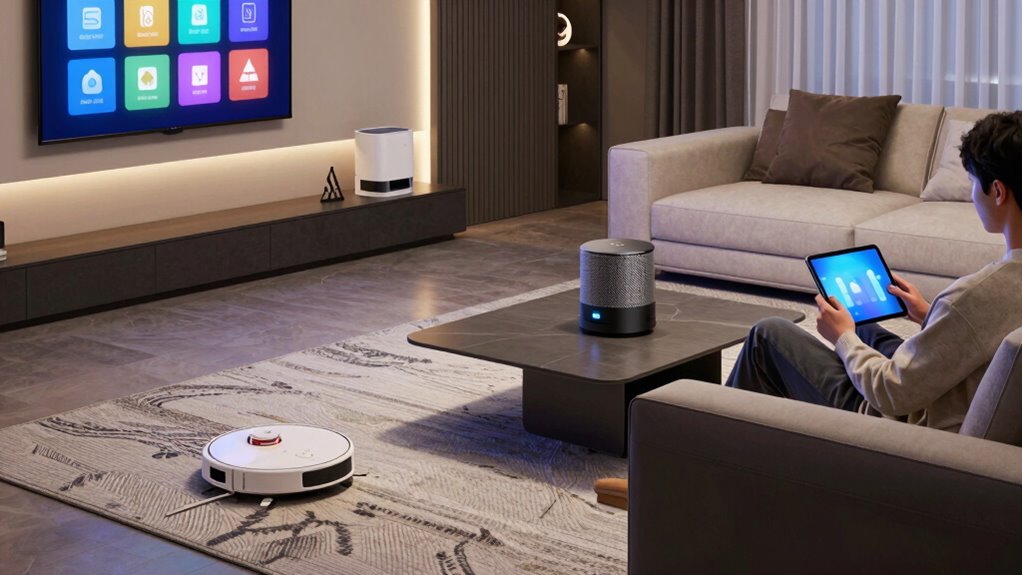

Home technology influences your habits more than you realize by seamlessly automating routines and creating environmental cues that guide your behaviors. Devices anticipate your needs, adjust settings, and suggest actions, often without you noticing. This automation reinforces habits and makes routines feel natural, reducing your conscious decision-making. Over time, your daily patterns become shaped by these technologies rather than personal choices. If you keep exploring, you’ll uncover how these subtle influences impact your lifestyle more deeply than you might think.

Get the latest gadgets delivered free — and shop member deals
- Fast, free delivery on millions of items
- Access to Prime Big Deal Days deals on October 6–7
- Prime Video, Amazon Music and more included
Key Takeaways
- Devices predict needs and automate tasks, reinforcing routines without conscious awareness.
- Behavioral cues from technology subtly influence decision-making and activity patterns.
- Reliance on automation fosters ingrained habits, reducing personal control over routines.
- Environmental adjustments by devices guide behavior, often shaping habits unconsciously.
- Awareness of these influences enables more intentional integration and management of home technology.
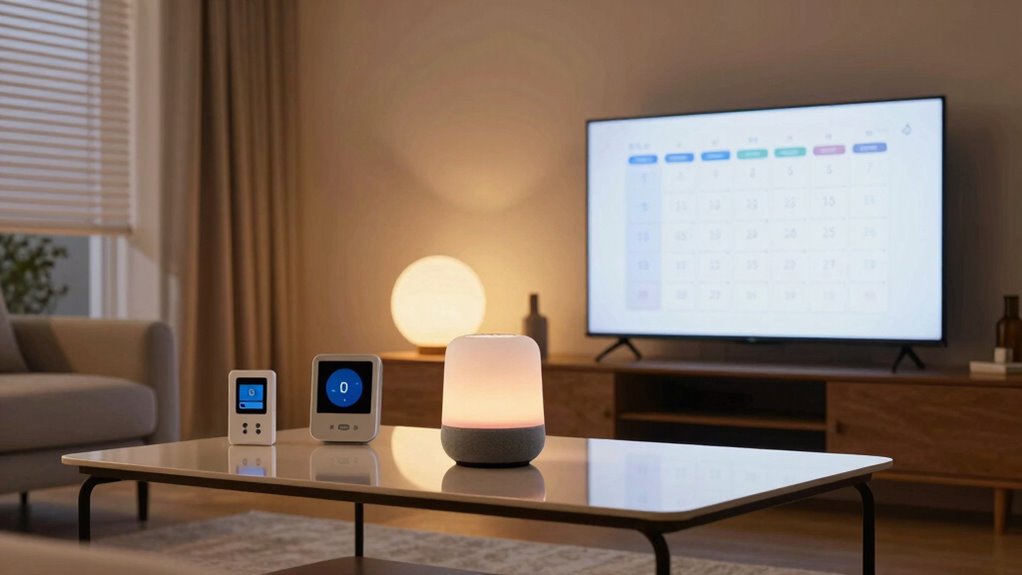
How much do your devices influence your daily routines? You might not realize it, but smart appliances are quietly shaping the way you go about your day. These devices do more than just make life convenient—they subtly influence your habits and decisions. With routine automation, your home technology anticipates your needs, often before you even recognize them. For example, your smart thermostat adjusts the temperature based on your schedule, so you wake up to a cozy home every morning. You might think you’re in control, but in reality, your routines are being molded by the technology you’ve integrated into your living space.
Smart devices subtly shape your routines, often before you even realize they’re influencing your daily decisions.
Smart appliances aren’t just about remote control or voice commands anymore; they’re designed to learn from your behaviors. Over time, these devices observe patterns—when you usually turn on the coffee maker, when you set the lights, or when you prefer the dishwasher to run—and they begin to automate these tasks without your direct input. This routine automation creates a seamless experience, but it also reinforces habits that you might not have consciously formed. You start to rely on these systems, which can make certain activities almost automatic, reducing your need to think about mundane tasks. Additionally, choosing compatible devices can enhance the effectiveness of these automations, making your routines even more integrated.
The influence of home technology extends beyond convenience. It subtly guides your choices and priorities. For instance, if your smart fridge keeps track of your groceries and suggests shopping lists, you might start to plan meals around what’s available rather than what you desire. If your lighting system adjusts brightness based on time of day, you may find yourself spending less time in brightly lit spaces or sleeping earlier because the lighting signals your body to wind down. These small technological nudges shape your behavior without you realizing it, often aligning your routines more closely with the capabilities of your devices. Furthermore, home automation can sometimes lead to a reduced need for manual intervention, which might diminish your engagement with everyday tasks.
Furthermore, routine automation makes your home smarter and more efficient, but it also means your habits become more ingrained and less flexible. You might find yourself sticking to routines that your devices have established, even when you’d prefer to change them. This reliance on automation can lead to a cycle where your habits are less about your choices and more about what your technology facilitates. Template compatibility also plays a role here, as choosing compatible devices can influence how seamlessly your routines are integrated and automated. In this way, home technology doesn’t just support your lifestyle—it actively molds it, often in ways you don’t notice until you step back and reflect.
In the end, your home technology plays a bigger role in shaping your habits than you might expect. It’s not just about convenience; it’s about creating an environment that subtly guides your behavior, making some routines feel natural and effortless while potentially limiting your flexibility. Recognizing this influence helps you make more conscious choices about how you integrate these devices into your daily life.
smart thermostat for home automation
As an affiliate, we earn on qualifying purchases.
As an affiliate, we earn on qualifying purchases.
Frequently Asked Questions
How Quickly Do Habits Change With New Home Technology?
Habits can change surprisingly fast with new home technology, often within days or weeks, as you adapt through habit formation and technology integration. When you start using smart devices or automation tools regularly, your routines shift seamlessly. The more you rely on these technologies, the quicker your habits evolve, making daily tasks easier and more efficient without you even realizing it. This rapid change highlights how powerful technology can be in shaping behaviors.
Can Technology Override Personal Preferences in Daily Routines?
Technology can definitely override your personal preferences, like a tide reshaping the shoreline. As you become more dependent on your smart home devices, privacy concerns grow, and routines may shift without you noticing. You might find yourself relying on automation rather than your own instincts, creating a dependency that influences daily habits. While convenient, this dependency can subtly change your routines, making technology the captain of your daily ship rather than your own preferences.
Do Smart Devices Influence Social Interactions at Home?
Smart devices do influence your social interactions at home by encouraging device dependency, which can sometimes lead to less face-to-face communication. While they offer convenience, privacy concerns may make you hesitant to share personal moments, impacting openness. You might find yourself more focused on screens than engaging with family members. Recognizing these effects helps you balance technology use, ensuring it enhances rather than hinders your social bonds.
What Is the Most Overlooked Habit Affected by Home Tech?
You might overlook how home tech subtly influences your privacy concerns and security risks daily. As you enjoy smart devices, you may unknowingly change your habits around sharing personal info or trusting connected systems. These habits, often taken for granted, can weaken your privacy boundaries. Staying aware helps you maintain control, ensuring you enjoy the convenience of technology without risking your personal security, making your home a truly comfortable and safe space.
How Do Different Age Groups Adapt to New Home Technologies?
You notice that elderly adaptation to new home technologies often takes longer, as they prefer simple, intuitive devices and need more guidance. In contrast, youth preferences lean toward advanced features and seamless integration with their digital lifestyles. You can help bridge this gap by choosing user-friendly tech for seniors while offering younger users innovative options, ensuring everyone benefits and adapts comfortably to your smart home environment.
As an affiliate, we earn on qualifying purchases.
Conclusion
As you embrace home technology, you might think you’re in control, making choices deliberately. Yet, it subtly molds your habits, often without you noticing. Just like a puppeteer pulling strings behind the scenes, these devices shape your routines more than you realize. In this dance of control and influence, technology becomes both your tool and your guide, reminding you that sometimes, what feels like your decision is quietly guided by the very innovations you trust.
smart fridge with grocery tracking
As an affiliate, we earn on qualifying purchases.
As an affiliate, we earn on qualifying purchases.
automatic coffee maker with app control
As an affiliate, we earn on qualifying purchases.
As an affiliate, we earn on qualifying purchases.
Halloween Picks
halloween
As an affiliate, we earn on qualifying purchases.