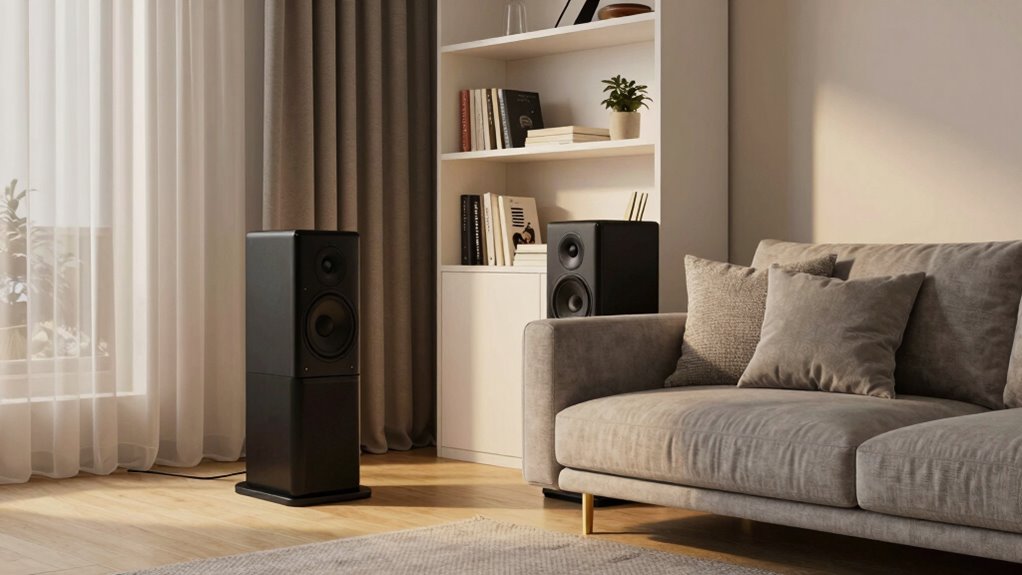

Proper speaker placement can make or break your room’s sound quality. If you position speakers too close to walls or corners, reflections and echoes will muddy your audio. Moving them to ear level and angling them inward improves clarity and stereo imaging. Acoustic treatments and small adjustments can also considerably enhance sound. Getting the placement right balances the soundstage and reduces unwanted room interactions. Keep exploring to discover how thoughtful setup reveals your system’s full potential.

Get the latest gadgets delivered free with Prime
- Fast, free delivery on millions of items
- Prime Video, Amazon Music and more included
- Member-only deals all year
Key Takeaways
- Proper speaker placement enhances sound clarity, stereo imaging, and overall listening experience within a room.
- Incorrect positioning causes sound reflections, echoes, and muddled audio, degrading sound quality.
- Positioning speakers away from walls and corners reduces reflections and reverberations that harm clarity.
- Adjusting speaker height and angle ensures high frequencies reach ears directly, improving sound accuracy.
- Acoustic treatment and room-aware adjustments optimize sound interaction, preventing chaotic reflections.
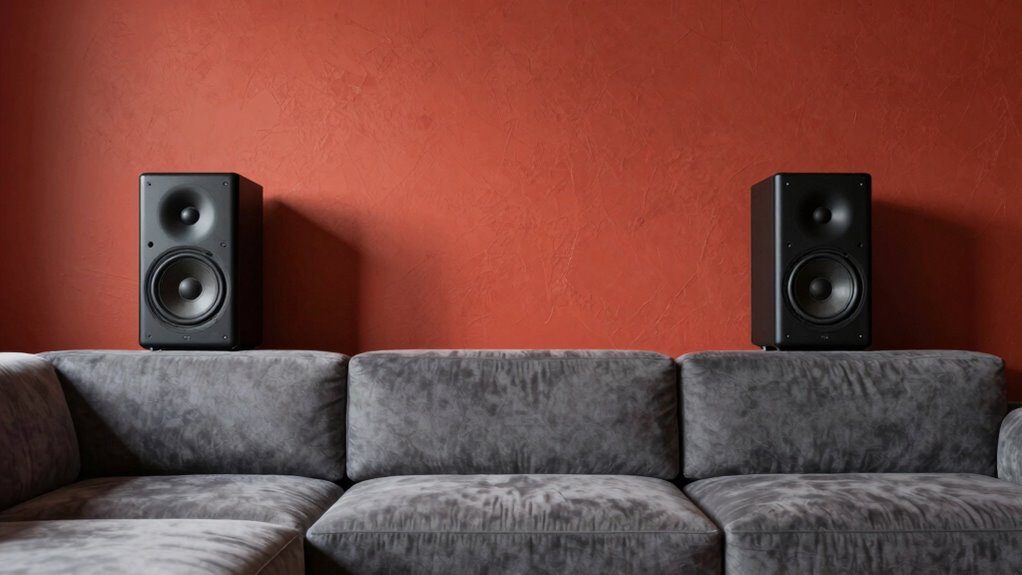
Ever wondered how to get the most out of your home audio system? One of the biggest factors is speaker placement. The way you position your speakers can dramatically influence sound quality, clarity, and overall listening experience. When you set up your speakers, you need to think about more than just putting them in the corners of the room. Proper placement can help manage sound reflection, reduce unwanted echoes, and ensure a balanced soundstage.
Start by avoiding placing your speakers too close to walls or corners, as this can cause sound reflection issues. When sound waves bounce off surfaces, they can create distortions that muddle the audio. To minimize this, position your speakers a few feet away from walls to allow sound waves to disperse naturally into the room. This helps prevent exaggerated bass or harsh reflections that can interfere with clarity. Additionally, angling your speakers slightly inward, toward your listening position, creates a more direct sound path, which enhances stereo imaging and detail.
Avoid placing speakers too close to walls or corners to reduce sound reflection issues and improve audio clarity.
Acoustic treatment plays a crucial role here. Installing soft materials like rugs, curtains, or acoustic panels can absorb excessive sound reflection, preventing echoes and reverberations that diminish audio quality. When you treat your room acoustically, you’re essentially controlling how sound waves interact within the space. This can make your listening environment sound more natural and balanced, allowing you to hear every detail as intended. Proper acoustic treatment complements strategic speaker placement, ensuring sound waves don’t bounce chaotically around the room. Understanding sound reflection and how it interacts with your space can help you make better placement choices.
You should also consider the height and orientation of your speakers. For optimal results, the tweeters (high-frequency drivers) should be roughly at ear level when you’re seated. This positioning ensures that high frequencies reach your ears directly, rather than bouncing off surfaces or being absorbed by furniture. Experiment with the distance between your speakers and the listening position, aiming for an equidistant setup to create a cohesive stereo image. Small adjustments in placement can also help accommodate different room acoustics, which vary widely from space to space.
In the end, achieving the perfect speaker placement isn’t just about following a set of rules; it’s about listening carefully and adjusting based on your room’s unique characteristics. Small tweaks can lead to noticeable improvements. Think about how sound reflection interacts with your space and use acoustic treatment to tame unwanted echoes. With thoughtful placement and some room correction, you’ll unlock your audio system’s full potential and enjoy a richer, more immersive listening experience.
Frequently Asked Questions
How Does Room Shape Influence Speaker Placement?
Room shape greatly influences speaker placement because it affects room acoustics and how sound reflects. You need to take into account speaker alignment carefully, positioning speakers to avoid bouncing sound off walls or corners that cause echoes. For irregularly shaped rooms, experiment with angles and distances to find the best sound clarity. Proper placement minimizes unwanted reflections, ensuring your audio remains clear and balanced, no matter the room’s shape.
What Are the Best Materials for Speaker Stands?
You should choose speaker stands made from sturdy materials like metal or dense wood, which guarantee stand stability. For ideal speaker height, aim for stands that position your speakers at ear level when seated, much like aligning a telescope perfectly. I once used heavy-duty steel stands, and the improved clarity made me feel like I was hearing music live. Stability and correct height are essential for the best sound experience.
Can Furniture Placement Affect Sound Quality?
Yes, furniture placement can considerably affect sound quality. Large pieces like sofas and bookshelves can block or reflect sound waves, impacting clarity. To improve acoustics, incorporate acoustic treatments and use sound absorption materials strategically around the room. Proper furniture placement minimizes unwanted reflections and echoes, creating a balanced sound environment. Experimenting with the position of furniture helps optimize sound clarity and overall listening experience.
How Do You Optimize Stereo Imaging Through Placement?
Think of your speakers as a painter’s palette; proper placement guarantees a vivid stereo image. To optimize stereo imaging clarity and stereo depth, position your speakers equidistant from your listening spot, forming an equilateral triangle. Angle them slightly inward, like focusing a camera lens. This setup ensures sound waves converge precisely, sharpening image focus, and creating a spacious, immersive soundstage that feels as real as a living painting.
What Are Common Mistakes to Avoid When Positioning Speakers?
Avoid common mistakes like incorrect speaker height and uneven speaker symmetry. Make certain your speakers are at ear level when seated, which enhances sound clarity. Keep both speakers symmetrically positioned relative to your listening area to prevent imbalance in stereo imaging. Don’t place speakers too close to walls or corners, as this causes unwanted bass boost and muddiness. Proper placement ensures balanced sound and a more immersive listening experience.
Conclusion
In the end, speaker placement shapes sound quality, shapes listening experience, shapes your enjoyment. Proper placement enhances clarity, balances tones, and creates immersion. Poor placement, on the other hand, ruins clarity, distorts tones, and destroys immersion. So, take the time to experiment, listen carefully, and adjust thoughtfully. Because where your speakers sit determines what you hear, how you feel, and how much you enjoy every note. Make placement a priority, and your room will sound its best.
Halloween Picks
halloween
As an affiliate, we earn on qualifying purchases.