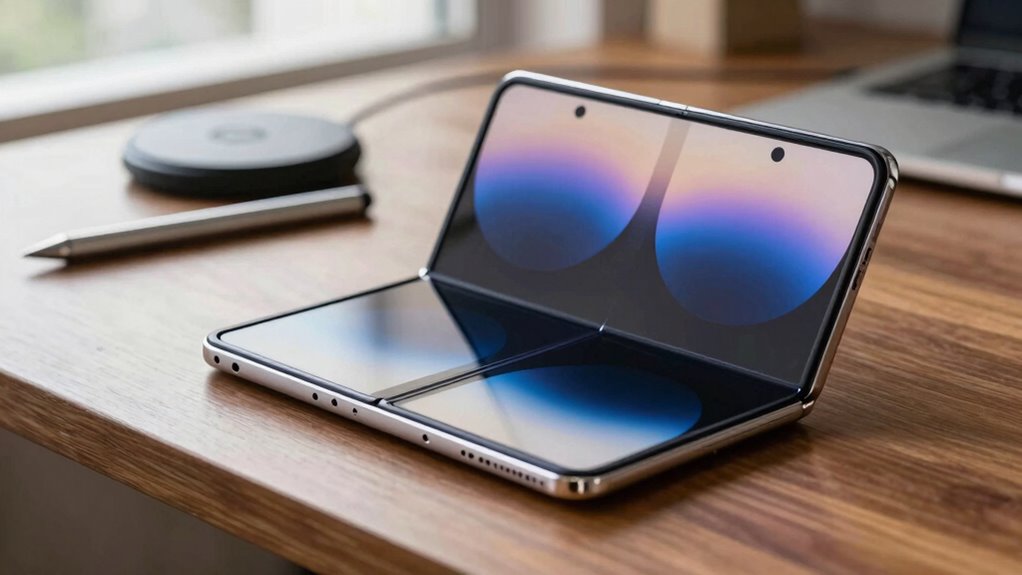

Foldable phones excel at offering a versatile design that blends smartphone and tablet features, giving you a unique and stylish device. They enhance media, multitasking, and reading experiences, making them appealing. However, they face challenges with battery life, as larger and flexible screens drain power quickly, and durability issues, especially around hinges and screens, still persist. App compatibility can also be inconsistent, affecting your user experience. To understand how these strengths and weaknesses shape your choices, keep exploring.

Get the latest gadgets delivered free with Prime
- Fast, free delivery on millions of items
- Prime Video, Amazon Music and more included
- Member-only deals all year
Key Takeaways
- Foldable phones excel in versatility, combining smartphone portability with tablet-sized screens for enhanced media and multitasking experiences.
- They face challenges with battery efficiency due to larger, more complex displays that drain power faster.
- Durability issues, especially around hinges and flexible screens, can impact long-term device reliability.
- App compatibility remains inconsistent, causing user frustration until developers fully optimize for foldable formats.
- Higher costs and repair expenses can limit accessibility and raise concerns about long-term value.
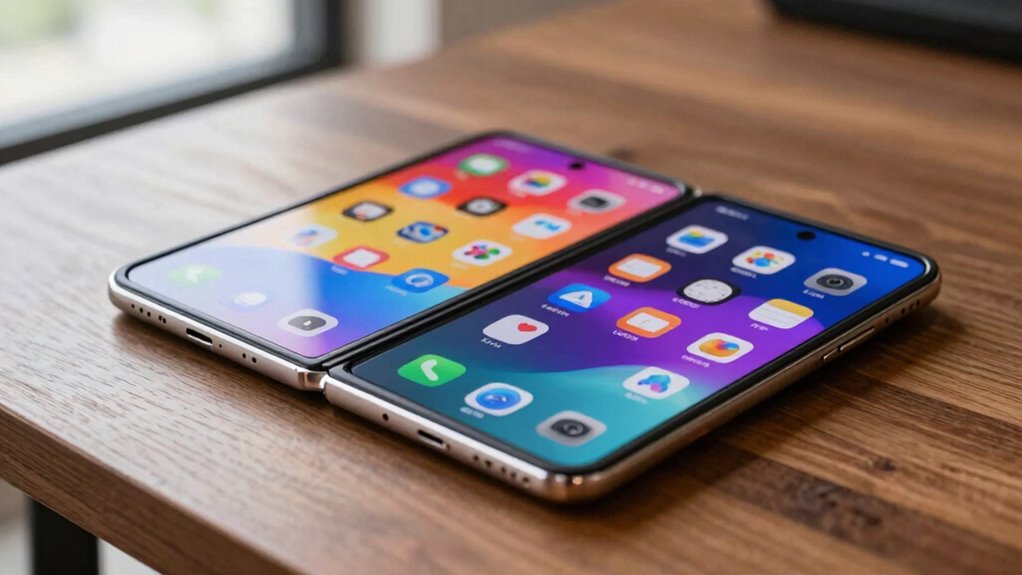
Are foldable phones truly the future of mobile technology? Many people see them as a groundbreaking innovation, but there are still hurdles to overcome. One of the most critical aspects to contemplate is battery efficiency. Foldable phones, with their larger screens and more complex mechanisms, tend to consume more power than traditional smartphones. The flexible displays require additional energy to operate, and their larger screens mean you’ll likely drain the battery faster. While manufacturers are working on improving battery technology, right now, you might find yourself charging these devices more often. If you’re someone who relies heavily on your phone throughout the day, this can be a significant drawback. You need to deliberate whether the convenience of a foldable form factor outweighs the potential inconvenience of more frequent charging. Additionally, display technology plays a crucial role in the overall power consumption and durability of foldable phones. Advances in flexible display materials are helping to improve both efficiency and longevity, but they are still evolving. Innovations in battery technology could eventually help address these issues, but they are not yet widespread. Furthermore, the flexible display technology itself is still susceptible to scratches and damage if not handled carefully, which can impact long-term usability. It’s also worth noting that ongoing manufacturing processes are working to improve the overall quality and resilience of these components.
Another key factor is app compatibility. Many apps are optimized for standard rectangular screens, so when you open a foldable device, you might encounter issues with how apps display or function. Some apps may not adapt seamlessly to the changing screen sizes or hinge areas, leading to a less smooth user experience. Developers are gradually updating their apps to support foldable screens, but it’s not universal yet. You might notice that certain games or productivity tools don’t utilize the full potential of the foldable display or behave unexpectedly when you switch between folded and unfolded modes. This inconsistency can hamper your productivity and overall satisfaction. Until app developers prioritize foldable support, you might find yourself toggling between different apps or adjusting settings more often than you’d like.
On the flip side, foldable phones excel in offering versatility. They give you a compact device that transforms into a larger screen for media consumption, multitasking, or reading. When they work well, they provide a seamless experience that combines the best of smartphones and tablets. The foldable design also introduces an element of novelty and style, making your device stand out. However, the technology isn’t perfect yet. You still face issues like durability, with hinges and flexible displays being more susceptible to damage over time. Plus, the cost of these devices remains high, which can be a barrier for many users.
Products Worth Considering

DJI Osmo Mobile 7P Phone Gimbal with Mic Mini Transmitter, Infinity Black

Amazon Kindle Scribe (64GB) with Premium Pen, Metallic Jade

Samsung 49-Inch Odyssey G93SC QD-OLED Curved Gaming Monitor
As an affiliate, we earn on qualifying purchases.
Frequently Asked Questions
How Durable Are Foldable Screens Over Long-Term Use?
Foldable screens are improving, but their durability over long-term use still varies. You might notice screen durability issues like creasing or scratches if you don’t handle them carefully. The hinge longevity is essential too; well-designed hinges last longer and reduce stress on the screen. To keep your foldable phone in top shape, avoid excessive folding force and keep the hinge clean. With proper care, these phones can last several years.
Are Foldable Phones More Expensive to Repair?
Yes, foldable phones tend to be more expensive to repair because of their costly repairs and fragile components. When you break a foldable screen or damage the hinge, expect higher repair costs due to the complex design. The delicate parts require specialized tools and expertise, making repairs pricier than traditional smartphones. So, if you own one, be prepared for potential costs if accidental damage occurs.
What Are the Best Foldable Phone Models Available Now?
Imagine holding a flexible canvas that transforms with your needs—that’s what the best foldable phones offer. The Galaxy Z Fold 4 and Pixel Fold showcase stunning design innovations, combining sleekness with durability. They also excel in battery efficiency, keeping you powered through long days. These models stand out for their seamless foldings and smart energy use, making them your perfect companions for both work and play.
How Do Foldable Phones Compare to Tablets for Productivity?
Foldable phones excel in portability advantages and screen flexibility, making them great for productivity on the go. Unlike tablets, they easily fit in your pocket, yet offer larger screens when unfolded for multitasking or detailed work. While tablets might have better battery life and more dedicated features, foldable phones combine convenience with a versatile display, allowing you to switch seamlessly between phone and small tablet, boosting your efficiency wherever you are.
Do Foldable Phones Support All Popular Apps Seamlessly?
You’ll be amazed—foldable phones support nearly all popular apps, but it’s not perfect. App compatibility can sometimes fall flat, especially with older or less optimized software. While software optimization has improved drastically, some apps still struggle to adapt seamlessly to the foldable display. Expect occasional glitches or awkward interfaces, but overall, most essential apps work well, making foldable phones a surprisingly versatile choice for everyday use.
Conclusion
You might wonder if foldable phones are truly worth it. The truth is, they innovate and offer versatility, but they still have flaws. The question is whether those flaws will fade as technology improves. If you’re excited by the idea of a device that adapts to your needs, embracing the potential of foldables makes sense. Sometimes, progress means accepting imperfections in the pursuit of something better. Will you be part of that future?