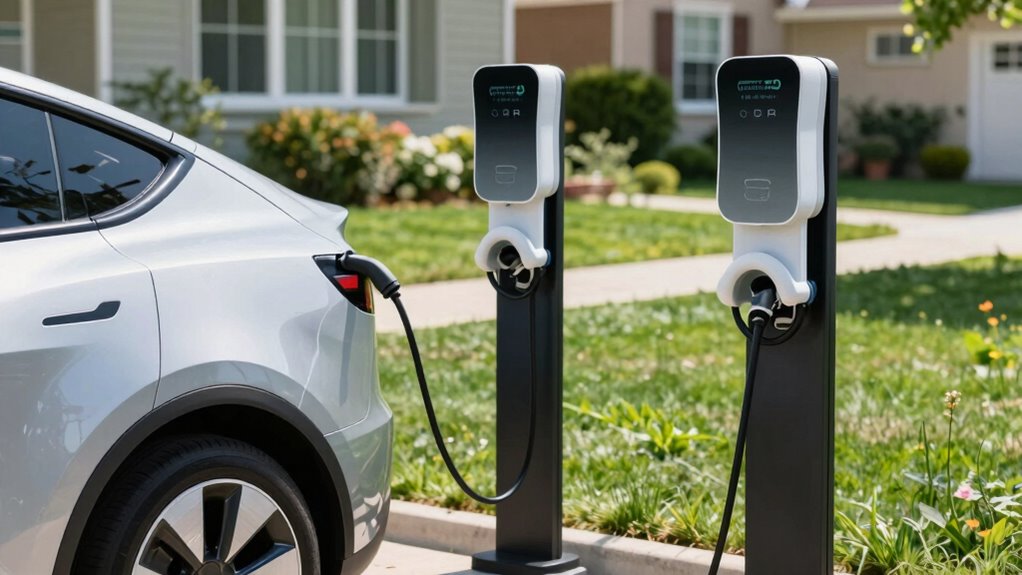

Level 2 EV charging uses a 240-volt outlet, providing faster, more efficient charging at home. You can pair it with solar panels and energy storage to lower energy costs and reduce your carbon footprint. Upgrading your electrical system might be necessary for peak performance, and monitoring your setup helps keep everything running smoothly. If you want to learn how to optimize your home charging station with solar and storage, keep exploring the details.
Key Takeaways
- Level 2 chargers provide faster charging times than standard outlets, typically completing a full charge in a few hours.
- They require a dedicated 240-volt circuit, often needing electrical panel upgrades for proper installation.
- Compatible with solar integration and energy storage systems to maximize renewable energy use.
- Proper monitoring and electrical system upgrades improve safety, efficiency, and charging reliability.
- Local regulations and incentives can affect installation costs and available financial benefits.
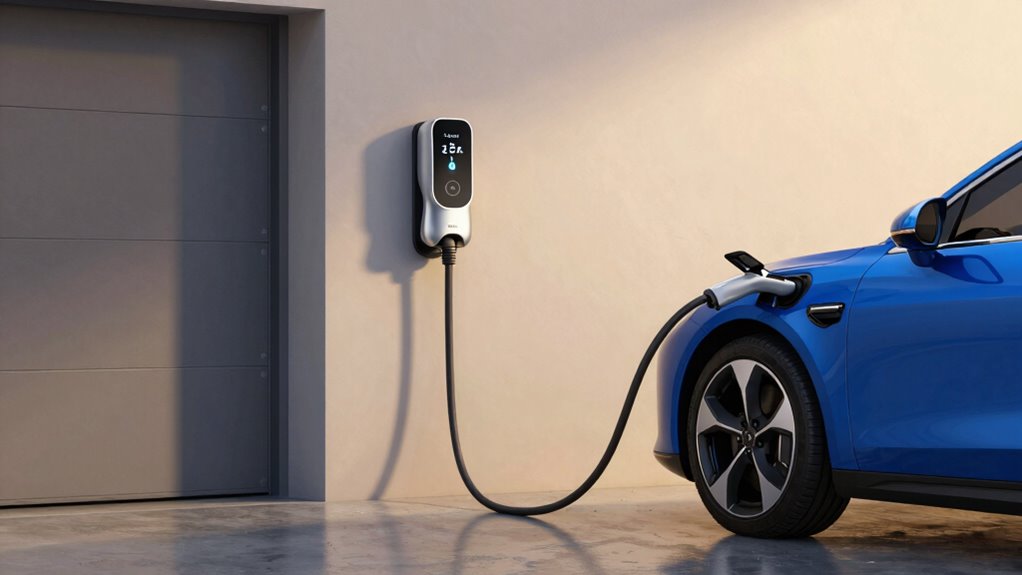
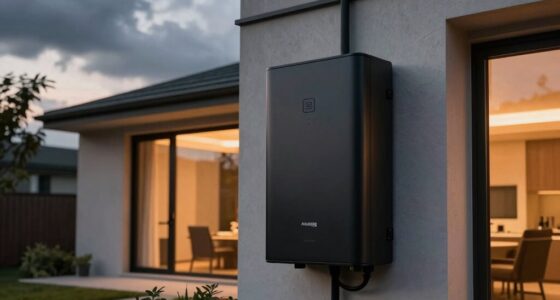
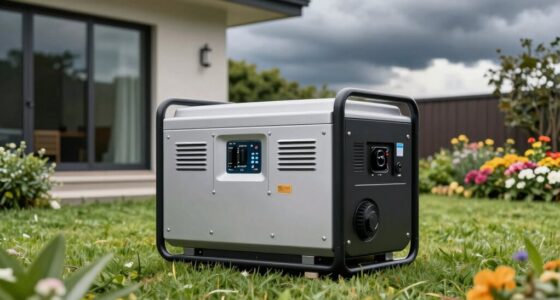
When contemplating a Level 2 charger for your home, you’ll want to explore options that incorporate solar integration. Solar panels can work in tandem with your charging station, allowing you to harness renewable energy and reduce your reliance on the grid. Solar integration not only helps lower your overall energy costs but also makes your EV charging more sustainable. By installing a solar system alongside your Level 2 charger, you can generate clean energy during the day and use it to power your vehicle, aligning with environmentally friendly goals. This setup often requires an initial investment, but the long-term savings and environmental benefits can be substantial. Additionally, choosing a system with energy storage options can enhance your ability to use solar energy more effectively, especially during cloudy days or at night.
Speaking of costs, installation expenses are an important factor to examine. The installation costs for a Level 2 charger can vary widely based on your home’s electrical system, the distance from your main panel to the charging spot, and whether additional upgrades are necessary. Typically, installation can range anywhere from a few hundred to a couple of thousand dollars. If your home’s electrical system isn’t already prepared for a Level 2 charger, you might need to upgrade your electrical panel, which adds to the overall expenses. Investing in a charger with features like smart connectivity or weatherproofing might also influence the price. While the upfront costs can seem high, many homeowners find the convenience and savings on fuel and maintenance well worth the investment. Additionally, understanding your power quality and monitoring options can help ensure your home’s electrical system supports efficient and safe EV charging. Improving electrical system capacity can also contribute to faster and more reliable charging experiences, especially when integrating solar energy. Moreover, considering regulatory and environmental considerations can help you navigate local requirements and incentives for sustainable installations.
As an affiliate, we earn on qualifying purchases.
Frequently Asked Questions
How Long Does It Take to Install a Level 2 Charger at Home?
It typically takes about one to two days to install a Level 2 charger at home, depending on factors like your home’s electrical system and installation complexity. You’ll want to verify charger compatibility with your vehicle and existing wiring. The installation timeline can be quicker if your electrical panel can handle the additional load, but it might take longer if upgrades are necessary. Consulting with a professional guarantees a smooth, efficient process.
Can I Upgrade My Existing Outlet to Level 2 Charging?
You can upgrade your existing outlet to Level 2 charging, but it depends on outlet compatibility and your home’s electrical system. Imagine a new, faster-charging station seamlessly fitting into your garage, transforming your daily routine. You’ll need to choose from various charging station options, ensuring your setup matches your electrical capacity. Consulting an electrician guarantees a safe upgrade, enabling the power to charge your EV efficiently and effortlessly every day.
What Is the Cost Difference Between Level 1 and Level 2 Chargers?
The cost difference between Level 1 and Level 2 chargers mainly hinges on charging speed and power requirements. Level 1 chargers are cheaper upfront, typically $300 or less, but offer slower charging. Level 2 chargers cost between $500 and $2,000, providing faster charging due to higher power requirements. While the initial investment is higher, you benefit from quicker charging times, saving you time and making your EV more convenient to use daily.
Are There Any Special Permits Required for Installation?
Did you know most homeowners don’t need special permits for Level 2 EV charger installation? Typically, permit requirements depend on your local electrical codes and the installation’s complexity. You should verify with your city or municipality first, as some areas require permits for electrical upgrades to ensure safety and compliance. Hiring a licensed electrician helps you navigate these codes smoothly, making sure your installation is safe and up to code.
How Do I Ensure My Home Electrical System Can Handle Level 2 Charging?
To guarantee your home electrical system can handle Level 2 charging, start by checking your current electrical panel’s capacity. You might need electrical panel upgrades to support the additional load. Also, verify your charging station’s compatibility with your system. Consulting a licensed electrician helps assess your setup, recommend necessary upgrades, and assure safe, efficient installation, so your home can handle the increased power demand without issues.
240 volt EV charging station with solar integration
As an affiliate, we earn on qualifying purchases.
As an affiliate, we earn on qualifying purchases.
Conclusion
Now that you know about Level 2 EV charging, imagine plugging in your car and watching it charge faster than a rocket soaring to the moon—your driveway transforming into a futuristic fueling station! With this powerful charger, you’ll never wait ages for your battery to fill again. It’s like having a superhero sidekick for your car, ready to save the day with lightning-fast power. Say goodbye to long waits—your electric journey just got turbocharged!
EV charger with energy storage compatibility
As an affiliate, we earn on qualifying purchases.
As an affiliate, we earn on qualifying purchases.
As an affiliate, we earn on qualifying purchases.