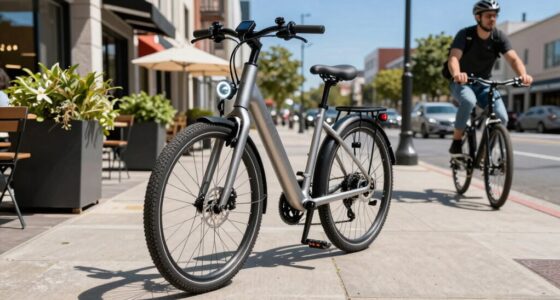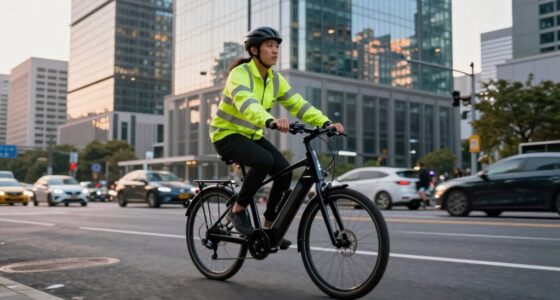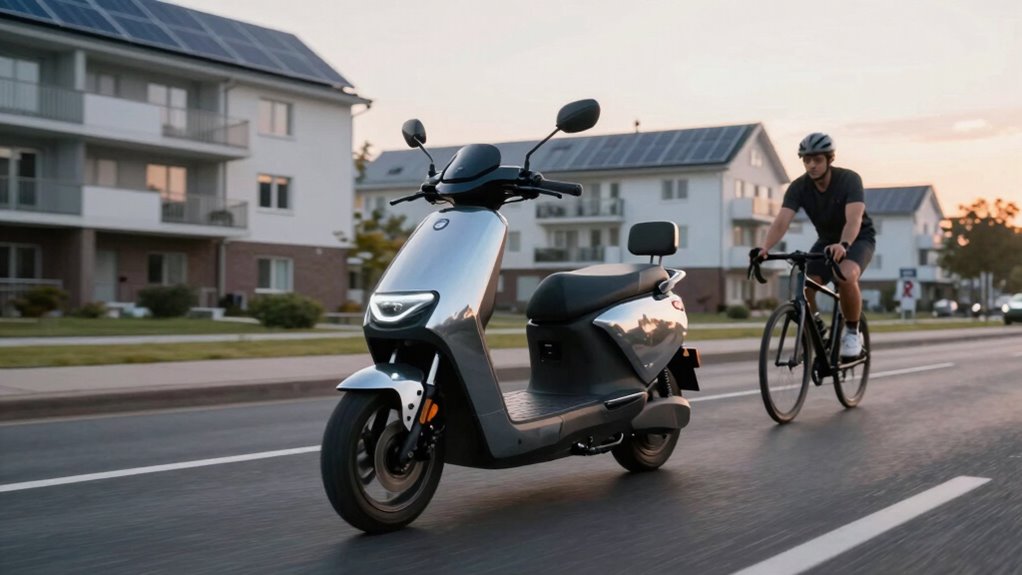

Electric commuting is transforming your daily habits and how you experience cities. You’re likely planning trips around charging stations, opting for more eco-friendly routes, and embracing shared mobility options. Urban landscapes are changing, with more green spaces and walkable neighborhoods replacing parking lots. These shifts promote sustainability and healthier living. If you want to understand how these lifestyle changes are shaping your environment and routines, there’s much more to discover.
Key Takeaways
- Electric commuting encourages more mindful travel habits, reducing unnecessary trips and promoting route efficiency.
- Urban planning shifts prioritize green spaces and walkable neighborhoods, transforming daily routines and community interactions.
- Adoption of EVs fosters cultural awareness of sustainability, influencing broader environmental values and lifestyle choices.
- Technological innovations like faster chargers and advanced safety systems reshape how and when people use electric vehicles.
- Increased focus on shared mobility and renewable energy integration reflects a collective shift toward eco-friendly lifestyles.
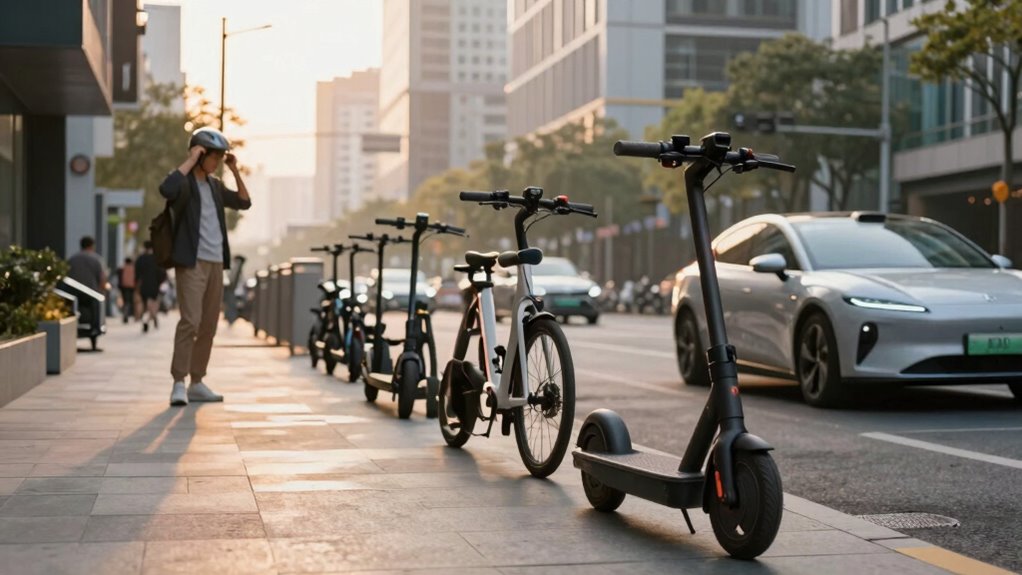
As more people embrace electric vehicles, a significant lifestyle shift is taking place behind the scenes of daily commuting. This change isn’t just about swapping gas-powered cars for electric ones; it’s influencing how cities are designed and how you think about your impact on the environment. Urban planning is adapting to support this transition by creating infrastructure that makes electric vehicle (EV) use more convenient and accessible. Charging stations are popping up in parking lots, on busy streets, and even integrated into residential neighborhoods, making it easier for you to keep your EV powered throughout the day. This shift encourages a reevaluation of city layouts, promoting more walkable neighborhoods and reducing the need for sprawling parking lots, which historically dominated urban landscapes. As a result, city planners are prioritizing green spaces, bike lanes, and public transit options alongside EV infrastructure, fostering a more sustainable environment for everyone. Additionally, the integration of advanced charging technologies is accelerating the adoption of electric vehicles by reducing charging times and increasing efficiency. Moreover, these developments are encouraging biodiversity in urban areas by allowing natural landscapes to flourish instead of being replaced by extensive parking facilities. The integration of innovative urban development strategies is further supporting this transition by fostering more eco-friendly city environments. This evolution in urban planning highlights the importance of sustainable design principles in shaping future cities.
Your daily routines are also subtly changing because of this transition. With the rise of EVs, you might find yourself planning your trips differently, considering charging station locations or timing your drives to coincide with available power sources. This new mindset can lead to more mindful use of your vehicle, reducing unnecessary trips or optimizing routes to minimize energy consumption. Over time, these habits contribute to less air pollution and lower greenhouse gas emissions, lessening the environmental impact of your commute. The shift isn’t just about individual actions but also about collective responsibility—cities and communities now aim to lower their carbon footprint by supporting cleaner transportation options. Additionally, advancements in ADAS sensor calibration are enhancing the safety and efficiency of electric vehicles, further supporting this sustainable shift. These technological improvements are also helping drivers adapt more quickly to the evolving landscape of electric mobility.
The environmental impact of electric commuting extends beyond just reducing emissions. It influences a broader cultural shift toward sustainability. As you become more aware of how your transportation choices affect the planet, you might start advocating for policies that promote renewable energy sources for charging stations, further amplifying the positive environmental impact. This awareness also encourages a transition toward shared mobility solutions, like carpooling or community EV programs, which can decrease the number of vehicles on the road altogether. Over time, these adjustments in urban planning and personal habits reshape the way you view mobility—more as an integrated part of sustainable living rather than a standalone activity.

ChargePoint HomeFlex Level 2 EV Charger J1772 – Fast Smart Battery Power Charging at Home for Electric Automobile Vehicles – Hardwired for Electric Car
- Reliable Home Charging: Builds dependable EV charging stations
- 24/7 Support: Around-the-clock assistance available
- Mobile App Control: Manage charger via smartphone app
As an affiliate, we earn on qualifying purchases.
As an affiliate, we earn on qualifying purchases.
Frequently Asked Questions
How Does Electric Commuting Impact Urban Infrastructure Development?
Electric commuting greatly impacts urban infrastructure development by requiring you to prioritize charging infrastructure in city planning. You’ll need to redesign urban spaces to accommodate charging stations, which influences traffic flow, parking, and zoning. This shift prompts you to rethink urban planning strategies, ensuring the infrastructure supports increased electric vehicle use. As a result, cities become more sustainable, and your daily commute becomes more efficient and environmentally friendly.
What Are the Long-Term Environmental Benefits of Electric Commuting?
Electric commuting offers long-term environmental benefits by reducing reliance on fossil fuels, especially when powered by renewable energy sources. As you switch to electric vehicles, you help cut emissions that improve air quality in cities. This shift also encourages cleaner energy development and lessens greenhouse gases, supporting a healthier planet. Over time, your choice promotes sustainable urban growth and contributes to a cleaner, greener environment for everyone.
How Are Traditional Car Manufacturers Adapting to Electric Vehicle Trends?
Traditional car manufacturers are adapting to electric vehicle trends by investing heavily in battery innovation, which improves range and reduces costs. They’re also focusing on manufacturing sustainability, adopting eco-friendly materials and processes to lower their environmental impact. You’ll see automakers expanding their electric model offerings and building new production facilities dedicated to EVs, ensuring they stay competitive as the shift toward cleaner transportation accelerates worldwide.
What Are the Common Challenges Faced During the Transition to Electric Commuting?
You face challenges like limited charging infrastructure and evolving battery technology. Building enough charging stations takes time and investment, making it hard to guarantee convenience for all users. Battery technology keeps improving, but initially, it may limit range and increase costs. You need to adapt your routines around charging schedules and stay informed about new advancements. Overcoming these hurdles is essential to making electric commuting practical and accessible for everyone.
How Does Electric Commuting Influence Regional Economic Growth?
Electric commuting boosts regional economic growth by creating new job opportunities in renewable energy and battery technology sectors. As you adopt electric vehicles, demand for clean energy sources increases, encouraging investments and infrastructure development. This change also stimulates local innovation and manufacturing, leading to a more resilient economy. You’ll see growth in tech industries, increased tax revenues, and a cleaner environment, all driven by your shift to sustainable transportation.

AIMILER Level 2 Electric Vehicle (EV) Charger(WIFI APP/Plug-play), 32A, 25ft Cable ETL Certified, 220V-240V NEMA 14-50P Plug EVSE w/ J1772 Connector, Portable EV Car Charging Stations for Home Level 2
- Power Plug Compatibility: 240V Nema 14-50 plug with adapter options
- Universal J1772 Connector: Compatible with North American EVs and PHEVs
- Fast Charging Capability: Up to 7.68kWh with adjustable amperage
As an affiliate, we earn on qualifying purchases.
As an affiliate, we earn on qualifying purchases.
Conclusion
Just like Icarus soaring towards the sun, embracing electric commuting signals your leap toward a brighter, sustainable future. As you shift gears away from traditional fuel, you’re not just changing your ride—you’re rewriting your story in the grand myth of progress. Every electric mile you travel echoes the promise of a cleaner planet, reminding us all that real change starts with the choices we make today—our personal odysseys toward a better world.

Level 1&2 Portable EV Charger (WiFi) with App Control, 8-16Amp Adjustable Current & Timer, 110V–240V, NEMA 5-15 & 6-20 Plug, 25Ft EV Charging Cable, J1772 Electric Car Charger for All PHEV/EV
- Smart Charging with App Control: Adjustable settings and scheduling via app
- Universal Compatibility: Works with all J1772 EVs and PHEVs
- Portable Level 1 & 2 Charger: Charge anywhere with NEMA outlets
As an affiliate, we earn on qualifying purchases.
As an affiliate, we earn on qualifying purchases.

EVIQO Level 2 EV Charger, 40 Amp 240V, J1772 for Non-Tesla EVs, 25ft Cable, WiFi (2.4GHz) Smart App, Weatherproof Indoor/Outdoor (IP66, NEMA 4), UL & ETL Certified, NEMA 14-50 Plug-in, 9.6kW
- Plug-in Installation: No electrician needed, uses NEMA 14-50 outlet
- High Power Output: 40A, 240V, 9.6kW charging capacity
- Universal Compatibility: Works with all North American EVs and PHEVs
As an affiliate, we earn on qualifying purchases.
As an affiliate, we earn on qualifying purchases.