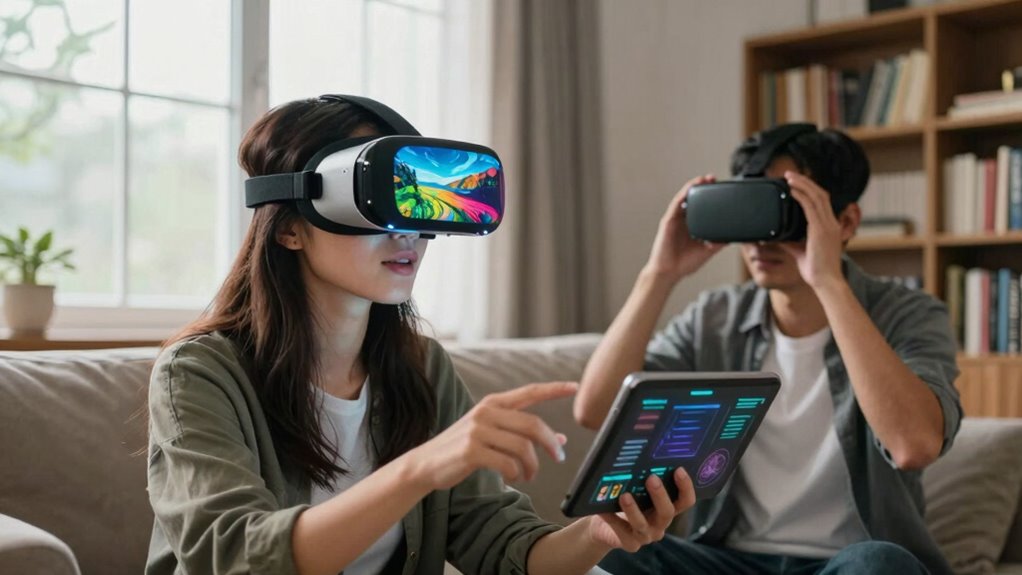
In your daily life, AR enhances tasks like navigation, shopping, and social interactions by overlaying digital info onto the real world, making things more intuitive and connected. VR, on the other hand, immerses you completely in virtual environments, ideal for virtual meetings, training, or entertainment. Both technologies are changing how you work, learn, and play, offering more engaging and personalized experiences. Keep exploring to discover how these tools will shape your everyday routines even further.

Get the latest gadgets delivered free — and shop member deals
- Fast, free delivery on millions of items
- Access to Prime Big Deal Days deals on October 6–7
- Prime Video, Amazon Music and more included
Key Takeaways
- AR enhances real-world tasks with digital overlays, improving navigation, shopping, and productivity in daily activities.
- VR offers fully immersive experiences, transforming entertainment, training, and virtual exploration without physical world interaction.
- AR integrates digital info into physical surroundings, making daily interactions more intuitive and context-aware.
- VR creates isolated, realistic virtual environments ideal for education, simulations, and entertainment.
- Both technologies are advancing to become more accessible, personalized, and seamlessly integrated into everyday life.
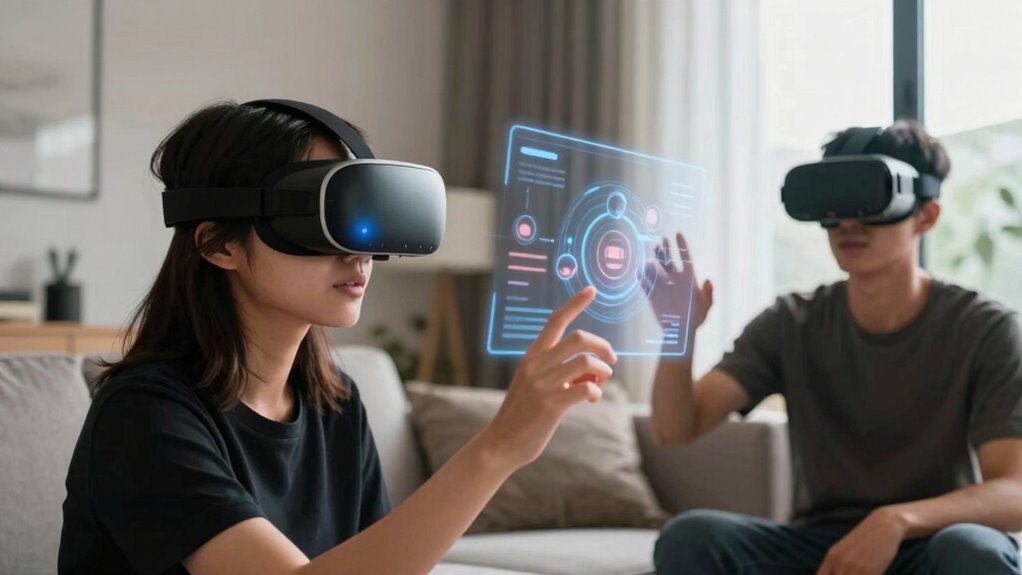
Augmented Reality (AR) and Virtual Reality (VR) are transforming how you experience everyday life, blending digital and physical worlds in new and exciting ways. When you use AR, you overlay digital information onto the real world, creating an enhanced view of your surroundings. Think of pointing your phone at a restaurant and instantly seeing reviews or menu options. This technology enriches your daily activities without fully removing you from reality. Meanwhile, VR transports you entirely into virtual environments, shutting out the physical world and immersing you in a completely digital space. Whether you’re exploring a virtual art gallery or playing a game, VR offers a fully immersive experience that feels real enough to engage your senses.
In your daily routine, AR subtly changes how you interact with your environment. For example, AR-enabled glasses or smartphone apps can provide real-time navigation, overlaying directions onto the streets as you walk or drive. You can easily access contextual information about objects around you, making tasks like shopping or maintenance more efficient. AR also enhances social interactions; you might see virtual avatars or annotations during meetings or social gatherings, adding a layer of interaction that’s more dynamic and engaging. These digital overlays become an integrated part of your physical world, improving productivity, learning, and entertainment without requiring you to step into a dedicated virtual space. As AR continues to develop, its ability to blend digital and physical realities will further enhance daily experiences. The integration of digital information into real-world contexts is a key factor driving these changes. Additionally, AR’s potential to augment real-world tasks makes everyday activities more intuitive and accessible.
VR, on the other hand, profoundly shifts your experience by immersing you fully in virtual environments. When you put on a VR headset, your entire perception shifts from real surroundings to a digital universe. This immersion makes VR ideal for virtual meetings, training simulations, or exploring distant locations without leaving your home. You can walk through a virtual cityscape, attend a concert, or even rehearse a presentation in a simulated environment. The key change is that VR isolates you from your physical environment, creating a sense of presence that’s highly effective for education, training, and entertainment. As AI solutions advance within VR platforms, they will enable more realistic and personalized virtual experiences. Furthermore, ongoing innovations in hardware and software will make VR more accessible and comfortable for everyday use.
While AR enhances your real-world interactions with digital insights, VR creates entirely new worlds for you to explore. Both technologies impact your daily life by expanding what’s possible—AR by seamlessly integrating digital data into your physical surroundings, and VR by transporting you into fully immersive virtual spaces. As these technologies evolve, they’ll continue to redefine how you work, learn, and entertain yourself, making everyday experiences more connected, engaging, and innovative.
Frequently Asked Questions
How Affordable ARe AR and VR Devices for Everyday Users?
AR and VR devices are becoming more affordable for everyday users, but cost barriers still exist. You might find basic AR apps on your smartphone or affordable VR headsets around $200, making them accessible. However, high-end VR systems with advanced features can be costly, creating accessibility challenges. Overall, as technology advances, prices are dropping, so more people can experience AR and VR without breaking the bank.
What ARe the Health Impacts of Prolonged AR and VR Use?
Prolonged AR and VR use can cause eye strain and motion sickness, making you feel dizzy or disoriented. Some believe these devices might even lead to long-term vision problems, but current research isn’t conclusive. You might notice headaches or fatigue after extended sessions. To protect yourself, take regular breaks and limit continuous use. Staying mindful helps guarantee your immersive experiences remain enjoyable without risking your health.
Can AR and VR Improve Productivity in Daily Tasks?
Yes, augmented reality and virtual reality can boost your productivity in daily tasks. AR overlays useful information onto your real-world view, helping you complete tasks faster and more accurately. VR can simulate environments for training or planning, saving time and resources. By integrating these technologies into your routine, you’ll find workflows become more efficient, and complex tasks easier to manage. Embracing AR and VR can truly transform how you approach everyday activities.
How Secure Is Data Collected Through AR and VR Applications?
They say “trust, but verify,” and that’s essential with AR and VR data. Your data privacy can be at risk if these applications aren’t properly secured, making hacking risks a real concern. Developers often collect sensitive info, so you should stay cautious about what you share. While some platforms implement encryption, it’s wise to keep an eye on updates and privacy policies to protect your personal information.
Will AR and VR Replace Traditional Forms of Communication?
AR and VR won’t fully replace traditional communication, but they’ll enhance it through virtual presence and emotional connection. You’ll experience more immersive interactions, feeling closer to others regardless of distance. While face-to-face conversations remain essential, AR and VR tools will supplement them, offering richer, more engaging ways to connect. These technologies will transform how you share experiences, making communication more dynamic without replacing the genuine emotional bonds you develop through in-person interactions.
Conclusion
So, here’s the irony: whether AR or VR becomes your daily companion, it’s still just technology—yet somehow, it feels like it’s changing your life faster than you can say “reality.” You might think you’re in control, but these tools subtly reshape your world without you noticing. In the end, maybe it’s not about which tech wins, but how it secretly rewires what you call “real.” After all, isn’t that the real game?
Fall Picks
fall essentials
As an affiliate, we earn on qualifying purchases.